
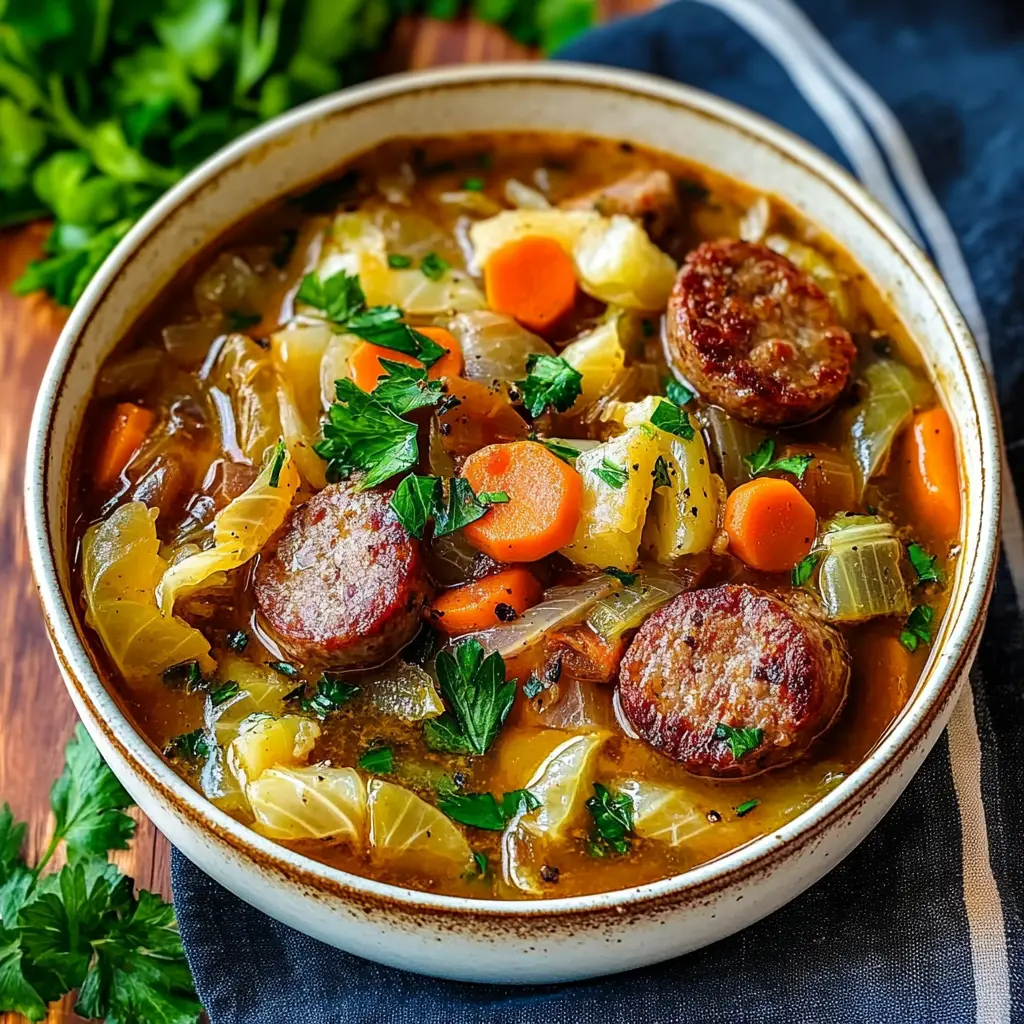
Irish Sausage & Cabbage Stew: A Hearty Traditional Recipe for Comfort Food Lovers
Introduction
Irish Sausage & Cabbage Stew represents the heart of traditional Irish comfort food. This beloved dish combines savory Irish sausages with tender cabbage in a rich, flavorful broth. Moreover, this one-pot wonder has nourished Irish families for generations.
The beauty of this Irish Sausage & Cabbage Stew lies in its simplicity. Furthermore, it transforms humble ingredients into something truly satisfying. Additionally, this hearty meal provides warmth during cold weather and brings families together around the dinner table.
This comprehensive guide will teach you everything about creating authentic Irish Sausage & Cabbage Stew. Subsequently, you’ll discover the secrets to achieving perfect flavor balance. Finally, you’ll learn various techniques to make this dish your own.
The History of Irish Sausage & Cabbage Stew
Origins in Irish Culinary Tradition
Irish Sausage & Cabbage Stew has deep roots in Irish history. Originally, this dish emerged from necessity during challenging economic times. Consequently, resourceful Irish cooks created hearty meals using affordable, accessible ingredients.
Cabbage became a cornerstone of Irish cuisine for practical reasons. First, it grew well in Ireland’s climate. Second, cabbage stored effectively through winter months. Therefore, families relied on this versatile vegetable for consistent nutrition.
Evolution Through the Centuries
Over time, Irish Sausage & Cabbage Stew evolved significantly. Initially, families used whatever sausages were available locally. However, as Irish sausage-making traditions developed, specific varieties became preferred for this stew.
The cooking methods also transformed over generations. Traditional Irish cooks prepared this stew over open fires. Later, kitchen ranges allowed for more controlled cooking. Today, modern appliances make creating this classic dish even easier.
Regional Variations Across Ireland
Different Irish regions developed unique approaches to this stew. For instance, coastal areas often added root vegetables from local gardens. Meanwhile, farming communities incorporated seasonal produce into their versions.
These regional differences contribute to the dish’s rich heritage. Nevertheless, the core combination of sausage and cabbage remains constant. Thus, Irish Sausage & Cabbage Stew maintains its authentic character while allowing creative variations.
Essential Ingredients for Authentic Flavor
The Foundation: Quality Sausages
Selecting proper sausages is crucial for authentic Irish Sausage & Cabbage Stew. Traditional Irish sausages contain high-quality pork with minimal fillers. Additionally, they feature distinctive seasoning blends including sage, thyme, and black pepper.
Look for sausages with natural casings for better texture. Furthermore, choose varieties with balanced fat content for optimal flavor. Ultimately, quality sausages make the difference between good and exceptional stew.
Cabbage: The Star Vegetable
Fresh cabbage forms the heart of this traditional stew. Green cabbage works perfectly for most recipes. However, some cooks prefer combining green and red cabbage for visual appeal.
Choose firm, heavy cabbage heads with tight leaves. Moreover, avoid cabbages with yellowing or wilted outer leaves. Fresh cabbage provides the best texture and flavor in your stew.
Essential Aromatics and Seasonings
Onions and Garlic
-
Yellow onions provide sweetness and depth
-
Garlic adds aromatic complexity
-
Both vegetables form the flavor foundation
Herbs and Spices
-
Fresh thyme complements the sausages
-
Bay leaves add earthy notes
-
Black pepper enhances overall flavor
-
Salt balances all ingredients
Supporting Vegetables
Root Vegetables
Potatoes are traditional additions to Irish Sausage & Cabbage Stew. Specifically, waxy varieties like Yukon Gold hold their shape well. Additionally, carrots add natural sweetness and vibrant color.
Optional Vegetables
Some recipes include celery for crunch. Furthermore, parsnips contribute earthy sweetness. However, these additions remain optional for authentic preparation.
Liquid Components
Broth Selection
High-quality chicken or vegetable broth creates the stew base. Rich, homemade broth produces superior results. Nevertheless, store-bought versions work adequately for convenience.
Additional Liquids
Some cooks add tomato paste for depth. Water can extend the liquid if needed. However, maintain proper flavor concentration throughout cooking.
Step-by-Step Recipe Instructions
Preparation Phase
Ingredient Preparation (15 minutes)
First, gather all ingredients before starting. Then, wash and chop vegetables uniformly. This preparation ensures smooth cooking workflow.
Vegetable Preparation:
-
Slice 2 pounds Irish sausages into 1-inch pieces
-
Chop 1 large head cabbage into wedges
-
Dice 2 medium onions finely
-
Mince 4 garlic cloves
-
Cut 2 pounds potatoes into chunks
-
Slice 3 carrots diagonally
Cooking Process
Step 1: Brown the Sausages (8-10 minutes)
Heat a large Dutch oven over medium-high heat. Add sausage pieces without overcrowding. Brown thoroughly on all sides. This step develops deep, rich flavors.
Transfer browned sausages to a plate. Leave rendered fat in the pot. This fat will flavor the vegetables beautifully.
Step 2: Cook the Aromatics (5-7 minutes)
Add diced onions to the same pot. Cook until softened and translucent. Then, add minced garlic and cook for 1 minute more.
The aromatics form the flavor foundation. Therefore, cook them properly without burning. Stir frequently to prevent sticking.
Step 3: Build the Stew Base (3-5 minutes)
Return sausages to the pot with vegetables. Add bay leaves and fresh thyme. Season with salt and black pepper to taste.
Pour in 6 cups of quality broth gradually. Bring the mixture to a gentle boil. Then reduce heat to maintain steady simmering.
Step 4: Add Root Vegetables (20 minutes)
Add cubed potatoes and sliced carrots first. These vegetables require longer cooking time. Cover the pot partially and simmer steadily.
Stir occasionally to prevent sticking. However, avoid over-stirring to maintain vegetable integrity. The potatoes should become tender but not mushy.
Step 5: Incorporate the Cabbage (15-20 minutes)
Add cabbage wedges to the simmering stew. Press them down gently into the liquid. Cover the pot completely this time.
Continue simmering until cabbage becomes tender. The cabbage should retain slight texture. Overcooking creates mushy, unappetizing results.
Final Assembly
Step 6: Season and Finish (5 minutes)
Taste the stew and adjust seasoning accordingly. Add more salt or pepper as needed. Remove bay leaves before serving.
Let the stew rest for 5 minutes. This allows flavors to meld perfectly. Additionally, the temperature equalizes throughout the dish.
Cooking Tips and Techniques
Achieving Perfect Sausage Texture
Browning Techniques
Never skip the sausage browning step. This process creates essential flavor compounds through the Maillard reaction. Furthermore, proper browning prevents grey, unappetizing sausages.
Cook sausages in batches if necessary. Overcrowding lowers pan temperature and prevents proper browning. Patience during this step rewards you with superior flavor.
Temperature Control
Maintain medium-high heat for browning. However, reduce to medium-low for simmering. High heat during simmering toughens sausages and breaks down vegetables.
Cabbage Cooking Mastery
Cutting Techniques
Cut cabbage into manageable wedges rather than shreds. Wedges maintain better texture during long cooking. Moreover, they’re easier to serve attractively.
Remove the tough core but keep wedges intact. This technique prevents the cabbage from completely falling apart. Consequently, you’ll have more appealing presentation.
Timing Considerations
Add cabbage during the final cooking phase. Early addition results in mushy, overcooked cabbage. Proper timing ensures tender yet structured cabbage pieces.
Flavor Development Strategies
Layering Flavors
Build flavors gradually throughout cooking. Start with browning, then aromatics, then liquid components. This methodical approach creates complex, satisfying taste profiles.
Seasoning Balance
Season in stages rather than all at once. Taste frequently during cooking. Adjust seasoning levels as ingredients cook down and concentrate.
Herb Usage
Add hardy herbs like thyme early in cooking. Delicate herbs should be added near the end. This timing preserves their bright, fresh characteristics.
Consistency Control
Liquid Management
Monitor liquid levels throughout cooking. Add more broth if the stew becomes too thick. Conversely, simmer uncovered to reduce excess liquid.
Thickening Options
Some cooks prefer slightly thicker stew. Mash a few potato pieces against the pot sides. This technique creates natural thickening without added starches.
Nutritional Benefits and Health Information
Macronutrient Profile
Irish Sausage & Cabbage Stew provides balanced nutrition in each serving. A typical portion contains approximately 450-550 calories. Furthermore, this dish offers substantial protein from the sausages.
Protein Content
The sausages deliver high-quality protein essential for muscle maintenance. Additionally, this protein helps maintain satiety for longer periods. Consequently, this stew makes an excellent main dish option.
Carbohydrate Sources
Potatoes provide complex carbohydrates for sustained energy. These carbohydrates fuel daily activities effectively. Moreover, they contribute to the stew’s satisfying, filling nature.
Vitamin and Mineral Content
Cabbage Nutrition
Cabbage offers exceptional nutritional value in this stew. It contains high levels of vitamin C for immune system support. Additionally, cabbage provides vitamin K for bone health.
The fiber content in cabbage supports digestive health. Furthermore, cabbage contains antioxidants that may reduce inflammation. These compounds contribute to overall wellness.
Root Vegetable Benefits
Potatoes supply potassium for heart health and blood pressure regulation. Carrots contribute beta-carotene, which the body converts to vitamin A. This nutrient supports eye health and immune function.
Health Considerations
Sodium Awareness
Traditional sausages can be high in sodium. Choose lower-sodium varieties when possible. Additionally, control added salt during cooking to manage overall sodium intake.
Fat Content
Irish sausages contain saturated fat naturally. However, this stew includes plenty of vegetables to balance the meal. Moderate portions help maintain healthy dietary patterns.
Portion Control
This hearty stew is quite filling. A typical serving size ranges from 1.5 to 2 cups. Larger portions may exceed daily caloric needs for some individuals.
Serving Suggestions and Pairings
Traditional Accompaniments
Irish Soda Bread
Nothing complements Irish Sausage & Cabbage Stew like fresh soda bread. The bread’s slightly tangy flavor balances the rich stew perfectly. Additionally, it helps soak up the delicious broth.
Serve warm soda bread with butter on the side. This combination has pleased Irish families for generations. Furthermore, the bread adds satisfying carbohydrates to the meal.
Simple Side Salads
A light green salad provides refreshing contrast to the hearty stew. Choose crisp lettuce varieties with simple dressing. This addition adds fresh vegetables and textural variety.
Modern Presentation Ideas
Garnish Options
Fresh parsley adds bright color and fresh flavor. Chopped chives provide mild onion notes. These simple garnishes elevate the stew’s appearance significantly.
A dollop of Irish butter melting on top creates rich appeal. Additionally, freshly cracked black pepper enhances the visual presentation.
Serving Vessel Selection
Serve in wide, shallow bowls to showcase ingredients. Alternatively, rustic crocks emphasize the stew’s traditional nature. Warm bowls help maintain serving temperature longer.
Beverage Pairings
Non-Alcoholic Options
Strong black tea complements this hearty stew wonderfully. Irish breakfast tea is particularly suitable. Additionally, herbal teas like chamomile provide soothing accompaniment.
Fresh apple cider pairs beautifully during autumn months. The fruity sweetness balances the savory stew flavors. Furthermore, sparkling water with lemon cleanses the palate between bites.
Seasonal Serving Ideas
Winter Presentations
Serve this stew during cold weather for maximum comfort. Add extra vegetables for heartier portions. Additionally, provide warm bread rolls for complete satisfaction.
Spring Adaptations
Incorporate early spring vegetables when available. Fresh peas or spring onions add seasonal appeal. However, maintain the traditional flavor profile throughout adaptations.
Storage and Reheating Guidelines
Proper Storage Techniques
Refrigerator Storage
Cool Irish Sausage & Cabbage Stew completely before refrigerating. Transfer to airtight containers within 2 hours of cooking. Properly stored stew keeps for 3-4 days safely.
Divide large batches into smaller containers. This technique promotes faster, more even cooling. Additionally, smaller portions reheat more effectively.
Freezer Storage Options
This stew freezes well for up to 3 months. However, potato texture may change slightly after freezing. Leave space in containers for expansion during freezing.
Label containers with contents and date clearly. Use freezer-safe containers or bags designed for liquid storage. Remove excess air to prevent freezer burn.
Reheating Methods
Stovetop Reheating
Transfer stew to a heavy-bottomed pot. Heat gently over medium-low heat. Stir occasionally to ensure even heating throughout.
Add small amounts of broth if the stew seems too thick. Heat until steaming hot throughout. This method preserves the best texture and flavor.
Microwave Reheating
Place individual portions in microwave-safe bowls. Cover with microwave-safe lids or plates. Heat in 90-second intervals, stirring between each interval.
Check temperature before serving to ensure even heating. Add liquid if needed during reheating process. Microwave power varies, so adjust timing accordingly.
Food Safety Considerations
Temperature Guidelines
Reheat stew to internal temperature of 165°F (74°C). Use a food thermometer for accuracy. Proper reheating eliminates potential bacterial growth concerns.
Storage Time Limits
Never leave stew at room temperature longer than 2 hours. Bacteria multiply rapidly in the temperature danger zone. When in doubt, discard questionable leftovers.
Recipe Variations and Adaptations
Regional Irish Variations
Cork-Style Additions
Some Cork region recipes include white beans for extra protein. These beans absorb flavors beautifully during cooking. Additionally, they create heartier, more filling portions.
Ulster Province Adaptations
Northern Irish versions sometimes feature different sausage varieties. Local butchers create unique seasoning blends. These variations reflect regional taste preferences and available ingredients.
Dietary Adaptations
Vegetarian Alternatives
Replace traditional sausages with high-quality vegetarian versions. Many plant-based sausages provide similar flavors and textures. Consequently, vegetarians can enjoy this traditional dish too.
Choose vegetarian sausages with robust seasonings. Additionally, ensure they maintain shape during long cooking periods. Some varieties work better than others for stewing.
Gluten-Free Considerations
Many Irish sausages contain gluten as fillers. Read labels carefully when avoiding gluten. Alternatively, choose certified gluten-free sausage varieties.
The remaining ingredients are naturally gluten-free. Therefore, only sausage selection requires special attention. Many butchers offer gluten-free options upon request.

Seasonal Adaptations
Spring Variations
Early spring brings fresh ingredients to enhance this stew. Add fresh peas during the final cooking minutes. Additionally, spring onions provide milder onion flavors.
Baby potatoes work beautifully in spring versions. Leave their skins on for extra nutrients and texture. These small potatoes cook quickly and look appealing.
Autumn Enhancements
Fall vegetables add seasonal appeal to traditional recipes. Diced butternut squash provides natural sweetness. Furthermore, it contributes beautiful orange color.
Root vegetables like turnips and parsnips work well too. These vegetables were traditional Irish staples. Additionally, they provide authentic historical accuracy.
International Fusion Ideas
German Influences
Add sauerkraut instead of fresh cabbage for tangy variation. This substitution creates German-Irish fusion flavors. The fermented cabbage adds probiotic benefits too.
Caraway seeds complement the sauerkraut beautifully. However, use them sparingly to avoid overwhelming other flavors. A teaspoon provides sufficient seasoning for most recipes.
American Adaptations
Some American versions include corn kernels for sweetness. Bell peppers add color and crunch. These additions reflect local ingredient availability and preferences.
Frequently Asked Questions
Can I make Irish Sausage & Cabbage Stew in advance?
Yes, this stew actually improves when made ahead. The flavors meld beautifully overnight in the refrigerator. Furthermore, advance preparation saves time on busy weeknights.
Prepare the stew completely, then cool and refrigerate. Reheat gently before serving. However, you may need to add extra broth during reheating.
What type of sausages work best for this recipe?
Traditional Irish sausages provide authentic flavor. However, high-quality pork sausages work well too. Look for varieties with natural casings and minimal fillers.
Avoid overly spiced sausages that might overwhelm the dish. Additionally, choose sausages with balanced fat content. Lean sausages may become dry during cooking.
How can I prevent the cabbage from becoming mushy?
Add cabbage during the final 15-20 minutes of cooking. Additionally, cut it into wedges rather than small pieces. This technique helps maintain better texture.
Avoid vigorous stirring once cabbage is added. Gentle folding motions preserve the vegetable structure. Furthermore, don’t cook at high temperatures during this phase.
Can I use red cabbage instead of green?
Red cabbage works perfectly in this Irish Sausage & Cabbage Stew. It provides beautiful color and similar nutritional benefits. However, it may take slightly longer to become tender.
Some cooks combine both varieties for visual appeal. This combination creates attractive color contrast. Additionally, it provides subtle flavor variation.
What’s the best way to thicken this stew?
The stew naturally thickens as potatoes break down slightly. However, you can mash a few potato pieces for extra thickness. This method creates natural, starch-based thickening.
Alternatively, simmer uncovered to reduce liquid content. This technique concentrates flavors while achieving desired consistency. Avoid adding flour or cornstarch for authentic preparation.
How long does homemade stew keep in the refrigerator?
Properly stored stew keeps for 3-4 days safely. Cool completely before refrigerating in airtight containers. Additionally, reheat thoroughly before serving leftovers.
Never leave stew at room temperature longer than 2 hours. Bacteria multiply rapidly in lukewarm conditions. When uncertain about safety, discard questionable leftovers.
Conclusion
Irish Sausage & Cabbage Stew represents the perfect harmony of simple ingredients and traditional cooking methods. This beloved comfort food transforms humble vegetables and quality sausages into something truly special. Moreover, it connects us to generations of Irish cooks who created nourishing meals from accessible ingredients.
The beauty of this Irish Sausage & Cabbage Stew lies in its versatility and forgiving nature. Whether you follow traditional methods or adapt for modern preferences, the results consistently satisfy. Furthermore, this one-pot wonder simplifies meal preparation while delivering complex, satisfying flavors.
Remember that patience during cooking creates the best results. Allow time for flavors to develop fully. Additionally, don’t rush the browning process, as it provides essential flavor foundation.
This comprehensive guide provides everything needed to master Irish Sausage & Cabbage Stew. From ingredient selection to serving suggestions, each element contributes to success. Furthermore, the various adaptations ensure this recipe suits different dietary needs and preferences.
Ready to create your own memorable Irish Sausage & Cabbage Stew? Start with quality ingredients and follow these time-tested techniques. Soon, you’ll be serving this comforting dish to grateful family and friends!

Irish Sausage & Cabbage Stew
Description
Ingredients
-
6 pork sausages (Irish bangers or bratwurst)
-
1 tablespoon olive oil
-
1 onion, sliced
-
2 carrots, peeled and sliced
-
2 cloves garlic, minced
-
½ head green cabbage, chopped (about 4 cups)
-
4 cups beef or chicken stock
-
1 bay leaf (optional)
-
1 teaspoon dried thyme (or 1 tablespoon fresh thyme)
-
Salt and black pepper to taste
-
Fresh parsley for garnish (optional)
Instructions
-
Heat olive oil in a large pot or Dutch oven over medium-high heat.
-
Brown the sausages on all sides, about 2-3 minutes per side. Remove and set aside.
-
Add onion and carrots to the pot and sauté for 4-5 minutes until slightly softened.
-
Add garlic and cook for an additional 1 minute, stirring frequently.
-
Stir in thyme and bay leaf. Season with salt and pepper.
-
Return the sausages to the pot and pour in the stock, scraping up any browned bits from the bottom.
-
Add chopped cabbage and stir to combine.
-
Bring to a simmer, cover, and cook on low for 20–25 minutes until sausages are cooked through and vegetables are tender.
-
Adjust seasoning if needed. Serve hot garnished with fresh parsley if desired.
This hearty stew is a comforting meal full of classic Irish flavors and is perfect for cozy dinners.