
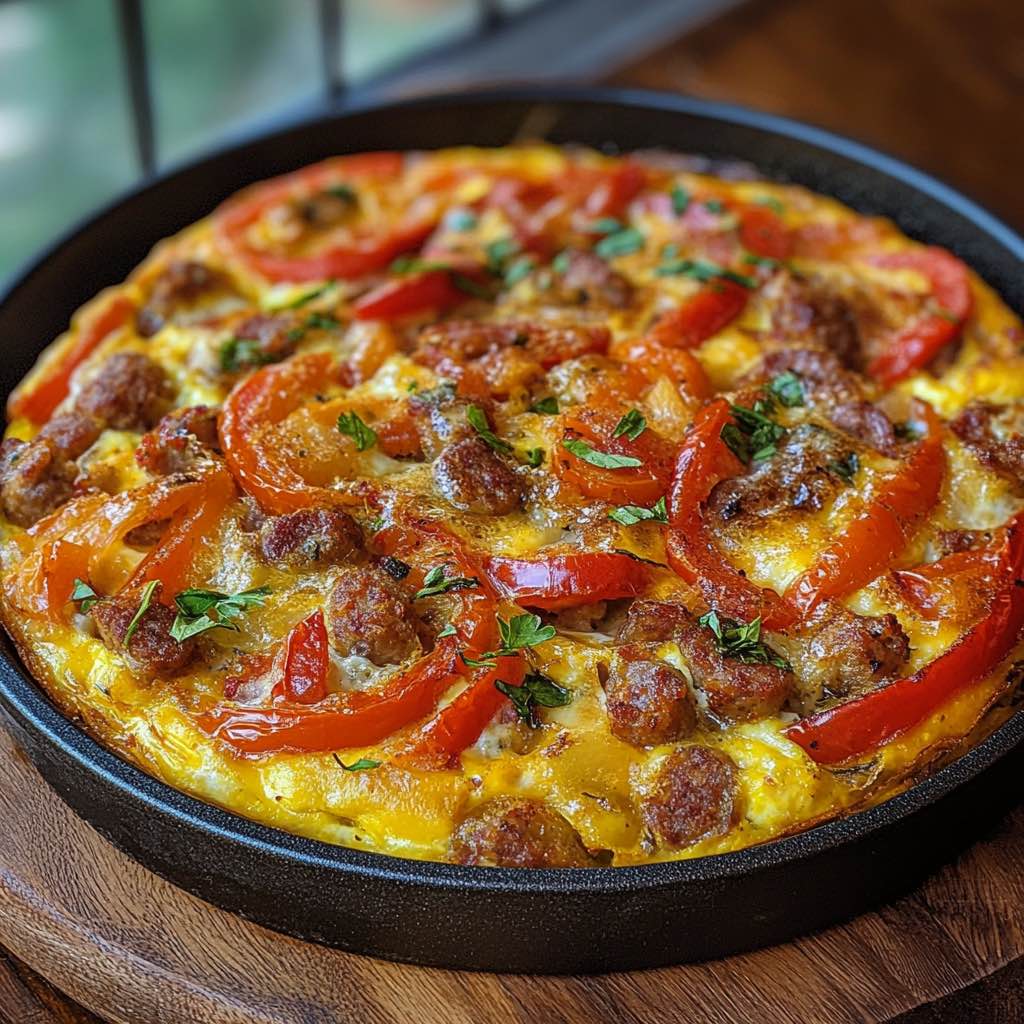
Italian Frittata with Sausage and Peppers: A Complete Guide to This Classic Italian Dish
Italian frittata with sausage and peppers represents one of Italy’s most beloved comfort foods. This versatile dish combines the rich flavors of savory Italian sausage with colorful bell peppers in a perfectly set egg base. Moreover, this traditional recipe transforms simple ingredients into an extraordinary meal that works for breakfast, lunch, or dinner.
The beauty of this Italian frittata lies in its simplicity and adaptability. Furthermore, it requires minimal preparation while delivering maximum flavor. Additionally, this protein-packed dish provides a nutritious option that satisfies even the heartiest appetites.
Table of Contents
What Makes Italian Frittata Special
Italian frittata differs significantly from traditional scrambled eggs or omelets. First, the cooking method involves starting on the stovetop and finishing in the oven. This technique creates a unique texture that’s creamy inside yet slightly firm outside.
The Italian approach emphasizes fresh, quality ingredients. Consequently, each component shines through without overwhelming the others. The sausage provides rich, savory notes while peppers add sweetness and vibrant color.
Historical Background
Frittata originated in Italy as a way to use leftover ingredients efficiently. Italian cooks discovered that combining eggs with vegetables, meats, and cheeses created satisfying meals. Over time, regional variations developed throughout Italy.
The sausage and pepper combination became particularly popular in central and southern Italy. This pairing offers complementary flavors that enhance each ingredient’s natural qualities.
Essential Ingredients for Sausage and Pepper Frittata
Creating an authentic Italian frittata requires carefully selected ingredients. Each component plays a crucial role in achieving the perfect balance of flavors and textures.
Primary Ingredients
Fresh Eggs form the foundation of any great frittata. Use large, room-temperature eggs for best results. Additionally, fresh eggs provide better flavor and structure compared to older ones.
Italian Sausage should be high-quality with authentic seasoning. Choose between mild or spicy varieties based on your preference. Furthermore, remove casings before cooking for even distribution.
Bell Peppers contribute sweetness and color. Red, yellow, and orange peppers work exceptionally well. Moreover, they provide essential vitamins and appealing visual contrast.
Onions add depth and aromatic foundation. Yellow onions offer the best flavor profile for this dish. Additionally, proper caramelization enhances the overall taste.
Supporting Ingredients
Olive Oil helps achieve proper cooking temperature and adds subtle flavor. Use extra virgin olive oil for authentic Italian taste. Furthermore, it prevents sticking during the cooking process.
Fresh Herbs elevate the dish’s aromatic profile. Basil, oregano, and parsley work particularly well. Additionally, fresh herbs provide brighter flavors than dried alternatives.
Cheese adds richness and helps bind ingredients together. Parmigiano-Reggiano or Pecorino Romano are traditional choices. Moreover, aged cheeses contribute complex flavors.
Salt and Pepper season the mixture appropriately. Use sea salt or kosher salt for best results. Additionally, freshly ground black pepper provides superior flavor.
Equipment You’ll Need
Having the right equipment ensures successful frittata preparation. Professional-quality tools make the process smoother and more enjoyable.
Essential Cookware
Oven-Safe Skillet is absolutely crucial for this recipe. Cast iron or heavy-bottomed skillets work best. Additionally, ensure the handle can withstand oven temperatures up to 400°F.
Sharp Knife facilitates precise vegetable preparation. A chef’s knife works perfectly for chopping onions and peppers. Furthermore, clean cuts help vegetables cook evenly.
Cutting Board provides a stable surface for ingredient preparation. Use separate boards for vegetables and raw sausage to prevent cross-contamination. Additionally, wooden boards are gentler on knife edges.
Helpful Tools
Whisk creates properly mixed egg mixture. A wire whisk incorporates air for lighter texture. Moreover, thorough mixing ensures even seasoning distribution.
Measuring Cups help maintain proper ingredient ratios. Accurate measurements contribute to consistent results. Additionally, clear measuring cups make liquid measurements easier.
Oven Mitts protect hands when transferring hot skillets. Heat-resistant mitts are essential for safety. Furthermore, they allow confident handling of hot cookware.
Step-by-Step Cooking Instructions
Creating the perfect Italian frittata with sausage and peppers requires attention to timing and technique. Follow these detailed steps for restaurant-quality results.
Preparation Phase
Preheat your oven to 375°F before beginning ingredient preparation. This ensures even cooking throughout the frittata. Additionally, proper preheating prevents temperature fluctuations.
Remove sausage casings and break meat into bite-sized pieces. Uniform pieces cook more evenly and distribute better throughout the frittata. Furthermore, smaller pieces integrate seamlessly with other ingredients.
Slice peppers into strips approximately ¼-inch wide. Consistent sizing ensures even cooking and attractive presentation. Moreover, uniform strips distribute color evenly throughout the dish.
Dice onions into small, uniform pieces. Fine dice releases more flavor and cooks more quickly. Additionally, smaller pieces blend better with the egg mixture.
Cooking Process
Heat olive oil in your oven-safe skillet over medium heat. Proper oil temperature prevents sticking and promotes even browning. Furthermore, medium heat allows ingredients to cook without burning.
Cook sausage first, breaking it into smaller pieces as it browns. Cook until no pink remains, approximately 6-8 minutes. Additionally, rendered fat adds flavor to the remaining ingredients.
Add onions to the skillet with cooked sausage. Sauté until softened and lightly caramelized, about 4-5 minutes. Moreover, caramelized onions contribute sweetness that balances the dish.
Include peppers and continue cooking until they begin to soften. This takes approximately 5-6 minutes. Furthermore, peppers should retain some firmness for textural contrast.
Egg Integration
Beat eggs thoroughly in a large bowl with salt, pepper, and herbs. Proper beating incorporates air for lighter texture. Additionally, seasoning the eggs evenly distributes flavors.
Pour egg mixture over the cooked vegetables and sausage. Gently stir to distribute ingredients evenly. Moreover, avoid overmixing which can create tough texture.
Cook on stovetop for 3-4 minutes until edges begin to set. The bottom should be lightly golden but center remains liquid. Furthermore, this initial cooking creates structural foundation.
Oven Finishing
Transfer skillet to preheated oven immediately. The residual heat continues cooking while oven heat finishes the top. Additionally, oven cooking ensures even temperature throughout.
Bake for 12-15 minutes until center is just set. The frittata should spring back lightly when touched. Moreover, overcooking creates rubbery texture.
Rest for 5 minutes before cutting or serving. This allows the frittata to firm up slightly. Furthermore, resting prevents ingredients from sliding apart when sliced.
Professional Tips for Perfect Results
Achieving restaurant-quality Italian frittata requires understanding professional techniques. These tips ensure consistent, delicious results every time.
Temperature Control
Medium heat is crucial throughout the stovetop cooking process. High heat can burn vegetables before they properly cook. Additionally, consistent temperature prevents hot spots that create uneven cooking.
Room temperature eggs blend more easily and cook more evenly. Cold eggs can lower the skillet temperature unexpectedly. Furthermore, room temperature ingredients integrate better.
Preheated oven ensures immediate, even cooking when the skillet transfers. Temperature fluctuations can affect final texture. Moreover, consistent heat creates uniform browning.
Ingredient Preparation
Uniform cutting ensures all ingredients cook at the same rate. Inconsistent pieces create texture problems. Additionally, professional presentation requires attention to knife skills.
Proper seasoning at each stage builds layers of flavor. Season vegetables as they cook, not just the final mixture. Furthermore, gradual seasoning prevents over-salting.
Fresh herbs added at the end preserve their bright flavors. Cooking herbs too long can make them bitter. Moreover, fresh additions provide color contrast.
Cooking Techniques
Don’t overcrowd the skillet which can cause steaming instead of browning. Cook in batches if necessary. Additionally, overcrowding lowers temperature and creates soggy vegetables.
Rendered fat from sausage enhances overall flavor. Don’t drain all the fat before adding vegetables. Furthermore, some fat helps vegetables caramelize properly.
Gentle stirring when adding eggs prevents breaking up vegetable pieces. Aggressive mixing can create mushy texture. Moreover, careful handling maintains visual appeal.
Nutritional Benefits
Italian frittata with sausage and peppers provides excellent nutritional value. This protein-rich dish offers essential nutrients in a satisfying meal format.
Protein Content
High-quality protein from eggs and sausage supports muscle maintenance and growth. Each serving provides approximately 25-30 grams of complete protein. Additionally, protein promotes satiety and stable blood sugar levels.
Essential amino acids from eggs make this dish nutritionally complete. Eggs contain all nine essential amino acids in optimal ratios. Furthermore, protein helps maintain healthy metabolism.
Vitamin and Mineral Profile
Bell peppers contribute significant amounts of vitamin C and antioxidants. Red peppers especially provide beta-carotene for eye health. Moreover, these compounds support immune system function.
Eggs supply vitamin D, choline, and selenium. These nutrients support brain function and bone health. Additionally, eggs provide easily absorbed nutrients.
Iron from sausage helps prevent anemia and supports energy levels. Heme iron from meat sources absorbs more efficiently than plant sources. Furthermore, adequate iron supports oxygen transport.
Heart-Healthy Components
Olive oil provides monounsaturated fats that support cardiovascular health. These healthy fats can help reduce inflammation. Moreover, olive oil contributes to the Mediterranean diet pattern.
Vegetables supply fiber and potassium for heart health. Adequate fiber intake supports healthy cholesterol levels. Additionally, potassium helps regulate blood pressure.
Serving Suggestions and Pairings
Italian frittata with sausage and peppers works wonderfully for various meal occasions. Creative serving approaches enhance the dining experience.
Breakfast and Brunch
Fresh fruit complements the savory frittata perfectly. Seasonal berries or sliced citrus provide refreshing contrast. Additionally, fruit adds natural sweetness and vitamins.
Crusty bread allows diners to soak up any delicious juices. Italian bread or focaccia work particularly well. Moreover, bread provides satisfying carbohydrates.
Simple salad with mixed greens balances the rich frittata. Light vinaigrette dressing adds acidity that cuts through richness. Furthermore, greens provide additional nutrients and fiber.
Lunch and Dinner
Roasted vegetables extend the Italian theme beautifully. Zucchini, eggplant, or tomatoes work especially well. Additionally, roasted vegetables add textural variety.
Antipasto platter creates an authentic Italian meal experience. Include olives, cheese, and cured meats. Moreover, varied flavors complement the frittata’s richness.
Soup course can precede the frittata for elegant dining. Minestrone or vegetable soup work particularly well. Furthermore, soup adds warmth and comfort to the meal.
Beverage Pairings
Fresh juice provides bright flavors that complement the dish. Orange juice or tomato juice work especially well. Additionally, natural fruit juices add vitamins and refreshment.
Coffee pairs naturally with Italian cuisine traditions. Espresso or cappuccino enhance the authentic experience. Moreover, coffee’s bitterness balances the frittata’s richness.
Herbal tea offers a lighter alternative to coffee. Chamomile or mint tea provide soothing flavors. Furthermore, herbal teas aid digestion after rich meals.
Variations and Customizations
The basic Italian frittata recipe adapts beautifully to personal preferences and dietary needs. Creative variations keep this dish interesting and exciting.
Vegetable Variations
Mushroom additions provide earthy flavors and meaty texture. Cremini or shiitake mushrooms work particularly well. Additionally, mushrooms add umami depth to the overall flavor profile.
Spinach incorporation boosts nutritional value significantly. Fresh spinach wilts quickly and integrates seamlessly. Moreover, spinach adds vibrant color and iron content.
Tomato inclusions contribute acidity and Mediterranean flair. Cherry tomatoes or sun-dried tomatoes both work well. Furthermore, tomatoes provide lycopene and bright flavors.
Protein Alternatives
Pancetta offers authentic Italian flavor with less spice than sausage. This cured pork adds saltiness and richness. Additionally, pancetta provides traditional Italian character.
Prosciutto creates an elegant variation with delicate flavor. Add prosciutto after cooking to preserve its texture. Moreover, prosciutto adds sophisticated taste without overwhelming other ingredients.
Vegetarian options can replace sausage for plant-based diets. Seasoned mushrooms or plant-based sausage work well. Furthermore, additional vegetables can provide satisfying substance.
Cheese Variations
Goat cheese creates creamy texture and tangy flavor. Crumble goat cheese throughout for even distribution. Additionally, goat cheese pairs beautifully with peppers and herbs.
Mozzarella provides mild flavor and excellent melting properties. Fresh mozzarella creates particularly appealing texture. Moreover, mozzarella adds classic Italian authenticity.
Ricotta contributes lightness and subtle sweetness. Mix ricotta directly into eggs for uniform distribution. Furthermore, ricotta creates exceptionally tender texture.
For additional Italian recipe inspiration, check out our comprehensive guide on [authentic pasta preparations] that complement frittata perfectly.
Storage and Reheating Guidelines
Proper storage and reheating maintain the frittata’s quality and safety. Following these guidelines ensures delicious leftovers.
Refrigeration
Cool completely before refrigerating to prevent condensation. Room temperature cooling takes approximately 30 minutes. Additionally, gradual cooling prevents texture changes.
Wrap properly in plastic wrap or store in airtight containers. Proper wrapping prevents odor absorption and moisture loss. Moreover, sealed storage maintains freshness longer.
Consume within 3-4 days for best quality and safety. Label containers with preparation dates. Furthermore, proper rotation ensures food safety compliance.
Freezing Options
Freeze portions individually for convenient single servings. Wrap pieces separately before placing in freezer bags. Additionally, individual portions thaw more quickly and evenly.
Use within 2-3 months for optimal texture and flavor. Frozen frittata maintains safety longer but quality degrades over time. Moreover, proper labeling prevents freezer burn confusion.
Thaw safely in refrigerator overnight before reheating. Room temperature thawing can promote bacterial growth. Furthermore, gradual thawing preserves texture better.
Reheating Methods
Oven reheating provides the best texture restoration. Preheat to 350°F and warm for 10-15 minutes. Additionally, covering with foil prevents surface drying.
Microwave heating offers convenience but can create rubbery texture. Use lower power settings and heat in short intervals. Moreover, microwave heating works best for single portions.
Stovetop warming in a covered skillet works well for larger portions. Use low heat to prevent burning the bottom. Furthermore, adding a tablespoon of water creates gentle steam.
Troubleshooting Common Issues
Even experienced cooks encounter challenges when making frittata. Understanding solutions prevents disappointment and ensures success.
Texture Problems
Rubbery texture usually results from overcooking or high heat. Cook gently and remove from oven when center just sets. Additionally, room temperature eggs help prevent toughness.
Watery frittata indicates vegetables released too much moisture. Pre-cook vegetables longer to evaporate excess water. Moreover, salting vegetables beforehand draws out moisture.
Uneven cooking suggests temperature control issues. Use medium heat throughout stovetop cooking. Furthermore, oven temperature accuracy affects final results.
Flavor Issues
Bland taste requires better seasoning at each cooking stage. Season vegetables as they cook, not just the final mixture. Additionally, fresh herbs brighten overall flavor significantly.
Greasy texture results from not draining excess sausage fat. Remove some rendered fat before adding vegetables. Moreover, paper towels can absorb excess surface oil.
Bitter flavors often come from burnt vegetables or overcooked herbs. Monitor heat carefully and add delicate herbs at the end. Furthermore, burnt vegetables should be discarded and restarted.
Structural Problems
Falling apart when serving indicates insufficient cooking time. The center should be completely set before removing from oven. Additionally, resting time helps structure stabilize.
Sticking to pan suggests inadequate oil or wrong pan type. Use enough oil and ensure even-safe skillet. Moreover, well-seasoned cast iron prevents sticking naturally.
Uneven browning indicates hot spots in cookware. Rotate the pan occasionally during stovetop cooking. Furthermore, quality cookware distributes heat more evenly.
According to culinary experts at the Culinary Institute of America, proper temperature control is the most critical factor in frittata success. Their research shows that medium heat throughout the cooking process creates optimal texture and prevents common problems.
Frequently Asked Questions
Can I make Italian frittata with sausage and peppers ahead of time?
Yes, this frittata can be prepared up to 24 hours in advance. Store covered in the refrigerator and bring to room temperature before serving. Additionally, advance preparation allows flavors to meld beautifully.
What’s the best way to prevent sticking?
Use a well-seasoned cast iron skillet or non-stick pan with adequate olive oil. Heat the oil properly before adding ingredients. Moreover, avoid moving the frittata too early in the cooking process.
How do I know when the frittata is done?
The center should be just set and spring back lightly when touched. A knife inserted in the center should come out with just slightly wet egg. Furthermore, the edges will pull away slightly from the pan sides.
Can I use egg substitutes in this recipe?
Egg substitutes can work but will change the texture significantly. Use products designed for baking rather than scrambled eggs. Additionally, you may need to adjust cooking times accordingly.
What size skillet works best?
A 10-inch oven-safe skillet provides ideal proportions for standard recipes. Smaller skillets create thicker frittatas that require longer cooking times. Moreover, larger pans create thinner frittatas that cook more quickly.
How can I reduce the fat content?
Use turkey Italian sausage instead of pork versions. Additionally, increase the proportion of vegetables to meat. Furthermore, drain more rendered fat during the cooking process.
The American Egg Board recommends using fresh eggs within three to five weeks of purchase for optimal flavor and nutrition in frittata recipes.
Conclusion
Italian frittata with sausage and peppers represents the perfect balance of simplicity and sophistication. This versatile dish transforms basic ingredients into an extraordinary meal that satisfies any appetite. The combination of savory Italian sausage, colorful bell peppers, and perfectly set eggs creates a harmonious blend of flavors and textures.
The beauty of this traditional recipe lies in its adaptability and forgiving nature. Whether served for breakfast, lunch, or dinner, this Italian frittata delivers consistent, delicious results. Furthermore, the protein-rich composition provides sustained energy and satisfaction.
Mastering this classic dish opens doors to countless variations and creative possibilities. The fundamental techniques translate to numerous other frittata combinations. Moreover, understanding proper cooking methods ensures success with any ingredient combination.
The nutritional benefits make this dish an excellent choice for health-conscious diners. High-quality protein, essential vitamins, and heart-healthy fats contribute to a well-balanced meal. Additionally, the Mediterranean-style preparation aligns with established healthy eating patterns.

Italian Frittata with Sausage and Peppers
Description
Ingredients
Main Components
-
8-10 large eggs
-
½ pound Italian sausage (sweet or spicy), casings removed
-
1 red bell pepper, thinly sliced
-
1 orange or yellow bell pepper, thinly sliced
-
1 medium yellow onion, halved and thinly sliced
-
3 cloves garlic, minced
-
½ cup shredded mozzarella cheese (optional)
-
⅓ cup heavy cream or whole milk
-
2-3 tablespoons olive oil, divided
-
1 teaspoon salt, divided
-
½ teaspoon black pepper
-
¼ teaspoon red pepper flakes (optional)
-
2 tablespoons fresh herbs (parsley, oregano, or basil)
Instructions
Prepare the Base
Preheat oven to 375°F and position rack in upper third. In a large bowl, whisk eggs with cream, ½ teaspoon salt, and black pepper until well combined. Set aside while preparing the filling.
Cook the Sausage and Vegetables
Heat 1 tablespoon olive oil in a 10-12 inch oven-safe skillet over medium-high heat. Add sausage and cook, breaking it into bite-sized pieces with a spatula, until browned and cooked through, about 5-7 minutes. Remove sausage to a plate.
Add remaining oil to the same skillet and reduce heat to medium. Add sliced onions and peppers, scraping up any browned bits from the bottom of the pan. Cook for 8-10 minutes until vegetables are soft and caramelized. Add minced garlic and cook for another 1-2 minutes until fragrant.
Assemble and Cook the Frittata
Return cooked sausage to the skillet and stir to combine with vegetables. Season with remaining salt and arrange mixture in an even layer. If using cheese, sprinkle it over the sausage and pepper mixture.
Reduce heat to low and pour beaten eggs over the filling, ensuring even coverage. Cook on stovetop for 4-5 minutes until edges begin to set but center remains slightly wet.
Transfer skillet to preheated oven and bake for 8-12 minutes until center is just set and top is lightly golden. The frittata should be slightly puffed and spring back when gently touched in the center.
Serving and Storage
Remove from oven and let rest in the pan for 5 minutes before slicing. Cut into wedges and serve warm, garnished with fresh herbs. This versatile dish serves 4-6 people and can be enjoyed hot or at room temperature.