
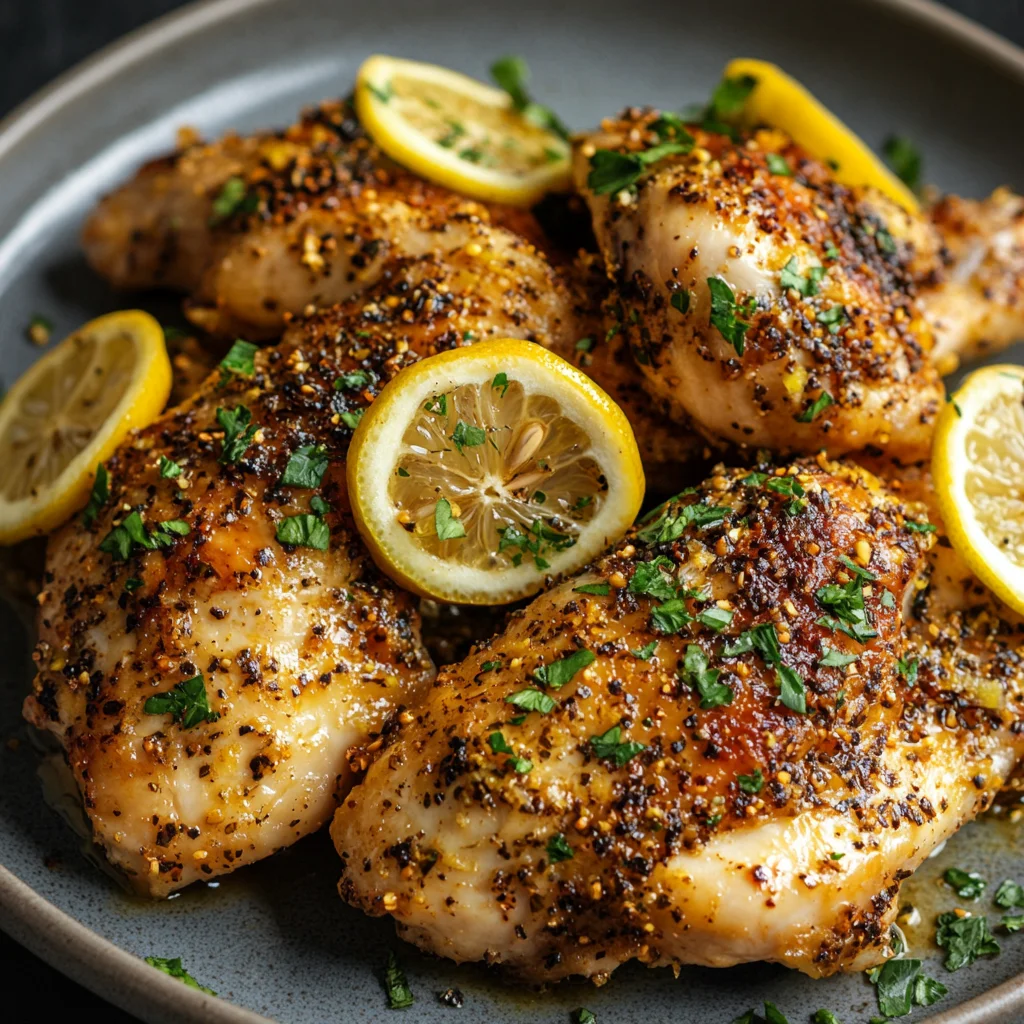
Lemon-Pepper Chicken: A Zesty, Flavorful Dish Perfect for Any Occasion
Introduction
Lemon-pepper chicken is a beloved dish that combines bright citrus flavors with the bold kick of black pepper, creating a meal that’s both simple and incredibly satisfying. This versatile recipe has become a weeknight dinner staple for home cooks across the country, offering restaurant-quality results with minimal effort. Whether you’re preparing a quick family meal or hosting a dinner party, lemon-pepper chicken delivers exceptional flavor that will have everyone asking for seconds.
The beauty of this dish lies in its simplicity. With just a handful of everyday ingredients, you can create tender, juicy chicken coated in a tangy, peppery sauce that pairs perfectly with countless side dishes. Plus, it’s naturally healthy and can be ready in as little as 20-30 minutes, making it an ideal choice for busy weeknights.
What is Lemon-Pepper Chicken?
Lemon-pepper chicken is a popular American dish featuring chicken seasoned with a blend of lemon zest, cracked black pepper, and complementary spices. The dish has roots in Southern cooking and showcases the perfect marriage of bright citrus and bold pepper flavors. Most recipes feature either chicken breasts or thighs that are either pan-seared, baked, or grilled to golden perfection.
The defining characteristic of this dish is its signature seasoning blend. Traditional lemon-pepper chicken relies on the simple combination of fresh or dried lemon peel, coarsely ground black pepper, salt, and sometimes garlic and onion powder. Many cooks prefer making homemade seasoning blends to control the flavor profile and sodium content.
What makes this recipe particularly appealing is its adaptability. You can prepare it with a light butter sauce, a creamy pan sauce, or simply as seasoned grilled chicken. Each preparation method brings out different aspects of the lemon and pepper flavors while maintaining the dish’s essential character.
The Key Ingredients
Essential Components
The foundation of excellent lemon-pepper chicken starts with selecting quality ingredients. Here are the key components you’ll need:
Chicken: Boneless, skinless chicken breasts or thighs work beautifully for this recipe. Breasts offer a leaner option, while thighs provide more moisture and flavor. For best results, choose thin-cut chicken breasts or pound regular ones to an even thickness.
Lemon Components: Fresh lemon zest and lemon juice provide the bright, citrusy flavor that defines this dish. Fresh lemons deliver superior taste compared to bottled juice. You’ll typically need 3-4 tablespoons of zest and about 1/3 cup of fresh juice.
Black Pepper: Freshly cracked black pepper is crucial for authentic flavor. The coarse texture and robust taste of fresh pepper cannot be replicated with pre-ground varieties.
Supporting Ingredients
Flour: All-purpose flour helps create a light coating that promotes browning and helps the sauce adhere to the chicken. You’ll typically need 1/3 cup for dredging.
Fats: Olive oil for cooking and butter for the sauce add richness and help develop flavor. Most recipes call for 2 tablespoons of each.
Aromatics: Garlic and onion enhance the overall flavor profile. Fresh minced garlic is preferred, though garlic powder works in a pinch.
Liquids: Chicken broth or stock helps create a flavorful pan sauce. Using low-sodium options allows you to control the salt level.
Health Benefits and Nutrition
Nutritional Profile
Lemon-pepper chicken is a nutritious meal choice that provides excellent protein while remaining relatively low in calories. A typical serving of this dish contains approximately 250-330 calories, depending on preparation method and portion size. The macronutrient breakdown typically includes 30-62 grams of high-quality protein, making it an excellent choice for muscle maintenance and satiety.
The dish offers a favorable nutritional profile with moderate fat content, primarily from healthy cooking oils and small amounts of butter. Carbohydrate content remains minimal at 2-3 grams per serving when prepared simply, making it suitable for low-carb diets.
Health Benefits of Key Ingredients
The lemon-pepper seasoning itself brings impressive health advantages beyond just flavor. Lemon zest contains concentrated Vitamin C, a powerful antioxidant that supports immune function and helps combat free radicals. This vital nutrient also plays a role in reducing the risk of chronic diseases, including heart conditions.
Black pepper contains piperine, a compound known for its anti-inflammatory and antioxidant properties. Piperine enhances nutrient absorption from food and may support metabolic function. Additionally, it can provide mild pain relief benefits and assist with weight management.
The seasoning blend is naturally fat-free and carbohydrate-free, providing zero calories from these macronutrients. Many commercial and homemade versions offer low-sodium or salt-free options, which can help manage blood pressure. The complete absence of cholesterol in the seasoning blend makes it heart-friendly, as it won’t contribute to atherosclerosis or increase cardiovascular disease risk.
Cooking Methods Explained
Pan-Searing Method
Pan-searing is the most popular technique for preparing lemon-pepper chicken because it develops a beautiful golden crust while keeping the interior moist. Start by heating olive oil and butter in a large skillet over medium-high heat. The combination of these fats creates ideal browning conditions and prevents burning.
Dredge seasoned chicken pieces in flour, shaking off excess before placing them in the hot pan. Cook without moving for 5-6 minutes per side until golden brown and cooked through. The key is resisting the urge to flip too early, allowing proper crust development.
Baking Method
Oven-baking produces consistently cooked lemon-pepper chicken with less hands-on attention required. Preheat your oven to 375-425°F, depending on whether you’re using breasts or thighs. Arrange seasoned chicken on a baking sheet, optionally using a rack for even air circulation.
Bake for 18-20 minutes for breasts or 35-40 minutes for bone-in thighs until the internal temperature reaches 165°F. For extra crispy skin on thighs, finish under the broiler for 2-3 minutes.
Grilling Method
Grilling adds smoky depth to lemon-pepper chicken while creating attractive char marks. Preheat your grill to medium heat, around 400°F. Marinated chicken should cook for 15-18 minutes, flipping halfway through.
For best results, flip the chicken multiple times to ensure even cooking. Always use a meat thermometer to verify the internal temperature reaches 165°F at the thickest part.
Classic Lemon-Pepper Chicken Recipe
Ingredients
For the Chicken:
-
4 boneless, skinless chicken breasts (about 1.3 pounds total)
-
1/3 cup all-purpose flour
-
1 tablespoon lemon-pepper seasoning
-
Salt to taste
-
2 tablespoons olive oil
For the Sauce:
-
2 tablespoons butter
-
2 cloves garlic, minced
-
2/3 cup chicken broth
-
2 teaspoons fresh lemon juice
-
1 tablespoon chopped fresh parsley
-
Lemon slices for garnish
Step-by-Step Instructions
Prepare the chicken by cutting each breast in half lengthwise to create thinner, more evenly-sized pieces. This technique reduces cooking time and ensures consistent doneness throughout. Pat the chicken dry with paper towels to remove excess moisture, which helps achieve better browning.
Create the dredging mixture by combining flour, lemon-pepper seasoning, and salt on a plate. Mix thoroughly to distribute the seasonings evenly. Dredge each chicken piece in the flour mixture, coating both sides and shaking off excess.
Heat the cooking fat by adding olive oil to a large skillet over medium-high heat. Allow the pan to heat for a few minutes until the oil shimmers. Add the dredged chicken and cook for 5-6 minutes per side without moving. The chicken should release easily from the pan when properly browned.
Make the sauce by removing the cooked chicken to a plate and covering to keep warm. Add butter to the same pan and let it melt, then add minced garlic. Whisk in the lemon juice and chicken broth, scraping up any browned bits from the pan bottom.
Finish the dish by returning the chicken to the pan and spooning sauce over each piece. Let everything simmer together for a few minutes to meld the flavors. Sprinkle with fresh parsley and garnish with lemon slices before serving.
Advanced Cooking Techniques
Creating a Creamy Sauce
For a richer variation of lemon-pepper chicken, incorporate heavy cream into your pan sauce. After deglazing with broth, add 1/2 cup of heavy cream and 1/2 tablespoon of lemon-pepper seasoning. Whisk continuously until the flour dissolves and the sauce thickens. This creates a luxurious, silky coating that elevates the dish.
The key to preventing lumps is gradual incorporation. Add liquids in small splashes while stirring continuously. Bring the sauce to a gentle bubble rather than a rolling boil, which helps it thicken properly without breaking.
Marinating for Maximum Flavor
Marinating lemon-pepper chicken intensifies the citrus and pepper flavors throughout the meat. Combine olive oil, lemon juice, lemon zest, minced garlic, cracked black pepper, and salt in a large bowl. Add chicken pieces and massage the marinade into the meat.
Let the chicken marinate for at least 10 minutes or up to 24 hours maximum. Longer marinating times produce more pronounced flavor, though even brief marinating makes a noticeable difference. The acidity from the lemon juice also helps tenderize the chicken.
Achieving Perfect Browning
Excellent browning requires proper temperature management and patience. Ensure your pan or grill is properly preheated before adding chicken. The surface should be hot enough that the chicken sizzles immediately upon contact.
Resist the temptation to move or flip the chicken too frequently. Allowing uninterrupted contact with the hot surface develops the flavorful crust that makes lemon-pepper chicken so appealing. The chicken will release naturally from the pan when it’s ready to flip.
Perfect Side Dishes and Pairings
Starch-Based Sides
Lemon-pepper chicken pairs exceptionally well with various starches that soak up the delicious sauce. Rice is a classic choice, with long-grain white rice being particularly popular. The neutral flavor of rice allows the bright lemon and bold pepper notes to shine.
Pasta makes another excellent accompaniment, especially when tossed with some of the pan sauce. Choose shapes like penne, fettuccine, or orzo that capture sauce well. Roasted or mashed potatoes also complement the dish beautifully, providing comforting substance.
Vegetable Sides
Fresh vegetables balance the richness of lemon-pepper chicken while adding color and nutrition to your plate. Grilled asparagus is a particularly fitting choice, as its slight bitterness contrasts nicely with the tangy sauce. Simply season with olive oil, salt, and pepper before grilling alongside the chicken.
Other excellent vegetable options include roasted broccoli, sautéed green beans, or a crisp garden salad. The freshness of raw or lightly cooked vegetables provides textural contrast. For a heartier option, consider serving greens and beans as a flavorful side.
Bread and Salad Options
Garlic bread makes a wonderful addition to lemon-pepper chicken, perfect for sopping up extra sauce. The buttery, garlicky bread complements the citrus and pepper flavors without overwhelming them. Simple crusty bread works equally well if you prefer a less seasoned option.
A fresh salad rounds out the meal with crisp, refreshing elements. Keep dressings light to avoid competing with the chicken’s bold flavors. A simple vinaigrette or lemon-based dressing maintains the citrus theme.
Tips for Perfect Results Every Time
Choosing the Right Chicken Cut
The choice between chicken breasts and thighs significantly impacts the final result of your lemon-pepper chicken. Breasts offer lean protein and mild flavor, making them ideal for absorbing the lemon-pepper seasoning. They cook quickly but require careful attention to prevent drying out.
Thighs provide more natural fat and connective tissue, resulting in juicier, more forgiving meat. They’re harder to overcook and maintain moisture even with longer cooking times. For the best of both worlds, consider preparing both cuts together.
Temperature and Timing
Proper internal temperature is crucial for food safety and optimal texture in lemon-pepper chicken. Always cook chicken to an internal temperature of 165°F, measured at the thickest part. For bone-in thighs, some cooks prefer reaching 170°F for fall-off-the-bone tenderness.
Resting the chicken after cooking allows juices to redistribute throughout the meat. Let it rest for 5 minutes before slicing or serving. This simple step ensures every bite remains moist and flavorful.
Seasoning Selection
The quality of your lemon-pepper seasoning dramatically affects the final dish. Read ingredient labels carefully when purchasing commercial blends, as they vary considerably between brands. Some contain salt while others don’t, some use real lemon peel while others rely on citric acid, and some even include artificial coloring.
For the most control over flavor and sodium content, make your own lemon-pepper seasoningblend. Combine fresh lemon zest, cracked black pepper, salt, and optionally garlic and onion powder. Homemade blends taste noticeably fresher and allow customization to your preferences.
Storing and Reheating Leftovers
Proper Storage Techniques
Leftover lemon-pepper chicken requires proper storage to maintain safety and quality. Cool the chicken slightly at room temperature, but never leave it out longer than two hours. Bacteria multiply rapidly in warm conditions, so refrigerate promptly.
Store chicken in airtight containers or resealable bags to prevent cross-contamination and retain moisture. Removing as much air as possible slows bacterial growth and prevents the chicken from drying out. Label containers with the storage date so you can track freshness.
Refrigerated lemon-pepper chicken stays safe for 3-5 days when stored at or below 40°F. For longer storage, freeze the chicken in airtight, freezer-safe containers or bags. Properly frozen chicken maintains quality for 2-6 months, depending on packaging.
Reheating Methods
The oven produces the best results when reheating lemon-pepper chicken, maintaining moisture and texture. Preheat your oven and add a splash of water or chicken broth to the container before reheating. This additional liquid prevents drying and helps the chicken steam gently as it warms.
Always reheat chicken to an internal temperature of 165°F, measured at the thickest part. Use a meat thermometer to verify proper temperature, ensuring food safety. Never consume partially warmed chicken, as this creates ideal conditions for bacterial growth.
Only reheat the amount you plan to eat immediately, leaving the rest safely stored. Chicken should only be reheated once after the initial cooking. If reheating frozen chicken, thaw it in the refrigerator overnight first for even warming.
Common Mistakes to Avoid
Overcooking the Chicken
Overcooking is the most common mistake when preparing lemon-pepper chicken, resulting in dry, tough meat. Chicken breasts are particularly susceptible because of their lean composition. Using thin-cut breasts or pounding thicker ones helps ensure even cooking.
Monitor cooking time carefully and use a meat thermometer rather than relying on visual cues alone. Remove the chicken from heat as soon as it reaches 165°F, remembering that carryover cooking will raise the temperature slightly during resting.
Improper Seasoning
Under-seasoning or using low-quality lemon-pepper blend produces bland lemon-pepper chicken. Taste your seasoning blend before using it, especially with commercial products. Some brands contain primarily salt with minimal lemon or pepper flavor.
Be aware of salt levels when seasoning, as some lemon-pepper blends are heavily salted while others contain none. Adjust additional salt accordingly to avoid over- or under-seasoning. Fresh lemon zest and freshly cracked pepper always deliver superior flavor compared to dried or pre-ground alternatives.
Skipping the Resting Period
Cutting into lemon-pepper chicken immediately after cooking causes valuable juices to run out onto the cutting board. These juices contain flavor and moisture that should remain in the meat. A brief 5-minute rest allows muscle fibers to relax and reabsorb liquid.
Cover resting chicken loosely with foil to maintain temperature while preventing steam buildup. This simple step makes a noticeable difference in the final juiciness of your dish.
Variations and Customizations
Homemade Seasoning Blend
Creating your own lemon-pepper seasoning gives you complete control over the flavor profile of your lemon-pepper chicken. Combine 3-4 tablespoons of fresh lemon zest with 2 tablespoons of freshly cracked black pepper. Add 1/2 teaspoon of salt and optionally include minced garlic and diced onion for extra depth.
This fresh blend contains no preservatives or artificial ingredients. Store homemade seasoning in an airtight container in the refrigerator for up to a week. The bright flavor of fresh zest far surpasses dried versions.
Grilled Version with Marinade
Transform lemon-pepper chicken into a grilled masterpiece by marinating before cooking. Whisk together olive oil, fresh lemon juice, lemon zest, minced garlic, cracked pepper, and salt. Add chicken and massage the marinade in thoroughly.
Marinate for 10 minutes to 24 hours, then grill over medium heat at approximately 400°F. Flip the chicken multiple times during cooking to ensure even charring and doneness. The marinade penetrates the meat while grilling adds smoky complexity.
Creamy Pan Sauce Version
Elevate your lemon-pepper chicken with a luxurious creamy pan sauce. After cooking the chicken, create a roux with butter and flour in the same pan. Gradually whisk in chicken broth and heavy cream, stirring constantly to prevent lumps.
Add lemon-pepper seasoning directly to the sauce and simmer until thickened. Return the chicken to the pan and spoon the silky sauce over each piece. This restaurant-style preparation works beautifully over pasta or rice.
Frequently Asked Questions
What is lemon-pepper chicken made of?
Lemon-pepper chicken consists of chicken seasoned with a blend of lemon zest, black pepper, salt, and often garlic and onion powder. The chicken is typically coated in flour and pan-seared, though grilling and baking are also popular methods. Most recipes include a simple butter or cream-based sauce made with lemon juice and chicken broth.
How many calories are in lemon-pepper chicken?
A typical serving of lemon-pepper chicken contains approximately 250-330 calories, depending on preparation method and portion size. The dish provides 30-62 grams of protein per serving, making it an excellent choice for satisfying, nutritious meals. Carbohydrate content remains low at 2-3 grams when prepared simply.
Can I make lemon-pepper chicken ahead of time?
Yes, you can prepare lemon-pepper chicken in advance and store it properly for later use. Cooked chicken keeps safely in the refrigerator for 3-5 days when stored in airtight containers. For longer storage, freeze the chicken for up to 2-6 months. Reheat thoroughly to 165°F before serving.
What’s the best way to prevent dry chicken?
Prevent dry lemon-pepper chicken by using thin-cut breasts or thighs, which cook more evenly. Monitor internal temperature carefully and remove chicken from heat at exactly 165°F. Always let the chicken rest for 5 minutes before cutting to allow juices to redistribute. Adding moisture through marinades or pan sauces also helps maintain juiciness.
Is lemon-pepper seasoning healthy?
Lemon-pepper seasoning offers several health benefits, including vitamin C from lemon zest and piperine from black pepper. The seasoning is naturally fat-free and carbohydrate-free. Choose low-sodium or salt-free versions to support heart health and blood pressure management. The antioxidants in both lemon and pepper may help reduce inflammation and support overall wellness.
Conclusion
Lemon-pepper chicken stands out as a versatile, delicious, and nutritious meal option that deserves a regular spot in your dinner rotation. The combination of bright citrus and bold pepper creates a flavor profile that appeals to diverse palates while remaining simple enough for weeknight cooking. Whether you choose to pan-sear, bake, or grill your chicken, this dish delivers consistently excellent results with minimal effort.
The health benefits of lemon-pepper chicken make it an intelligent choice for those seeking nutritious, protein-rich meals. With proper technique and quality ingredients, you can create restaurant-quality chicken at home in just 20-30 minutes. Remember to use fresh lemon zest and cracked black pepper for the best flavor, cook to the proper internal temperature, and allow the chicken to rest before serving.
Print
Lemon-Pepper Chicken
Description
Lemon-Pepper Chicken
📝 Ingredients
-
4 boneless, skinless chicken breasts
-
2 tbsp olive oil
-
2 tbsp butter
-
Juice and zest of 1 lemon
-
1½ tsp cracked black pepper
-
1 tsp salt
-
1 tsp garlic powder
-
½ tsp onion powder
-
½ tsp paprika
-
Fresh parsley, chopped (for garnish)
-
Lemon slices (for serving)
👩🍳 Instructions
-
Prep the chicken — Pat dry and season both sides with salt, pepper, garlic powder, onion powder, and paprika.
-
Sear to perfection — In a skillet, heat olive oil and butter over medium-high heat. Add chicken and cook 5–6 minutes per side until golden brown and cooked through.
-
Add lemon flavor — Reduce heat slightly, squeeze in lemon juice, and add zest. Swirl to coat the chicken in the buttery lemon sauce.
-
Serve — Top with fresh parsley and lemon slices.