A Taste of the Bayou’s Best
Welcome, food lovers, to a culinary journey deep into the heart of Louisiana’s most celebrated kitchen. We’re not just making any ordinary stew; oh no, we’re embarking on a mission to create the ultimate Luxe Cajun Seafood Gumbo with Scallops and Lobster. Imagine, if you will, the deep, nutty aroma of a perfectly dark roux swirling with the “Holy Trinity” of vegetables, all enveloping plump, sweet scallops and rich, tender lobster. This dish is more than a meal; it’s a vibrant celebration, a story in a bowl that speaks of tradition, indulgence, and pure, unadulterated flavor. So, tie on your apron, and let’s unlock the secrets to this magnificent gourmet seafood gumbo.
Luxe Cajun Seafood Gumbo with Scallops and Lobster: A Taste of Louisiana Luxury
Picture this: a cast-iron pot simmering with a brew so dark and mysterious it seems to hold the secrets of the bayou itself. The steam rising from it carries an intoxicating melody – the earthy whisper of a dark roux, the spicy kick of Andouille sausage, and the sweet, saline promise of the ocean. This, my friends, is the soul of Luxe Cajun Seafood Gumbo. Frankly, it’s the king of Louisiana cooking, a dish where humble ingredients meet extravagant treasures from the sea.
Now, you might wonder, what exactly pushes this particular authentic Louisiana gumbo into “luxe” territory? Well, it’s all about the upgrade! Traditionally, a fantastic Cajun seafood gumbo recipe might feature shrimp and crab. Consequently, by introducing succulent sea scallops and decadent lobster tails, we transform a beloved classic into a show-stopping centerpiece for any special occasion. It’s the difference between a weeknight dinner and a full-blown feast; it’s comfort food wearing its finest clothes.
Furthermore, to truly appreciate this masterpiece, a tiny dip into its history is essential. Amazingly, gumbo is a melting pot in a pot, a beautiful result of West African, French, and Native American cultures colliding in Louisiana. The name itself likely comes from the West African word for okra, “ki ngombo,” highlighting one of its traditional thickeners. This recipe proudly carries that legacy forward; however, we’re turning the volume up to eleven with our choice of luxurious seafood. Ultimately, every spoonful is a taste of history, albeit a deliciously modernized one.
Gathering Your Luxe Ingredients: A Symphony of Flavor
Alright, let’s get down to business! First and foremost, the magic of a great gumbo lies in the quality of its components. Think of yourself as a conductor; you need a stellar orchestra to create a symphony. Therefore, gathering top-notch ingredients isn’t just a suggestion—it’s the golden rule.
The Holy Trinity and The Foundation
Without a doubt, every single pot of homemade Cajun gumbo starts with its holy trinity: finely diced onion, green bell pepper, and celery. This aromatic base is the undisputed heart of the dish, providing a crucial savory depth that supports everything else. Additionally, you’ll need plenty of fresh garlic and a high-quality stock. Seriously, don’t cut corners here! A rich, homemade seafood stock is ideal, but a good-quality store-bought low-sodium chicken or seafood broth works wonders in a pinch.
The Stars of the Show: Selecting Scallops and Lobster
This is where the “luxe” factor truly shines. For the scallops, you absolutely must seek out dry-packed sea scallops. Why? Well, because their cheaper “wet-packed” cousins are treated with a solution that makes them absorb water. As a result, they steam instead of sear and will sadly leach all that water into your beautiful gumbo, diluting all your hard work. Dry-packed scallops will give you that gorgeous, caramelized crust.
For the lobster, you have fantastic options. You can use raw lobster tails, which you’ll poach gently in the broth at the end. Alternatively, whole lobster offers an amazing opportunity to make a quick, incredibly flavorful stock from the shells. On the other hand, pre-cooked lobster meat is a fantastic time-saver; just stir it in at the very last second to warm through.
Supporting Cast: The Andouille, Spices, and Filé
Now, for the supporting roles that pack a punch! Authentic Andouille sausage, a smoky, coarse-grained pork sausage, is non-negotiable for that classic flavor. Then, there’s the seasoning. While a pre-mixed Cajun seasoning blend is convenient, making your own from paprika, cayenne, garlic powder, and other spices is surprisingly easy and lets you control the heat perfectly. Finally, don’t forget about filé powder(ground sassafras leaves). It’s a traditional thickener and flavor agent used off the heat, and you can learn about the history and use of filé powder to understand its cultural significance.
Crafting Your Luxe Cajun Seafood Gumbo: A Step-by-Step Guide
Alright, are you ready? This is where the alchemy happens. Making gumbo isn’t difficult, but it does require patience and your full attention. So, clear your counter, put on some music, and let’s create magic.
Step 1: The Foundation – Crafting the Perfect Dark Roux
This is the single most important step. The roux is both a thickener and the primary source of flavor. Essentially, it’s a simple mixture of equal parts fat (like vegetable oil or butter) and flour, cooked slowly until it transforms.
The Science of the Roux: Fat and Flour
Firstly, combine your oil and flour in a heavy-bottomed Dutch oven over medium heat. Then, you’ll stir. And stir. And stir some more. You’ll watch it go from a pale blond, to a peanut butter color, and finally to a deep, dark chocolate brown. This process, called the Maillard reaction, is what develops that incredibly nutty, complex flavor that defines a great gumbo. However, you must be vigilant! A burned roux is bitter and utterly ruined, so constant stirring is your best insurance policy.
Step 2: Building Layers of Flavor
Once your roux has reached that perfect dark chocolate hue, it’s time for the holy trinity. Carefully add your diced onions, celery, and bell pepper—stand back, as it will sizzle and splutter! This addition miraculously stops the roux from cooking further and prevents burning.
Sautéing the Holy Trinity and Garlic
Stir constantly until the vegetables soften and wilt, which should take about 5-7 minutes. Then, add your garlic and cook for just another minute until fragrant. Next, stir in the sliced Andouille sausage, letting it heat through and render its smoky fats into the mixture. Wow, the aroma in your kitchen right now is unbelievable!
Step 3: Bringing It All Together
Now, for the big pour! Gradually whisk in your warm stock. It will bubble and steam violently at first, but just keep whisking to incorporate the roux smoothly into the liquid, scraping up any delicious browned bits from the bottom of the pot (that’s pure flavor!). Then, add your bay leaves, thyme, and seasoning.
Bring the whole pot to a boil, then immediately reduce it to a gentle simmer. Let it bubble away, uncovered, for at least 45 minutes. This slow simmering is crucial; it allows all those magnificent flavors to meld and mellow into a harmonious broth.
Introducing the Luxe Seafood & Final Touches
The base is ready, and it smells like heaven. Now, for the pièce de résistance: the delicate seafood. This step is all about finesse to avoid rubbery, overcooked disaster.
The Critical Timing for Tender Seafood
Remember, both scallops and lobster cook very quickly. Therefore, they must be added at the absolute last moment. If you add them too early, they’ll turn tough and chewy, single-handedly undoing all your patient work.
Searing Scallops Separately (Optional but Recommended)
For the best texture and presentation, I highly recommend searing your dry-packed scallops separately while the gumbo simmers. Simply pat them perfectly dry, season with a pinch of salt, and sear them in a screaming-hot pan with a little oil for just 60-90 seconds per side until they have a gorgeous golden-brown crust. Then, set them aside.
Gently Poaching the Lobster
If using raw lobster tail meat, cut it into large chunks. Turn the heat under your gumbo to low. Gently add the lobster pieces and let them gently poach in the hot liquid for just 5-7 minutes, until they are just opaque and firm.
Step 5: The Final Touches: Seasoning and Serving
Turn off the heat! Now, stir in your seared scallops (or add raw ones to poach for 3-4 minutes with the lobster). This is also the time to stir in your pre-cooked lobster meat, if using. Finally, taste your creation. Does it need more salt? A dash of hot sauce? Adjust the seasoning to your liking.
If you’re using it, now is the time to stir in the filé powder. Never boil the gumbo after adding filé, as it can become stringy. Simply stir it in, put the lid on, and let it stand for a few minutes off the heat to thicken.
Serving Your Culinary Masterpiece
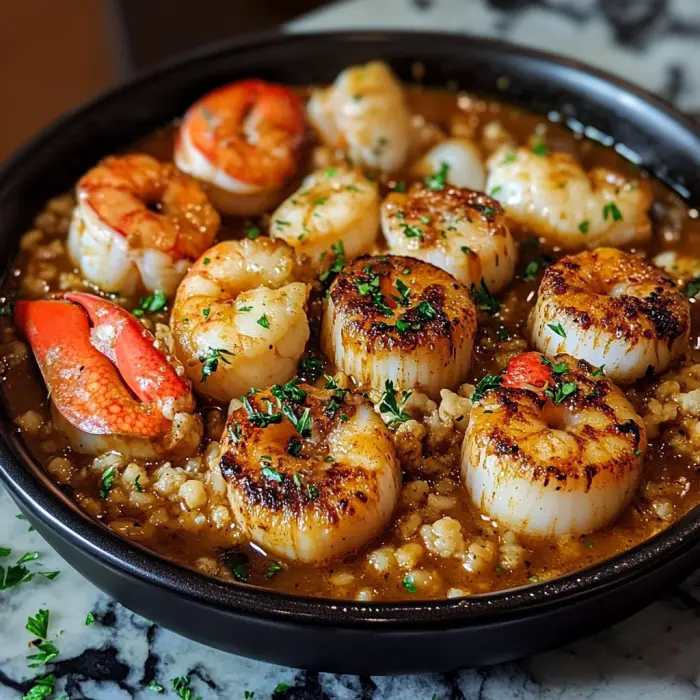
The moment has arrived! Ladle the deep, dark, and incredibly aromatic gumbo over a mound of fluffy, white rice in a large bowl. Place those beautiful seared scallops and chunks of lobster right on top. Garnish generously with sliced green onions and a sprinkle of fresh parsley.
Speaking of rice, it’s the traditional and perfect accompaniment. Its mild, soft texture is the ideal canvas for the gumbo’s complex, robust flavors, soaking up every last drop of the incredible broth.
For a drink pairing, consider a robust iced tea with a squeeze of lemon or a sparkling citrus-based punch. These beverages complement the spicy, rich nature of the dish without overpowering it. To understand how this dish fits into its cultural landscape, you can explore the rich cultural history of gumbo in Louisiana.
Storing and Reheating Your Gumbo Like a Pro
Believe it or not, gumbo often tastes even better the next day after the flavors have had more time to get to know each other. If you have leftovers, let the gumbo cool completely before transferring it to an airtight container. It will keep in the refrigerator for up to 3 days.
Reheating requires a gentle touch to protect your luxurious seafood. Pour the gumbo into a pot and reheat it slowly over low heat, stirring occasionally, until it’s just warmed through. Avoid boiling it vigorously, as this will definitely overcook the scallops and lobster. Unfortunately, the seafood doesn’t freeze well due to texture changes, but you can freeze the gumbo base (without seafood) for up to 3 months. Simply thaw and reheat, then add freshly cooked seafood.
Frequently Asked Questions: Luxe Seafood Gumbo
What is the difference between Cajun and Creole gumbo?
This is a classic debate! Generally, the distinction lies in geography and ingredients. Cajun gumbo, from rural areas, typically has a darker roux and rarely includes tomatoes. Creole gumbo, from New Orleans, often features a lighter roux and sometimes includes tomatoes. This recipe, with its deep, dark roux and no tomatoes, leans decidedly Cajun.
Can I make this gumbo ahead of time?
Absolutely, and it’s a brilliant strategy for stress-free entertaining. You can prepare the entire gumbo base—the roux, vegetables, sausage, and stock—a full day or two in advance. Simply cool it and store it in the fridge. When you’re ready to serve, reheat the base and then proceed with adding the raw seafood at the very end for perfect results.
What can I use if I can’t find filé powder?
No problem! While filé adds an authentic, earthy flavor and thickness, your gumbo will still be magnificent without it. The roux itself is the primary thickener. Okra is another traditional thickener you could use. Alternatively, you can simply enjoy the broth a little thinner. The flavor will still be outstanding.
How can I prevent my seafood from becoming rubbery?
The enemy here is overcooking. The key is to add raw seafood at the very end of the cooking process and only for the minimal amount of time needed. For lobster, that’s about 5-7 minutes of gentle poaching. For scallops, if adding raw, it’s 3-4 minutes. For best results, sear scallops separately and just place them on top to serve. For more tips, this guide on how to select and store fresh scallops is incredibly useful.
Embrace the Journey of Luxe Cajun Cooking
And there you have it! You’ve navigated the dark roux, championed the holy trinity, and expertly handled luxurious seafood. You’ve created something truly special—a pot of history, culture, and breathtaking flavor. This Luxe Cajun Seafood Gumbo with Scallops and Lobster is more than just dinner; it’s an experience, a story you made from scratch. So gather your friends and family, ladle it up, and take a bow. You’ve just mastered the art of Louisiana luxury.
Print
Luxe Cajun Seafood Gumbo with Scallops and Lobster
Description
✨ Luxe Cajun Seafood Gumbo with Scallops and Lobster
Ingredients:
For the roux:
-
½ cup vegetable oil
-
½ cup all-purpose flour
For the gumbo:
-
1 large onion, diced
-
1 green bell pepper, diced
-
2 celery ribs, diced
-
4 cloves garlic, minced
-
1 (14 oz) can diced tomatoes
-
6 cups seafood stock (or chicken stock)
-
2 bay leaves
-
1 tbsp Cajun seasoning (plus more to taste)
-
1 tsp smoked paprika
-
½ tsp cayenne pepper (optional, for heat)
-
Salt and black pepper, to taste
-
1 lb lobster tail meat, cut into chunks
-
1 lb large sea scallops
-
1 lb shrimp, peeled and deveined
-
½ lb lump crabmeat
-
½ lb andouille sausage, sliced
-
2 tbsp Worcestershire sauce
-
2 tsp hot sauce (optional)
-
½ cup fresh parsley, chopped
-
4 green onions, sliced
For serving:
-
Cooked white rice
-
Filé powder (optional, for authentic flavor)
Instructions:
-
Make the roux:
-
In a large heavy-bottomed pot or Dutch oven, heat oil over medium heat.
-
Whisk in flour and cook, stirring constantly, until the roux turns a deep chocolate brown (20–25 minutes). Be patient – this is the heart of gumbo.
-
-
Build the base:
-
Stir in onion, bell pepper, celery, and garlic. Cook until softened, about 5 minutes.
-
Add diced tomatoes and stir well.
-
-
Add stock and seasonings:
-
Gradually whisk in seafood stock until smooth.
-
Add bay leaves, Cajun seasoning, paprika, cayenne, Worcestershire sauce, and hot sauce.
-
Bring to a boil, then reduce to a gentle simmer. Cook uncovered for 30–40 minutes, stirring occasionally.
-
-
Add sausage and seafood:
-
Stir in sliced andouille sausage. Simmer 10 minutes.
-
Add lobster chunks, scallops, shrimp, and crabmeat. Cook just until seafood is opaque and tender (5–7 minutes).
-
-
Finish:
-
Stir in parsley and green onions. Adjust seasoning with salt, pepper, or extra Cajun spice.
-
Remove bay leaves.
-
-
Serve:
-
Ladle gumbo over bowls of fluffy white rice.
-
Sprinkle with filé powder if desired.
-
Serve hot with crusty bread on the side.
-