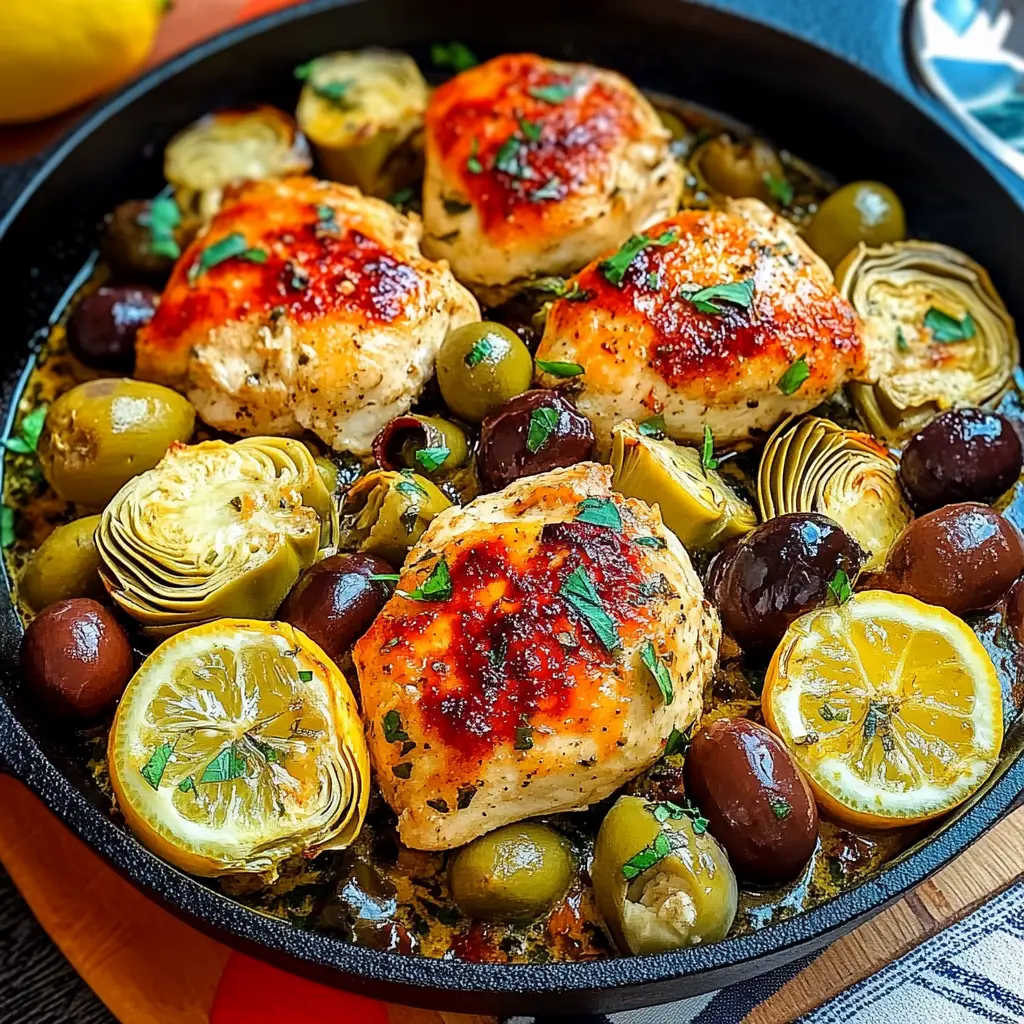
Mediterranean Lemon Chicken with Artichokes & Olives: A Bright, Flavorful Dinner Recipe
Mediterranean cuisine brings sunshine to your table with bold flavors and simple ingredients. This Mediterranean lemon chicken with artichokes and olives delivers a restaurant-quality meal in under 45 minutes. The dish combines tender chicken with tangy lemon, briny olives, and hearty artichokes for a dinner that satisfies every time.
This recipe captures the essence of coastal Mediterranean cooking without any complicated techniques. You’ll love how the bright lemon pairs with savory herbs and vegetables to create a balanced, wholesome meal your whole family will request again and again.
What Makes This Mediterranean Chicken Special
Mediterranean lemon chicken stands out from ordinary chicken dishes for several reasons. First, the combination of fresh lemon juice and zest creates layers of citrus flavor that brighten every bite. Second, the artichokes add a subtle earthiness that complements the chicken perfectly. Third, the olives provide bursts of salty richness throughout the dish.
The Mediterranean Flavor Profile
Mediterranean cooking relies on specific flavor combinations. Lemon and garlic form the foundation of countless dishes from Greece to Morocco. Oregano and thyme add herbaceous notes that transport your taste buds to sun-drenched coastlines. Olives contribute both saltiness and healthy monounsaturated fats.
When these elements come together in one pan, magic happens. The chicken absorbs all the aromatic flavors while staying moist and tender. The vegetables soak up the lemony pan juices, creating a cohesive dish where every component enhances the others.
Key Ingredients Breakdown
Understanding your ingredients helps you make smart substitutions and appreciate what each element brings to the dish. Let’s explore the stars of this Mediterranean lemon chicken recipe.
Chicken
-
Best cuts: Boneless, skinless chicken breasts or thighs work beautifully
-
Breast meat: Leaner option that cooks quickly
-
Thigh meat: More forgiving and stays juicier during cooking
-
Portion size: 6-8 ounces per serving
Chicken provides lean protein essential for muscle maintenance and overall health. According to the USDA FoodData Central, a 3-ounce serving of chicken breast contains approximately 26 grams of protein with minimal saturated fat.
Lemons
Fresh lemons are non-negotiable in this recipe. You’ll need both juice and zest for maximum flavor impact. The zest contains essential oils that deliver intense lemon aroma, while the juice provides bright acidity that tenderizes the chicken and balances rich flavors.
Choose lemons that feel heavy for their size. These contain more juice. Roll them on your counter before cutting to release more liquid. One medium lemon yields about 3 tablespoons of juice and 1 tablespoon of zest.
Artichokes
Artichoke hearts bring Mediterranean authenticity to this dish. You can use:
-
Canned artichokes: Most convenient option, already cooked
-
Jarred artichokes: Often marinated, adding extra flavor
-
Frozen artichokes: Great texture, need thawing first
-
Fresh artichokes: Most labor-intensive but rewarding
Drain and pat dry any canned or jarred artichokes before adding them to your pan. Excess liquid can make your sauce watery. The American Heart Association notes that artichokes provide dietary fiber and antioxidants that support cardiovascular health.
Olives
Kalamata olives are traditional in Greek-style preparations, but you have options:
-
Kalamata: Rich, fruity, and slightly bitter
-
Castelvetrano: Mild, buttery, and sweet
-
Green olives: Briny and firm
-
Black olives: Mild and versatile
Use pitted olives to make eating easier. If you can only find olives with pits, remove them yourself before cooking. Mix different olive varieties for complex flavor.
Herbs and Aromatics
Fresh herbs elevate this dish significantly:
-
Garlic: 4-6 cloves, minced
-
Oregano: 2 teaspoons dried or 2 tablespoons fresh
-
Thyme: 1 teaspoon dried or 1 tablespoon fresh
-
Parsley: For garnish and freshness
Dried herbs work perfectly in this recipe since they’ll cook with the chicken. Add fresh herbs at the end for brightness. Check out our guide on [insert link] for more information about using Mediterranean herbs effectively.
Additional Ingredients
-
Olive oil: Extra virgin for best flavor
-
Chicken broth: Low-sodium preferred
-
Cherry tomatoes: Optional but recommended
-
Capers: Small tangy bursts of flavor
-
Salt and pepper: Season to taste
Step-by-Step Cooking Instructions
This Mediterranean lemon chicken comes together in one pan, making cleanup easy. Follow these steps for guaranteed success.
Preparation (10 minutes)
-
Pat chicken dry with paper towels
-
Season generously with salt, pepper, and dried oregano
-
Zest lemons before juicing them
-
Mince garlic finely
-
Drain artichokes and pat dry
-
Pit olives if necessary
-
Measure all ingredients and have them ready
Cooking Process (30-35 minutes)
Sear the Chicken
Heat 2 tablespoons olive oil in a large skillet over medium-high heat. Once the oil shimmers, add seasoned chicken pieces. Let them cook undisturbed for 5-6 minutes until golden brown. Flip and cook another 5-6 minutes.
The goal is developing a flavorful crust while cooking the chicken about 75% through. Don’t worry if the center isn’t fully cooked yet. It will finish in the sauce.
Remove chicken to a plate and tent with foil. This resting period lets juices redistribute throughout the meat.
Build the Sauce
Reduce heat to medium. Add another tablespoon of olive oil if the pan looks dry. Add minced garlic and sauté for 30-45 seconds until fragrant. Don’t let it brown or it becomes bitter.
Pour in 1 cup of chicken broth. Use a wooden spoon to scrape up the browned bits stuck to the pan bottom. These flavorful bits, called fond, enrich your sauce significantly.
Add lemon juice, lemon zest, dried thyme, and a pinch of red pepper flakes if you like heat. Stir everything together and let it simmer for 2-3 minutes.
Combine Everything
Return chicken to the pan. Nestle the pieces into the sauce. Add artichoke hearts, olives, and halved cherry tomatoes around the chicken. If using capers, add them now.
Reduce heat to medium-low. Cover the pan and simmer for 10-12 minutes until chicken reaches an internal temperature of 165°F. The vegetables will soften and absorb the lemony sauce.
Final Touches
Taste the sauce and adjust seasoning. You might need more salt, pepper, or lemon juice depending on your preferences. Remember that olives and capers add saltiness, so taste before adding extra salt.
Garnish with fresh chopped parsley and additional lemon zest. Serve immediately while hot.
Pro Tips for Perfect Results
These expert tips ensure your Mediterranean lemon chicken turns out perfect every time.
Temperature Control
Don’t overcook the chicken. Use an instant-read thermometer to check doneness. Chicken is safe at 165°F internal temperature. Overcooking makes it dry and tough.
Let chicken rest before slicing. This allows juices to redistribute, keeping the meat moist.
Flavor Enhancement
Toast your dried herbs in the pan for 30 seconds before adding liquid. This releases essential oils and intensifies flavor.
Reserve some lemon zest for garnishing at the end. Fresh zest right before serving provides an aromatic pop.
Add a splash of lemon juice at the very end if the sauce needs brightening.
Texture Improvements
Don’t crowd the pan when searing chicken. Work in batches if necessary. Crowding creates steam instead of a proper sear.
Cut artichokes and olives into similar-sized pieces for even distribution and consistent bites.
Use bone-in chicken for even more flavor, though cooking time increases by 10-15 minutes.
Time-Saving Strategies
Pound chicken breasts to even thickness. This ensures uniform cooking and reduces total cooking time.
Prep ingredients the night before. Store minced garlic, zested lemons, and measured herbs in the refrigerator.
Use kitchen shears to quickly chop herbs right into the pan.
Nutritional Benefits
Mediterranean lemon chicken with artichokes and olives delivers impressive nutritional value alongside great taste.
Protein Power
Each serving provides approximately 35-40 grams of high-quality protein. Protein supports muscle growth, tissue repair, and immune function. It also promotes satiety, helping you feel full longer.
Healthy Fats
Olive oil and olives contribute monounsaturated fats that support heart health. According to research published by the Harvard T.H. Chan School of Public Health, the Mediterranean diet rich in olive oil correlates with reduced cardiovascular disease risk.
Vitamins and Minerals
This dish packs numerous micronutrients:
-
Vitamin C from lemons supports immune function
-
Vitamin K from herbs aids blood clotting
-
Potassium from chicken and artichokes regulates blood pressure
-
Iron from chicken supports oxygen transport
-
Folate from artichokes aids cell division
Fiber Content
Artichokes are fiber superstars. One medium artichoke heart contains about 7 grams of dietary fiber. Fiber promotes digestive health, stabilizes blood sugar, and supports healthy cholesterol levels.
Calorie Breakdown
A typical serving of this Mediterranean lemon chicken contains:
-
Calories: 350-400
-
Carbohydrates: 12-15g
-
Protein: 35-40g
-
Fat: 18-22g
-
Fiber: 4-6g
These numbers vary based on portion sizes and specific ingredients used.
Serving Suggestions
Mediterranean lemon chicken pairs beautifully with many side dishes. Consider these options for a complete meal.
Grain-Based Sides
Couscous soaks up the lemony sauce perfectly. Israeli couscous adds pleasant chewiness.
Rice pilaf provides a neutral base that lets the chicken shine. Try adding herbs to your rice for extra flavor.
Quinoa adds protein and creates a complete meal. Its nutty flavor complements Mediterranean spices.
Orzo pasta mimics rice but has a satisfying texture. Toss it with olive oil and herbs.
Vegetable Accompaniments
Roasted vegetables like zucchini, bell peppers, and eggplant echo Mediterranean flavors.
Greek salad brings freshness with cucumbers, tomatoes, and feta cheese.
Steamed green beans dressed with lemon juice and olive oil keep things light.
Sautéed spinach with garlic adds iron and vitamins without overwhelming the plate.
Bread Options
Crusty bread is perfect for soaking up extra sauce. Warm it before serving.
Pita bread offers a traditional Mediterranean touch. Toast it lightly for better texture.
Focaccia brings Italian flair with its herb-studded surface.
Complete Meal Ideas
Mediterranean feast: Serve with hummus, tabbouleh, and warm pita
Italian-inspired: Pair with polenta, roasted peppers, and arugula salad
Greek-style dinner: Accompany with lemon potatoes, tzatziki, and cucumber salad
Light lunch: Serve over mixed greens for a protein-packed salad
Storage and Meal Prep
This Mediterranean lemon chicken recipe works wonderfully for meal prep and makes delicious leftovers.
Refrigerator Storage
Cool completely before storing. Hot food raises refrigerator temperature, potentially affecting other foods.
Use airtight containers to prevent odor transfer and maintain moisture.
Store for 3-4 days maximum in the refrigerator at 40°F or below.
Keep sauce with chicken to prevent the meat from drying out.
Freezer Storage
Freeze for up to 3 months in freezer-safe containers or heavy-duty freezer bags.
Portion before freezing for easier thawing and reheating.
Label with date so you know when to use it by.
Note: Texture of artichokes and olives may change slightly after freezing but flavor remains excellent.
Reheating Methods
Stovetop method (best for preserving texture):
-
Place chicken and sauce in a skillet
-
Add 2-3 tablespoons water or broth
-
Cover and heat over medium-low until warmed through
Microwave method (quickest):
-
Place in microwave-safe dish
-
Cover with damp paper towel
-
Heat at 70% power in 1-minute intervals
-
Stir between intervals
Oven method (for multiple servings):
-
Preheat oven to 350°F
-
Place in oven-safe dish and cover with foil
-
Heat for 20-25 minutes until hot
Meal Prep Tips
Cook chicken and sauce separately from grains for maximum flexibility.
Prep vegetables ahead by washing, chopping, and storing them properly.
Make double batches since this recipe freezes well.
Portion immediately after cooking to streamline your meal prep process.
Recipe Variations
Customize this Mediterranean lemon chicken to suit your preferences and available ingredients.
Protein Swaps
Turkey cutlets work identically to chicken breasts. They cook quickly and absorb flavors well.
Pork medallions add richness while maintaining the Mediterranean profile.
White fish like cod or halibut creates a lighter version. Reduce cooking time significantly.
Chickpeas make it vegetarian. Add them with artichokes for a plant-based protein option.
Vegetable Additions
Roasted red peppers contribute sweetness and vibrant color.
Sun-dried tomatoes intensify the tomato flavor and add chewy texture.
Spinach wilts into the sauce during the last few minutes of cooking.
Zucchini cut into half-moons cooks quickly and soaks up sauce.
Fennel brings subtle anise flavor that’s quintessentially Mediterranean.
Spice Variations
Add harissa for North African heat and complexity.
Include sumac for tangy, lemony notes without extra liquid.
Try za’atar for Middle Eastern flair with its blend of herbs and sesame.
Mix in paprika for subtle smokiness and beautiful color.
Cooking Method Alternatives
Slow cooker version:
-
Sear chicken first for best flavor
-
Add all ingredients to slow cooker
-
Cook on low for 4-5 hours or high for 2-3 hours
Instant Pot adaptation:
-
Use sauté function to brown chicken
-
Add remaining ingredients
-
Pressure cook for 8 minutes with quick release
Sheet pan option:
-
Arrange chicken and vegetables on sheet pan
-
Drizzle with oil and lemon mixture
-
Roast at 425°F for 25-30 minutes
Grill method:
-
Marinate chicken in lemon and herbs
-
Grill over medium-high heat
-
Warm artichokes and olives in foil packet on grill
Common Mistakes to Avoid
Learning from common pitfalls helps you achieve perfect results every time.
Overcrowding the Pan
When too many chicken pieces crowd the pan, they steam instead of sear. This prevents browning and flavor development. Work in batches if necessary or use a larger pan.
Skipping the Sear
Browning chicken creates hundreds of new flavor compounds through the Maillard reaction. Don’t skip this step even though it’s tempting to throw everything in at once.
Using Only Lemon Juice
Lemon zest contains essential oils that juice lacks. Using both creates depth and complexity. Zest before juicing for easier handling.
Adding Garlic Too Early
Garlic burns quickly and develops bitter flavors when overcooked. Add it after removing chicken and watch it carefully during sautéing.
Not Tasting as You Go
Olives and capers vary in saltiness. Artichokes differ in acidity. Taste your sauce before final seasoning to avoid oversalting or under-seasoning.
Overcooking the Chicken
Dry, tough chicken ruins an otherwise perfect dish. Use a thermometer and remove chicken at 165°F. Carryover cooking will bring it to final temperature during resting.
Using Poor Quality Olive Oil
Since olive oil is central to Mediterranean cooking, quality matters. Extra virgin olive oil provides better flavor than refined versions. Store it properly to prevent rancidity.
Ignoring Ingredient Temperature
Cold chicken from the refrigerator cooks unevenly. Let it sit at room temperature for 15-20 minutes before cooking for better results.
Forgetting to Scrape the Fond
Those browned bits on the pan bottom contain concentrated flavor. Scraping them up with broth creates a richer, more complex sauce.
Not Adjusting for Pan Size
Recipe timing assumes a standard 12-inch skillet. Smaller pans require longer cooking times. Larger pans might need more liquid to prevent burning.
Frequently Asked Questions
Can I make Mediterranean lemon chicken ahead of time?
Yes, this dish actually improves when made ahead. The flavors meld and deepen as they sit. Prepare the complete dish up to 2 days in advance. Store it covered in the refrigerator. Reheat gently on the stovetop, adding a splash of broth if needed to loosen the sauce.
What if I don’t like olives?
Olives add signature Mediterranean flavor, but you can omit them. Increase the artichokes and add capers for briny complexity. Sun-dried tomatoes also provide concentrated flavor without the olive taste.
Can I use chicken thighs instead of breasts?
Absolutely. Chicken thighs stay juicier and more forgiving during cooking. They contain more fat, which translates to richer flavor. Increase cooking time by 5-7 minutes and ensure internal temperature reaches 165°F.
How do I prevent the lemon from making the sauce bitter?
Bitterness comes from overcooking lemon zest or including too much pith. Use a microplane for zesting, taking only the colored outer layer. Add fresh lemon juice at the end rather than cooking it extensively.
Is this recipe suitable for meal prep?
Yes, Mediterranean lemon chicken is excellent for meal prep. It reheats well and maintains flavor for several days. Store components separately if possible. Keep sauce with chicken but store grains separately to prevent mushiness.
Can I use dried herbs instead of fresh?
Dried herbs work perfectly in this recipe since they cook with the dish. Use one-third the amount of dried herbs compared to fresh. Add dried herbs early in cooking. Reserve fresh herbs for garnishing right before serving.
What’s the best way to get crispy chicken skin?
For crispy skin, use bone-in, skin-on chicken pieces. Pat the skin very dry before cooking. Start cooking skin-side down in a cold pan, then increase heat to medium-high. Press down gently with a spatula for even contact.
How can I make this dish spicier?
Add red pepper flakes when building the sauce. Harissa paste provides North African heat. Fresh jalapeños or Calabrian chili peppers introduce different types of heat. Start with small amounts and adjust to taste.
Can I substitute another citrus for lemon?
While lemon is traditional, you can experiment. Meyer lemons offer sweeter, less acidic flavor. Lime creates a different but delicious profile. Orange adds sweetness but reduces tanginess significantly.
What if my sauce is too thin?
Reduce the sauce by simmering uncovered for a few extra minutes. Alternatively, remove chicken and vegetables, then boil the sauce until it thickens. You can also create a slurry with 1 teaspoon cornstarch and 2 tablespoons water, then stir it into the simmering sauce.
Conclusion
Mediterranean lemon chicken with artichokes and olives brings restaurant-quality flavor to your home kitchen with minimal effort. The combination of tangy lemon, briny olives, and tender artichokes creates a balanced dish that satisfies without feeling heavy.
The beauty of this dish lies in its versatility. Serve it for weeknight dinners, special occasions, or meal prep throughout the week. The one-pan preparation means less cleanup while delivering maximum flavor. Whether you follow the recipe exactly or customize it with your favorite vegetables and proteins, you’ll create a memorable meal every time.
Print