Introduction & The Core Components
The Ultimate Guide to New York Strip and Loaded Shrimp Baked Potato
Ah, the perfect dinner. It’s not just about quenching hunger; it’s an event, a symphony of flavors that turns an ordinary evening into something memorable. Furthermore, it’s about that magical combination that has thrilled food lovers for generations: surf and turf. Consequently, this article is your ultimate guide to mastering one of its most glorious expressions right in your own kitchen: the impeccable New York Strip steak paired with a decadent loaded shrimp baked potato.
Prepare to embark on a culinary journey. We’ll delve into the art of selecting premium ingredients, unlock professional cooking techniques for that restaurant-quality sear, and build a loaded potato that’s a meal in itself. Ultimately, by the end of this guide, you’ll be armed with the knowledge and confidence to create a show-stopping meal that’s sure to impress.
An Introduction to a Classic Surf and Turf Experience
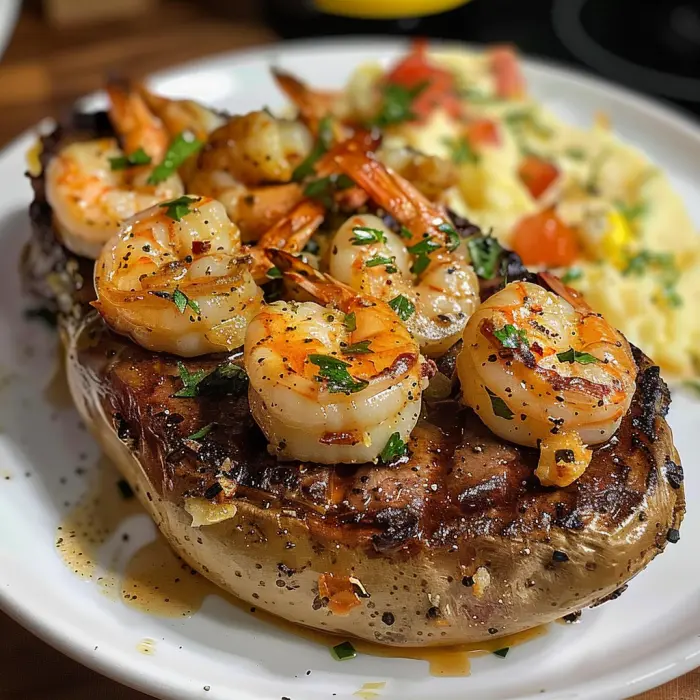
So, what makes this particular duo so special? Well, it’s a masterpiece of contrast and harmony. Imagine this: a perfectly cooked New York Strip, boasting a rugged, crispy, salt-kissed crust that gives way to a juicy, tender, and profoundly beefy interior. Sitting right beside it, a loaded baked potato emerges from the oven, its skin crackling with promise. But this is no ordinary side dish. Fork-split and steaming, its fluffy white interior becomes the foundation for a lavish topping of plump, garlicky sautéed shrimp, crisp bacon, melted cheese, and a cool dollop of sour cream.
Each element plays a crucial role. The steak is the undisputed star, the hearty “turf” anchor of the plate. Meanwhile, the potato transforms from a simple side into the “surf” component’s luxurious vessel, offering creamy, crunchy, and briny notes in every single bite. Together, they create a dining experience that is far greater than the sum of its parts—a true celebration of indulgence.
Deconstructing the Dish: Why This Combo Works
The New York Strip: A Cut Above
Let’s talk about the star of the show: the New York Strip steak. Originating from the short loin of the beast, this cut is renowned for its bold flavor and satisfying texture. Unlike its more delicate cousin, the filet mignon, the strip steak comes with a beautiful cap of fat along one side and robust intramuscular marbling. This fat is the key to its magic; as it renders during cooking, it bastes the steak from within, resulting in an incredibly juicy and flavorful piece of meat.
Why does it work so well here? Essentially, its firm texture and assertive, beefy flavor profile allow it to stand up to—and even complement—the rich and complex toppings of the loaded potato. It’s a hearty cut that feels substantial and rewarding, making it the perfect centerpiece for this gourmet surf and turf dinner.
The Loaded Shrimp Baked Potato: From Side to Star
On the other side of the plate, we have a humble ingredient elevated to sheer brilliance. The classic baked potato has undergone a glorious evolution. No longer just a simple vehicle for butter and chives, it has been reimagined as a loaded masterpiece, a canvas for culinary creativity.
Adding succulent shrimp to the equation is a game-changer. This move catapults the side dish into a luxurious territory, officially claiming the “surf” in our surf and turf. The contrasts are what make it unforgettable: the hot, fluffy potato against the cool, tangy sour cream; the crisp, salty bacon against the tender, delicate shrimp; and the sharp, melted cheddar cheese against the gentle sweetness of the seafood. Every single element is designed to create a symphony of textures and flavors that perfectly complements the simplicity of a perfectly cooked steak.
Selecting Your Ingredients for Success
Sourcing Perfection: A Guide to Premium Ingredients
Alright, let’s get down to business! You simply cannot build a magnificent dish without a rock-solid foundation. In other words, the quality of your final meal is directly tied to the quality of the ingredients you start with. Skimp here, and you’ll be fighting an uphill battle. Conversely, choose wisely, and you’re already halfway to a phenomenal dinner.
Choosing the Right New York Strip Steak
Walking up to the meat counter can feel a bit intimidating, but fear not! Understanding a few key terms will turn you into a confident shopper.
First up: grading. The USDA beef grading standards (Prime, Choice, Select) are your best friend. Primeis the top tier, boasting the most marbling—those little white flecks of fat that melt into sublime juiciness. It’s often found in high-end steakhouses. Choice is the sweet spot for most home cooks; it offers excellent marbling and flavor without the prime price tag. Select is leaner and can be less tender, so it’s best for marinating.
Next, consider thickness. For a proper sear and a juicy steak, please, I beg you, choose a steak that’s at least 1 to 1.5 inches thick. Thin steaks cook too quickly, often leading to a well-done interior before the outside has a chance to develop a proper crust. Thickness is your best insurance against overcooking.
Picking Potatoes and Seafood for Your Loaded Masterpiece
The Perfect Potato: Russet is King
Not all spuds are created equal! For the ultimate loaded baked potato, you want a classic Russet. Their high starch content and low moisture yield that desired light, fluffy interior that soaks up toppings like a dream. Meanwhile, their thick, sturdy skin transforms into a wonderfully crispy, edible shell when baked properly. Look for potatoes that are firm, oval-shaped, and free of any major blemishes or green spots.
Selecting Shrimp: Size, Type, and Freshness
Ah, the shrimp! This is where your potato gets its luxury upgrade. When shopping, you’ll see numbers like 16/20 or 21/25. This indicates how many shrimp make up a pound—so a lower number means bigger shrimp. For this dish, larger shrimp (around 16/20 or 21/25 count) make a more substantial and impressive topping.
Now, about freshness. Unless you live on the coast, high-quality frozen shrimp is often a better and more sustainable option than “fresh” shrimp, which may have been previously frozen and thawed at the store. Look for labels that specify wild-caught, and for guidance on the most sustainable choices, you can consult the Monterey Bay Aquarium Seafood Watch recommendations for shrimp. Finally, I highly recommend buying peeled and deveined shrimp to save yourself a significant amount of prep time.
Cooking the Perfect New York Strip Steak
Mastering the Main Event: Cooking the Perfect New York Strip
This is it—the moment of truth! Cooking a magnificent steak isn’t about secret tricks; it’s about nailing the fundamentals. Patience and a good thermometer are your greatest allies here. Let’s break down the process into foolproof steps.
The Crucial First Step: Bringing Your Steak to Temperature
Here’s a common mistake that leads to uneven cooking: throwing a cold steak into a hot pan. Just don’t do it! Instead, about 30 to 45 minutes before you plan to cook, take your steak out of the refrigerator. Let it sit on the counter, uncovered. This allows the meat to come to room temperature, which promotes perfectly even cooking from edge to center. A cold steak will have a overcooked outer ring before the center even gets warm.
Seasoning Philosophy: Salt, Pepper, and Beyond
Seasoning is where personality shines through. The classic, and always winning, combination is generously coating all sides with coarse kosher salt and freshly cracked black pepper. The salt doesn’t just add flavor; it also helps pull moisture to the surface for a better sear.
Feeling adventurous? Furthermore, you can add a dash of garlic powder or onion powder to the mix—these won’t burn as easily as fresh garlic. For a smoky hint, a little paprika works wonders. Ultimately, the goal is to enhance the natural beefy flavor profile, not mask it.
Expert Cooking Methods
The Cast Iron Sear and Baste (Highly Recommended)
This method is a favorite for a reason: it delivers a phenomenal crust and incredible flavor.
-
Heat the pan: Place your cast iron skillet over medium-high heat until it’s screaming hot. A drop of water should skitter across the surface.
-
Sear the steak: Add a high-smoke-point oil (like avocado or grapeseed). Carefully place your seasoned steak in the pan. It should sizzle aggressively. Sear undisturbed for 2-3 minutes per side for that beautiful brown crust.
-
Add butter and baste: In the last minute, add a few tablespoons of butter, along with a couple of garlic cloves and fresh herbs like rosemary or thyme. Tilt the pan and, using a spoon, continuously pour the bubbling butter over the steak. This bastes it, infusing it with incredible flavor.
The Reverse Sear Method for Ultimate Precision
For those who love gadget-level precision, the reverse sear method is a game-changer. This technique is fantastic for thicker cuts.
-
Low and slow: First, preheat your oven to a low temperature, around 275°F (135°C). Place the steak on a wire rack set over a baking sheet. Cook until the internal temperature is about 10-15°F below your desired final temperature (e.g., 115°F for medium-rare). This slow cook ensures the entire steak is evenly warmed.
-
Sear to finish: Then, heat your cast iron skillet until it’s blisteringly hot. Finally, sear the steak for just 60-90 seconds per side to develop that gorgeous crust. The result is edge-to-edge perfection.
The Art of the Rest
You’ve cooked it perfectly! Now, for the love of all that is juicy, you must let it rest. Immediately after cooking, transfer your New York Strip steak to a cutting board or a warm plate. Tent it loosely with foil and walk away for at least 5-10 minutes.
Why is this so important? Well, during cooking, the muscle fibers tighten and push the juices toward the center. Resting allows those fibers to relax and reabsorb all those delicious juices throughout the entire steak. If you cut into it right away, those precious juices will just end up on your plate, leaving you with a drier piece of meat. Trust me, it’s worth the wait.
Crafting the Loaded Shrimp Baked Potato
Building the Perfect Loaded Shrimp Baked Potato
While your steak is resting (see, it’s multitasking!), it’s time to construct the other headliner on the plate. This isn’t a mere side dish; it’s a project of love and layers. The goal? A crispy-skinned vessel overflowing with fluffy potato and decadent toppings.
The Foundation: Baking the Potato to Perfection
A great loaded potato starts long before the toppings ever come into play. It begins with a perfectly baked spud.
The Classic Oven-Baked Method
This is the traditional path to potato glory. First, preheat your oven to 400°F (200°C). Meanwhile, scrub those Russet potatoes clean under running water—you’re going to eat the skin, after all! Then, dry them thoroughly. Next, poke each potato 4-5 times with a fork; this allows steam to escape and prevents a messy explosion in your oven.
Now, for the crispiness secret: rub each potato all over with a little neutral oil (vegetable or avocado oil works well) and then sprinkle generously with coarse salt. This combination draws out moisture and results in that wonderfully crispy potato skin everyone fights over. Finally, do not wrap them in foil! Instead, place them directly on the oven rack with a baking sheet on the lower rack to catch any drips. This promotes hot air circulation. Bake for 45 to 60 minutes.
The Faster Air Fryer Method
Short on time? The air fryer baked potato is your new best friend. Follow the same prep steps: scrub, dry, poke, oil, and salt. Then, place the potatoes in the air fryer basket. Cook at 400°F (200°C) for 35-40 minutes, flipping them halfway through. You’ll get an incredibly crispy skin in almost half the time!
How to Tell It’s Done
You can’t just guess! The best way to check is to give it a gentle squeeze (use an oven mitt!). It should yield easily to pressure. For absolute certainty, pierce it with a paring knife or a thermometer—it should slide in with no resistance, and the internal temperature should be around 205-210°F (96-99°C).
Preparing the Gourmet Toppings
While the potatoes bake, get your toppings ready. This is your mise en place moment.
-
The Shrimp: Pat your shrimp dry. Season them simply with salt, pepper, and perhaps a pinch of paprika or a dash of Old Bay seasoning. Heat a tablespoon of butter or oil in a skillet over medium-high heat. Sauté the shrimp for just 1-2 minutes per side until they turn pink and opaque. Be careful not to overcook them! They’ll cook faster than you think.
-
The Bacon: While you can use pre-made bits, cooking your own bacon strips until super crispy and then crumbling them is a flavor upgrade that’s 100% worth it.
-
The Extras: Grate your cheddar cheese (it melts better than pre-shredded, which has anti-caking agents), chop your chives, and get your sour cream ready.
The Assembly: Layering Flavors and Textures
The potato is baked, the shrimp is cooked, and the steak is resting. It’s showtime!
-
Split: Using a sharp knife, slice a lengthwise slit down the top of the potato. Then, using a fork, gently fluff the beautiful, steaming white interior from within.
-
Base Layer: First, add a pat of butter and a big spoonful of sour cream right into the center. Let it melt into the fluffy potato.
-
Cheese Please: Next, sprinkle a generous handful of the grated cheese so the residual heat from the potato melts it into gooey perfection.
-
The Main Attraction: Now, pile on those gorgeous, garlicky sautéed shrimp and the crispy bacon bits.
-
The Finish: Finally, garnish with a fresh sprinkle of chives. The result? A loaded shrimp baked potatothat is a masterpiece of contrasting temperatures, textures, and flavors.
Bringing It All Together & Enhancement
Plating, Presentation, and Pairing
You’ve executed the components flawlessly. Now, let’s bring them together on the plate with the flair of a professional. After all, we eat with our eyes first! A little attention to presentation makes the entire meal feel even more special and restaurant-worthy.
Plating for Impact
You have two fantastic options for your New York Strip. You can present it whole, leaning majestically against the loaded potato—a true testament to its size and beauty. Alternatively, for easier eating, slice it against the grain into half-inch strips. Fan those beautiful, pink-centered slices out next to the potato. This not only looks elegant but also shows off your perfect cook on the inside.
Place the loaded shrimp baked potato either alongside or slightly overlapping the steak. Let it stand tall and proud, with its toppings visible and inviting. Wipe any splatters off the rim of the plate for a clean finish. A simple sprig of fresh rosemary or thyme adds a touch of color and sophistication.
Sauce and Finishing Touches
While this dish is incredible on its own, a simple sauce can be the proverbial cherry on top. A classic steakhouse peppercorn sauce or a simple drizzle of melted garlic herb butter over the steak takes it to another level. For the potato, an extra dollop of sour cream or a sprinkle of smoked paprika adds a final pop of color and flavor.
Just before serving, you can add one more tiny pinch of flaky sea salt (like Maldon) over the steak. This gives little bursts of salty crunch that are absolutely divine.
Perfect Pairings: What to Serve Alongside
This is a rich, indulgent meal. Therefore, your side dishes should provide a refreshing contrast to cut through that richness.
-
The Salad: A simple, acidic salad is the perfect counterpart. Think a handful of arugula or mixed greens with a very light vinaigrette made from lemon juice, olive oil, and a touch of Dijon mustard. The bitterness and acidity will cleanse the palate between bites of steak and potato.
-
The Vegetables: If you want another cooked vegetable, something green and simple is best. Sautéed asparagus with a squeeze of lemon, garlicky green beans, or simply roasted broccoli florets are all excellent choices. They add color and a healthy element without competing for attention.
-
The Drinks: For a non-alcoholic pairing, consider sparkling water with a twist of lime to cleanse the palate. Iced tea, especially a slightly bitter black tea or a refreshing herbal mint tea, also stands up well to the robust flavors. A rich and creamy tomato juice cocktail can also be a surprisingly good match.
FAQs and Conclusion
Frequently Asked Questions (FAQs)
What is the best doneness for a New York Strip?
The widely agreed-upon perfect doneness for a New York Strip is medium-rare (an internal temperature of 130-135°F). At this temperature, the fat has had time to render, making the steak exceptionally juicy and tender, while the flavor is at its most robust. However, personal preference is always the most important rule!
Can I prepare the loaded baked potato components ahead of time?
Absolutely! You can be a meal-prep hero here. The potatoes can be baked ahead of time and reheated in the oven or air fryer to crisp up the skin again. Similarly, you can cook the bacon and store it crumbled. You can even season the shrimp and keep them chilled. Then, when you’re ready to eat, it’s just a matter of quickly reheating the potato, sautéing the shrimp (which takes minutes), and assembling everything fresh.
What’s a good substitute for shrimp on the baked potato?
Lobster meat is the most luxurious and direct substitute for a different surf and turf twist. For a “turf and turf” option, pulled barbecue brisket or even some thinly sliced tri-tip would be fantastic. For a simpler approach, a classic loaded baked potato with just bacon, cheese, and chives is always a winner.
How do I get my baked potato skin really crispy?
The secrets are in the prep! Scrub and dry the skin thoroughly, rub it all over with oil (which helps conduct heat and promote browning), and coat it generously with coarse salt. Most importantly, bake it directly on the oven rack without foil. Foil steams the potato, resulting in a soft skin. The hot air circulating all around the potato is what makes it crispy and delicious.
Conclusion: Your Gourmet Meal Awaits
And there you have it! You’ve journeyed from selecting the finest ingredients to mastering the sear and constructing the ultimate loaded potato. This isn’t just a recipe; it’s a skillset. You’ve learned that the best meals are built on patience, quality, and a passion for creating something extraordinary.
So, preheat that oven, heat that cast iron skillet, and get ready. A restaurant-quality New York Strip and loaded shrimp baked potato dinner is no longer a fantasy—it’s what’s for dinner tonight. You’ve got this
Print
New York strip and loaded shrimp baked potato
Description
🥩 New York Strip Steak
Ingredients:
-
2 New York strip steaks (about 1–1½ inches thick)
-
2 tbsp olive oil (or melted butter)
-
3 cloves garlic, smashed
-
2 sprigs fresh rosemary or thyme
-
1 tsp kosher salt
-
1 tsp black pepper
Instructions:
-
Pat steaks dry and season generously with salt and pepper.
-
Heat a cast-iron skillet over high heat until smoking hot. Add olive oil.
-
Place steaks in skillet and sear 3–4 minutes per side (for medium-rare).
-
Add garlic and herbs, then spoon the hot oil/butter over the steaks for extra flavor.
-
Remove and let rest 5 minutes before slicing.
🥔 Loaded Shrimp Baked Potato
Ingredients:
-
2 large russet potatoes
-
1 tbsp olive oil
-
½ tsp salt
-
½ cup sour cream
-
½ cup shredded cheddar cheese
-
2 tbsp butter
-
2 green onions, sliced
-
6–8 large shrimp, peeled & deveined
-
1 tbsp garlic butter (or 1 tbsp butter + 1 minced garlic clove)
-
1 tbsp Cajun seasoning (or Old Bay)
Instructions:
-
Bake Potatoes: Preheat oven to 400°F (200°C). Rub potatoes with olive oil and salt. Pierce with a fork and bake 45–60 minutes until soft.
-
Cook Shrimp: Heat a skillet with garlic butter. Toss shrimp with Cajun seasoning and cook until pink (2–3 minutes per side).
-
Load Potatoes: Slice potatoes open, fluff insides with a fork, and add butter, sour cream, and cheese. Top with shrimp and sprinkle with green onions.