
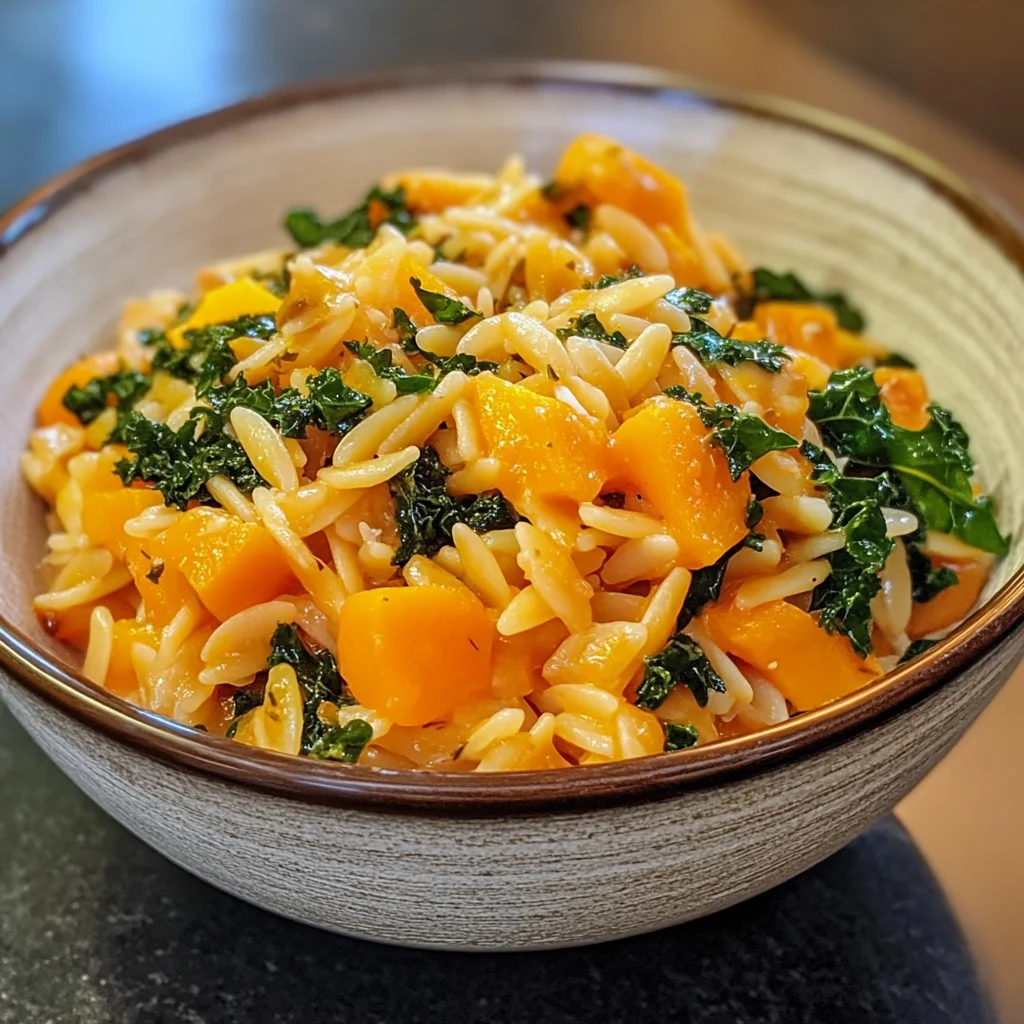
One-Pot Creamy Butternut Squash Orzo with Kale
One-pot creamy butternut squash orzo with kale delivers restaurant-quality flavor with minimal cleanup. This wholesome dish combines tender orzo pasta with sweet butternut squash and nutrient-rich kale in a luscious, creamy sauce. Perfect for busy weeknights, this recipe requires just one pot and about 40 minutes from start to finish.
Why You’ll Love This One-Pot Creamy Butternut Squash Orzo
This recipe transforms simple ingredients into an impressive main course that satisfies both vegetarians and meat-eaters alike. The one-pot cooking method infuses every grain of orzo with rich, savory flavors while creating a naturally creamy texture without excessive cream or butter.
The combination of butternut squash and kale creates a visually stunning dish with vibrant orange and green colors. Sweet, earthy squash pairs beautifully with the slightly bitter, hearty kale. Each bite offers a perfect balance of textures from tender pasta, soft squash cubes, and wilted greens.
Minimal cleanup makes this dish ideal for weeknight cooking. Everything cooks together in one pot, eliminating multiple pans and reducing dishwashing time. The hands-off cooking technique allows you to prepare other meal components or simply relax while dinner simmers.
Health Benefits of Butternut Squash and Kale
Nutritional Powerhouse Combination
Butternut squash stands out as an exceptional source of vitamin A, primarily delivered through beta-carotene that your body converts into this essential vitamin. A single cup serving provides substantial amounts of vitamin A, supporting eye health and helping prevent night blindness. This versatile vegetable also strengthens immune function by maintaining healthy skin and mucous membranes, your body’s first defense against infections.
Beyond vitamin A, butternut squash delivers vitamin C, magnesium, potassium, calcium, iron, phosphorus, and copper. These minerals work together to support bone health, regulate blood pressure, and facilitate proper cellular function. The naturally sweet flavor comes from complex carbohydrates that provide sustained energy without blood sugar spikes.
Kale’s Impressive Nutrient Profile
Kale ranks among the most nutrient-dense leafy greens available. An 80-gram serving contains approximately 104 milligrams of calcium, supporting bone health and dental strength. This same portion provides 1.36 milligrams of iron, contributing significantly toward the recommended daily intake of 8 milligrams for men and 18 milligrams for women.
The leafy green also delivers 88 milligrams of vitamin C, 96 micrograms of folate, and 360 milligrams of potassium in each serving. Vitamin C enhances iron absorption from plant-based sources, making kale even more beneficial when consumed in dishes like this orzo recipe. The folate supports cell growth and DNA synthesis, particularly important for pregnant women.
Combined Nutritional Benefits
When butternut squash and kale come together in this one-pot dish, they create a nutritionally complete meal. The recipe typically provides around 435-498 calories per serving, with approximately 67-69 grams of carbohydrates, 11-19 grams of protein, and 13-18 grams of fat. Fiber content reaches 6-7 grams per serving, promoting digestive health and satiety.
Essential Ingredients
Main Components
The foundation of one-pot creamy butternut squash orzo requires orzo pasta, a rice-shaped pasta that creates a risotto-like texture when cooked properly. Choose dried orzo rather than fresh for this recipe, as it absorbs liquids beautifully while maintaining structure. You’ll need approximately 1.5 to 2 cups of dried orzo depending on serving size.
Butternut squash should be peeled, seeded, and cut into small half-inch cubes. Smaller pieces cook faster and distribute more evenly throughout the dish. Plan for about 3-4 cups of diced squash, which equals roughly one medium butternut squash. Pre-cut butternut squash from grocery stores saves preparation time without sacrificing quality.
Fresh kale works best in this recipe, with stems removed and leaves roughly chopped. One bunch of kale yields approximately 3-4 cups of chopped leaves. Both curly kale and lacinato kale work well, though lacinato offers a slightly more tender texture.
Flavor Builders
Aromatics form the flavor foundation of this dish. One medium onion, finely chopped, provides sweetness and depth. Two to three garlic cloves, minced or chopped, add aromatic complexity that complements both the squash and kale.
Vegetable stock serves as the cooking liquid, infusing the orzo with savory flavor as it absorbs. Plan for approximately 2.5 to 3 cups of stock. Low-sodium varieties allow better control over final seasoning levels.
Creamy Elements and Seasonings
Creating creaminess requires a combination of techniques and ingredients. Butter adds richness and helps create a silky sauce. Olive oil works for sautéing vegetables and adds heart-healthy fats. Some variations include cream, milk, or nutritional yeast for additional creaminess.
Essential seasonings include kosher salt, black pepper, chili powder, and garlic powder. These simple spices enhance natural flavors without overwhelming the dish. Optional additions like red pepper flakes bring gentle heat.
Step-by-Step Cooking Instructions
Preparation Phase
Begin by preparing all ingredients before starting to cook. Peel and dice the butternut squash into uniform half-inch cubes for even cooking. Remove thick stems from kale leaves and roughly chop the greens. Finely chop the onion and mince the garlic cloves.
Measure out your dried orzo pasta and have your vegetable stock ready. Gather all seasonings and keep them within reach. This mise en place approach ensures smooth cooking without scrambling for ingredients mid-process.
Building the Base
Heat a large, deep pot or Dutch oven over medium heat. Add olive oil and allow it to warm for about 30 seconds. Add the chopped onion and sauté for 3-4 minutes until softened and translucent. The onions should release their moisture and begin to turn golden at the edges.
Add minced garlic to the pot and cook for 30-60 seconds until fragrant. Garlic burns easily, so watch carefully and stir constantly during this step. The aromatics should smell sweet and inviting without any bitter, burnt notes.
Cooking the Squash
Add the diced butternut squash to the pot along with butter. Season with chili powder, garlic powder, half of your salt, and black pepper. Stir well to coat all squash pieces with the seasonings and melted butter.
Cook the squash for 6-10 minutes, stirring occasionally, until the pieces become somewhat tender when pierced with a fork. The squash doesn’t need to cook through completely at this stage, as it will continue cooking with the orzo.
Adding Orzo and Liquid
Pour the dried orzo directly into the pot with the squash. Stir to distribute the pasta evenly among the vegetables. Add the vegetable stock, ensuring the liquid covers the orzo by about half an inch.
Bring the mixture to a boil over medium-high heat. Once boiling, reduce heat to medium-low and cover the pot. The covered cooking method allows the orzo to absorb liquid while steaming, similar to cooking rice.
Simmering to Perfection
Simmer the covered pot for 8-12 minutes, stirring every 2-3 minutes to prevent sticking. Orzo tends to clump due to its small size, so regular stirring ensures even cooking. The pasta should absorb most of the liquid while reaching al dente texture.
Start tasting the orzo at the 7-minute mark to check texture. It should be tender but still have a slight bite. If the liquid absorbs before the pasta cooks through, add small amounts of additional stock or water.
Incorporating the Kale
While the orzo finishes cooking, prepare the kale. Place chopped kale in a bowl with a drizzle of olive oil and the remaining salt. Massage the leaves with your hands for about one minute. This technique breaks down tough fibers and turns the leaves from dull to brilliant green.
Add the massaged kale to the pot during the last 2-3 minutes of cooking. Stir well to distribute the greens throughout the orzo and squash. The kale should wilt slightly but retain some texture.
Final Adjustments
Once the orzo reaches perfect tenderness and the kale wilts, remove the pot from heat. Taste and adjust seasonings as needed, adding more salt, pepper, or spices according to preference. If the dish seems too thick, stir in small amounts of stock or pasta water to reach desired consistency.
For extra creaminess, stir in a splash of cream, a tablespoon of cream cheese, or nutritional yeast at this stage. The residual heat will melt these additions into a luscious sauce.
Tips for Perfect Creamy Orzo
Achieving Ideal Texture
Proper liquid-to-pasta ratio ensures creamy results without mushiness. Maintain approximately 2:1 liquid to orzo ratio for risotto-style texture. Too much liquid creates soup, while insufficient liquid leads to crunchy, undercooked pasta.
Frequent stirring prevents clumping and helps release starches from the orzo, creating natural creaminess. The released starches thicken the cooking liquid into a silky sauce without adding cream. Stir every 2-3 minutes throughout the cooking process.
Cook orzo to al dente rather than completely soft. The pasta continues absorbing liquid and softening even after removing from heat. Slightly underdone pasta at the finish line results in perfect texture when serving.
Flavor Enhancement Techniques
Season the cooking liquid generously with salt before adding orzo. The pasta absorbs seasoned liquid as it cooks, flavoring it from within. Well-salted cooking water prevents bland, tasteless pasta that requires excessive salt later.
Toast aromatics properly to develop deep, complex flavors. Allow onions sufficient time to caramelize slightly and garlic to release aromatic compounds. Rushing this step results in sharp, harsh flavors rather than sweet, mellow notes.
Layer seasonings throughout cooking rather than adding everything at once. Season the squash when sautéing, the cooking liquid when adding orzo, and adjust again before serving. This technique builds complexity that one-time seasoning cannot achieve.
Timing Considerations
Add delicate greens toward the end of cooking to preserve color and texture. Kale added too early becomes olive-drab and mushy. Two to three minutes of cooking time wilts the leaves perfectly while maintaining bright color.
Allow the finished dish to rest for 2-3 minutes before serving. This resting period allows flavors to meld and the sauce to thicken slightly as it cools. The orzo continues absorbing any excess liquid during this time.
Ingredient Substitutions and Variations
Pasta Alternatives
While orzo creates traditional texture, other small pasta shapes work in this recipe. Pearl couscous provides similar size and mouthfeel with slightly different texture. Ditalini or small shells also substitute effectively, though cooking times may vary slightly.
Rice-based alternatives suit gluten-free diets. Arborio rice creates authentic risotto texture when cooked with the same technique. Brown rice adds nutty flavor and extra fiber, though it requires longer cooking time and additional liquid.
Vegetable Variations
Substitute butternut squash with other winter squashes like kabocha, acorn, or delicata. These alternatives provide similar sweetness and texture with subtle flavor variations. Sweet potatoes offer comparable color and nutritional benefits with earthier flavor.
Replace kale with other hearty greens such as Swiss chard, collard greens, or spinach. Spinach requires less cooking time than kale, so add it during the final minute. Arugula provides peppery flavor when stirred in after removing from heat.
Add additional vegetables for variety and nutrition. Cherry tomatoes burst during cooking, adding bright acidity. Mushrooms contribute umami depth and meaty texture. Zucchini adds moisture and mild flavor.
Protein Additions
Transform this side dish into a complete meal by adding protein. Cooked chicken, either shredded or diced, stirs in during the final minutes. Chickpeas provide plant-based protein and creamy texture that complements the squash.
Crumbled Italian sausage adds savory richness. Cook the sausage first, then use the rendered fat to sauté aromatics before proceeding with the recipe. Shrimp cooks quickly and pairs beautifully with the sweet squash and earthy kale.
Dairy and Vegan Options
Make this recipe completely plant-based by using olive oil instead of butter and substituting dairy cream with cashew cream or coconut milk. Nutritional yeast adds cheesy flavor without dairy. These substitutions maintain creaminess while accommodating dietary restrictions.
For richer, more indulgent versions, stir in cream cheese, mascarpone, or heavy cream at the end. Parmesan cheese adds salty, umami notes that enhance all other flavors. Goat cheese provides tangy creaminess that contrasts nicely with sweet squash.
Serving Suggestions
Presentation Ideas
Serve one-pot creamy butternut squash orzo in shallow bowls to showcase the beautiful colors. Garnish with fresh herbs like chopped parsley, sage, or thyme for visual appeal and aromatic freshness. A drizzle of high-quality olive oil adds glossy finish and rich flavor.
Top with toasted nuts or seeds for textural contrast. Toasted pumpkin seeds echo the squash flavor while adding crunch. Chopped walnuts or pecans contribute buttery richness and additional healthy fats. Toast nuts in a dry skillet until fragrant before sprinkling over servings.
Shaved or grated Parmesan cheese creates an elegant finish. The salty, nutty cheese balances the sweet squash and adds visual interest. For dairy-free versions, sprinkle nutritional yeast or vegan parmesan alternative.
Complementary Side Dishes
Pair this hearty orzo dish with simple sides that don’t compete for attention. A crisp green salad with lemon vinaigrette provides refreshing contrast to the creamy pasta. Arugula salad with shaved fennel and citrus segments offers peppery, bright flavors.
Crusty bread serves as the perfect vehicle for scooping up extra sauce. Warm, crusty baguette or focaccia soaks up the creamy liquid beautifully. Garlic bread adds aromatic richness that complements the dish’s flavors.
Roasted vegetables create a complete autumn meal. Brussels sprouts, carrots, or cauliflower roasted with olive oil and herbs echo the seasonal theme. These additions increase vegetable intake while maintaining cohesive flavors.
Beverage Pairings
Serve this dish with beverages that complement its sweet and earthy flavors. Sparkling apple cider provides festive sweetness that mirrors the butternut squash. The bubbles cleanse the palate between bites of creamy pasta.
Herbal teas work wonderfully with this autumn-inspired dish. Chamomile tea offers gentle sweetness and floral notes. Sage tea echoes the earthy kale and creates harmonious flavor pairing.
Storage and Reheating Instructions
Proper Storage Methods
Store leftover one-pot creamy butternut squash orzo in airtight containers in the refrigerator. Properly stored, this dish remains fresh for 3-4 days. Allow the orzo to cool to room temperature before refrigerating, but don’t leave it at room temperature for more than two hours.
Divide large batches into smaller containers for faster cooling and easier portioning. Shallow containers cool more quickly than deep ones, reducing bacterial growth risk. Label containers with the date to track freshness.
Reheating Techniques
Reheat orzo gently to prevent drying out and maintain creamy texture. Add a splash of vegetable stock, milk, or water before reheating to restore moisture absorbed during storage. Stir the liquid into the orzo before applying heat.
Stovetop reheating provides best results. Place orzo in a pot over medium-low heat, stirring frequently until warmed through. This method allows you to monitor texture and add liquid as needed.
Microwave reheating works for quick meals. Transfer orzo to a microwave-safe dish, add a tablespoon of liquid, and cover loosely. Heat in 1-minute intervals, stirring between each, until hot throughout. The covering traps steam that keeps the pasta moist.
Freezing Considerations
This dish freezes adequately, though texture may change slightly upon thawing. The orzo can become softer and the sauce may separate. Freeze in portion-sized containers for convenient future meals.
To freeze, cool completely and transfer to freezer-safe containers, leaving half-inch headspace for expansion. Freeze for up to 2 months for best quality. Thaw overnight in the refrigerator before reheating.
Common Mistakes to Avoid
Overcooking the Orzo
Overcooked orzo becomes mushy and loses its distinct texture. Start checking for doneness at the 7-minute mark and taste every minute thereafter. Remember that pasta continues cooking in residual heat after removing from the stove.
Using too much liquid results in soupy orzo rather than creamy pasta. Maintain the 2:1 liquid-to-pasta ratio and add more liquid only if the pasta remains crunchy after absorbing all liquid.
Inadequate Stirring
Neglecting to stir frequently causes orzo to clump and stick to the pot bottom. The small pasta shape makes it particularly susceptible to sticking. Stir every 2-3 minutes throughout cooking to prevent this issue.
Burnt bits on the pot bottom create bitter flavors that permeate the entire dish. If you notice sticking, immediately reduce heat and add small amounts of liquid while stirring.
Seasoning Errors
Under-seasoning at each stage results in bland, boring orzo. Season the cooking liquid generously, as this represents your main opportunity to flavor the pasta from within. Taste and adjust seasonings before serving.
Adding salt only at the end cannot penetrate the already-cooked pasta. The orzo tastes bland while the sauce tastes salty. Build seasoning gradually throughout the cooking process for balanced flavor.
Squash Size Issues
Cutting butternut squash into large chunks leads to uneven cooking. Large pieces remain crunchy while orzo becomes mushy. Dice squash into uniform half-inch cubes for consistent cooking.
Overcrowding the pot prevents proper heat distribution and extends cooking time. Use a pot large enough to accommodate all ingredients with room to stir comfortably.
Frequently Asked Questions
Can I make one-pot creamy butternut squash orzo ahead of time?
Yes, prepare this dish 1-2 days in advance for convenient meal planning. The flavors meld and intensify during storage, often tasting even better the next day. Cook according to directions, cool completely, and refrigerate in airtight containers. Reheat gently with added liquid to restore creamy consistency.
What’s the best way to cut butternut squash safely?
Trim both ends of the squash to create stable, flat surfaces. Stand the squash upright on one flat end and carefully slice downward to remove the peel in strips. Cut the peeled squash in half lengthwise, scoop out seeds, then dice the flesh into uniform pieces. Using a sharp knife and stable cutting surface prevents accidents.
Can I use pre-cut butternut squash?
Absolutely, pre-cut butternut squash saves significant preparation time without compromising quality. Many grocery stores offer peeled and diced squash in the produce section. This convenience option works perfectly for busy weeknight cooking.
How do I know when the orzo is properly cooked?
Properly cooked orzo should be tender but still have slight resistance when bitten, known as al dente. Start tasting at the 7-minute mark and continue checking every minute. The pasta should not be crunchy or mushy. When in doubt, slightly undercook, as residual heat continues the cooking process.
Is one-pot creamy butternut squash orzo gluten-free?
Traditional orzo contains wheat and is not gluten-free. However, gluten-free orzo made from rice, corn, or quinoa substitutes effectively. Alternatively, use arborio rice with the same cooking method for a naturally gluten-free risotto-style dish.
Can I double this recipe?
Yes, this recipe scales well for larger gatherings. Use a very large pot or Dutch oven to accommodate increased volume. You may need to extend cooking time slightly to ensure even heating throughout. Stir more frequently when cooking larger batches to prevent sticking.
Why is my orzo too dry?
Dry orzo results from insufficient liquid or overcooking without enough moisture. Add small amounts of vegetable stock, cream, or water to restore creaminess. Next time, reduce cooking time slightly or increase initial liquid quantity. The dish should appear saucy rather than dry when finished.
Can I substitute frozen butternut squash?
Frozen butternut squash works in this recipe with minor adjustments. Thaw and drain excess moisture before using to prevent watery orzo. Frozen squash may break down more during cooking, creating thicker sauce. This isn’t necessarily negative, just different from fresh squash texture.
Nutritional Information
One serving of one-pot creamy butternut squash orzo with kale provides approximately 435-498 calories, depending on specific ingredients and portions. This balanced meal offers 67-69 grams of carbohydrates, providing sustained energy throughout the day.
Protein content ranges from 11-19 grams per serving, varying based on additions like cheese or nutritional yeast. Fat content typically falls between 13-18 grams, primarily from olive oil, butter, and any dairy additions. These healthy fats aid in absorbing fat-soluble vitamins present in the vegetables.
Fiber content reaches 6-7 grams per serving, supporting digestive health and promoting satiety. This substantial fiber content helps maintain stable blood sugar levels and contributes to daily fiber requirements.
The dish provides exceptional vitamin A content, often exceeding 14,000-20,000 IU per serving thanks to butternut squash’s high beta-carotene levels. Vitamin C ranges from 35-40 milligrams, supporting immune function. Calcium content varies from 194-414 milligrams depending on dairy additions, while iron provides 2-3 milligrams per serving.
One-pot creamy butternut squash orzo with kale combines nutrition, flavor, and convenience in a single satisfying dish. This versatile recipe adapts easily to dietary preferences while delivering restaurant-quality results with minimal effort. The naturally sweet squash, tender orzo, and nutrient-rich kale create a harmonious meal that appeals to all ages and dietary preferences.
Print
One-Pot Creamy Butternut Squash Orzo with Kale
Description
One-Pot Creamy Butternut Squash Orzo with Kale
Ingredients
-
2 tbsp olive oil or butter
-
1 small onion, diced
-
3 garlic cloves, minced
-
1 cup uncooked orzo
-
2 cups butternut squash, small cubes
-
3 cups vegetable or chicken broth
-
1 cup milk or half-and-half
-
½ cup grated Parmesan cheese
-
1 cup chopped kale (stems removed)
-
½ tsp thyme
-
¼ tsp nutmeg (optional, but amazing with squash)
-
Salt & black pepper to taste
-
Optional: red pepper flakes, extra Parmesan for garnish
Instructions
-
Sauté aromatics:
Heat oil or butter in a large pot over medium heat. Add onion and cook 3–4 minutes. Add garlic and sauté 30 seconds. -
Toast the orzo:
Add the orzo and stir for 1–2 minutes to lightly toast. -
Add squash & liquids:
Stir in the butternut squash, broth, milk, thyme, nutmeg, salt, and pepper. -
Simmer:
Bring to a gentle boil, then reduce heat to medium-low.
Cover and cook 12–15 minutes, stirring occasionally, until the orzo is tender and the squash is soft. -
Add kale & cheese:
Stir in chopped kale and Parmesan. Cook 2–3 more minutes until the kale wilts and the sauce is creamy. -
Finish:
Taste and adjust salt/pepper. Add red pepper flakes or more Parmesan if you want extra richness.