
Introduction
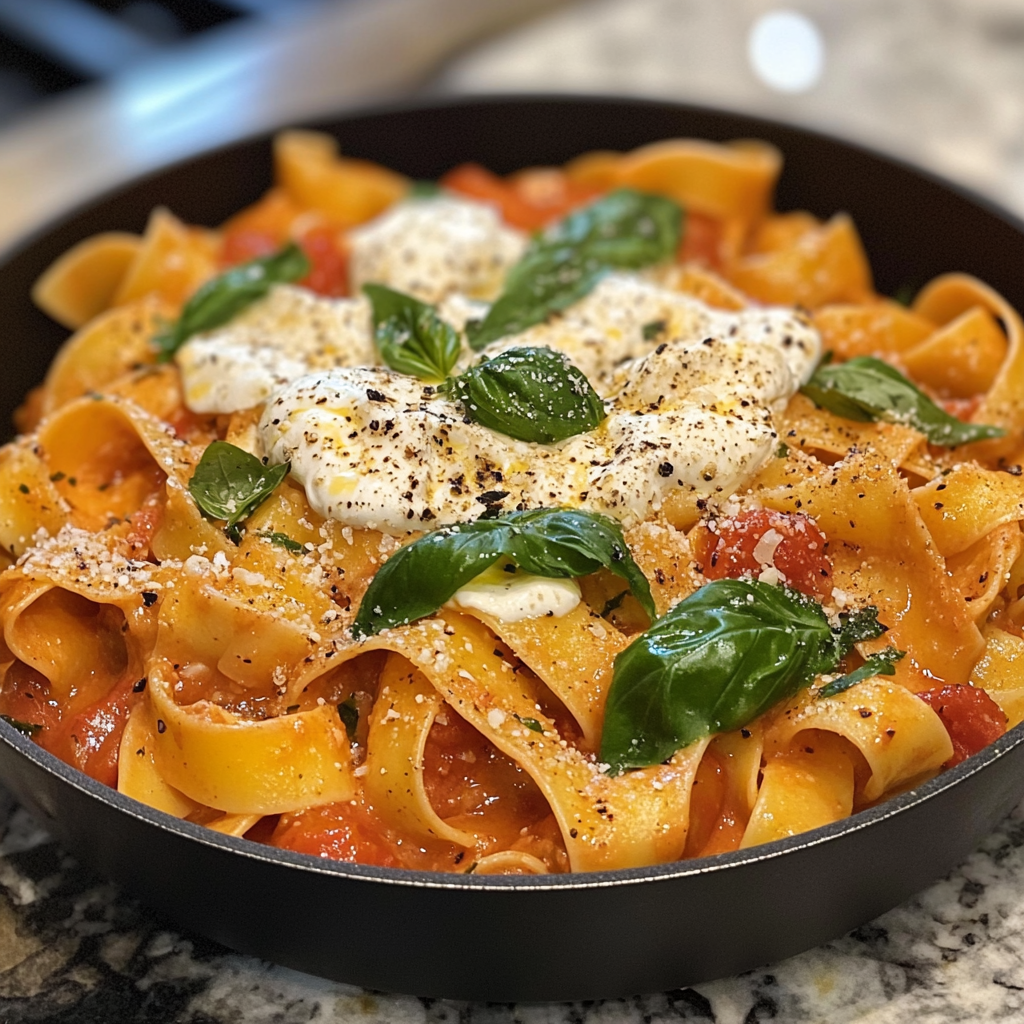
One-Pot Creamy Tomato Basil Pasta with Burrata transforms weeknight dinner into a restaurant-quality meal. This recipe combines simplicity with sophistication, requiring just one pan and minimal cleanup. The pasta cooks directly in the sauce, absorbing rich tomato flavors while creating a naturally creamy consistency. Fresh burrata cheese crowns the dish, melting into the warm pasta to create luxurious, silky ribbons throughout. You’ll have this impressive meal on the table in approximately 30 minutes.
The beauty of this dish lies in its accessibility. Even novice cooks can master the technique quickly. Moreover, the ingredient list remains straightforward and budget-friendly. Fresh basil, ripe tomatoes, and quality pasta form the foundation. The burrata serves as the showstopping finale.
What Makes This One-Pot Pasta Special
The Revolutionary One-Pot Method
Traditional pasta cooking requires multiple pots and careful timing. The one-pot method changes everything. The pasta cooks directly with the sauce ingredients in significantly less water than conventional methods. This technique allows the pasta to absorb flavors while releasing starches that naturally thicken the sauce.
Subsequently, you eliminate the draining step entirely. The cooking liquid reduces into a silky sauce coating every strand. This approach saves time and reduces dishes. Furthermore, it concentrates flavors more effectively than traditional methods.
Time-Saving Benefits
Busy weeknights demand efficient cooking solutions. This one-pot creamy tomato basil pasta with burrata delivers dinner in approximately 20-30 minutes. Consequently, you spend less time cooking and more time enjoying your meal. The simplified process requires minimal active cooking time.
Additionally, cleanup becomes remarkably simple. One pan means fewer dishes to wash. This efficiency makes the recipe ideal for hectic schedules.
Flavor Development
The one-pot cooking method creates deeper, more complex flavors. As the pasta cooks, it releases starches into the liquid. These starches bind with the tomato juices and olive oil. Therefore, the sauce becomes naturally creamy without heavy cream. The concentrated cooking environment intensifies the basil and garlic aromatics.
Understanding the Key Ingredients
Cherry Tomatoes
Cherry tomatoes form the foundation of this creamy tomato basil pasta with burrata. They provide natural sweetness and acidity. When cooked over high heat, these tomatoes burst and release their juices. This process creates a naturally thick, flavorful sauce. Vine-ripened cherry tomatoes offer the best flavor profile. However, regular cherry tomatoes work perfectly well.
The cooking process caramelizes the natural sugars in the tomatoes. This caramelization adds depth to the sauce. Subsequently, the tomato flavor becomes richer and more concentrated.
Fresh Burrata Cheese
Burrata cheese elevates this dish from simple to spectacular. This fresh Italian cheese features an outer shell of solid mozzarella. The interior contains stracciatella and cream, creating an unusually soft, creamy texture. When placed on hot pasta, the burrata melts gradually. Its creamy center oozes throughout the dish.
Fresh burrata should be served at room temperature for optimal flavor. Remove it from the refrigerator approximately 30 minutes before serving. The cheese originates from the Puglia region of Italy.
Nutritional Profile of Burrata
Burrata offers several nutritional benefits when consumed in moderation. A typical 100-gram serving contains approximately 300 calories. The cheese provides roughly 17 grams of protein. This protein content supports muscle repair and growth.
Furthermore, burrata delivers substantial calcium for bone health. The cheese contains vitamin A, which maintains skin integrity. It also provides vitamin B12, essential for energy metabolism. Phosphorus works alongside calcium to enhance bone mineralization.
Fresh Basil
Fresh basil pairs wonderfully with tomatoes and burrata. This aromatic herb adds brightness to the rich, creamy sauce. Sweet basil, commonly found in grocery stores, works best for Italian-inspired pasta recipes. Add the basil near the end of cooking to preserve its delicate flavor and vibrant color.
Torn basil leaves release more essential oils than chopped ones. Therefore, tearing creates more aromatic results. Reserve some fresh basil for garnishing the finished dish.
Quality Pasta Selection
The pasta choice significantly impacts the final dish. Short pasta shapes like rigatoni hold sauce exceptionally well. Alternatively, spaghetti creates a classic presentation. Penne and bucatini also work beautifully. Choose pasta made from durum wheat semolina for the best texture.
The pasta should cook to al dente texture. This means tender but still slightly firm when bitten. Overcooked pasta becomes mushy and absorbs too much liquid.
Aromatics and Seasonings
Garlic and shallots provide aromatic depth to the sauce. Minced garlic releases its pungent, savory flavor quickly when sautéed. Finely diced shallots offer a milder, sweeter onion flavor. Red pepper flakes add subtle heat without overwhelming the dish.
Salt enhances all the other flavors in the recipe. Use coarse salt for seasoning the cooking water and sauce. Freshly ground black pepper adds a pleasant bite. Lemon zest brightens the tomato sauce and balances richness.
Essential Kitchen Tools
Large Skillet or Sauté Pan
A large, heavy-bottomed skillet is essential for one-pot creamy tomato basil pasta with burrata. The pan must be large enough to accommodate the pasta without breaking. A 12-inch skillet works well for most recipes. Heavy-bottomed pans distribute heat evenly, preventing burning.
Choose a pan with high sides to contain the cooking liquid. Cast iron or stainless steel skillets perform excellently. Nonstick pans also work but may not develop the same depth of flavor.
Additional Tools
You’ll need a sharp knife and cutting board for preparing ingredients. A wooden spoon helps stir the pasta without scratching the pan. Measuring cups and spoons ensure accurate ingredient proportions. Tongs make flipping and stirring pasta easier.
Step-by-Step Cooking Instructions
Preparation Phase
Begin by preparing all ingredients before cooking starts. Halve the cherry tomatoes to help them burst and release juices faster. Mince six cloves of garlic finely. Finely dice one-quarter cup of shallots. Chop one-half cup of fresh basil leaves. Measure 12 ounces of pasta.
Remove the burrata from the refrigerator 30 minutes before serving. This allows it to come to room temperature. Zest one lemon and set aside. Gather your vegetable stock or chicken broth.
Sautéing Aromatics
Heat one tablespoon of olive oil in your large skillet over medium-high heat. Once the oil shimmers, add the shallots and garlic. Sauté for approximately two minutes, stirring frequently. The aromatics should become fragrant but not browned. Burning garlic creates bitter flavors, so watch carefully.
Building the Sauce
Add the halved cherry tomatoes to the skillet. Sprinkle with one teaspoon of salt. Sauté for an additional two minutes. The tomatoes will begin to soften and release their juices. Stir occasionally to prevent sticking.
Cooking the Pasta
Add the pasta and three and one-half cups of vegetable stock to the skillet. The liquid should nearly cover the pasta. Bring the mixture to a gentle simmer over medium-high heat. Do not cover the pan.
Simmer for approximately 10 minutes, stirring occasionally with tongs. The pasta should absorb most of the liquid. Flip and stir the pasta to ensure even cooking. The pasta will be a few minutes from tender at this point.
Finishing Touches
Stir in the lemon zest, chili flakes, and two tablespoons of balsamic reduction. Continue cooking until the pasta reaches al dente texture. Most of the liquid should reduce to a thick, glossy sauce. This takes approximately 2-3 additional minutes.
The sauce should coat the pasta without being watery. If the sauce seems thin, cook for another minute. Conversely, if it appears too thick, add a splash of pasta water. Stir in the chopped fresh basil just before removing from heat.
Serving with Burrata
Transfer the pasta to a serving platter or individual bowls. Place fresh burrata in the center of the hot pasta. Cut the burrata open to allow the creamy interior to flow out. The heat from the pasta will gently melt the cheese.
Drizzle with high-quality olive oil and sprinkle with additional fresh basil leaves. Add red pepper flakes for extra heat if desired. Season with freshly ground black pepper. Serve immediately while hot.
Tips for Perfect Results Every Time
Selecting the Best Tomatoes
Choose ripe, sweet cherry tomatoes for optimal flavor. Vine-ripened varieties offer superior taste. The tomatoes should feel firm but yield slightly to pressure. Avoid tomatoes with soft spots or blemishes. During peak tomato season, the flavors intensify dramatically.
Managing Heat Levels
Maintain medium-high heat throughout most of the cooking process. This temperature allows the tomatoes to burst properly. However, once the pasta is added, reduce to a gentle simmer. Boiling too vigorously causes the pasta to cook unevenly.
Monitor the heat carefully to prevent burning. Adjust as needed based on your stovetop. Gas and electric stoves may require different heat settings.
Achieving Perfect Pasta Texture
Stir the pasta frequently during cooking to prevent sticking. The pasta should move freely in the liquid. Test for doneness by tasting a piece. Al dente pasta should be tender but still firm in the center.
Remember that the pasta continues cooking slightly after removing from heat. Therefore, stop cooking when it’s just barely al dente. The residual heat will finish the cooking process.
Enhancing Creaminess
The starch released from the pasta creates natural creaminess. For extra richness, reserve some pasta cooking water before draining. The starchy water helps bind the sauce. Add it gradually if the sauce needs thinning.
Additionally, the burrata contributes significant creaminess when mixed into the hot pasta. Cut the burrata and gently fold it through the dish. The creamy interior coats each piece of pasta.
Nutritional Benefits
Protein Content
This one-pot creamy tomato basil pasta with burrata provides substantial protein from the cheese. Burrata contains approximately 17 grams of protein per 100-gram serving. Protein is crucial for building and repairing body tissues. It maintains muscle mass and improves overall health.
The pasta itself contributes additional protein, especially if using whole wheat varieties. Together, these ingredients create a satisfying, protein-rich meal.
Calcium for Bone Health
Burrata serves as an excellent source of calcium. This essential mineral supports strong bones and teeth. Regular consumption of calcium-rich foods helps protect against osteoporosis. Phosphorus in the cheese works alongside calcium to enhance bone mineralization.
One serving of this pasta dish contributes significantly to daily calcium requirements. This makes it beneficial for growing children and adults alike.
Vitamins and Minerals
The dish provides various essential vitamins and minerals. Burrata contains vitamin A, which maintains skin integrity and promotes cell turnover. Vitamin B12 supports energy metabolism. Tomatoes contribute vitamin C and antioxidants like lycopene.
Fresh basil adds vitamin K, important for blood clotting. Garlic provides manganese and vitamin B6. Together, these nutrients support various bodily functions.
Healthy Fats in Moderation
Burrata contains fats from cream, which nourish the body when consumed moderately. These healthy fats help balance your diet. They keep you feeling full longer than usual. Olive oil adds heart-healthy monounsaturated fats.
However, burrata is high in calories and saturated fat. Therefore, enjoy this dish in appropriate portion sizes. Balance it with lighter meals throughout the day.
Probiotic Properties
Burrata is a fermented dairy product containing probiotics. These beneficial bacteria protect gut health. A healthy gut enables better digestion and strengthens the immune system. Consequently, including fermented foods in your diet supports overall wellness.
Serving Suggestions and Pairings
Complementary Side Dishes
Serve this creamy tomato basil pasta with burrata alongside a simple green salad. Arugula dressed with lemon vinaigrette provides peppery contrast. Alternatively, a mixed greens salad with balsamic dressing complements the rich pasta beautifully.
Garlic bread makes an excellent accompaniment. The crusty bread is perfect for soaking up extra sauce. Roasted vegetables like zucchini or asparagus add color and nutrition. A Caprese salad echoes the tomato-basil flavors in the main dish.
Presentation Ideas
For elegant presentation, serve the pasta in wide, shallow bowls. This showcases the colorful ingredients beautifully. Place the burrata prominently in the center. Garnish generously with fresh basil leaves and a drizzle of quality olive oil.
Add a sprinkle of flaky sea salt for texture and visual appeal. Freshly grated Parmesan cheese complements the burrata nicely. A few whole cherry tomatoes as garnish add vibrant color.
Beverage Pairings
Sparkling water with lemon cleanses the palate between bites. Freshly brewed iced tea offers refreshing contrast to the creamy dish. For a special occasion, serve Italian sparkling water or artisanal lemonade.
Herbal teas like chamomile or mint complement the basil flavors. Fresh fruit juices provide sweetness that balances the savory pasta.
Popular Variations to Try
Adding Protein
Transform this vegetarian dish by adding protein sources. Grilled chicken breast sliced thinly works wonderfully. Season the chicken with Italian herbs before grilling. Alternatively, pan-seared shrimp adds elegance and cooks quickly.
Crispy pancetta or prosciutto introduces salty, savory notes. Cook the meat before adding other ingredients. Use the rendered fat to sauté the aromatics. White beans provide plant-based protein and creamy texture.
Vegetable Additions
Incorporate additional vegetables for extra nutrition and color. Spinach wilts beautifully into the hot pasta. Add it during the last minute of cooking. Mushrooms contribute earthy, umami flavors. Sauté them with the aromatics until golden.
Bell peppers add sweetness and crunch when diced small. Roasted red peppers offer smoky depth. Zucchini and summer squash work well during warm months. Frozen peas add pops of color and sweetness.
Cream-Based Variations
For extra richness, add a splash of heavy cream near the end of cooking. This creates an even more luxurious sauce. A dollop of ricotta cheese stirred through adds creaminess. Mascarpone cheese creates an ultra-silky texture.
Cream cheese melted into the sauce provides tangy richness. These additions make the dish more decadent for special occasions.
Spicy Versions
Increase the red pepper flakes for more heat. Start with one-quarter teaspoon and adjust to taste. Fresh jalapeños diced finely add bright, fresh heat. Remove the seeds for milder spice levels.
Calabrian chili paste delivers complex, fruity heat. Stir it in during the final minutes of cooking. Hot sauce added at the table allows customization.
Herb Variations
While basil is traditional, other herbs create interesting variations. Fresh oregano provides earthy, robust flavor. Thyme adds subtle woodsy notes. Parsley contributes bright, fresh taste.
Combine multiple herbs for complex flavor profiles. Add hardy herbs like oregano early in cooking. Delicate herbs like basil go in at the end.
Storage and Reheating Guidelines
Proper Storage Methods
Store leftover one-pot creamy tomato basil pasta with burrata in an airtight container. Refrigerate within two hours of cooking. The pasta keeps for three to four days when properly stored. However, the burrata is best enjoyed fresh.
If possible, store the burrata separately from the pasta. Add fresh burrata when reheating for optimal texture and flavor. The pasta sauce may thicken when cold. This is normal and easily remedied when reheating.
Reheating Instructions
Reheat the pasta gently in a skillet over medium-low heat. Add a splash of vegetable stock or water to loosen the sauce. Stir frequently to ensure even heating. Alternatively, microwave in 30-second intervals, stirring between each.
Avoid high heat when reheating, as it can make the pasta mushy. The dish should be heated through but not boiling. Add fresh burrata just before serving for the best experience.
Freezing Considerations
This dish doesn’t freeze particularly well due to the fresh cheese component. The burrata’s texture deteriorates significantly when frozen and thawed. However, you can freeze the pasta without the burrata.
Cool the pasta completely before freezing. Store in freezer-safe containers for up to two months. Thaw overnight in the refrigerator. Reheat gently and add fresh burrata before serving.
Troubleshooting Common Issues
Pasta Too Dry
If the pasta seems dry, insufficient liquid was used during cooking. Add reserved pasta water or additional stock gradually. Stir well to incorporate the liquid. The sauce should coat the pasta glossily.
Alternatively, the pasta may have cooked too long. Reduce cooking time slightly next attempt. Check the pasta frequently during the final minutes.
Sauce Too Thin
Thin sauce results from too much liquid or undercooked pasta. Continue cooking uncovered to reduce excess liquid. The sauce should thicken as moisture evaporates. Alternatively, the pasta starch may not have released properly.
Stir more frequently to help release starch from the pasta. This natural starch thickens the sauce effectively. A small amount of cornstarch slurry can thicken if needed.
Tomatoes Not Breaking Down
Underripe tomatoes may not burst properly during cooking. Choose ripe, soft tomatoes for best results. Additionally, insufficient heat prevents proper breakdown. Increase the heat slightly when cooking the tomatoes initially.
Cut the tomatoes into smaller pieces if they’re particularly firm. This helps them release juices faster. Cook them longer before adding the pasta and liquid.
Pasta Sticking Together
Pasta sticks when not stirred frequently enough. Stir every couple of minutes during cooking. Use tongs to flip and separate the pasta strands or pieces. Ensure sufficient liquid covers the pasta during cooking.
If the pasta begins sticking, add more liquid immediately. Gently separate the pieces with your stirring utensil.
Frequently Asked Questions
Can I make one-pot creamy tomato basil pasta with burrata ahead of time?
You can prepare components in advance but should assemble the dish fresh. Cook the pasta sauce up to one day ahead and refrigerate. Reheat the sauce before adding freshly cooked pasta. Always add fresh burrata just before serving for optimal texture and flavor.
What pasta shapes work best?
Short pasta shapes like rigatoni, penne, and bucatini work excellently. These shapes hold the sauce well and cook evenly. Long pasta like spaghetti creates classic presentation. Choose based on personal preference and what’s available.
Can I use canned tomatoes instead of fresh?
Fresh cherry tomatoes provide the best flavor and texture for this recipe. However, canned cherry tomatoes work in a pinch. Drain excess liquid before using. Canned crushed tomatoes create a different consistency but still taste delicious.
How do I know when the pasta is al dente?
Al dente pasta is tender but still firm when bitten. Test by tasting a piece a few minutes before the package cooking time. The pasta should offer slight resistance in the center. Remember it continues cooking after removing from heat.
Can I substitute mozzarella for burrata?
Fresh mozzarella makes an acceptable substitute, though it’s less creamy. Burrata’s unique interior creates unmatched richness. For similar effect, use fresh mozzarella with added cream or ricotta. The dish remains delicious but differs in texture.
Is this recipe suitable for meal prep?
This dish is best enjoyed fresh due to the burrata component. However, the pasta without cheese meal preps reasonably well. Store for three to four days and add fresh burrata when serving. The flavors actually develop nicely overnight.
How can I make this dish dairy-free?
Replace the burrata with cashew cream or dairy-free cream cheese. Nutritional yeast adds cheesy flavor without dairy. Use vegetable stock and ensure all other ingredients are dairy-free. The result won’t match the original but still tastes satisfying.
What’s the best way to cut burrata?
Place the burrata on the hot pasta first. Use a sharp knife to cut it open gently. Allow the creamy interior to flow naturally over the pasta. Alternatively, tear it into pieces with your hands for rustic presentation.
Conclusion
One-Pot Creamy Tomato Basil Pasta with Burrata delivers restaurant-quality results with minimal effort and cleanup. The revolutionary one-pot method creates deeply flavored sauce while cooking the pasta perfectly. Fresh burrata transforms this simple dish into something truly special. The combination of sweet cherry tomatoes, aromatic basil, and creamy cheese satisfies every time.
This versatile recipe adapts easily to dietary preferences and available ingredients. Whether you’re cooking for a busy weeknight or entertaining guests, this pasta impresses consistently. The 30-minute preparation time makes it accessible even on the most hectic days.
Try this one-pot creamy tomato basil pasta with burrata tonight and discover why it’s become a beloved favorite. The minimal cleanup and maximum flavor make it a recipe you’ll return to repeatedly. Gather your ingredients, heat your skillet, and prepare to enjoy an exceptional meal that brings Italian-inspired comfort to your table.
Print
One-Pot Creamy Tomato Basil Pasta with Burrata
- Total Time: 25
- Yield: 4 1x
Ingredients
-
12 oz (340g) pasta (penne, spaghetti, or fusilli)
-
2 tablespoons olive oil
-
3 cloves garlic, minced
-
1 can (14 oz) diced tomatoes (or 2 cups fresh cherry tomatoes, halved)
-
2 cups vegetable or chicken broth
-
½ cup heavy cream
-
1 teaspoon salt
-
½ teaspoon black pepper
-
½ teaspoon red pepper flakes (optional)
-
1 teaspoon dried Italian herbs or 1 tablespoon fresh chopped basil
-
2 tablespoons grated Parmesan cheese
-
1 ball burrata cheese (about 6–8 oz), for serving
-
Fresh basil leaves, for garnish
Instructions
-
Cook Pasta in One Pot:
-
In a large skillet or pot, heat olive oil over medium heat.
-
Add garlic and sauté for 1 minute until fragrant.
-
Add pasta, diced tomatoes, broth, salt, pepper, and red pepper flakes.
-
Bring to a boil, then reduce heat and simmer uncovered for 10–12 minutes, stirring occasionally, until pasta is cooked and liquid has slightly thickened.
-
-
Add Cream and Cheese:
-
Stir in heavy cream, Parmesan cheese, and chopped basil.
-
Cook for another 2–3 minutes until sauce is creamy and well combined.
-
-
Serve with Burrata:
-
Divide pasta among plates.
-
Place a piece of burrata on top of each serving, letting it melt slightly into the pasta.
-
Garnish with fresh basil leaves and a drizzle of olive oil.
-
Notes
-
For a lighter version, use half-and-half instead of heavy cream.
-
Add sautéed spinach or roasted cherry tomatoes for extra veggies.
-
Burrata can be substituted with fresh mozzarella if needed.
- Prep Time: 10
- Cook Time: 15
Nutrition
- Calories: 500