
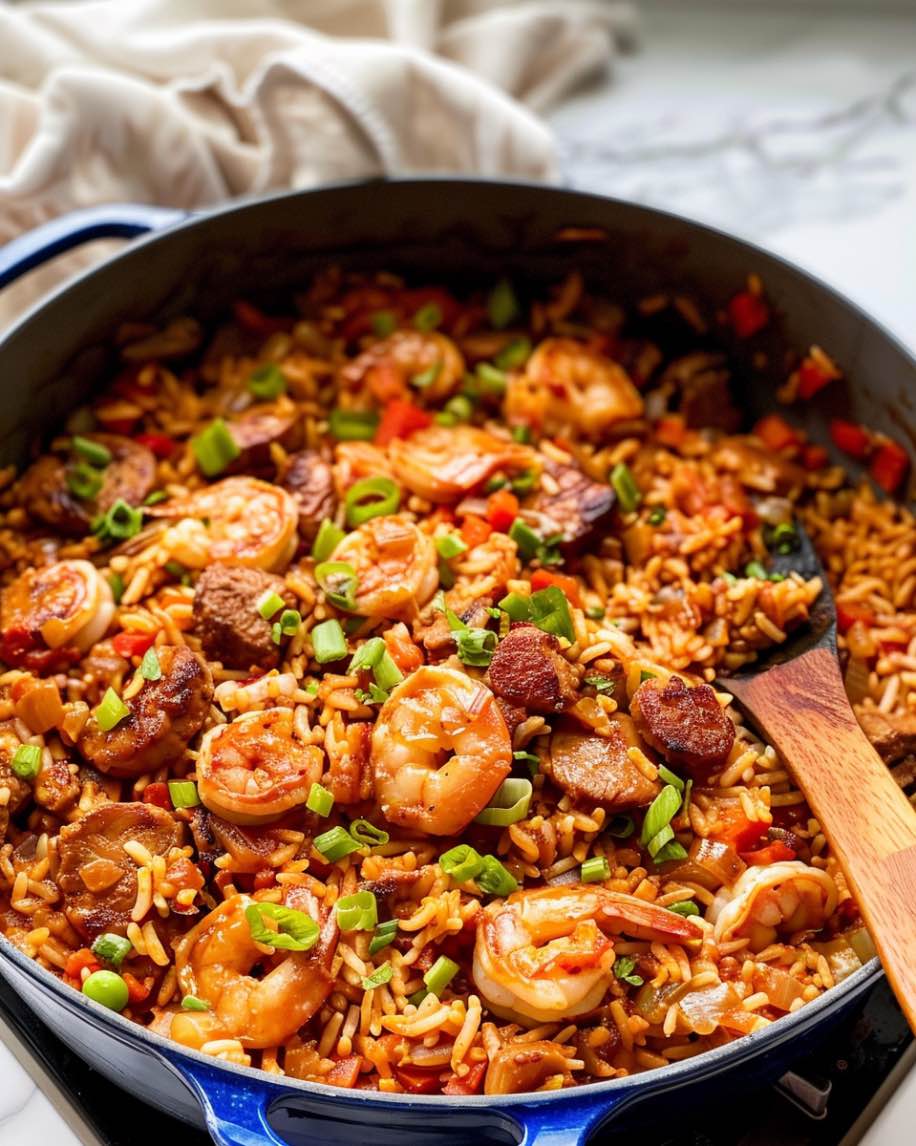
One-Pot Jambalaya: The Ultimate Comfort Food Recipe
One-pot jambalaya is a beloved Louisiana classic that brings bold flavors, hearty ingredients, and simple preparation together in one dish. This iconic Creole recipe combines tender chicken, smoky sausage, succulent shrimp, and perfectly seasoned rice in a flavorful tomato-based sauce. Moreover, cooking everything in a single pot makes cleanup effortless while creating layers of complex flavors. Whether you’re feeding a crowd or meal prepping for the week, this one-pot jambalaya delivers authentic taste without the fuss.
What Is One-Pot Jambalaya?
One-pot jambalaya is a complete meal that cooks entirely in a single pot or Dutch oven. This Louisiana dish features a harmonious blend of proteins, vegetables, and rice simmered in a richly spiced tomato broth. Additionally, the one-pot method allows all ingredients to meld together beautifully.
The dish typically includes three proteins: chicken, andouille sausage, and shrimp. However, you can adapt the recipe based on your preferences. The rice absorbs all the flavorful liquid as it cooks, creating a perfectly textured dish. Furthermore, the technique requires minimal hands-on time, making it ideal for busy weeknights.
Unlike its cousin gumbo, jambalaya doesn’t use a roux base. Instead, it relies on the holy trinity of Creole cooking: onions, celery, and bell peppers. These aromatic vegetables form the flavor foundation. Subsequently, spices like paprika, cayenne, and thyme add depth and warmth.
The History Behind Jambalaya
Jambalaya emerged in Louisiana during the 18th century. The dish reflects the state’s diverse cultural influences, including Spanish, French, African, and Native American traditions. Consequently, it represents a true melting pot of culinary heritage.
Two main styles exist: Creole (red) and Cajun (brown) jambalaya. Creole jambalaya, originating in New Orleans, includes tomatoes and has a reddish hue. Meanwhile, Cajun jambalaya from rural Louisiana omits tomatoes, resulting in a brown color from caramelized ingredients.
The name likely derives from the Spanish word “jamón” (ham) combined with African and French influences. Early versions used whatever ingredients were available locally. Therefore, the dish evolved into countless regional variations over time.
Cultural Significance
Jambalaya represents community and celebration in Louisiana culture. Families often prepare large batches for gatherings and festivals. The dish’s adaptability made it popular among working-class families who needed to stretch ingredients. As a result, it became a staple comfort food throughout the South.
Essential Ingredients for Perfect Jambalaya
Creating authentic one-pot jambalaya requires quality ingredients. Each component contributes to the overall flavor profile. Let’s explore what you’ll need:
Proteins
Chicken thighs or breasts: Boneless, skinless cuts work best. They remain tender during the cooking process. Cut them into bite-sized pieces for even cooking.
Andouille sausage: This smoked Cajun sausage adds essential flavor. Slice it into rounds or half-moons. If unavailable, substitute with smoked kielbasa or chorizo.
Shrimp: Use medium to large shrimp, peeled and deveined. Add them near the end to prevent overcooking. Fresh or frozen work equally well.
The Holy Trinity
Onions: Yellow or white onions provide sweetness and depth. Dice them finely for even distribution.
Celery: Adds subtle flavor and texture. Chop into small pieces to match the onion size.
Bell peppers: Green peppers are traditional, but you can mix colors. They contribute sweetness and vibrant color.
Rice and Liquids
Long-grain white rice: This variety absorbs liquid without becoming mushy. Avoid instant or converted rice.
Chicken broth: Use low-sodium broth for better control over salt levels. It forms the cooking liquid base.
Diced tomatoes: Canned tomatoes work perfectly. They create the signature red color and tangy flavor.
Tomato paste: Concentrates the tomato flavor and adds richness. Use a small amount for depth.
Seasonings and Spices
-
Paprika (adds color and mild flavor)
-
Cayenne pepper (provides heat)
-
Dried thyme (earthy undertone)
-
Dried oregano (complements tomatoes)
-
Garlic powder (savory depth)
-
Onion powder (enhances overall flavor)
-
Bay leaves (aromatic complexity)
-
Black pepper (subtle spice)
-
Salt (enhances all flavors)
-
Fresh garlic (aromatic punch)
Fresh Ingredients
Garlic cloves: Fresh garlic is non-negotiable. Mince several cloves for aromatic intensity.
Fresh parsley: Garnish with chopped parsley before serving. It adds color and freshness.
Green onions: Slice thinly for topping. They provide a mild onion flavor and visual appeal.
Kitchen Tools You’ll Need
Having the right equipment makes preparing one-pot jambalaya easier. Fortunately, you don’t need specialized tools. Here’s what works best:
Dutch oven or large pot: A 6-quart capacity accommodates all ingredients. Cast iron retains heat beautifully. However, any heavy-bottomed pot works.
Sharp knife: Essential for chopping vegetables and cutting proteins. A chef’s knife handles most tasks efficiently.
Cutting board: Use a large board for ample workspace. Consider separate boards for raw meat and vegetables.
Wooden spoon: Perfect for stirring without scratching your pot. It reaches into corners effectively.
Measuring cups and spoons: Accuracy ensures consistent results. Have both dry and liquid measuring tools ready.
Kitchen timer: Prevents overcooking rice and proteins. Set reminders for each cooking stage.
Step-by-Step Cooking Instructions
Follow these detailed instructions for perfect one-pot jambalaya every time. The process is straightforward and forgiving.
Step 1: Prepare Your Ingredients
Start by gathering and prepping all ingredients. This mise en place approach streamlines cooking. Dice the onions, celery, and bell peppers into uniform pieces. Cut chicken into 1-inch chunks. Slice the andouille sausage. Mince the garlic cloves.
Measure out your spices and rice. Have everything within arm’s reach. This preparation prevents scrambling mid-recipe. Additionally, it ensures nothing burns while you search for ingredients.
Step 2: Brown the Proteins
Heat two tablespoons of oil in your Dutch oven over medium-high heat. Add the chicken pieces in a single layer. Season with salt and pepper. Cook for 4-5 minutes until browned on all sides. The chicken doesn’t need to cook through completely.
Remove the chicken and set aside. Next, add the sliced sausage to the same pot. Brown for 2-3 minutes until it develops color. The rendered fat adds incredible flavor. Transfer the sausage to the plate with the chicken.
Step 3: Sauté the Holy Trinity
Reduce heat to medium. Add another tablespoon of oil if needed. Toss in the diced onions, celery, and bell peppers. Sauté for 5-6 minutes until softened. Stir occasionally to prevent sticking.
The vegetables should become translucent and fragrant. Add the minced garlic during the last minute. Garlic burns easily, so watch carefully. The aromatics create the flavor base for your jambalaya.
Step 4: Add Tomatoes and Spices
Stir in the tomato paste and cook for 1 minute. This step deepens the tomato flavor. Pour in the diced tomatoes with their juices. Mix everything thoroughly.
Now add your spice blend: paprika, cayenne, thyme, oregano, garlic powder, and onion powder. Stir well to coat all vegetables. The spices bloom in the heat, releasing their essential oils. Season with salt and black pepper to taste.
Step 5: Combine Rice and Liquids
Add the uncooked rice to the pot. Stir it into the vegetable mixture until well combined. This step coats each grain with flavorful oil and spices.
Pour in the chicken broth and add the bay leaves. Return the browned chicken and sausage to the pot. Stir everything together thoroughly. Ensure the rice is submerged in liquid.
Step 6: Simmer Until Rice is Tender
Bring the mixture to a boil over high heat. Once boiling, reduce heat to low. Cover the pot with a tight-fitting lid.
Simmer for 20-25 minutes without lifting the lid. The trapped steam cooks the rice perfectly. Resist the urge to stir during this time. Stirring releases starch and creates mushy rice.
Step 7: Add Shrimp and Finish
After 20-25 minutes, check if the rice is tender. The liquid should be mostly absorbed. If rice needs more time, cover and cook for 5 more minutes.
Once the rice is cooked, nestle the shrimp into the jambalaya. Push them slightly into the mixture. Cover again and cook for 3-4 minutes. The shrimp turn pink and opaque when done.
Remove from heat and let rest for 5 minutes. This resting period allows flavors to settle. Remove the bay leaves before serving. Fluff the rice gently with a fork.
Step 8: Garnish and Serve
Sprinkle freshly chopped parsley over the top. Add sliced green onions for extra color. Serve immediately while hot. The jambalaya is now ready to enjoy.
Pro Tips for the Best Jambalaya
Elevate your one-pot jambalaya with these expert techniques. Small adjustments make significant differences.
Choose Quality Proteins
Fresh, never-frozen shrimp taste best. Look for firm, translucent flesh without ammonia smell. For chicken, thighs remain juicier than breasts. Dark meat stands up better to long cooking times.
Authentic andouille sausage is worth seeking out. It has a distinct smoky flavor that defines jambalaya.
Layer Your Flavors
Don’t skip the browning steps. Caramelization creates depth and complexity. The fond (browned bits) on the pot bottom adds incredible flavor. Those bits dissolve into the liquid during cooking.
Toast your spices briefly in the pot before adding liquids. This technique enhances their aromatic properties. However, watch closely to prevent burning.
Rice Cooking Ratios
Use a 2:1 liquid-to-rice ratio for perfect texture. Too much liquid creates soupy jambalaya. Conversely, too little leaves crunchy rice. Adjust based on your rice variety if needed.
Long-grain rice maintains separate grains beautifully. Medium-grain rice creates a creamier texture. Never use quick-cooking or instant rice varieties.
Control the Heat Level
Adjust cayenne pepper according to preference. Start with 1/4 teaspoon for mild heat. Increase to 1/2 teaspoon or more for spicy versions. You can always add hot sauce at the table.
Remember that heat builds as the dish cooks. Capsaicin concentrates when liquids reduce. Therefore, err on the conservative side initially.
Timing Matters
Add delicate proteins like shrimp at the end. They overcook quickly and become rubbery. Three to four minutes is sufficient for perfectly cooked shrimp.
Let the jambalaya rest before serving. This waiting period allows the rice to firm up slightly. The flavors also meld together beautifully during resting.
Use Fresh Herbs
While dried herbs work well during cooking, finish with fresh ones. Chopped parsley, cilantro, or green onions brighten the dish. They add visual appeal and fresh flavor notes.
Consider adding a squeeze of fresh lemon juice before serving. The acidity balances the rich, savory flavors. Just a small amount makes everything pop.
Common Mistakes to Avoid
Even experienced cooks make errors with jambalaya. Knowing these pitfalls helps you avoid them.
Mistake 1: Lifting the Lid Too Often
Opening the pot releases steam and lowers temperature. This disrupts the rice cooking process. Resist checking until the minimum cooking time passes. Trust the process and keep the lid on.
Mistake 2: Stirring During Cooking
Stirring rice releases starch, creating gummy texture. After combining everything, leave it alone. Only stir once at the very end when adding shrimp.
Mistake 3: Using Insufficient Seasoning
Jambalaya requires bold flavors. Don’t be timid with spices. Taste and adjust seasoning before adding rice. Remember, the rice dilutes flavors as it absorbs liquid.
Mistake 4: Overcooking Proteins
Chicken cooks through completely during the simmering phase. Initial browning only needs to develop color. Shrimp especially overcook easily, becoming tough and rubbery.
Mistake 5: Wrong Rice Choice
Sticky rice varieties ruin jambalaya’s texture. Jasmine or sushi rice becomes too soft and clumpy. Stick with long-grain white rice for best results.
Mistake 6: Skipping the Browning Step
Browning creates flavor through the Maillard reaction. It also renders fat from the sausage. These steps establish the foundation for your jambalaya’s taste.
Variations and Customizations
One-pot jambalaya adapts easily to different preferences and dietary needs. Here are popular variations:
Seafood Jambalaya
Replace chicken with additional seafood. Include crawfish tails, mussels, or firm white fish. Add these proteins during the last 5-7 minutes of cooking. The result is a seafood lover’s dream.
Vegetarian Jambalaya
Omit all meat and seafood. Double the vegetables, adding mushrooms, okra, and zucchini. Use vegetable broth instead of chicken broth. Add red kidney beans or black-eyed peas for protein. Season generously with smoked paprika for depth.
Low-Carb Version
Substitute cauliflower rice for regular rice. Add it during the last 10 minutes of cooking. Cauliflower rice needs much less cooking time. This version significantly reduces carbohydrates while maintaining flavor.
Turkey Jambalaya
Use ground turkey or turkey sausage for a leaner option. Brown the turkey thoroughly before continuing. Season more aggressively since turkey is milder than chicken and pork sausage.
Spicy Jambalaya
Increase cayenne pepper to 1 teaspoon or more. Add sliced jalapeños with the holy trinity. Include hot sauce in the liquid mixture. Top with pickled peppers for extra heat. Check out our guide on [adjusting spice levels in Cajun dishes].
Cajun-Style (Brown) Jambalaya
Omit tomatoes and tomato paste entirely. Caramelize the vegetables longer for deeper color. Use extra paprika and brown the chicken more thoroughly. The result has a darker, more rustic appearance.
Serving Suggestions
One-pot jambalaya is a complete meal on its own. However, complementary sides enhance the experience. Consider these accompaniments:
Classic Sides
Cornbread: Sweet or savory cornbread soaks up flavorful juices beautifully. Serve warm with butter.
Collard greens: These traditional Southern greens balance jambalaya’s richness. Season them with garlic and onions.
Cole slaw: Crisp, tangy slaw provides textural contrast. The coolness tempers spicy jambalaya.
Green salad: A simple garden salad with vinaigrette adds freshness. Include tomatoes, cucumbers, and onions.
Bread Options
Crusty French bread works perfectly for soaking up sauce. Garlic bread adds extra flavor dimension. Biscuits offer a buttery, flaky complement.
Beverages
Iced tea, both sweet and unsweetened, pairs wonderfully. Lemonade provides refreshing citrus notes. Sparkling water with lime cleanses the palate between bites.
Presentation Tips
Serve jambalaya family-style in the cooking pot. The rustic presentation adds authenticity. Alternatively, plate individual portions and garnish elaborately. Sprinkle with chopped herbs and green onions. Add lemon wedges on the side for optional squeezing.
Storage and Reheating Tips
Proper storage maintains jambalaya’s quality and safety. Follow these guidelines for best results.
Refrigerator Storage
Let jambalaya cool to room temperature first. Transfer to airtight containers within two hours of cooking. Refrigerate for up to 4 days. The flavors often improve overnight as they meld together.
Store in shallow containers for faster cooling. This prevents bacterial growth in the temperature danger zone. Label containers with the date for easy tracking.
Freezer Storage
Jambalaya freezes exceptionally well for up to 3 months. Use freezer-safe containers or heavy-duty freezer bags. Remove as much air as possible to prevent freezer burn.
Portion into meal-sized amounts for convenience. Individual servings thaw and reheat more quickly. Consider freezing without shrimp, adding fresh when reheating.
Reheating Methods
Stovetop: Add a splash of chicken broth to a pot. Heat over medium-low, stirring occasionally. This method best maintains texture. Heat until steaming throughout, about 10-15 minutes.
Microwave: Place jambalaya in a microwave-safe dish. Add a tablespoon of water or broth. Cover loosely and heat in 2-minute intervals. Stir between intervals for even heating. Continue until piping hot.
Oven: Preheat oven to 350°F. Transfer jambalaya to an oven-safe dish. Cover with foil and add a bit of liquid. Bake for 20-25 minutes until heated through. Stir halfway through heating time.
Food Safety Tips
Always reheat to an internal temperature of 165°F. Use a food thermometer to verify. Never reheat jambalaya more than once. Discard any leftovers that smell off or look questionable.
Nutritional Information
One-pot jambalaya offers balanced nutrition in a single dish. Here’s an approximate breakdown per serving (based on 8 servings):
-
Calories: 420-450
-
Protein: 32-35g
-
Carbohydrates: 45-48g
-
Fat: 12-15g
-
Fiber: 3-4g
-
Sodium: 800-1000mg (varies by broth and seasoning)
Nutritional Benefits
Jambalaya provides excellent protein from multiple sources. Chicken and shrimp offer lean protein with minimal fat. The dish includes essential vitamins and minerals.
Bell peppers contain vitamin C and antioxidants. Tomatoes provide lycopene, a powerful antioxidant. Celery offers fiber and beneficial plant compounds. Onions contribute quercetin and other healthful nutrients.
Rice provides energy through complex carbohydrates. Long-grain white rice has a moderate glycemic index. For more fiber, substitute brown rice, adjusting cooking time accordingly.
Making It Healthier
Use turkey sausage to reduce saturated fat. Increase vegetable quantities for more fiber and nutrients. Reduce sodium by using low-sodium broth and limiting added salt. Add extra vegetables like okra, carrots, or squash.
Frequently Asked Questions
What’s the difference between jambalaya and gumbo?
Jambalaya is a rice dish where rice cooks with all ingredients. Gumbo is a soup-like stew served over rice. Furthermore, gumbo starts with a roux, while jambalaya doesn’t. Both feature similar ingredients but have distinct textures and preparation methods.
Can I make one-pot jambalaya in advance?
Yes, absolutely. Prepare the entire dish up to 2 days ahead. Store in the refrigerator and reheat before serving. The flavors actually improve after resting overnight. However, consider adding shrimp just before serving for optimal texture.
Why is my jambalaya mushy?
Mushy jambalaya typically results from too much liquid or stirring during cooking. Use the correct rice-to-liquid ratio of 1:2. Additionally, avoid lifting the lid or stirring while rice cooks. These actions release starch and disrupt steam cooking.
Can I use brown rice instead of white rice?
Brown rice works but requires adjustments. It needs more liquid and longer cooking time. Use 2.5 cups liquid per cup of brown rice. Increase simmering time to 40-45 minutes. The texture will be chewier and nuttier.
How do I make jambalaya spicier?
Add more cayenne pepper or include fresh jalapeños. Hot sauce mixed into the cooking liquid increases heat. Serve with additional hot sauce on the side. Red pepper flakes or crushed chili peppers also work well.
What if I don’t have andouille sausage?
Substitute with smoked kielbasa, chorizo, or any smoked sausage. Each brings different flavor profiles. For vegetarian versions, use plant-based sausage or omit entirely. The dish still tastes excellent without sausage.
Can I make this in a slow cooker?
Yes, but the method differs slightly. Brown proteins and sauté vegetables first. Transfer everything to a slow cooker with rice and liquids. Cook on low for 3-4 hours. Add shrimp during the last 30 minutes. The texture differs from stovetop versions.
Is jambalaya gluten-free?
Traditional jambalaya is naturally gluten-free. Rice, proteins, and vegetables contain no gluten. However, check sausage labels carefully. Some brands add fillers containing gluten. Use certified gluten-free sausage if necessary.
Conclusion
One-pot jambalaya delivers authentic Louisiana flavor with minimal effort and cleanup. This hearty dish combines tender proteins, perfectly seasoned rice, and aromatic vegetables in one satisfying meal. Moreover, the recipe easily scales for crowds or meal prep. The technique is forgiving and adapts to countless variations.
Whether you prefer traditional Creole style or customize with your favorite ingredients, jambalaya never disappoints. The bold spices, savory proteins, and comforting rice create a memorable eating experience. Furthermore, leftovers taste even better the next day as flavors continue developing.
Start your one-pot jambalaya journey today. Gather quality ingredients, follow the steps carefully, and create this Louisiana classic in your kitchen. Your family will request this dish repeatedly. The combination of convenience, flavor, and satisfaction makes it a permanent menu staple.
One-Pot Jambalaya
Description
One-Pot Jambalaya
Ingredients:
-
2 tablespoons olive oil (or vegetable oil)
-
12 oz andouille sausage, sliced into rounds
-
1 lb boneless, skinless chicken thighs, cut into bite-size pieces
-
1 onion, diced
-
1 green bell pepper, diced
-
1 red bell pepper, diced
-
2 celery stalks, diced
-
4 cloves garlic, minced
-
1 can (14.5 oz) diced tomatoes
-
2 cups long-grain rice (uncooked)
-
3 ½ cups chicken broth
-
2 teaspoons Creole or Cajun seasoning (adjust to taste)
-
1 teaspoon smoked paprika
-
1 teaspoon dried thyme
-
2 bay leaves
-
1 lb raw shrimp, peeled and deveined
-
Salt & black pepper, to taste
-
Fresh parsley & green onions, chopped (for garnish)
Instructions:
-
Brown the Meat
-
Heat oil in a large pot or Dutch oven over medium-high heat.
-
Add sausage and cook until browned, about 3 minutes. Remove and set aside.
-
Add chicken pieces, season lightly with salt and pepper, and sear until golden (they don’t need to be fully cooked). Remove and set aside.
-
-
Sauté the Vegetables
-
In the same pot, add onion, peppers, and celery. Cook 4–5 minutes until softened.
-
Stir in garlic and cook 1 minute more.
-
-
Build the Base
-
Stir in diced tomatoes, rice, Creole seasoning, paprika, thyme, and bay leaves.
-
Return sausage and chicken to the pot.
-
Pour in chicken broth, stir well, and bring to a boil.
-
-
Simmer the Jambalaya
-
Reduce heat to low, cover, and simmer about 20–25 minutes, stirring occasionally, until rice is tender and liquid absorbed.
-
-
Finish with Shrimp
-
Add shrimp on top, cover, and cook another 5 minutes until pink and cooked through.
-
Remove bay leaves. Adjust seasoning with salt and pepper.
-
-
Serve
-
Garnish with fresh parsley and green onions.
-
Serve hot with cornbread or crusty French bread.
-