
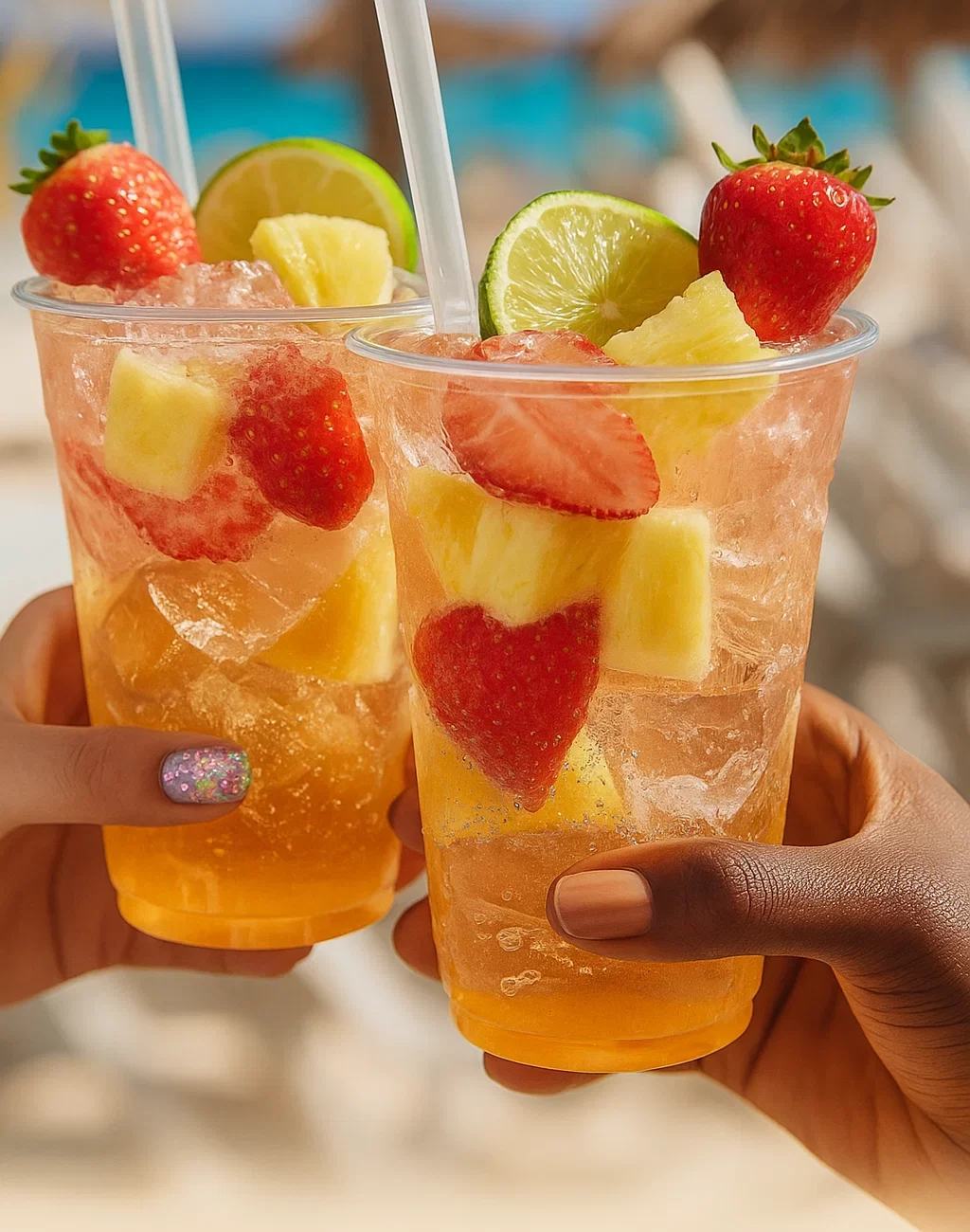
Pineapple Strawberry Sangria: A Refreshing Summer Escape in a Glass
There’s something undeniably magical about a perfectly chilled glass of sangria. It’s more than just a drink—it’s a moment. A sun-drenched afternoon. A lazy breeze wafting through the trees. The sound of laughter echoing across a patio. In the heart of summer, when days stretch long and the air feels thick with golden heat, few drinks capture the essence of the season quite like sangria. And this particular rendition—Pineapple Strawberry Sangria—is a radiant tribute to everything that makes summer unforgettable.
Unlike traditional red wine-based sangrias, this version leans into the light and luminous. Crisp white wine becomes the canvas, upon which the vibrant colors and bold flavors of pineapple and strawberry are painted. The drink shimmers like a gemstone in the sunlight, sparkling with a splash of soda, and brimming with fresh fruit that infuses every sip with natural sweetness and tropical delight. It’s a drink meant to be savored slowly, with each mouthful capturing a tiny story of sunshine, fruit, and chilled elegance.
This is not a complex cocktail—no muddling, no shaking, no elaborate garnishes. But what it lacks in fuss, it more than makes up for in character. Whether you’re reclining by the pool with a good book, hosting a weekend brunch, or simply indulging in a moment of self-care at golden hour, a glass of Pineapple Strawberry Sangria is your companion to celebration, relaxation, and everything in between.
The Origins of Sangria: A Brief Look Back
Before diving into the unique beauty of this recipe, it’s worth remembering where sangria comes from. The term “sangria” is rooted in the Spanish word sangre, meaning blood, a nod to the deep red hue of the classic wine-based version made from bold Spanish reds. The concept of wine mixed with fruit has ancient origins, tracing back to the Romans, who often flavored their wines with herbs and fruits to improve taste and prevent spoilage.
Over centuries, sangria evolved into a vibrant and social drink in Spain and Portugal, where it became a beloved summertime refreshment. As it made its way across the globe, interpretations varied. Red sangria with citrus and brandy. White sangria with peaches and apples. Rosé sangria with berries and mint. Every version told a different story, based on the climate, the fruits in season, and the wine available.
This particular sangria—featuring pineapple and strawberry—is a distinctly modern twist. It borrows the festive spirit of the original, then spins it into something lighter, brighter, and unmistakably tropical.
Why Pineapple and Strawberry?
When crafting a white sangria, the possibilities are endless. You can lean citrusy with oranges and lemons, or floral with peaches and elderflower. But here, pineapple and strawberry steal the show—and for good reason.
Pineapple brings boldness. It’s juicy, tangy, and unmistakably tropical. It’s the fruit of beach vacations, tiki cocktails, and golden sunshine. It also holds up well when soaked in wine, retaining both its texture and intensity without becoming mushy or overly sweet.
Strawberries, on the other hand, offer subtle sweetness and aromatic complexity. They’re soft, juicy, and deeply fragrant—adding not only a beautiful ruby hue to the glass but also a floral, almost candy-like flavor that complements both the wine and pineapple without overpowering either.
Together, the duo creates a perfectly balanced dance of sweet, tart, and fresh. When combined with the dry crispness of white wine and a sparkle of soda, it becomes a drink that tastes like a vacation—even if you’re just in your backyard.
Choosing the Right Wine
The heart of any sangria is its wine. And when it comes to this Pineapple Strawberry version, the choice of wine is more than just a base—it’s a character in its own right.
Pinot Grigio is a wonderful option for those who prefer a dry, zesty backdrop. It brings subtle apple and citrus notes that enhance the brightness of the pineapple without adding any competing sweetness. If you’re after something crisp, clean, and refreshing, this is your go-to.
Sauvignon Blanc offers a slightly grassier profile with notes of green apple, lime, and sometimes passionfruit. It’s aromatic and lively, perfect for pairing with tropical fruits like pineapple.
Moscato, on the other hand, tilts the drink into dessert territory. It’s sweet, often slightly effervescent, and brings a honeyed note that can turn the sangria into something almost whimsical. If you’re serving this at a brunch or after dinner, Moscato adds that soft, syrupy sweetness many people adore.
No matter which wine you choose, the key is balance. The wine should play nicely with the fruit—not overwhelm it or fade behind it. And it should be something you’d enjoy sipping on its own, since it still shines through in every sip of sangria.
The Effervescence Factor
A key element in this version of sangria is the splash of fizz added right at the end. It’s a small touch, but one that brings life to the drink. The carbonation lifts the flavors, adds texture, and makes each sip feel light and refreshing.
You have two solid options here:
-
Club soda: Clean, unsweetened, and perfect if you want a drier finish. It doesn’t interfere with the flavors—it just adds the bubbles.
-
Lemon-lime soda: Slightly sweet and citrusy, this turns the sangria into something more playful. It works especially well if your wine is on the dry side, as it rounds things out and adds a kiss of sugar.
Whichever you choose, be sure to add it just before serving to preserve that satisfying sparkle. Too early, and the bubbles will vanish before the first sip.
Fresh Fruit: More Than Just Garnish
This isn’t just a flavored drink—the fresh fruit floating in the glass is as much a part of the experience as the liquid. When served properly, every glass of sangria is a mini fruit salad in disguise.
Strawberries should be fresh, bright red, and sliced thin to maximize surface area. This allows their flavor to infuse into the drink more quickly. Over time, they’ll soak up the wine, becoming little edible jewels that burst with flavor when bitten.
Pineapple chunks can be cut from a fresh whole pineapple (ideal for maximum juice and brightness), or from a quality pre-cut source. You want them firm but ripe. Avoid anything too soft or from a can, as the texture may not hold.
And then there’s the lime slice garnish. It may seem minor, but it adds a gentle aroma of citrus and a hint of tartness that balances the drink. You can float it directly in the glass or perch it on the rim for visual flair.
Crafting the Perfect Glass
Part of the pleasure of sangria lies in presentation. Here’s how to build your Pineapple Strawberry Sangria like a pro:
-
Start with Ice: Add a generous handful of ice to your glass. This not only chills the drink but creates a beautiful structure for the fruit and liquid to settle into.
-
Add Fruit: Drop in your strawberry slices and pineapple chunks. Let them mingle with the ice—it helps them stay cool and release flavor slowly.
-
Pour the Wine and Juice: Add 4 oz of white wine, followed by 1 oz of pineapple juice. The pineapple juice adds body, acidity, and an extra layer of fruitiness.
-
Top with Soda: Just before serving, finish with a splash of your chosen soda. Watch the bubbles rise and swirl around the fruit—it’s a little show in every glass.
-
Garnish and Stir: Add the lime slice, give everything a gentle stir, and serve immediately. A straw or cocktail stirrer is optional, but a nice touch.
A Drink for All Occasions
While Pineapple Strawberry Sangria feels tailor-made for summer, its versatility means it fits into many occasions throughout the year. Here are a few ideas to keep in mind:
-
Brunches: Light, fruity, and low in alcohol, it pairs beautifully with eggs, pastries, and fresh fruit.
-
Outdoor Gatherings: Its chilled, vibrant profile makes it ideal for warm afternoons on the patio or backyard get-togethers.
-
Beach Picnics: Pre-mix a batch in a large jug (sans soda), then top with fizz at the beach for a portable treat.
-
Late-Night Wind-Downs: Enjoy a glass as the sun sets—quiet, cool, and calming.
And while this recipe is for a single serving, it scales effortlessly. Multiply the ingredients, add everything to a pitcher, and let it sit for an hour in the fridge to allow the flavors to deepen. Just remember to add the soda last, right before pouring into glasses.
A Toast to Summer, in Every Sip
Pineapple Strawberry Sangria isn’t just a cocktail. It’s a mood. A state of mind. A celebration of color, taste, and moment. It captures the carefree magic of summer in liquid form—bright, tangy, sweet, and a little bit fizzy. It invites you to slow down, sip thoughtfully, and let your senses drink in more than just flavor.
Whether you’re toasting under a patio umbrella, clinking glasses poolside, or enjoying a quiet evening indoors, this sangria is a reminder of all the simple pleasures that make life beautiful.
So pour yourself a glass, raise it high, and let the sunshine in.
Print
Pineapple Strawberry Sangria
Description
🍍🍓 Pineapple Strawberry Sangria
A breezy twist on the classic sangria! This version blends crisp white wine with juicy pineapple, ripe strawberries, and a splash of soda for sparkle. Bright, refreshing, and ideal for summer brunches, poolside hangs, or a casual happy hour.
📝 Ingredients (Serves 1)
-
4 oz white wine (Pinot Grigio, Sauvignon Blanc, or Moscato for a sweeter version)
-
1 oz pineapple juice
-
Splash of club soda or lemon-lime soda (for fizz)
-
Sliced fresh strawberries
-
Pineapple chunks
-
Lime slice (for garnish)
-
Ice
🥣 Instructions
-
Fill the Glass:
-
In a large wine glass or stemless goblet, add a handful of ice, a few strawberry slices, and a few pineapple chunks.
-
-
Pour the Liquids:
-
Add 4 oz white wine and 1 oz pineapple juice over the fruit and ice.
-
-
Add the Fizz:
-
Top with a splash of club soda (for a drier finish) or lemon-lime soda (for a touch of sweetness).
-
-
Garnish & Serve:
-
Garnish with a fresh lime slice on the rim or float it inside.
-
Stir gently and serve with a straw or cocktail stir stick.
-