
Introduction & The Cultural Foundation
Red Snapper and Shrimp over Creamy Grits: A Symphony of Southern Flavors
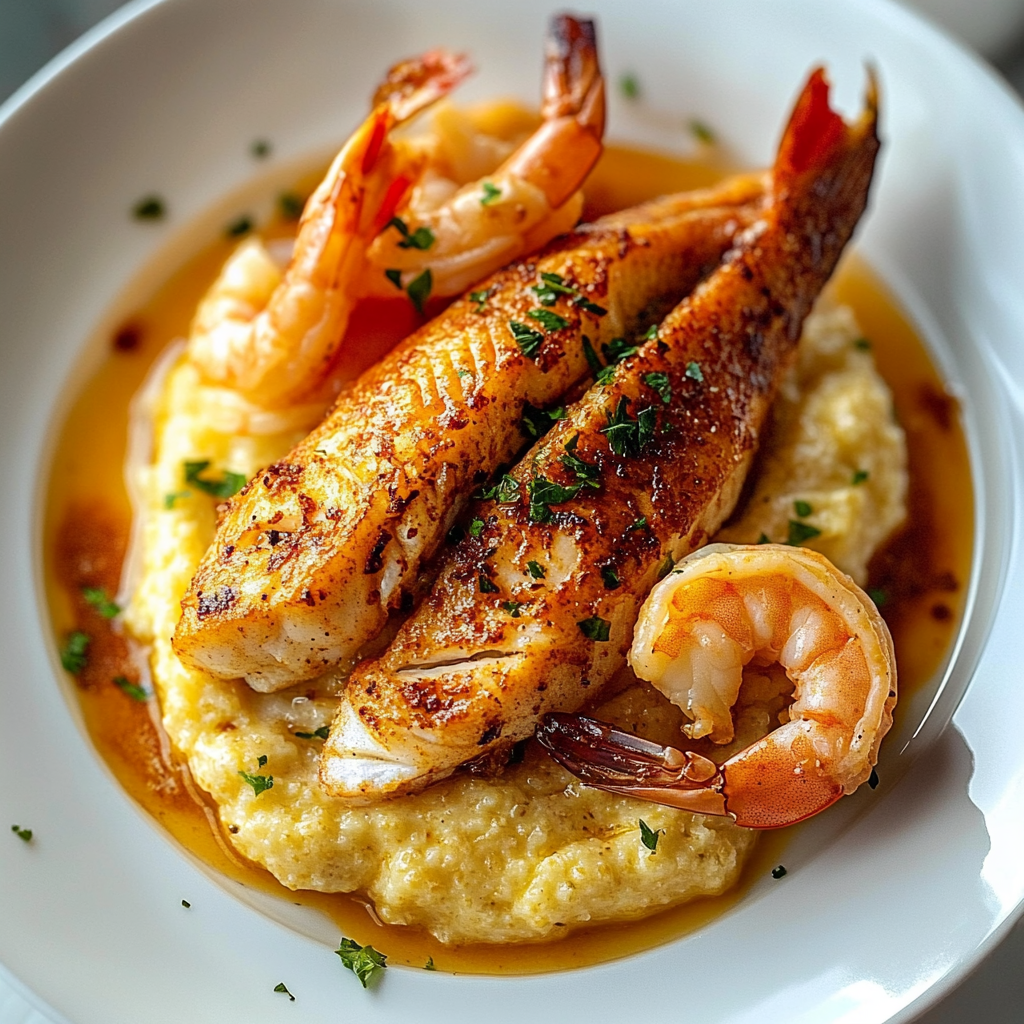
Picture this, will you? A pristine, pan-seared red snapper fillet, its skin crackling-crisp, perched atop a mound of plump, juicy shrimp. These glorious morsels from the sea are resting on a bed of luxuriously creamy cheese grits, so smooth and rich they practically beg for a spoon. Now, a generous ladle of a savory, herb-infused pan sauce cascades over everything, weaving the elements together into a single, breathtaking masterpiece. This isn’t just a meal; oh no, it’s a vibrant story on a plate—a tale where the ocean meets the farmland in a delicious harmony that sings of warm Southern hospitality.
This definitive guide, however, is your personal backstage pass to mastering this iconic coastal dish. We’re going to dive fork-first into its soul-soothing history, unravel the secrets to selecting the freshest catch, and unlock the simple magic behind those perfectly creamy grits. Consequently, whether you’re a seasoned home chef or a curious newcomer, you’ll discover how to bring this restaurant-quality experience right into your own kitchen. Ultimately, this dish is more than sustenance; it’s a celebration of tradition, texture, and taste that’s surprisingly within your reach.
The Rich History on a Plate: Where Land Meets Sea
To truly appreciate a dish, you’ve got to know its roots, right? Well, the story of shrimp and grits is a fascinating journey from a humble breakfast staple to a gourmet dinner superstar. Interestingly, it all begins with “rockahominy,” a simple porridge made from ground corn that was a cornerstone of the Native American diet. European settlers, upon arriving, embraced this versatile grain, and thus, “grits” were officially born into Southern cuisine.
For generations, this dish was the fuel for Lowcountry fishermen and shrimpers. Before the crack of dawn, they would head out onto the water with a hearty, inexpensive breakfast: a bowl of grits topped with the shrimp that were too small to sell. It was a practical, protein-packed meal designed to sustain them through a long, grueling day of work. It was pure, unassuming comfort food.
So, how did it transform into the elegant dish we know today? The credit largely goes to the culinary revolution of the 1980s, particularly in Charleston, South Carolina. Chefs began to see the incredible potential in this classic combination. They elevated it, introducing ingredients like andouille sausage, Tasso ham, complex sauces, and—crucially—premium fish like wild-caught red snapper. This addition of a flaky, mild white fish from the Gulf of Mexico elevated the dish from a simple breakfast to a sophisticated entrée, perfectly representing the abundant Gulf seafood and its place on the modern gourmet table.
The Anatomy of a Perfect Dish
Deconstructing the Dish: The Holy Trinity of Components
Alright, let’s get down to the nitty-gritty—literally! To build this masterpiece, you need to understand its three pillars: the majestic snapper, the succulent shrimp, and the foundational grits. Each component demands respect and a little know-how; furthermore, nailing all three is the secret to a truly transcendent meal.
The Star of the Show: Selecting and Preparing Red Snapper
First up, the crown jewel: the red snapper. This firm, mild, and slightly sweet fish is an absolute dream when cooked properly. To begin with, you’ll face a choice: wild-caught vs. farm-raised. For the best flavor and texture, wild-caught is undoubtedly the way to go. These fish boast a cleaner, more robust taste, a firmer texture, and often come from more regulated fisheries. Honestly, it makes a world of difference.
Now, how do you pick a winner? When you’re at the fish counter, use your senses. Look for clear, bright, and bulging eyes—cloudy eyes are a big no-no. The skin should be shiny and metallic, with vibrant red hues. Give it a gentle poke; the flesh should spring back immediately, not leave an indentation. Finally, take a whiff. It should smell fresh and briny, like the ocean breeze, not fishy or ammonia-like. For more details on making an ethical choice, look for information on sustainable red snapper fishing practices.
Once you have your perfect fillets, preparation is key. Pat them absolutely dry with a paper towel—this is non-negotiable for that crispy skin! Then, season them generously with salt and pepper right before they hit the pan. Letting them sit out for 15-20 minutes to come to room temperature ensures they cook evenly, from edge to center.
The Supporting Star: Choosing the Right Shrimp
Don’t you dare think of the shrimp as just a sidekick! They provide a beautiful, briny counterpoint to the mild snapper. When shopping, you’ll see numbers like 16/20 or 21/25 on the package. This is the count, indicating how many shrimp make up a pound. Fewer numbers mean bigger shrimp! For this dish, a larger size (16/20 or 21/25) works best, as they hold up beautifully to the seared fish.
Here’s a pro tip: don’t shy away from the freezer aisle. High-quality, individually quick-frozen (IQF) shrimp are often frozen within hours of being caught, locking in peak freshness. Just thaw them slowly overnight in the fridge or, in a pinch, under cold running water. As for the vein? Well, it’s really the digestive tract. While it’s not harmful, it can be gritty. Deveining is mostly about texture and appearance, so it’s your call!
The Foundation: Crafting Truly Creamy Grits
And now, for the heart and soul of the dish: the grits. This is where many folks get tripped up, but fear not! The type of grits you choose is the most important decision. You’ll typically find three kinds: instant, quick, and stone-ground.
-
Instant Grits: These are pre-cooked and dried. Honestly, they’re a culinary tragedy—mushy and flavorless.
-
Quick Grits: They’re a slight step up, but still lack the deep, corny flavor and texture we crave.
-
Stone-Ground Grits: These are the undisputed champions! They retain the germ and hull of the corn, leading to incredible, complex flavor and a satisfying texture that’s creamy with a slight chew. For the ultimate experience, seek out premium stone-ground grits from Anson Mills or a local mill.
The liquid is your next mission. Using just water is a missed opportunity! For maximum creaminess, use a combination of water and whole milk or, for sheer indulgence, a splash of heavy cream. The cooking method? Low and slow, baby! Rushing grits is a one-way ticket to Lumpsville. You must stir them frequently, coaxing them into releasing their starch gradually. This patience is rewarded with a velvety, luxurious pot of goodness that’s ready to be enriched with butter, cheese, and seasoning.
The Culinary Execution
Your Culinary Blueprint: A Step-by-Step Recipe Guide
Alright, enough talk—let’s get cooking! Before you fire up the stove, remember the golden rule of any great chef: mise en place. That’s just a fancy way of saying “get everything in its place.” Chop your herbs, measure your liquids, and have your seafood prepped and ready to go. This makes the entire process smooth and stress-free.
Part 1: Mastering the Creamy Grits
-
Ingredients: 1 cup stone-ground grits, 4 cups liquid (a 3:1 ratio of water to whole milk works perfectly), 2 tbsp butter, 1/2 cup sharp cheddar cheese (grated), salt and pepper.
-
Instructions:
-
In a heavy-bottomed saucepan, bring your water and milk mixture to a gentle boil. Season generously with salt.
-
Gradually whisk in the grits in a slow, steady stream. If you dump them all in at once, you’re asking for a lumpy mess!
-
Immediately reduce the heat to the lowest possible setting. Partially cover the pot with a lid.
-
Cook for about 45-60 minutes, stirring frequently with a wooden spoon to prevent sticking and scorching on the bottom. You’ll know they’re done when they’re tender, creamy, and have thickened beautifully.
-
Turn off the heat. Stir in the butter and grated cheese until melted and fully incorporated. Taste and adjust seasoning. Keep covered until ready to serve.
-
Cooking the Seafood to Perfection
-
For the Snapper: Ensure your fillets are skin-on, dry, and at room temperature. Heat a neutral oil (like grapeseed or avocado) in a stainless steel or cast-iron skillet over medium-high heat until it shimmers. Carefully place the fillets skin-side down. Press gently with a spatula for the first 10 seconds to ensure even contact with the pan. Cook for 3-4 minutes without moving them, until the skin is golden brown and crispy. Flip and cook for another 2-3 minutes on the flesh side, until just cooked through.
-
For the Shrimp: Pat your thawed shrimp dry and season. In the same pan (why waste all that flavor!), add a bit more oil or butter. Add the shrimp in a single layer, making sure not to crowd the pan. Cook for 1-2 minutes per side, until they turn pink and opaque. Remove them immediately to avoid overcatching.
Bringing It All Together: The Sauce and Assembly
Don’t clean that pan! All those browned bits (the fond) are pure flavor gold. With the heat on medium, add a minced garlic clove and a pinch of red pepper flakes, cooking for just 30 seconds until fragrant. Deglaze the pan with a quarter cup of chicken or seafood stock, using your spoon to scrape up all the goodness. Let it reduce slightly. Finish with a squeeze of fresh lemon juice and a tablespoon of cold butter, swirling until it creates a simple, glossy sauce. Stir your cooked shrimp into this sauce to warm them through.
To plate, spoon a generous amount of creamy grits into a wide, shallow bowl. Carefully place the crispy-skinned snapper fillet on top. Artfully arrange the shrimp around it and drizzle the entire creation with the pan sauce. Finally, garnish with fresh parsley or sliced scallions.
Chef’s Pro-Tips for an Exceptional Dish
-
The Crowded Pan Dilemma: If you’re cooking for a crowd, cook your seafood in batches. Overcrowding the pan steams the fish instead of searing it, leading to soggy skin. Patience is a virtue here!
-
Layering is Everything: Season your grits as they cook. Season your seafood right before it hits the heat. This builds layers of flavor that just can’t be achieved by salting at the end.
-
The Brightness Factor: That final squeeze of lemon juice is not optional! The acid cuts through the richness of the grits and butter, balancing the entire dish and making the flavors pop.
Variations, Pairing, and Conclusion
Beyond the Classic: Delicious Variations to Try
Once you’ve mastered the classic, the world is your oyster—or well, your shrimp and grits! This dish is a fantastic canvas for your creativity.
-
A Spicy Cajun Twist: Swap out the simple pan sauce for a spicy, smoky gravy featuring andouille sausage, the “holy trinity” (onion, celery, bell pepper), and a heavy dose of Cajun seasoning. It’s a flavor explosion!
-
A Herb-Forward Mediterranean Version: Lighten things up with sun-dried tomatoes, spinach, kalamata olives, and a generous amount of fresh oregano and basil. Finish with a crumble of feta cheese instead of cheddar.
-
The Ultimate Luxury Upgrade: Feeling decadent? Replace the shrimp with chunks of lobster tail. Lobster and grits is the undisputed king of Southern coastal cuisine for a reason.
The Perfect Pairing: What to Serve and Drink
This rich dish benefits from simple, bright sides. A pile of sautéed leafy greens like kale or collards provides a bitter contrast. Alternatively, a simple arugula salad with a lemon vinaigrette works wonders. For a beverage, skip the wine and consider a sparkling citrus-forward mocktail, a sweet and bitter sweet tea, or even a crisp, hoppy IPA which complements the dish’s richness beautifully.
Conclusion: A Dish Worth Mastering
From its humble beginnings as a fisherman’s breakfast to its current status as a gourmet delight, red snapper and shrimp over creamy grits tells a story of tradition and innovation. It’s a dish that seems complex but, when broken down, is built on fundamental cooking techniques: searing, sautéing, and slow simmering. By sourcing quality ingredients and cooking with patience, you can recreate this taste of the Southern coast any night of the week. So go on, gather your ingredients, and tell your own delicious story.
FAQs (Frequently Asked Questions)
Red Snapper and Shrimp over Creamy Grits: Your Questions Answered
What can I use instead of red snapper?
No problem! Grouper, mahi-mahi, or even halibut are all fantastic substitutes. Basically, you’re looking for any firm, mild, and flaky white fish that can stand up to searing without falling apart.
Can I make the grits ahead of time?
Absolutely, you can! They reheat like a dream. Simply store them in an airtight container in the fridge. When you’re ready, reheat them in a saucepan over low heat. They will have thickened significantly, so just whisk in a little extra milk or water until they return to that lovely, creamy consistency.
How do I prevent my grits from being lumpy?
The key is all in the whisk! Always whisk constantly as you slowly sprinkle the grits into the boiling liquid. A slow, steady stream and immediate agitation prevents the granules from clumping together. Once they’re incorporated, frequent stirring during cooking keeps them smooth.
Is this dish considered healthy?
It can certainly be part of a balanced diet! Seafood is an excellent source of lean protein and healthy fats. Using a mix of milk and water for the grits and being mindful of the butter and cheese can lighten it up. Furthermore, stone-ground grits offer more fiber and nutrients than their processed counterparts. It’s a wholesome, satisfying meal that is rich in good-for-you ingredients. For a deeper dive into the cultural significance of such dishes, exploring the history of Southern foodways can be incredibly enlightening.
Red Snapper and Shrimp over Creamy Grits
Description
Red Snapper and Shrimp over Creamy Grits
Ingredients
For the Grits
-
1 cup stone-ground grits
-
4 cups chicken broth (or water)
-
1 cup whole milk or heavy cream
-
3 tbsp butter
-
1 cup shredded sharp cheddar cheese (optional)
-
Salt & black pepper, to taste
For the Seafood
-
2 red snapper fillets (skin on or off, about 6 oz each)
-
1/2 lb large shrimp, peeled & deveined
-
2 tbsp olive oil or butter
-
3 garlic cloves, minced
-
1 tbsp Cajun seasoning (divided)
-
1/2 tsp smoked paprika
-
Juice of 1/2 lemon
-
Fresh parsley, chopped (for garnish)
Instructions
-
Cook the grits
-
In a saucepan, bring broth to a boil. Stir in grits, reduce heat, and simmer, stirring occasionally, until thick and creamy (20–25 minutes for stone-ground).
-
Stir in milk, butter, and cheese (if using). Season with salt and pepper. Keep warm.
-
-
Prepare the snapper
-
Pat fillets dry, season with half the Cajun seasoning, paprika, salt, and pepper.
-
Heat olive oil in a skillet over medium-high heat. Cook snapper fillets skin-side down (if skin-on) for 3–4 minutes per side, until golden and cooked through. Remove and keep warm.
-
-
Cook the shrimp
-
In the same skillet, add a little butter. Toss in shrimp with garlic, remaining Cajun seasoning, and lemon juice. Cook 2–3 minutes until pink and just cooked through.
-
-
Assemble
-
Spoon creamy grits into bowls. Place a snapper fillet on top and scatter shrimp around.
-
Garnish with parsley and serve immediately.
-