
Roasted Beet and Carrot with Creamy Burrata Salad: The Ultimate Colorful Mediterranean Delight
Introduction
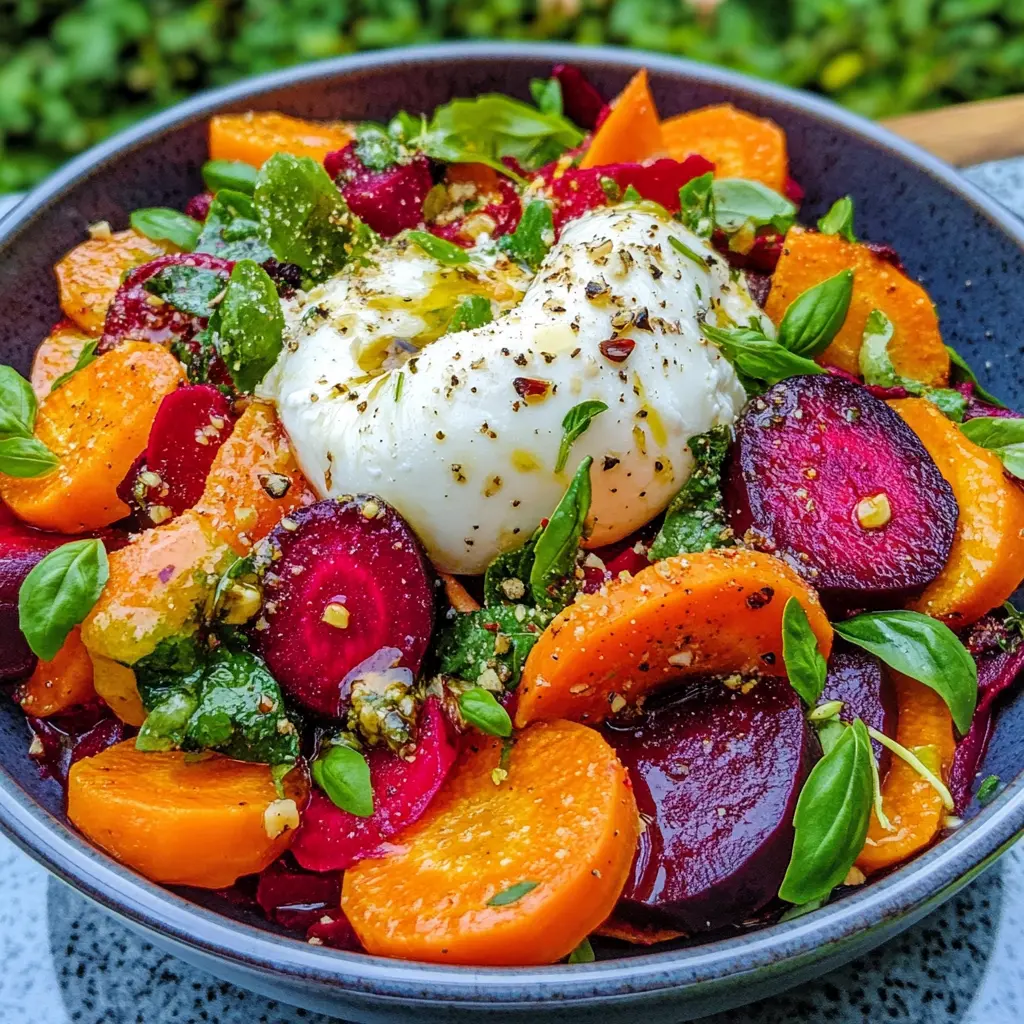
Picture this: vibrant crimson beets and golden carrots, perfectly caramelized from roasting, nestled alongside creamy, luxurious burrata cheese. This Roasted Beet and Carrot with Creamy Burrata Salad transforms simple vegetables into an extraordinary culinary experience. Furthermore, this Mediterranean-inspired dish delivers both visual appeal and incredible flavor.
This stunning salad combines the earthy sweetness of roasted root vegetables with the rich, buttery texture of fresh burrata cheese. Moreover, it’s completely perfect for health-conscious food lovers. Additionally, the recipe requires minimal preparation while delivering maximum impact on your dinner table.
Whether you’re hosting a dinner party or seeking a nutritious weeknight meal, this colorful creation will exceed your expectations. Indeed, the combination of textures and flavors makes every bite memorable.
What Makes This Salad Special
Flavor Profile Excellence
The Roasted Beet and Carrot with Creamy Burrata Salad showcases a perfect balance of earthy and creamy elements. Consequently, roasting brings out the natural sugars in both beets and carrots. Meanwhile, the burrata adds richness without overwhelming the vegetables’ delicate flavors.
The caramelization process during roasting creates complex flavors. Similarly, the contrast between warm roasted vegetables and cool, creamy cheese creates textural interest. Furthermore, fresh herbs add brightness that elevates the entire dish.
Visual Appeal and Presentation
This salad is a feast for the eyes. The deep burgundy beets contrast beautifully with bright orange carrots. Additionally, the white burrata creates stunning visual drama against the colorful vegetables. Therefore, this dish makes an impressive centerpiece for any meal.
Restaurant-quality presentation comes naturally with this recipe. Moreover, the natural colors require no artificial enhancement. Subsequently, food photography enthusiasts will find endless inspiration in this vibrant creation.
Nutritional Powerhouse
Beyond its beauty, this salad packs serious nutritional benefits. First, beets provide folate, manganese, and nitrates that support cardiovascular health. Meanwhile, carrots deliver beta-carotene and fiber for optimal wellness.
The burrata contributes high-quality protein and calcium. Additionally, olive oil provides healthy monounsaturated fats. Therefore, this salad supports a balanced, nutritious diet while satisfying your taste buds.
Essential Ingredients Breakdown
Primary Vegetables
Fresh Beets (2-3 medium)
Choose firm, unblemished beets with smooth skin. Golden and red varieties work equally well. Furthermore, smaller beets tend to cook more evenly than oversized ones.
Large Carrots (4-5 pieces)
Select carrots with vibrant orange color and firm texture. Additionally, avoid carrots with soft spots or excessive branching. Baby carrots can substitute but may require adjusted cooking times.
The Star: Burrata Cheese
Fresh Burrata (8 oz)
High-quality burrata makes all the difference in this salad. Look for cheese that feels soft but not overly liquid. Moreover, use burrata within 2-3 days of purchase for optimal flavor and texture.
Store-bought burrata works perfectly fine. However, if available, artisanal varieties offer superior taste. Additionally, ensure the cheese reaches room temperature before serving.
Supporting Cast
Extra Virgin Olive Oil (1/4 cup)
Choose high-quality olive oil for the best flavor results. Furthermore, good olive oil enhances rather than masks the vegetables’ natural taste.
Fresh Herbs (1/2 cup mixed)
Basil, thyme, and oregano work beautifully together. Additionally, fresh herbs provide brightness that dried versions cannot match. Moreover, growing your own herbs ensures optimal freshness.
Balsamic Vinegar (2 tablespoons)
Quality balsamic vinegar adds tangy depth to the salad. Furthermore, aged balsamic provides complex flavors that complement the roasted vegetables perfectly.
Garlic (3 cloves)
Fresh garlic cloves, minced finely, distribute flavor throughout the dish. Additionally, roasting mellows garlic’s sharpness while maintaining its aromatic qualities.
Seasoning Elements
Sea Salt and Black Pepper
High-quality sea salt enhances all the other flavors. Meanwhile, freshly cracked black pepper adds subtle heat and complexity.
Optional: Toasted Pine Nuts (1/4 cup)
Pine nuts provide delightful crunch and nutty flavor. Additionally, toasting enhances their natural oils and creates deeper taste.
Step-by-Step Preparation Guide
Phase 1: Vegetable Preparation
Step 1: Preheat and Prep
Preheat your oven to 425°F (220°C). Subsequently, line two large baking sheets with parchment paper. This temperature ensures proper caramelization without burning.
Step 2: Beet Preparation
Wash beets thoroughly under cold running water. Then, trim both ends and peel with a vegetable peeler. Additionally, wear gloves to prevent staining your hands.
Cut beets into 1-inch wedges for even cooking. Moreover, uniform pieces ensure consistent texture throughout the salad. Furthermore, similar-sized pieces finish cooking simultaneously.
Step 3: Carrot Preparation
Peel carrots and cut them into diagonal slices, approximately 1/2-inch thick. Diagonal cuts provide more surface area for caramelization. Additionally, this cutting style creates elegant presentation.
Phase 2: Roasting Process
Step 4: Seasoning the Vegetables
Place beets on one baking sheet and carrots on another. Drizzle each with olive oil, ensuring all pieces are well-coated. Then, season generously with salt and pepper.
Add minced garlic to both vegetables. Additionally, fresh herbs can be added during the final 10 minutes of roasting. This timing prevents burning while infusing flavor.
Step 5: Roasting Timeline
Roast beets for 25-30 minutes until fork-tender. Meanwhile, carrots typically require 20-25 minutes. Therefore, stagger your timing accordingly for simultaneous completion.
Check vegetables every 10 minutes, turning once halfway through cooking. Furthermore, properly roasted vegetables should be caramelized but not mushy. Additionally, they should pierce easily with a fork.
Phase 3: Assembly and Final Touches
Step 6: Cooling and Arrangement
Allow roasted vegetables to cool slightly before arranging on your serving platter. Moreover, warm vegetables can cause burrata to melt prematurely.
Create an attractive arrangement by alternating beet and carrot pieces. Additionally, leave space in the center for the burrata cheese.
Step 7: Adding the Burrata
Tear burrata into generous portions and place throughout the salad. Furthermore, the creamy interior should be visible and inviting. Additionally, distribute pieces evenly for balanced bites.
Step 8: Final Garnishing
Drizzle the entire salad with balsamic vinegar and remaining olive oil. Then, sprinkle fresh herbs over everything. Finally, add toasted pine nuts if using.
Nutritional Benefits
Cardiovascular Health Support
The Roasted Beet and Carrot with Creamy Burrata Salad provides numerous heart-healthy benefits. First, beets contain natural nitrates that support healthy blood pressure levels.
Meanwhile, carrots provide beta-carotene, which converts to vitamin A in the body. Furthermore, this antioxidant supports overall cellular health and immune function.
Digestive Health Benefits
Both beets and carrots offer significant fiber content. Additionally, fiber supports healthy digestion and helps maintain stable blood sugar levels. Moreover, the combination creates a satisfying meal that promotes fullness.
The healthy fats from olive oil and burrata aid nutrient absorption. Furthermore, these fats help the body utilize fat-soluble vitamins more effectively.
Bone Health Support
Burrata cheese provides calcium and phosphorus essential for strong bones. Additionally, the vitamin K found in leafy herbs supports bone metabolism. Therefore, this salad contributes to long-term skeletal health.
Anti-Inflammatory Properties
The colorful vegetables in this salad provide powerful antioxidants. Moreover, olive oil contains compounds that reduce inflammation throughout the body. Subsequently, regular consumption may support overall wellness and longevity.
Serving Suggestions and Pairings
Meal Positioning Options
This versatile Roasted Beet and Carrot with Creamy Burrata Salad works beautifully as either an appetizer or main course. Additionally, it serves as an elegant side dish for special occasions.
For appetizer service, divide among individual plates for sophisticated presentation. Meanwhile, family-style serving encourages sharing and conversation around the dinner table.
Complementary Dishes
Grilled Proteins
This salad pairs exceptionally well with grilled chicken, salmon, or lamb. Furthermore, the creamy burrata balances perfectly with smoky, charred flavors. Additionally, the vegetables provide refreshing contrast to rich proteins.
Grain-Based Sides
Consider serving alongside quinoa, farro, or wild rice. Moreover, these grains absorb the delicious juices from the roasted vegetables. Therefore, they create a more substantial, complete meal.
Bread Selections
Crusty artisanal bread or focaccia complements this Mediterranean-inspired salad beautifully. Additionally, the bread helps soak up the flavorful olive oil and balsamic dressing.
Seasonal Adaptations
Spring Variations
Add fresh asparagus or sugar snap peas to the roasted vegetables. Furthermore, spring herbs like chives or dill provide bright, fresh flavors.
Summer Modifications
Incorporate cherry tomatoes or roasted bell peppers during peak summer season. Additionally, fresh basil becomes the star herb for warm weather enjoyment.
Fall Enhancements
Include roasted butternut squash or parsnips for heartier autumn versions. Moreover, sage and rosemary complement the earthier fall flavors perfectly.
Winter Adaptations
Add roasted Brussels sprouts or cauliflower for cold-weather variations. Furthermore, heartier herbs like thyme and oregano provide warming aromatics.
Storage and Make-Ahead Tips
Preparation Timeline
This Roasted Beet and Carrot with Creamy Burrata Salad benefits from strategic advance preparation. First, vegetables can be roasted up to two days ahead. Additionally, proper storage maintains their flavor and texture.
Store roasted vegetables separately in airtight containers in the refrigerator. Furthermore, bring them to room temperature before assembling the final salad.
Burrata Handling
Purchase burrata as close to serving time as possible. Moreover, this cheese is best enjoyed within 24 hours of opening. Additionally, keep burrata refrigerated until 30 minutes before serving.
Never freeze burrata, as the texture becomes grainy and unappetizing. Furthermore, frozen and thawed burrata loses its characteristic creaminess.
Assembly Strategies
For best results, assemble the complete salad just before serving. However, if timing requires earlier preparation, add burrata at the last possible moment. Additionally, reserve fresh herbs and nuts for final garnishing.
Leftover Management
Leftover roasted vegetables keep well for up to three days refrigerated. Moreover, they can be repurposed in grain bowls or pasta dishes. However, leftover burrata should be consumed within 24 hours.
Transform leftovers by tossing with pasta and additional olive oil. Furthermore, chopped leftover vegetables work wonderfully in omelets or frittatas.
Creative Variations
Protein Additions
Transform this salad into a complete meal by adding complementary proteins. Grilled chicken breast, sliced thin, integrates seamlessly with the existing flavors. Additionally, chickpeas or white beans provide plant-based protein alternatives.
Check out our guide on [perfect protein pairings for Mediterranean salads] for more inspiration.
Cheese Alternatives
While burrata creates the signature creaminess, other cheese options work beautifully. Fresh mozzarella provides similar texture with milder flavor. Furthermore, goat cheese adds tangy complexity that complements the sweet vegetables.
Ricotta cheese, especially when high-quality, offers another creamy alternative. Additionally, feta cheese provides Mediterranean authenticity with sharp, salty notes.
Vegetable Variations
Root Vegetable Medley
Add parsnips, turnips, or sweet potatoes for more complex flavors. Moreover, different vegetables provide varied textures and colors. Therefore, experimentation keeps the salad interesting throughout the seasons.
Mediterranean Additions
Include roasted red peppers, zucchini, or eggplant for traditional Mediterranean flair. Furthermore, these vegetables roast well alongside beets and carrots.
Dressing Alternatives
While olive oil and balsamic create the classic combination, other dressings work well too. Lemon vinaigrette provides bright acidity that enhances the vegetables’ sweetness. Additionally, herb-infused oils create aromatic complexity.
Tahini-based dressings offer Middle Eastern inspiration. Furthermore, the nutty flavor complements roasted vegetables beautifully while maintaining the salad’s healthful profile.
Professional Chef Tips
Roasting Excellence
Professional chefs achieve superior results through attention to detail. First, ensure vegetables are completely dry before oiling. Additionally, excess moisture prevents proper caramelization.
Use separate baking sheets for different vegetables. Moreover, this prevents color bleeding and allows for precise timing control. Furthermore, overcrowding leads to steaming rather than roasting.
Burrata Mastery
High-end restaurants serve burrata at optimal temperature for maximum impact. Room temperature burrata spreads more easily and releases its creamy interior naturally. Additionally, cold burrata lacks the luxurious mouthfeel that makes this cheese special.
Flavor Balancing
Professional kitchens balance sweet, salty, and acidic elements carefully. The natural sweetness from roasted vegetables requires adequate salt to enhance flavors. Moreover, balsamic acidity cuts through the rich burrata perfectly.
Taste continuously during preparation. Additionally, adjust seasoning levels based on the sweetness of your particular vegetables. Furthermore, seasonal variations may require different amounts of salt and acid.
Presentation Techniques
Restaurant-quality plating elevates home cooking significantly. Create height and visual interest by layering components thoughtfully. Additionally, use the natural colors to create striking contrasts.
Warm the serving plates slightly for optimal presentation. Moreover, this prevents the burrata from firming up too quickly. Furthermore, attractive presentation enhances the overall dining experience.
Frequently Asked Questions
Can I make Roasted Beet and Carrot with Creamy Burrata Salad ahead of time?
Yes, you can prepare components in advance for convenience. Roast vegetables up to two days ahead and store refrigerated. However, add burrata only just before serving to maintain optimal texture and temperature.
What’s the best way to prevent beet staining?
Wear disposable gloves when handling raw beets. Additionally, use separate cutting boards and utensils to prevent color transfer. Moreover, acidic solutions like lemon juice help remove beet stains from hands and surfaces.
How do I know when vegetables are properly roasted?
Properly roasted vegetables should be fork-tender with golden, caramelized edges. Furthermore, they should hold their shape without being mushy. Additionally, the natural sugars should be visible as slight browning on the surfaces.
Can I substitute different cheeses for burrata?
Fresh mozzarella provides the closest texture alternative to burrata. Additionally, goat cheese offers tangy complexity that pairs well with roasted vegetables. Moreover, ricotta cheese creates similar creaminess with milder flavor.
How long does this salad keep after assembly?
Assembled salad should be consumed within 2-3 hours for optimal quality. However, the roasted vegetables alone keep up to three days refrigerated. Furthermore, store components separately for maximum freshness.
What herbs work best in this recipe?
Basil, thyme, and oregano provide classic Mediterranean flavors. Additionally, fresh parsley adds brightness without overwhelming other ingredients. Moreover, rosemary works well but should be used sparingly due to its strong flavor.
Is this salad suitable for special diets?
This recipe naturally accommodates many dietary preferences. It’s vegetarian and gluten-free as written. Additionally, omitting the burrata creates a vegan-friendly option. Moreover, it fits well within Mediterranean and low-carb eating plans.

Roasted Beet and carrot with creamy burrata salad
Description
Roasted Beet and Carrot with Creamy Burrata Salad
Ingredients
Roasted Vegetables:
-
3 red beets, trimmed and peeled
-
3 golden beets, trimmed and peeled
-
6 medium carrots, halved lengthwise
-
Olive oil for roasting
-
Salt to taste
Salad Components:
-
8 oz burrata cheese
-
4-6 cups mixed greens (arugula, spinach, baby kale)
-
Beet greens from fresh beets, chopped
-
½ cup chopped toasted hazelnuts or pistachios
Honey Rosemary Vinaigrette:
-
3 tablespoons olive oil
-
1 tablespoon honey
-
1 garlic clove, minced
-
1 teaspoon fresh rosemary, finely chopped
-
Salt and pepper to taste
Instructions
Roast the Vegetables:
-
Preheat oven to 400°F (200°C)
-
Cut beets into wedges and carrots into 4-inch segments, halved lengthwise
-
Toss beets and carrots with olive oil and salt
-
Arrange vegetables in a single layer on a baking sheet, keeping red beets separate if you want to prevent color bleeding
-
Roast for 30-45 minutes until tender and caramelized around the edges
Prepare Beet Greens:
6. While vegetables roast, heat a drizzle of olive oil in a skillet over medium-high heat
7. Quickly sauté the beet greens for 2-3 minutes until lightly wilted
8. Set aside
Make Vinaigrette:
9. In a small bowl, whisk together olive oil, honey, minced garlic, fresh rosemary, salt, and pepper until well combined
Assemble Salad:
10. Allow roasted vegetables to cool slightly
11. Arrange mixed greens and sautéed beet greens on a large platter
12. Top with roasted beets and carrots
13. Tear burrata into pieces and distribute over the vegetables
14. Sprinkle with toasted nuts
15. Drizzle generously with honey rosemary vinaigrette
16. Garnish with fresh rosemary sprigs and serve immediately