
Introduction
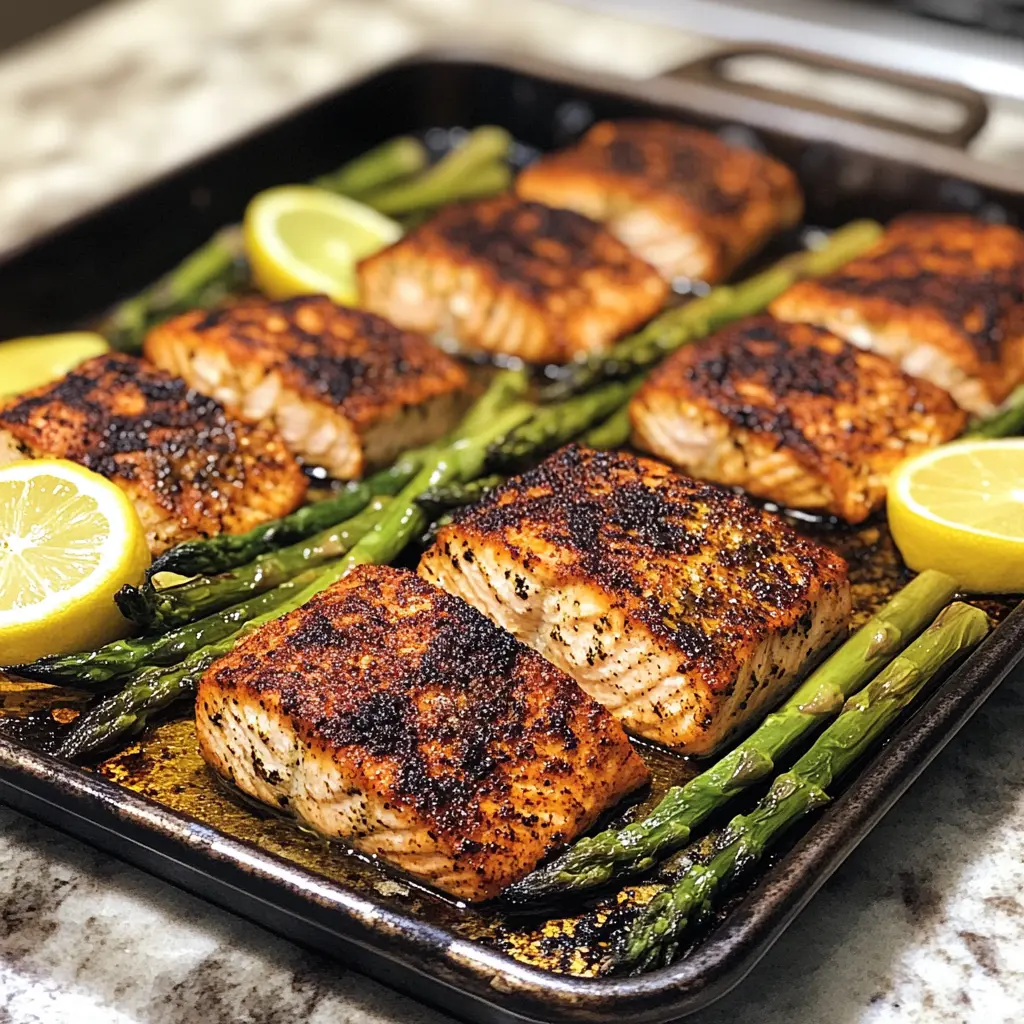
Sheet-Pan Blackened Salmon with Asparagus and Lemon transforms weeknight dinners into restaurant-quality meals without the hassle. This one-pan wonder combines protein-rich salmon fillets coated in bold Cajun spices with crisp-tender asparagus and bright lemon slices. Moreover, the entire meal cooks in just 20-25 minutes, making it perfect for busy families seeking nutritious options.
The blackening technique creates a flavorful crust on the salmon while keeping the inside moist and tender. Furthermore, cooking everything on a single sheet pan means minimal cleanup and maximum flavor development. This recipe delivers bold taste, impressive nutrition, and effortless preparation all in one dish.
What Makes Blackened Salmon Special
Blackening is a Louisiana cooking technique that originated from Cajun cuisine. This method involves coating fish or meat with a spice blend rich in paprika, cayenne, and aromatic herbs. The high heat creates a dark, flavorful crust without burning the food.
The blackened seasoning creates complex layers of flavor that enhance the natural richness of salmon. Additionally, the spice blend typically includes smoked paprika, which adds depth and a subtle smokiness. The combination of heat from cayenne and earthiness from dried herbs creates a perfectly balanced coating.
Sheet-Pan Blackened Salmon with Asparagus and Lemon offers several advantages over traditional stovetop blackening. First, the oven method produces less smoke in your kitchen. Second, you can cook the salmon and vegetables simultaneously. Finally, the sheet pan method requires less active cooking time and attention.
Health Benefits of This Recipe
Salmon ranks among the most nutritious proteins available, offering exceptional health benefits. A 100-gram serving provides approximately 2.3 grams of omega-3 fatty acids, including EPA and DHA. These essential fats support heart health, brain function, and reduce inflammation throughout the body.
Regular salmon consumption lowers the risk of cardiovascular diseases and stroke significantly. Research shows that eating two servings of fatty fish per week meets omega-3 requirements for most adults. Furthermore, salmon contains high levels of selenium, which supports DNA synthesis and thyroid hormone metabolism.
Asparagus brings its own nutritional advantages to this Sheet-Pan Blackened Salmon with Asparagus and Lemon recipe. This green vegetable provides fiber, vitamins A, C, E, and K, plus folate. Additionally, asparagus contains antioxidants that protect cells from damage. The combination of salmon and asparagus creates a nutrient-dense meal supporting overall wellness.
Essential Ingredients You’ll Need
For the Blackening Seasoning
The homemade seasoning blend elevates this dish from simple to spectacular. Quality spices make a noticeable difference in the final flavor profile. Here’s what you need:
-
3 tablespoons paprika (sweet or smoked)
-
1 tablespoon garlic powder
-
1 tablespoon onion powder
-
2 teaspoons sea salt
-
2 teaspoons black pepper
-
1 teaspoon cayenne pepper
-
1 teaspoon dried thyme
-
1 teaspoon dried oregano
-
½ teaspoon dried basil
For the Sheet Pan
Fresh, high-quality ingredients ensure the best results for Sheet-Pan Blackened Salmon with Asparagus and Lemon. Choose wild-caught salmon when possible for superior flavor and nutrition. The following ingredients serve four people:
-
4 salmon fillets (6 ounces each)
-
1½ pounds fresh asparagus
-
2 tablespoons olive oil
-
1 large lemon (sliced)
-
2 tablespoons fresh lemon juice
-
Fresh parsley for garnish
-
Lemon wedges for serving
How to Make the Perfect Blackening Seasoning
Creating homemade blackening seasoning takes just five minutes and surpasses store-bought versions. The blend combines readily available pantry spices into a flavorful mix with recognizable Cajun character. This recipe yields enough seasoning for multiple meals, so store extras in an airtight container.
Start by measuring all your spices into a small bowl. Mix thoroughly to distribute the cayenne pepper evenly throughout the blend. The paprika forms the base, providing color and sweet-peppery notes. Meanwhile, cayenne delivers heat, so adjust the amount based on your spice tolerance.
Smoked paprika adds exceptional depth to the blackening seasoning. However, regular paprika works fine if smoked paprika isn’t available. The dried herbs (thyme, oregano, and basil) contribute earthy complexity that balances the heat. This seasoning blend also works beautifully on chicken, shrimp, and vegetables.
Step-by-Step Preparation Guide
Preparing Your Ingredients
Begin by preheating your oven to 425°F, which is ideal for roasting vegetables and fish. This temperature creates caramelization on the asparagus while cooking the salmon to perfection. Line a large sheet pan with parchment paper or aluminum foil for easy cleanup.
Rinse the salmon fillets and pat them completely dry with paper towels. Moisture prevents the blackening seasoning from adhering properly. Next, trim the woody ends from the asparagus spears by bending each stalk until it naturally snaps. Alternatively, cut off the bottom 1-2 inches with a knife.
Wash and dry the asparagus thoroughly to prevent steaming during roasting. Excess moisture creates steam rather than the desired roasted texture. Slice your lemon into thin rounds, reserving some for fresh juice. These preparation steps ensure smooth assembly and even cooking.
Arranging the Sheet Pan
Place the salmon fillets skin-side down on the prepared sheet pan. Position them toward one side to leave room for the asparagus. Brush or drizzle the salmon with olive oil to help the seasoning adhere and prevent sticking.
Generously coat each salmon fillet with the blackening seasoning. Use approximately 1-2 tablespoons per fillet, depending on size and preference. Press the seasoning gently into the fish to create an even crust. Don’t be shy with the spice blend—it creates the characteristic blackened appearance and flavor.
Arrange the asparagus spears on the remaining space of the sheet pan. Drizzle them with the remaining olive oil and season with salt and pepper. Toss the asparagus to coat evenly. Scatter lemon slices among the asparagus and over the salmon for a beautiful presentation and added flavor.
Roasting to Perfection
Place the sheet pan in the preheated oven on the center rack. Roast for 12-15 minutes for medium-thickness salmon fillets. The cooking time varies based on fillet thickness and desired doneness. Pencil-thin asparagus will be perfectly tender in 10-12 minutes.
Check salmon doneness by inserting a fork into the thickest part of the fillet. The fish should flake easily when cooked through. Alternatively, use an instant-read thermometer to check for an internal temperature of 125°F. The salmon will continue cooking slightly after removal from the oven.
The asparagus should be easily pierced with a fork but maintain some crispness. Thicker asparagus spears may need 15-20 minutes to reach optimal tenderness. Remove the sheet pan from the oven when everything reaches the desired doneness. Drizzle fresh lemon juice over the salmon and asparagus immediately.
Cooking Tips for Perfect Results
Choosing the Right Salmon
Wild-caught salmon offers superior flavor and firmer texture compared to farmed varieties. Look for fillets with vibrant color and no strong fishy smell. Skin-on fillets work best for sheet-pan cooking because the skin protects the delicate flesh from direct heat.
All fillets should be approximately the same thickness for even cooking. If your fillets vary significantly in size, adjust their position on the pan. Place thicker pieces toward the back of the oven where heat is typically more intense. This simple adjustment ensures everything finishes simultaneously.
Asparagus Selection and Preparation
Choose asparagus spears that are firm, straight, and have tightly closed tips. Medium-thickness spears work best for Sheet-Pan Blackened Salmon with Asparagus and Lemon because they match the salmon’s cooking time. Avoid very thick or very thin spears, which cook at different rates.
Store asparagus properly before cooking by trimming the ends and standing the spears upright in a glass with an inch of water. Cover loosely with a plastic bag and refrigerate. This method keeps asparagus fresh and crisp for several days. Always bring asparagus to room temperature before roasting for even cooking.
Temperature and Timing Considerations
A 425°F oven temperature strikes the perfect balance for this recipe. Higher temperatures may burn the blackening spices before the salmon cooks through. Lower temperatures won’t create the desired caramelization on the asparagus or the characteristic blackened crust.
Don’t overcrowd the sheet pan, as this causes steaming instead of roasting. Leave space between asparagus spears for air circulation. If necessary, use two sheet pans rather than cramming everything onto one. Proper spacing ensures both the salmon and vegetables develop beautiful roasted flavors.
Nutritional Information
Sheet-Pan Blackened Salmon with Asparagus and Lemon provides impressive nutritional value per serving. One portion contains approximately 350-400 calories, depending on fillet size. The meal offers around 40 grams of high-quality protein, supporting muscle maintenance and satiety.
The omega-3 fatty acids in salmon provide 2-3 grams per serving. These essential fats support cardiovascular health and reduce inflammation markers. Additionally, the dish delivers minimal carbohydrates (under 8 grams per serving), making it suitable for low-carb and keto diets.
Asparagus contributes fiber, vitamins, and minerals without adding significant calories. The entire meal contains beneficial nutrients including selenium, vitamin D, B vitamins, and potassium. Furthermore, using olive oil adds heart-healthy monounsaturated fats. This complete meal supports various health goals while satisfying taste preferences.
Serving Suggestions and Side Dishes
Sheet-Pan Blackened Salmon with Asparagus and Lemon stands beautifully on its own as a complete meal. However, adding complementary sides creates variety and rounds out the dining experience. The bold Cajun flavors pair excellently with mild, starchy accompaniments.
Consider serving this dish with fluffy white rice or quinoa to absorb the flavorful juices. Alternatively, cauliflower rice offers a low-carb option that complements the robust spices. Creamy mashed potatoes or roasted sweet potato wedges also work wonderfully alongside the blackened salmon.
For a lighter approach, serve the salmon over mixed greens for a warm salad presentation. The lemon and olive oil from the sheet pan double as salad dressing. Crusty bread helps sop up any remaining juices and balances the spicy seasoning. Fresh herbs like parsley, cilantro, or dill add brightness and visual appeal to the finished plate.
Meal Prep and Storage Instructions
Preparing Components in Advance
Make the blackening seasoning blend up to three months ahead and store it in an airtight container. Label the container with the date to track freshness. This time-saving strategy means the seasoning is ready whenever you need it.
Wash and trim asparagus up to two days before cooking. Store the prepared spears in a container lined with damp paper towels. Keep them refrigerated until ready to use. You can also portion salmon fillets and store them separately in the refrigerator for convenient weeknight cooking.
Storing Leftovers
Leftover Sheet-Pan Blackened Salmon with Asparagus and Lemon keeps well in airtight containers for 3-4 days. Store the salmon and asparagus together or separately based on your reheating preferences. Refrigerate promptly after the meal cools to room temperature.
Reheat leftovers gently to prevent overcooking the salmon. Use a 300°F oven for 8-10 minutes until warmed through. Alternatively, reheat in a covered skillet over low heat with a splash of water. Microwave reheating works but may dry out the salmon, so use short intervals and cover the container.
Freezing Guidelines
Cooked salmon freezes reasonably well for up to two months when properly stored. Wrap individual portions tightly in plastic wrap, then place in freezer bags. However, asparagus doesn’t freeze well after cooking because it becomes mushy upon thawing. Consider freezing only the salmon if you anticipate longer storage needs.
Thaw frozen salmon in the refrigerator overnight before reheating. Never refreeze previously frozen and cooked salmon. For best results, consume thawed salmon within 24 hours. The texture may be slightly different from fresh, but the flavor remains delicious.
Common Mistakes to Avoid
Overcooking the Salmon
Overcooked salmon becomes dry, tough, and loses its buttery texture. Remember that salmon continues cooking after removal from the oven due to residual heat. Therefore, pull the salmon from the oven when it reaches 125°F internally.
The center should still appear slightly translucent when you remove the pan. The salmon will reach 130-135°F (perfectly cooked) as it rests. This technique ensures moist, tender fish every time. Set a timer to avoid forgetting about the sheet pan in the oven.
Using Too Little Seasoning
The blackening technique requires generous seasoning to create the characteristic crust and bold flavor. Don’t be timid when applying the spice blend to the salmon. A proper coating should completely cover the fish surface with visible spices.
However, balance is important—the seasoning should enhance, not overwhelm, the salmon’s natural flavor. Start with 1-2 tablespoons per fillet and adjust based on personal preference. Press the seasoning into the fish rather than just sprinkling it on top for better adhesion.
Skipping the Oil
Olive oil serves multiple purposes in Sheet-Pan Blackened Salmon with Asparagus and Lemon. First, it helps the seasoning stick to the salmon. Second, it prevents sticking to the pan. Third, it aids in heat transfer for better browning and caramelization.
Don’t skip or drastically reduce the oil to save calories. The modest amount used distributes across multiple servings and contributes beneficial fats. The oil also helps fat-soluble vitamins in the asparagus become more bioavailable during digestion.
Variations and Customizations
Spice Level Adjustments
Reduce the cayenne pepper in the blackening seasoning for a milder version. Start with ½ teaspoon instead of a full teaspoon. Conversely, spice enthusiasts can increase cayenne or add crushed red pepper flakes for extra heat.
Replace cayenne with chipotle powder for a different flavor profile. Chipotle adds smoky heat with slightly less intensity than cayenne. You can also split the difference by using half cayenne and half chipotle powder for complex, layered heat.
Vegetable Substitutions
While asparagus works beautifully in this recipe, other vegetables make excellent alternatives. Try green beans, broccolini, or zucchini spears following the same preparation method. These vegetables roast well at 425°F and complement the blackened salmon.
Cherry tomatoes add bright color and sweet-tart flavor when scattered around the salmon. Bell peppers (sliced into strips) provide crunch and mild sweetness. You can also add thinly sliced red onion for additional depth. Mix and match vegetables based on seasonal availability and personal preferences.
Sauce and Topping Options
Create a cooling sauce to balance the spicy blackening seasoning. Mix Greek yogurt with fresh dill, lemon juice, and minced garlic. This tangy sauce complements the bold flavors without competing with them.
Alternatively, make a cilantro-ginger sauce by blending fresh cilantro, ginger, lime juice, and olive oil. This bright, herbaceous sauce adds freshness to Sheet-Pan Blackened Salmon with Asparagus and Lemon. A simple garlic-herb butter also works wonderfully melted over the hot salmon.
Adding Starchy Components
Transform this recipe into a complete one-pan meal by adding potatoes. Cut baby potatoes into quarters and toss with olive oil, salt, and pepper. Place them on the sheet pan first and roast for 15 minutes before adding the salmon and asparagus.
Sweet potato cubes also work well, though they require similar pre-roasting time. The potatoes develop crispy exteriors and fluffy interiors while absorbing flavors from the salmon and seasonings. This addition makes the meal more filling and eliminates the need for separate side dishes.
Frequently Asked Questions
How do I know when Sheet-Pan Blackened Salmon with Asparagus and Lemon is done?
The salmon is properly cooked when it flakes easily with a fork and reaches an internal temperature of 125-130°F. The fish should appear opaque throughout with a slightly translucent center. Asparagus should be easily pierced with a fork while maintaining some firmness. Avoid overcooking, which makes salmon dry and asparagus mushy.
Can I use frozen salmon for this recipe?
Yes, but thaw the salmon completely before cooking for best results. Place frozen fillets in the refrigerator overnight to thaw slowly and safely. Pat the thawed salmon very dry with paper towels before applying the seasoning. Excess moisture prevents proper seasoning adhesion and affects the blackened crust formation.
What if I don’t have all the spices for blackening seasoning?
You can use store-bought Cajun or blackening seasoning as a convenient alternative. However, homemade seasoning allows you to control the heat level and sodium content. If missing one or two herbs, the recipe still works well. The essential components are paprika, garlic powder, onion powder, cayenne, salt, and black pepper.
How do I prevent the salmon skin from sticking?
Always place salmon skin-side down on a well-oiled or parchment-lined sheet pan. The oil creates a barrier between the skin and the pan surface. Additionally, avoid moving the salmon once placed on the pan. The skin releases naturally from the pan once the fish cooks through.
Can I make Sheet-Pan Blackened Salmon with Asparagus and Lemon ahead for meal prep?
Yes, this recipe works excellently for meal prep. Cook the recipe as directed and portion into airtight containers. Store in the refrigerator for up to four days. Reheat gently in a 300°F oven or covered skillet. The flavors actually develop and meld overnight, making leftovers particularly delicious.
What sides pair well with this dish?
Rice, quinoa, couscous, and cauliflower rice all complement the bold flavors beautifully. Mashed potatoes or roasted sweet potatoes add heartiness. A simple green salad with lemon vinaigrette balances the spicy, rich salmon. Crusty bread helps absorb the flavorful juices from the sheet pan.
Is this recipe suitable for special diets?
Sheet-Pan Blackened Salmon with Asparagus and Lemon naturally fits many dietary patterns. The recipe is gluten-free, dairy-free, paleo, keto-friendly, and Whole30 compliant. It’s also low in carbohydrates and high in protein and healthy fats. The meal supports heart-healthy eating patterns and provides anti-inflammatory omega-3 fatty acids.
Can I double this recipe for a crowd?
Absolutely, but use two sheet pans to avoid overcrowding. Crowded pans create steam instead of allowing proper roasting and caramelization. Place both pans in the oven simultaneously, rotating their positions halfway through cooking. This ensures even cooking and consistent results across both pans.
Conclusion
Sheet-Pan Blackened Salmon with Asparagus and Lemon delivers restaurant-quality flavor with minimal effort and cleanup. This healthy, protein-rich meal combines bold Cajun spices, tender vegetables, and bright citrus in just 25 minutes. The recipe provides impressive nutritional benefits including heart-healthy omega-3 fatty acids and essential vitamins.
The versatility of this dish makes it perfect for busy weeknights, meal prep, or special occasions. Furthermore, the simple preparation technique produces consistently excellent results without requiring advanced cooking skills. The combination of spicy blackened crust and tender, flaky salmon creates addictive flavors that keep people coming back for more.
Ready to transform your dinner routine? Try Sheet-Pan Blackened Salmon with Asparagus and Lemon tonight and discover how easy healthy eating can be. Gather your ingredients, preheat your oven, and prepare to enjoy a delicious meal that supports your wellness goals. Don’t forget to save the blackening seasoning recipe for your next cooking adventure!
Print
Sheet-Pan Blackened Salmon with Asparagus and Lemon
- Total Time: 25
- Yield: 4 1x
Ingredients
For the Shrimp:
-
1 lb (450 g) large shrimp, peeled and deveined
-
1 tbsp olive oil
-
1 tsp chili powder
-
1/2 tsp cumin
-
1/2 tsp smoked paprika
-
1/4 tsp garlic powder
-
Salt and black pepper to taste
For the Cilantro Lime Rice:
-
1 cup long-grain white rice
-
2 cups water or chicken broth
-
Juice of 1 lime
-
1/4 cup chopped fresh cilantro
-
Salt to taste
Optional Bowl Toppings:
-
Diced avocado
-
Cherry tomatoes, halved
-
Shredded lettuce
-
Sliced red onion
-
Shredded cheese
-
Salsa or sour cream
Instructions
-
Cook the Rice:
-
Rinse rice under cold water. In a saucepan, bring 2 cups water or broth to a boil. Add rice and a pinch of salt, reduce heat to low, cover, and simmer for 15–18 minutes until rice is tender.
-
Fluff rice with a fork and stir in lime juice and chopped cilantro.
-
-
Cook the Shrimp:
-
In a medium bowl, toss shrimp with olive oil, chili powder, cumin, smoked paprika, garlic powder, salt, and pepper.
-
Heat a skillet over medium-high heat and cook shrimp 2–3 minutes per side until pink and cooked through.
-
-
Assemble the Bowls:
-
Divide cilantro lime rice among bowls. Top with cooked shrimp and your choice of toppings such as avocado, tomatoes, lettuce, cheese, and salsa.
-
Notes
-
For extra flavor, squeeze fresh lime juice over the assembled bowls.
-
Use brown rice or cauliflower rice for a healthier variation.
-
Make it a meal prep option by storing shrimp and rice separately in airtight containers for up to 3 days.
- Prep Time: 10
- Cook Time: 15
Nutrition
- Calories: 400