
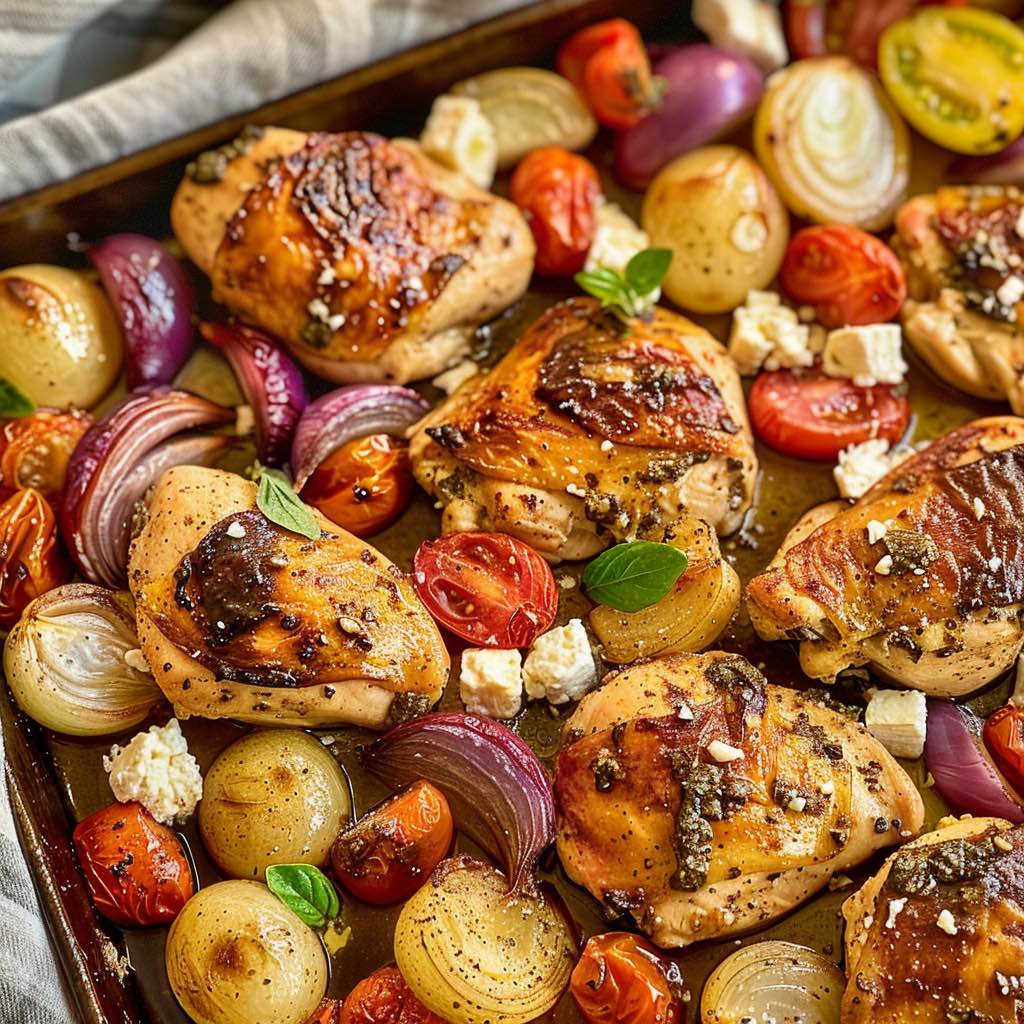
Sheet Pan Feta Chicken: A Simple One-Pan Mediterranean Dinner
Sheet pan feta chicken transforms ordinary chicken breasts into a flavorful Mediterranean feast with minimal effort and maximum taste. This one-pan wonder combines juicy chicken, tangy feta cheese, vibrant vegetables, and aromatic herbs for a complete meal that requires just minutes of prep and one sheet pan for easy cleanup.
What Makes Sheet Pan Feta Chicken Special
Sheet pan feta chicken stands out as a weeknight dinner hero. This Mediterranean-inspired dish delivers restaurant-quality flavor without complicated techniques or extensive cleanup.
The magic happens when feta cheese melts over tender chicken breasts. It creates a creamy, tangy sauce that coats the meat and vegetables. Meanwhile, the high-heat roasting caramelizes the vegetables and creates golden-brown edges on the chicken.
One-pan meals save time in multiple ways. You spend less time preparing ingredients. You also spend less time washing dishes. Most importantly, everything cooks together, allowing flavors to meld beautifully.
The Mediterranean approach to cooking emphasizes fresh ingredients. It also focuses on simple preparations and bold flavors. This recipe embodies those principles perfectly.
Why This Recipe Works
Several factors contribute to this dish’s success. First, sheet pan cooking uses dry heat from all sides. This method ensures even cooking and proper browning.
Second, the feta cheese serves dual purposes. It adds flavor while creating moisture. The cheese prevents the chicken from drying out during roasting.
Third, the vegetables cook alongside the protein. This technique saves time and energy. It also allows the vegetables to absorb flavors from the chicken and seasonings.
Essential Ingredients for Perfect Results
Quality ingredients make a significant difference in this recipe. Each component plays a specific role in creating the final dish.
Protein Selection
Boneless, Skinless Chicken Breasts (4 pieces, 6-8 oz each): These form the foundation of the dish. Choose breasts of similar size for even cooking. Pound them to uniform thickness if needed.
Feta Cheese (8 oz, crumbled): Select quality feta packed in brine. Greek or Bulgarian feta offers the best flavor. The cheese should be creamy yet crumbly.
Vegetables and Aromatics
Cherry Tomatoes (2 cups, halved): These burst during roasting, creating a natural sauce. Red and yellow varieties add visual appeal.
Red Onion (1 large, sliced): The onion sweetens as it caramelizes. It adds depth to the overall flavor profile.
Bell Peppers (2 medium, any color, sliced): Peppers provide sweetness and color. Mix red, yellow, and orange for visual interest.
Garlic (6 cloves, minced): Fresh garlic is non-negotiable. It infuses the entire dish with aromatic flavor.
Kalamata Olives (1/2 cup, pitted): These add briny, savory notes. They complement the feta perfectly.
Seasonings and Oils
Extra Virgin Olive Oil (1/4 cup): Quality olive oil matters. It carries flavors and promotes browning.
Dried Oregano (2 tablespoons): This quintessential Mediterranean herb is essential. Use Greek oregano when possible.
Lemon (2 large): Fresh lemon juice and zest brighten all flavors. Plan to use both juice and zest.
Black Pepper (1 teaspoon, freshly ground): Fresh pepper provides the best flavor and aroma.
Red Pepper Flakes (1/2 teaspoon, optional): Add heat if desired. Adjust to taste preferences.
Fresh Parsley (1/4 cup, chopped): This finishing touch adds freshness and color.
Step-by-Step Cooking Instructions
Follow these detailed instructions for perfect sheet pan feta chicken every time. Precision in preparation ensures consistent results.
Preparation Phase
Step 1: Preheat and Prepare
Preheat your oven to 425°F (220°C). This high temperature is crucial for proper browning. While the oven heats, line your sheet pan with parchment paper. This step simplifies cleanup significantly.
Step 2: Prepare the Chicken
Pat the chicken breasts completely dry with paper towels. Moisture prevents browning. Season both sides generously with salt and pepper. Place the chicken breasts in the center of the sheet pan, spacing them evenly.
Step 3: Season the Vegetables
In a large bowl, combine cherry tomatoes, red onion, bell peppers, and garlic. Drizzle with 3 tablespoons of olive oil. Add oregano, black pepper, and red pepper flakes if using. Toss everything thoroughly to coat evenly.
Cooking Process
Step 4: Arrange Ingredients
Arrange the seasoned vegetables around the chicken breasts. Distribute them evenly across the pan. Make sure vegetables are in a single layer for proper roasting. Scatter kalamata olives throughout the vegetables.
Step 5: Add Feta
Crumble feta cheese directly over the chicken breasts. Use your hands to ensure even distribution. Some feta can fall onto the vegetables too. Drizzle the remaining tablespoon of olive oil over everything.
Step 6: Add Citrus
Zest one lemon directly over the pan. Cut both lemons into wedges. Nestle several lemon wedges between the chicken and vegetables. Reserve remaining wedges for serving.
Step 7: Roast
Place the sheet pan on the middle oven rack. Roast for 25-30 minutes. The chicken should reach an internal temperature of 165°F (74°C). Check with an instant-read thermometer in the thickest part.
The vegetables should be tender and lightly charred. The feta will melt and become golden in spots. If the feta isn’t golden enough, broil for 2-3 minutes at the end.
Finishing Touches
Step 8: Rest and Serve
Remove the pan from the oven. Let everything rest for 5 minutes. This allows juices to redistribute in the chicken. Meanwhile, squeeze fresh lemon juice from the reserved wedges over everything.
Garnish with chopped fresh parsley. The bright green color contrasts beautifully with the golden chicken and roasted vegetables. Serve immediately while hot.
Choosing the Right Sheet Pan
The sheet pan itself significantly impacts cooking results. Understanding different options helps you make the best choice.
Size Matters
A standard half-sheet pan measures 18 x 13 inches. This size works perfectly for this recipe. It provides enough space for four chicken breasts and vegetables without overcrowding.
Quarter-sheet pans (13 x 9 inches) are too small. They cause overcrowding, which leads to steaming instead of roasting. Full-sheet pans (26 x 18 inches) work but may be unnecessarily large for home ovens.
Material Considerations
Aluminum: These pans heat quickly and distribute heat evenly. They’re lightweight and affordable. However, they can warp at high temperatures over time.
Stainless Steel: These are durable and won’t warp. They handle high heat excellently. The downside is potential sticking without proper preparation.
Non-stick: These make cleanup easier. However, they can’t withstand temperatures above 400°F safely. They’re not ideal for this high-heat recipe.
Aluminized Steel: This material combines aluminum’s heat conductivity with steel’s durability. These pans are professional-grade and worth the investment.
Rim Height
Choose pans with rims at least 1 inch high. Lower rims can allow juices to spill. Higher rims contain all the delicious cooking liquids that become part of the dish.
Flavor Variations and Customizations
Sheet pan feta chicken adapts easily to different tastes and preferences. These variations maintain the core concept while offering new flavor profiles.
Herb Variations
Italian Style: Replace oregano with Italian seasoning. Add fresh basil at the end instead of parsley. Include sun-dried tomatoes with the cherry tomatoes.
Herbes de Provence: Use this French herb blend for a different Mediterranean twist. Add fresh thyme sprigs before roasting. The lavender notes create subtle complexity.
Za’atar Blend: This Middle Eastern spice mixture includes thyme, sesame seeds, and sumac. It transforms the dish into something entirely different yet equally delicious.
Cheese Alternatives
Goat Cheese: This provides similar tanginess with creamier texture. It melts beautifully over the chicken. Use the same quantity as feta.
Halloumi: This squeaky cheese holds its shape better during cooking. Cube it and scatter over vegetables. It develops a beautiful golden crust.
No Cheese: For dairy-free versions, increase the lemon and olives. The dish remains flavorful without cheese.
Spice Adjustments
Smoky Version: Add 1 teaspoon smoked paprika to the vegetable mixture. This creates depth without heat. The smokiness complements the sweetness of roasted vegetables.
Spicy Kick: Double the red pepper flakes. Add sliced jalapeños to the vegetables. Fresh chili creates more heat than dried flakes.
Mediterranean Blend: Combine cumin, coriander, and oregano in equal parts. This creates a more complex flavor profile.
Vegetable Combinations That Work Best
The vegetable selection impacts both flavor and texture. Choose vegetables that roast well at high temperatures.
Best Choices
Zucchini and Yellow Squash: Cut into thick half-moons. They cook quickly and develop sweet, caramelized edges. Add them at the beginning with other vegetables.
Asparagus: Trim woody ends and cut into 2-inch pieces. Asparagus pairs exceptionally well with lemon and feta. It roasts perfectly in the same time frame.
Green Beans: Use fresh beans, not frozen. Trim ends and leave whole. They develop slight char while remaining crisp-tender.
Artichoke Hearts: Use canned or jarred hearts packed in water. Drain well and quarter them. They add Mediterranean authenticity.
Eggplant: Cut into 1-inch cubes. Salt them first and let sit 15 minutes to remove bitterness. Pat dry before adding to the pan.
Vegetables to Avoid
Broccoli and Cauliflower: These cook too quickly at 425°F. They become mushy before the chicken finishes. If using them, add during the last 15 minutes.
Leafy Greens: Spinach, kale, and chard burn at high heat. Add fresh greens after cooking instead. Toss them with the hot vegetables to wilt slightly.
Potatoes: Standard potato chunks need longer cooking times. If including potatoes, parboil them first for 5 minutes. Alternatively, use baby potatoes and add 10 minutes to cooking time.
Mushrooms: They release too much liquid at this temperature. This creates steam instead of roasting. Sauté mushrooms separately if desired.
Nutritional Benefits
Sheet pan feta chicken offers impressive nutritional value. Understanding these benefits helps you appreciate this dish beyond its delicious taste.
Protein Content
Each serving provides approximately 45-50 grams of protein. This comes primarily from the chicken breast. Protein supports muscle maintenance and promotes satiety.
Chicken breast is one of the leanest protein sources. It contains all essential amino acids.
Healthy Fats
Olive oil provides monounsaturated fats. These fats support heart health and reduce inflammation. The Mediterranean diet’s health benefits largely come from olive oil consumption.
Feta cheese adds calcium and additional protein. While it contains saturated fat, moderate amounts fit into balanced diets. The cheese also provides vitamin B12 and phosphorus.
Vitamins and Minerals
The vegetable component delivers impressive nutrients. Tomatoes provide lycopene, a powerful antioxidant. Bell peppers offer vitamin C in abundance.
Onions and garlic contain compounds that support immune function. They also provide anti-inflammatory benefits. The combination creates a nutritionally dense meal.
Calorie Breakdown
A typical serving contains approximately 450-500 calories. This includes one chicken breast and a generous portion of vegetables. The calorie distribution supports balanced nutrition:
-
Protein: 35-40%
-
Carbohydrates: 20-25%
-
Fat: 35-40%
This macronutrient balance promotes sustained energy. It also supports metabolic health.
Storage and Meal Prep Tips
Proper storage extends this dish’s usefulness throughout the week. Follow these guidelines for safe and delicious meal prep.
Refrigeration
Cool leftovers quickly after serving. Divide into shallow containers for faster cooling. Refrigerate within two hours of cooking.
Properly stored sheet pan feta chicken lasts 3-4 days refrigerated. Keep chicken and vegetables together in airtight containers. The flavors continue developing overnight.
Freezing Options
This dish freezes reasonably well with some caveats. The vegetables soften more upon reheating. The feta texture changes slightly but remains flavorful.
To freeze:
-
Cool completely first
-
Portion into freezer-safe containers
-
Remove as much air as possible
-
Label with date and contents
-
Freeze up to 3 months
Reheating Methods
Oven Method: This is the best option for maintaining texture. Preheat to 350°F. Place leftovers in a baking dish. Cover with foil and heat 15-20 minutes.
Microwave Option: While faster, this method softens vegetables more. Use 50% power to prevent overcooking. Heat in 1-minute intervals, stirring between.
Stovetop Technique: Cut chicken into strips. Heat in a skillet with a splash of broth or water. This method works well for repurposing into wraps or grain bowls.
Meal Prep Strategies
Batch Cooking: Double the recipe using two sheet pans. Rotate pans halfway through cooking. This provides multiple meals for the week.
Prep Ahead: Chop vegetables up to 2 days ahead. Store separately in the refrigerator. Marinate chicken the night before for deeper flavor.
Component Cooking: Prepare vegetables and chicken separately. Mix and match throughout the week. This prevents flavor fatigue.
Check out our guide on [meal prep containers] for the best storage options.
Common Mistakes to Avoid
Understanding potential pitfalls helps ensure success. These mistakes can significantly impact your results.
Overcrowding the Pan
The most common error is cramming too much onto one sheet pan. Overcrowding causes steaming instead of roasting. Vegetables become mushy rather than caramelized.
Solution: Use two pans if needed. Arrange everything in a single layer. Leave small gaps between pieces for air circulation.
Not Preheating Properly
Starting with a cold oven extends cooking time. It also affects texture development. Proper preheating ensures immediate browning.
Solution: Always preheat to the full temperature. Wait until the oven signals readiness. This typically takes 15-20 minutes.
Using Wet Chicken
Moisture on chicken prevents browning. It creates steam pockets that make skin rubbery. Even without skin, dry surfaces brown better.
Solution: Pat chicken completely dry with paper towels. Let it sit at room temperature for 15 minutes before cooking. This removes surface moisture.
Uneven Vegetable Sizes
Inconsistent cutting leads to uneven cooking. Small pieces burn while large pieces stay raw. This creates textural problems.
Solution: Cut all vegetables to similar sizes. Aim for 1-inch pieces as a standard. This ensures everything finishes simultaneously.
Skipping the Rest Period
Cutting chicken immediately causes juice loss. The meat becomes drier and less flavorful. Resting allows fibers to relax and retain moisture.
Solution: Always rest chicken 5 minutes after cooking. Tent loosely with foil if needed. Use this time to prepare serving plates.
Temperature Guessing
Relying on visual cues alone risks undercooked chicken. Food safety requires proper internal temperatures. Undercooked chicken poses health risks.
Solution: Always use a meat thermometer. Insert it into the thickest part of the breast. Ensure it reaches 165°F before serving.
Serving Suggestions
Sheet pan feta chicken pairs beautifully with various sides. These combinations create complete, satisfying meals.
Grain Options
Quinoa: This protein-rich grain complements Mediterranean flavors perfectly. Cook it in vegetable broth for extra flavor. The fluffy texture contrasts nicely with tender chicken.
Rice Pilaf: Prepare with garlic and herbs. The rice absorbs the delicious pan juices. Both white and brown rice work well.
Couscous: This North African pasta cooks in just 5 minutes. Fluff it with a fork before serving. Pearl couscous offers more substantial texture.
Orzo: This rice-shaped pasta creates a nice base. Cook it al dente according to package directions. Toss with a little olive oil to prevent sticking.
Bread Accompaniments
Crusty Bread: Use it to soak up pan juices. Warm bread in the oven during the last 5 minutes of cooking. Artisan loaves work wonderfully.
Pita Bread: Warm pitas make perfect scoops. Cut them into triangles for easier handling. They complement the Mediterranean theme.
Flatbread: Naan or focaccia add substance without heaviness. Their soft texture contrasts with roasted vegetables.
Salad Pairings
Greek Salad: The classic combination includes cucumbers, tomatoes, and olives. Add more feta if desired. Dress simply with olive oil and lemon.
Arugula Salad: Peppery greens balance the rich chicken. Toss with lemon vinaigrette. Add shaved Parmesan for extra flavor.
Cucumber Tomato Salad: This refreshing side adds crunch. Dress with red vinegar and herbs. It provides cooling contrast.
Sauce Additions
Tzatziki: This yogurt-cucumber sauce adds cooling creaminess. Make it fresh or use quality store-bought versions. The tanginess complements the feta.
Hummus: Serve alongside for dipping vegetables or bread. It adds protein and Middle Eastern flair. Traditional or roasted red pepper varieties work well.
Lemon Tahini Sauce: Blend tahini with lemon juice and garlic. Thin with water to desired consistency. Drizzle over everything before serving.
FAQs
How do I prevent the chicken from drying out in sheet pan feta chicken?
Pat chicken dry before seasoning. The feta cheese creates moisture during cooking. Don’t overcook beyond 165°F internal temperature. The natural juices from vegetables also help keep chicken moist. Resting the chicken after cooking allows juices to redistribute throughout the meat.
Can I use chicken thighs instead of breasts?
Absolutely. Boneless, skinless thighs work excellently. They contain more fat, making them even more forgiving. Increase cooking time by 5-10 minutes. Thighs need to reach 175°F internal temperature for optimal texture.
What if I don’t have a sheet pan?
Use a large roasting pan or baking dish instead. Ensure it’s at least 2 inches deep to contain juices. A 9×13 inch pan works for smaller portions. Cast iron skillets also work well for reduced quantities.
How do I know when the chicken is done?
Use an instant-read thermometer. Insert it into the thickest part of the breast. It should read 165°F for safe consumption. The juices should run clear when pierced. The meat should feel firm but not hard.
Can I make this dish dairy-free?
Yes, simply omit the feta cheese. Increase the olives and add extra lemon for flavor compensation. The dish remains delicious without cheese. You can also add nutritional yeast for a cheesy flavor without dairy.
What’s the best way to reheat leftovers?
The oven method preserves texture best. Reheat at 350°F for 15-20 minutes covered. Add a splash of broth or water to prevent drying. Alternatively, use the microwave at 50% power in short intervals.
Can I prep this dish in advance?
Partially yes. Chop vegetables up to 2 days ahead. Keep them refrigerated separately. Season chicken the morning of cooking. Don’t assemble everything until ready to cook. This prevents vegetables from releasing too much moisture.
Why are my vegetables soggy instead of roasted?
This usually indicates overcrowding. Moisture can’t escape when vegetables touch too much. Use two pans if necessary. Also ensure your oven reaches full temperature before cooking. Finally, make sure vegetables are dry before adding oil.
Sheet pan feta chicken delivers restaurant-quality Mediterranean flavor with minimal effort and maximum convenience. This one-pan meal combines juicy protein, tangy cheese, and perfectly roasted vegetables into a complete dinner that satisfies both taste and nutrition requirements. The simple preparation, easy cleanup, and endless customization options make this recipe invaluable for busy weeknight cooking.
Ready to simplify your dinner routine? Try sheet pan feta chicken tonight and discover how one pan can create an unforgettable Mediterranean feast. Your family will love the vibrant flavors, and you’ll appreciate the minimal cleanup and maximum taste this recipe delivers every single time.
Sheet Pan Feta Chicken
Description
Sheet Pan Feta Chicken
Ingredients
For the Chicken and Marinade:
-
6-8 chicken thighs, bone-in, skin-on (or 4 chicken breasts)
-
1/2 cup olive oil, divided
-
1 large lemon, juiced (about 3 tablespoons)
-
4 garlic cloves, minced
-
2 teaspoons dried oregano
-
1 teaspoon dried thyme
-
1 teaspoon Dijon mustard
-
1 teaspoon kosher salt
-
1/2 teaspoon freshly ground black pepper
For the Vegetables:
-
1 medium zucchini, halved lengthwise and sliced
-
1 yellow bell pepper, chopped into 1-inch pieces
-
1/2 large red onion, thinly sliced into wedges
-
1 pint cherry or grape tomatoes
-
1 pound baby potatoes, halved (optional)
For Final Assembly:
-
6-8 ounces feta cheese, broken into large chunks
-
1/2 cup kalamata olives, pitted
-
2 tablespoons fresh parsley, finely chopped
-
2 tablespoons fresh basil, chopped
-
1 lemon, sliced into wheels
Instructions
Preparation:
-
Preheat oven to 425°F
-
In a small bowl, whisk together 1/3 cup olive oil, lemon juice, minced garlic, oregano, thyme, Dijon mustard, salt, and pepper to make the marinade
Marinate the Chicken:
-
Place chicken thighs in a bowl and pour 2/3 of the marinade over them
-
Use your hands to toss and coat the chicken well
-
Let marinate for 10-15 minutes while preparing vegetables
Prepare the Vegetables:
-
On a large rimmed baking sheet, spread zucchini, bell pepper, red onion, tomatoes, and potatoes (if using)
-
Drizzle remaining marinade and 2 tablespoons olive oil over vegetables
-
Season vegetables with additional salt and pepper, then toss to coat
-
Spread vegetables in an even layer
Assembly and Baking:
-
Nestle the marinated chicken thighs among the vegetables on the sheet pan
-
Arrange lemon slices around the pan
-
Bake for 30 minutes
-
Remove from oven and add feta cheese chunks and olives to the pan
-
Return to oven and bake for another 10-15 minutes until chicken reaches internal temperature of 165°F
-
For extra browning, broil for 2-3 minutes at the end
Finishing:
-
Remove from oven and let rest for 5 minutes
-
Squeeze the roasted lemon slices over the entire dish
-
Garnish with fresh chopped parsley and basil
-
Serve immediately while hot
This Mediterranean-inspired sheet pan dinner combines juicy chicken with vibrant vegetables and creamy, salty feta cheese all roasted together for maximum flavor. The one-pan method makes cleanup easy while delivering a complete, satisfying meal.