
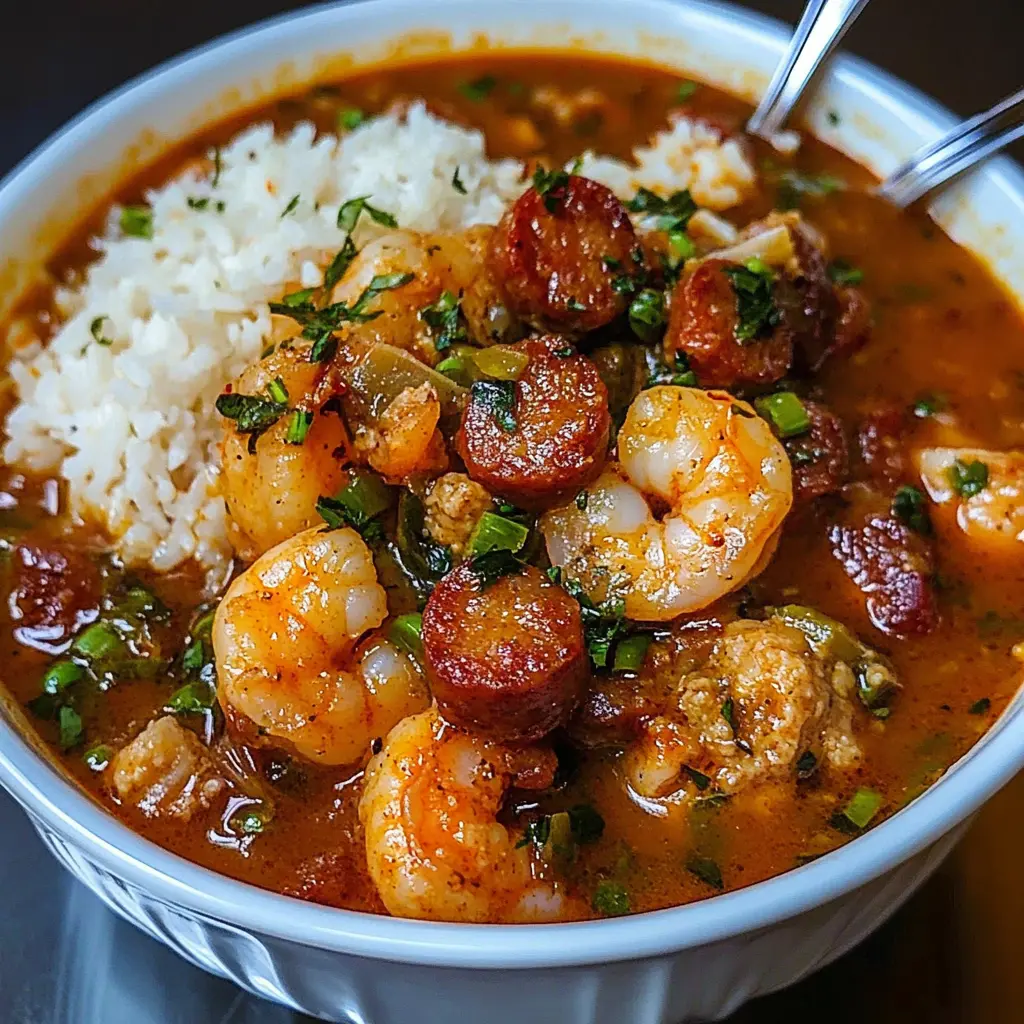
Shrimp and Sausage Gumbo: A Classic Louisiana Comfort Dish Made Simple
There’s something magical about a steaming bowl of shrimp and sausage gumbo that brings the soul of Louisiana right to your kitchen. This hearty, flavorful stew combines succulent shrimp, smoky sausage, and the holy trinity of Cajun cooking—onions, celery, and bell peppers—in a rich, dark roux that’s the foundation of authentic gumbo. Whether you’re new to Cajun cuisine or a seasoned gumbo enthusiast, this comprehensive guide will walk you through creating restaurant-quality gumbo at home, packed with traditional flavor.
What Is Shrimp and Sausage Gumbo?
Shrimp and sausage gumbo is a thick, hearty stew that represents the pinnacle of Louisiana Creole and Cajun cooking. This iconic dish features a complex, deeply flavored broth thickened with a dark roux and often okra or filé powder. The combination of tender shrimp and smoky andouille sausage creates a perfect balance of seafood sweetness and savory richness.
The dish starts with a roux—flour cooked in oil until it reaches a deep chocolate brown color. This roux provides both thickening power and a nutty, toasted flavor that’s essential to authentic gumbo. Combined with the “holy trinity” of aromatics and slow-simmered with stock, it creates a base that’s both comforting and sophisticated.
According to Southern Living, gumbo is considered one of the most important dishes in Louisiana’s culinary heritage, representing the melting pot of cultures that shaped the region’s food traditions.
The History and Cultural Significance of Gumbo
Understanding gumbo’s rich history enhances your appreciation for this beloved dish. The word “gumbo” likely derives from the West African term for okra, “ki ngombo.” This etymology reflects gumbo’s multicultural roots, blending African, French, Spanish, Native American, and German influences.
Origins and Evolution
Gumbo emerged in Louisiana during the 18th century as enslaved West Africans combined their cooking techniques with ingredients available in the New World. French settlers contributed roux-making techniques learned from classical French cuisine. Native Americans introduced filé powder, made from ground sassafras leaves, as a thickening and flavoring agent.
Spanish colonists brought different spices and cooking methods. German immigrants added their sausage-making expertise, leading to the development of andouille sausage as we know it today. This cultural fusion created a dish uniquely Louisiana, now recognized as the official state cuisine.
Regional Variations
Different regions of Louisiana developed their own gumbo styles. Creole gumbo from New Orleans often includes tomatoes and tends toward seafood. Cajun gumbo from southwest Louisiana typically skips tomatoes and features whatever proteins are available—poultry, seafood, or game.
Essential Ingredients for Perfect Gumbo
Creating authentic shrimp and sausage gumbo requires specific ingredients that contribute to its signature flavor profile. Here’s what you’ll need:
The Roux Base
-
All-purpose flour: Forms the foundation of your roux
-
Vegetable oil or bacon fat: Provides the cooking medium for the flour
-
Patience: The secret ingredient for achieving perfect color
The Holy Trinity
-
Yellow onions: Provide sweet, savory depth
-
Celery: Adds aromatic complexity and texture
-
Green bell peppers: Contributes subtle sweetness and color
Proteins
-
Large shrimp: Look for 21-25 count per pound, peeled and deveined
-
Andouille sausage: Authentic smoked sausage provides essential smokiness
-
Chicken stock: Creates a flavorful liquid base
Seasonings and Aromatics
-
Garlic: Fresh cloves minced, never jarred
-
Bay leaves: Add herbaceous notes
-
Cajun seasoning: Blend of paprika, cayenne, garlic powder, and herbs
-
Cayenne pepper: Provides adjustable heat
-
Black pepper and salt: Essential for balanced seasoning
-
Thyme: Fresh or dried, adds earthiness
-
Okra: Traditional thickener with unique texture (optional)
-
Filé powder: Sassafras-based thickener, added at serving
Additional Components
-
Long-grain white rice: Traditional accompaniment
-
Green onions: Fresh garnish
-
Fresh parsley: Bright finishing touch
-
Hot sauce: For serving
The National Library of Medicine notes that the diverse ingredients in traditional gumbo provide a wide range of nutrients, from protein to vitamins and minerals.
Kitchen Tools You’ll Need
Having the right equipment makes gumbo preparation smoother and more enjoyable. Gather these essential tools before you begin:
Must-Have Equipment
-
Heavy-bottomed pot or Dutch oven: 6-8 quart capacity, essential for even heat distribution
-
Wooden spoon or heat-resistant spatula: For constant roux stirring
-
Sharp knife: For precise vegetable cutting
-
Cutting board: Large enough for all your prep work
-
Measuring cups and spoons: Accuracy matters in gumbo
-
Large bowl: For holding prepped ingredients
-
Ladle: For serving
Optional but Helpful
-
Food processor: Speeds up vegetable chopping
-
Instant-read thermometer: Ensures shrimp doneness
-
Fat separator: If making homemade stock
Step-by-Step Guide to Making Gumbo
Follow these detailed steps to create perfect shrimp and sausage gumbo every time.
Preparation Phase (30 minutes)
Start by prepping all ingredients before cooking begins. This French cooking technique called “mise en place” ensures smooth cooking.
Dice your onions, celery, and bell peppers into uniform pieces about 1/4-inch in size. Mince the garlic finely. Slice andouille sausage into 1/4-inch rounds. Peel and devein shrimp if not already done, keeping them refrigerated. Measure out all seasonings and have them ready.
Making the Roux (45-60 minutes)
The roux is gumbo’s foundation and requires your complete attention. Combine equal parts flour and oil (typically 3/4 cup each) in your heavy-bottomed pot over medium heat. Stir constantly with your wooden spoon.
The roux will progress through several stages: blonde, peanut butter, milk chocolate, and finally dark chocolate. You want dark chocolate—rich, deep brown but not burned. This process takes 45-60 minutes of constant stirring. Never leave the roux unattended.
If you see black specks, the roux has burned. Start over—there’s no saving it. The roux smells nutty and toasty when done correctly.
Building the Base (15 minutes)
Once your roux reaches dark chocolate color, immediately add the holy trinity vegetables. They’ll sizzle and halt the darkening process. Stir well to combine.
Cook the vegetables in the roux for 5-7 minutes until softened. Add minced garlic and cook another minute. The mixture should smell incredible—aromatic, toasty, and savory.
Adding Liquid and Seasoning (10 minutes)
Gradually add chicken stock to the roux mixture, stirring constantly to prevent lumps. Start with 2 cups, stirring until smooth, then add remaining stock (6 cups total for this recipe).
Add bay leaves, Cajun seasoning, thyme, cayenne pepper, and black pepper. Bring the mixture to a boil, then reduce heat to maintain a gentle simmer.
If using okra, add it now. Okra provides traditional thickening and authentic flavor. Simmer the base for 30 minutes, stirring occasionally. This develops flavors and allows the roux to fully incorporate.
Cooking the Proteins (20 minutes)
Add sliced andouille sausage to the simmering gumbo. Cook for 15 minutes to allow the sausage to release its smoky flavor into the broth.
Add shrimp during the final 5 minutes of cooking. Shrimp cook quickly—they’re done when pink and opaque. Overcooking makes them rubbery. Remove from heat as soon as shrimp are cooked through.
Taste and adjust seasonings. Add salt, pepper, or additional Cajun seasoning as needed. Remove bay leaves before serving.
Final Assembly
Serve gumbo over cooked white rice in large bowls. Garnish with sliced green onions and fresh parsley. Offer filé powder and hot sauce at the table for individual customization.
Mastering the Dark Roux
The roux makes or breaks your gumbo. Understanding this crucial component ensures success.
Why Roux Matters
Roux serves dual purposes in gumbo. First, it thickens the liquid, creating that characteristic stewlike consistency. Second, it provides deep, complex flavor that can’t be replicated with shortcuts.
As flour cooks in fat, the starches break down and the proteins undergo the Maillard reaction. This chemical process creates hundreds of flavor compounds, giving gumbo its distinctive nutty, toasted taste.
Temperature and Timing
Medium heat works best for roux. High heat seems faster but increases burning risk dramatically. Low heat takes too long and can tire your stirring arm.
Expect to invest 45-60 minutes in roux-making. Some cooks achieve it in 30 minutes, but rushing increases failure risk. The longer cooking time at moderate heat develops better flavor.
Troubleshooting Common Roux Problems
Problem: Roux won’t darken
Solution: Increase heat slightly, ensure you’re stirring consistently but not excessively
Problem: Black specks appearing
Solution: Heat is too high—start over with fresh ingredients
Problem: Roux seems grainy
Solution: Stir more vigorously to break up clumps
Problem: Roux smells burned
Solution: Discard and begin again—burned roux ruins gumbo
Shortcut Options
While traditional roux-making can’t be rushed, some alternatives exist. Oven-baked roux involves spreading flour in a pan and toasting it in a 350°F oven, stirring every 30 minutes until dark. This hands-off method takes 2-3 hours but requires less active attention.
Pre-made roux jars are available in stores, though purists argue they lack depth. If using jarred roux, choose reputable brands like Savoie’s that use traditional methods.
Choosing the Right Sausage and Shrimp
Quality proteins elevate your gumbo from good to exceptional.
Andouille Sausage Selection
Authentic andouille sausage is double-smoked, giving it distinctive flavor and texture. Look for these characteristics:
-
Color: Deep reddish-brown exterior
-
Texture: Coarse grind, firm bite
-
Flavor: Smoky, spicy, garlicky
-
Origin: Louisiana-made brands offer authenticity
If andouille isn’t available, substitute kielbasa or smoked sausage. Avoid Italian sausage—the fennel flavor doesn’t suit gumbo. Some cooks add smoked turkey sausage for lighter versions.
Shrimp Quality Matters
Choose shrimp based on these factors:
Size: Large shrimp (21-25 count per pound) work best. They’re substantial enough to stand up to gumbo’s bold flavors without overcooking.
Fresh vs. Frozen: Both work well. Most “fresh” shrimp were previously frozen anyway. Frozen shrimp often offer better value and quality control.
Wild-Caught vs. Farm-Raised: Wild-caught Gulf shrimp have superior flavor and texture. Farm-raised shrimp are acceptable and more sustainable.
Preparation: Buy already peeled and deveined shrimp to save time. Leave tails on for presentation or remove for easier eating.
Serving Suggestions and Side Dishes
Gumbo shines as a complete meal, but thoughtful accompaniments enhance the experience.
Traditional Accompaniments
White Rice: Long-grain white rice is classic. Cook it plain to let gumbo’s flavors shine. Use a 2:1 water-to-rice ratio for fluffy results.
Potato Salad: Surprisingly, potato salad is a traditional gumbo side in Louisiana. The creamy, cool salad contrasts beautifully with spicy, hot gumbo.
French Bread: Crusty bread for dipping captures every drop of flavorful broth.
Cornbread: Southern-style cornbread adds sweet contrast to savory gumbo.
Modern Pairings
-
Green Salad: Light, acidic greens cut through gumbo’s richness
-
Coleslaw: Crunchy, tangy slaw provides textural contrast
-
Pickled Vegetables: Pickled okra or green beans add brightness
-
Corn on the Cob: Sweet corn complements Cajun flavors
Storage and Reheating Tips
Gumbo often tastes better the next day as flavors meld and develop.
Proper Storage Methods
Allow gumbo to cool completely before refrigerating. Store in airtight containers in the refrigerator for up to 4 days. Separate rice from gumbo to prevent it from absorbing too much liquid and becoming mushy.
For longer storage, freeze gumbo for up to 3 months. Use freezer-safe containers or heavy-duty freezer bags. Leave some headspace for expansion. Label containers with contents and date.
Reheating Guidelines
Reheat refrigerated gumbo on the stovetop over medium-low heat, stirring occasionally. Add a splash of stock or water if it’s thickened too much. Heat until steaming throughout, about 10-15 minutes.
For frozen gumbo, thaw overnight in the refrigerator, then reheat as above. You can reheat from frozen, but it takes longer and requires more stirring to prevent scorching.
Microwave reheating works in a pinch. Use 50% power and stir every 2 minutes for even heating. Add a tablespoon of water to prevent drying.
The “Better the Next Day” Phenomenon
Many gumbo enthusiasts swear it improves after a day in the refrigerator. The resting period allows:
-
Flavors to blend and harmonize
-
Spices to distribute evenly throughout
-
Roux to fully hydrate and thicken
-
Proteins to absorb seasonings
Consider making gumbo a day ahead for dinner parties or special occasions.
Common Mistakes to Avoid
Even experienced cooks can stumble with gumbo. Avoid these pitfalls:
Rushing the Roux
Taking shortcuts with roux produces inferior results. The deep, complex flavors develop during that long cooking time. Attempting to speed it up by increasing heat almost always ends in burning.
Solution: Commit to the time investment. Put on music, pour yourself a beverage, and embrace the meditative stirring process.
Overcooking Shrimp
Rubbery shrimp ruins otherwise perfect gumbo. Shrimp need only 3-5 minutes in hot liquid.
Solution: Add shrimp last and remove pot from heat as soon as they turn pink and opaque. They’ll continue cooking slightly from residual heat.
Under-Seasoning
Gumbo requires bold seasoning to balance rich roux and multiple proteins. Timid seasoning produces bland results.
Solution: Season in layers—add some during cooking, taste, and adjust at the end. Remember that gumbo should be flavorful and slightly spicy.
Wrong Consistency
Too-thick gumbo becomes gloppy. Too-thin gumbo lacks substance.
Solution: Aim for consistency slightly thinner than you want in the final dish. It will thicken as it cools and during refrigeration. Add stock to thin if needed.
Skipping the Holy Trinity
Some recipes substitute or omit these essential vegetables. This compromises authentic flavor.
Solution: Always use onions, celery, and bell peppers in proper proportions (2:1:1 ratio). They’re fundamental to Cajun and Creole cooking.
Adding Filé Too Early
Filé powder (ground sassafras) becomes stringy and unpleasant when boiled.
Solution: Only add filé powder at serving time, either stirred into individual bowls or offered at the table. Never return gumbo to heat after adding filé.
Variations and Customizations
While respecting tradition, you can adapt gumbo to your preferences and dietary needs.
Protein Variations
Chicken and Sausage: Replace shrimp with boneless chicken thighs cut into chunks. Add chicken with sausage and cook 20-25 minutes until fully cooked.
Seafood Gumbo: Expand seafood selection with crab, oysters, and fish. Add delicate seafood during the last 5-10 minutes.
Vegetarian Gumbo: Omit meat and seafood. Add extra okra, mushrooms, and beans. Use vegetable stock instead of chicken stock.
Heat Level Adjustments
Adjust spiciness by controlling cayenne pepper and choosing mild or hot andouille. For extra heat, add fresh jalapeños with the holy trinity. For milder gumbo, reduce or omit cayenne and use sweet paprika instead of hot.
Thickening Options
Okra Only: Traditional African method relies solely on okra’s natural thickening properties. Use 1 pound of sliced fresh or frozen okra.
Filé Only: Purely Choctaw approach uses only filé powder, added at serving time. Use 1-2 teaspoons per pot.
Combination Method: Use both okra during cooking and filé at serving for maximum authentic flavor and texture.
Special Dietary Considerations
Low-Sodium: Use low-sodium stock and reduce or eliminate added salt. Let diners add salt individually.
Gluten-Free: Substitute rice flour or gluten-free flour blend for all-purpose flour in the roux. Results may vary slightly in color and flavor.
Low-Fat: Reduce oil in roux to 1/2 cup and use turkey sausage instead of pork andouille. Flavor will be lighter but still delicious.
Nutritional Information
Understanding gumbo’s nutritional profile helps with meal planning and dietary considerations.
Per Serving (Based on 8 Servings)
-
Calories: 380-420
-
Protein: 28-32g
-
Carbohydrates: 35-40g
-
Fat: 15-18g
-
Fiber: 3-4g
-
Sodium: 800-1000mg
Nutritional Highlights
Shrimp provides lean protein and essential minerals like selenium and zinc. The American Heart Association recognizes shrimp as a heart-healthy protein when prepared without excess saturated fat.
The holy trinity vegetables contribute vitamins A and C, plus dietary fiber. Okra adds additional fiber and antioxidants. Cajun spices like cayenne pepper contain capsaicin, which may boost metabolism and reduce inflammation according to nutritional research.
Making It Healthier
Reduce overall fat by using less oil in the roux—though this affects flavor and texture. Increase vegetable content by adding extra celery, bell peppers, and okra. Serve over cauliflower rice instead of white rice to reduce carbohydrates. Choose turkey andouille to lower saturated fat content.
Frequently Asked Questions
Can I make shrimp and sausage gumbo ahead of time?
Yes, gumbo is excellent for advance preparation. Make it up to 2 days ahead and store in the refrigerator. Many cooks believe gumbo tastes better after resting as flavors develop and meld. Reheat gently on the stovetop before serving.
What’s the difference between gumbo and jambalaya?
Gumbo is a thick stew served over rice, while jambalaya is a rice dish cooked with the proteins and vegetables. Gumbo uses a roux for thickening and complex flavor. Jambalaya doesn’t use roux and has a drier consistency.
How do I know when my roux is dark enough?
Your roux should resemble dark chocolate in color—rich brown but not black. It takes 45-60 minutes of constant stirring over medium heat. The roux should smell nutty and toasted, never burned or acrid.
Can I freeze leftover gumbo?
Absolutely. Freeze gumbo in airtight containers for up to 3 months. Thaw overnight in the refrigerator before reheating. The texture and flavor hold up well to freezing.
Why is my gumbo too thick or too thin?
Thickness depends on roux quantity, cooking time, and liquid amount. If too thick, add hot stock or water gradually until desired consistency is reached. If too thin, simmer longer uncovered to reduce liquid, or make a small additional roux to stir in.
Do I have to use okra in gumbo?
Okra is traditional but optional. It provides thickening and authentic flavor. If you dislike okra’s texture, omit it and rely on the roux for thickening. You can also use filé powder at serving time as an alternative thickener.
What type of rice is best for serving with gumbo?
Long-grain white rice is traditional. It remains fluffy and separate, perfectly complementing gumbo’s thick consistency. Avoid sticky rice varieties like sushi rice or medium-grain rice.
How spicy should gumbo be?
Spice level is personal preference. Traditional gumbo has a pleasant heat that enhances rather than overwhelms. Start with less cayenne and add more at the table. Most gumbo should have some spiciness—it’s characteristic of Cajun and Creole cooking.
Conclusion
Mastering shrimp and sausage gumbo connects you to Louisiana’s rich culinary heritage while creating a deeply satisfying, soul-warming meal. The process—from carefully crafting that perfect dark roux to the final garnish of fresh green onions—rewards patience and attention with complex, layered flavors that improve with each bite.
The combination of properly made roux, quality proteins, aromatic vegetables, and bold Cajun seasonings creates all the depth and richness you crave. Whether you’re cooking for family dinner or hosting friends, this shrimp and sausage gumbo delivers comfort, flavor, and a taste of the Deep South.
Remember that gumbo is forgiving once you master the roux. Adjust seasonings to your taste, experiment with different proteins, and make it your own while respecting the fundamentals. Most importantly, enjoy the process as much as the final bowl.

Shrimp and Sausage Gumbo
Description
Shrimp and Sausage Gumbo
Ingredients
• 1/2 cup vegetable oil
• 1/2 cup all-purpose flour
• 1 large onion, diced
• 1 green bell pepper, diced
• 2 celery stalks, diced
• 4 garlic cloves, minced
• 1 lb smoked sausage, sliced
• 1 lb shrimp, peeled and deveined
• 4 cups chicken or seafood broth
• 1 (14 oz) can diced tomatoes (optional)
• 2 tsp Creole seasoning
• 1 tsp paprika
• 1/2 tsp cayenne pepper (adjust to heat preference)
• 2 bay leaves
• Salt and black pepper to taste
• 2 tbsp fresh parsley, chopped
• Cooked white rice, for serving
Instructions
-
In a large pot or Dutch oven, make a roux by whisking flour into oil over medium heat. Stir constantly for 10–12 minutes until deep golden brown. Patience is key!
-
Add onions, bell peppers, celery, and garlic. Cook until softened, about 5 minutes.
-
Stir in sliced sausage and cook 3–4 minutes.
-
Slowly whisk in broth and diced tomatoes. Add Creole seasoning, paprika, cayenne, bay leaves, salt, and pepper. Bring to a simmer for 20–25 minutes to let flavors meld.
-
Add shrimp and cook 3–5 minutes until pink and cooked through.
-
Remove bay leaves, stir in parsley, and serve over hot white rice.