
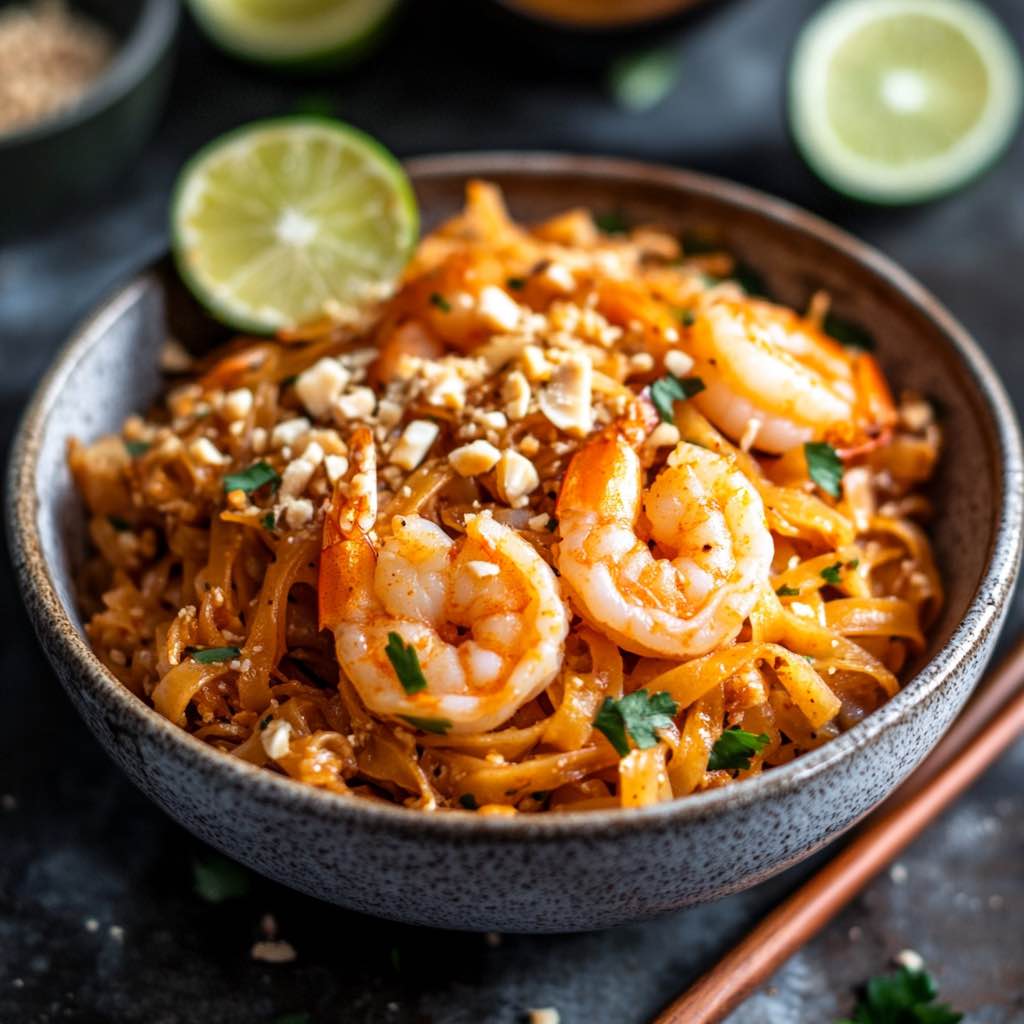
Shrimp Pad Thai: The Ultimate Guide to Making Authentic Thai Street Food at Home
Introduction
Shrimp Pad Thai stands as one of Thailand’s most beloved street food dishes, captivating food lovers worldwide with its perfect balance of sweet, sour, and savory flavors. This iconic noodle dish combines tender shrimp, silky rice noodles, crunchy peanuts, and fresh bean sprouts in a harmonious blend that takes less than 30 minutes to prepare. Making authentic Shrimp Pad Thai at home delivers restaurant-quality results while offering complete control over ingredients and flavors.
Thai cuisine enthusiasts often consider Pad Thai a gateway dish to exploring deeper flavors of Southeast Asian cooking. The dish’s popularity stems from its accessibility and the incredible depth of flavor achieved through simple, fresh ingredients. Home cooks can master this technique with proper guidance and attention to detail.
What Is Shrimp Pad Thai?
Shrimp Pad Thai represents a stir-fried rice noodle dish that originated in Thailand and has become internationally recognized as a signature Thai creation. The dish features flat rice stick noodles tossed with shrimp, eggs, tofu, and an array of aromatics and vegetables. Traditional Pad Thai balances four fundamental flavor profiles: sweet from palm or brown sugar, sour from tamarind, salty from fish sauce, and umami from various ingredients.
Street vendors across Thailand have perfected this dish over generations, each adding their unique touch while maintaining core elements. The name “Pad Thai” literally translates to “Thai-style stir-fry,” reflecting the cooking technique used to create it. Modern versions maintain the essence of traditional recipes while accommodating various dietary preferences and ingredient availability.
Origins and Cultural Significance
Thai culinary tradition embraced this noodle dish as a national staple during the mid-20th century. The dish quickly became a symbol of Thai cuisine globally, representing the country’s ability to balance complex flavors in a single plate. Street food culture in Thailand elevated Pad Thai from a simple noodle dish to an art form requiring skill and precision.
Essential Ingredients for Authentic Shrimp Pad Thai
Creating authentic Shrimp Pad Thai requires gathering specific ingredients that each play a crucial role in achieving the signature taste. Quality ingredients make the difference between mediocre and exceptional results. Understanding each component helps recreate the authentic street food experience at home.
Rice Noodles
Medium-width rice stick noodles form the foundation of any great Pad Thai dish. These flat noodles absorb sauce beautifully while maintaining a pleasant chewy texture when cooked properly. Dried rice noodles require soaking in water before cooking, typically for 5 minutes in hot water or 20-30 minutes in lukewarm water.
Fresh rice noodles offer a softer texture and cook faster than dried varieties. The key lies in avoiding overcooking, which leads to mushy, clumpy noodles that fall apart during stir-frying. Proper noodle preparation ensures they absorb sauce without becoming soggy.
Shrimp Selection
Large or jumbo shrimp work best for Pad Thai, providing substantial protein in every bite. Fresh shrimp should appear translucent with a mild ocean smell, while frozen varieties need complete thawing before cooking. Peeled and deveined shrimp with tails attached create an attractive presentation.
Using 9-10 ounces of shrimp for two servings provides the ideal protein-to-noodle ratio. Shrimp cook quickly, requiring only 1-2 minutes per side to turn pink and opaque. Overcooking results in rubbery texture, so monitoring cooking time remains critical.
Tamarind Concentrate
Tamarind concentrate delivers the essential sour note that defines authentic Pad Thai flavor. This thick, dark paste comes from tamarind fruit and provides a complex tartness impossible to replicate exactly. Two tablespoons typically suffice for a two-serving recipe.
If tamarind proves difficult to find, several substitutes work reasonably well. Rice vinegar offers a similar tangy profile when used in a 1:1 ratio. Pomegranate molasses provides excellent acidity with a sweet-sour balance similar to tamarind.
Mango chutney mixed with lime juice creates another viable alternative, especially when balanced properly. Each substitute requires slight adjustments to achieve the desired flavor profile. Fresh lime juice combined with brown sugar approximates the tamarind taste when other options aren’t available.
Fish Sauce
Fish sauce contributes the essential salty and umami depth to Pad Thai sauce. This fermented condiment forms the backbone of Thai cooking, providing savory complexity. Quality fish sauce should smell pungent but not overpowering, with a clear amber color.
Two to three tablespoons typically balance well with other sauce ingredients in most recipes. Thai Kitchen and Red Boat produce highly regarded fish sauce brands available in most supermarkets. Starting with less fish sauce allows for adjustment during final seasoning.
Palm Sugar or Brown Sugar
Palm sugar provides authentic sweetness with subtle caramel notes that elevate the sauce. Caramelizing the sugar before adding other sauce ingredients deepens the flavor complexity. Light brown sugar serves as an excellent substitute when palm sugar isn’t accessible.
Using 2-3 tablespoons of brown sugar or slightly more grated palm sugar balances the sour and salty components. The sugar should completely dissolve into the sauce for smooth consistency. Proper caramelization adds depth without creating burnt flavors.
Additional Essential Ingredients
Garlic and shallots provide aromatic foundation when sautéed at the start of cooking. Bean sprouts add fresh crunch and should be added near the end to maintain texture. Roasted peanuts contribute nutty richness and textural contrast when crushed or chopped.
Eggs scrambled directly in the wok create creamy pockets throughout the noodles. Green onions or scallions add mild onion flavor and visual appeal. Fresh lime wedges served on the side allow diners to adjust acidity to personal preference.
Pressed tofu cubed small adds protein and absorbs the sauce beautifully. Dried shrimp, though optional, provides authentic umami depth found in traditional recipes. Preserved radish (chai poh) adds a subtle salty-sweet element unique to Thai Pad Thai.
The Perfect Pad Thai Sauce
Creating the ideal Pad Thai sauce requires balancing four distinct flavor elements into harmonious unity. The sauce serves as the soul of the dish, coating noodles and ingredients with layers of taste. Proper sauce preparation makes or breaks the final result.
Sauce Components and Ratios
The classic Pad Thai sauce combines fish sauce, tamarind concentrate, and palm or brown sugar in specific proportions. A basic ratio uses 3 tablespoons fish sauce, 2 tablespoons tamarind concentrate, and 3-5 tablespoons brown sugar. These measurements create a foundation that can be adjusted to personal taste preferences.
Some recipes incorporate additional elements like rice vinegar for extra tang or peanut butter for creamy richness. Sriracha hot sauce adds heat for those who prefer spicier versions. The beauty of homemade sauce lies in the ability to customize intensity of each flavor component.
Cooking the Sauce
Traditional preparation involves caramelizing palm sugar in a pan until it darkens slightly. Adding water stops the caramelization process and prevents burning. Fish sauce and tamarind join next, creating a simmering mixture that melds flavors together.
The sauce should simmer gently until sugar completely dissolves into a smooth, pourable consistency. Letting the sauce cool slightly before use helps flavors develop further. Making sauce ahead allows for better flavor integration and saves time during the stir-fry process.
No-Tamarind Sauce Variations
For those without access to tamarind, combining lime juice, fish sauce, soy sauce, and honey creates a functional alternative. This simplified sauce uses 3 tablespoons fish sauce, 1 tablespoon soy sauce, 5 tablespoons brown sugar, 2 tablespoons rice vinegar, and 1 tablespoon Sriracha. The result approximates authentic flavor while using more accessible ingredients.
Rice vinegar provides the necessary sourness when tamarind isn’t available. Adding a touch of brown sugar to rice vinegar creates a more balanced tamarind-like taste. These substitutions work particularly well for home cooks making Pad Thai regularly.
Step-by-Step Guide to Making Shrimp Pad Thai
Mastering the technique of Shrimp Pad Thai transforms home cooking into restaurant-quality dining experiences. Following proper steps ensures ingredients cook correctly and flavors develop fully. Organization and preparation create the foundation for successful execution.
Preparation Phase
Begin by soaking rice noodles in a large bowl filled with water until they soften but remain slightly firm. Dried noodles typically need hot water for 5 minutes or room temperature water for 20-30 minutes. Drain the noodles in a colander and rinse quickly under cold water to stop the cooking process.
Prepare all ingredients before heating the wok, as stir-frying happens quickly. Mince 3-4 garlic cloves, slice shallots thinly, and chop scallions into small pieces. Beat 2 eggs in a small bowl and roughly chop 1/4 cup peanuts.
Mix the sauce ingredients in a small saucepan and heat until sugar dissolves completely. Allow the sauce to cool while organizing other components. Having everything ready prevents burning or overcooking during the rapid cooking process.
Cooking Process
Heat a wok or large non-stick skillet over medium-high heat until hot but not smoking. Add 1½ tablespoons of vegetable oil and swirl to coat the cooking surface. The pan should be hot enough to sizzle when ingredients touch it, but not so hot that garlic burns immediately.
Add minced garlic and sliced shallots first, sautéing for 1-2 minutes until fragrant and lightly golden. If using dried shrimp, preserved radish, and tofu, add them now and stir-fry briefly. These aromatics form the flavor base that permeates the entire dish.
Cooking the Shrimp
Push aromatics to the side of the wok and add shrimp in a single layer. Cook for 1-2 minutes without moving them, allowing a light sear to develop. Flip the shrimp and cook the other side until they turn pink and opaque throughout.
Shrimp cook remarkably fast, so watch carefully to avoid overcooking. Once fully cooked, the shrimp should appear uniformly pink with curled tails. Some recipes recommend removing cooked shrimp temporarily and adding them back later to prevent rubbery texture.
Scrambling the Eggs
Create space in the wok by pushing cooked ingredients to one side. Add a small amount of additional oil to the empty space and pour in beaten eggs. Break the egg yolks and scramble gently, allowing them to cook for 15-30 seconds until almost set.
The eggs should remain soft and slightly runny when you begin mixing them with other ingredients. Breaking scrambled eggs into small pieces with a spatula creates better distribution throughout the noodles. Avoid overcooking the eggs, as they will continue cooking with residual heat.
Adding Noodles and Sauce
Add the soaked and drained rice noodles to the wok, tossing to combine with eggs and aromatics. Let the noodles cook for about 2 minutes, spreading them out to prevent clumping. The noodles should begin to soften further from the wok’s heat.
Pour the prepared Pad Thai sauce over the noodles, stirring thoroughly to coat everything evenly. Toss constantly to ensure the sauce distributes uniformly and the noodles absorb it properly. Cook for 2-3 minutes, allowing noodles to soak up the sauce while maintaining their texture.
The noodles should absorb most of the sauce, creating a glossy coating rather than a puddle in the pan. Control the heat carefully during this stage, as too much heat burns the sauce while too little creates soggy noodles. Medium-high heat typically works best for maintaining proper cooking temperature.
Final Additions and Seasoning
Add bean sprouts, chopped peanuts (reserving some for garnish), and sliced scallions to the wok. Toss everything together gently, allowing bean sprouts to wilt slightly while maintaining some crunch. The heat should be turned off or reduced to low during this final mixing stage.
Taste the Pad Thai and adjust seasoning as needed with additional fish sauce for saltiness, sugar for sweetness, or lime juice for acidity. Garlic chives or Chinese chives can replace scallions for a more authentic flavor profile. A sprinkle of chili flakes adds heat for those who enjoy spicy food.
Plating and Garnishing
Transfer the Shrimp Pad Thai to serving plates immediately while still hot. Garnish with reserved crushed peanuts, fresh bean sprouts, lime wedges, and chopped cilantro. The visual presentation enhances the dining experience and allows diners to customize their portions.
Fresh lime wedges are essential, as squeezing lime over the dish before eating brightens all the flavors. Additional chili flakes can be served on the side for heat-seekers. The dish should be consumed immediately for the best texture and temperature.
Common Mistakes to Avoid
Understanding pitfalls helps home cooks achieve consistent success with Shrimp Pad Thai. Many mistakes stem from improper heat control or ingredient preparation. Learning from common errors saves time and prevents disappointing results.
Using Excessive Heat
Cooking Pad Thai over excessively high heat ranks among the most frequent mistakes. While street vendors use powerful burners, home stoves require temperature moderation to prevent burning. Noodles burn before the sauce can coat them properly when heat runs too high.
Practice controlling heat gradually, adjusting as cooking progresses. Medium-high heat typically provides the sweet spot for home stoves. If ingredients start burning or smoking, reduce heat immediately and remove the pan briefly to cool down.
Oversoaking Noodles
Soaking rice noodles in boiling water causes them to overcook before they even reach the wok. Mushy noodles fall apart during stir-frying and absorb too much sauce. The noodles should be soaked until pliable but still slightly firm, as they will continue cooking in the pan.
Lukewarm water for 20-30 minutes produces better results than hot water for most dried rice noodles. Testing a noodle by bending it helps determine readiness – it should flex without breaking but still have some resistance. Rinsing soaked noodles under cold water stops the softening process.
Adding Too Much Liquid
Excess liquid creates soupy Pad Thai instead of properly coated noodles. The sauce should cling to noodles rather than pool at the bottom of the pan. Adding sauce gradually while tossing allows better control over consistency.
Rice noodles should absorb the sauce as they cook, creating glossy, flavorful strands. If the dish appears too wet, increase heat slightly and continue tossing to evaporate excess liquid. Spreading noodles out in the wok rather than keeping them bunched promotes better sauce absorption.
Incorrect Cooking Order
Adding ingredients in the wrong sequence disrupts the cooking process and results in unevenly cooked components. Aromatics should go in first to build flavor foundation. Proteins come next, followed by eggs, then noodles and sauce.
Bean sprouts and peanuts go in last to maintain their texture and freshness. Following the proper order ensures each ingredient cooks to the right degree of doneness. Rushing through steps or combining everything at once creates inconsistent results.
Overcooking Shrimp
Shrimp turn rubbery and tough when cooked too long. They need only 1-2 minutes per side to cook through completely. Shrimp are done when they turn uniformly pink and opaque, with tails curled.
Removing cooked shrimp temporarily and adding them back at the end prevents overcooking. This technique works particularly well when making large batches. Residual heat continues cooking shrimp even after removing from direct heat, so timing matters critically.
Nutritional Benefits
Shrimp Pad Thai offers several nutritional advantages when prepared with quality ingredients and balanced portions. Understanding the nutritional profile helps incorporate this dish into healthy eating patterns. Making adjustments enhances the health benefits while maintaining delicious flavor.
Protein Content
Shrimp provides high-quality, lean protein with minimal fat content. Each serving of Shrimp Pad Thai typically contains substantial protein from shrimp, eggs, and tofu. Protein supports muscle maintenance, satiety, and various metabolic functions.
Combining multiple protein sources creates a more complete amino acid profile. The eggs add additional protein while contributing important nutrients like choline and vitamin D. Tofu offers plant-based protein that complements the shrimp excellently.
Vitamins and Minerals
Bean sprouts contribute vitamin C, vitamin K, and folate to the dish. Peanuts provide vitamin E, magnesium, and heart-healthy fats. The variety of vegetables and aromatics adds diverse micronutrients.
Shrimp contains selenium, vitamin B12, and phosphorus in significant amounts. Garlic and shallots offer compounds with potential anti-inflammatory and immune-supporting properties. The combination of ingredients creates a nutrient-dense meal when portioned appropriately.
Customizing for Health
Increasing the vegetable content boosts fiber and micronutrient density. Adding bell peppers, carrots, or extra bean sprouts enhances nutritional value without significantly altering flavor. Using less sugar in the sauce reduces calorie and carbohydrate content.
Reducing oil quantities during cooking lowers total fat content while maintaining cooking efficiency. Rice noodles naturally contain no gluten, making Pad Thai suitable for gluten-sensitive diets. Check out our guide on [healthy Thai cooking techniques] for more nutritional optimization strategies.
Variations and Customizations
Traditional Shrimp Pad Thai serves as a template for countless delicious variations. Personal preferences and dietary needs inspire creative modifications. Experimenting with different ingredients while maintaining core elements leads to exciting discoveries.
Protein Alternatives
Chicken works beautifully in place of or alongside shrimp, requiring 3-4 minutes of cooking time. Tofu-only versions appeal to vegetarians while maintaining authentic texture when using pressed, firm tofu. Combining multiple proteins like shrimp, chicken, and tofu creates an extra-hearty version.
Scallops provide a luxurious alternative with sweet, delicate flavor. Pork or beef cut into thin strips adapts well to the Pad Thai format, though cooking times need adjustment. Each protein brings unique characteristics while working within the fundamental flavor framework.
Vegetable Additions
Bell peppers add sweetness and crunch when sliced thinly and added with aromatics. Carrots cut into matchsticks provide color and nutrition. Bok choy or Chinese broccoli introduces authentic Thai vegetables to the mix.
Mushrooms offer umami depth and meaty texture, particularly shiitake or oyster varieties. Snow peas or snap peas contribute fresh, crisp elements. The key lies in cutting vegetables uniformly for even cooking.
Spice Level Adjustments
Traditional Pad Thai typically features mild to moderate heat, allowing diners to add spice individually. Incorporating chili flakes during cooking distributes heat throughout the dish. Fresh Thai bird’s eye chilies sliced thin add authentic, bright heat.
Sriracha sauce mixed into the Pad Thai sauce provides consistent spice distribution. Serving extra chili sauce or chili flakes on the side accommodates varying heat preferences. Balancing heat with the sweet-sour profile requires careful tasting and adjustment.
Dietary Modifications
Gluten-free Pad Thai requires checking that fish sauce contains no wheat-based additives. Most rice noodles are naturally gluten-free, making this adaptation relatively simple. Substituting tamari for soy sauce eliminates gluten in recipes that call for it.
Reducing sodium involves using low-sodium soy sauce and less fish sauce. Adding more lime juice compensates for reduced saltiness by enhancing other flavors. These modifications maintain enjoyability while meeting dietary requirements.
Serving Suggestions
Presenting Shrimp Pad Thai properly enhances the overall dining experience. Thoughtful accompaniments complement the dish without overwhelming its balanced flavors. Creating an authentic Thai meal involves considering beverage pairings and side dishes.
Traditional Accompaniments
Fresh lime wedges rank as the most essential accompaniment, allowing diners to adjust acidity before eating. Extra crushed peanuts served on the side add textural variety. Bean sprouts and fresh cilantro maintain their crispness when served separately.
Chili flakes or chili sauce in small dishes accommodate individual heat preferences. Pickled vegetables provide acidic contrast that refreshes the palate between bites. These simple additions transform a good Pad Thai into an exceptional one.
Beverage Pairings
Iced Thai tea offers sweet, creamy contrast to the tangy, savory noodles. Coconut water provides natural refreshment that complements tropical flavors. Fresh limeade echoes the citrus notes in the dish while cleansing the palate.
Sparkling water with fresh mint creates a light, refreshing option. Jasmine iced tea adds floral notes that pair beautifully with Thai cuisine. The key lies in choosing beverages that complement rather than compete with the dish’s complex flavors.
Complete Thai Meal
Starting with fresh spring rolls provides light, vegetable-forward appetizers that don’t fill diners before the main course. Tom yum soup offers bold, sour, spicy flavors as a complementary first course. Green papaya salad creates refreshing contrast with its crisp texture and bright flavors.
Finishing with fresh mango and sticky rice or coconut ice cream provides sweet closure to the meal. Thai cuisine emphasizes balance across courses, creating satisfying progression of flavors. Planning a complete menu showcases Shrimp Pad Thai as the centerpiece while honoring Thai culinary traditions.
Storage and Reheating Tips
Proper storage techniques preserve Shrimp Pad Thai quality for later enjoyment. Understanding best practices prevents texture degradation and maintains food safety. Planning for leftovers allows making larger batches efficiently.
Refrigeration Guidelines
Store leftover Shrimp Pad Thai in airtight containers within two hours of cooking. Refrigerated Pad Thai maintains quality for 2-3 days when properly stored. Keeping garnishes like peanuts, bean sprouts, and lime separate preserves their freshness and texture.
Cooling the dish to room temperature before refrigerating prevents condensation that makes noodles soggy. Dividing large quantities into smaller containers promotes faster, more even cooling. Label containers with dates to track freshness accurately.
Reheating Methods
Reheating in a wok or large skillet over medium heat produces the best texture results. Adding a small amount of oil prevents sticking and refreshes the noodles. Tossing constantly while reheating ensures even warming throughout.
Microwave reheating works in a pinch, though it may soften noodles further. Using 50% power in short intervals prevents overheating and maintains better texture. Adding a splash of water or broth prevents drying during microwave reheating.
Avoid reheating more than once, as multiple heating cycles degrade quality significantly. Bringing refrigerated Pad Thai closer to room temperature before reheating promotes more even warming. Fresh lime juice squeezed over reheated portions brightens flavors that may have dulled.
Freezing Considerations
Freezing Pad Thai is not recommended, as rice noodles become mushy and unpleasant when thawed. The texture changes significantly during freezing and thawing cycles. If freezing is necessary, slightly undercooking the noodles initially provides better post-thaw results.
Store frozen Pad Thai in freezer-safe containers or bags with as much air removed as possible. Consume within one month for the least texture degradation. Thawing overnight in the refrigerator produces better results than room temperature thawing.
Frequently Asked Questions
What makes Pad Thai sauce authentic?
Authentic Pad Thai sauce combines tamarind concentrate, fish sauce, and palm sugar in balanced proportions. The tamarind provides essential sourness, fish sauce adds saltiness and umami, and palm sugar contributes sweet caramel notes. Caramelizing the sugar before adding other ingredients deepens the flavor complexity.
Can I make Shrimp Pad Thai without tamarind?
Yes, rice vinegar works as an excellent tamarind substitute when used in equal amounts. Lime juice combined with a touch of brown sugar approximates the sweet-sour profile. Pomegranate molasses provides another viable option with similar acidity and complexity.
How do I prevent rice noodles from sticking?
Properly soaking noodles until just pliable but still slightly firm prevents excessive sticking. Rinsing soaked noodles under cold water removes excess starch that causes clumping. Adding noodles to a hot, well-oiled wok and tossing constantly prevents them from sticking together.
What’s the best type of rice noodles for Pad Thai?
Medium-width flat rice stick noodles work best for authentic Shrimp Pad Thai texture. These noodles absorb sauce well while maintaining structure during stir-frying. Both dried and fresh versions work, though each requires different preparation methods.
How can I make my Pad Thai less sweet?
Reducing the sugar in the sauce by one tablespoon creates a less sweet profile. Adding extra lime juice or tamarind increases tartness that balances sweetness. Incorporating more fish sauce shifts the flavor toward savory umami.
Is Shrimp Pad Thai gluten-free?
Rice noodles contain no gluten naturally, making the base inherently gluten-free. However, some fish sauce brands include wheat-based additives, so checking labels ensures complete gluten avoidance. Using certified gluten-free ingredients throughout creates a fully gluten-free dish.
Can I prepare Pad Thai sauce in advance?
Yes, making Pad Thai sauce ahead allows flavors to meld and saves time during cooking. Store cooled sauce in an airtight container in the refrigerator for up to one week. Bring refrigerated sauce to room temperature before using for better mixing with noodles.
Why did my Pad Thai turn out mushy?
Oversoaking noodles in hot water or soaking them too long causes mushiness. Using excessive heat that breaks down noodle structure also creates soft, mushy texture. Adding too much liquid prevents proper sauce absorption, resulting in soggy noodles.
Conclusion
Shrimp Pad Thai represents one of Thailand’s greatest culinary contributions to world cuisine, offering perfect harmony of sweet, sour, salty, and umami flavors. This comprehensive guide provides all the knowledge needed to create restaurant-quality Pad Thai at home, from selecting proper ingredients to mastering cooking techniques. The dish rewards attention to detail while remaining accessible to home cooks of all skill levels.
Mastering heat control, proper noodle preparation, and sauce balance transforms good Pad Thai into exceptional results. Avoiding common mistakes like oversoaking noodles, using excessive heat, and overcooking shrimp ensures consistent success. The flexibility to customize proteins, vegetables, and spice levels makes this dish adaptable to various preferences and dietary needs.
Fresh, quality ingredients form the foundation of authentic flavor, while proper technique brings everything together harmoniously. Whether preparing a quick weeknight dinner or creating an impressive Thai feast, Shrimp Pad Thai delivers satisfying results that rival favorite restaurants. The journey from gathering ingredients to plating the finished dish takes less than 30 minutes, making it perfect for busy schedules.
Print
Shrimp Pad Thai
Description
Shrimp Pad Thai
Ingredients:
For the Sauce:
-
3 tbsp fish sauce
-
1 ½ tbsp tamarind paste (or 1 tbsp lime juice as a substitute)
-
1 ½ tbsp brown sugar (or palm sugar)
-
1 tbsp soy sauce
-
1 tsp Sriracha (optional, for spice)
For the Pad Thai:
-
8 oz rice noodles (medium width)
-
2 tbsp vegetable oil (or peanut oil)
-
2 eggs, lightly beaten
-
½ lb shrimp, peeled and deveined
-
2 cloves garlic, minced
-
1 small shallot, finely chopped
-
1 cup bean sprouts
-
2 green onions, sliced (plus more for garnish)
-
¼ cup roasted peanuts, chopped
-
Lime wedges, for serving
-
Fresh cilantro, for garnish
Instructions:
1. Prepare the Noodles:
Soak rice noodles in warm water for about 25–30 minutes, until softened but still slightly firm.
Drain and set aside.
(Do not over-soak — they’ll finish cooking in the pan.)
2. Make the Sauce:
In a small bowl, whisk together fish sauce, tamarind paste, brown sugar, soy sauce, and Sriracha.
Taste and adjust balance — it should be sweet, salty, and tangy.
3. Cook the Shrimp:
In a large skillet or wok, heat 1 tbsp oil over medium-high heat.
Add shrimp and cook 1–2 minutes per side, until pink and opaque.
Remove from the pan and set aside.
4. Scramble the Eggs:
Add another 1 tbsp oil to the pan.
Pour in beaten eggs and scramble gently until just set.
Push to one side of the pan.
5. Stir-Fry the Aromatics:
Add garlic and shallot to the same pan. Sauté for 30 seconds, until fragrant.
6. Combine Everything:
Add the drained noodles and Pad Thai sauce to the pan.
Toss with tongs until noodles are evenly coated and slightly caramelized.
Return the shrimp to the pan, along with bean sprouts and green onions.
Toss everything together for another 1–2 minutes.
7. Serve:
Plate the Pad Thai and top with crushed peanuts, fresh cilantro, and extra green onions.
Serve with lime wedges for squeezing over the top.