
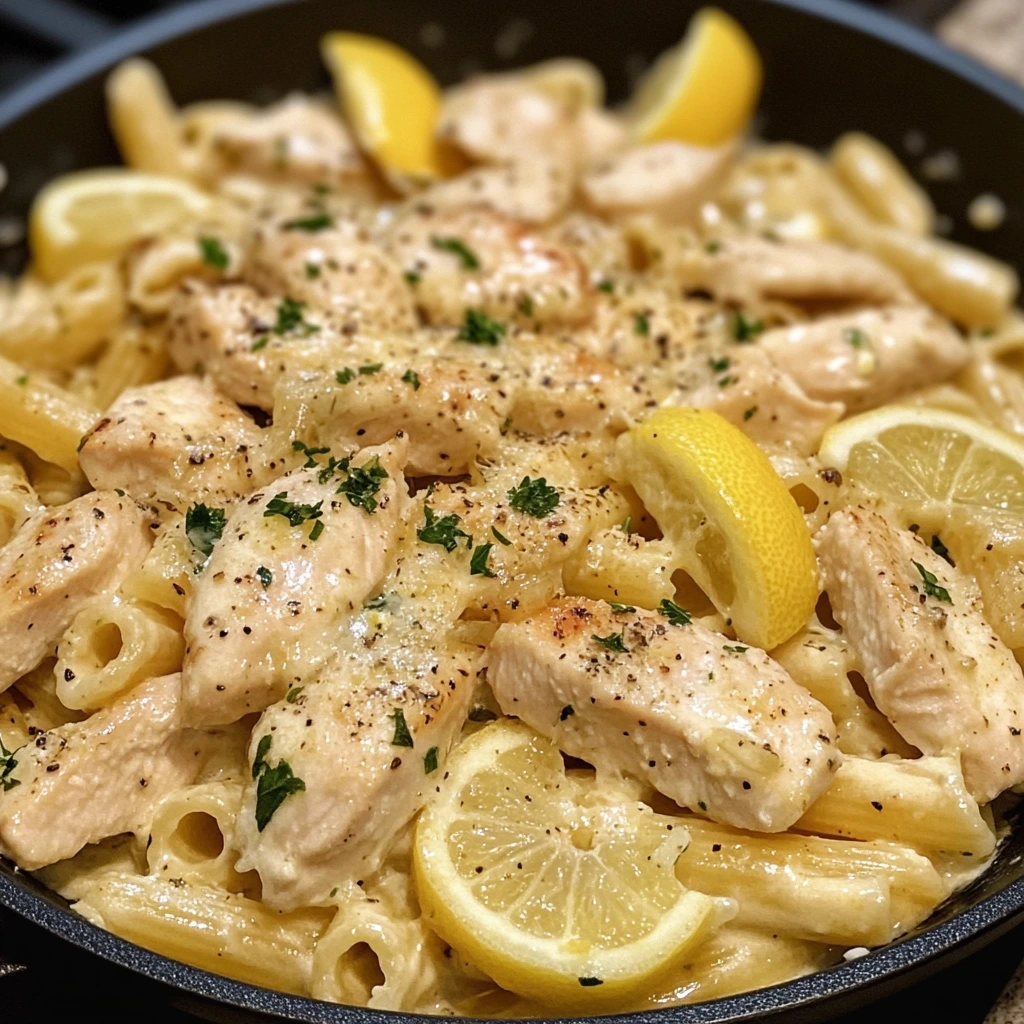
Skillet Creamy Lemon Garlic Chicken Pasta
Introduction
Skillet Creamy Lemon Garlic Chicken Pasta transforms weeknight dinners into restaurant-quality experiences. This one-pan wonder combines tender chicken breasts with al dente pasta coated in a luxurious, tangy cream sauce infused with fresh garlic and bright lemon. The beauty of this dish lies in its simplicity. You need just one skillet, about 30 minutes, and a handful of everyday ingredients to create something truly spectacular. Whether you’re cooking for your family or entertaining guests, this recipe delivers impressive results without complicated techniques.
What Makes This Recipe Special
The magic of Skillet Creamy Lemon Garlic Chicken Pasta comes from its perfectly balanced flavors. Bright lemon juice cuts through the richness of heavy cream while aromatic garlic adds depth to every bite. The one-pan cooking method means less cleanup and more flavor development as ingredients build upon each other in the same skillet.
This recipe stands out because it achieves restaurant-quality results without requiring professional cooking skills. The technique of cooking chicken first, then building the sauce in the same pan, captures all those delicious brown bits that add incredible flavor. Additionally, combining pasta directly with the sauce allows the noodles to absorb the creamy lemon garlic goodness, creating a cohesive dish rather than separate components.
Key Ingredients
Essential Components
The foundation of great Skillet Creamy Lemon Garlic Chicken Pasta starts with quality ingredients. Here’s what you need:
-
Boneless chicken breasts: Pound to even thickness for uniform cooking
-
Pasta: Linguini, fettuccine, or penne work beautifully
-
Heavy cream: Creates the luxurious sauce base
-
Fresh garlic: Minced for maximum flavor impact
-
Fresh lemon: Both juice and zest for bright citrus notes
-
Chicken broth: Adds depth and helps create the sauce
-
Butter: Enriches the sauce and adds silky texture
-
Parmesan cheese: Provides salty, umami richness
-
Olive oil: For searing the chicken
-
Fresh herbs: Parsley or basil for garnish
Ingredient Quality Matters
Using fresh garlic instead of pre-minced varieties makes a noticeable difference in flavor. Similarly, freshly squeezed lemon juice provides brighter, more vibrant citrus notes than bottled alternatives. Investing in a block of authentic Parmesan cheese rather than pre-grated versions ensures better melting and superior taste.
Nutritional Benefits
Protein Power
Chicken pasta dishes offer excellent nutritional value, particularly in protein content. A typical serving provides approximately 28 grams of protein, which supports muscle repair and overall health. The combination of chicken and pasta creates a balanced meal that fuels productivity throughout your day.
Essential Nutrients
This Skillet Creamy Lemon Garlic Chicken Pasta delivers multiple essential nutrients. Pasta provides B vitamins, iron, selenium, copper, and phosphorus. The garlic component offers antimicrobial properties and may help regulate blood sugar levels. Meanwhile, lemon contributes vitamin C, which enhances immune function and aids nutrient absorption.
Health-Conscious Considerations
Research shows that combining pasta with protein and vegetables reduces glycemic load and balances the overall impact on blood sugar. The garlic and lemon combination has been shown to improve lipid levels and support cardiovascular health. Additionally, pasta dishes can be part of a balanced diet when portion sizes are controlled and quality ingredients are used.
Step-by-Step Cooking Instructions
Preparation Phase
Begin by gathering all ingredients and preparing your workspace. Cook pasta according to package directions until al dente, then drain and set aside. Reserve one cup of pasta cooking water before draining, as this starchy liquid helps create a silky sauce. While pasta cooks, pound chicken breasts to an even half-inch thickness using a meat mallet. Season both sides generously with salt and pepper.
Cooking the Chicken
Heat olive oil in a large oven-safe skillet over medium-high heat. Once the oil shimmers, add seasoned chicken breasts to the pan. Cook for 3-4 minutes per side until golden brown and crispy on the outside. The chicken doesn’t need to be completely cooked through at this stage. Remove chicken to a plate and set aside while you prepare the sauce.
Building the Sauce
Reduce heat to medium and add butter to the same skillet. Once melted, add minced garlic and cook for 1-2 minutes until fragrant but not browned. Pour in chicken broth and use a whisk to scrape up all the flavorful brown bits from the bottom of the pan. Add lemon juice and bring the mixture to a simmer. Let the sauce reduce for 10-15 minutes until about one-third cup of liquid remains.
Creating the Creamy Finish
Remove the skillet from heat before adding heavy cream. This prevents the cream from curdling, which happens when it’s added to boiling liquid. Whisk the cream into the reduced sauce until fully combined. Add freshly grated Parmesan cheese in batches, whisking between additions to ensure smooth melting. Return the pan to low heat for just 30 seconds, being careful not to let the sauce boil.
Final Assembly
Add the cooked pasta directly to the creamy lemon garlic sauce. Toss everything together, adding reserved pasta water as needed to achieve your desired consistency. Nestle the seared chicken pieces into the pasta and spoon sauce over the top. If using an oven-safe skillet, you can finish the chicken in a 375°F oven for 5-8 minutes to ensure it’s cooked through. Alternatively, slice the chicken and arrange it over the pasta. Garnish with fresh parsley or basil and additional Parmesan cheese.
Expert Tips for Perfect Results
Temperature Control
Maintaining proper heat levels makes the difference between perfect and problematic cream sauces. Always reduce heat before adding cream to prevent curdling. The cream should only ever reach a very gentle simmer, never a rolling boil. When incorporating lemon juice into cream-based sauces, whisk it in quickly while the heat is low to avoid separation.
Pasta Water Is Gold
Don’t discard that starchy pasta cooking water. This liquid contains starches that help bind sauce to pasta and create a silky, cohesive texture. Add it gradually, one splash at a time, until you achieve the perfect consistency. The pasta should be well-coated but not swimming in sauce.
Chicken Cooking Secrets
Pounding chicken breasts to uniform thickness ensures even cooking and prevents dry, overcooked edges. Don’t overcrowd the pan when searing chicken, as this creates steam instead of that desirable golden crust. Let the chicken rest for a few minutes after cooking to allow juices to redistribute throughout the meat.
Cheese Integration
Add Parmesan cheese off the heat or on very low heat to prevent it from becoming grainy or clumpy. Finely grated cheese melts more smoothly than coarsely grated varieties. Add cheese gradually and whisk thoroughly between additions for the smoothest possible sauce.
Timing Considerations
Cook the pasta while you’re searing the chicken to maximize efficiency. This parallel cooking approach gets dinner on the table faster and ensures both components finish at the same time. Aim for al dente pasta since it will continue softening slightly when tossed with the hot sauce.
Serving Suggestions
Perfect Pairings
Skillet Creamy Lemon Garlic Chicken Pasta shines as a complete one-dish meal, but complementary sides enhance the dining experience. Serve with sautéed broccolini, roasted asparagus, or a crisp green salad to add freshness and color. Garlic bread or crusty Italian bread provides the perfect vehicle for soaking up extra sauce.
Presentation Ideas
For an elegant presentation, slice chicken breasts on the bias and fan them over individual portions of pasta. Garnish each plate with fresh lemon slices, a sprinkle of lemon zest, and freshly chopped parsley or basil. A light dusting of additional Parmesan and cracked black pepper adds the final touch.
Portion Sizes
A typical serving of chicken pasta contains approximately 500 calories and provides substantial protein and carbohydrates. Plan for 6-8 ounces of pasta and 4-6 ounces of chicken per person for generous main-course portions. Adjust quantities based on appetite and whether you’re serving additional side dishes.
Storage and Reheating Guide
Refrigeration
Store leftover Skillet Creamy Lemon Garlic Chicken Pasta in an airtight container in the refrigerator for up to 4-5 days. Make sure the pasta has cooled to room temperature before sealing and refrigerating to prevent condensation buildup. Keep the chicken and pasta together in the sauce to maintain moisture and prevent drying.
Freezing Instructions
Transfer cooled pasta to freezer-safe airtight containers for long-term storage. Properly stored, the dish maintains quality in the freezer for up to 3 months. Label containers with the date to track freshness. Allow frozen portions to thaw overnight in the refrigerator before reheating.
Reheating Methods
Gently rewarm leftovers in a Dutch oven or large pot on the stovetop over medium-low heat. Splash in chicken broth, cream, or water as needed to loosen the sauce, which thickens during storage. Stir frequently to ensure even heating and prevent scorching. Alternatively, microwave individual portions, adding a splash of liquid and covering to prevent drying.
Common Mistakes to Avoid
Sauce Separation Issues
Adding cream to boiling liquid causes curdling and separation. Always remove the pan from heat or reduce to very low before incorporating dairy products. Similarly, adding lemon juice too quickly or at high temperatures can cause cream to break. Whisk acidic ingredients in gradually while maintaining low heat.
Overcooked Chicken
Cooking chicken beyond 165°F internal temperature results in dry, tough meat. Use a meat thermometer to check doneness rather than guessing. Remember that chicken continues cooking slightly after removal from heat, so pull it from the pan just before it reaches the target temperature.
Pasta Pitfalls
Overcooking pasta makes it mushy and unable to hold sauce properly. Cook to al dente according to package directions, keeping in mind it will soften slightly when combined with hot sauce. Rinsing cooked pasta removes the starch that helps sauce cling to noodles.
Garlic Burning
Garlic burns quickly and becomes bitter when cooked at high heat. Always cook garlic over medium or medium-low heat and add it after reducing the temperature from searing the chicken. Cook only until fragrant, about 1-2 minutes, before adding liquids.
Variations and Substitutions
Protein Options
While chicken breasts are traditional, boneless chicken thighs offer more flavor and stay juicier during cooking. Chicken tenderloins cook even faster and work perfectly in this recipe. For seafood lovers, substitute large shrimp or scallops, adjusting cooking time accordingly.
Pasta Alternatives
Linguini and fettuccine are classic choices, but penne, rigatoni, or farfalle also work beautifully. For a lighter option, use whole grain pasta, which adds fiber and nutrients while maintaining great texture. Gluten-free pasta varieties adapt well to this recipe when cooked according to package directions.
Cream Substitutes
Half-and-half creates a lighter sauce while still maintaining creaminess. For an even lighter version, use a combination of milk and cream cheese. Those avoiding dairy can experiment with coconut cream or cashew cream, though the flavor profile will change slightly.
Vegetable Additions
Enhance nutritional value and add color by incorporating vegetables. Mushrooms, spinach, cherry tomatoes, and roasted red peppers all complement the lemon garlic flavors beautifully. Sauté vegetables along with the garlic or stir them in with the pasta.
Herb Variations
While parsley and basil are traditional garnishes, fresh thyme or oregano add Mediterranean flair. Chives provide a mild onion flavor that pairs wonderfully with the creamy sauce. Fresh dill offers an unexpected but delightful twist that enhances the lemon notes.
Frequently Asked Questions
How do I prevent my cream sauce from curdling?
Remove the pan from heat before adding cream and never let cream-based sauces reach a full boil. Add acidic ingredients like lemon juice slowly while whisking constantly and keeping heat low. If your sauce does separate, try whisking vigorously or blending with an immersion blender to re-emulsify.
Can I make Skillet Creamy Lemon Garlic Chicken Pasta ahead of time?
You can prep components in advance by cooking chicken and making the sauce separately. Store them in the refrigerator and combine with freshly cooked pasta when ready to serve. The complete dish stores well for 4-5 days, though the pasta will absorb sauce over time.
What’s the best way to reheat cream-based pasta dishes?
Reheat gently on the stovetop over medium-low heat, adding liquid to restore the original consistency. Chicken broth, cream, or even water helps loosen the sauce that thickens during refrigeration. Stir frequently and avoid high heat, which can cause the sauce to separate.
How can I make this recipe healthier?
Use whole grain pasta for added fiber and nutrients. Replace some or all of the heavy cream with half-and-half or a milk and Greek yogurt combination. Add extra vegetables like spinach, broccoli, or zucchini to increase nutritional density. Control portion sizes and pair with a large green salad.
Why is my sauce too thick or too thin?
Sauce thickness depends on reduction time and pasta water additions. If too thick, gradually add reserved pasta water or chicken broth until you reach desired consistency. If too thin, let it simmer gently to reduce, or add a bit more Parmesan cheese, which helps thicken the sauce.
Can I use dried herbs instead of fresh?
Fresh herbs provide the brightest flavor and are preferred for garnishing. However, dried herbs can be used in the sauce itself, using about one-third the amount of fresh. Add dried herbs earlier in the cooking process to allow them time to rehydrate and release their flavors.
Conclusion
Skillet Creamy Lemon Garlic Chicken Pasta delivers restaurant-quality results with minimal effort and maximum flavor. This versatile recipe combines tender chicken, perfectly cooked pasta, and a luxurious cream sauce brightened with fresh lemon and aromatic garlic. The one-pan cooking method streamlines preparation while building layers of flavor that make every bite memorable.
Whether you’re planning a quick weeknight dinner or entertaining guests, this dish impresses without requiring professional cooking skills. The balanced combination of protein, carbohydrates, and flavorful sauce creates a satisfying meal that fuels your body while delighting your taste buds. With proper storage techniques, you can enjoy leftovers for several days or freeze portions for future convenient meals.
Ready to transform your dinner routine? Gather your ingredients and discover why Skillet Creamy Lemon Garlic Chicken Pasta has become a favorite for home cooks everywhere. Try this recipe tonight and experience the perfect harmony of bright citrus, savory garlic, and creamy indulgence in every forkful.
Print
Skillet Creamy Lemon Garlic Chicken Pasta
Description
Skillet Creamy Lemon Garlic Chicken Pasta
Servings: 4 | Prep Time: 10 min | Cook Time: 20 min | Calories: ~520 per serving
Ingredients:
-
1 lb (450g) boneless, skinless chicken breasts, cut into bite-sized pieces
-
Salt and pepper, to taste
-
2 tbsp olive oil
-
4 cloves garlic, minced
-
8 oz (225g) pasta (fettuccine or penne works best)
-
2 cups chicken broth
-
1 cup heavy cream
-
Zest and juice of 1 lemon
-
½ cup grated Parmesan cheese
-
1 tsp Italian seasoning
-
2 cups fresh spinach
-
Optional garnish: chopped parsley or extra Parmesan
Instructions:
-
Cook chicken: Season chicken with salt and pepper. Heat olive oil in a large skillet over medium-high heat. Cook chicken 5–6 minutes until golden and cooked through. Remove from skillet and set aside.
-
Cook pasta and sauce: In the same skillet, add garlic and sauté 1 minute until fragrant. Pour in chicken broth, heavy cream, lemon zest, and juice. Bring to a simmer. Add pasta, cover, and cook 10 minutes, stirring occasionally, until pasta is tender and sauce thickens.
-
Combine: Stir in cooked chicken, Parmesan cheese, Italian seasoning, and spinach. Cook 2–3 minutes until spinach wilts and everything is coated in creamy sauce.
-
Serve: Garnish with chopped parsley and extra Parmesan. Serve immediately.