
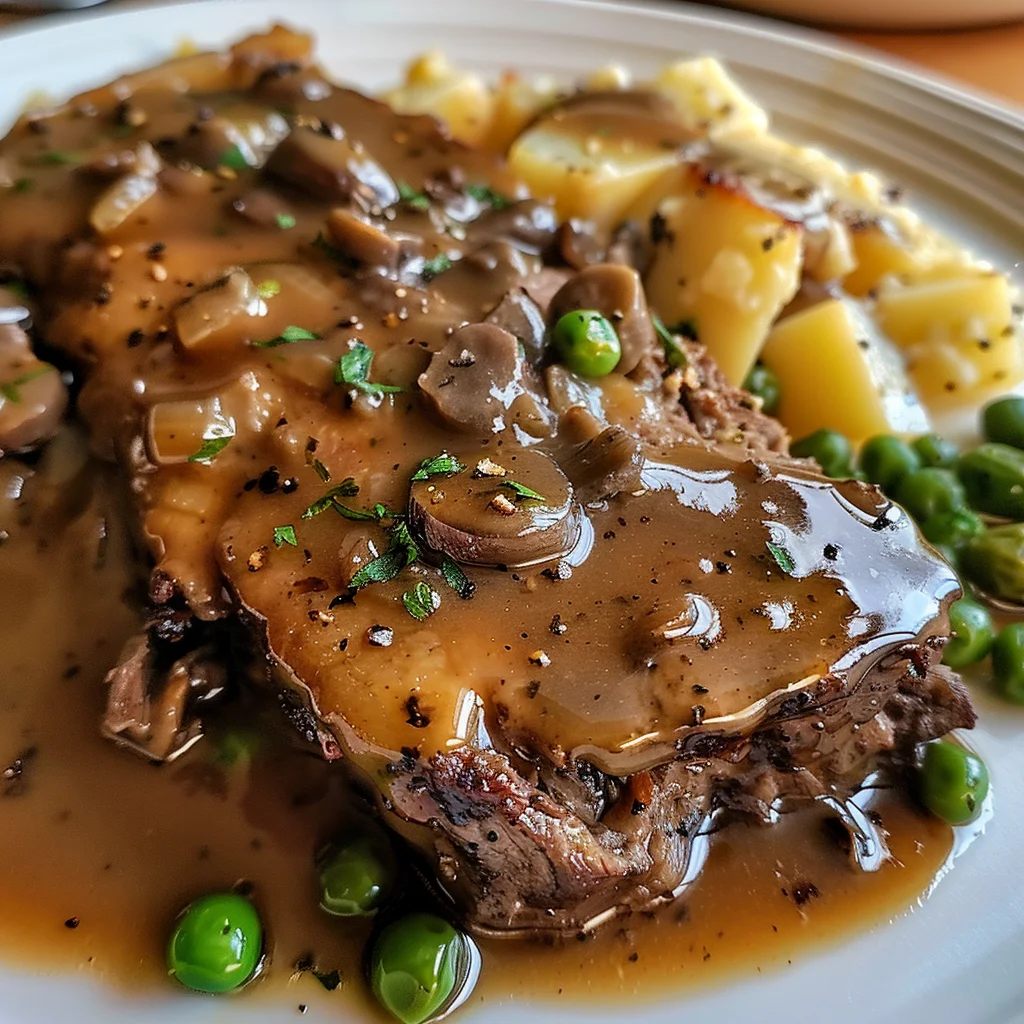
Ah, the unmistakable aroma of slow-cooked steak wafting from the kitchen—it’s the very essence of Southern comfort, a promise of a meal that’s been prepared with patience and love. This isn’t just food; it’s a warm embrace, a taste of tradition that turns a simple cut of beef into something truly magical. Furthermore, this guide is your ultimate resource for mastering this classic dish. We’ll dive deep into the history, the perfect cut of meat, and the secrets to creating a rich gravy that’ll have everyone begging for seconds. So, pull up a chair, and let’s get started on creating a masterpiece.
Southern-Style Slow-Cooked Steak with Rich Gravy: The Ultimate Comfort Food
Imagine coming home to the deeply comforting scent of beef that has been simmering for hours, becoming so tender it practically melts at the touch of a fork. Picture a rich gravy, deeply flavorful and velvety smooth, just waiting to be poured over a mountain of mashed potatoes. This, my friend, is the heart and soul of Southern-style cooking. It’s a dish that speaks of family gatherings, Sunday dinners, and the incredible power of low, slow heat to transform humble ingredients into a meal you’ll never forget. Ultimately, this article will be your trusted guide through every single step, ensuring your creation is nothing short of perfection.
Why This Dish is a Timeless Southern Classic
Honestly, this dish is far more than just a recipe; it’s a delicious piece of history on a plate.
A Dish Rooted in History and Hospitality
In the past, Southern cooks were masters of resourcefulness, famously turning tougher, more affordable cuts of meat into extraordinarily tender and flavorful feasts. This method of slow-cookingwasn’t just a technique; it was a necessity, a way to feed a crowd and make every single bite count. Consequently, this culinary ingenuity gave birth to what we now cherish as soul food—meals that nourish the spirit just as much as the body. Moreover, serving a dish like this has always been a fundamental act of hospitality, a way to say “welcome” and “you are family.”
The Unbeatable Appeal of Low and Slow Cooking
So, what’s the big secret behind this transformation? Well, it all boils down to science, believe it or not! Tough cuts of beef are typically loaded with collagen, a tough connective tissue. However, when you apply gentle, low heat over a long period, something amazing happens: that stubborn collagen slowly breaks down into luxurious, melt-in-your-mouth gelatin. This process not only makes the meat incredibly tender but also naturally thickens the cooking juices, forming the base for that unforgettable gravy. Therefore, patience is the most important ingredient you’ll add to the pot.
The Heart of the Dish: Choosing the Right Cut of Beef
Selecting the right cut is absolutely critical; in fact, it’s the single most important decision you’ll make. Contrary to what you might think, you actually want to avoid the expensive, fancy steaks for this particular dish.
Why Tough Cuts are Best for Braising
It seems counterintuitive, doesn’t it? Why would you seek out a tough piece of meat? Well, for the slow-cooking method we’re using, those well-worked, muscular cuts are pure gold because they contain the highest amount of collagen. As a result, all that marbling and connective tissue slowly renders down, basting the meat from the inside out and creating an unbelievably moist and flavorful result. In other words, fat is flavor, and collagen is your ticket to tenderness.
Top Contenders for Your Slow-Cooked Steak
-
Chuck Roast: Without a doubt, this is the champion for braised steak. Cut from the shoulder of the cow, it’s marvelously marbled with fat and laced with collagen, making it the ideal candidate for breaking down over hours of cooking. It shreds beautifully and soaks up all the delicious flavors of the pot.
-
Round Steak (Top or Bottom): This is a considerably leaner option from the rear leg of the animal. While it can work wonderfully, you must be extra careful not to overcook it, as it has less fat to keep it moist. For this reason, I often recommend it for the slow cooker where the sealed environment helps retain moisture.
-
Blade Steak: Another fantastic, well-marbled choice from the shoulder area. It’s known for its deep beefy flavor and reliable tenderness when cooked properly with this method.
Cuts to Avoid
Save your money! Seriously, do not use expensive, already-tender cuts like Filet Mignon, Ribeye, or Strip Steak. These steaks are prized for their tenderness when cooked quickly over high heat. Conversely, subjecting them to a long braise will only rob them of their texture, leaving you with a mushy, overcooked, and frankly, wasted piece of meat.
Part 2: The Ingredients & The Method
Building Flavor: Your Southern Steak Pantry List
Gathering your ingredients beforehand is a game-changer; consequently, it makes the entire cooking process smooth and enjoyable. Furthermore, you’ll likely have most of these staples already in your kitchen. This isn’t about fancy, hard-to-find items; it’s about building deep, foundational flavors with simplicity.
-
The Aromatics: A large yellow onion and several cloves of fresh garlic are non-negotiable. They form the sweet, savory base notes of the entire dish.
-
The Liquids: Good-quality beef broth is the workhorse here, providing the liquid for the braise. A generous dash of Worcestershire sauce adds a crucial umami punch. For an incredible depth of flavor, a small splash of strong black coffee works wonders without being identifiable.
-
The Thickener: All-purpose flour is our tool of choice. You’ll use it for dredging the steak to achieve a perfect sear and later, for thickening that glorious gravy.
-
The Fat: You’ll need a combination of butter for richness and a high-smoke-point oil like avocado or canola for the initial sear.
-
The Seasonings: Keep it simple but powerful: kosher salt, freshly ground black pepper, smoked paprika for a touch of warmth, and a bay leaf or some dried thyme for an herbal whisper.
Step-by-Step: Mastering the Slow-Cooking Process
Alright, let’s roll up our sleeves and transform these simple ingredients into a masterpiece. Trust the process—each step builds upon the last to create something extraordinary.
Step 1 – The Crucial Sear: Locking in Flavor
Do not—I repeat, do not—skip this step! Seriously, this is the secret weapon for a flavorful dish, not just a boiled one. Pat your chuck roast completely dry with paper towels; this is essential for getting a sear, not a steam. Generously season all sides with salt and pepper, then dredge lightly in flour, shaking off any excess.
Next, heat your oil in a heavy-bottomed Dutch oven over medium-high heat until it shimmers. Carefully place the steak in the pot. Leave it alone! Let it cook for a solid 4-5 minutes until a deep brown crust forms before even thinking about flipping it. Sear it on all sides, including the edges. This process, called the Maillard reaction, creates hundreds of new flavor compounds that will infuse the entire dish.
Step 2 – Sautéing the Aromatics
Once the beef is beautifully browned, transfer it to a plate. See all those delicious browned bits stuck to the bottom of the pot? That’s liquid gold, called fond. Reduce the heat to medium and add your chopped onions right into that flavorful fat. Sauté them until they become soft and translucent, which should take about 5 minutes. Afterwards, add the garlic, stirring constantly for just one minute until fragrant—be careful not to burn it!
Now, for the magic trick: pour in a small splash of your beef broth to deglaze the pot. As you scrape the bottom with a wooden spoon, all those stuck-on brown bits will loosen and dissolve into the liquid, creating an incredibly flavorful base.
Step 3 – The Low and Slow Braise
Return the seared steak to the pot, nestling it right into the onions. Then, pour in the remaining beef broth and Worcestershire sauce (and coffee, if using) until the liquid comes about halfway up the sides of the meat. Toss in the bay leaf. Bring everything just to a gentle simmer, then cover the pot with a tight-fitting lid.
Now, you have a choice of methods:
-
Dutch Oven Method: Transfer the covered pot to a preheated 300°F (150°C) oven. Let it work its magic for 2.5 to 3.5 hours. This method allows for slight evaporation, yielding a more concentrated flavor.
-
Slow Cooker Method: Carefully transfer the entire contents of your pot into a slow cooker. Set it to LOW for 7-8 hours or HIGH for 4-5 hours.
No matter which path you choose, the doneness test is the same: the steak should be easily pierced with a fork and should shred without any effort. It will be fall-apart tender.
The Gravy & Serving
Crafting the Perfect Rich, Southern Gravy
You’ve patiently waited, and the smell is driving you crazy. The steak is perfect, but now comes the crowning glory: the gravy. Using the incredible pan drippings left in the pot is the key to a gravy that’s miles ahead of any mix.
Carefully remove the steak to a cutting board and tent it with foil to rest. Your pot will be filled with an intensely flavorful liquid, softened onions, and rendered fat. For a smoother gravy, you can strain out the onions, but I love keeping them in for extra texture and flavor.
Now, let’s thicken it up. Place the pot back over medium heat on the stovetop and bring the juices to a simmer. In a small bowl, make a beurre manié by mashing together equal parts soft butter and flour into a smooth paste. Gradually whisk this paste, a small spoonful at a time, into the simmering liquid. Alternatively, you can create a slurry by mixing a tablespoon of cornstarch with two tablespoons of cold water.
As you whisk, you’ll witness the transformation—the liquid will gradually thicken into a luscious, glossy gravy. Let it bubble gently for 2-3 minutes to cook out the raw flour taste. Finally, season generously with salt and pepper to taste. The gravy should coat the back of a spoon beautifully. Oh, and taste it—you’re in for a revelation!
Serving Your Southern Masterpiece
The moment of truth has arrived! Using two forks, shred the steak into chunks or pull it apart completely. You can then return all the meat to the pot to swim in that glorious gravy, or you can arrange it on a large serving platter and pour the gravy over the top.
This dish demands the very best comfort food sidekicks. Here are the classic pairings:
-
A huge bowl of creamy, buttery mashed potatoes is the absolute number one choice. They are the perfect vehicle for that rich gravy.
-
Buttery stone-ground grits provide a wonderfully Southern alternative.
-
Flaky, warm buttermilk biscuits are essential for sopping up every last drop on your plate.
-
For a green vegetable, simple Southern-style green beans or stewed collards are the perfect complement.
Storing and Reheating for Later Enjoyment
If, by some miracle, you have leftovers, they store beautifully. Simply allow the steak and gravy to cool completely before transferring it to an airtight container. It will keep in the refrigerator for up to 4 days.
When you’re ready for round two, gentle reheating is crucial. Dump the contents into a saucepan, add a small splash of beef broth or water to loosen it up, and warm it over low heat, stirring occasionally. The microwave will work in a pinch, but the stovetop method does a far better job of preserving the texture and preventing the meat from drying out.
FAQs and Conclusion
Frequently Asked Questions (FAQs)
Q: Can I make this Southern-style steak in a slow cooker?
A: You absolutely can! For the very best flavor, I highly recommend searing the steak and sautéing the onions in a skillet on the stovetop first. Then, transfer everything into your slow cooker and proceed as directed. Cooking on LOW for 7-8 hours will yield the most tender result.
Q: What can I use if I don’t have beef broth?
A: That’s no problem at all. You can easily substitute with chicken broth or even vegetable broth. For a rich, homemade flavor, a good quality bouillon cube or granules dissolved in hot water will work perfectly well in a pinch.
Q: How can I thicken my gravy if it’s too thin?
A: The easiest fix is to create a cornstarch slurry. Simply mix one tablespoon of cornstarch with two tablespoons of cold water until it’s completely smooth. While your gravy is simmering, whisk in this slurry a little bit at a time. Let it cook for a minute or two after each addition until you achieve your desired thickness.
Q: Why is my slow-cooked steak tough?
A: This almost always means it hasn’t cooked long enough. The collagen simply needs more time to break down. Don’t worry! Just return it to the pot, add a bit more liquid if needed, and continue cooking. Check for tenderness every 30 minutes until it reaches that perfect fall-apart state.
Conclusion: A Taste of Southern Tradition
And there you have it! You’ve just created more than just a meal; you’ve crafted an experience, a delicious tribute to the power of patience and simple, good ingredients. This Southern-Style Slow-Cooked Steak with Rich Gravy is the ultimate expression of comfort food—a hearty, satisfying dish that brings people together around the table. So, don’t save it just for special occasions. Make it, share it, and savor the tradition. After all, you’ve earned it.
Print
Southern-Style Slow-Cooked Steak with Rich Gravy
Description
Southern-Style Slow-Cooked Steak with Rich Gravy
Ingredients
-
2 lbs cube steak (or round steak, cut into portions)
-
1 cup all-purpose flour
-
1 tsp garlic powder
-
1 tsp onion powder
-
½ tsp smoked paprika
-
Salt and black pepper, to taste
-
4 tbsp vegetable oil (for searing)
-
1 large onion, thinly sliced
-
3 cloves garlic, minced
-
3 cups beef broth
-
1 tbsp Worcestershire sauce
-
1 tsp dried thyme (or 2–3 sprigs fresh thyme)
-
1 bay leaf
-
2 tbsp cornstarch + 2 tbsp cold water (slurry, optional for thickening)
-
Fresh parsley, chopped (for garnish)
Instructions
-
Season and dredge the steak: Mix flour, garlic powder, onion powder, paprika, salt, and pepper in a shallow dish. Coat each piece of steak in the seasoned flour. Shake off excess.
-
Sear the steaks: Heat oil in a large skillet over medium-high heat. Brown steaks on both sides, about 2–3 minutes per side. Transfer to a slow cooker.
-
Cook the onions: In the same skillet, add sliced onions and cook until softened and lightly golden. Add garlic and cook 1 minute. Deglaze with a splash of beef broth, scraping up browned bits.
-
Build the gravy: Pour onions and pan juices over the steaks in the slow cooker. Add remaining beef broth, Worcestershire sauce, thyme, and bay leaf.
-
Slow cook: Cover and cook on Low for 6–8 hours or High for 3–4 hours, until steaks are fork-tender.
-
Thicken (optional): Remove bay leaf. If you prefer thicker gravy, stir in cornstarch slurry and cook on High for 10–15 minutes until thickened.
-
Serve: Spoon rich onion gravy over steaks. Garnish with fresh parsley.