
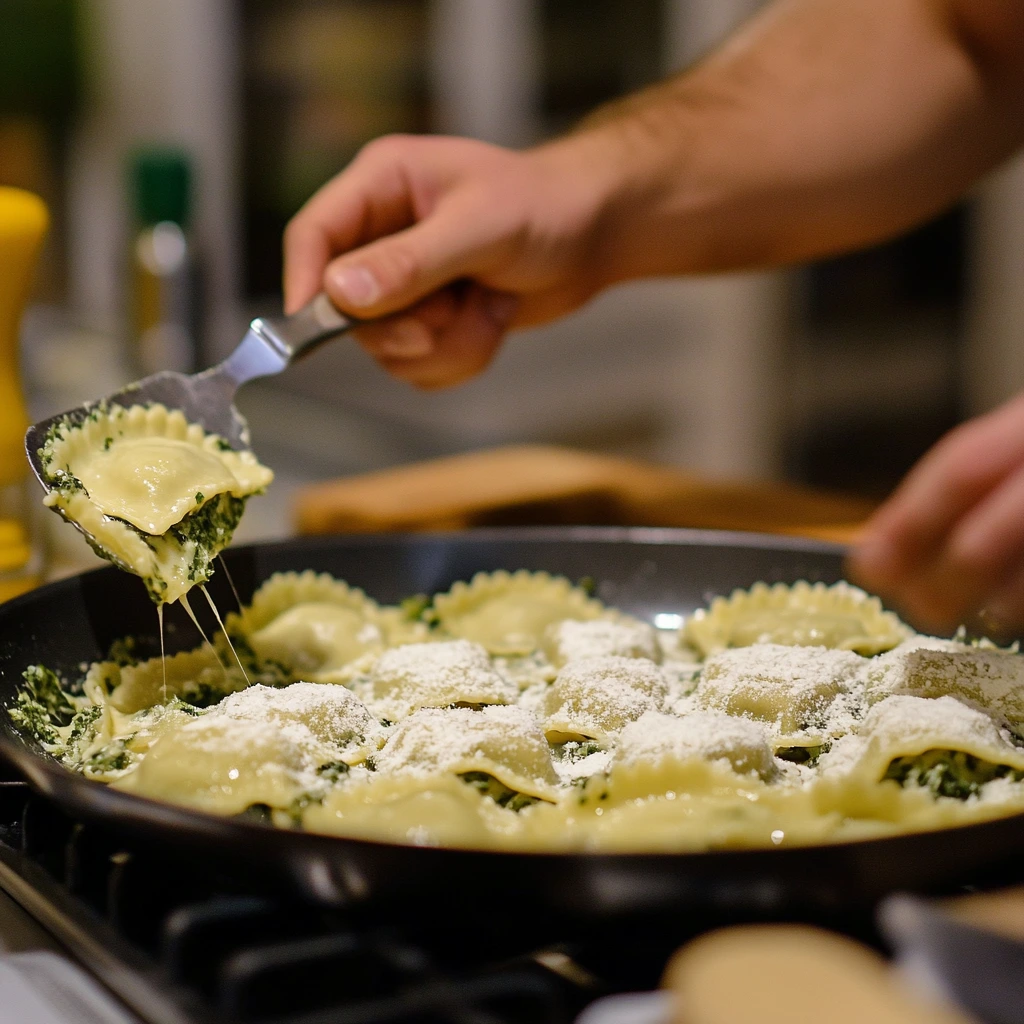
Spinach Cheese Ravioli: A Delicious Recipe
Spinach cheese ravioli is a dish that effortlessly combines comfort, flavor, and nutrition. Whether you’re a seasoned chef or a beginner in the kitchen, this recipe promises to deliver a mouthwatering experience that will leave you craving more. In this article, we’ll walk you through everything you need to know to create homemade spinach cheese ravioli from scratch. From preparing the perfect pasta dough to crafting a flavorful spinach and ricotta filling, we’ve got you covered. Plus, we’ll share tips, serving suggestions, and answers to frequently asked questions to ensure your ravioli turns out perfectly every time. Let’s dive in!
Introduction and Overview
Spinach Cheese Ravioli: A Delicious Recipe
There’s something undeniably satisfying about biting into a tender piece of spinach cheese ravioli. The delicate pasta, the creamy filling, and the burst of flavors make it a dish that’s hard to resist. Not only is it a crowd-pleaser, but it’s also a fantastic way to sneak some greens into your meal. Whether you’re cooking for a special occasion or simply treating yourself, this recipe is sure to impress.
Why Spinach Cheese Ravioli?
Spinach cheese ravioli isn’t just delicious—it’s also packed with nutrients. Spinach is a powerhouse of vitamins like A, C, and K, as well as iron and fiber. Pair it with ricotta cheese, which is rich in calcium and protein, and you’ve got a meal that’s as wholesome as it is tasty.
What’s more, making ravioli at home allows you to control the ingredients, ensuring a fresher and healthier dish compared to store-bought options. Plus, there’s a certain pride that comes with crafting your own pasta. It’s a labor of love that pays off with every bite.
What Makes This Recipe Special?
This recipe stands out because it strikes the perfect balance between simplicity and flavor. You don’t need to be a professional chef to master it, yet the results are restaurant-quality. The combination of fresh spinach, creamy ricotta, and a hint of nutmeg creates a filling that’s both rich and refreshing.
Moreover, this recipe is incredibly versatile. You can pair the ravioli with a variety of sauces, from a classic marinara to a creamy Alfredo or even a simple drizzle of olive oil. It’s a dish that adapts to your preferences, making it a staple in any home cook’s repertoire.
Ingredients and Preparation
Ingredients for Spinach Cheese Ravioli
Before you start rolling out your pasta dough or mixing the filling, it’s essential to gather all the necessary ingredients. Here’s what you’ll need to create this delicious spinach cheese ravioli:
For the Pasta Dough
- 2 cups all-purpose flour (plus extra for dusting)
- 3 large eggs
- 1 tablespoon olive oil
- A pinch of salt
For the Filling
- 2 cups fresh spinach (washed and trimmed)
- 1 cup ricotta cheese
- ½ cup grated Parmesan cheese
- 1 clove garlic (minced)
- A pinch of nutmeg (freshly grated for the best flavor)
- Salt and pepper to taste
For the Sauce (Optional)
While the ravioli shines on its own, a good sauce can elevate it to the next level. Here are a few simple options:
- Marinara sauce for a classic Italian touch.
- Alfredo sauce for a creamy, indulgent twist.
- Brown butter sage sauce for a nutty, aromatic flavor.
Tools and Equipment Needed
Making homemade ravioli requires a few basic tools. Don’t worry—you don’t need fancy equipment to get started. Here’s what you’ll need:
- A pasta machine or rolling pin (for rolling out the dough).
- Mixing bowls (for the dough and filling).
- A ravioli mold or a sharp knife/pizza cutter (for shaping the ravioli).
- A large pot (for boiling the ravioli).
- A slotted spoon (for removing the ravioli from the water).
Preparing the Spinach Cheese Filling
The filling is the heart of your spinach cheese ravioli, so it’s worth taking the time to get it just right. Here’s how to prepare it step by step:
- Blanch the Spinach: Start by bringing a pot of water to a boil. Add the fresh spinach and let it cook for about 1-2 minutes until wilted. Immediately transfer it to a bowl of ice water to stop the cooking process. This helps retain the vibrant green color.
- Drain and Squeeze: Once the spinach has cooled, drain it and squeeze out as much water as possible. Excess moisture can make the filling too wet, which can cause the ravioli to break during cooking.
- Mix the Filling: In a mixing bowl, combine the spinach with ricotta cheese, grated Parmesan, minced garlic, and a pinch of nutmeg. Season with salt and pepper to taste. Mix everything until well combined.
- Chill the Filling: Cover the filling and refrigerate it for at least 30 minutes. Chilling makes it easier to handle and prevents it from oozing out of the ravioli during assembly.
Making the Pasta Dough
How to Make Homemade Pasta Dough
Making pasta dough from scratch might sound intimidating, but it’s surprisingly simple and incredibly rewarding. With just a few ingredients and a little patience, you can create a dough that’s silky, elastic, and perfect for spinach cheese ravioli. Here’s how to do it:
- Create a Flour Mound: On a clean, flat surface, mound 2 cups of all-purpose flour. Make a well in the center—this is where you’ll add the wet ingredients.
- Add Eggs and Olive Oil: Crack 3 large eggs into the well, followed by 1 tablespoon of olive oil and a pinch of salt. Using a fork, gently beat the eggs and oil together, gradually incorporating the flour from the edges of the well.
- Knead the Dough: Once the mixture comes together, use your hands to knead the dough for about 8-10 minutes. The dough should be smooth, elastic, and slightly tacky but not sticky. If it’s too dry, add a few drops of water; if it’s too sticky, sprinkle in a bit more flour.
- Rest the Dough: Wrap the dough in plastic wrap and let it rest at room temperature for 30 minutes. Resting allows the gluten to relax, making the dough easier to roll out later.
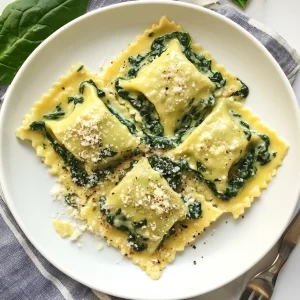
Rolling Out the Pasta Dough
Now that your dough is ready, it’s time to roll it out. Whether you’re using a pasta machine or a rolling pin, the goal is to achieve a thin, even sheet of dough. Here’s how:
- Divide the Dough: Cut the dough into 4 equal pieces. Work with one piece at a time, keeping the rest covered to prevent drying out.
- Flatten the Dough: Flatten the dough piece with your hands or a rolling pin to make it easier to feed through the pasta machine.
- Roll It Out: If using a pasta machine, start at the widest setting and gradually work your way to a thinner setting. Pass the dough through each setting 2-3 times, folding it in half between passes if needed. Aim for a thickness of about 1-2 mm.
If using a rolling pin, dust your surface with flour and roll the dough into a thin, even sheet. This might take a bit more effort, but it’s absolutely doable!
- Dust with Flour: Lightly dust the rolled-out dough with flour to prevent sticking, but don’t overdo it—too much flour can make the dough tough.
Assembling and Cooking the Ravioli
Assembling Spinach Cheese Ravioli
Now comes the fun part—assembling your spinach cheese ravioli! This step is where your hard work pays off, and you get to see your delicious creation take shape. Follow these steps to ensure your ravioli are perfectly sealed and ready to cook:
- Prepare the Dough Sheets: Lay one rolled-out sheet of pasta dough on a lightly floured surface. Keep the other sheets covered to prevent them from drying out.
- Add the Filling: Using a spoon or a piping bag, place small mounds of the spinach and ricotta filling onto the dough sheet. Space them about 1.5 inches apart to leave room for sealing.
- Brush with Water: Lightly brush the edges of the dough and around each mound of filling with water. This helps the dough stick together when sealed.
- Top with Another Dough Sheet: Gently place another sheet of dough over the filling. Press down around each mound to remove any air pockets and seal the edges.
- Cut the Ravioli: Use a ravioli mold, a sharp knife, or a pizza cutter to cut the ravioli into individual pieces. If using a mold, press firmly to ensure the edges are sealed. If cutting by hand, use a fork to crimp the edges for a decorative touch.
- Check for Seals: Make sure each ravioli is properly sealed to prevent the filling from leaking out during cooking.
Cooking the Ravioli
Cooking homemade ravioli is quick and easy, but it requires a bit of attention to ensure they turn out perfectly. Here’s how to do it:
- Boil Water: Bring a large pot of salted water to a rolling boil. The water should taste like the sea—this seasons the pasta as it cooks.
- Cook in Batches: Gently drop the ravioli into the boiling water, making sure not to overcrowd the pot. Cook in batches if necessary.
- Monitor Cooking Time: Fresh ravioli cooks much faster than store-bought. They’re usually done in 3-4 minutes or when they float to the surface.
- Remove Carefully: Use a slotted spoon to carefully remove the ravioli from the water. Let them drain briefly before transferring to a plate or serving dish.
Tips for Perfect Ravioli
- Avoid Overfilling: Too much filling can cause the ravioli to burst during cooking. Stick to about 1 teaspoon of filling per ravioli.
- Seal Properly: Take your time to seal the edges well. Air pockets can cause the ravioli to break open.
- Don’t Overcook: Fresh pasta cooks quickly, so keep an eye on the timer to avoid mushy ravioli.
- Use a Slotted Spoon: This prevents the delicate ravioli from breaking when you remove them from the water.
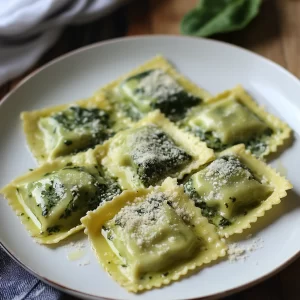
Serving and Pairing Suggestions
How to Serve Spinach Cheese Ravioli
Once your spinach cheese ravioli is cooked to perfection, it’s time to plate it up and make it look as good as it tastes. Here are some simple yet elegant ways to serve your ravioli:
- Drizzle with Sauce: Whether you’re using marinara, Alfredo, or brown butter sage sauce, spoon it generously over the ravioli. For a lighter option, a drizzle of high-quality olive oil works wonders.
- Garnish with Fresh Herbs: Sprinkle chopped basil, parsley, or chives on top for a pop of color and freshness.
- Add Cheese: A sprinkle of grated Parmesan or Pecorino Romano adds a salty, savory finish.
- Serve Family-Style: Place the ravioli on a large platter and let everyone help themselves. It’s a great way to create a warm, communal dining experience.
Sauce Pairings
The right sauce can take your spinach cheese ravioli to the next level. Here are a few classic and creative options:
- Marinara Sauce: A tangy, tomato-based sauce that complements the creamy filling beautifully.
- Alfredo Sauce: Rich and creamy, this sauce adds a luxurious touch to the dish.
- Brown Butter Sage Sauce: Nutty brown butter paired with fragrant sage creates a simple yet sophisticated flavor profile.
- Pesto: A vibrant basil pesto adds a fresh, herbaceous note that pairs well with the spinach and cheese.
- Olive Oil and Garlic: For a lighter option, sauté minced garlic in olive oil and drizzle it over the ravioli.
Side Dishes and Pairings
While spinach cheese ravioli can easily stand on its own, pairing it with the right sides can turn it into a complete meal. Here are some ideas:
- Garlic Bread: Crispy on the outside and soft on the inside, garlic bread is a classic accompaniment to any pasta dish.
- Caesar Salad: The crisp romaine lettuce, crunchy croutons, and tangy dressing provide a refreshing contrast to the rich ravioli.
- Roasted Vegetables: Try roasted zucchini, bell peppers, or asparagus for a healthy and colorful side.
- Soup: A light minestrone or tomato basil soup can be a great starter before diving into the main course.
FAQs Section
Frequently Asked Questions About Spinach Cheese Ravioli
When it comes to making spinach cheese ravioli, it’s natural to have a few questions. Here are answers to some of the most common queries to help you perfect your ravioli-making skills:
Can I use frozen spinach instead of fresh?
Absolutely! Frozen spinach is a convenient alternative to fresh. Just make sure to thaw it completely and squeeze out all the excess water before using it in the filling. Too much moisture can make the filling soggy and difficult to work with.
Can I make ravioli ahead of time?
Yes, you can! Uncooked ravioli can be stored in the freezer for up to 3 months. Arrange them in a single layer on a baking sheet, freeze until solid, and then transfer to a zip-top bag. When you’re ready to cook, boil them straight from frozen—just add an extra minute or two to the cooking time.
What can I substitute for ricotta cheese?
If you don’t have ricotta cheese, you can use cottage cheese or mascarpone as alternatives. Cottage cheese will give a similar texture, while mascarpone will add a richer, creamier flavor.
How do I store leftover cooked ravioli?
Store leftover cooked ravioli in an airtight container in the refrigerator for up to 3 days. To reheat, gently warm them in a skillet with a bit of sauce or olive oil to prevent them from drying out.
Can I make gluten-free ravioli?
Definitely! Substitute the all-purpose flour with a gluten-free flour blend designed for pasta. Keep in mind that gluten-free dough may be a bit more delicate, so handle it with care when rolling and assembling.
How do I prevent the ravioli from sticking together?
To prevent sticking, make sure the ravioli are well-floured before storing or cooking. If boiling, avoid overcrowding the pot and stir gently during the first minute of cooking.
What’s the best way to seal ravioli without a mold?
If you don’t have a ravioli mold, you can use a fork to crimp the edges of the dough. Simply press the tines of the fork around the edges to create a tight seal. Alternatively, you can use a round cookie cutter to cut out individual ravioli and then press the edges together by hand.