
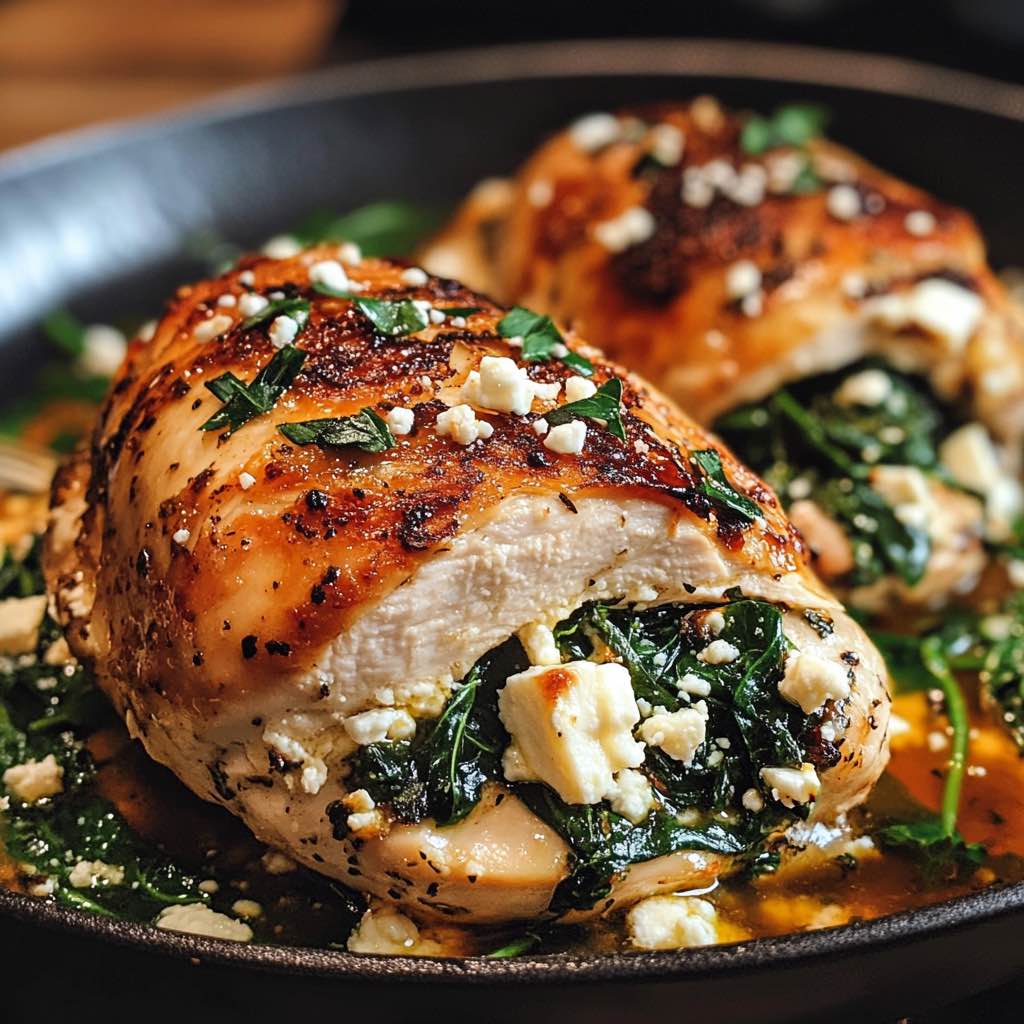
Stuffed Chicken Breast with Spinach and Feta: The Ultimate Comfort Food Recipe
Stuffed chicken breast with spinach and feta transforms an ordinary weeknight dinner into an elegant, restaurant-quality meal that’s surprisingly easy to prepare at home. This Mediterranean-inspired dish combines tender, juicy chicken with a creamy, flavorful filling that creates a perfect balance of protein, vegetables, and rich cheese that will impress family and guests alike.
Why This Stuffed Chicken Recipe Stands Out
The combination of fresh spinach and tangy feta cheese creates a filling that’s both nutritious and indulgent. Unlike heavy cream-based stuffings, this spinach and feta mixture provides a lighter yet satisfying flavor profile that complements the mild taste of chicken breast perfectly. The contrast between the golden, crispy exterior and the creamy, herb-infused interior makes every bite a delightful experience.
This recipe offers excellent versatility for meal planning and can easily be scaled up for entertaining or meal prep. The ingredients are readily available year-round, making it a reliable go-to recipe for any occasion. Whether you’re cooking for a romantic dinner, family gathering, or simply want to elevate your weeknight meals, this stuffed chicken breast delivers consistent, impressive results.
Essential Ingredients for Perfect Stuffed Chicken
Main Components
The foundation of this dish starts with high-quality boneless, skinless chicken breasts. Choose pieces that are similar in size and thickness for even cooking. Ideally, select chicken breasts that weigh between 6-8 ounces each, as they provide the perfect canvas for stuffing while maintaining structural integrity during cooking.
Fresh baby spinach works best for this recipe because of its tender leaves and mild flavor. You’ll need approximately 4-5 cups of fresh spinach, which will wilt down significantly during preparation. If using frozen spinach, ensure it’s thoroughly thawed and excess moisture is squeezed out completely to prevent a watery filling.
Feta cheese provides the signature tangy flavor that defines this dish. Opt for block feta rather than pre-crumbled varieties, as it maintains better texture and allows you to control the chunk size. Greek feta typically offers the best flavor profile, but Bulgarian or French varieties work equally well.
Supporting Ingredients
Cream cheese acts as the binding agent that holds the filling together while adding richness and smooth texture. Use full-fat cream cheese at room temperature for easy mixing and optimal consistency. The cream cheese also helps balance the saltiness of the feta and creates a cohesive filling that won’t fall out during cooking.
Fresh garlic and onion form the aromatic base of the filling. Two to three cloves of minced garlic and one small diced onion provide the perfect amount of flavor without overwhelming the delicate taste of the chicken and cheese. Sautéing these ingredients beforehand develops their flavors and ensures they integrate seamlessly into the filling.
Herbs play a crucial role in elevating the overall taste profile. Fresh oregano, thyme, and parsley complement the Mediterranean theme perfectly. If fresh herbs aren’t available, use dried herbs in smaller quantities, typically one-third the amount called for in fresh herbs.
Step-by-Step Preparation Guide
Preparing the Filling
Begin by heating olive oil in a large skillet over medium heat. Add the diced onion and cook for 3-4 minutes until softened and translucent. The onion should release its moisture and become fragrant without browning. Add minced garlic and cook for another minute, stirring constantly to prevent burning.
Add the fresh spinach to the skillet in batches, allowing each addition to wilt before adding more. This process takes about 3-5 minutes total. Once all spinach is wilted, season with salt and pepper, then remove from heat. Allow the mixture to cool for 5-10 minutes before proceeding.
In a mixing bowl, combine the room-temperature cream cheese with crumbled feta cheese. Mix until well combined but maintain some texture from the feta chunks. Add the cooled spinach mixture, fresh herbs, and a pinch of black pepper. Stir gently to combine all ingredients evenly. Taste and adjust seasoning as needed, keeping in mind that feta adds significant saltiness.
Preparing the Chicken
Place each chicken breast on a cutting board and use a sharp knife to create a pocket for the filling. Make a horizontal cut about three-quarters of the way through the thickest part of each breast, being careful not to cut completely through. Open the breast like a book and gently pound with a meat mallet to achieve even thickness of about 1/2 inch.
Season both sides of the chicken breasts generously with salt, pepper, and any additional herbs or spices you prefer. Mediterranean seasoning blends work particularly well with this recipe. Allow the seasoned chicken to rest at room temperature for 15-20 minutes, which helps ensure even cooking.
Divide the spinach and feta filling evenly among the chicken breasts, placing it in the pocket you created. Be careful not to overfill, as this can cause the stuffing to leak out during cooking. Secure the opening with toothpicks or kitchen twine, ensuring the filling is completely enclosed.
Cooking Techniques for Optimal Results
Pan-Searing Method
Heat a tablespoon of olive oil in an oven-safe skillet over medium-high heat. Once the oil shimmers, carefully place the stuffed chicken breasts in the pan. Don’t overcrowd the pan; cook in batches if necessary. Sear for 3-4 minutes on each side until golden brown, creating a beautiful crust that locks in juices.
After searing, transfer the skillet to a preheated 375°F oven. Bake for 15-20 minutes, depending on the thickness of the chicken breasts. Use a meat thermometer to ensure the internal temperature reaches 165°F in the thickest part of the chicken, avoiding the filling area for accurate readings.
Alternative Baking Method
For a simpler approach, you can skip the pan-searing and bake the stuffed chicken breasts directly in the oven. Place them in a lightly greased baking dish and brush with olive oil for browning. Bake at 400°F for 20-25 minutes, checking for doneness with a meat thermometer.
This method works well when preparing multiple portions or when you prefer a hands-off cooking approach. The chicken may not develop as deep a color as the pan-seared version, but the flavor and texture remain excellent.
Flavor Variations and Customizations
Mediterranean Twist
Enhance the Mediterranean flavors by adding sun-dried tomatoes, kalamata olives, and fresh basil to the filling. Dice the sun-dried tomatoes and olives finely to distribute flavor throughout the mixture. Pine nuts provide additional texture and nutty flavor that complements the feta beautifully.
Consider substituting goat cheese for half the feta to create a milder, creamier filling. Lemon zest adds brightness and helps balance the rich cheese flavors. A touch of dried Italian seasoning can tie all the Mediterranean elements together harmoniously.
Italian-Inspired Version
Transform this recipe with Italian flavors by using ricotta cheese instead of cream cheese and adding fresh basil, oregano, and a touch of Parmesan cheese. Include finely diced Roma tomatoes for color and freshness. This variation pairs excellently with marinara sauce served alongside.
Prosciutto strips can be wrapped around the outside of the stuffed chicken breasts before cooking, adding a salty, savory element that complements the cheese filling perfectly. The prosciutto helps keep the chicken moist while providing additional flavor complexity.
Seasonal Adaptations
Adapt this recipe to highlight seasonal ingredients throughout the year. In spring, incorporate fresh asparagus pieces and lemon zest. Summer variations might include fresh basil, cherry tomatoes, and zucchini. Fall adaptations could feature roasted butternut squash and sage, while winter versions might include roasted red peppers and rosemary.
These seasonal adaptations keep the recipe interesting and allow you to take advantage of the best produce available throughout the year. The basic technique remains the same, making it easy to experiment with different flavor combinations.
Nutritional Benefits and Health Considerations
Protein Powerhouse
This stuffed chicken breast recipe provides an excellent source of lean protein, with each serving containing approximately 35-40 grams of high-quality protein. Chicken breast is naturally low in saturated fat while being rich in essential amino acids necessary for muscle maintenance and growth.
The protein content makes this dish particularly satisfying and helps maintain stable blood sugar levels, making it an excellent choice for those following low-carb or ketogenic dietary approaches. The high protein content also supports weight management by increasing satiety and boosting metabolism.
Nutrient-Dense Vegetables
Spinach contributes significant nutritional value to this dish, providing folate, iron, vitamin K, and antioxidants like lutein and zeaxanthin. These nutrients support eye health, bone health, and overall immune function. The cooking process actually increases the bioavailability of some nutrients in spinach, making them easier for your body to absorb.
The garlic and onion in the filling provide additional health benefits, including compounds that support cardiovascular health and have anti-inflammatory properties. These vegetables also contribute fiber, which supports digestive health and helps maintain stable blood sugar levels.
Calcium and Healthy Fats
Feta cheese provides calcium for bone health along with beneficial probiotics that support digestive health. While cheese does add calories and saturated fat to the dish, the portions used provide flavor satisfaction without excessive amounts. The combination of protein and moderate fat content helps create a balanced, satisfying meal.
Using olive oil for cooking adds monounsaturated fats that support heart health and help with the absorption of fat-soluble vitamins. The overall nutritional profile makes this dish suitable for most healthy eating plans when enjoyed as part of a balanced diet.
Storage and Reheating Guidelines
Proper Storage Techniques
Cooked stuffed chicken breasts can be safely stored in the refrigerator for up to three days when properly wrapped or stored in airtight containers. Allow the chicken to cool completely before refrigerating to prevent condensation that could lead to soggy exteriors or bacterial growth.
For longer storage, these stuffed chicken breasts freeze well for up to three months. Wrap individual portions tightly in plastic wrap, then place in freezer-safe containers or bags. Label with the date and contents for easy identification. Proper packaging prevents freezer burn and maintains quality during storage.
Reheating for Best Results
When reheating refrigerated stuffed chicken breasts, use the oven for best results. Preheat to 350°F and place the chicken in a covered baking dish with a tablespoon of chicken broth or water to prevent drying. Heat for 10-15 minutes until warmed through, checking that the internal temperature reaches 165°F.
Microwave reheating is convenient but can result in uneven heating and rubbery texture. If using a microwave, place chicken on a microwave-safe plate, cover with a damp paper towel, and heat in 30-second intervals until warmed through. Let stand for a minute before serving to allow heat to distribute evenly.
Troubleshooting Common Issues
Preventing Filling Leakage
One of the most common challenges with stuffed chicken is keeping the filling inside during cooking. Ensure you don’t overstuff the chicken breasts, as this increases pressure inside the pocket and can cause splitting. Secure the opening thoroughly with toothpicks or kitchen twine.
If your chicken breasts are particularly thin or have torn during preparation, you can create a wrap-style preparation by pounding the chicken very thin and rolling it around the filling instead of stuffing it into a pocket. This technique actually works well and creates an attractive spiral pattern when sliced.
Avoiding Dry Chicken
Overcooking is the primary cause of dry stuffed chicken breasts. Use a meat thermometer to monitor internal temperature accurately, removing the chicken from heat as soon as it reaches 165°F. The chicken will continue cooking slightly from residual heat, ensuring it remains juicy.
Brining the chicken breasts for 2-4 hours before preparation can significantly improve moisture retention. A simple brine of water, salt, and sugar helps the chicken retain moisture during cooking and adds subtle flavor enhancement throughout the meat.
Temperature Control Issues
Uneven cooking can occur when chicken breasts vary significantly in size or thickness. Try to select similar-sized pieces, or pound thicker portions to match thinner ones. If you must use varying sizes, start the larger pieces first and add smaller ones to the pan a few minutes later.
Using an instant-read thermometer is crucial for determining doneness without cutting into the chicken and releasing juices. Check temperature in the thickest part of the meat, avoiding the filling area which may give false readings due to moisture content.
Perfect Side Dish Pairings
Vegetable Accompaniments
Roasted vegetables complement this stuffed chicken beautifully, particularly Mediterranean vegetables like zucchini, bell peppers, eggplant, and cherry tomatoes. Toss vegetables with olive oil, herbs, and seasonings, then roast alongside the chicken for a complete one-pan meal.
Steamed or sautéed green vegetables like broccoli, green beans, or asparagus provide color contrast and additional nutrients. These lighter sides allow the rich flavors of the stuffed chicken to remain the star of the meal while contributing essential vitamins and fiber.
Starch Options
Rice pilaf or wild rice blends absorb the delicious juices from the chicken and provide satisfying substance to the meal. Prepare rice with chicken or vegetable broth instead of water for enhanced flavor that complements the Mediterranean theme of the dish.
Roasted or mashed potatoes offer comfort food appeal and pair excellently with the creamy filling flavors. For a lighter option, consider cauliflower mash or roasted sweet potatoes, which provide similar satisfaction with different nutritional profiles.
Sauce Suggestions
While this dish is flavorful enough to stand alone, certain sauces can enhance the dining experience. A light lemon butter sauce brightens the rich cheese flavors without overwhelming them. Tzatziki sauce provides cooling cucumber and yogurt flavors that complement the Greek-inspired elements.
A simple pan sauce made from the drippings left in the cooking skillet adds restaurant-quality finish to the dish. Deglaze the pan with white wine or chicken broth, add herbs and a touch of butter for a sophisticated accompanying sauce.
Meal Prep and Make-Ahead Options
Advance Preparation Strategies
The entire dish can be assembled up to 24 hours in advance and refrigerated until ready to cook. This makes it excellent for entertaining, as you can complete the prep work earlier in the day and simply cook when guests arrive. Cover assembled chicken breasts tightly with plastic wrap to prevent drying.
The filling can be prepared several days ahead and stored separately in the refrigerator. This component keeps well for up to five days, allowing you to prepare it during weekend meal prep sessions for quick weeknight assembly.
Batch Cooking Benefits
This recipe scales easily for batch cooking, making it perfect for meal prep enthusiasts. Prepare multiple portions at once, cook them completely, then store individual servings for grab-and-go meals throughout the week.
Consider preparing different flavor variations in the same batch cooking session to provide variety throughout the week. Label containers clearly with contents and date for easy identification and rotation of meals.
Frequently Asked Questions
Can I use frozen spinach instead of fresh spinach?
Yes, you can substitute frozen spinach for fresh, but it requires careful preparation. Use about 1 cup of frozen spinach (thawed) to replace 4-5 cups of fresh spinach. Thaw the frozen spinach completely and squeeze out as much excess water as possible using paper towels or a clean kitchen towel. Excess moisture can make the filling watery and cause it to leak during cooking.
What other cheeses can I substitute for feta?
Several cheese alternatives work well in this recipe. Goat cheese provides a similar tangy flavor with a creamier texture. Ricotta cheese creates a milder, Italian-inspired filling. For a sharper flavor, try crumbled blue cheese in smaller quantities. Fresh mozzarella can be used for a milder taste, though you may want to add extra herbs for flavor complexity.
How do I know when the stuffed chicken is fully cooked?
The most reliable method is using an instant-read meat thermometer inserted into the thickest part of the chicken breast, avoiding the filling area. The internal temperature should reach 165°F. The juices should run clear, and the meat should no longer appear pink. Cooking time typically ranges from 20-25 minutes at 375°F, depending on thickness.
Can I prepare this dish ahead of time?
Absolutely. You can assemble the stuffed chicken breasts up to 24 hours in advance and store them covered in the refrigerator. The filling can be prepared up to 3 days ahead. For longer storage, you can freeze the assembled, uncooked chicken breasts for up to 3 months. Thaw completely in the refrigerator before cooking.
What should I do if my chicken breast tears while creating the pocket?
If the chicken breast tears, you can still proceed with the recipe. For small tears, simply overlap the torn edges and secure with toothpicks. For larger tears, consider pounding the chicken breast thin and using it as a wrapper, rolling the filling inside instead of stuffing it into a pocket. This creates an attractive spiral pattern when sliced.
How can I prevent the filling from leaking out during cooking?
Avoid overstuffing the chicken breasts, leaving about 1/2 inch border around the edges of the pocket. Secure the opening thoroughly with 2-3 toothpicks or tie with kitchen twine. Let the filled chicken rest for 10-15 minutes before cooking to allow the filling to firm up slightly. Cook at the proper temperature to avoid sudden expansion of the filling.
Is it necessary to pound the chicken breasts?
While not absolutely necessary, pounding the chicken breasts to even thickness ensures uniform cooking and makes it easier to create a proper pocket for the filling. If you choose not to pound them, be extra careful when cutting the pocket and monitor cooking time closely, as thicker areas will take longer to cook through.
Can I cook this dish in a slow cooker?
Yes, though the texture will be different from oven cooking. Place the stuffed chicken breasts in the slow cooker with about 1/4 cup of chicken broth. Cook on low for 4-6 hours or high for 2-3 hours. The chicken will be very tender but won’t develop the golden-brown exterior that oven cooking provides.
What wine pairs well with this dish?
This Mediterranean-inspired dish pairs beautifully with white wines such as Sauvignon Blanc, Pinot Grigio, or Chardonnay. The acidity in these wines complements the tangy feta cheese. For red wine lovers, a light Pinot Noir or Chianti works well without overwhelming the delicate chicken flavors.
How can I make this recipe dairy-free?
To make this dish dairy-free, substitute the feta and cream cheese with dairy-free alternatives. Use dairy-free cream cheese and either omit the feta or replace it with a dairy-free feta substitute. Nutritional yeast can add a cheesy flavor, though the texture will be different. Increase herbs and seasonings to compensate for flavor changes.
Conclusion
Stuffed chicken breast with spinach and feta represents the perfect marriage of simplicity and elegance in home cooking. This dish demonstrates how basic ingredients can be transformed into something truly special through proper technique and attention to detail. The combination of tender chicken, creamy cheese, and nutritious spinach creates a meal that satisfies both comfort food cravings and nutritional needs.
The versatility of this recipe makes it invaluable for any cook’s repertoire. Whether you’re preparing a quick weeknight dinner, entertaining guests, or meal prepping for the week ahead, this stuffed chicken breast adapts beautifully to your needs. The Mediterranean flavors provide a fresh, healthy alternative to heavier comfort foods while still delivering the satisfaction and richness that makes a meal memorable.
The techniques learned in preparing this dish extend beyond this single recipe. Understanding how to properly stuff and cook chicken breasts opens up endless possibilities for creativity in the kitchen. The basic method can be adapted with seasonal ingredients, different cheese combinations, or various herb blends to keep your meals interesting and flavorful throughout the year.
From a nutritional standpoint, this dish provides an excellent balance of lean protein, vegetables, and moderate amounts of healthy fats. It fits well into most dietary approaches while providing the satisfaction and flavor that make healthy eating enjoyable rather than restrictive. The high protein content supports muscle health and weight management, while the vegetables contribute essential nutrients and fiber.
The make-ahead capabilities of this recipe make it particularly valuable for busy households. The ability to prepare components in advance or even assemble the entire dish ahead of time reduces weeknight stress while ensuring you can serve a restaurant-quality meal at home. This planning flexibility makes it easier to maintain healthy eating habits even during hectic periods.
Success with this recipe builds confidence in more advanced cooking techniques and encourages experimentation with flavors and ingredients. The fundamental skills of creating pockets in meat, preparing cohesive fillings, and achieving proper doneness transfer to many other recipes, making you a more versatile and capable cook overall.
This stuffed chicken breast with spinach and feta proves that impressive, delicious meals don’t require complicated techniques or exotic ingredients. With attention to proper preparation, cooking temperatures, and timing, home cooks can create restaurant-quality results that will impress family and friends while providing nutritious, satisfying meals that everyone will request again and again.

Stuffed Chicken Breast with Spinach and Feta
Description
Ingredients
-
4 boneless, skinless chicken breasts (about 6 oz each)
-
1 teaspoon kosher salt
-
1/2 teaspoon black pepper
-
1 teaspoon paprika
-
1 teaspoon dried oregano
-
1 teaspoon garlic powder
-
2 tablespoons olive oil
-
5 ounces fresh spinach (or 5 ounces frozen, thawed and well-squeezed dry)
-
2 cloves garlic, minced
-
1/2 cup crumbled feta
-
1/4 cup ricotta or cream cheese (for creaminess)
-
2 tablespoons chopped scallions or shallot (optional)
-
1/2 teaspoon dried dill or 1 tablespoon fresh, chopped (optional)
-
Toothpicks for securing
Instructions
-
Prep chicken
-
Preheat oven to 400°F (200°C). Pat chicken dry. Using a sharp knife, cut a horizontal slit in the thickest side of each breast to make a pocket without cutting through. Season all over with salt, pepper, paprika, oregano, and garlic powder.
-
Make filling
-
Heat 1 tablespoon olive oil in a skillet over medium. Add spinach and cook until wilted (if using fresh), 1–2 minutes. Stir in garlic for 30 seconds. Transfer to a bowl and cool slightly. Mix in feta, ricotta or cream cheese, and scallions/shallot and dill if using. Taste and adjust salt.
-
Stuff and sear
-
Spoon filling into each pocket. Secure openings with 2–3 toothpicks. Heat remaining 1 tablespoon olive oil in an oven-safe skillet over medium-high. Sear stuffed breasts 3–4 minutes per side until golden.
-
Bake
-
Transfer skillet to oven and bake 12–18 minutes until internal temperature reaches 165°F (74°C). Rest 5 minutes. Remove toothpicks, slice, and serve.