A Culinary Journey Awaits
Prepare to embark on a delicious adventure, transforming simple, humble ingredients into a show-stopping meal. This definitive guide to Tagliatelle with Bacon and Mushrooms is more than just a recipe; it’s a deep dive into the art of creating comfort food at its absolute finest. We’ll explore the history behind the dish, break down the science of its flavors, and arm you with professional tips and clever variations. Consequently, by the end, you’ll be equipped to whip up a restaurant-quality pasta dish that’s bursting with savory, umami-rich flavor and guaranteed to become a new family favorite. So, grab your apron and let’s get started!
Tagliatelle with Bacon and Mushrooms: A Symphony of Savory Comfort
Why This Dish Captivates Every Palate
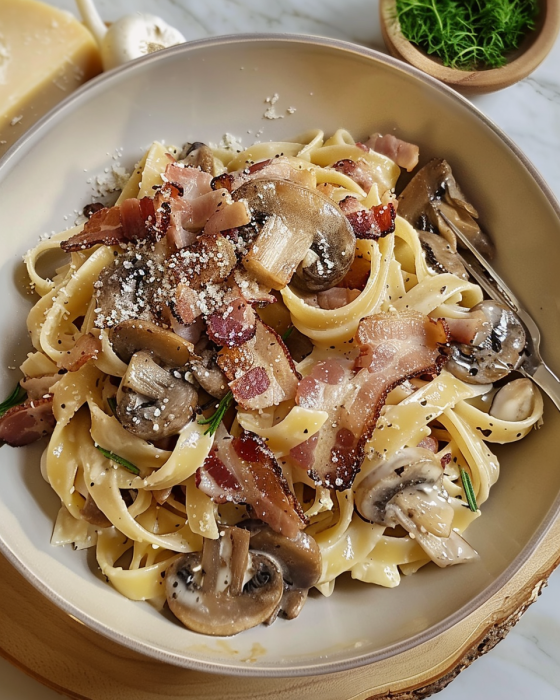
Honestly, is there anything more inviting than the sound of bacon sizzling in a pan? Now, imagine that aroma mingling with the earthy scent of sautéing mushrooms and the sharp, nutty notes of Parmesan cheese. This, my friends, is the irresistible allure of Tagliatelle with Bacon and Mushrooms. Fundamentally, it’s a dish that speaks a universal language of comfort and satisfaction. Wide, luxurious ribbons of pasta, perfectly al dente, swathed in a creamy, decadent sauce that’s studded with crispy, salty pork and meaty, tender fungi—each forkful is a perfect bite. It’s a culinary hug in a bowl, equally suited for a hectic weeknight dinner or a leisurely weekend feast meant to impress. This article, therefore, is your ultimate guide to mastering this classic, from its rustic origins to the secrets of achieving that flawless, silky sauce.
From Humble Roots to Gourmet Table: A Brief History
To truly appreciate this dish, it’s fascinating to trace its lineage back to the heart of Italy. Tagliatelle, a classic fresh pasta from the Emilia-Romagna region, literally means “to cut” in Italian. Traditionally, these golden ribbons are the perfect vehicle for rich, meaty sauces like the famous Bolognese. Meanwhile, the combination of cured pork and pasta is a cornerstone of Italian cuisine, famously showcased in Roman dishes like Carbonara (using guanciale) and Amatriciana (using pancetta). Originally, these were meals of necessity and ingenuity, created by working people using preserved, shelf-stable ingredients.
The addition of mushrooms, particularly wild-foraged varieties like prized porcini, adds another layer of rustic, earthy depth from Italy’s culinary tradition. The modern version using bacon is a glorious, globalized adaptation. While purists might argue for pancetta, the smoky intensity of bacon has carved out its own beloved niche, creating a hearty pasta dish that feels both familiar and excitingly gourmet. It’s a beautiful example of how recipes evolve, traveling across borders and adapting to local tastes while still honoring their core principles: quality ingredients, bold flavors, and simple, effective technique.
The Anatomy of a Perfect Plate: Choosing Your Ingredients
The Starches: Tagliatelle and Its Alternatives
First things first, let’s talk pasta! The foundation of this dish is, without a doubt, the noodle. Tagliatelle, with its broad, flat surface, is the undisputed champion here. Why? Because its ample real estate is specifically designed to grab onto and hold every drop of that luxurious sauce. Now, you’ll face the classic choice: fresh vs. dried pasta. Fresh tagliatelle, often found in the refrigerated section, cooks in mere minutes and boasts a wonderfully delicate, tender texture. On the other hand, a high-quality dried tagliatelle offers a firmer bite and a remarkable ability to absorb flavors.
Don’t have tagliatelle? No problem! Fettuccine is an almost identical sibling, and pappardelle’s extra-wide ribbons make a fantastic, hearty substitute. For those with dietary needs, many excellent gluten-free and whole wheat pasta options are available nowadays; just be sure to carefully reserve that starchy cooking water, as it’s even more critical for helping the sauce cling to these alternative noodles.
The Savory Base: Bacon, Pancetta, or Guanciale?
Ah, the source of that glorious, salty, umami punch! This is where you can truly make the dish your own. Let’s break down the options:
-
Bacon: The smoky, familiar favorite. Its accessibility is its superpower. For the best result, opt for a thick-cut, good-quality bacon; it will render beautifully and provide a substantial, meaty bite. Just remember, its smokiness will be the dominant note in your dish.
-
Pancetta: The Italian cousin to bacon. This is cured pork belly, but crucially, it’s not smoked. Using pancetta gives you that pure, salty, pork flavor that lets the other ingredients, especially the mushrooms, shine through more clearly. You can find it diced in most well-stocked supermarkets.
-
Guanciale: The hardcore traditionalist’s choice. Cured from the pork jowl or cheek, guanciale has a richer, more complex flavor and a higher fat content that melts into the most incredible unctuous sauce. It can be trickier to find, but oh boy, is it a game-changer.
Ultimately, you can’t go wrong. Each option brings its own unique personality to the party. For a vegetarian twist, simply omit the meat and start with a few tablespoons of olive oil. A pinch of smoked paprika can then help mimic that deep, smoky depth.
The Earthy Element: A Deep Dive into Mushrooms
Mushrooms are the co-star of this show, providing the essential earthy flavor that balances the richness of the pork and cream. Cremini mushrooms (also called baby bellas) are the workhorse here—readily available, affordable, and packed with much more flavor than standard white buttons. But hey, why not get fancy?
A mix of wild mushrooms like shiitake, oyster, or even reconstituted dried porcini will elevate your pasta to a whole new level of gourmet sophistication. Each variety adds its own unique texture and intense, woodsy note. Here’s a pro tip: always make sure your mushrooms are dry before they hit the pan. Wipe them with a damp paper towel instead of washing them under water. This ensures they sear and brown perfectly instead of steaming and becoming soggy.
The Supporting Cast: Cheese, Aromatics, and Cream
Finally, we have the ensemble that brings everything together. For cheese, Parmigiano-Reggiano is the classic, providing a nutty, salty sharpness. Pecorino Romano, made from sheep’s milk, is saltier and more piquant. Some folks even use a blend of the two for a perfect balance of flavor. Whatever you choose, please, please grate it yourself! Pre-grated cheese contains anti-caking agents that will prevent it from melting smoothly into your sauce.
Fresh garlic is non-negotiable—its pungent aroma is a cornerstone of the dish’s fragrance. Fresh flat-leaf parsley, stirred in at the very end, adds a necessary pop of color and a fresh, herbal note that cuts through the richness. Then there’s the cream. Heavy cream (double cream) will give you the most luxurious, decadent result. However, for a slightly lighter version, half-and-half works perfectly well. Believe it or not, you can even create a creamy emulsion without any cream at all, using just the starchy pasta water, butter, and cheese—a technique worth mastering!
Crafting Your Masterpiece: The Step-by-Step Recipe
Total Time: 35-40 minutes
Servings: 4
Ingredients:
-
400g (14 oz) tagliatelle (fresh or dried)
-
250g (9 oz) thick-cut bacon or pancetta, diced
-
400g (14 oz) cremini mushrooms, sliced
-
3 cloves garlic, minced
-
120ml (1/2 cup) heavy cream (or half-and-half)
-
60g (2/3 cup) freshly grated Parmigiano-Reggiano, plus more for serving
-
Small handful fresh parsley, finely chopped
-
Salt and freshly ground black pepper
-
2 tablespoons olive oil (if needed)
Mise en Place: The Art of Preparation
Alright, let’s get organized! This dish comes together quickly, so having everything prepped and within arm’s reach—a French concept known as mise en place—is the absolute key to a stress-free cooking experience. Therefore, before you even think about turning on the stove, complete these tasks: dice your bacon, slice the mushrooms, mince the garlic, grate the cheese, and chop the parsley. Now, you’re ready to rock and roll.
Step 1: Building the Foundation – Rendering the Bacon
Place your diced bacon in a large, cold skillet or Dutch oven. Then, turn the heat to medium. Starting in a cold pan allows the fat to render out slowly, resulting in crispy bacon bits and plenty of delicious fat to cook the rest of your ingredients. Cook, stirring occasionally, until the bacon is golden brown and crispy, which should take about 8-10 minutes. Once done, use a slotted spoon to transfer the bacon to a paper towel-lined plate, leaving all that glorious fat behind in the pan.
Step 2: Unleashing Umami – Sautéing the Mushrooms
Now, it’s mushroom time! Increase the heat to medium-high. If your bacon didn’t render much fat, add a tablespoon of olive oil. Toss in your sliced mushrooms. Here’s the secret: don’t crowd the pan! If necessary, cook them in two batches. Crowding will steam them, but we want a deep, brown sear. Let them cook without moving them for a few minutes to get some good color. Then, season with a pinch of salt and pepper—the salt will help draw out their moisture—and continue to cook until they are deeply browned and all their released liquid has evaporated, about 8-10 minutes.
Add the minced garlic to the mushrooms and cook for just one more minute, until incredibly fragrant. You have to watch it like a hawk; burnt garlic tastes bitter and will ruin your sauce.
Step 3: The Liquid Assets – Deglazing and Creating the Sauce
See all those browned, crispy bits stuck to the bottom of the pan? That’s called the fond, and it’s pure flavor gold! To incorporate it, you can add a splash of stock to the pan, using your wooden spoon to scrape all those bits up. Let it bubble and reduce for a minute. Next, pour in your heavy cream and add most of the cooked bacon back in (save a little for garnish!). Bring the sauce to a gentle simmer and let it thicken slightly for 2-3 minutes. Reduce the heat to low while you wait for the pasta.
Step 4: The Main Event – Cooking and Incorporating the Pasta
While your sauce is simmering, cook the tagliatelle in a large pot of generously salted boiling water. If you think you’ve added enough salt, you should probably add a bit more—the water should taste like the sea! Cook the pasta until it is just one minute shy of al dente (meaning it still has a slight bite to it). Remember, it will finish cooking in the sauce. This is the most crucial step: before you drain the pasta, SCOOP OUT ABOUT 1 CUP OF THE STARCHY PASTA WATER. Then, drain the pasta.
Add the hot, drained pasta directly to the skillet with your creamy mushroom and bacon sauce. Pour in a good splash (about 1/4 cup) of the reserved pasta water. Using tongs, toss everything together vigorously over low heat for 1-2 minutes. The starch from the pasta water will emulsify with the fat and cheese, creating a glossy, restaurant-quality sauce that clings to every single strand. If the sauce seems too thick, add another splash of pasta water.
Step 5: The Final Flourish – Finishing and Plating
Take the skillet off the heat! Now, add most of your grated Parmigiano-Reggiano and most of the chopped parsley. Continue to toss until the cheese is melted and fully incorporated into the sauce. This final step, done off the direct heat, ensures a smooth, creamy sauce. Finally, season generously with a hefty amount of freshly ground black pepper. Serve immediately in warm bowls, garnished with the remaining bacon, cheese, and parsley.
Elevating Your Dish: Variations and Expert Secrets
Creative Twists on the Classic Recipe
Once you’ve mastered the basic formula, the world is your oyster mushroom! This recipe is incredibly adaptable. Feel like channeling your inner Roman chef? For a Carbonara-inspired version, simply omit the cream. Instead, whisk together two egg yolks with your grated cheese and a ton of black pepper. Then, take the pan off the heat and quickly toss the hot pasta with the egg mixture, using the residual heat to create a luxuriously creamy sauce without any curdling.
Want to add some greens? A couple of large handfuls of fresh spinach or kale tossed in at the very end will wilt perfectly in the residual heat. Frozen peas are another fantastic addition—just toss them in with the cream to heat through. For a touch of spice, a pinch of red pepper flakes added with the garlic will give the dish a gentle, warming kick. And for the ultimate indulgence, a drizzle of white truffle oil at the end is nothing short of spectacular.
What to Serve With Tagliatelle with Bacon and Mushrooms
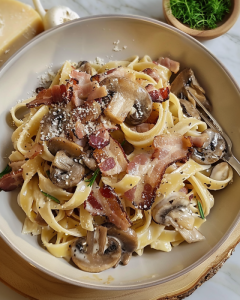
While this pasta is certainly a meal unto itself, a few simple accompaniments can turn it into a truly memorable feast. A simple side salad is the perfect counterpart to its richness. Try a mix of crisp arugula or radicchio with a very light, sharp lemon vinaigrette; the bitterness and acidity will cut through the creaminess beautifully. Furthermore, no one will say no to a basket of warm, crusty bread for mopping up every last trace of that incredible sauce from the plate.
Pro Tips for Guaranteed Success
Even the best cooks run into the occasional hiccup. Here’s how to solve common pasta problems:
-
Sauce too thick? This is an easy fix! Just add a tablespoon of your reserved pasta water at a time, tossing continuously, until it loosens up to your desired consistency.
-
Sauce too thin? Let the pasta and sauce simmer together for another minute or two over low heat. The starch from the pasta will continue to thicken it. You can also add a bit more grated cheese.
-
Avoiding watery mushrooms: The key is patience and high heat. Ensure the mushrooms are dry before cooking, don’t overcrowd the pan, and let all the liquid they release evaporate completely before moving on.
-
Reheating leftovers: Gently reheat leftovers in a skillet over medium-low heat with a tiny splash of water, milk, or cream. Stir frequently to prevent sticking and to help re-emulsify the sauce.
Frequently Asked Questions (FAQs)
Can I use milk instead of heavy cream?
You can, but proceed with caution. Milk has a much higher water content and lacks the fat of cream, making it prone to curdling when heated and added to the acidic pan residues. For a safer, lighter alternative, half-and-half is a much better option as it has a higher fat content than milk and will provide a smoother result.
What can I use instead of tagliatelle?
Absolutely! Any broad, flat pasta will work wonderfully. Fettuccine is the closest substitute and behaves almost identically. Pappardelle, with its extra-wide ribbons, makes for a heartier, more luxurious dish. Wider shapes are generally better as they hold the chunky bacon and mushroom sauce far more effectively than thin, round shapes like spaghetti.
How do I store and reheat leftovers?
Store any leftovers in an airtight container in the refrigerator for up to 3 days. The best way to reheat is in a skillet over medium-low heat. Add a small splash of water or milk to help loosen the sauce and stir frequently until heated through. You can also use a microwave, heating in 30-second intervals and stirring in between to ensure even heating.
Is it possible to make this dish vegetarian?
Absolutely! To make a delicious vegetarian version, simply omit the bacon. Start by sautéing your mushrooms in 2-3 tablespoons of olive oil or butter. For a hint of that smoky flavor, add a teaspoon of smoked paprika to the mushrooms while they are cooking. Use vegetable stock for deglazing the pan instead of wine. You’ll still end up with a deeply flavorful and satisfying earthy pasta dish.
Tagliatelle with Bacon and Mushrooms
- Author: Stephanie
Description
Tagliatelle with Bacon and Mushrooms
Ingredients:
-
12 oz tagliatelle (fresh or dried)
-
6 oz bacon or pancetta, diced
-
10 oz mushrooms (cremini, button, or mixed wild), sliced
-
2 tbsp olive oil (or butter)
-
2 cloves garlic, minced
-
1 small onion or 2 shallots, finely chopped
-
½ cup dry white wine (optional, but adds depth)
-
1 cup heavy cream (or use half-and-half for lighter)
-
½ cup grated Parmesan (plus extra for serving)
-
2 tbsp fresh parsley, chopped
-
Salt and freshly ground black pepper, to taste
Instructions:
-
Cook pasta: Bring a large pot of salted water to boil. Cook tagliatelle until al dente, reserving ½ cup pasta water before draining.
-
Cook bacon: In a large skillet, heat olive oil over medium heat. Add bacon/pancetta and cook until crispy. Remove and set aside, leaving some fat in the pan.
-
Sauté mushrooms & aromatics: Add mushrooms to the skillet, cooking until browned and softened, about 5–7 minutes. Stir in onion/shallots and cook 3 minutes more. Add garlic and cook 1 minute.
-
Deglaze: Pour in the white wine, scraping up any browned bits. Let it simmer until reduced by half.
-
Make the sauce: Reduce heat to low. Stir in cream, Parmesan, and reserved bacon. Let simmer 2–3 minutes until slightly thickened. Season with salt and black pepper.
-
Toss with pasta: Add cooked tagliatelle to the skillet, tossing gently to coat. If needed, add a splash of reserved pasta water for a silky sauce.
-
Finish & serve: Sprinkle with parsley, more Parmesan, and freshly cracked pepper. Serve hot.