
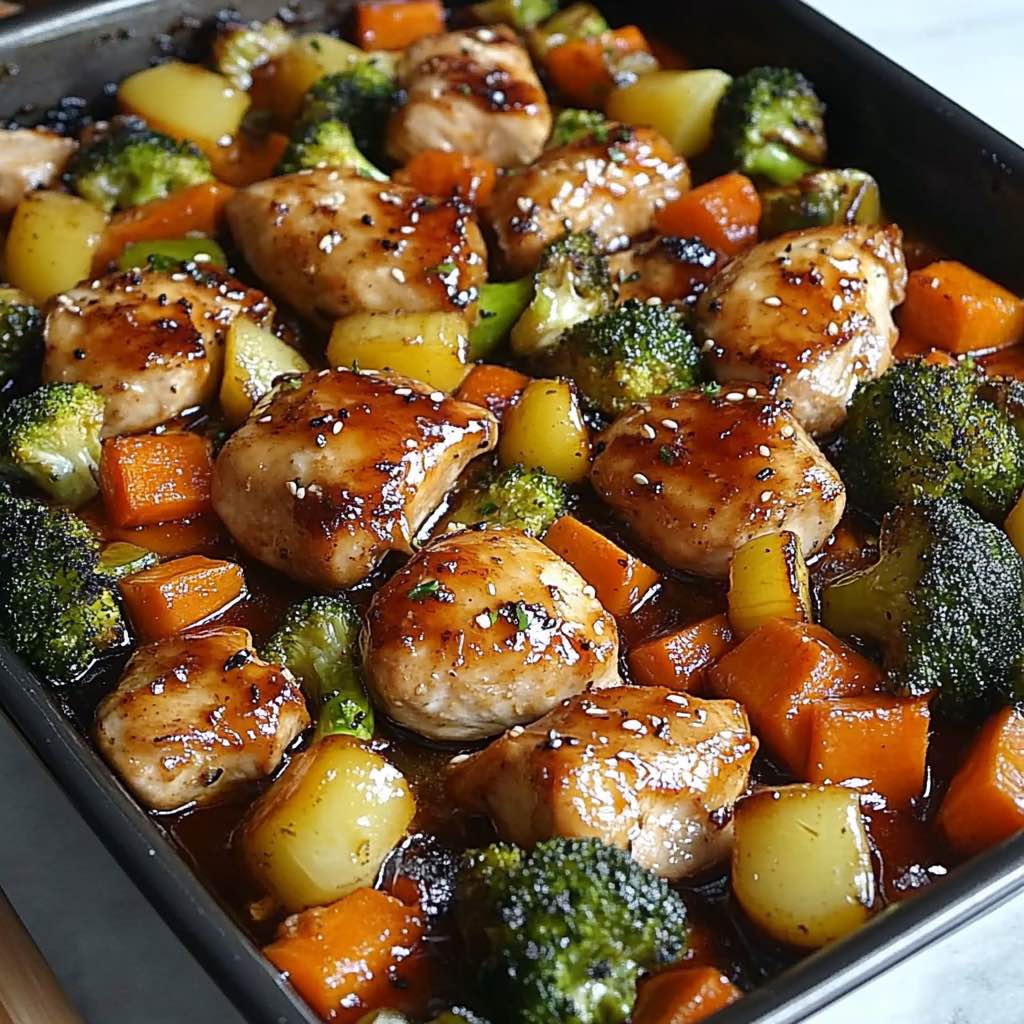
Teriyaki Chicken & Veggies One Pan Meal: The Ultimate Weeknight Dinner Solution
Are you tired of spending hours in the kitchen preparing separate dishes? This Teriyaki Chicken & Veggies One Pan Meal is your answer to delicious, nutritious dining without the hassle. With tender chicken, vibrant vegetables, and a glossy teriyaki glaze all cooked together on one pan, you’ll have dinner ready in under 45 minutes. Moreover, this complete meal delivers restaurant-quality flavors while keeping cleanup minimal.
Why Choose One Pan Teriyaki Chicken & Veggies
Time-Saving Benefits
The beauty of this Teriyaki Chicken & Veggies One Pan Meal lies in its simplicity. Instead of juggling multiple pots and pans, everything cooks together harmoniously. Consequently, you’ll spend less time cooking and even less time cleaning up afterward.
Complete Nutritional Profile
This dish provides a balanced combination of lean protein, colorful vegetables, and complex carbohydrates when served over rice. Furthermore, the teriyaki glaze adds incredible flavor without overwhelming the natural tastes of the ingredients.
Budget-Friendly Approach
One pan meals maximize your grocery budget by using simple, accessible ingredients. Additionally, this recipe serves 4-6 people generously, making it perfect for families or meal prep enthusiasts.
Versatility Factor
Whether you’re cooking for picky eaters or adventurous food lovers, this recipe adapts easily. Similarly, you can customize the vegetables based on seasonal availability or personal preferences.
Essential Ingredients for Perfect Results
Protein Foundation
Chicken Selection
-
2 pounds boneless, skinless chicken thighs (preferred for tenderness)
-
Alternative: 1.5 pounds chicken breast, cut into bite-sized pieces
-
Chicken thighs remain juicier during the cooking process
Vegetable Medley
Primary Vegetables
-
2 medium bell peppers (red and yellow for color contrast)
-
1 large onion, sliced into half-moons
-
2 cups broccoli florets
-
1 medium zucchini, sliced into half-moons
-
8 ounces mushrooms, quartered
Optional Additions
-
1 cup snap peas
-
2 carrots, sliced diagonally
-
1 red bell pepper for extra sweetness
Homemade Teriyaki Sauce
Base Ingredients
-
1/2 cup low-sodium soy sauce
-
1/4 cup honey or maple syrup
-
2 tablespoons rice vinegar
-
1 tablespoon sesame oil
-
2 cloves garlic, minced
-
1 teaspoon fresh ginger, grated
Thickening Agent
-
1 tablespoon cornstarch
-
2 tablespoons cold water
Finishing Touches
Garnishes and Seasonings
-
2 tablespoons sesame seeds
-
3 green onions, sliced thin
-
1 teaspoon red pepper flakes (optional)
-
2 tablespoons vegetable oil for cooking
Step-by-Step Cooking Instructions
Preparation Phase
Step 1: Prepare Your Workspace
First, preheat your oven to 425°F (220°C). Then, line a large sheet pan with parchment paper for easy cleanup. Meanwhile, gather all your ingredients and prepare them according to the specifications listed above.
Step 2: Make the Teriyaki Sauce
In a medium bowl, whisk together soy sauce, honey, rice vinegar, sesame oil, minced garlic, and grated ginger. Next, create a slurry by mixing cornstarch with cold water until smooth. Subsequently, add the cornstarch mixture to the sauce and whisk until well combined.
Step 3: Prepare the Chicken
Cut chicken thighs into bite-sized pieces, approximately 1-inch cubes. Then, season lightly with salt and pepper. Afterward, toss the chicken pieces with half of the prepared teriyaki sauce, ensuring each piece is well coated.
Cooking Process
Step 4: Initial Cooking Phase
Heat vegetable oil in a large oven-safe skillet over medium-high heat. Next, add the marinated chicken pieces in a single layer. Cook for 3-4 minutes without moving them, allowing a golden crust to develop.
Step 5: Add Vegetables Strategically
After the chicken develops color, add the onions and bell peppers first, as they take longer to cook. Subsequently, add mushrooms and carrots if using. Continue cooking for another 3-4 minutes, stirring occasionally.
Step 6: Complete the Vegetable Addition
Add broccoli florets and zucchini to the pan. Then, pour the remaining teriyaki sauce over everything, ensuring even distribution. Toss gently to coat all ingredients with the flavorful sauce.
Step 7: Oven Finishing
Transfer the skillet to the preheated oven. Bake for 15-20 minutes, or until chicken reaches an internal temperature of 165°F (74°C) and vegetables are tender-crisp.
Final Assembly
Step 8: Rest and Garnish
Remove the pan from the oven and let it rest for 5 minutes. Meanwhile, prepare your garnishes. Finally, sprinkle with sesame seeds and sliced green onions before serving.
Pro Tips for Restaurant-Quality Results
Temperature Control Mastery
Optimal Heat Management
Maintain medium-high heat during the initial searing phase. However, reduce to medium heat when adding vegetables to prevent burning. This approach ensures even cooking throughout the Teriyaki Chicken & Veggies One Pan Meal.
Oven Temperature Accuracy
Use an oven thermometer to verify your oven’s actual temperature. Additionally, rotate the pan halfway through baking for even browning and cooking.
Sauce Consistency Secrets
Achieving Perfect Glaze
The cornstarch slurry creates the signature glossy finish. Furthermore, adding it to cold liquid prevents lumping. If your sauce appears too thin, cook it separately for 2-3 minutes until it thickens.
Flavor Balance
Taste your teriyaki sauce before cooking and adjust sweetness or saltiness as needed. Similarly, remember that the sauce will concentrate slightly during cooking.
Vegetable Cooking Excellence
Texture Preservation
Cut vegetables uniformly for even cooking. Moreover, add delicate vegetables like zucchini later in the process to maintain their texture. This technique prevents overcooking and mushiness.
Color Retention
Choose a variety of colorful vegetables for visual appeal. Additionally, slightly undercook them during the stovetop phase, as they’ll continue cooking in the oven.
Chicken Preparation Mastery
Moisture Retention
Chicken thighs naturally stay more moist than breasts. However, if using chicken breast, avoid overcooking by monitoring internal temperature carefully. Furthermore, let the meat rest before cutting to retain juices.
Even Cooking
Cut chicken pieces uniformly for consistent cooking times. Additionally, don’t overcrowd the pan, which can lead to steaming instead of searing.
Nutritional Benefits
Protein Powerhouse
High-Quality Protein Content
This Teriyaki Chicken & Veggies One Pan Meal delivers approximately 35-40 grams of complete protein per serving. Consequently, it supports muscle maintenance and provides lasting satiety. Furthermore, chicken provides all essential amino acids your body needs.
Metabolic Benefits
Protein requires more energy to digest than carbohydrates or fats. Therefore, this meal naturally supports healthy metabolism and weight management goals.
Vegetable Nutrition Profile
Vitamin and Mineral Density
Bell peppers provide exceptional vitamin C content, while broccoli offers folate and vitamin K. Additionally, the variety of vegetables ensures a broad spectrum of micronutrients in every serving.
Fiber Content
The vegetable medley contributes significant dietary fiber, supporting digestive health and blood sugar stability. Moreover, fiber promotes feelings of fullness and satisfaction.
Healthy Cooking Methods
Minimal Added Fats
This recipe uses only a small amount of oil for initial searing. Subsequently, the oven cooking method requires no additional fats, keeping the calorie count reasonable.
Reduced Sodium Options
Using low-sodium soy sauce allows better control over salt intake. Furthermore, the abundance of vegetables and natural flavors reduces reliance on excess sodium for taste.
Caloric Breakdown
Per Serving Analysis (serves 4)
-
Calories: 320-350
-
Protein: 35-40g
-
Carbohydrates: 18-22g
-
Fat: 12-15g
-
Fiber: 4-6g
Meal Prep and Storage Guidelines
Batch Cooking Strategies
Double Recipe Benefits
This Teriyaki Chicken & Veggies One Pan Meal scales perfectly for larger batches. Therefore, consider doubling the recipe and using two sheet pans for efficient meal prep. Subsequently, you’ll have ready-made meals for busy weekdays.
Freezer-Friendly Approach
Cook the complete dish, then cool completely before portioning into freezer containers. Additionally, leave some space for expansion during freezing. Properly stored, it maintains quality for up to 3 months.
Storage Best Practices
Refrigerator Storage
Store leftovers in airtight containers in the refrigerator for up to 4 days. Moreover, separate larger portions into individual serving sizes for convenient reheating.
Reheating Methods
Reheat in the microwave at 50% power to prevent overcooking. Alternatively, reheat in a 350°F oven for 10-15 minutes until heated through. Add a splash of water if the dish seems dry.
Meal Prep Assembly
Container Selection
Use glass containers when possible for even reheating and food safety. Furthermore, ensure containers are freezer-safe if preparing frozen portions.
Portioning Strategy
Divide into single-serving containers for grab-and-go convenience. Additionally, include a small container of extra teriyaki sauce for those who prefer more flavor intensity.
Creative Variations
Protein Alternatives
Seafood Variations
Substitute shrimp or salmon for chicken to create a seafood version. However, reduce cooking time significantly as seafood cooks much faster. Additionally, add seafood during the last 8-10 minutes of oven cooking.
Plant-Based Options
Extra-firm tofu or tempeh work excellently in this recipe. Furthermore, marinate plant proteins for 30 minutes before cooking for maximum flavor absorption. Similarly, add nuts or seeds for extra protein and crunch.
Vegetable Combinations
Seasonal Adaptations
Spring vegetables like asparagus and peas create a fresh variation. Moreover, autumn vegetables such as butternut squash and Brussels sprouts offer hearty alternatives. Therefore, adapt the recipe to seasonal produce for best flavor and value.
International Twists
Add water chestnuts and bamboo shoots for an Asian-inspired version. Alternatively, include Mediterranean vegetables like eggplant and cherry tomatoes for a fusion approach.
Sauce Variations
Spicy Teriyaki
Add sriracha or chili garlic sauce to the base teriyaki for heat lovers. Furthermore, fresh jalapeños provide natural heat and freshness. However, start with small amounts and adjust to taste.
Citrus Enhancement
Orange or pineapple juice adds tropical sweetness to the sauce. Additionally, fresh citrus zest brightens the overall flavor profile significantly.
Serving Suggestions
Grain Alternatives
Serve over cauliflower rice for a low-carb option. Similarly, quinoa or brown rice provide nutty flavors and additional nutrients. Furthermore, rice noodles create an Asian noodle bowl experience.
Additional Toppings
Crushed peanuts add texture and healthy fats. Moreover, fresh herbs like cilantro or Thai basil provide aromatic finishing touches. Additionally, lime wedges allow diners to adjust acidity to their preference.
Common Mistakes to Avoid
Temperature-Related Errors
Overheating Issues
Cooking at excessively high heat burns the sauce before vegetables soften. Therefore, maintain medium to medium-high heat throughout the stovetop cooking phase. Additionally, monitor the pan closely to prevent sticking.
Undercooking Chicken
Always verify chicken reaches 165°F internal temperature for food safety. Furthermore, use a reliable meat thermometer rather than guessing doneness. Consequently, this ensures both safety and optimal texture.
Sauce Problems
Lumpy Sauce Prevention
Always dissolve cornstarch in cold liquid before adding to prevent lumps. Moreover, whisk continuously when combining ingredients. If lumps form, strain the sauce through a fine-mesh sieve.
Sauce Consistency
Adding too much liquid dilutes the teriyaki flavor significantly. Therefore, measure ingredients carefully and taste-test before cooking. Additionally, remember that the sauce reduces slightly during cooking.
Vegetable Cooking Mistakes
Overcrowding Effects
Packing too many ingredients creates steam instead of proper browning. Subsequently, vegetables become soggy rather than caramelized. Therefore, use a large enough pan or cook in batches if necessary.
Timing Errors
Adding all vegetables simultaneously results in uneven cooking. However, staggering additions based on cooking times ensures optimal texture for each component.
Pan Selection Issues
Wrong Pan Size
Using too small a pan causes overcrowding and uneven cooking. Conversely, too large a pan may cause burning in empty areas. Therefore, choose a pan that accommodates ingredients in mostly single layers.
Material Considerations
Non-stick pans work well but may not achieve the same browning as cast iron or stainless steel. Furthermore, ensure your chosen pan is oven-safe before transferring to the oven.
Frequently Asked Questions
Can I make this Teriyaki Chicken & Veggies One Pan Meal ahead of time?
Yes, you can prepare this dish several ways ahead of time. First, you can marinate the chicken and prepare vegetables up to 24 hours in advance. Additionally, the complete cooked dish stores well in the refrigerator for up to 4 days. Furthermore, you can freeze portions for up to 3 months, making it perfect for meal prep situations.
What vegetables work best in this recipe?
Hardy vegetables that maintain structure during cooking work exceptionally well. Therefore, bell peppers, broccoli, onions, and mushrooms are ideal choices. Similarly, zucchini, snap peas, and carrots provide excellent results. However, avoid delicate greens like spinach, as they wilt too quickly during the cooking process.
How do I prevent the chicken from drying out?
Several techniques ensure moist, tender chicken throughout the cooking process. First, choose chicken thighs over breasts for natural moisture retention. Additionally, don’t overcook the chicken beyond 165°F internal temperature. Furthermore, let the cooked dish rest for 5 minutes before serving to redistribute juices.
Can I use store-bought teriyaki sauce instead of homemade?
While store-bought sauce works in a pinch, homemade provides better flavor control and freshness. However, if using commercial sauce, choose low-sodium varieties and thin with a little water if too thick. Additionally, you may need to adjust cooking times since store-bought sauces vary in consistency.
What’s the best way to reheat leftovers?
Gentle reheating preserves texture and prevents overcooking. Therefore, use 50% microwave power and add a splash of water to prevent drying. Alternatively, reheat in a 350°F oven covered with foil for 10-15 minutes. Furthermore, stovetop reheating with a little added sauce works excellently for restoring moisture.
How can I make this recipe gluten-free?
Substitute tamari or gluten-free soy sauce for regular soy sauce. Additionally, ensure your cornstarch is certified gluten-free, though most brands naturally are. Furthermore, verify that any additional seasonings or sauces are also gluten-free certified for complete peace of mind.
Can I add rice directly to the pan?
While tempting, adding raw rice directly to the pan creates timing and liquid challenges. Instead, serve the Teriyaki Chicken & Veggies One Pan Meal over separately cooked rice for best results. However, you can add pre-cooked rice during the last 5 minutes of oven cooking to warm through.
What if my sauce is too thin or too thick?
For thin sauce, mix additional cornstarch with cold water and stir into the pan. Then, cook for 2-3 minutes until thickened. Conversely, for thick sauce, add small amounts of chicken broth or water until desired consistency is reached. Additionally, remember that the sauce continues to thicken as it cools.
Conclusion
This Teriyaki Chicken & Veggies One Pan Meal represents the perfect solution for busy weeknight dinners without sacrificing flavor or nutrition. With its balanced combination of tender protein, vibrant vegetables, and glossy teriyaki glaze, every bite delivers satisfaction and wholesome nourishment. Moreover, the simple preparation method and minimal cleanup make this recipe a true weeknight winner.
The versatility of this dish ensures it never becomes boring, while the meal prep potential saves both time and money throughout the week. Furthermore, the customizable nature accommodates various dietary preferences and seasonal ingredient availability. Whether you’re cooking for family dinner or preparing meals for the week ahead, this recipe delivers consistent, delicious results.
By following the detailed instructions and incorporating the professional tips provided, you’ll master this Teriyaki Chicken & Veggies One Pan Meal and create restaurant-quality results in your own kitchen. Additionally, the nutritional benefits and complete protein profile make this dish a smart choice for maintaining healthy eating goals.
Teriyaki Chicken & Veggies One Pan Meal
Description
Teriyaki Chicken & Veggies One Pan Meal
Ingredients
For the chicken and vegetables:
-
1 1/2 lbs boneless, skinless chicken breasts or thighs, cut into 1-inch pieces
-
2 cups broccoli florets
-
1 red bell pepper, sliced or chopped
-
1 cup carrots, sliced diagonally
-
1/2 red onion, sliced
-
2 tablespoons olive oil
-
Salt and pepper to taste
For the homemade teriyaki sauce:
-
1/2 cup low-sodium soy sauce
-
1/3 cup pineapple juice
-
3 tablespoons honey
-
1 tablespoon brown sugar
-
1 tablespoon rice vinegar
-
3 cloves garlic, minced
-
1 teaspoon fresh grated ginger
-
1 tablespoon cornstarch mixed with 2 tablespoons water
Instructions
Step 1: Preheat and prepare
Preheat oven to 400°F (200°C). Line a large sheet pan with parchment paper or spray with cooking spray.
Step 2: Make teriyaki sauce
In a small saucepan, combine soy sauce, pineapple juice, honey, brown sugar, rice vinegar, minced garlic, and grated ginger. Bring to a boil over medium heat, then add the cornstarch mixture and simmer for 3-5 minutes until thickened. Remove from heat and set aside.
Step 3: Prepare chicken and vegetables
Cut chicken into 1-inch pieces and place in the center of the prepared sheet pan. In a separate bowl, toss broccoli florets, sliced bell pepper, carrots, and red onion with olive oil. Season with salt and pepper.
Step 4: Assemble and coat
Spread the seasoned vegetables evenly around the chicken on the sheet pan. Pour about 2/3 of the teriyaki sauce over the chicken and vegetables, tossing everything to coat evenly. Arrange in a single layer, ensuring chicken pieces don’t overlap.
Step 5: Bake
Bake for 20-25 minutes, or until vegetables are crisp-tender and caramelized, and chicken reaches an internal temperature of 165°F. Stir halfway through cooking to ensure even browning.
Step 6: Finish and serve
Remove from oven and drizzle with remaining teriyaki sauce. Serve immediately over steamed rice or quinoa, and garnish with sliced green onions and sesame seeds if desired.