
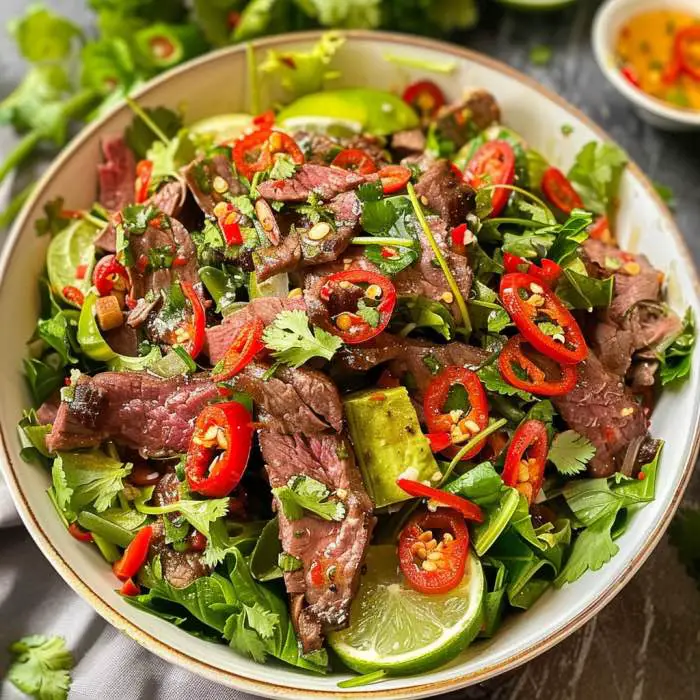
Yum Nua: The Ultimate Guide to Thailand’s Spicy Beef Salad
Close your eyes and imagine this: the sizzle of steak hitting a scorching grill, the instant aroma of char that makes your stomach rumble in anticipation. Now, picture that very beef, sliced razor-thin and tossed while still warm with a fiery lime-chili dressing, a handful of sharp shallots, and an entire garden of fresh mint and cilantro. This isn’t just a meal; it’s a vibrant, explosive experience for the senses. Welcome to the world of Yum Nua, a dish that truly embodies the bold and beautiful spirit of Thai cuisine.
Frankly, calling it a “salad” feels almost like a disservice. In the West, that word can conjure images of tame lettuce and meek dressings. Conversely, Yum Nua is anything but tame. It’s a powerful harmony of contrasts: searingly spicy yet refreshingly herbal, intensely savory with a crucial hint of sweetness. This guide is your passport to mastering this iconic dish. We’ll journey through its rustic origins, break down its complex anatomy, and arm you with a foolproof recipe. Ultimately, you’ll be able to bring the unforgettable taste of a Thai street food stall right into your own kitchen.
More Than Just a Salad: An Explosion of Thai Flavors
Alright, let’s get one thing straight right off the bat. If you think you know salads, Yum Nua is here to completely redefine your understanding. This isn’t a side dish; it’s the main event. Traditionally, it’s a one-plate wonder, a fulfilling meal that combines protein and vegetables in a dazzling dance of flavors and textures. Each component plays a critical role, creating a symphony that is far greater than the sum of its parts.
The first thing you’ll notice is the incredible aroma. It’s an assertive scent that commands attention—citrusy, spicy, and deeply savory all at once. Then comes the taste: an immediate, exhilarating punch of heat from the bird’s eye chilies, quickly balanced by the sharp, sour tang of fresh-squeezed lime juice. Underneath it all, the umami-rich fish sauce provides a salty depth that anchors the entire experience. Finally, a subtle whisper of palm sugar rounds out the edges, ensuring the dressing is vibrant but not harsh. Tossed with the smoky, grilled beef and the cooling burst of herbs, every single bite is a thrilling adventure.
A Taste of Isaan: The Humble Origins of Yum Nua
To truly appreciate Yum Nua, you have to understand its roots. This dish doesn’t hail from the bustling tourist kitchens of Bangkok or the refined royal courts of old Siam. Instead, its soul belongs to Isaan, the vast and arid northeastern region of Thailand, renowned for its fiercely bold and incredibly delicious cuisine.
Isaan food, frankly, is not for the faint of heart. It’s a cuisine born from a harsh landscape, characterized by powerful flavors meant to excite the palate and preserve food in the heat. Consequently, dishes like Som Tum (green papaya salad), Larb (minced meat salad), and our star, Yum Nua, are absolute masters of the four essential Thai tastes: spicy, sour, salty, and sweet. They are unapologetic, vibrant, and incredibly moreish.
Yum Nua itself is a celebration of resourcefulness. It transforms a simple, inexpensive cut of beef into something extraordinary through the magic of fire and a powerfully flavorful dressing. Often found sizzling at street food stalls, it’s a beloved staple for a quick, flavorful, and satisfying lunch. It’s the kind of food that brings people together, meant to be eaten with sticky fingers and a cold drink, with the complex layers of flavor sparking conversation and pure culinary joy. This is the authentic heart we aim to capture.
The Anatomy of an Authentic Yum Nua
Creating an unforgettable Yum Nua is like conducting an orchestra; every single ingredient must perform in perfect harmony. Let’s break down this culinary masterpiece, from the starring protein to the secret weapon that ties it all together.
The Star of the Show: Choosing and Preparing the Beef
First and foremost, your choice of beef sets the foundation for the entire dish. You don’t need a fancy, expensive cut; in fact, the more flavorful, slightly chewier options work brilliantly here.
-
Flank Steak: A fantastic, lean choice that soaks up marinades beautifully and slices into gorgeous, long strips.
-
Skirt Steak: Another top contender, packed with intense beefy flavor and a satisfying texture that stands up to the bold dressing.
-
Sirloin or Ribeye: For those preferring a more tender bite, these well-marbled cuts work wonderfully, offering a luxurious richness.
Preparation is absolutely key. For the best results, always pat your steak completely dry with a paper towel before it hits the heat; this ensures a proper, caramelized sear instead of a steam. Moreover, let it sit at room temperature for about 20-30 minutes; a cold steak will cook unevenly. Finally, and this is non-negotiable, you must slice it against the grain. This simple step cuts through the muscle fibers, guaranteeing every piece is wonderfully tender instead of tough and chewy.
The Soul of the Salad: The Zesty Lime Dressing (Nam Yum)
Here’s where the magic really happens. The nam yum dressing isn’t just a topping; it’s the vibrant, pulsating soul of the salad. Balancing it is an art form, but don’t worry, it’s easier than you think.
-
Fish Sauce (Nam Pla): This is your umami powerhouse, providing that deep, savory, salty backbone. Avoid cheap, overly fishy brands. Look for a quality one like Megachef or Squid Brand for a cleaner, more complex flavor.
-
Lime Juice (Nam Manao): Please, I beg you, use fresh-squeezed juice. Bottled lime juice has a flat, bitter taste that will completely let your dish down. The bright, sharp acidity is essential for cutting through the richness of the beef.
-
Chilies (Prik): This is your heat source. The classic choice is the fearsome bird’s eye chili (prik kee noo). Handle with care! Their heat is no joke. For a milder version, you can use a larger, milder red chili or simply remove the seeds and membranes, which harbor most of the capsaicin.
-
Palm Sugar: This isn’t about making the dressing sweet; it’s about balance. The subtle caramel notes of palm sugar round out the sharp edges of the lime and fish sauce, creating a harmonious blend. In a pinch, light brown sugar makes a decent substitute.
The Aromatic Ensemble: Herbs and Vegetables
This is the “salad” part, but forget about iceberg lettuce. We’re talking about an aromatic ensemble of fresh herbs and vegetables that provide crucial cooling contrast and textural complexity.
-
Mint (Bai Saranae): It offers little bursts of cool freshness that immediately soothe the fiery chili heat.
-
Cilantro (Pak Chee): Love it or hate it, its distinctive citrusy, earthy flavor is absolutely fundamental to authentic Thai beef salad.
-
Shallots (Hom Daeng): Thinly sliced shallots provide a sharp, slightly sweet crunch that is far superior to regular onions.
-
Scallions: Sliced on a sharp diagonal, they add a mild onion flavor and a beautiful pop of green color.
-
Cucumber & Tomato: Traditionally, these aren’t tossed in with the beef but are served fresh on the side as a cooling, crunchy palate cleanser between fiery bites.
The Secret Weapon: Toasted Rice Powder (Khao Khua)
Now, for the secret weapon, the ingredient that will elevate your Yum Nua from great to truly authentic and unforgettable: toasted rice powder (Khao Khua).
This humble ingredient is a cornerstone of Isaan food. It’s made by dry-toasting glutinous (sticky) rice in a pan until it’s deeply golden brown and aromatically nutty, then grinding it to a coarse powder. When sprinkled over the salad just before serving, it does two things: it adds an incredible, deep, nutty aroma that you simply can’t get from anything else, and it provides a subtle, satisfying textural crunch that thickens the dressing slightly. You can find it pre-made at some Asian grocery stores, but making it at home is simple and profoundly rewarding. For a fantastic guide, check out this resource on how to make authentic toasted rice powder (Khao Khua).
Crafting the Perfect Yum Nua: A Step-by-Step Recipe
Alright, enough theory—let’s get cooking! This master recipe will guide you through each crucial step to create a stunning Yum Nua that will rival your favorite Thai restaurant.
Gathering Your Ingredients (Shopping List)
For the Beef & Grill:
-
1 lb (450g) flank steak or skirt steak, at room temperature
-
1 tablespoon neutral oil (like avocado or vegetable oil)
-
1 tablespoon soy sauce (or coconut aminos)
For The Dressing (Nam Yum):
-
3 tablespoons fresh-squeezed lime juice (about 2 limes)
-
2.5 tablespoons quality fish sauce
-
1 tablespoon palm sugar, finely grated (or light brown sugar)
-
1-5 red bird’s eye chilies, finely minced (adjust to your heat preference!)
-
1-2 cloves garlic, finely minced (optional, but delicious)
For The Salad:
-
3-4 shallots, thinly sliced
-
½ cup fresh mint leaves, roughly torn
-
½ cup fresh cilantro leaves and stems, roughly chopped
-
2-3 scallions, sliced on a sharp diagonal
-
1 tablespoon toasted rice powder (Khao Khua)
-
For serving: cucumber slices, tomato wedges, and crisp lettuce leaves.
Step 1: Achieving the Perfect Grill on Your Beef
Start by prepping your steak. Pat it dry thoroughly with paper towels. Then, lightly rub it with the oil and soy sauce—this isn’t a marinade, just a simple flavor enhancer for the surface.
Now, get your cooking surface screaming hot. Whether you’re using a charcoal grill, gas grill, or a heavy cast-iron skillet on the stove, high heat is non-negotiable for that perfect char. Grill the steak for about 4-6 minutes per side, depending on thickness, for a perfect medium-rare. Remember, you can always cook it more, but you can’t undo overcooking!
Wait! Don’t slice it yet! This is the most common mistake. Transfer the steak to a cutting board and let it rest for a full 10 minutes. This allows the frantic juices to relax and redistribute throughout the meat. If you slice it immediately, all those delicious juices will just end up on your cutting board.
Step 2: Crafting the Perfect Balanced Dressing
While the steak is resting, make your dressing. In a medium bowl, combine the fresh lime juice, fish sauce, and grated palm sugar. Whisk it until the sugar is mostly dissolved. Now, stir in the minced chilies and garlic.
Here’s the pro tip: taste as you go! Dip a little piece of lettuce or cucumber into the dressing. Is it too mouth-puckeringly sour? Add a pinch more sugar. Too salty? Add a squeeze more lime. Not exciting enough? Add another chili. The dressing should be a powerful, balanced burst of flavor on its own, as it will slightly mellow once it coats the other ingredients.
Step 3: The Art of Assembly and Serving
After the steak has rested, slice it against the grain into thin, bite-sized strips. See how tender it is? That’s the reward for your patience.
In a large mixing bowl, combine the warm sliced beef, the sliced shallots, and most of the fresh herbs (save some for garnish). Pour the dressing over everything. Using tongs or two spoons, toss everything together gently but thoroughly, ensuring every piece of beef gets coated in that glorious nam yum.
Finally, sprinkle the toasted rice powder over the top and give it one last gentle toss. This preserves its crunchy texture.
To serve, transfer the salad to a large plate or platter. Garnish with the remaining fresh herbs and scallions. Arrange the cucumber slices, tomato wedges, and lettuce leaves around the edge of the plate. This creates a beautiful presentation and offers a refreshing break from the heat.
Pro Tips from a Thai Kitchen
-
Avoid the Soggy Salad: Assemble the salad literally seconds before you are ready to serve it. The herbs wilt quickly in the warm dressing, so for the best texture, timing is everything.
-
You’re the Boss of the Heat: Remember, you control the chilies. Start with one, taste the dressing, and add more until it reaches your desired comfort level.
-
Texture is Everything: The contrast between the tender beef, the crunchy vegetables, the soft herbs, and the nutty rice powder is what makes this dish so special. Don’t skip the textural elements!
Making Yum Nua Your Own: Variations and Pairings
The basic framework of Yum Nua is incredibly versatile. Once you’ve mastered the classic, feel free to get creative and adapt it to your tastes or dietary needs.
Creative Twists on a Classic Recipe
-
Seafood Lover’s Dream: Substitute the beef with grilled shrimp or squid to make Yum Talay, a fantastic and refreshing seafood salad.
-
The Chicken Alternative: Use grilled chicken breast or thigh, sliced or shredded, to create Yum Gai. It’s a lighter but equally flavorful option.
-
Plant-Powered Version: For a vegetarian or vegan Yum Nua, grill firm tofu or king oyster mushrooms until nicely charred. Replace the fish sauce with a combination of soy sauce and a tiny bit of mushroom powder for umami.
Dietary Considerations: Gluten-Free, Keto, and Low-Carb
The wonderful thing about this dish is that it’s naturally accommodating to many dietary preferences.
-
Gluten-Free: Simply ensure your fish sauce is certified gluten-free (most good quality ones are).
-
Keto & Low-Carb: Yum Nua is already perfectly suited for these diets. It’s high in protein, packed with healthy fats from the beef, and very low in carbohydrates, especially if you serve it without sugar (or with a keto-friendly sweetener) and enjoy the vegetable sides.
The Perfect Meal: What to Serve with Yum Nua
-
The Traditional Way: The absolute best way to eat it is with a big basket of sticky rice (Khao Niao). The slightly sweet, chewy rice is the perfect tool for scooping up the salad and soaking up every last drop of that incredible dressing.
-
Part of a Feast: Yum Nua makes an excellent component of a larger Thai meal. Its bold flavors pair beautifully with milder dishes like fresh spring rolls (Po Pia Tod) or a creamy, cooling soup.
-
The Right Drink: The intense spice calls for a cooling beverage. Iced jasmine tea, a sweet-sour drinking vinegar, or a sparkling limeade are all perfect non-alcoholic pairings that help balance the heat.
Yum Nua FAQs: Your Questions Answered
What is the difference between Yum Nua and Nam Tok?
This is a fantastic question, as the two dishes are close cousins from the Isaan region. While both are spicy Thai beef salads, Nam Tok (which translates to “waterfall”) traditionally uses beef that is initially boiled and then grilled, often resulting in a rarer finish with juices that mingle with the dressing like a waterfall. It also sometimes includes blood (though rarely in Western preparations) and is typically even more aggressively seasoned with dried chili flakes. The line is often blurry, but Yum Nua is generally considered the more universal term.
How do I make Yum Nua less spicy?
Easy! The heat in chilies comes from the seeds and white membranes inside. For a much milder dish, simply slice the chilies in half lengthwise and scrape out all the seeds and membranes before mincing them. You still get the lovely chili flavor without the intense fire.
Can I make Yum Nua ahead of time?
You can prep all the components ahead of time, but do not assemble it until right before serving. Cook and slice the beef, make the dressing, chop all the herbs, and toast the rice powder. Store everything separately in the fridge. Then, simply combine the warm beef and dressing, add the herbs and powder, and toss. This keeps the herbs from wilting and the texture perfect.
What is a good substitute for fish sauce?
This is tricky because fish sauce has a unique flavor. For a vegetarian/vegan option, a combination of soy sauce or tamari with a tiny bit of fermented soybean paste or even miso paste can approximate the salty-umami depth. However, the flavor profile will be different. For a paleo-friendly option, coconut aminos are a good substitute, though they are sweeter and less salty.
Print
yum nua ( spicy thai beef salad )
Description
Ingredients (2–3 servings):
For the beef:
-
10 oz (300 g) flank steak, ribeye, or sirloin
-
1 tbsp soy sauce
-
1 tsp fish sauce
-
1 tsp oil
For the salad:
-
1 cup cucumber, sliced
-
1 cup cherry tomatoes, halved
-
½ small red onion or shallot, thinly sliced
-
½ cup fresh mint leaves
-
½ cup fresh cilantro leaves
-
½ cup fresh Thai basil (optional)
-
2–3 scallions, chopped
-
1–2 small red chilies, thinly sliced (adjust heat to taste)
For the dressing:
-
3 tbsp fish sauce
-
2 tbsp lime juice (freshly squeezed)
-
1 tbsp soy sauce
-
1 tbsp palm sugar (or brown sugar)
-
1 clove garlic, minced
-
1–2 Thai chilies, finely chopped
Instructions:
-
Marinate beef – Rub steak with soy sauce, fish sauce, and oil. Let sit 15–30 minutes.
-
Grill or sear beef – Cook steak over high heat (grill or skillet) until medium-rare or to your liking. Rest 5–10 minutes, then slice thinly against the grain.
-
Mix dressing – Whisk fish sauce, lime juice, soy sauce, sugar, garlic, and chopped chilies until sugar dissolves.
-
Assemble salad – In a large bowl, combine cucumber, tomatoes, onion, mint, cilantro, basil, scallions, and sliced chilies. Add the sliced beef.
-
Toss with dressing – Pour dressing over the salad, toss lightly, and taste to adjust seasoning (more lime for tang, more fish sauce for saltiness, more sugar for balance).
-
Serve – Plate with extra herbs on top. Delicious with sticky rice on the side.