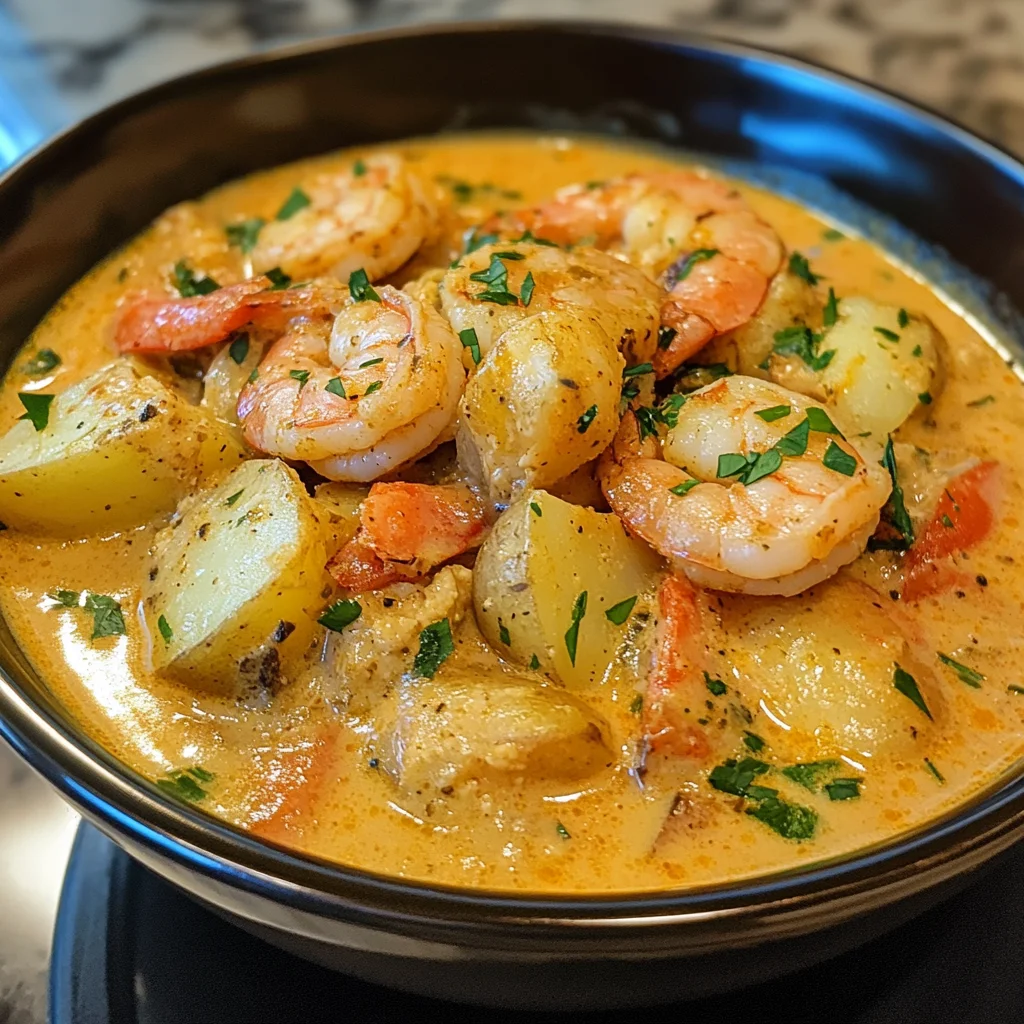
Creamy Cajun Shrimp and Potato Chowder: A Flavor-Packed Comfort Bowl
Introduction
Imagine a bowl of pure comfort that warms you from the inside out. Creamy Cajun Shrimp and Potato Chowder delivers exactly that experience with every spoonful. This hearty soup combines succulent shrimp, tender potatoes, and bold Cajun spices in a velvety cream base that satisfies your soul. Whether you need a cozy weeknight dinner or an impressive dish for guests, this chowder checks all the boxes.
This recipe brings together the best of Louisiana-inspired cooking with nutritious ingredients. The result is a restaurant-quality meal you can prepare in your own kitchen. Additionally, this dish offers incredible versatility for customization while maintaining its signature rich flavor profile.
What Makes Cajun Shrimp and Potato Chowder Special
Bold Flavor Profile
The magic of this chowder lies in its carefully balanced spice blend. Cajun seasoning typically includes paprika, garlic powder, onion powder, dried thyme, dried oregano, black pepper, and cayenne pepper. These spices create layers of flavor that make each bite memorable. Furthermore, the seasoning enhances both the shrimp and vegetables without overwhelming them.
Comfort Food Appeal
Chowders rank among America’s favorite comfort foods for good reason. The creamy texture combined with chunky vegetables creates satisfying substance. Moreover, the warmth and richness provide instant comfort during cold weather or whenever you need something nurturing.
One-Pot Convenience
This recipe simplifies meal preparation by using just one large pot. Consequently, cleanup becomes minimal while flavor development reaches maximum potential. The Dutch oven or stockpot allows all ingredients to meld together beautifully throughout the cooking process.
Key Ingredients Breakdown
Fresh Shrimp Selection
Choose large shrimp that are peeled and deveined for convenience. Each pound of shrimp provides substantial protein and omega-3 fatty acids. The shrimp should be fresh or properly thawed before cooking. Quality matters significantly because shrimp serves as the star ingredient.
Potato Varieties
A combination of red and yellow potatoes creates the best texture and flavor. Red potatoes hold their shape well during cooking, while yellow varieties add buttery richness. Each medium potato provides 620 mg of potassium and 45% of your daily vitamin C needs. The potatoes also naturally thicken the chowder as they soften.
Cajun Seasoning Components
Making homemade Cajun seasoning ensures freshness and flavor control. The blend requires paprika for color, garlic powder and onion powder for aromatics, thyme and oregano for herbal notes, plus black pepper and cayenne for heat. This combination delivers authentic Louisiana taste. You can adjust the cayenne amount based on your heat preference.
Cream Base Elements
The creamy foundation comes from combining chicken broth, milk, and heavy cream. Brown sugar adds subtle sweetness that balances the spicy seasoning. Bay leaves contribute depth and aromatic complexity. Together, these ingredients create the signature velvety texture.
Vegetable Additions
Sweet yellow onions, red bell peppers, and garlic form the aromatic base. These vegetables soften during cooking and release natural sugars that enhance overall flavor. Optional additions like corn kernels add sweetness and textural variety.
Health Benefits of This Chowder
Protein-Rich Nutrition
Shrimp provides excellent lean protein with approximately 19.7 grams per serving of seafood chowder. This protein supports muscle maintenance and keeps you feeling full longer. Additionally, shrimp contains fewer calories than many meat alternatives.
Omega-3 Fatty Acids
Four ounces of shrimp delivers 350-375 milligrams of omega-3 fatty acids, including EPA and DHA. These essential fats support heart health, brain function, and visual health. The omega-3 to omega-6 ratio in shrimp is particularly favorable at approximately 3:1.
Vitamin and Mineral Content
Potatoes contribute significant amounts of potassium, vitamin C, and vitamin B6. These nutrients support immune function, heart health, and energy metabolism. Folate found in potato skins benefits cellular health. The vegetables add fiber, vitamins, and additional minerals to the dish.
Moderate Calorie Density
While chowders can be calorie-dense due to cream content, seafood chowder provides substantial nutrition per serving. The combination of protein, healthy fats, and complex carbohydrates creates a balanced meal. Portion awareness helps maintain reasonable calorie intake while enjoying full flavor.
Step-by-Step Recipe Instructions
Ingredient Preparation
Start by gathering all ingredients before cooking begins. Peel and devein one pound of large shrimp, then pat them dry. Cut two medium red potatoes and two medium yellow potatoes into small cubes. Dice one small yellow onion and one red bell pepper into uniform pieces. Mince three to four garlic cloves.
Seasoning the Shrimp
Place the cleaned shrimp in a small bowl. Add approximately half of your prepared Cajun spice blend. Toss the shrimp until evenly coated, then set aside. This pre-seasoning step ensures the shrimp absorb maximum flavor before cooking.
Building the Base
Heat two tablespoons of olive oil in a Dutch oven over medium-high heat. Add the diced onion and bell pepper once the oil shimmers. Cook for two to three minutes until the vegetables begin softening. Stir occasionally to prevent sticking or burning.
Adding Potatoes and Aromatics
Add the cubed potatoes to the pot along with the remaining Cajun seasoning and minced garlic. Cook for another two to three minutes while stirring constantly. The constant stirring prevents the garlic from burning while allowing the spices to bloom.
Creating the Creamy Base
Pour in four cups of chicken broth, two cups of milk, and one cup of heavy cream. Add one tablespoon of brown sugar and two bay leaves to the mixture. Increase heat to high and bring everything to a boil while stirring occasionally.
Simmering Process
Once the chowder reaches a boil, reduce heat to medium. Continue cooking for 15 minutes, stirring occasionally. The potatoes should become tender during this time. The starches released from the potatoes will naturally thicken the chowder.
Cooking the Shrimp
Add the seasoned shrimp to the pot after the potatoes have softened. Cook for three to five minutes until the shrimp turn pink and opaque. Avoid overcooking as this makes shrimp rubbery. Remove bay leaves before serving.
Final Adjustments
Taste the chowder and adjust seasoning as needed. Add salt and pepper to your preference. For extra thickness, mash some potato pieces against the pot side with a spoon. This releases more starch for a creamier consistency.
Tips for Perfect Chowder Every Time
Temperature Control
Maintain proper heat levels throughout cooking for best results. High heat brings the liquid to a boil quickly. Medium heat allows gentle simmering without scorching. Therefore, watch the pot carefully and adjust burner settings as needed.
Avoiding Curdled Cream
Never add cold cream directly to boiling liquid. Instead, warm the cream separately or add it after reducing heat. This prevents the proteins in dairy from separating and creating an unpleasant texture. Gradual temperature changes keep the chowder smooth.
Shrimp Cooking Time
Cook shrimp just until they turn pink and curl slightly. Overcooking creates tough, chewy texture that diminishes enjoyment. Consequently, watch the shrimp closely during the final cooking minutes. They cook surprisingly fast in hot liquid.
Thickness Adjustment
If your chowder seems too thin, several options exist for thickening. Mash some potato pieces directly in the pot. Alternatively, remove a portion of vegetables and blend them before returning to the pot. Instant potato flakes also work well when added gradually.
Spice Level Customization
Adjust cayenne pepper amounts in your Cajun seasoning for heat control. Start with less cayenne if serving children or heat-sensitive guests. You can always add hot sauce at the table for those who prefer extra spice.
Storage and Reheating Guidelines
Refrigeration Methods
Allow leftover chowder to cool completely before refrigerating. Transfer to airtight containers within two hours of cooking. Properly stored chowder lasts three to four days in the refrigerator. Label containers with preparation dates for easy tracking.
Freezing Considerations
Cream-based soups can separate slightly when frozen. However, you can still freeze this chowder for up to two months. Use freezer-safe containers and leave room for expansion. Note that potato texture may change slightly after freezing.
Reheating Techniques
Reheat chowder gently over medium-low heat on the stovetop. Stir frequently to distribute heat evenly and prevent scorching. Alternatively, microwave individual portions at 50% power in short intervals. Add a splash of broth or milk if the chowder thickens too much during storage.
Food Safety
Never leave chowder at room temperature for more than two hours. Bacteria multiply rapidly in the temperature danger zone between 40°F and 140°F. When reheating, ensure the chowder reaches 165°F throughout for safety.
Variations and Substitutions
Seafood Combinations
Replace half the shrimp with scallops for a luxury version. Alternatively, add crab meat during the final minutes of cooking. Firm white fish like cod or halibut also works well. Multiple seafood varieties create a restaurant-style chowder experience.
Vegetable Options
Sweet corn adds natural sweetness and texture. Celery provides additional crunch and traditional chowder flavor. Diced tomatoes create a Creole-inspired variation. Consequently, feel free to experiment with your favorite vegetables.
Dairy-Free Adaptations
Substitute coconut milk for heavy cream to create a dairy-free version. Full-fat coconut milk provides richness similar to cream. Use vegetable broth instead of chicken broth for a fully plant-based option. The Cajun spices work beautifully with these substitutions.
Potato Alternatives
Sweet potatoes create an interesting twist on the classic recipe. They add natural sweetness and vibrant color. Alternatively, use Yukon Gold potatoes exclusively for buttery flavor. Different potato varieties change the chowder character while maintaining heartiness.
Spice Blend Modifications
Create a milder version by reducing or eliminating cayenne pepper. Add smoked paprika for deeper, smokier flavor notes. Italian seasoning can be adjusted or replaced with individual herbs. Customize the blend to match your taste preferences.
Serving Suggestions
Bread Pairings
Crusty French bread makes an excellent accompaniment for soaking up the creamy broth. Cornbread provides Southern-style complementary flavor and texture. Garlic bread adds extra aromatic appeal. Warm bread elevates the entire meal experience.
Salad Combinations
Serve with a crisp green salad for textural contrast. Caesar salad pairs particularly well with rich chowder. A simple mixed green salad with vinaigrette cuts through the cream beautifully. Fresh vegetables balance the hearty soup perfectly.
Garnish Ideas
Fresh parsley adds color and fresh herb flavor. Sliced green onions provide mild onion taste and visual appeal. A dollop of sour cream creates extra richness. Crispy bacon bits add smoky crunch for non-vegetarian versions.
Presentation Tips
Serve in wide, shallow bowls to showcase the chunky ingredients. Warm the bowls beforehand for an extra-special touch. Garnish just before serving to maintain freshness and visual impact. Restaurant-quality presentation enhances the dining experience at home.
Common Mistakes to Avoid
Overcrowding the Pot
Using a pot that’s too small prevents proper heat circulation. Choose a large Dutch oven or stockpot with plenty of room. This ensures even cooking and prevents spillover during boiling. Adequate space also makes stirring easier.
Burning the Garlic
Garlic burns quickly and turns bitter when cooked too long or at high heat. Add garlic during the specified step and stir constantly. Keep heat at medium when aromatics are in the pot. Burned garlic ruins the entire flavor profile.
Adding Shrimp Too Early
Shrimp cook extremely quickly and become rubbery when overcooked. Add them during the final three to five minutes only. This timing ensures perfectly tender, juicy shrimp. Set a timer to avoid accidental overcooking.
Skipping the Seasoning Steps
Pre-seasoning the shrimp creates deeper flavor than seasoning only the broth. This extra step makes a noticeable difference in taste. Similarly, allowing spices to bloom in hot oil enhances their aromatic qualities. Therefore, follow each seasoning step carefully.
Using Low-Quality Ingredients
Fresh, high-quality shrimp dramatically impacts the final result. Frozen shrimp works fine when properly thawed and drained. However, avoid previously frozen shrimp with added sodium or preservatives. Quality ingredients create quality dishes.
Frequently Asked Questions
Can I Make Creamy Cajun Shrimp and Potato Chowder Ahead of Time?
Yes, prepare the chowder base ahead without adding shrimp. Refrigerate the base for up to two days. Add fresh shrimp during reheating for best texture and flavor. This method saves time while maintaining quality. The flavors actually deepen after sitting overnight.
What Makes This Chowder Different from Other Seafood Soups?
The Cajun seasoning blend creates distinctive bold, spicy flavor. The combination of potatoes and cream provides signature chowder thickness. Traditional New England clam chowders use different seafood and milder seasonings. This recipe bridges Southern and coastal American cooking styles.
How Can I Make This Recipe Less Spicy?
Reduce cayenne pepper in the Cajun seasoning to your comfort level. Start with one teaspoon instead of two for milder heat. Alternatively, use only half the total Cajun seasoning called for. The other spices still provide excellent flavor without intense heat.
Is This Chowder Gluten-Free?
The basic recipe contains no gluten-containing ingredients. However, always check your chicken broth and seasoning labels. Some commercial broths contain gluten as a thickener. Making homemade Cajun seasoning ensures complete gluten-free status.
Can I Use Pre-Cooked Shrimp?
Pre-cooked shrimp work in a pinch but require different timing. Add them during the last minute just to warm through. Cooking them longer makes them tough and rubbery. Fresh raw shrimp provide better texture and flavor absorption.
How Do I Know When Potatoes Are Done?
Test potato cubes with a fork after 15 minutes of simmering. They should pierce easily but still hold their shape. Mushy potatoes indicate overcooking. Proper doneness maintains texture while releasing enough starch for thickening.
Can I Double This Recipe?
Absolutely, use a very large pot or divide between two pots. All measurements scale proportionally when doubling. However, cooking time may increase slightly for larger volumes. Ensure adequate pot capacity before beginning.
What’s the Best Way to Thicken Thin Chowder?
Mash some potato pieces against the pot side with a wooden spoon. The released starch thickens the liquid naturally. Alternatively, blend a portion of the chowder and return it to the pot. Both methods avoid adding flour or cornstarch.
How Long Does Homemade Cajun Seasoning Last?
Store homemade seasoning in an airtight container in a cool, dark place. Properly stored seasoning maintains quality for up to six months. Label the container with the preparation date. The spices gradually lose potency over time.
Conclusion
Creamy Cajun Shrimp and Potato Chowder delivers an unbeatable combination of comfort, nutrition, and bold flavors. This recipe transforms simple ingredients into a restaurant-quality meal that satisfies everyone at your table. The tender shrimp, hearty potatoes, and perfectly balanced Cajun spices create memorable dining experiences. Moreover, the one-pot preparation method makes this impressive dish surprisingly accessible for home cooks.
The nutritional benefits enhance the appeal with protein-rich shrimp providing omega-3 fatty acids and potatoes contributing essential vitamins. Whether you serve this chowder for a casual weeknight dinner or special occasion, it never disappoints. The customizable nature allows adjustments for spice preferences and dietary needs while maintaining authentic Louisiana-inspired taste.
Print
Creamy Cajun Shrimp and Potato Chowder
Description
Creamy Cajun Shrimp and Potato Chowder
Servings: 6
Calories: ~540 per serving
Prep Time: 15 minutes
Cook Time: 30 minutes
Total Time: 45 minutes
Ingredients
-
1 lb (450 g) large shrimp, peeled and deveined
-
4 slices bacon, chopped
-
2 tbsp butter
-
1 small onion, diced
-
1 red bell pepper, diced
-
2 cloves garlic, minced
-
2 tbsp all-purpose flour
-
3 cups chicken broth
-
2 cups diced potatoes (Yukon gold or russet)
-
1 cup heavy cream
-
1 cup corn kernels (fresh, frozen, or canned)
-
1 1/2 tsp Cajun seasoning (plus extra for shrimp)
-
1/2 tsp smoked paprika
-
1/4 tsp thyme
-
Salt and black pepper, to taste
-
2 tbsp chopped green onions (for garnish)
-
Fresh parsley, for garnish
Instructions
-
Cook the bacon:
In a large pot or Dutch oven, cook chopped bacon over medium heat until crispy. Remove and set aside, leaving about 1 tbsp of bacon grease in the pot. -
Sauté the veggies:
Add butter, onion, and bell pepper to the pot. Cook 3–4 minutes until softened. Stir in garlic and cook for 30 seconds until fragrant. -
Build the base:
Sprinkle flour over the mixture and stir well. Slowly whisk in chicken broth until smooth. Add diced potatoes, Cajun seasoning, paprika, thyme, salt, and pepper.
Bring to a boil, then reduce heat and simmer for 12–15 minutes, or until potatoes are tender. -
Add cream and corn:
Stir in heavy cream and corn. Simmer gently for 5 minutes. -
Cook the shrimp:
Season shrimp with a pinch of Cajun seasoning. In a separate skillet, sauté shrimp in a little butter for 2–3 minutes per side, until pink and cooked through. Add shrimp to the chowder. -
Finish and serve:
Stir in cooked bacon, adjust seasoning if needed, and garnish with green onions and parsley. Serve hot with crusty bread!