
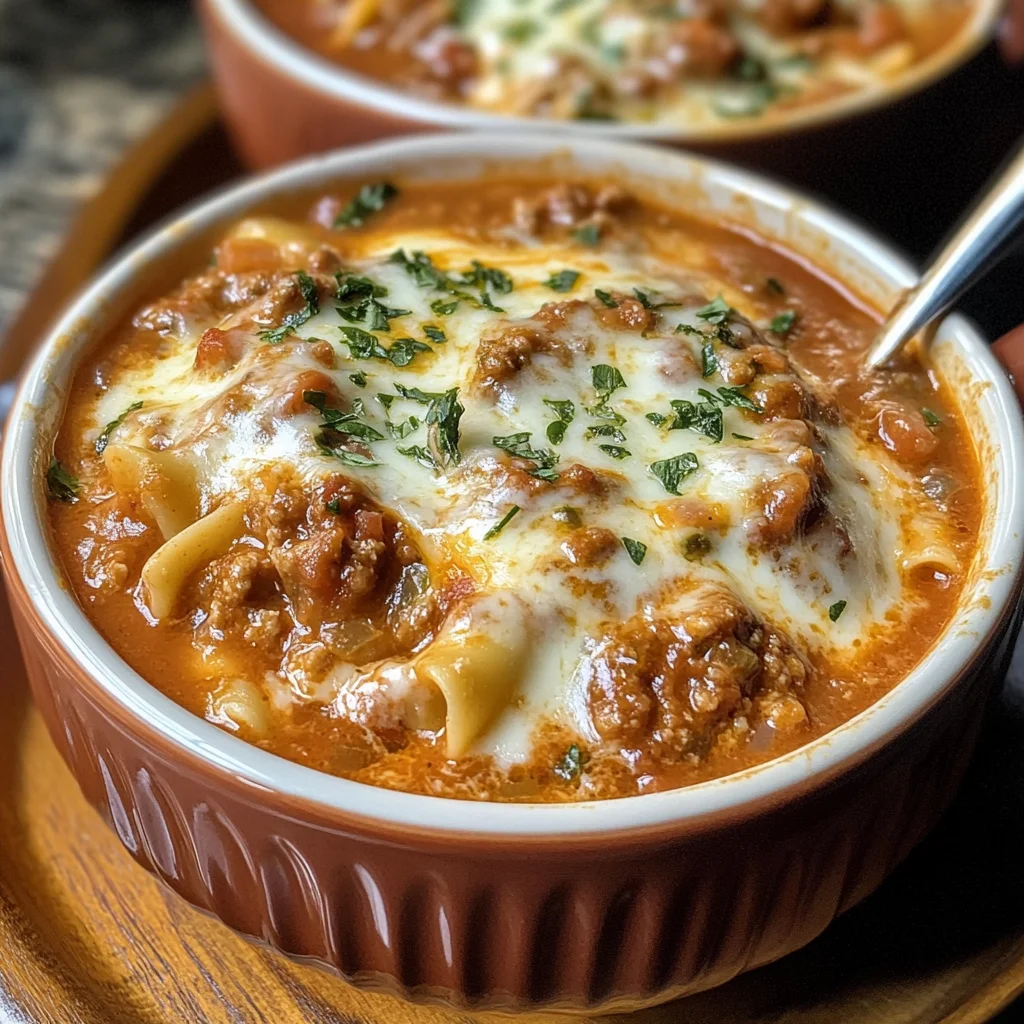
Cheesy Loaded Lasagna Soup: The Ultimate Comfort Food Recipe
Introduction
Imagine all the delicious flavors of traditional lasagna transformed into a warm, comforting bowl of soup. Cheesy Loaded Lasagna Soup combines broken lasagna noodles, savory ground meat, rich tomato sauce, and three types of melted cheese into one incredible dish. This recipe delivers all the satisfaction of layered lasagna without the lengthy baking time.
Additionally, this soup is perfect for busy weeknights when you crave something hearty. The preparation takes just 15 minutes, and everything cooks in one pot. Furthermore, the combination of ricotta, mozzarella, and parmesan creates an irresistibly creamy texture that rivals traditional baked lasagna.
What Makes Cheesy Loaded Lasagna Soup Special
The Perfect Blend of Comfort and Convenience
Cheesy Loaded Lasagna Soup stands out because it captures authentic lasagna taste in a fraction of the time. Traditional lasagna requires multiple steps including boiling noodles separately, creating layers, and baking for nearly an hour. However, this soup version simplifies everything into a single pot.
Moreover, the soup format allows the pasta to absorb the flavorful tomato broth directly. This creates incredibly tender noodles infused with Italian seasonings like basil, oregano, and garlic. The result is a dish with deeper, more developed flavors throughout.
Triple Cheese Richness
The hallmark of this recipe is its generous cheese combination. Each serving features ricotta for creaminess, shredded mozzarella for stretchiness, and parmesan for sharp, nutty depth. This three-cheese approach mirrors authentic lasagna while creating luxurious texture in every spoonful.
Essential Ingredients for Perfect Lasagna Soup
Protein Foundation
Ground beef forms the traditional base for Cheesy Loaded Lasagna Soup. Most recipes call for one pound of lean ground beef, which provides hearty texture and savory flavor. Alternatively, Italian sausage adds extra seasoning and richness to the broth.
You can also combine both meats for maximum flavor complexity. The meat is browned first to develop caramelized notes, then simmered in the tomato base. Ground turkey offers a leaner option while maintaining protein content.
Aromatic Vegetables
A proper aromatic base starts with diced yellow onion and minced garlic cloves. These vegetables are sautéed in olive oil until translucent, releasing essential oils that flavor the entire soup. Some variations include fresh spinach leaves for added nutrients and color.
Red pepper flakes provide gentle heat without overwhelming the dish. Fresh parsley and basil contribute bright, herbaceous notes that balance the rich cheese.
Tomato Components
The tomato base requires multiple elements for depth. Start with one 28-ounce can of crushed tomatoes for texture and body. Add two tablespoons of tomato paste to intensify the tomato flavor and create richness.
Furthermore, quality marinara or tomato sauce brings pre-seasoned flavor to the broth. Many cooks prefer brands with Italian herbs already incorporated. A splash of balsamic vinegar adds subtle sweetness and acidity that brightens the overall taste.
Pasta Selection
Traditional lasagna noodles broken into one to two-inch pieces work perfectly for this soup. The wide, flat noodles mimic authentic lasagna while being easy to eat with a spoon. Break approximately 10 uncooked lasagna sheets directly into the simmering broth.
Alternatively, mafalda pasta or fusilli provide similar texture with curled edges that catch sauce beautifully. Cook the pasta directly in the soup for maximum flavor absorption.
Broth and Liquid
Chicken broth creates the soup base, with most recipes using six to seven cups of low-sodium variety. The lower sodium content allows you to control seasoning precisely. Beef broth works equally well and adds deeper, meatier flavor.
Heavy cream stirred in near the end creates luxurious creaminess. Use approximately half a cup for velvety texture without making the soup too heavy.
The Triple Cheese Combination
The cheese mixture defines Cheesy Loaded Lasagna Soup. You need 10 ounces of ricotta cheese, which provides creamy white pockets throughout. Add one cup of shredded mozzarella for that classic stretchy, melted cheese experience.
Finally, half a cup of freshly grated parmesan cheese adds sharp, salty notes that enhance all other flavors. Freshly grated parmesan melts better than pre-shredded varieties.
Herbs and Seasonings
Italian seasoning forms the flavor backbone with one tablespoon of dried basil, one teaspoon each of dried oregano and parsley, plus salt and pepper to taste. A whole bay leaf simmered in the broth adds subtle depth.
Garlic powder mixed into the ricotta topping enhances the cheese mixture. Fresh basil leaves for garnish provide aromatic finishing touches.
Step-by-Step Cooking Instructions
Browning the Meat
Heat a large Dutch oven or soup pot over medium-high heat. Add one pound of ground beef along with diced onion. Cook while stirring occasionally until the beef browns completely, which takes approximately eight minutes.
Once browned, add minced garlic and red pepper flakes. Sauté for 30 seconds until fragrant, then drain any excess fat from the pot. This prevents greasy soup while maintaining rich flavor.
Building the Tomato Base
Add your tomato components next. Pour in the marinara sauce, crushed tomatoes, and tomato paste. Stir in balsamic vinegar and sugar to balance acidity. The sugar counteracts tomato tartness without making the soup sweet.
Next, add all dried herbs including basil, oregano, parsley, salt, pepper, and the bay leaf. These seasonings need time to bloom in the liquid. Stir everything together thoroughly to distribute flavors evenly.
Adding Broth and Simmering
Pour in six cups of chicken or beef broth and stir to combine all ingredients. Bring the mixture to a rolling boil over high heat. Once boiling, reduce heat to maintain a gentle simmer.
Cover the pot and let everything simmer for approximately 20 minutes. This allows flavors to meld together while the tomatoes break down further. The kitchen will fill with incredible Italian aromas during this stage.
Cooking the Pasta
Break lasagna noodles into bite-sized pieces directly over the simmering soup. Add approximately 10 lasagna sheets broken into one to two-inch pieces. Stir immediately to prevent sticking.
Continue simmering uncovered for 20 to 30 minutes, stirring occasionally. The noodles will cook directly in the flavorful broth, absorbing all the seasoned liquid. Test a noodle for tenderness before proceeding.
Creating Creaminess
Once noodles reach tender perfection, stir in half a cup of heavy cream. This step is optional but highly recommended for luxurious texture. The cream mellows the tomato acidity while adding richness.
Alternatively, stir shredded mozzarella or parmesan directly into the soup base. This creates an even cheesier broth that coats every noodle. Taste and adjust seasonings with additional salt and pepper if needed.
Preparing the Cheese Topping
While the soup simmers, prepare your cheese mixture. Combine 10 ounces of ricotta cheese with half the mozzarella and parmesan in a medium bowl. Add half a teaspoon of garlic powder and a pinch of salt and pepper.
Mix until well combined and creamy. This topping mimics the cheese layers in traditional baked lasagna. Some cooks prefer adding fresh basil directly into this mixture for extra flavor.
Serving and Assembly
Ladle the hot soup into individual bowls. Add a generous dollop of the ricotta mixture on top of each serving. Sprinkle with additional mozzarella and parmesan cheese for maximum cheesiness.
Garnish with fresh basil leaves and extra black pepper. Serve immediately while the cheese is warm and melty. The contrast between hot soup and cool ricotta creates wonderful temperature variation.
Cheese Selection and Layering Techniques
Ricotta Quality Matters
Choose whole milk ricotta for the richest, creamiest texture. Part-skim ricotta works for lighter versions but sacrifices some lusciousness. Cottage cheese substitutes effectively if you prefer tangier flavor.
Drain excess liquid from ricotta before mixing. This prevents watery topping that doesn’t hold its shape on the soup. Pat the ricotta gently with paper towels if it seems particularly wet.
Mozzarella Options
Fresh mozzarella pearls create beautiful presentation when floated on top of the soup. They melt into creamy puddles that mix with the broth. Shredded low-moisture mozzarella melts more uniformly into the soup base.
Pre-shredded mozzarella contains anti-caking agents that prevent smooth melting. Shredding a block of mozzarella yourself yields superior results. The extra effort creates perfectly gooey, stretchy cheese.
Parmesan Power
Authentic Parmigiano-Reggiano provides the best flavor with complex, nutty notes. Grate it finely just before using for maximum meltability. The parmesan rind can simmer in the soup for extra umami depth.
Remove the rind before serving if you choose this technique. The rind won’t melt but infuses incredible savory flavor throughout the broth. This restaurant-quality trick elevates homemade soup significantly.
Customization and Variations
Protein Alternatives
Turkey sausage or ground turkey creates a leaner version without sacrificing texture. These alternatives reduce fat content while maintaining protein levels. Chicken sausage offers another lighter option with Italian seasoning built in.
For vegetarian Cheesy Loaded Lasagna Soup, omit meat entirely and add extra vegetables. Mushrooms, zucchini, bell peppers, and eggplant create hearty substance. Use vegetable broth instead of chicken or beef broth for completely plant-based liquid.
Vegetable Additions
Fresh spinach wilts beautifully into the soup during the last few minutes of cooking. Add two cups of spinach leaves and stir until just wilted. This boosts iron, calcium, and vitamin content significantly.
Zucchini diced into small cubes adds texture and nutrients. Add it when you add the noodles so it cooks tender but not mushy. Frozen spinach works in a pinch but squeeze out excess moisture first.
Instant Pot Method
For faster cooking, use your Instant Pot on sauté mode to brown meat and vegetables. Add all remaining ingredients except cream and noodles. Seal the lid and cook on soup mode for 15 minutes.
Quick release pressure when done, then stir in cream and cooked noodles. This method reduces active cooking time significantly. The pressure cooking intensifies flavors even more than stovetop simmering.
Spice Level Adjustments
Increase red pepper flakes for spicier soup. Start with half a teaspoon and adjust upward to taste. Fresh jalapeños or crushed Calabrian chili peppers provide authentic Italian heat.
For milder versions suitable for children, omit red pepper entirely. The Italian herbs provide plenty of flavor without any spiciness. Black pepper alone offers subtle warmth without overwhelming young palates.
Nutritional Benefits
Protein Content
Cheesy Loaded Lasagna Soup delivers approximately 23 grams of protein per serving. This comes from ground meat and the triple cheese combination. Protein supports muscle repair and creates satisfying fullness.
The ricotta and mozzarella together provide complete amino acids essential for body functions. This makes the soup a balanced meal option rather than just comfort food.
Calcium and Bone Health
The three cheeses supply approximately 319 milligrams of calcium per serving, which represents 32 percent of daily value. Calcium is crucial for maintaining strong bones and teeth. This is particularly important for growing children and aging adults.
Mozzarella and parmesan both contain high calcium concentrations. One serving provides substantial bone-supporting nutrients.
Vitamins and Antioxidants
Tomatoes provide lycopene, a powerful antioxidant linked to heart health and anti-inflammatory benefits. Each serving contains over 10,000 micrograms of lycopene. Cooking tomatoes actually increases lycopene availability.
The soup also supplies significant amounts of vitamins A, C, and K. These vitamins support immune function, skin health, and blood clotting. Adding spinach increases vitamin content even further.
Iron and Minerals
Beef provides heme iron, the most bioavailable form for human absorption. Each serving delivers approximately 6 milligrams of iron, representing 72 percent of daily needs. Iron prevents anemia and supports energy levels.
Additional minerals include potassium for heart health, zinc for immune function, and selenium for thyroid support. This nutrient density makes Cheesy Loaded Lasagna Soup genuinely nourishing.
Calorie Considerations
Traditional lasagna soup contains approximately 340 to 389 calories per serving. This moderate calorie count works well for balanced meal planning. The protein and fiber create satiety that prevents overeating.
Using lean ground turkey or reducing cheese slightly lowers calories further. A lighter version can contain around 301 calories while maintaining 31 grams of protein. These adjustments accommodate various dietary goals.
Storage and Reheating Tips
Refrigerator Storage
Store leftover Cheesy Loaded Lasagna Soup in airtight containers in the refrigerator for four to five days. The soup actually tastes better the next day as flavors continue developing. Make sure the soup cools to room temperature before sealing containers.
Glass containers work better than plastic because they don’t absorb tomato stains or odors. Label containers with the date to track freshness. Keep the cheese topping stored separately for best results.
Freezing Instructions
Freeze the soup without pasta for optimal texture preservation. The noodles become mushy when frozen and reheated. Prepare the soup base completely, let it cool, then transfer to freezer-safe containers.
The soup base freezes beautifully for up to three months. Leave one inch of headspace in containers for expansion. Cook fresh noodles when reheating to maintain perfect texture.
Reheating Methods
Reheat refrigerated soup on the stovetop over medium heat until warmed through. This takes approximately 10 minutes while stirring occasionally. Add a splash of broth if the soup has thickened too much.
Microwave reheating works but requires caution because tomato-based soups can splatter. Heat in one to two-minute intervals, stirring between each. Cover loosely with a paper towel to prevent mess.
Thawing Frozen Soup
Transfer frozen soup to the refrigerator 24 hours before serving to thaw slowly. This preserves texture better than rapid thawing. Once thawed, reheat on the stovetop and add freshly cooked pasta.
Alternatively, reheat from frozen on low heat in a covered pot. This takes 20 to 30 minutes with frequent stirring. The gentle heat prevents scorching while thoroughly warming the soup.
Common Mistakes to Avoid
Overcooking the Pasta
The most frequent error is letting noodles cook too long directly in the soup. Overcooked pasta becomes mushy and breaks apart. Start checking noodles for doneness after 15 minutes of simmering.
Remember that pasta continues cooking slightly even after removing from heat. Stop cooking when noodles still have a tiny bit of firmness. They’ll reach perfect tenderness as the soup rests.
Using High Heat
Rapid boiling breaks down ingredients too quickly and causes splashing. After bringing soup to initial boil, always reduce to gentle simmer. Low, steady heat develops flavors properly without burning anything.
High heat also causes cream to separate and cheese to become grainy. Maintain medium-low temperature especially after adding dairy. Patience creates the smoothest, most delicious results.
Skipping the Cream Step
While optional, heavy cream transforms good soup into restaurant-quality excellence. It mellows tomato acidity and creates luxurious mouthfeel. Don’t skip this step unless dietary restrictions require it.
Add cream at the very end off heat to prevent curdling. Stir gently but thoroughly to incorporate evenly. The difference in richness is immediately noticeable and worth the extra calories.
Wrong Cheese Ratios
Using only one type of cheese misses the complexity that makes this soup special. Each cheese serves a specific purpose texturally and flavor-wise. Ricotta provides creaminess, mozzarella adds stretch, and parmesan delivers sharp notes.
Measure cheese quantities accurately for balanced flavor. Too much ricotta makes the topping bland, while too much parmesan overwhelms with saltiness. Follow recipe proportions for best results.
Serving Suggestions
Perfect Pairings
Serve Cheesy Loaded Lasagna Soup with crusty Italian bread for dipping and soaking up every drop of flavorful broth. Garlic bread adds complementary flavor that enhances the soup. Warm the bread briefly before serving for best texture.
A simple green salad with balsamic vinaigrette provides fresh contrast to the rich soup. Caesar salad works particularly well with its similar Italian flavors. Keep the salad light to balance the hearty soup.
Garnish Options
Fresh basil leaves torn and scattered on top add aromatic freshness. The contrast between hot soup and cool herbs creates wonderful sensory experience. Other fresh herbs like parsley or oregano work similarly.
Extra shredded parmesan sprinkled over each bowl adds salty richness. A drizzle of high-quality olive oil provides fruity notes. Freshly cracked black pepper contributes pleasant spice.
Portion Sizes
This recipe typically yields six to eight servings depending on bowl size. Each serving ranges from one to one-and-a-half cups of soup. Larger portions work as complete meals, while smaller servings suit appetizer courses.
The soup is quite filling due to pasta and cheese content. Start with modest portions and offer seconds if desired. Pair smaller servings with salad and bread for complete meals.
FAQs
Can I make Cheesy Loaded Lasagna Soup ahead of time?
Yes, prepare everything except pasta and refrigerate up to 24 hours in advance. Cook the noodles just before serving for optimal texture. This makes the recipe perfect for meal prep and entertaining.
What type of pasta works best for lasagna soup?
Traditional lasagna noodles broken into pieces provide authentic texture and appearance. Mafalda, fusilli, or even broken spaghetti work as substitutes. Choose pasta that holds sauce well.
How do I prevent the soup from becoming too thick?
Add extra chicken or beef broth to thin the soup to desired consistency. The pasta absorbs liquid as it sits, so leftovers often need thinning. Keep extra broth on hand for adjustments.
Can I use no-boil lasagna noodles in this Cheesy Loaded Lasagna Soup?
Regular lasagna noodles work better because no-boil varieties may become gummy in soup. If using no-boil noodles, reduce cooking time by five to 10 minutes. Monitor texture carefully to avoid mushiness.
Is Cheesy Loaded Lasagna Soup freezer-friendly?
Freeze the soup base without noodles for best results. Add freshly cooked pasta when reheating. The soup freezes well for up to three months in airtight containers.
Conclusion
Cheesy Loaded Lasagna Soup transforms beloved Italian flavors into an easy, one-pot comfort meal. The combination of tender noodles, savory meat, rich tomato broth, and triple cheese topping creates satisfaction in every spoonful. This recipe delivers all the deliciousness of traditional lasagna with fraction of the effort and time.
Furthermore, the nutritional benefits make this soup more than empty calories. You get substantial protein, calcium, vitamins, and antioxidants in each serving. The customization options accommodate various dietary preferences and ingredient availability.
Print
Cheesy Loaded Lasagna Soup
Description
Cheesy Loaded Lasagna Soup
Servings: 6
Prep Time: 10 minutes
Cook Time: 25 minutes
Calories: ~560 per serving
Ingredients
-
1 lb ground beef
-
½ lb Italian sausage (optional but extra flavor)
-
1 small onion, diced
-
4 cloves garlic, minced
-
1 tbsp olive oil
-
4 cups beef or chicken broth
-
1 jar (24 oz) marinara sauce
-
1 can (15 oz) crushed tomatoes
-
1 tbsp Italian seasoning
-
1 tsp garlic powder
-
1 tsp onion powder
-
½ tsp crushed red pepper (optional)
-
Salt & pepper to taste
-
10–12 lasagna noodles, broken into pieces
-
1 cup heavy cream
-
1 cup ricotta cheese
-
2 cups shredded mozzarella
-
½ cup grated Parmesan
-
Fresh basil or parsley for garnish
Instructions
-
Brown the meat:
Heat olive oil in a large pot. Cook ground beef, sausage, and onion until browned. Stir in garlic. -
Build the soup:
Add broth, marinara, crushed tomatoes, Italian seasoning, garlic powder, onion powder, red pepper, salt, and pepper. Stir well. -
Add noodles:
Bring to a boil. Add broken lasagna noodles and cook until tender (10–12 minutes), stirring occasionally. -
Make it creamy:
Reduce heat and stir in heavy cream. -
Add the cheesy topping:
In a small bowl, mix ricotta, mozzarella, and Parmesan.
Scoop a big dollop on top of each serving OR stir it directly into the soup for extra cheesiness. -
Serve:
Garnish with fresh basil or parsley and extra Parmesan.