
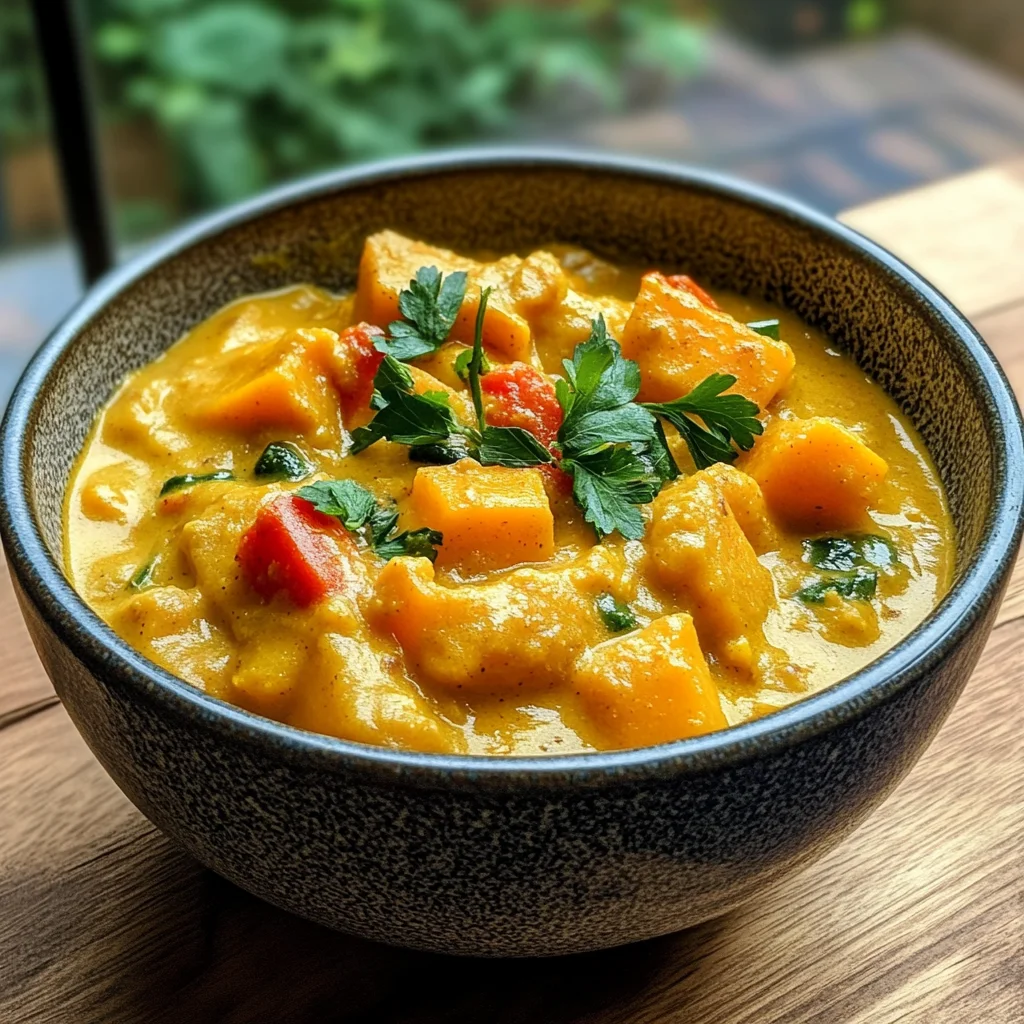
One Pot Butternut Squash Yellow Curry
Introduction
This One Pot Butternut Squash Yellow Curry transforms simple ingredients into a warming, nourishing meal that requires minimal cleanup and maximum flavor. The combination of tender butternut squash, aromatic yellow curry spices, and creamy coconut milk creates a dish that satisfies both comfort food cravings and nutritional needs. Whether you’re seeking an easy weeknight dinner or meal prep solution, this one pot curry delivers exceptional taste with remarkable simplicity.
The beauty of one pot butternut squash yellow curry lies in its versatility and convenience. You’ll need just one cooking vessel to create this vibrant dish, streamlining both preparation and cleanup. The recipe welcomes customization while maintaining its core identity as a plant-forward, satisfying meal.
What Makes This Curry Special
One Pot Convenience
One pot meals revolutionize home cooking by simplifying every aspect of the process. Using a single pot reduces the number of dishes to wash, saves valuable kitchen space, and streamlines meal preparation from start to finish. This cooking method proves particularly valuable for those with smaller kitchens or limited storage, as it minimizes equipment needs while maximizing results.
The time-saving benefits extend beyond cleanup. With everything cooking in one vessel, flavors meld beautifully as ingredients simmer together. This method also makes one pot butternut squash yellow curry ideal for camping trips, potluck dinners, or any situation requiring portable, convenient meal solutions.
Warming Yellow Curry Flavors
Yellow curry distinguishes itself through turmeric, which provides both the signature golden color and powerful anti-inflammatory properties. The curry paste typically combines coriander, cumin, fenugreek, paprika, and cardamom to create layers of warming flavor. These spices work synergistically to deliver complex taste without requiring extensive ingredient lists or complicated techniques.
Fresh ginger and garlic enhance the curry base with aromatic depth. Ginger aids digestion and supports immune function, while garlic promotes heart health. Together, these ingredients create a foundation that transforms simple vegetables into restaurant-quality cuisine.
Health Benefits of Key Ingredients
Butternut Squash Nutrition
Butternut squash stands out as a nutritional powerhouse, delivering significant amounts of vitamins A and C in every serving. One cup of cooked butternut squash provides up to 83% of your daily vitamin A requirement and 32% of vitamin C needs. This winter squash also contains essential B vitamins including folate, which supports energy production and red blood cell formation.
The vibrant orange flesh indicates high levels of beta-carotene and other carotenoids. Your body converts these plant pigments into active vitamin A, supporting immune function, eye health, and cell growth. Butternut squash additionally provides magnesium and potassium, minerals vital for maintaining healthy bones and balancing bodily fluids.
Turmeric and Curry Benefits
Turmeric’s active compound curcumin delivers remarkable anti-inflammatory properties that rival common medications. Studies suggest curcumin may reduce inflammation and swelling as effectively as ibuprofen, though more research continues. This golden spice has been used for centuries in traditional medicine to address pain, arthritis, and various inflammatory conditions.
Research indicates curcumin may help reduce cholesterol and triglyceride levels. The anti-inflammatory and antioxidant properties also show promise for supporting digestive health, joint function, and overall wellness. When combined with other curry spices like ginger and garlic, these benefits multiply through synergistic effects.
Essential Ingredients You Need
Main Vegetables
-
Butternut squash: 2 cups cubed fresh squash forms the foundation of this curry
-
Cauliflower: 3 cups of florets add texture and absorb the curry sauce beautifully
-
Carrots: One large carrot, thinly sliced, contributes natural sweetness
-
Yellow onion: One diced onion builds the aromatic base
-
Spinach: Fresh greens stirred in at the end provide color and nutrients
Aromatics and Spices
The spice blend creates the distinctive yellow curry character. You’ll need minced garlic, freshly grated ginger, yellow curry powder, ground turmeric, and cayenne pepper for heat. These aromatics release their essential oils when cooked, infusing the entire dish with complex flavors that develop as the curry simmers.
Liquid Ingredients
One 15-ounce can of full-fat coconut milk provides creamy richness. Vegetable broth adds depth without overpowering delicate vegetable flavors. Natural creamy peanut butter thickens the sauce while contributing subtle nutty undertones. Gluten-free soy sauce or coconut aminos season the curry with savory umami notes.
Step-by-Step Cooking Instructions
Prepare Your Ingredients
Begin by gathering and preparing all vegetables before cooking starts. Peel and cube the butternut squash into uniform pieces for even cooking. Dice the onion, slice the carrot thinly, and break the cauliflower into similarly-sized florets. Mince the garlic and grate fresh ginger using a microplane or fine grater.
Measure out all spices and have them ready near your cooking area. This mise en place approach ensures smooth cooking once you begin. Having everything prepared prevents burning aromatics while you scramble to find ingredients.
Cook the Vegetables
Heat one tablespoon coconut oil in a large deep skillet, pot, or Dutch oven over medium heat. Once the oil melts, add the diced onion, sliced carrot, cauliflower florets, and cubed butternut squash. Sauté the vegetables, stirring occasionally, until the cauliflower and butternut squash begin to soften. This process typically takes 5 to 10 minutes.
The vegetables should develop light golden edges without browning excessively. This initial cooking step begins caramelizing natural sugars, building flavor complexity. Stir regularly to prevent sticking and ensure even cooking across all vegetables.
Build the Curry Base
Add the minced garlic, grated ginger, yellow curry powder, ground turmeric, and cayenne pepper to the softened vegetables. Stir frequently for about one minute to release the essential oils and activate the spices. You’ll notice the aromatics becoming fragrant as they toast lightly in the pot.
This crucial step, known as blooming spices, intensifies flavors dramatically. The brief cooking time prevents burning while maximizing aromatic compounds. Keep stirring to coat all vegetables evenly with the spice mixture.
Simmer to Perfection
Pour in the coconut milk and vegetable broth, stirring to combine all ingredients thoroughly. Add the peanut butter and soy sauce or coconut aminos. Season with salt and pepper to taste. Bring the mixture to a simmer, then reduce heat and let it cook gently until vegetables reach tender perfection.
The curry should simmer for approximately 10 to 15 minutes until the butternut squash can be easily pierced with a fork. During the final minutes of cooking, stir in fresh spinach leaves and allow them to wilt into the curry. The greens add vibrant color and extra nutrients without requiring extended cooking time.
Recipe Variations and Customizations
Protein Additions
Transform this vegetarian one pot butternut squash yellow curry into a more substantial meal by incorporating chickpeas. One 14-ounce can of drained, rinsed chickpeas adds plant-based protein and satisfying texture. Add them during the final minutes of simmering so they heat through without becoming mushy.
For non-vegetarian versions, consider adding cooked chicken, shrimp, or tofu. Each protein source pairs beautifully with the curry’s warming spices and creamy coconut base. Add pre-cooked proteins near the end to simply heat them through in the flavorful sauce.
Vegetable Substitutions
While butternut squash forms the recipe’s foundation, other vegetables work equally well. Try sweet potatoes, regular pumpkin, or acorn squash as alternatives. Swiss chard can replace spinach for a heartier green. Bell peppers add sweet crunch and colorful appeal.
Seasonal availability often determines vegetable choices. The one pot butternut squash yellow curry framework accommodates whatever fresh produce your market offers. Maintain similar vegetable volumes to preserve the sauce-to-solid ratio.
Spice Level Adjustments
Control heat intensity by adjusting cayenne pepper quantities. Start with the recommended quarter teaspoon for mild warmth, or increase amounts gradually for spicier results. Thai chilies or fresh jalapeños offer alternative heat sources with different flavor profiles.
Conversely, omit cayenne entirely for completely mild versions suitable for sensitive palates or young children. The curry retains wonderful flavor from turmeric, curry powder, ginger, and garlic without any spicy heat.
Serving Suggestions
Perfect Pairings
Serve your one pot butternut squash yellow curry over fluffy basmati rice to soak up the luscious coconut sauce. The fragrant rice complements curry spices while providing satisfying substance. Jasmine rice or brown rice work equally well as bases.
Flatbreads like naan or roti make excellent accompaniments for scooping curry. Cauliflower rice offers a low-carb alternative that maintains the dish’s vegetable-forward philosophy. Quinoa provides complete protein and nutty flavor that pairs beautifully with yellow curry spices.
Garnish Ideas
Fresh cilantro brightens the curry with herbal notes and visual appeal. A squeeze of fresh lime juice adds acidity that balances the rich coconut milk. Chopped green onions contribute mild onion flavor and crisp texture contrast.
Consider toasted coconut flakes, crushed peanuts, or sesame seeds for textural variety. Each garnish adds another dimension to the one pot butternut squash yellow curry experience. Keep garnishes simple to let the curry’s natural flavors shine through.
Storage and Meal Prep Tips
Refrigeration Guidelines
Store leftover one pot butternut squash yellow curry in airtight containers in the refrigerator for up to four days. The flavors actually deepen and improve after a day as spices continue melding. Reheat gently on the stovetop or in the microwave, adding a splash of broth or coconut milk if the curry thickens during storage.
Cool the curry completely before refrigerating to maintain food safety. Divide large batches into smaller containers for quicker cooling and easier portion control. Label containers with preparation dates to track freshness.
Freezing Instructions
This curry freezes beautifully for up to three months. Portion it into freezer-safe containers, leaving headspace for expansion. Thaw overnight in the refrigerator before reheating for best texture results.
Consider freezing the curry in individual servings for convenient grab-and-go lunches. One pot butternut squash yellow curry maintains its quality through freezing better than many dishes due to its vegetable composition and coconut milk base. This makes it ideal for batch cooking and meal prep strategies.
Meal Prep Strategy
Prepare double batches to maximize your cooking efficiency. The one pot method already saves time, and doubling quantities adds minimal extra effort. Use this economical approach to reduce food waste by incorporating lingering vegetables from your refrigerator.
Prep vegetables in advance by washing, peeling, and cutting them up to two days before cooking. Store prepped vegetables in separate containers to maintain freshness. This advanced preparation makes weeknight cooking even more streamlined.
Frequently Asked Questions
Can I make one pot butternut squash yellow curry ahead of time?
Absolutely! This curry actually benefits from resting time as flavors develop and intensify. Prepare it up to four days in advance and store refrigerated in airtight containers. Reheat gently before serving, adjusting consistency with additional broth if needed. The convenience of advance preparation makes this dish perfect for entertaining or busy weeks.
What can I substitute for coconut milk?
While coconut milk provides signature creaminess and subtle sweetness, alternatives exist for those with allergies or preferences. Cashew cream offers similar richness with neutral flavor. Regular dairy cream works for non-vegan versions, though it changes the curry’s character significantly. Note that substitutions will alter the authentic yellow curry taste that coconut milk provides.
How do I know when the butternut squash is cooked?
Properly cooked butternut squash should be fork-tender without falling apart completely. Pierce a cube with a fork after 10 minutes of simmering to test doneness. The fork should slide in easily with minimal resistance. Undercooked squash tastes starchy and hard, while overcooked pieces become mushy and lose their shape.
Is yellow curry paste the same as yellow curry powder?
These products differ significantly in composition and usage. Yellow curry paste contains fresh ingredients like lemongrass, galangal, and chilies blended into a concentrated paste. Yellow curry powder is a dried spice blend typically including turmeric, coriander, and cumin. This recipe uses curry powder for convenience, though paste creates more authentic Thai flavor.
Can I use pre-cut butternut squash?
Pre-cut butternut squash from grocery stores saves significant preparation time and effort. This convenience option works perfectly in one pot butternut squash yellow curry without compromising results. Ensure the pieces are similarly sized for even cooking. While pre-cut squash costs more, it eliminates peeling and cutting challenges that many home cooks find frustrating.
Conclusion
One Pot Butternut Squash Yellow Curry delivers exceptional flavor, impressive nutrition, and remarkable convenience in a single dish. The combination of vitamin-rich butternut squash, anti-inflammatory turmeric, and aromatic curry spices creates a meal that nourishes both body and soul. The one pot cooking method simplifies preparation and cleanup, making this curry accessible for busy weeknights while remaining impressive enough for entertaining.
This versatile recipe welcomes customization with different vegetables, proteins, and spice levels to suit your preferences. Whether you’re meal prepping for the week ahead or seeking a warming comfort meal, this curry rises to every occasion. The minimal equipment requirements and straightforward technique make it perfect for cooks of all skill levels.
Print
One Pot Butternut Squash Yellow Curry
Description
One Pot Butternut Squash Yellow Curry
Ingredients
-
2 tbsp olive oil or coconut oil
-
1 small yellow onion, diced
-
3 garlic cloves, minced
-
1 tbsp grated fresh ginger
-
2 tbsp yellow curry paste (or 1½ tbsp curry powder)
-
1 lb (450g) butternut squash, peeled & cubed
-
1 medium red bell pepper, sliced
-
1 medium carrot, thinly sliced
-
1 can (14 oz / 400ml) coconut milk
-
2 cups vegetable or chicken broth
-
1 tbsp soy sauce or fish sauce
-
1 tbsp brown sugar or honey
-
Juice of ½ lime
-
Salt & pepper to taste
-
Fresh cilantro or parsley, for garnish
-
Cooked rice, for serving
Instructions
-
Sauté aromatics:
Heat oil in a large pot over medium heat. Add onion and cook 3–4 minutes until softened. Add garlic and ginger; sauté 1 minute. -
Add curry paste:
Stir in yellow curry paste (or curry powder) and let it toast for 30 seconds. -
Add vegetables:
Add butternut squash, red pepper, and carrots. Stir to coat in the spices. -
Add liquids:
Pour in coconut milk and broth. Add soy sauce (or fish sauce) and brown sugar. Stir well. -
Simmer:
Bring to a boil, then reduce heat to medium-low. Cover and simmer 18–22 minutes, or until squash is tender. -
Finish:
Stir in lime juice. Taste and adjust seasoning with salt, pepper, or more curry. -
Serve:
Ladle curry over hot rice and garnish with fresh cilantro.