
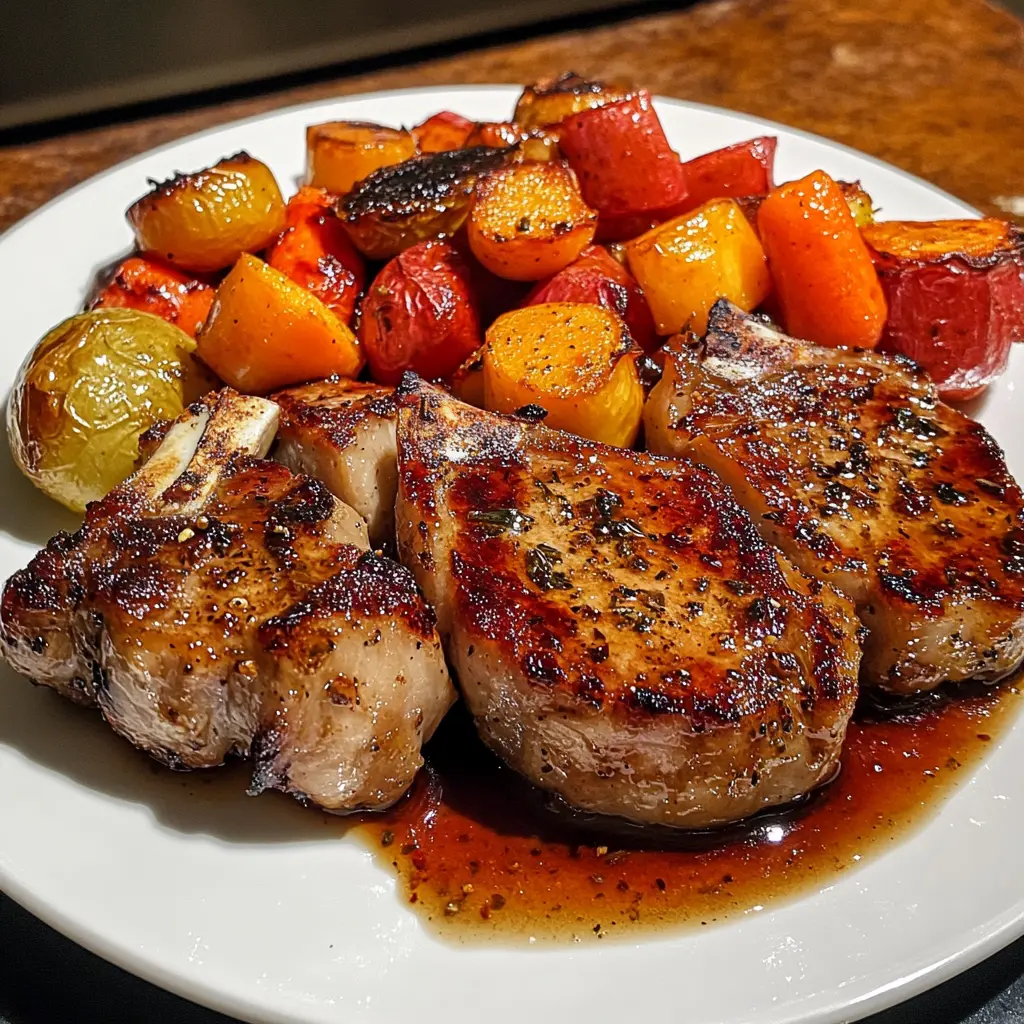
Honey Garlic Pork Chops with Roasted Vegetables
Honey Garlic Pork Chops with Roasted Vegetables brings together tender pork, a glossy sweet-savory glaze, and beautifully browned veggies on a single pan for minimal cleanup and maximum comfort. Because the whole meal roasts together, you get deep flavor, caramelized edges, and a satisfying texture contrast in every bite while keeping dinner simple and approachable.
What makes this dish special
Honey Garlic Pork Chops with Roasted Vegetables stands out because it delivers a balanced meal on a single sheet pan without complicated techniques. The pork cooks in a sticky garlic honey sauce while vegetables roast until tender, giving you protein, fiber, and satisfying sweetness in one tray.
The honey garlic glaze brings depth from garlic and savory seasoning, with a glossy finish that clings beautifully to the meat and vegetables. Roasting intensifies the natural sweetness of carrots, potatoes, and other vegetables, creating crispy edges and soft centers that pair perfectly with the juicy chops.
Ingredients for pork chops
Thoughtful ingredient choices help the pork stay moist and flavorful from pan to plate. Aim for a balance of sweet, salty, garlicky, and slightly tangy elements so the glaze feels complex without being heavy.
Core pork chop ingredients
These basics form the foundation of Honey Garlic Pork Chops with Roasted Vegetables.
-
Boneless or bone-in pork chops, about 1 inch thick
-
Fine sea salt or kosher salt
-
Freshly ground black pepper
-
Neutral or light olive oil for searing and roasting
-
Fresh garlic cloves, minced for the glaze
-
Honey for sweetness and caramelization
-
Reduced-sodium soy sauce or tamari for savory depth
-
A splash of apple cider vinegar or rice vinegar for brightness
-
Optional: pinch of red pepper flakes or cayenne for gentle heat
The honey and soy combination mirrors many classic honey garlic pork chop recipes, where honey is blended with garlic, soy, and a bit of acidity, then reduced into a sticky sauce. Garlic can be added both at the searing stage and in the glaze, but it should not burn, so often it is cooked gently in the sauce rather than over high heat.
Optional flavor boosters
Small additions can customize the dish to match your brand, mood, or side dishes.
-
Smoked paprika or sweet paprika for color and warmth
-
Ground ginger for a subtle, aromatic kick
-
Onion powder for extra savory backbone
-
Toasted sesame seeds for garnish and texture
-
Fresh herbs like parsley, cilantro, or green onions for freshness
Many honey garlic pork presentations use chopped parsley or green onions as garnish to add a bright, fresh note on top of the rich glaze. Lightly toasted sesame seeds or sliced green onions also contribute visual appeal for photography-focused content.
Ingredients for roasted vegetables
Roasted vegetables add color, nutrition, and texture, making this Honey Garlic Pork Chops with Roasted Vegetables recipe feel like a complete dinner. A mix of root vegetables and faster-cooking options ensures every bite offers contrast and interest.
Recommended vegetable mix
Choose at least three different vegetables so the pan looks abundant and visually appealing.
-
Baby potatoes or diced Yukon Gold potatoes
-
Carrots, sliced on a bias for style and even cooking
-
Broccoli florets or broccolini
-
Red onion wedges for sweetness and color
-
Optional: bell peppers, zucchini, or green beans for variety
Guides to oven-roasted vegetables often recommend cutting sturdy veggies like potatoes and carrots into similar sizes so they soften and brown evenly. Broccoli, peppers, or zucchini are usually added later or cut into larger pieces because they roast more quickly than dense roots.
Seasonings for vegetables
Simple seasoning lets the honey garlic glaze remain the star while the vegetables still shine.
-
Olive oil
-
Salt and pepper
-
Garlic powder or granulated garlic
-
Dried Italian herbs, thyme, or oregano
-
Optional: a squeeze of lemon juice after roasting for brightness
Many roasted vegetable recipes rely on a combination of olive oil, salt, pepper, and a few dried herbs to encourage browning and boost flavor without overshadowing the main protein. A quick toss with seasoning before the tray goes in the oven helps every piece develop flavorful browned edges.
Best cuts of pork for this recipe
Several pork cuts work well in Honey Garlic Pork Chops with Roasted Vegetables, but their thickness and fat content affect cooking time and juiciness. Matching the cut to your method improves both texture and timing alongside the vegetables.
Common pork chop options
-
Bone-in rib chops: Juicy and flavorful, with a bit more fat that helps prevent drying.
-
Center-cut loin chops: Leaner and mild, great for those who prefer a lighter cut.
-
Boneless chops: Convenient and quick-cooking, ideal when pairing with smaller vegetables.
Pork chop temperature guidelines highlight that modern pork can be served juicy and slightly pink at an internal temperature of 145°F, which suits both bone-in and boneless cuts when rested properly. Thicker chops around 1 inch are less likely to dry out than very thin ones, especially in high-heat roasting or searing methods.
Thickness and pan size
-
Choose chops close in size so they cook at the same rate.
-
Avoid overcrowding the sheet pan so heat can circulate and vegetables roast instead of steam.
Sheet-pan pork dinners generally advise arranging chops and vegetables in a single layer with a little space between pieces. Using a large rimmed baking sheet keeps the honey garlic glaze from spilling over while still allowing caramelization.
How to make Honey Garlic Pork Chops with Roasted Vegetables
This method combines quick stovetop searing with oven roasting to achieve both a flavorful crust and tender interior. The vegetables roast alongside the pork, soaking up drips of glaze and forming delicious browned bits on the tray.
Step 1: Prep and preheat
-
Preheat the oven to around 400–425°F (200–220°C).
-
Line a large rimmed baking sheet with parchment or lightly grease it.
-
Pat the pork chops dry with paper towels, then season both sides with salt and pepper.
Roasted vegetable recipes often recommend temperatures between 400°F and 425°F to promote browning and crisp edges while keeping centers tender. Drying the pork surface helps it sear well and reduces excess moisture on the pan, encouraging caramelization instead of steaming.
Step 2: Toss the vegetables
-
In a large bowl, combine potatoes, carrots, and other chosen vegetables.
-
Drizzle with olive oil and sprinkle with salt, pepper, garlic powder, and herbs.
-
Toss until every piece is lightly coated and spread them over the sheet pan.
Many guides suggest roasting sturdier vegetables like potatoes and carrots for a bit longer, sometimes starting them in the oven before adding more delicate options like broccoli. Spacing vegetables in a single layer helps them brown evenly instead of becoming soggy.
Step 3: Sear the pork chops
-
Heat a skillet over medium-high heat with a thin layer of oil.
-
Sear the pork chops for 2–3 minutes per side until golden brown.
-
Transfer the seared chops to a plate while you prepare the glaze.
Quick searing in a skillet develops flavorful browned crusts before the chops finish cooking in the oven or in the sauce. Many honey garlic recipes call for searing first, then finishing the chops in the pan or oven with the prepared glaze.
Step 4: Make the honey garlic glaze
-
In the same skillet, reduce the heat to medium.
-
Add minced garlic and sauté briefly until fragrant, avoiding browning.
-
Stir in honey, soy sauce or tamari, and a splash of vinegar.
-
Simmer for several minutes until the sauce slightly thickens and coats a spoon.
Popular honey garlic pork recipes use a simple ratio of honey, garlic, soy, and acid simmered together until glossy and thick enough to cling to the meat. Reducing the sauce for 5–8 minutes develops flavor and helps it caramelize when baked on the chops and vegetables.
Step 5: Combine on the sheet pan
-
Nestle the seared pork chops among the seasoned vegetables on the tray.
-
Spoon honey garlic glaze generously over each chop and drizzle the rest over the vegetables.
-
Turn the vegetables lightly to coat them with a thin layer of sauce.
Sheet-pan honey garlic dinners often coat both the protein and vegetables in the glaze to unify flavors and create sticky, caramelized edges. Leaving some vegetables with only light sauce ensures the tray does not get flooded, which would prevent proper roasting.
Step 6: Roast to perfection
-
Roast in the preheated oven until the vegetables are tender and the pork reaches a safe internal temperature.
-
Remove the tray from the oven and let the pork rest for a few minutes before serving.
Many roasted vegetable mixes become tender and browned within 20–30 minutes at 400–425°F, depending on size. Pork chops are considered safe at an internal temperature of 145°F, followed by a brief rest, which helps juices redistribute and keeps the meat moist.
Timing, temperature, and doneness
Dialing in timing and temperature keeps Honey Garlic Pork Chops with Roasted Vegetables juicy and evenly cooked. Because vegetables and pork cook at slightly different speeds, paying attention to cut size and oven settings is essential.
Pork chop internal temperature
Food safety experts and government guidelines recommend cooking whole pork cuts, including chops, to a minimum internal temperature of 145°F with a rest. This temperature kills harmful pathogens while allowing pork to remain tender and slightly pink in the center.
Using an instant-read thermometer inserted into the thickest part of the chop helps verify doneness without guesswork. Many grilling and roasting resources suggest removing pork chops from heat just before 145°F because carryover cooking raises the temperature slightly during resting.
Roasted vegetable timing
Different vegetables roast at varying speeds, so adjust cut sizes to help them finish together.
-
Potatoes and carrots: often 30–45 minutes depending on size.
-
Broccoli, peppers, and onions: closer to 15–20 minutes.
Roasting guides frequently recommend either starting dense vegetables earlier or cutting them smaller and adding quicker-cooking vegetables later in the process. Tossing the vegetables once halfway through roasting promotes even browning and prevents sticking.
Flavor variations and substitutions
Honey Garlic Pork Chops with Roasted Vegetables is flexible, which makes it perfect for content customization and audience adaptation. Swapping vegetables, adjusting spices, or changing the sweetener lets readers tailor the dish without losing its core identity.
Vegetable swap ideas
-
Use sweet potatoes instead of white potatoes for deeper sweetness.
-
Add Brussels sprouts halves for extra caramelized edges.
-
Include colorful bell peppers or cherry tomatoes for a brighter tray.
Roasted vegetable recipes often highlight that nearly any sturdy vegetable can be roasted as long as it is cut into similar-size pieces and coated with a thin layer of oil and seasoning. Mixing colors and shapes increases visual appeal, which is especially helpful for food photography and social content.
Glaze and seasoning twists
-
Replace part of the honey with maple syrup for a different sweetness profile.
-
Add a bit of hot sauce, chili paste, or red pepper flakes for a spicy honey garlic version.
-
Incorporate fresh ginger or a dash of sesame oil for an Asian-inspired twist.
Popular honey garlic recipes sometimes include chili flakes or hot sauce to balance sweetness with gentle heat. A small amount of ginger or sesame adds aromatic depth without overpowering the garlic-forward character.
Make-ahead, storage, and reheating
Planning ahead makes Honey Garlic Pork Chops with Roasted Vegetables a practical choice for meal prep or busy weekdays. Proper storage and gentle reheating preserve texture and flavor across several days.
Make-ahead prep
-
Whisk the honey garlic glaze up to 3 days in advance and refrigerate it in a sealed jar.
-
Chop sturdy vegetables like potatoes and carrots ahead, storing them in water to prevent browning.
-
Season the pork chops a few hours early to let the salt penetrate.
Many home cooking resources recommend making sauces and chopping vegetables ahead to streamline weeknight cooking while keeping food safety in mind. Storing cut potatoes submerged in water in the refrigerator helps slow oxidation until roasting time.
Safe storage and reheating
-
Cool leftovers promptly and refrigerate them in airtight containers.
-
Reheat gently in the oven at a moderate temperature so the pork does not dry out.
General food safety guidance from government agencies emphasizes rapid cooling and storing cooked meats in shallow containers to keep them safe. Reheating at lower oven temperatures and covering loosely with foil can warm the chops and vegetables through while preserving moisture.
Serving suggestions and pairing ideas
Because Honey Garlic Pork Chops with Roasted Vegetables already includes protein and veggies, side dishes can stay simple. Light, fresh elements balance the richness of the honey garlic glaze and roasted components.
Simple sides that work well
-
Steamed rice, quinoa, or couscous to soak up extra glaze.
-
A crisp green salad with a citrus or light vinaigrette.
-
Crusty bread or garlic toast for a homestyle feel.
Many honey garlic pork dinners are served over rice or potatoes to capture the sticky sauce and juices. Roasted vegetable guides often suggest pairing rich roasted dishes with a fresh salad or simple grains for a complete plate.
Garnish and presentation
-
Sprinkle chopped parsley or green onions over the tray just before serving.
-
Add lemon wedges on the side for squeezing.
-
Plate the pork on top of a bed of vegetables for an eye-catching presentation.
Food photography–friendly recipes often emphasize fresh green herbs and citrus as last-minute finishes to add color and contrast. Arranging the pork chops slightly overlapped with vegetables underneath creates height and visual interest on camera.
Nutrition, balance, and dietary tweaks
Honey Garlic Pork Chops with Roasted Vegetables can fit into many balanced eating patterns when portion sizes and ingredients are adjusted thoughtfully. Roasting vegetables with just enough oil and seasoning keeps them flavorful without becoming overly heavy.
Lighter and gluten-free options
-
Use leaner center-cut chops and trim visible fat if desired.
-
Swap regular soy sauce for tamari or a certified gluten-free alternative.
-
Increase the proportion of non-starchy vegetables like broccoli, peppers, and zucchini.
Nutrition-focused roasted vegetable guides often suggest filling at least half the plate with vegetables to boost fiber and micronutrients. Using lean cuts and moderate glaze amounts keeps the dish satisfying while still mindful of overall calories and sodium.
Higher-vegetable and kid-friendly tweaks
-
Cut vegetables into fun shapes or wedges to appeal to younger eaters.
-
Keep spice levels mild and offer chili flakes or hot sauce at the table.
-
Serve extra honey garlic sauce on the side for dipping vegetables.
Family-friendly honey garlic sheet-pan dinners frequently emphasize accessible flavors, modest heat, and plenty of sauce so picky eaters can choose how much to add. Offering veggies with the same glaze used on the pork helps encourage kids to enjoy the full plate.
Common mistakes and how to avoid them
Avoiding a few common pitfalls makes Honey Garlic Pork Chops with Roasted Vegetables more consistent, especially for beginners. Paying attention to cut size, pan crowding, and sauce thickness goes a long way.
Overcrowding and uneven cuts
-
Problem: Overcrowded pans trap steam, leading to pale vegetables and soggy edges.
-
Fix: Use a larger pan or two pans so vegetables and pork form a single layer.
Roasting tutorials consistently warn that packing vegetables too tightly prevents proper browning and caramelization. Cutting inconsistent sizes also leads to some pieces burning while others remain undercooked.
Overcooked pork and burnt glaze
-
Problem: Pork left too long in the oven can dry out, and honey-heavy glazes can scorch under very high heat.
-
Fix: Use a thermometer to check for 145°F and pull the tray once the sauce is bubbling and slightly thickened.
Food safety sources highlight 145°F as the target internal temperature for juicy, safe pork chops, followed by a rest. Many honey garlic recipes note that sugar-based sauces should be simmered and roasted just until glossy to prevent burning.
FAQs about Honey Garlic Pork Chops with Roasted Vegetables
Can boneless pork chops be used for Honey Garlic Pork Chops with Roasted Vegetables?
Yes, boneless pork chops work very well in Honey Garlic Pork Chops with Roasted Vegetables as long as they are at least about 1 inch thick. Thicker cuts stay juicier in the oven, and a thermometer helps ensure they reach 145°F without overcooking.
Do the vegetables need to be par-cooked?
Par-cooking is not required if vegetables are cut to appropriate sizes and roasted at a high enough temperature. However, starting dense potatoes or carrots in the oven 10 minutes earlier can help if you like them very soft by the time the pork finishes.
Can this recipe be made on one sheet pan only?
This Honey Garlic Pork Chops with Roasted Vegetables concept is designed for a single sheet pan, provided the pan is large enough for a single layer. If your pan is smaller, use two trays and rotate them halfway through roasting for even browning.
Is it safe if the pork is slightly pink?
Yes, a slight blush of pink can be normal and safe in pork chops when the internal temperature reaches 145°F and the meat rests afterward. Food safety guidelines explain that improved production practices allow pork to be enjoyed at this lower, juicier temperature.
Final thoughts
Honey Garlic Pork Chops with Roasted Vegetables delivers juicy, flavorful pork, caramelized vegetables, and a glossy garlic honey glaze in a single pan, making it ideal for busy home cooks who still want a comforting, well-rounded meal. With the right cut of pork, smart vegetable prep, and careful roasting, this dish can become a reliable weeknight staple and a photogenic centerpiece for your content strategy.
Print
Honey Garlic Pork Chops with Roasted Vegetables
Description
Honey Garlic Pork Chops with Roasted Vegetables
Ingredients
For the Pork Chops
-
4 bone-in or boneless pork chops (about 1 inch thick)
-
3 tbsp honey
-
3 cloves garlic, minced
-
2 tbsp soy sauce
-
1 tbsp olive oil
-
Salt & black pepper, to taste
-
½ tsp smoked paprika (optional)
For the Roasted Vegetables
-
2 cups baby carrots
-
1 cup broccoli florets
-
1 cup bell pepper, chopped
-
1 tbsp olive oil
-
Salt & black pepper, to taste
-
½ tsp garlic powder
Instructions
-
Preheat oven to 400°F (200°C).
-
In a small bowl, whisk together honey, minced garlic, soy sauce, olive oil, salt, pepper, and smoked paprika.
-
Place pork chops in a baking dish and brush both sides with the honey garlic mixture. Let marinate for 10–15 minutes if time allows.
-
Toss vegetables with olive oil, salt, pepper, and garlic powder. Arrange around the pork chops in the baking dish.
-
Bake for 25–30 minutes, or until pork chops reach an internal temperature of 145°F (63°C) and vegetables are tender.
-
Optional: Broil for 2–3 minutes for a caramelized finish.
-
Serve hot with the roasted vegetables and drizzle any pan juices over the pork chops.