

Introduction
Sheet Pan Mini Meatloaves with Roasted Vegetables transforms traditional comfort food into an easy weeknight dinner. This complete meal cooks on a single baking sheet, combining seasoned ground beef formed into individual portions with colorful roasted vegetables. Instead of spending hours in the kitchen preparing multiple dishes, you can have a satisfying, balanced dinner ready in under 45 minutes. The beauty of this recipe lies in its simplicity and minimal cleanup, making it perfect for busy families who crave homemade meals without the hassle.
What Makes Sheet Pan Mini Meatloaves Special
Individual portions provide several advantages over traditional full-sized meatloaf. First, mini meatloaves cook faster, reducing your total dinner preparation time significantly. Each person receives their own perfectly portioned serving, eliminating the need for slicing and serving at the table. Additionally, the increased surface area allows the tangy glaze to caramelize beautifully on all sides, creating delicious crispy edges that everyone fights over.
The one-pan cooking method means your vegetables roast alongside the meatloaves, absorbing savory flavors while developing their own caramelized sweetness. This approach saves you from washing multiple pots and pans. Moreover, the hands-off cooking technique frees you to prepare other tasks while dinner bakes. Sheet pan dinners have become increasingly popular because they deliver maximum flavor with minimal effort.
Essential Ingredients You’ll Need
For the Mini Meatloaves
Quality ground beef forms the foundation of this recipe. You’ll need one pound of lean ground beef, preferably 90/10 or 85/15 for the best balance of flavor and moisture. Half a medium onion, finely chopped or grated, adds sweetness and keeps the meat tender. One large egg binds everything together, preventing the meatloaves from falling apart.
A quarter cup of fine breadcrumbs creates the perfect texture. Plain or Italian-seasoned varieties both work well. For the base flavor, add a quarter cup of ketchup or barbecue sauce directly into the meat mixture. Season with half a teaspoon each of Italian seasoning and salt, plus an eighth teaspoon of black pepper.
For the Meatloaf Glaze
The glaze adds a sweet-tangy finish that elevates simple meatloaf to restaurant quality. Combine a quarter cup of ketchup with one tablespoon of brown sugar and one teaspoon of cider vinegar. This mixture brushes onto the meatloaves during the final minutes of baking. The sugar caramelizes beautifully, creating a sticky, flavorful coating. Some cooks prefer substituting barbecue sauce for a smokier profile.
For the Roasted Vegetables
One pound of baby potatoes, halved or quartered depending on size, provides hearty substance. Red or Yukon gold potatoes work wonderfully. Add two cups of trimmed green beans or broccoli florets for color and nutrition. Alternatively, you can use carrots cut into sticks, asparagus pieces, or Brussels sprouts.
Drizzle the vegetables with one tablespoon of olive oil. Season with salt, pepper, and optionally half a teaspoon of Italian seasoning for extra flavor. The oil helps vegetables crisp up while preventing them from drying out during roasting.
Step-by-Step Cooking Instructions
Preparing Your Baking Sheet
Preheat your oven to 400 degrees Fahrenheit. This temperature ensures both meat and vegetables cook through completely while achieving proper browning. Line a rimmed baking sheet with aluminum foil or parchment paper for easy cleanup. Lightly grease the lined pan with non-stick cooking spray to prevent sticking.
Seasoning the Vegetables
Place halved potatoes in a medium bowl. Drizzle with olive oil and season generously with salt and pepper. Toss until each piece is evenly coated. Spread potatoes in a single layer on one side of your prepared baking sheet, cut-side down for maximum caramelization.
In the same bowl, add your green beans or broccoli. Toss with a little more oil and seasoning. Arrange vegetables on the pan, leaving enough space for the meatloaves. Proper spacing ensures even roasting rather than steaming.
Mixing the Meatloaf
In a large mixing bowl, combine ground beef, chopped onion, ketchup or barbecue sauce, breadcrumbs, egg, Italian seasoning, salt, and pepper. Mix gently with clean hands or a fork until just combined. Overmixing develops too much gluten, resulting in tough, dense meatloaves. Stop as soon as ingredients are evenly distributed.
Shaping Mini Meatloaves
Divide your meat mixture into four equal portions. Each portion should weigh approximately 4 ounces. Shape each portion into an oval or rectangular mini loaf about three-quarters inch thick. Consistent sizing ensures even cooking.
Place the shaped meatloaves on the prepared baking sheet, leaving at least one inch of space between each loaf. This spacing allows heat to circulate properly. Some cooks create a foil divider on the pan to keep juices from the meat separate from the vegetables.
Baking Everything Together
Transfer the sheet pan to your preheated oven. Bake for 25 to 35 minutes total. After about 20 to 25 minutes, remove the pan from the oven. Check that potatoes are fork-tender and vegetables show signs of browning.
Brush the meatloaf glaze generously over each mini loaf. Return the pan to the oven for the final 5 to 10 minutes. This final baking time caramelizes the glaze beautifully. The meatloaves are done when an instant-read thermometer inserted into the center registers 160 degrees Fahrenheit.
Choosing the Best Vegetables for Roasting
Root Vegetables
Root vegetables are ideal companions for Sheet Pan Mini Meatloaves with Roasted Vegetables. Baby potatoes, sweet potatoes, carrots, and parsnips all roast beautifully at 400 degrees. These vegetables hold their shape well and develop sweet, caramelized edges. Cut root vegetables into uniform sizes to ensure even cooking.
Turnips and beets also work, though beets may bleed color onto other ingredients. Consider their longer cooking time when planning. Add them to the pan 5 to 10 minutes before the meatloaves for best results.
Quick-Cooking Vegetables
Green beans, broccoli, and asparagus cook faster than root vegetables. These can go on the pan at the same time as potatoes since they’ll soften while the starchy vegetables crisp. Brussels sprouts, when halved, caramelize beautifully in the same timeframe.
Bell peppers and zucchini add color but release moisture as they cook. Place them slightly away from meatloaves to prevent soggy results. Cherry tomatoes burst during roasting, creating a delicious natural sauce.
Vegetables to Avoid
Some vegetables don’t suit this cooking method. Leafy greens like spinach or kale will burn. Delicate vegetables such as mushrooms may become rubbery. Vegetables with high water content, including eggplant, need different preparation methods.
Tips for Perfect Mini Meatloaves
Selecting the Right Meat
Lean ground beef works best, with 85/15 or 90/10 fat ratios providing optimal results. Too much fat causes excessive grease, while extra-lean meat yields dry meatloaves. Ground turkey or chicken offer lighter alternatives. Mix different meats, such as half beef and half pork, for complex flavor.
Ensure meat is fresh and properly refrigerated. Let it sit at room temperature for 10 to 15 minutes before mixing. This helps ingredients combine more evenly.
Preventing Dry Meatloaf
Several techniques keep mini meatloaves moist and tender. First, don’t overmix the meat mixture. Handle it gently, mixing only until ingredients are just combined. Second, avoid using too many breadcrumbs, which absorb moisture.
The egg and ketchup in the mixture provide essential moisture. Some cooks add a tablespoon of milk or cream for extra richness. Finally, don’t overbake. Remove meatloaves from the oven as soon as they reach 160 degrees Fahrenheit.
Achieving Even Cooking
Uniform sizing is critical for Sheet Pan Mini Meatloaves with Roasted Vegetables. Use a kitchen scale to divide meat into equal portions. Shape each loaf to the same thickness, ensuring the thickest part doesn’t exceed three-quarters inch.
Arrange meatloaves and vegetables in a single layer with adequate spacing. Crowding causes steaming rather than roasting. Rotate the pan halfway through baking if your oven has hot spots.
Customization and Variations
International Flavor Profiles
Transform this basic recipe with global seasonings. For Italian-inspired meatloaves, add minced garlic, fresh basil, and a quarter cup of grated Parmesan cheese to the meat mixture. Top with marinara sauce instead of ketchup glaze. Serve with roasted tomatoes and zucchini.
Mexican-style variations incorporate cumin, chili powder, and chopped cilantro. Top finished meatloaves with salsa or enchilada sauce. Roast bell peppers and onions alongside for fajita-inspired flavors.
Asian-influenced versions use ginger, garlic, and green onions in the meat. Replace the traditional glaze with a mixture of hoisin sauce and sesame oil. Roast broccoli and snap peas for complementary vegetables.
Dietary Modifications
For gluten-free Sheet Pan Mini Meatloaves with Roasted Vegetables, substitute breadcrumbs with gluten-free oats or almond flour. Ensure your barbecue sauce and ketchup are certified gluten-free. The recipe naturally contains no gluten beyond the breadcrumbs.
Low-carb adaptations replace breadcrumbs with pork rinds or simply omit them entirely. Substitute cauliflower florets for potatoes. The meatloaves still hold together well with just the egg as a binder.
For dairy-free needs, this recipe already qualifies. Avoid adding cheese toppings suggested in variations. Most ketchup and barbecue sauces are naturally dairy-free.
Protein Alternatives
Ground turkey creates lighter meatloaves with slightly different texture. Use 93/7 ground turkey to prevent dryness. Ground chicken works similarly. Add extra moisture with diced mushrooms or grated zucchini.
Plant-based ground “beef” substitutes adapt well to this format. Follow package instructions for binding and seasoning adjustments. Lentil-based alternatives may need additional egg or binding agents.
Mix proteins for complex flavors. Combine equal parts ground beef and Italian sausage (casings removed). Alternatively, use three-quarters beef and one-quarter ground pork.
Storage and Reheating Guidelines
Refrigerating Leftovers
Cool Sheet Pan Mini Meatloaves with Roasted Vegetables to room temperature before storing. Transfer meatloaves and vegetables to separate airtight containers. Refrigerate within two hours of cooking. Properly stored, both components last three to four days.
Keep the glaze in a small container if you have extra. Brush additional glaze on meatloaves when reheating for fresh flavor. Label containers with the date to track freshness.
Freezing for Later
Mini meatloaves freeze exceptionally well, making them perfect for meal prep. Wrap each cooled meatloaf individually in plastic wrap, then place in freezer bags. Remove as much air as possible to prevent freezer burn. Frozen meatloaves keep for up to three months.
Roasted vegetables don’t freeze as successfully. Potatoes become grainy, and green vegetables lose their texture. If freezing vegetables is necessary, slightly undercook them initially.
Reheating Methods
Reheat refrigerated meatloaves in a 350-degree oven for 10 to 15 minutes. Cover with foil to prevent drying. Alternatively, microwave individual portions for 1 to 2 minutes on high power. Add a tablespoon of water or broth to maintain moisture.
For frozen meatloaves, thaw overnight in the refrigerator before reheating. Or reheat directly from frozen, adding 5 to 10 extra minutes to oven time. Check the internal temperature reaches 165 degrees Fahrenheit when reheating.
Reheat vegetables separately on a baking sheet at 375 degrees for 5 to 8 minutes. This restores some crispness lost during storage.
Nutritional Benefits of This Meal
Complete Protein Source
Each mini meatloaf provides approximately 25 to 30 grams of protein, depending on the meat used. Protein supports muscle maintenance, immune function, and satiety. Ground beef supplies all essential amino acids your body needs. This makes Sheet Pan Mini Meatloaves with Roasted Vegetables a satisfying meal that keeps hunger at bay for hours.
Lean beef also provides important vitamins and minerals. It’s particularly rich in vitamin B12, essential for nerve health and red blood cell formation. Additionally, beef contains bioavailable iron, zinc, and selenium.
Vegetable Nutrition
Potatoes offer substantial vitamin C, potassium, and fiber when eaten with skins. Contrary to popular belief, they’re nutritious carbohydrates when properly prepared. The roasting method used here requires minimal added fat compared to frying.
Green beans provide vitamin K, folate, and antioxidants. Broccoli is exceptionally nutrient-dense, offering vitamin C, vitamin K, folate, and beneficial plant compounds. The variety of vegetables ensures you receive diverse nutrients. Aim for colorful vegetable combinations to maximize nutritional benefits.
Balanced Macronutrients
This meal naturally provides balanced macronutrients without special planning. Each serving contains approximately 400 to 500 calories, depending on portions. The protein from meat, carbohydrates from potatoes, and healthy fats from olive oil create satisfaction.
The fiber from vegetables aids digestion and blood sugar regulation. Choosing lean meat keeps saturated fat moderate. This balance makes Sheet Pan Mini Meatloaves with Roasted Vegetables suitable for various eating patterns.
Common Mistakes to Avoid
Overpacking the Pan
The most frequent error is overcrowding your baking sheet. When ingredients touch or overlap, they steam instead of roast. This results in soggy vegetables and pale meatloaves without appetizing browning. Leave at least half an inch between items.
Use a larger sheet pan if necessary, or prepare two separate pans. It’s better to use more pans than compromise texture and flavor. Consider the size of your vegetables when planning pan space.
Incorrect Oven Temperature
Baking at temperatures below 400 degrees extends cooking time excessively. Vegetables won’t caramelize properly, and meatloaves may dry out during the prolonged cooking. Conversely, temperatures above 425 degrees risk burning vegetables before meat cooks through.
Always preheat your oven completely before adding food. Use an oven thermometer to verify accuracy. Many home ovens run hot or cold, affecting your results significantly.
Skipping the Meat Thermometer
Visual cues alone can’t reliably determine doneness. Ground beef must reach 160 degrees Fahrenheit for food safety. Insert an instant-read thermometer into the thickest part of a meatloaf. Check each one, as individual loaves may cook at slightly different rates.
Undercooked ground meat poses health risks. Overcooked meatloaves become dry and unpleasant. The thermometer eliminates guesswork, ensuring perfect results every time.
Using Cold Ingredients
Adding cold meat and eggs straight from the refrigerator affects mixing and cooking. Cold fat doesn’t incorporate well, leading to uneven texture. Let meat sit at room temperature for 10 to 15 minutes before preparing.
Similarly, cold vegetables take longer to roast. Room-temperature ingredients ensure everything finishes cooking simultaneously. This attention to detail separates good results from great ones.
Serving Suggestions and Side Dishes
Complementary Side Dishes
While Sheet Pan Mini Meatloaves with Roasted Vegetables provides a complete meal, additional sides create abundant family dinners. A simple green salad with vinaigrette adds freshness and contrasts the richness. Crusty bread or dinner rolls help soak up any delicious pan juices.
For heartier appetites, serve buttered egg noodles or mashed cauliflower. These starchy sides complement the savory meatloaf beautifully. A light coleslaw adds crunch and acidity, balancing the meal’s flavors.
Sauce Options
The built-in glaze provides plenty of flavor, but additional sauces offer variety. Classic brown gravy transforms this into a traditional comfort meal. Mushroom gravy adds earthy depth. Prepare gravy in advance or use quality store-bought versions.
Tangy barbecue sauce on the side lets each diner customize their experience. Honey mustard sauce provides sweet-savory contrast. For lighter options, serve with chimichurri or fresh herb sauce.
Presentation Tips
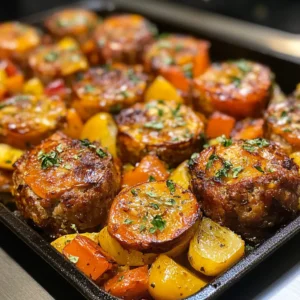
Though this is casual weeknight fare, thoughtful presentation elevates the experience. Plate each person’s mini meatloaf with a portion of roasted vegetables. Garnish with fresh chopped parsley or green onions for color.
For family-style serving, transfer everything to a large platter. Arrange meatloaves in the center surrounded by colorful vegetables. Drizzle any accumulated pan juices over the top. The rustic presentation celebrates the dish’s homestyle origins.
Frequently Asked Questions
Can I make Sheet Pan Mini Meatloaves with Roasted Vegetables ahead of time?
Yes, this recipe is excellent for meal prep. Shape uncooked meatloaves and store them covered in the refrigerator for up to 24 hours before baking. Prepare vegetables and store them separately. When ready to cook, assemble everything on the pan and bake as directed. Alternatively, bake everything completely, refrigerate, and reheat portions throughout the week.
What’s the best way to keep meatloaves from sticking to the pan?
Line your baking sheet with parchment paper or aluminum foil, then apply non-stick cooking spray. This double-layer approach provides reliable release. Alternatively, use a silicone baking mat. Some cooks place meatloaves directly on vegetables to elevate them slightly, preventing bottom sticking.
Can I use different vegetables?
Absolutely. Sheet Pan Mini Meatloaves with Roasted Vegetables adapts to any vegetables that roast well at 400 degrees. Try Brussels sprouts, cauliflower, carrots, parsnips, or butternut squash. Match cooking times by cutting denser vegetables smaller. Add quick-cooking vegetables like bell peppers halfway through baking.
How do I know when the meatloaves are done?
Use an instant-read thermometer inserted into the center of a meatloaf. Ground beef is safely cooked at 160 degrees Fahrenheit. The exterior should appear browned with caramelized glaze. Juices should run clear when meatloaf is pierced. Visual assessment alone isn’t reliable for ground meat safety.
Can I double this recipe?
Doubling works well if you have adequate oven space. Use two sheet pans on separate racks, rotating their positions halfway through baking. This ensures even cooking despite different rack temperatures. All other aspects of the recipe scale proportionally without adjustments.
What type of ground beef should I use?
Choose ground beef with 85/15 or 90/10 fat ratio. These provide enough fat for flavor and moisture without excessive grease. Extra-lean beef (93/7 or higher) tends to produce dry meatloaves. Higher-fat ground beef (80/20) creates too much pan grease, potentially making vegetables soggy.
How can I add more flavor to the meatloaves?
Experiment with different seasonings in the meat mixture. Add minced garlic, Worcestershire sauce, fresh herbs, or grated Parmesan cheese. Stuff meatloaves with cheese cubes for melted centers. Replace plain breadcrumbs with seasoned Italian-style crumbs. Different glaze variations also dramatically change the final flavor profile.
Conclusion
Sheet Pan Mini Meatloaves with Roasted Vegetables delivers everything busy families need in a weeknight dinner: convenience, nutrition, and satisfying comfort-food flavors. The one-pan approach minimizes cleanup while maximizing taste through the marriage of savory meatloaves and caramelized vegetables. Whether you’re feeding picky eaters who appreciate individual portions or adults seeking wholesome home cooking, this recipe consistently succeeds.
The flexibility of this dish means you’ll never tire of it. Swap vegetables based on what’s in season or on sale. Experiment with different meat blends and global seasonings to create endless variations. The fundamental technique remains the same while flavors transform completely.
Print
Sheet Pan Mini Meatloaves with Roasted Vegetables
Description
Sheet Pan Mini Meatloaves with Roasted Vegetables
Ingredients
Mini Meatloaves
-
1½ lbs ground beef (or mix beef & pork)
-
1 small onion, finely chopped
-
2 cloves garlic, minced
-
½ cup breadcrumbs
-
¼ cup milk
-
1 large egg
-
2 tbsp ketchup
-
1 tsp Worcestershire sauce
-
1 tsp Italian seasoning
-
Salt & pepper to taste
-
2–3 tbsp ketchup or BBQ sauce (for topping)
Roasted Vegetables
-
2 cups baby potatoes, halved
-
2 cups carrots, cut into sticks
-
1 red bell pepper, sliced
-
1 tbsp olive oil
-
½ tsp salt
-
¼ tsp black pepper
-
½ tsp garlic powder
-
½ tsp paprika
Instructions
-
Prep oven & pan:
Preheat oven to 400°F (200°C). Line a large sheet pan with parchment paper. -
Mix the meatloaf:
In a bowl, combine ground meat, onion, garlic, breadcrumbs, milk, egg, ketchup, Worcestershire, Italian seasoning, salt, and pepper. Mix until just combined. -
Shape mini meatloaves:
Divide mixture into 6–8 portions. Shape into small loaves and place on the sheet pan. -
Prepare vegetables:
Toss potatoes, carrots, and bell pepper with olive oil, salt, pepper, garlic powder, and paprika. Arrange around mini meatloaves on the same pan. -
Top meatloaves:
Spread a thin layer of ketchup or BBQ sauce on top of each mini meatloaf. -
Bake:
Roast in the preheated oven for 25–30 minutes, until meatloaves are cooked through (internal temp 160°F / 71°C) and vegetables are tender. -
Serve:
Garnish with fresh parsley if desired and serve straight from the pan for easy cleanup.
Cooking Time
-
Prep: 15 minutes
-
Cook: 25–30 minutes
-
Total: 40–45 minutes
Calories (Approx.)
350–400 calories per mini meatloaf with veggies (depending on meat and sauce).