
Introduction
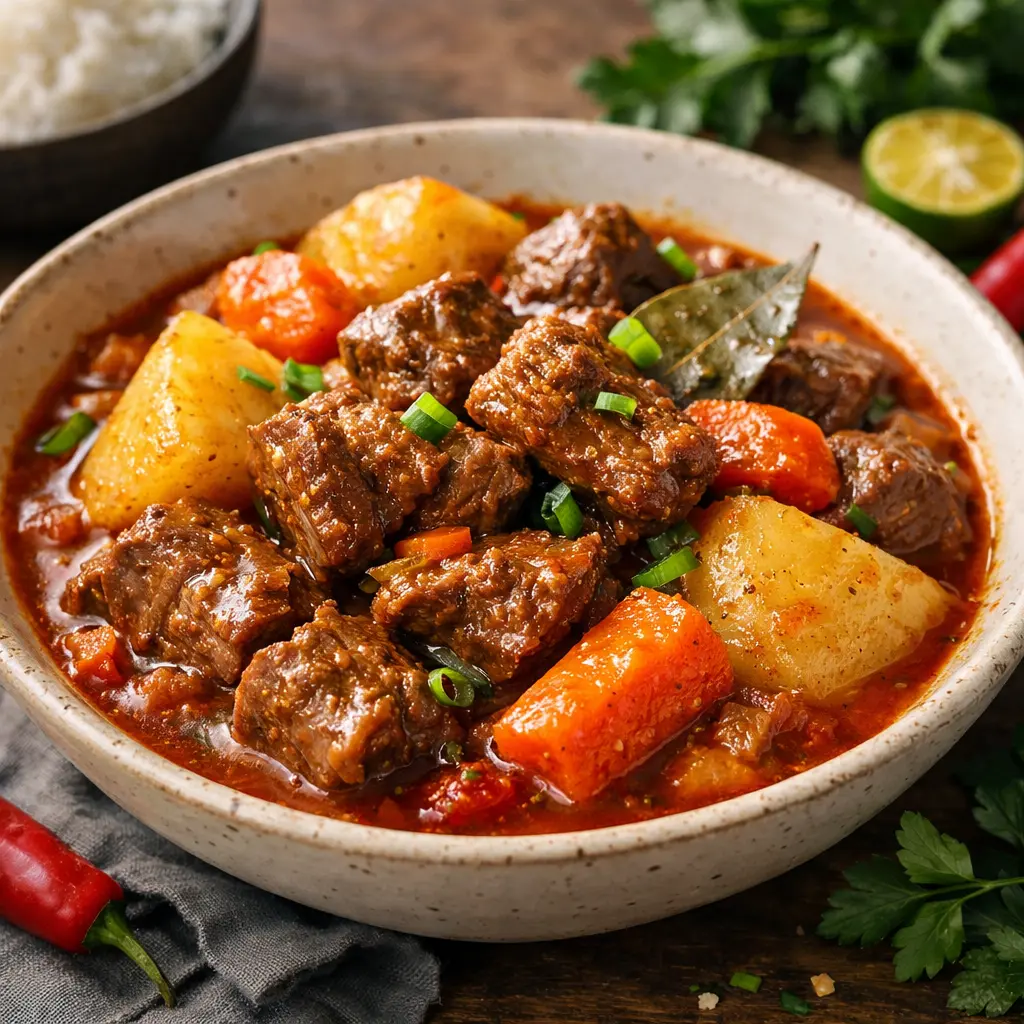
Mechado (Filipino Beef Stew) with Potatoes and Carrots is one of the most beloved comfort foods in Filipino cuisine. This hearty dish features fork-tender beef simmered in a rich tomato-based sauce alongside vegetables. Moreover, its savory-tangy flavor profile makes it perfect for family gatherings and special occasions.
Filipino households have been preparing this traditional stew for generations. The dish transforms humble ingredients into an extraordinary meal that pairs beautifully with steamed rice. Additionally, Mechado offers a delicious way to experience authentic Filipino cooking at home.
What is Mechado?
Mechado is a tomato-based Filipino stew made with tender beef chunks, onions, bell peppers, carrots, and potatoes. The name comes from the Spanish word “mecha,” which means wick. Originally, Filipino cooks inserted pork fat strips into beef like a wick before cooking.
Today, most versions skip the larding process but retain the signature flavors. The stew features beef marinated in soy sauce and citrus juice, then braised slowly in tomato sauce. Consequently, the result is melt-in-your-mouth tender meat in a flavorful sauce.
Traditional vs Modern Preparation
Traditional Mechado required inserting pork fat strips into beef cuts. This technique helped tenderize tougher meat. However, modern recipes focus on slow braising instead.
The contemporary approach produces equally delicious results. Furthermore, it simplifies the cooking process for home cooks. Most recipes now emphasize proper marination and long simmering times.
The History and Origins of Mechado
Mechado reflects Spanish colonial influence on Filipino cuisine. The dish emerged during the Spanish colonial period in the Philippines. Spanish cooking methods like larding were adapted using local ingredients.
Filipino cooks incorporated soy sauce, calamansi, and tomatoes into the recipe. These ingredients created a unique fusion of Spanish and Filipino flavors. As a result, Mechado became distinctly Filipino despite its Spanish roots.
The evolution of this dish showcases Filipino culinary creativity. Traditional Spanish larding techniques merged with Southeast Asian seasonings. This combination produced a stew that remains popular today.
Key Ingredients for Authentic Mechado
Creating delicious Mechado requires specific ingredients that work together harmoniously. Each component contributes to the dish’s signature taste and texture.
Essential Proteins and Seasonings
-
Beef chuck roast – The primary protein that becomes fork-tender when slow-cooked
-
Soy sauce – Adds savory umami depth and saltiness
-
Calamansi or lemon juice – Provides tangy, citrusy brightness
-
Tomato sauce – Creates the rich, hearty base
-
Beef broth – Enhances meaty flavor and adds liquid for braising
Aromatics and Vegetables
Fresh aromatics build the flavor foundation. Garlic and onions are sautéed until fragrant. Bell peppers add sweetness and color to the stew.
Potatoes and carrots are the traditional vegetable additions. They absorb the flavorful sauce while cooking. Both vegetables should be cut into 2-inch chunks for even cooking.
Seasonings and Herbs
Bay leaves add aromatic complexity to the simmering stew. Fish sauce (patis) contributes authentic Filipino umami. Black pepper provides gentle heat and spice.
Some recipes include hot sauce for extra kick. Salt adjusts the final seasoning to taste. These seasonings work together to create balanced flavors.
How to Choose the Best Beef Cut
Selecting the right beef cut is crucial for perfect Mechado. The meat must become tender through long, slow cooking.
Best Cuts for Mechado
Beef chuck roast is the top choice for this stew. This cut contains excellent marbling that breaks down during braising. The fat renders slowly and bastes the meat from within.
Chuck roast transforms into gelatinous, fork-tender pieces. Additionally, it offers great value compared to premium cuts. Most Filipino cooks prefer chuck for its reliability.
Beef brisket serves as an alternative option. It requires similar cooking times to become tender. However, chuck roast generally produces more consistent results.
Preparing the Beef
Cut beef into 2-inch cubes for uniform cooking. Larger pieces hold together better during long simmering. Trim excess fat but leave some marbling intact.
Season the meat generously before marinating. This step helps flavors penetrate deeply. Allow at least 30 minutes for marination, though longer is better.
Step-by-Step Cooking Instructions
Follow these detailed instructions to create authentic Mechado at home. Each step builds flavor and ensures tender results.
Marinating the Beef
Combine beef cubes with soy sauce, lemon juice, and black pepper. Mix thoroughly until all pieces are coated. Cover and refrigerate for at least 30 minutes.
Longer marination yields deeper flavor penetration. Four to 24 hours produces optimal results. The acidic marinade begins tenderizing the meat.
Searing for Flavor
Heat oil in a large Dutch oven over medium-high heat. Brown garlic until golden and set aside. Add beef pieces and sear on all sides.
Work in batches to avoid crowding the pan. Proper browning creates rich, caramelized flavors. This step takes 2-3 minutes per side.
Building the Base
Return beef to the pot and add chopped onions. Season with fish sauce as the onions soften. Sauté until onions become translucent.
Pour in tomato sauce, water, and reserved marinade. Add beef broth, bay leaves, and bell peppers. Stir everything together thoroughly.
Slow Simmering
Bring the mixture to a boil over high heat. Then reduce to low and cover the pot. Let the stew simmer gently for 1.5 hours.
Stir occasionally to prevent sticking. The meat should become tender and easily pierced. Low heat prevents the sauce from burning.
Adding Vegetables
When beef is tender, add potato and carrot chunks. Continue cooking for 20-30 minutes more. The vegetables should be fork-tender but not mushy.
Check seasoning and adjust with salt and pepper. Remove bay leaves before serving. The sauce should be thick and flavorful.
Essential Cooking Techniques
Mastering key techniques ensures consistently excellent Mechado. These methods maximize flavor and texture.
Proper Searing
Searing creates a flavorful crust on the beef. High heat triggers the Maillard reaction. This chemical process develops complex savory notes.
Ensure the pan is very hot before adding meat. Don’t move the pieces too quickly. Let each side develop a golden-brown crust.
Braising at Low Temperature
Low, slow cooking is essential for tender beef. High heat toughens the meat fibers. Gentle simmering breaks down connective tissue gradually.
Maintain a bare simmer with occasional bubbles. Cover the pot to retain moisture. This method can take 1.5 to 2 hours total.
Layering Flavors
Build flavors in stages throughout cooking. Start with aromatics, then add proteins and liquids. Finish with vegetables that require less cooking time.
Each layer contributes unique elements to the final dish. Consequently, the stew develops complex, well-rounded taste. This approach creates depth that quick cooking cannot achieve.
Common Variations of Mechado
Filipino cooks have created numerous Mechado variations over time. These adaptations suit different preferences and ingredient availability.
Pork Mechado
Pork replaces beef as the main protein. The cooking process remains largely similar. Pork slices or chunks work equally well.
This version often includes green peas alongside potatoes. The braising time may be slightly shorter. Pork fat can be rendered first for extra flavor.
Slow Cooker Method
Modern cooks use slow cookers for convenience. Brown the beef and aromatics first. Then transfer everything to the slow cooker.
Cook on low for 6-8 hours until tender. Add vegetables during the last hour. This hands-off approach fits busy schedules perfectly.
Pressure Cooker Version
Pressure cooking dramatically reduces cooking time. The same ingredients can be ready in 45 minutes. However, traditional slow cooking develops richer flavors.
Adjust liquid amounts for pressure cooking. The sealed environment prevents evaporation. This method works well for weeknight dinners.
Serving Suggestions and Pairings
Mechado tastes best when served hot with complementary sides. Traditional Filipino pairings enhance the overall meal experience.
Traditional Accompaniments
Steamed white rice is the classic pairing. The rice absorbs the flavorful sauce beautifully. Jasmine or regular white rice both work well.
The combination of tender beef and fluffy rice is deeply satisfying. Moreover, rice balances the rich, tangy flavors. Most Filipino families serve Mechado this way.
Additional Side Dishes
Consider serving these sides alongside your Mechado:
-
Garlic bread – Provides crispy texture contrast
-
Green salad – Offers freshness and lightness
-
Pickled vegetables (atchara) – Adds tangy crunch
-
Steamed vegetables – Contributes nutritional balance
Presentation Tips
Serve Mechado in deep bowls or plates. Ladle generous portions of sauce over rice. Garnish with fresh herbs if desired.
The colorful vegetables make the dish visually appealing. Red bell peppers, orange carrots, and golden potatoes create an attractive presentation. Serve family-style for gatherings.
Storage and Reheating Tips
Proper storage keeps Mechado delicious for several days. Follow these guidelines to maintain quality and safety.
Refrigeration
Cool the stew completely before storing. Transfer to airtight containers within two hours. Refrigerate for up to 4 days.
The flavors often deepen overnight. Many cooks believe Mechado tastes even better the next day. The meat continues absorbing the sauce.
Freezing for Longer Storage
Mechado freezes well for up to 3 months. Use freezer-safe containers or bags. Leave some space for expansion.
Label containers with the date and contents. Thaw overnight in the refrigerator before reheating. Never thaw at room temperature.
Reheating Methods
Reheat gently on the stovetop over medium-low heat. Stir occasionally to prevent sticking. Add a splash of water or broth if needed.
Microwave reheating works for individual portions. Use 50% power and heat in intervals. Stir between intervals for even warming.
Nutritional Benefits
Mechado offers several nutritional advantages when prepared properly. The ingredients provide essential nutrients and energy.
Protein and Minerals
Beef supplies high-quality complete protein. This supports muscle maintenance and growth. Additionally, beef provides iron and zinc.
The protein content keeps you satisfied longer. Iron supports healthy blood cells. Zinc boosts immune function.
Vitamins from Vegetables
Carrots deliver beta-carotene and vitamin A. These nutrients support eye health and immunity. Potatoes provide vitamin C and potassium.
Bell peppers add more vitamin C and antioxidants. Together, the vegetables create nutritional balance. They also contribute dietary fiber.
Making It Healthier
Trim visible fat from beef before cooking. This reduces saturated fat content. Use low-sodium broth and soy sauce.
Increase vegetable proportions for more fiber. Add leafy greens during the last few minutes. These adjustments boost nutritional value.
Troubleshooting Common Issues
Even experienced cooks encounter challenges when making Mechado. Here are solutions to common problems.
Tough, Chewy Meat
Insufficient cooking time causes tough beef. Continue simmering until fork-tender. Some cuts need 2+ hours.
Using the wrong cut also creates toughness. Always choose well-marbled chuck roast. Lean cuts don’t become tender enough.
Thin, Watery Sauce
Too much liquid produces thin sauce. Simmer uncovered to reduce and thicken. This concentrates the flavors.
Alternatively, remove solids and reduce sauce separately. Then recombine everything. This method prevents overcooking vegetables.
Bland Flavor
Under-seasoning results in bland taste. Taste and adjust salt at the end. Add more soy sauce if needed.
Insufficient browning also reduces flavor depth. Take time to properly sear the beef. Don’t skip this crucial step.
Mushy Vegetables
Adding vegetables too early makes them mushy. Wait until meat is nearly tender. Then add potatoes and carrots.
Cook vegetables just until fork-tender. They should hold their shape. Remove from heat promptly.
Mechado vs Other Filipino Stews
Several Filipino tomato-based stews share similarities with Mechado. Understanding the differences helps identify each dish correctly.
Mechado Characteristics
Primary protein: Beef with optional pork fat
Signature flavors: Soy sauce, citrus juice, tomato sauce
Traditional method: Larding with pork fat strips
Taste profile: Tangy, savory, citrusy
Afritada Differences
Afritada mainly uses chicken as the protein. The sauce is thinner and milder. Some versions include evaporated milk and pineapple.
The name comes from “fritada,” meaning fried. Ingredients are often fried before simmering. This creates a different texture.
Kaldereta Distinctions
Kaldereta traditionally features goat meat. The sauce is richer and often spicy. Liver spread adds unique depth.
Green olives are a signature ingredient. The flavor profile is more robust. It’s generally heartier than Mechado.
Menudo Comparison
Menudo uses pork and liver in small cubes. The pieces are much smaller than Mechado. It has a sweet-savory flavor balance.
This stew includes tomato sauce like Mechado. However, the ingredient proportions differ. The cooking time is also shorter.
Frequently Asked Questions
What makes Mechado different from other Filipino stews?
Mechado Filipino beef stew features a distinctive tangy-savory flavor from soy sauce and citrus marinade. The traditional method involved larding beef with pork fat, though modern versions skip this step. Its signature characteristics include fork-tender beef chunks and rich tomato-based sauce.
Can I make Mechado with chicken instead of beef?
While traditional Mechado uses beef, you can adapt the recipe for chicken. However, this creates a different dish closer to Afritada. Chicken requires much shorter cooking time than beef. Adjust the simmering period to 30-45 minutes.
How do I know when the beef is tender enough?
The beef should easily break apart with a fork. Insert a fork into a piece and twist gently. If it falls apart easily, it’s done. Undercooked beef resists and feels chewy.
What can I substitute for calamansi juice?
Lemon juice works as an excellent substitute. Use the same amount called for in the recipe. Lime juice also provides similar acidity. Some cooks combine lemon juice with a bit of orange juice.
Why is my Mechado sauce too thick?
Excessive reduction causes overly thick sauce. Add beef broth or water to thin it. Stir well and simmer briefly. Check consistency before serving.
Can I prepare Mechado in advance?
Yes, Mechado is excellent for advance preparation. The flavors develop and deepen when refrigerated overnight. Reheat gently before serving. Many cooks prefer making it a day ahead.
What’s the best way to serve Mechado for a party?
Serve Mechado family-style in a large serving bowl. Provide steamed rice separately so guests can control portions. Keep the stew warm in a slow cooker on low. Offer traditional Filipino condiments on the side.
Is Mechado spicy?
Traditional Mechado is not particularly spicy. It has mild heat from black pepper. Some recipes include hot sauce for those who prefer heat. Adjust spice levels to your preference.
Conclusion
Mechado (Filipino Beef Stew) with Potatoes and Carrots represents the heart of Filipino comfort cooking. This beloved dish combines tender beef, vibrant vegetables, and rich tomato-based sauce in perfect harmony. The slow-braising method transforms simple ingredients into an extraordinary meal.
Whether you follow traditional preparation methods or modern adaptations, Mechado delivers satisfying flavors. The tangy-savory sauce pairs beautifully with steamed rice for a complete meal. Moreover, this dish brings families together around the dinner table.
Start making your own authentic Mechado today and experience this Filipino classic. Gather quality ingredients, follow the step-by-step instructions, and enjoy the rewarding results. Your kitchen will fill with incredible aromas as this magnificent stew simmers to perfection.
Print
Mechado (Filipino Beef Stew) with Potatoes and Carrots
- Total Time: 1 hour 45 minutes
- Yield: 6 1x
Ingredients
1½ lb (700 g) beef chuck or beef shank, cut into large cubes
2 tablespoons vegetable oil
1 medium onion, chopped
4 garlic cloves, minced
2 tablespoons soy sauce
2 tablespoons calamansi juice or lemon juice
1 cup tomato sauce
1 cup water or beef broth
2 bay leaves
1 teaspoon sugar (optional, to balance acidity)
Salt and black pepper, to taste
2 medium potatoes, peeled and quartered
2 medium carrots, sliced into chunks
1 red bell pepper, sliced (optional)
Instructions
-
Marinate the beef (optional but recommended):
Combine beef, soy sauce, and calamansi (or lemon) juice. Marinate for at least 30 minutes for deeper flavor. -
Brown the beef:
Heat oil in a heavy pot over medium-high heat. Sear beef pieces until browned on all sides. Remove and set aside. -
Sauté aromatics:
In the same pot, sauté onion until soft. Add garlic and cook until fragrant. -
Build the sauce:
Return beef to the pot. Add tomato sauce, water or broth, bay leaves, black pepper, and sugar if using. Stir well. -
Simmer:
Bring to a boil, then lower heat. Cover and simmer for 1–1½ hours until beef is fork-tender, stirring occasionally. -
Add vegetables:
Add potatoes and carrots. Continue simmering 20–30 minutes until vegetables are tender and sauce thickens. -
Final seasoning:
Adjust salt and pepper. Add bell peppers in the last 5 minutes if using. -
Serve:
Remove bay leaves and serve hot with steamed white rice.
Notes
Traditional touch: Some versions add a small amount of soy sauce at the end for deeper color and savoriness.
Richer flavor: Use beef shank for a more gelatin-rich stew.
Shortcut: Pressure cooker or Instant Pot reduces cooking time to about 45 minutes total.
Next-day magic: Like many stews, Mechado tastes even better the next day.
- Prep Time: 15
- Cook Time: 90
Nutrition
- Calories: 480