
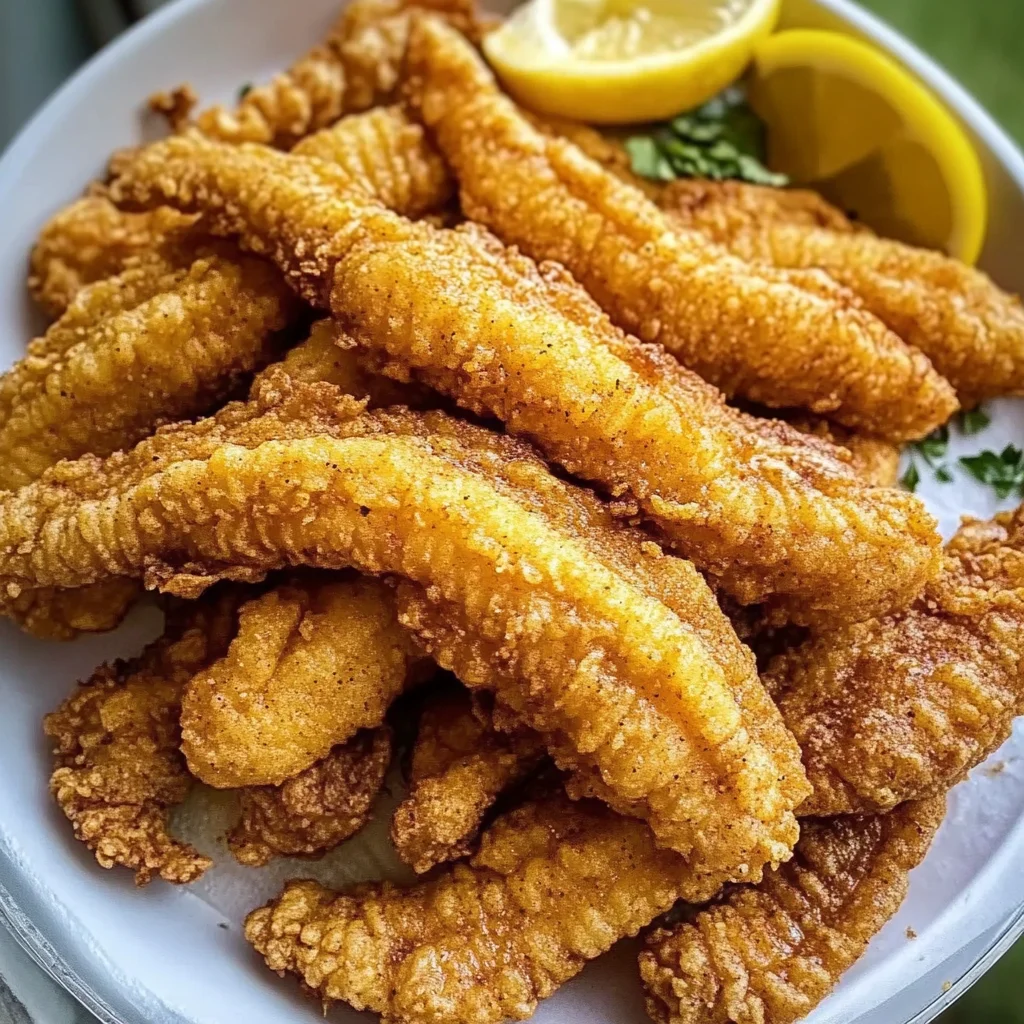
Ah, the irresistible siren’s call of Southern Fried Catfish! Imagine this: a plate arrives, steaming hot. Upon it rests a fillet, gleaming with a golden-brown, craggy crust that promises an earth-shattering crunch. A gentle squeeze of lemon releases a citrusy perfume that mingles with the warm, savory scent of cornmeal and spice. This isn’t just dinner; it’s a direct line to the heart of the American South, a culinary tradition steeped in history, community, and downright delicious flavor. Frankly, mastering this dish is a rite of passage for any home cook. Consequently, this ultimate guide will be your trusted companion, walking you through its rich history, the secrets to that perfect crispy coating, and the art of crafting the complete, iconic meal. So, roll up your sleeves—it’s time to fry up some magic.
Southern Fried Catfish: A Crispy, Golden Pillar of American Cuisine
Picture, if you will, the sound of a perfect fillet meeting bubbling oil. That initial fierce sizzle is the overture to a symphony of texture and taste. Firstly, there’s the audible, shatteringly crisp exterior, giving way to a interior that’s almost impossibly tender, flaky, and sweet. This, my friends, is the hallmark of expertly prepared Southern Fried Catfish. It’s a dish that transcends the simple act of eating; instead, it’s a vibrant celebration on a plate.
Furthermore, this iconic meal is far more than a random combination of fish and hot oil. Indeed, it stands as a crispy, golden pillar of American comfort food, deeply rooted in the culture and soul of the South. From bustling, family-owned “fish camps” in the Carolinas to upscale Creole restaurants in New Orleans, its presence is a constant and comforting promise of a meal done right. Whether it’s the centerpiece of a sprawling Friday night community fish fry or a simple weeknight supper served with quiet pride, its ability to bring people together is nothing short of remarkable.
Therefore, our journey won’t just hand you a recipe and send you on your way. On the contrary, we’re diving deep into the very soul of this beloved dish. We’ll explore its fascinating journey from humble riverbanks to dinner tables nationwide. Moreover, we’ll decode the science and the secrets behind that crave-worthy crust and that moist, flavorful fish. Ultimately, we’ll arm you with all the knowledge you need to confidently recreate this classic dish in your own kitchen, creating not just a meal, but a memorable experience.
More Than a Meal: The History and Heart of Fried Catfish
Humble Beginnings: From Riverbanks to Dinner Tables
Long before it became a menu staple, fried catfish was a cornerstone of survival and sustenance. Native American tribes living along the mighty Mississippi River and other Southern waterways were the first to prize the plentiful bottom-feeder. Eventually, European settlers adopted the practice, and thus, a simple, resourceful method of cooking became a regional tradition. For countless families, especially in rural areas, catching and frying catfish was an affordable way to put a hot, nutritious meal on the table. It was food that didn’t require fancy ingredients or complicated techniques—just a fresh catch, some cornmeal, and a hot pan of oil.
The Catfish Farming Revolution
The dish’s journey from regional specialty to national superstar is largely thanks to a pivotal shift in agriculture. Believe it or not, the widespread love for this dish is a relatively modern phenomenon! The commercial farming of U.S. Farm-Raised Catfish began to boom in the 1960s and 70s, particularly in the Mississippi Delta. This innovation was a complete game-changer. Suddenly, a consistent, mild-flavored, and readily available product could be supplied year-round to restaurants and supermarkets across the country. This reliability helped catapult the humble catfish from a Southern secret to an American classic.
A Cultural Staple: Fish Fries, Family, and Community
However, to only talk about the fish itself is to miss the point entirely. The true essence of Southern Fried Catfish is found in its power to gather people. The social tradition of the “fish fry” is woven into the fabric of Southern life. These events, often held in church basements, backyard pavilions, and community centers, are about far more than food. They are fundraisers, family reunions, and a way to strengthen community bonds. Heaping platters of crispy fish, surrounded by bowls of coleslaw and hush puppies, foster a spirit of sharing and togetherness. In this way, the dish is a powerful symbol of hospitality, comfort, and shared heritage.
Building Blocks of Flavor: Choosing Your Ingredients Wisely
The Star of the Show: Selecting the Perfect Catfish
Alright, let’s get down to the nitty-gritty: picking your fish. This is the most critical decision you’ll make! You’ll primarily choose between farm-raised and wild-caught. Farm-raised catfish is the most common and is renowned for its consistently mild, sweet flavor and firm, meaty texture. Its diet and environment are controlled, resulting in a very clean taste. On the other hand, wild-caught catfish can have a stronger, more pronounced “fishy” or sometimes earthy flavor, which some purists adore. For your first attempt, we highly recommend starting with high-quality U.S. Farm-Raised Catfish for its predictable and beginner-friendly profile.
The Marinade: The Power of Buttermilk
Now, for the secret weapon: the buttermilk bath. Soaking your catfish in buttermilk is a non-negotiable step for pros, and here’s why. The acidity in the buttermilk works wonders by gently breaking down proteins in the fish, which translates to an incredibly tender final product. Additionally, it effectively neutralizes any remaining trace of a “muddy” flavor, ensuring that the sweet, delicate taste of the fish shines through. For the best results, season your buttermilk with a good pinch of salt, black pepper, and a dash of hot sauce for a subtle kick that permeates the fillet.
The Breading: The Great Cornmeal vs. Flour Debate
This is where the iconic texture is born! The classic, authentic Southern breading uses fine or medium-ground cornmeal, often with a small amount of all-purpose flour mixed in to help adhesion. The cornmeal is what creates that distinct, gritty, satisfying crunch that defines the dish. Alternatively, some cooks prefer using all-purpose flour for a lighter, crispier coating that’s more similar to other fried fish. For the true experience, stick with cornmeal. Your seasoning mix is crucial here—a simple blend of paprika (for color and sweetness), garlic powder, onion powder, cayenne (for heat), salt, and black pepper will create that signature flavor.
Essential Tools for the Perfect Fry
The Ideal Vessel: Cast Iron Skillet
You can’t talk about Southern frying without paying homage to the mighty cast iron skillet. This heavyweight champion is the preferred tool for a multitude of reasons. Its incredible heat retention and ability to distribute heat evenly are second to none, which means no hot spots to burn your breading. Furthermore, a well-seasoned cast iron surface is naturally non-stick, making it easier to flip those delicate fillets. If you don’t have one, a heavy-bottomed Dutch oven or a dedicated countertop deep fryer will also do the trick beautifully.
The Right Oil for High Heat
Not all oils are created equal, especially when it comes to deep frying. You need an oil with a high smoke point—meaning it can get very hot without burning and smoking. My top recommendation is peanut oil. It has a neutral flavor that won’t compete with the fish, and its high smoke point makes it perfect for achieving a crisp, non-greasy crust. Canola oil and vegetable oil are also excellent, affordable, and widely available choices. Remember, the goal is to cook the fish quickly at a steady, high temperature, sealing the crust immediately.
Crucial Tools: Thermometers and Racks
Here are two tools that will elevate your results from “good” to “great”: a thermometer and a wire rack. First, guessing your oil temperature is a recipe for disaster. A deep-fry or candy thermometer is your best friend, allowing you to maintain that perfect 350-375°F (175-190°C) range. Secondly, forget draining on paper towels! While they sop up grease, they also trap steam, making the bottom of your beautifully crispy fish soggy. Instead, place a wire cooling rack over a sheet pan. This allows air to circulate all around the fillet, keeping every single inch of that crust perfectly crisp.
The Ultimate Southern Fried Catfish Recipe
Ready to create some magic? This step-by-step guide will walk you through the entire process for flawless fried catfish. Trust me, with a little preparation, it’s a breeze.
Step 1: Preparation and Marinating
Begin by patting your catfish fillets completely dry with paper towels. This helps the marinade stick. Next, in a shallow bowl, prepare your buttermilk bath. Add a generous teaspoon of salt, a half teaspoon of black pepper, and a tablespoon of your favorite hot sauce to the buttermilk, then give it a good whisk. Submerge the fillets in the mixture, ensuring they’re fully covered. Now, cover the bowl and let it rest in the refrigerator for at least 30 minutes. For even more flavor and tenderness, you can let it go for up to 4 hours.
Step 2: Crafting the Perfect Seasoned Breading
While the fish is marinating, it’s the perfect time to prepare your breading. In another shallow dish (a pie plate works wonderfully), whisk together one cup of fine yellow cornmeal and a quarter cup of all-purpose flour. Then, add your spices: one tablespoon of paprika, two teaspoons of garlic powder, two teaspoons of onion powder, one teaspoon of cayenne pepper (adjust to your heat preference), two teaspoons of salt, and one teaspoon of black pepper. Whisk everything together until it’s uniformly mixed. Honestly, give it a quick taste—the dry mix should taste delicious and well-seasoned on its own.
Step 3: The Dredging Dance
Remove your fillets from the buttermilk, allowing any excess to drip off. Then, one by one, dredge them thoroughly in the cornmeal mixture. Press down gently to make sure the breading adheres well on all sides. As you finish each piece, place it on a parchment-lined baking sheet. Here’s a pro tip: let the breaded fillets sit for about 10 minutes before frying. This allows the coating to hydrate fully from the residual buttermilk, which helps it form a solid crust that won’t fall off in the oil.
Step 4: Mastering the Fry
Pour your oil into the cast iron skillet to a depth of about 1.5 to 2 inches. Heat it over medium-high heat until it reaches a steady 375°F (190°C). Carefully lay a fillet into the hot oil, away from you to avoid splatter. Importantly, do not overcrowd the pan; fry in batches to maintain the temperature. Each fillet should take about 4-6 minutes per side, depending on thickness. You’re looking for a deep, golden brown color. The fish is done when it reaches an internal temperature of 145°F (63°C) and the flesh is opaque and flakes easily with a fork.
Step 5: Draining and Serving Immediately
Using tongs or a spider strainer, carefully lift the finished catfish from the oil. Let the excess oil drip away for a moment, then immediately transfer it to your prepared wire rack. This is the final, crucial step for ultimate crispiness. Serve it immediately, right off the rack, while it’s piping hot and at its absolute best.
The Full Experience: What to Serve with Fried Catfish
Classic Southern Sidekicks
Southern Fried Catfish is the star, but it needs a supporting cast to create the full, legendary meal. These sides are designed to complement its rich, crispy nature.
-
Hush Puppies: These deep-fried cornmeal balls are the quintessential companion. Their slightly sweet, oniony flavor is the perfect foil for the savory fish.
-
Creamy Coleslaw: You need something cool, crunchy, and tangy to cut through the richness. A classic, mayo-based coleslaw provides that refreshing contrast beautifully.
-
Collard Greens: Slowly simmered with a bit of smoked meat, these flavorful, hearty greens add a depth of savory goodness to the plate.
-
French Fries or Potato Salad: You can’t go wrong with these classic picnic sides. Both offer a starchy comfort that rounds out the meal perfectly.
Sauces and Dips for Dipping
While the fish is spectacular on its own, a great sauce can take it to the next level.
-
Tartar Sauce: This is the classic, creamy pairing. A homemade version with chopped pickles, lemon juice, and herbs is lightyears ahead of the store-bought stuff.
-
Remoulade Sauce: A Louisiana favorite! This zesty sauce is typically mayo-based but is kicked up with Creole mustard, paprika, horseradish, and herbs for a tangy, spicy punch.
-
Hot Sauce: A few dashes of a vinegar-based hot sauce like Crystal or Louisiana provides an instant hit of acid and heat that brightens every bite.
-
Lemon Wedges: Never, ever forget the lemon wedges. A quick squeeze of fresh lemon juice right before eating is absolutely non-negotiable. It lifts all the flavors and cuts the grease.
Expert Tips, Variations, and FAQs
Expert Tips for Guaranteed Success
-
Keep the Oil Hot: This is the golden rule. If the oil temperature drops, the fish will absorb oil and become greasy. Use your thermometer and adjust the heat between batches.
-
Fry in Batches: Overcrowding the pan is the number one mistake. It causes the temperature to plummet. Be patient for perfect results.
-
Season at Every Stage: Don’t be shy with salt and pepper. Season the buttermilk marinade AND the breading mix for fish that’s flavorful all the way through.
Delicious Variations to Try
Once you’ve mastered the classic, why not play around?
-
Blackened Catfish: Skip the breading altogether! Instead, coat the fillets in a spice blend heavy on paprika and cayenne, then sear in a screaming hot cast-iron skillet for a spicy, crusty alternative.
-
Air Fryer Catfish: For a lighter version, spray breaded fillets with oil and cook in an air fryer at 400°F (200°C) for about 10-12 minutes. The texture is different but still wonderfully crispy.
-
Cajun-Spiced Catfish: Add a tablespoon of your favorite Cajun or Creole seasoning blend to the cornmeal mix for an extra kick of Southern flavor.
Frequently Asked Questions (FAQs)
Why do you soak catfish in buttermilk?
The acidity in buttermilk performs two crucial functions. It tenderizes the fish proteins, resulting in a more delicate texture, and it neutralizes any potential earthy or “muddy” flavors, ensuring your catfish tastes clean and sweet.
What is the best oil for frying catfish?
You need an oil with a high smoke point. Peanut oil is an excellent choice due to its neutral taste and high smoke point. Alternatively, canola oil and vegetable oil are also great, affordable options that perform very well for deep frying.
How long does it take to fry catfish?
The time can vary based on the thickness of your fillets and the exact temperature of your oil. Generally, at a steady 375°F (190°C), it takes approximately 4-6 minutes per side. The best indicator is always color (golden brown) and an internal temperature of 145°F (63°C).
Can I bake catfish instead of frying it?
Absolutely! For a healthier oven-fried catfish option, place your breaded fillets on a wire rack set over a baking sheet. Lightly spray them with oil and bake in a preheated 425°F (220°C) oven for 15-20 minutes, or until crispy and cooked through.
Southern Fried Catfish
Description
Southern Fried Catfish
Ingredients
-
4–6 catfish fillets (fresh or thawed, patted dry)
-
2 cups buttermilk
-
2 cups cornmeal (yellow or white, finely ground)
-
½ cup all-purpose flour
-
1 ½ tsp garlic powder
-
1 ½ tsp onion powder
-
1 tsp smoked paprika (or regular)
-
½ tsp cayenne pepper (optional, for heat)
-
1 tsp salt
-
1 tsp black pepper
-
Vegetable oil (for frying)
-
Lemon wedges, for serving
Instructions
1. Marinate the Fish
-
Place catfish fillets in a shallow dish and cover with buttermilk.
-
Let soak for at least 30 minutes (up to overnight in the fridge) – this helps tenderize the fish and remove any “muddy” flavor.
2. Prepare the Coating
-
In a shallow dish, combine cornmeal, flour, garlic powder, onion powder, paprika, cayenne, salt, and black pepper.
-
Mix well.
3. Fry the Catfish
-
Heat about 2 inches of oil in a deep skillet or Dutch oven to 350°F (175°C).
-
Remove catfish from buttermilk, letting excess drip off.
-
Dredge each fillet in the seasoned cornmeal mixture, pressing lightly so it sticks.
-
Fry in batches for 4–6 minutes per side, depending on thickness, until golden brown and crispy.
-
Transfer to a wire rack or paper towel-lined plate to drain.
4. Serve
-
Serve hot with lemon wedges and classic sides like hush puppies, coleslaw, collard greens, or French fries.