
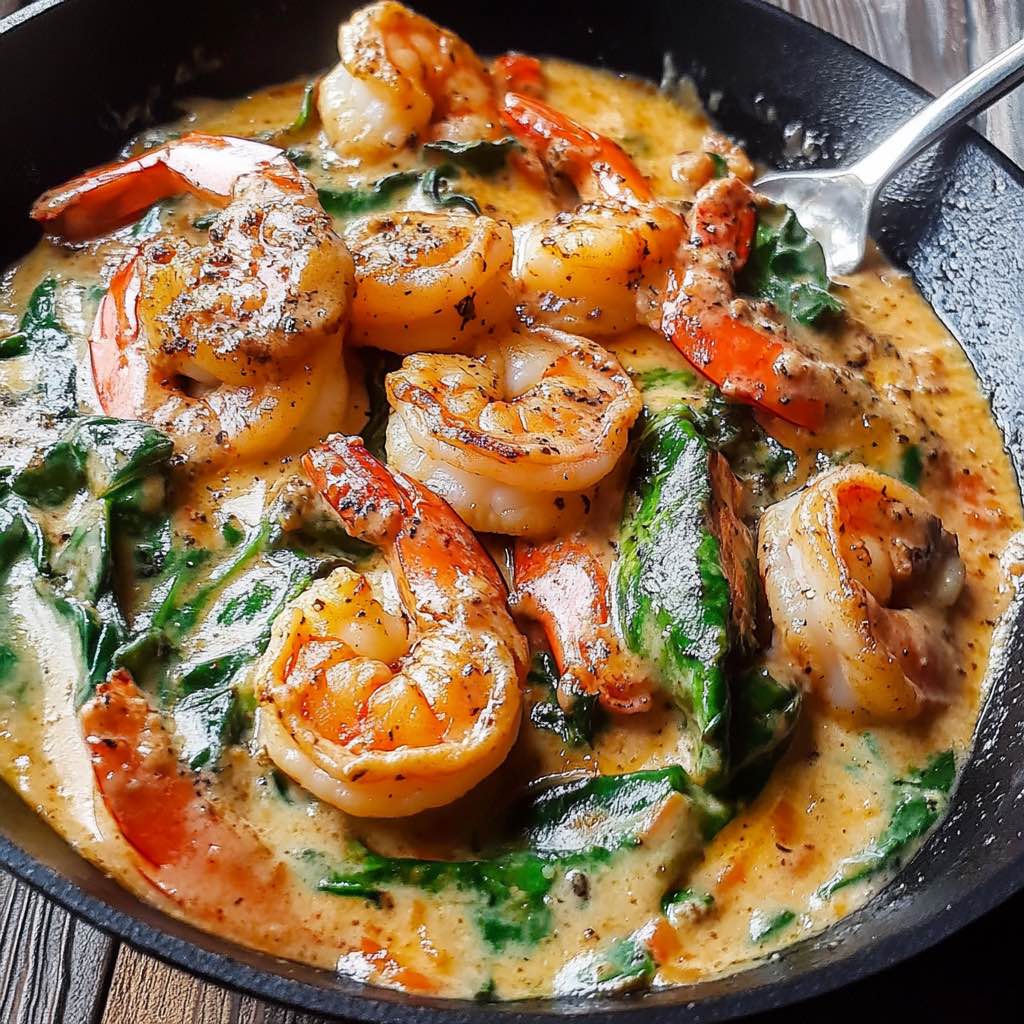
Creamy Shrimp with Spinach: The Ultimate Comfort Food Recipe
Introduction
Creamy shrimp with spinach represents the perfect harmony of seafood and vegetables in one delicious dish. This restaurant-quality meal combines tender, juicy shrimp with nutrient-rich spinach in a velvety, indulgent sauce. Moreover, this versatile recipe delivers exceptional flavor while providing a healthy dose of protein and iron.
Whether you’re planning a romantic dinner or need a quick weeknight meal, this dish satisfies both convenience and sophistication. Additionally, the combination of creamy textures and bold flavors makes it an instant crowd-pleaser. Therefore, mastering this recipe will elevate your home cooking repertoire significantly.
What Makes Creamy Shrimp with Spinach Special
The Perfect Protein and Vegetable Combination
Creamy shrimp with spinach offers an ideal balance of lean protein and nutrient-dense vegetables. Furthermore, shrimp provides high-quality protein with minimal calories. In addition, spinach contributes essential vitamins, minerals, and antioxidants to the dish.
The creamy sauce binds these ingredients together beautifully. However, the key lies in achieving the right consistency without overpowering the natural flavors. Therefore, careful attention to sauce preparation ensures restaurant-quality results every time.
Versatility for Any Occasion
This dish adapts effortlessly to various dining scenarios. For example, serve it over pasta for a hearty family dinner. Alternatively, present it with crusty bread for an elegant appetizer. Moreover, the recipe scales easily for both intimate meals and larger gatherings.
The cooking time remains relatively short, making it perfect for busy schedules. Additionally, most ingredients are readily available at standard grocery stores. Consequently, this becomes an accessible yet impressive meal option.
Essential Ingredients for Perfect Results
Premium Shrimp Selection
Fresh vs. Frozen Shrimp Considerations:
-
Fresh shrimp offers superior texture and flavor
-
Frozen shrimp provides convenience and longer shelf life
-
Medium to large shrimp work best for this recipe
-
Peeled and deveined shrimp saves preparation time
The quality of shrimp directly impacts the final dish. Therefore, choose shrimp that smell fresh and oceanic, not fishy. Additionally, look for firm texture and translucent appearance when purchasing fresh varieties.
Fresh Spinach Requirements
Spinach Selection Guidelines:
-
Baby spinach offers tender texture and mild flavor
-
Regular spinach provides more robust taste
-
Fresh leaves should appear vibrant green
-
Avoid wilted or yellowing spinach
Fresh spinach wilts quickly during cooking, so measure generously. Moreover, thorough washing removes grit and debris effectively. In addition, patting spinach dry prevents excess moisture in the final dish.
Cream and Dairy Components
Creating the Perfect Creamy Base:
-
Heavy cream provides richness and stability
-
Half-and-half offers lighter alternative
-
Cream cheese adds tanginess and thickness
-
Butter enhances flavor depth
The dairy components create the signature creamy texture. However, quality matters significantly for optimal results. Therefore, use fresh dairy products for the best flavor development.
Aromatics and Seasonings
Essential Flavor Builders:
-
Fresh garlic enhances savory depth
-
Onions provide sweetness and foundation
-
Fresh herbs brighten the overall taste
-
Quality seasonings elevate every component
Recommended Herb Combinations:
-
Fresh thyme and parsley
-
Basil and oregano
-
Chives and dill
-
Rosemary and sage (use sparingly)
Step-by-Step Cooking Instructions
Preparation Phase
Ingredient Prep Checklist:
-
Thaw frozen shrimp completely in refrigerator
-
Pat shrimp dry with paper towels
-
Season shrimp with salt and pepper
-
Wash and dry spinach thoroughly
-
Mince garlic and dice onions
-
Measure all dairy ingredients
Proper preparation ensures smooth cooking process. Additionally, having everything ready prevents overcooking delicate ingredients. Therefore, complete all prep work before starting the cooking process.
Cooking the Shrimp
Perfect Shrimp Technique:
-
Heat oil or butter in large skillet over medium-high heat
-
Add shrimp in single layer, avoid overcrowding
-
Cook 2-3 minutes per side until pink and opaque
-
Remove shrimp immediately to prevent overcooking
Shrimp cooks quickly and continues cooking from residual heat. Moreover, overcooked shrimp becomes tough and rubbery. Consequently, slightly undercooking initially allows for perfect final texture.
Building the Creamy Sauce
Sauce Development Steps:
-
Sauté aromatics in same pan with fond from shrimp
-
Add liquid components gradually while stirring
-
Simmer gently to prevent breaking or curdling
-
Season progressively and taste frequently
The fond left from cooking shrimp adds incredible flavor depth. Furthermore, gradual liquid addition prevents lumps or separation. In addition, gentle heat maintains smooth, velvety consistency.
Incorporating Spinach
Spinach Integration Method:
-
Add fresh spinach in batches to avoid overcrowding
-
Stir gently as spinach wilts quickly
-
Season lightly after spinach reduces in volume
-
Combine with reserved shrimp at final stage
Fresh spinach reduces dramatically when heated. Therefore, start with what seems like excessive amounts. Additionally, avoid overcooking spinach to maintain vibrant color and nutrients.
Nutritional Benefits and Health Advantages
Protein Powerhouse Benefits
Creamy shrimp with spinach delivers exceptional protein content per serving. Moreover, shrimp provides all essential amino acids necessary for muscle maintenance. Additionally, this complete protein supports metabolism and satiety effectively.
Protein Content Breakdown:
-
Large shrimp contains approximately 1 gram protein each
-
One serving provides 25-30 grams total protein
-
High biological value supports muscle synthesis
-
Low calorie density maximizes nutritional efficiency
Iron and Mineral Content
Spinach contributes significant iron content to this dish. Furthermore, combining spinach with vitamin C sources enhances iron absorption. Therefore, this meal supports healthy blood oxygen transport naturally.
Key Mineral Contributions:
-
Iron supports energy production and immunity
-
Potassium aids heart health and blood pressure regulation
-
Magnesium promotes bone health and muscle function
-
Selenium provides antioxidant protection
Vitamin and Antioxidant Benefits
Nutritional Advantages Include:
-
Vitamin A supports eye health and immunity
-
Folate aids cellular function and DNA synthesis
-
Vitamin K promotes bone health and blood clotting
-
Antioxidants combat cellular damage and inflammation
These nutrients work synergistically for optimal health benefits. Additionally, the combination provides both immediate satisfaction and long-term wellness support.
Recipe Variations and Customizations
Regional and Cultural Adaptations
Mediterranean Inspiration:
-
Add sun-dried tomatoes and olives
-
Include fresh basil and oregano
-
Incorporate lemon zest and juice
-
Use olive oil instead of butter
Mediterranean flavors complement shrimp and spinach beautifully. Moreover, these ingredients add complexity without overwhelming the base recipe. Therefore, this variation appeals to those seeking bold, bright flavors.
Asian-Inspired Version:
-
Include ginger and scallions
-
Add soy sauce or coconut milk
-
Incorporate sesame oil for finishing
-
Garnish with cilantro and lime
Asian flavors create an entirely different but equally delicious profile. Additionally, coconut milk provides dairy-free creamy alternative. Consequently, this adaptation suits various dietary preferences effectively.
Dietary Modification Options
Low-Carb Alternatives:
-
Serve over cauliflower rice or zucchini noodles
-
Use coconut cream instead of dairy
-
Increase vegetable content with bell peppers
-
Add avocado for healthy fats
Low-carb modifications maintain satisfaction while reducing carbohydrates significantly. Furthermore, these alternatives often increase nutrient density. Therefore, health-conscious diners appreciate these thoughtful adaptations.
Dairy-Free Solutions:
-
Substitute coconut cream for heavy cream
-
Use nutritional yeast for umami depth
-
Include cashew cream for richness
-
Add olive oil for flavor enhancement
Dairy-free versions accommodate lactose intolerance and vegan preferences. Moreover, plant-based alternatives often contribute unique flavors. Additionally, these substitutions can reduce overall calorie content.
Professional Cooking Tips and Techniques
Temperature Control Mastery
Critical Temperature Guidelines:
-
Medium-high heat for searing shrimp
-
Medium heat for sauce development
-
Low heat for final combining stage
-
Internal shrimp temperature: 120-145°F
Temperature control prevents overcooking and ensures proper texture development. Furthermore, adjusting heat throughout cooking stages optimizes each component. Therefore, mastering temperature yields consistently excellent results.
Timing and Coordination
Optimal Cooking Sequence:
-
Prepare all ingredients before starting
-
Cook shrimp first and set aside
-
Build sauce in same pan for flavor
-
Add spinach and wilt quickly
-
Return shrimp for final heating
Proper timing prevents overcooking while maximizing flavor development. Additionally, this sequence ensures each component reaches optimal doneness. Consequently, coordination skills improve with practice and attention.
Sauce Consistency Management
Achieving Perfect Thickness:
-
Reduce heat if sauce threatens to break
-
Add liquid gradually while stirring constantly
-
Use cornstarch slurry for thickening if needed
-
Finish with butter for glossy appearance
Sauce consistency directly impacts the final dish quality. Moreover, patience during sauce development prevents common problems. Therefore, gentle heat and gradual additions ensure success.
Flavor Balancing Techniques
Seasoning Strategy:
-
Salt enhances natural flavors without overpowering
-
Acid brightens and balances richness
-
Fresh herbs provide aromatic complexity
-
Black pepper adds gentle heat
Proper seasoning transforms good dishes into exceptional ones. Furthermore, tasting throughout cooking allows for adjustments. Additionally, final seasoning just before serving optimizes flavor impact.
Serving Suggestions and Pairings
Starch Accompaniments
Popular Serving Options:
-
Pasta: Linguine, fettuccine, or angel hair
-
Rice: Jasmine, basmati, or wild rice varieties
-
Bread: Crusty sourdough or garlic bread
-
Grains: Quinoa, farro, or barley
Each starch option provides different textures and flavors. Moreover, heartier grains add nutritional value and substance. Therefore, choose based on dietary preferences and occasion formality.
Vegetable Side Dishes
Complementary Vegetables:
-
Roasted asparagus with lemon
-
Sautéed mushrooms with herbs
-
Steamed broccoli with garlic
-
Grilled zucchini and bell peppers
Vegetable sides add color, nutrition, and textural variety. Additionally, they help balance the richness of the creamy sauce. Consequently, thoughtful vegetable pairings enhance the overall meal experience.
Beverage Pairings
Non-Alcoholic Options:
-
Sparkling water with lemon
-
Iced tea with fresh herbs
-
Fresh vegetable juices
-
Flavored seltzers
These beverages complement without competing with the dish’s flavors. Furthermore, they provide palate cleansing between bites. Therefore, appropriate beverages enhance overall dining satisfaction.
Storage and Reheating Guidelines
Proper Storage Methods
Refrigeration Best Practices:
-
Cool completely before refrigerating
-
Store in airtight containers
-
Use within 3-4 days for best quality
-
Label with preparation date
Proper storage maintains food safety and quality. Moreover, airtight containers prevent flavor absorption from other foods. Additionally, prompt refrigeration prevents bacterial growth effectively.
Reheating Techniques
Optimal Reheating Methods:
-
Stovetop: Gentle heat with occasional stirring
-
Microwave: 50% power in 30-second intervals
-
Oven: Low temperature with covered dish
-
Add liquid: If sauce appears too thick
Gentle reheating prevents overcooking the shrimp. Furthermore, adding small amounts of cream or broth restores proper consistency. Therefore, patience during reheating ensures quality results.
Freezing Considerations
Freezing Guidelines:
-
Cream-based sauces may separate when frozen
-
Shrimp texture can become rubbery after freezing
-
Consider freezing components separately
-
Use within 2-3 months for best quality
While freezing is possible, fresh consumption provides optimal texture and flavor. Moreover, cream sauces often require reconstituting after thawing. Consequently, prepare only quantities intended for immediate consumption.
Common Mistakes to Avoid
Overcooking Shrimp
Prevention Strategies:
-
Cook shrimp just until pink and opaque
-
Remove from heat immediately when done
-
Use timer to prevent distraction
-
Remember carryover cooking continues the process
Overcooked shrimp becomes tough and chewy, ruining the dish’s appeal. Furthermore, shrimp continues cooking from residual heat. Therefore, slight undercooking initially yields perfect final results.
Sauce Separation Issues
Avoiding Sauce Problems:
-
Use moderate heat throughout cooking
-
Add dairy components gradually
-
Stir constantly during sauce development
-
Avoid rapid temperature changes
Separated sauces appear curdled and unappetizing. Moreover, extreme heat causes proteins to coagulate rapidly. Additionally, gradual temperature changes maintain smooth, stable emulsions.
Spinach Overcooking
Maintaining Spinach Quality:
-
Add spinach at the very end
-
Use high heat for quick wilting
-
Avoid stirring excessively
-
Season after wilting completes
Overcooked spinach becomes mushy and loses vibrant color. Furthermore, excessive cooking destroys valuable nutrients. Therefore, brief cooking preserves both texture and nutritional value.
Seasoning Imbalances
Achieving Proper Balance:
-
Season gradually throughout cooking
-
Taste frequently and adjust accordingly
-
Consider salt content in all ingredients
-
Add acid to brighten heavy cream sauces
Proper seasoning develops layers of flavor complexity. Moreover, different ingredients contribute varying salt levels. Consequently, careful tasting prevents over-salting or under-seasoning.
Frequently Asked Questions
Can I use frozen spinach instead of fresh?
Fresh spinach provides superior texture and flavor for creamy shrimp with spinach. However, frozen spinach works as a substitute when thoroughly thawed and drained. Moreover, frozen spinach requires less cooking time since it’s already blanched. Therefore, add it directly to the hot sauce for quick heating.
What’s the best shrimp size for this recipe?
Medium to large shrimp (26-30 count per pound) work ideally for this dish. Additionally, larger shrimp provide substantial texture and visual appeal. Furthermore, they’re easier to handle during cooking and less likely to overcook. Consequently, invest in quality, properly sized shrimp for optimal results.
How can I make the sauce thicker?
Several methods effectively thicken the cream sauce. For example, simmer uncovered to reduce liquid content naturally. Alternatively, mix cornstarch with cold water and stir into the sauce. Moreover, cream cheese additions provide both thickness and tangy flavor. Therefore, choose the method that best suits your preferences.
Can this dish be made ahead of time?
Creamy shrimp with spinach tastes best when served immediately after preparation. However, you can prepare components separately in advance. Moreover, the sauce can be made earlier and reheated gently. Additionally, shrimp can be cooked and stored for quick final assembly. Consequently, strategic preparation allows for quicker final cooking.
What substitutes work for heavy cream?
Several alternatives provide creamy texture with different nutritional profiles. For instance, half-and-half creates lighter consistency with reduced calories. Additionally, coconut cream offers dairy-free richness for dietary restrictions. Moreover, Greek yogurt adds protein while maintaining creaminess. Therefore, choose substitutes based on dietary needs and flavor preferences.
Conclusion
Creamy shrimp with spinach delivers restaurant-quality results in your home kitchen with minimal effort and maximum flavor. This versatile dish combines premium protein with nutrient-rich vegetables in a luxurious, satisfying sauce. Moreover, the recipe adapts easily to various dietary preferences and occasions.
The key to success lies in proper technique, quality ingredients, and careful timing. Additionally, understanding temperature control and sauce development ensures consistently excellent results. Furthermore, this dish provides both immediate satisfaction and valuable nutritional benefits.
Whether you’re cooking for family dinner or entertaining guests, this creamy shrimp with spinach recipe delivers impressive results every time. Therefore, add this crowd-pleasing dish to your regular rotation for memorable meals that satisfy both taste and nutrition requirements.
Creamy Shrimp with Spinach
Description
Ingredients
For the shrimp:
-
1-1½ lbs large shrimp, peeled and deveined
-
2-3 tbsp olive oil or butter
-
Salt and pepper to taste
-
1 tsp Italian seasoning
-
1 tsp garlic powder
For the cream sauce:
-
2 tbsp butter
-
4-5 cloves garlic, minced
-
⅓ cup sun-dried tomatoes, chopped
-
1 tsp all-purpose flour (for thickening)
-
½ cup dry white wine (optional)
-
1 cup heavy cream, room temperature
-
½ cup Parmesan cheese, grated
-
2 cups fresh baby spinach
-
Fresh basil or parsley for garnish
Instructions
Prepare the shrimp:
-
Season shrimp with salt, pepper, Italian seasoning, and garlic powder.
-
Heat olive oil in a large skillet over medium-high heat. Cook shrimp for 2-3 minutes per side until pink and cooked through.
-
Remove shrimp and set aside on a plate, tented with foil to keep warm.
Make the cream sauce:
4. Reduce heat to medium and add butter to the same skillet.
5. Add garlic and sun-dried tomatoes, cooking for 1-2 minutes until fragrant.
6. Sprinkle flour over the mixture and stir to combine, cooking for 1 minute.
7. Pour in wine (if using) to deglaze the pan, scraping up any browned bits.
8. Add heavy cream gradually, stirring constantly. Simmer for 2-3 minutes until slightly thickened.
Finish the dish:
9. Stir in Parmesan cheese until melted and smooth.
10. Add spinach and cook for 2-3 minutes until wilted.
11. Return shrimp to the skillet and gently toss to coat with sauce. Heat through for 1-2 minutes.
12. Garnish with fresh basil or parsley and serve immediately.