
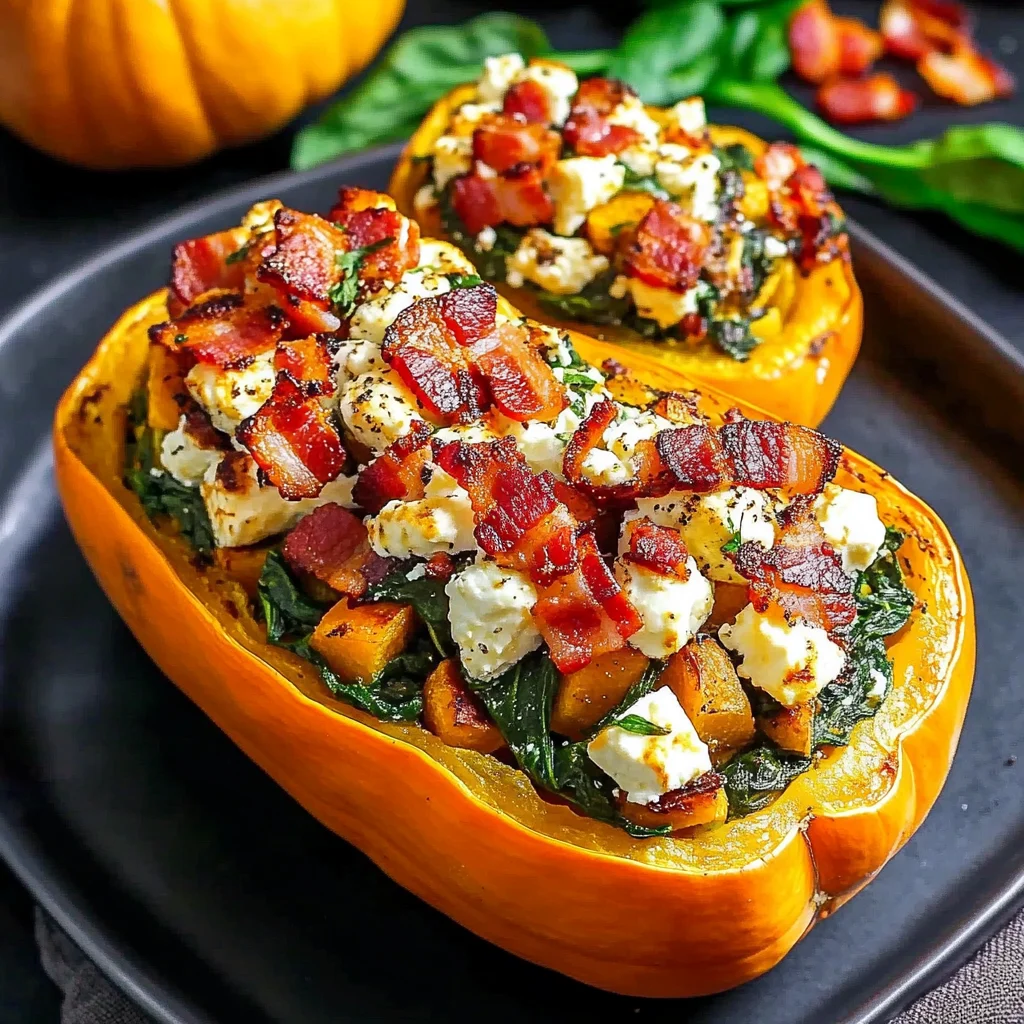
Stuffed Butternut Squash with Feta, Spinach & Bacon: A Perfect Fall Comfort Dish
Introduction
Nothing captures the essence of autumn quite like a perfectly roasted butternut squash filled with savory goodness. This stuffed butternut squash with feta, spinach & bacon recipe transforms a simple vegetable into an extraordinary centerpiece that’s both nutritious and incredibly satisfying. Moreover, this dish combines the natural sweetness of butternut squash with the salty richness of bacon and the creamy tang of feta cheese.
Furthermore, this recipe offers a complete meal in one beautiful presentation. The tender, caramelized squash serves as an edible bowl for a hearty filling packed with protein and vegetables. Additionally, the combination of textures and flavors creates a dining experience that feels both rustic and elegant.
Whether you’re planning a cozy family dinner or an impressive holiday spread, this stuffed butternut squash delivers on all fronts.
Why Stuffed Butternut Squash Makes the Perfect Fall Meal
Seasonal Availability and Freshness
Butternut squash reaches peak season during fall months, making it an ideal choice for autumn cooking. Consequently, you’ll find the best quality and prices during this time. Fresh butternut squash offers superior flavor and texture compared to off-season alternatives.
The natural sweetness of fall-harvested butternut squash pairs beautifully with savory ingredients. Additionally, the flesh becomes incredibly tender and creamy when roasted properly. This creates the perfect base for our flavorful stuffing mixture.
Nutritional Powerhouse
This stuffed butternut squash with feta, spinach & bacon provides exceptional nutritional value. First, butternut squash contains high levels of vitamin A, vitamin C, and fiber. Similarly, spinach contributes iron, folate, and additional vitamins.
The combination creates a well-balanced meal that supports overall health. Furthermore, the protein from bacon and feta cheese helps create lasting satisfaction. This means you’ll feel full and energized long after eating.
Visual Appeal and Presentation
Few dishes match the visual impact of a beautifully stuffed butternut squash. The golden-orange flesh creates a stunning contrast against the colorful filling. Moreover, serving individual squash halves creates an impressive presentation for guests.
This natural serving vessel eliminates the need for additional dishes. Consequently, cleanup becomes easier while maintaining an elegant appearance. The rustic yet refined look suits both casual and formal dining occasions.
Essential Ingredients for Success
Selecting the Perfect Butternut Squash
Choose medium-sized butternut squashes weighing 2-3 pounds each. Look for specimens with smooth, unblemished skin and a deep tan color. Additionally, the squash should feel heavy for its size, indicating good flesh density.
Avoid squashes with soft spots, cuts, or green patches. These signs indicate poor quality or improper storage. Furthermore, a good butternut squash should have a matte finish rather than a shiny appearance.
High-Quality Bacon Selection
For this stuffed butternut squash with feta, spinach & bacon, choose thick-cut bacon for better texture and flavor. Thick slices hold their shape better during cooking and provide satisfying bites throughout the dish.
Look for bacon with a good meat-to-fat ratio. Too much fat will create excess grease, while too little will result in dry, tough pieces. Additionally, consider using nitrate-free options for a cleaner flavor profile.
Fresh Spinach Versus Frozen
Fresh spinach provides superior texture and flavor in this recipe. However, frozen spinach works as an acceptable substitute when properly prepared. If using frozen spinach, thaw completely and squeeze out excess moisture thoroughly.
Fresh baby spinach cooks quickly and maintains better texture. Furthermore, it requires less preparation time and blends seamlessly with other ingredients. The mild flavor complements rather than competes with the bacon and feta.
Feta Cheese Considerations
Select high-quality feta cheese packed in brine for the best flavor and texture. Greek feta typically offers the most authentic taste and proper consistency. Additionally, block feta crumbles better than pre-crumbled varieties.
Avoid overly salty feta that might overpower the dish. Instead, look for creamy, tangy varieties that complement the sweet squash. Furthermore, good feta should have a clean, fresh aroma without any sour notes.
Step-by-Step Recipe Instructions
Ingredients List
For the Stuffed Butternut Squash:
-
2 medium butternut squashes (2-3 pounds each)
-
8 strips thick-cut bacon
-
4 cups fresh baby spinach
-
1 cup crumbled feta cheese
-
1 large onion, diced
-
3 cloves garlic, minced
-
1 cup cooked quinoa or rice
-
2 tablespoons olive oil
-
1 teaspoon dried thyme
-
1/2 teaspoon smoked paprika
-
Salt and black pepper to taste
-
1/4 cup chopped fresh parsley
Preparation Steps
Step 1: Prepare the Squash
First, preheat your oven to 400°F (200°C). Next, carefully cut each butternut squash in half lengthwise using a sharp chef’s knife. Then, scoop out all seeds and stringy pulp using a spoon or ice cream scoop.
Score the flesh in a crosshatch pattern, being careful not to pierce the skin. This technique helps the squash cook evenly and makes serving easier. Additionally, brush the cut surfaces with olive oil and season generously with salt and pepper.
Step 2: Initial Roasting
Place squash halves cut-side down on a baking sheet lined with parchment paper. Roast for 35-40 minutes until the flesh becomes tender when pierced with a fork. Meanwhile, prepare the filling ingredients.
The squash is ready when you can easily pierce the thickest part with minimal resistance. However, avoid overcooking, as the squash will continue cooking once stuffed. Remove from oven and let cool slightly before handling.
Step 3: Prepare the Filling
While the squash roasts, cook bacon in a large skillet over medium heat until crispy. Remove bacon to paper towels and crumble when cool. Reserve 2 tablespoons of bacon fat in the pan.
Add diced onion to the reserved bacon fat and cook until translucent, about 5 minutes. Then, add minced garlic and cook for another minute until fragrant. This creates the flavor base for our stuffing.
Step 4: Wilt the Spinach
Add fresh spinach to the skillet with onions and garlic. Cook, stirring frequently, until wilted completely, about 2-3 minutes. The spinach will reduce significantly in volume as it cooks.
Season the mixture with thyme, smoked paprika, salt, and pepper. Furthermore, taste and adjust seasonings as needed. The mixture should be well-seasoned but not overpowering.
Step 5: Combine Filling Ingredients
Remove the skillet from heat and stir in cooked quinoa or rice. Then, add crumbled bacon and half of the feta cheese. Mix gently to combine all ingredients evenly.
Taste the filling and adjust seasonings one final time. The mixture should be moist but not wet, with a good balance of flavors. Additionally, let the filling cool slightly before stuffing the squash.
Step 6: Stuff and Final Roasting
Carefully scoop out some flesh from each roasted squash half, creating deeper cavities for stuffing. Chop the removed flesh and fold it into the filling mixture for extra flavor and substance.
Divide the filling evenly among the four squash halves, mounding it slightly. Top with remaining feta cheese and return to the oven for 15-20 minutes until heated through and lightly golden.
Nutritional Benefits of This Wholesome Dish
Butternut Squash Nutrition
Butternut squash provides exceptional nutritional value in this stuffed butternut squash with feta, spinach & bacon recipe. One cup contains over 400% of the daily recommended vitamin A intake. Additionally, it offers significant amounts of vitamin C, potassium, and fiber.
The natural sugars in butternut squash provide sustainable energy without causing blood sugar spikes. Furthermore, the high fiber content promotes digestive health and helps maintain stable blood glucose levels.
Spinach Health Benefits
Fresh spinach contributes iron, folate, and vitamin K to this nutritious dish. These nutrients support healthy blood formation and bone strength. Moreover, spinach contains antioxidants that help protect cells from damage.
The iron in spinach becomes more bioavailable when paired with vitamin C-rich butternut squash. This combination enhances nutrient absorption and maximizes health benefits. Additionally, spinach provides lutein and zeaxanthin for eye health.
Protein and Calcium Sources
Bacon and feta cheese provide high-quality protein essential for muscle maintenance and satiety. Furthermore, feta cheese offers calcium and phosphorus for bone health. The protein content helps balance the carbohydrates from the squash and quinoa.
This balance creates a satisfying meal that maintains stable energy levels. Additionally, the combination of proteins and complex carbohydrates promotes long-lasting fullness and prevents overeating.
Whole Grain Benefits
Adding quinoa or brown rice increases the fiber and protein content significantly. These whole grains provide B vitamins and minerals that support energy metabolism. Furthermore, they add texture and substance to make the dish more filling.
Quinoa is a complete protein, containing all essential amino acids. This makes the stuffed butternut squash suitable for vegetarians when bacon is omitted or replaced with plant-based alternatives.
Preparation Tips and Techniques
Squash Selection and Storage
Choose butternut squashes that feel heavy and have hard, smooth skin without blemishes. Store whole squashes in a cool, dark place for up to three months. However, once cut, refrigerate and use within a week.
Properly stored butternut squash maintains its nutritional value and flavor over time. Additionally, buying in season ensures the best quality and price for your stuffed butternut squash with feta, spinach & bacon.
Safe Cutting Techniques
Cutting butternut squash requires sharp knives and careful technique. First, trim both ends to create stable surfaces. Then, cut through the neck section before tackling the bulbous bottom portion.
Use a vegetable peeler or knife to remove the tough skin after cutting. Furthermore, keep fingers away from the blade and work on a stable cutting board. These precautions prevent accidents and ensure even cuts.
Make-Ahead Options
This recipe offers excellent make-ahead possibilities for busy schedules. You can roast the squash halves up to two days in advance and refrigerate them. Similarly, prepare the filling mixture and store it separately.
Combine and stuff the squash just before the final baking step. This approach maintains the best texture while saving time on busy days. Additionally, the flavors often improve with time, making advance preparation beneficial.
Cooking Equipment Essentials
Use a large, rimmed baking sheet to prevent dripping and ensure even cooking. Additionally, have a sharp chef’s knife, sturdy cutting board, and ice cream scoop for easy preparation. A large skillet is essential for cooking the bacon and vegetables properly.
Consider using parchment paper or silicone mats to prevent sticking and simplify cleanup. Furthermore, having tongs or a large spoon helps handle the hot squash safely during preparation and serving.
Variations and Substitutions
Vegetarian Adaptations
Transform this stuffed butternut squash with feta, spinach & bacon into a vegetarian masterpiece by replacing bacon with roasted mushrooms or sun-dried tomatoes. Mushrooms provide umami richness, while sun-dried tomatoes add tangy complexity.
Additionally, consider using vegetarian bacon alternatives or omitting the smoky element entirely. The dish remains delicious with just the spinach, feta, and grain components. Furthermore, adding toasted nuts provides extra protein and crunch.
Dairy-Free Modifications
Replace feta cheese with dairy-free alternatives or nutritional yeast for similar flavor complexity. Cashew-based cheeses work particularly well in this application. Additionally, increase the seasoning to compensate for the reduced saltiness.
Consider adding extra herbs like fresh thyme or rosemary to enhance the flavor profile. Furthermore, a splash of lemon juice brightens the dish and adds acidity traditionally provided by cheese.
Grain Alternatives
While quinoa and rice work excellently, consider other whole grains for variety. Wild rice adds nuttiness and chewy texture, while bulgur wheat provides a heartier consistency. Additionally, cauliflower rice creates a lower-carb option.
Farro and barley offer different textures and flavors that complement the sweet squash beautifully. Furthermore, these ancient grains provide additional nutritional benefits and create more complex flavor profiles.
Protein Variations
Replace bacon with other proteins to suit different preferences and dietary needs. Turkey bacon offers a leaner alternative with similar smoky flavor. Additionally, chorizo provides Spanish-inspired spiciness and richness.
For plant-based options, consider seasoned lentils or chickpeas for protein and substance. Furthermore, crumbled tempeh seasoned with smoked paprika creates a bacon-like flavor and texture.
Serving Suggestions and Pairings
Complementary Side Dishes
This stuffed butternut squash with feta, spinach & bacon serves beautifully as a complete meal. However, simple sides enhance the overall dining experience. Consider a crisp green salad with apple slices and walnuts to complement the rich flavors.
Roasted Brussels sprouts or green beans provide additional vegetables and textural contrast. Additionally, a simple grain pilaf or wild rice stuffing makes the meal more substantial for larger appetites.
Seasonal Menu Integration
Incorporate this dish into fall and winter menus alongside other seasonal favorites. It pairs excellently with roasted turkey or ham for holiday celebrations. Furthermore, the colorful presentation makes it suitable for both casual and formal occasions.
Consider serving with cranberry sauce or apple chutney for additional fall flavors. These accompaniments provide sweet-tart contrasts that enhance the overall meal experience.
Beverage Pairings
Choose beverages that complement rather than compete with the rich, complex flavors. Sparkling water with lemon or herbs provides a refreshing contrast to the hearty dish. Additionally, herbal teas like chamomile or sage complement the autumn theme.
Presentation Ideas
Serve each stuffed squash half on individual plates for elegant presentation. Garnish with fresh herbs like parsley or thyme for color and aroma. Additionally, a drizzle of high-quality olive oil adds richness and visual appeal.
Consider serving family-style on a large platter for casual dining. Furthermore, providing small serving spoons allows guests to portion their preferred amounts while maintaining the attractive presentation.
Storage and Reheating Guidelines
Proper Storage Techniques
Store leftover stuffed butternut squash in the refrigerator for up to four days. Cover tightly with plastic wrap or store in airtight containers to maintain freshness and prevent odor absorption. Additionally, separate any unused filling to prevent sogginess.
Label containers with preparation dates to ensure food safety. Furthermore, store components separately when possible to maintain optimal texture upon reheating.
Effective Reheating Methods
Reheat individual portions in the microwave for 2-3 minutes, checking frequently to prevent overcooking. Alternatively, reheat in a 350°F (175°C) oven for 15-20 minutes until heated through. Cover with foil to prevent excessive browning.
For best results, let refrigerated portions come to room temperature before reheating. This ensures even heating throughout and prevents cold spots. Additionally, add a tablespoon of water or broth to prevent drying out.
Freezing Considerations
This stuffed butternut squash with feta, spinach & bacon can be frozen for up to three months. Wrap individual portions tightly in plastic wrap, then aluminum foil for extra protection. Label clearly with contents and date.
Thaw overnight in the refrigerator before reheating. The texture may change slightly after freezing, but the flavors remain excellent. Furthermore, consider freezing the filling separately for better texture retention.
Food Safety Guidelines
Always reheat leftovers to an internal temperature of 165°F (74°C) for food safety. Use a food thermometer to ensure proper heating, especially with dishes containing dairy and meat products. Additionally, never leave cooked food at room temperature for more than two hours.
Discard any portions that show signs of spoilage, including off odors or visible mold. Furthermore, trust your instincts – when in doubt, throw it out to prevent foodborne illness.
Frequently Asked Questions
How do I know when the butternut squash is perfectly cooked?
The butternut squash is ready when you can easily pierce the flesh with a fork with minimal resistance. Additionally, the edges should be lightly caramelized and golden brown. The flesh should be tender but still hold its shape for stuffing.
Can I prepare this stuffed butternut squash with feta, spinach & bacon ahead of time?
Yes, you can prepare most components in advance. Roast the squash halves and prepare the filling up to two days ahead. Store separately in the refrigerator, then assemble and bake just before serving for best results.
What’s the best way to cut butternut squash safely?
Start by trimming both ends to create stable surfaces. Cut through the narrow neck first, then tackle the bulbous bottom. Use a sharp knife and stable cutting board. Furthermore, consider microwaving the whole squash for 2-3 minutes to soften slightly before cutting.
How can I make this dish vegetarian?
Replace the bacon with roasted mushrooms, sun-dried tomatoes, or vegetarian bacon alternatives. The dish remains delicious and satisfying without the meat component. Additionally, consider adding extra herbs and seasonings to enhance the flavor profile.
What other grains work well in this recipe?
Many grains work excellently in this stuffed butternut squash recipe. Try wild rice, farro, bulgur wheat, or cauliflower rice for different textures and flavors. Each option provides unique nutritional benefits and taste experiences.
How do I prevent the squash from becoming too soft?
Avoid overcooking during the initial roasting phase. The squash should be tender but still hold its shape. Additionally, don’t scoop out too much flesh when creating cavities for stuffing. This maintains structural integrity during final baking.
Can I use frozen spinach instead of fresh?
Yes, but thaw completely and squeeze out excess moisture thoroughly. Frozen spinach can make the filling watery if not properly drained. Fresh spinach provides better texture and flavor, but frozen works as an acceptable substitute.
What size butternut squash should I buy?
Choose medium-sized squashes weighing 2-3 pounds each for best results. This size provides adequate cavity space for stuffing while ensuring even cooking. Additionally, medium squashes are easier to handle and serve than larger varieties.
Conclusion
This stuffed butternut squash with feta, spinach & bacon recipe represents the perfect fusion of seasonal ingredients and comfort food satisfaction. The natural sweetness of roasted butternut squash creates an ideal canvas for the savory filling of bacon, tangy feta, and nutritious spinach. Moreover, this dish delivers exceptional nutritional value while providing a visually stunning presentation that impresses guests and family alike.
The versatility of this recipe allows for numerous adaptations to suit different dietary preferences and restrictions. Whether you choose to make it vegetarian, dairy-free, or experiment with different grains and proteins, the fundamental concept remains sound and delicious. Additionally, the make-ahead friendly nature makes it perfect for busy schedules and holiday planning.
Furthermore, the combination of textures and flavors creates a complete meal that satisfies both comfort food cravings and nutritional needs. The protein from bacon and feta, combined with the complex carbohydrates from butternut squash and quinoa, provides sustained energy and lasting satisfaction.
Ready to create this incredible stuffed butternut squash with feta, spinach & bacon for your next family dinner or special occasion? Start by selecting the perfect butternut squashes at your local market, and don’t forget to gather all the quality ingredients needed to make this dish truly exceptional. Your taste buds will thank you for this delightful autumn creation!
Stuffed Butternut Squash with Feta, Spinach & Bacon
Description
Stuffed Butternut Squash with Feta, Spinach & Bacon
Ingredients
Butternut Squash:
-
2 medium butternut squash
-
2 tablespoons olive oil
-
¼ teaspoon salt
-
¼ teaspoon black pepper, freshly ground
Spinach, Bacon & Feta Filling:
-
1 tablespoon olive oil
-
10 oz fresh spinach, chopped
-
¼ teaspoon smoked paprika
-
¼ teaspoon chili powder
-
6 oz feta cheese, crumbled
-
8 strips bacon, cooked and chopped
Garnish:
-
Fresh herbs (rosemary, thyme)
Instructions
Prepare the Squash:
-
Preheat oven to 400°F
-
Cut butternut squash in half lengthwise and scoop out all seeds
-
Place squash halves cut side up on a parchment-lined baking sheet
-
Drizzle with olive oil and season with salt and pepper
-
Roast for 30-40 minutes until fork-tender
Make the Filling:
6. Cook bacon until crispy, then chop and set aside
7. Heat 1 tablespoon olive oil in a skillet over medium heat
8. Add chopped spinach and cook until wilted
9. Season with smoked paprika and chili powder
10. Remove from heat and stir in crumbled feta cheese and chopped bacon
Stuff the Squash:
11. Remove roasted squash from oven and let cool slightly
12. Using a spoon, scoop out the flesh leaving about a 1-inch border along sides and bottom
13. Add the scooped-out squash flesh back into the cavities
14. Divide the feta, spinach, and bacon mixture among the 4 halves
15. Top with remaining chopped bacon
16. Return to oven and bake for 10 more minutes at 400°F
17. Garnish with fresh herbs before serving