
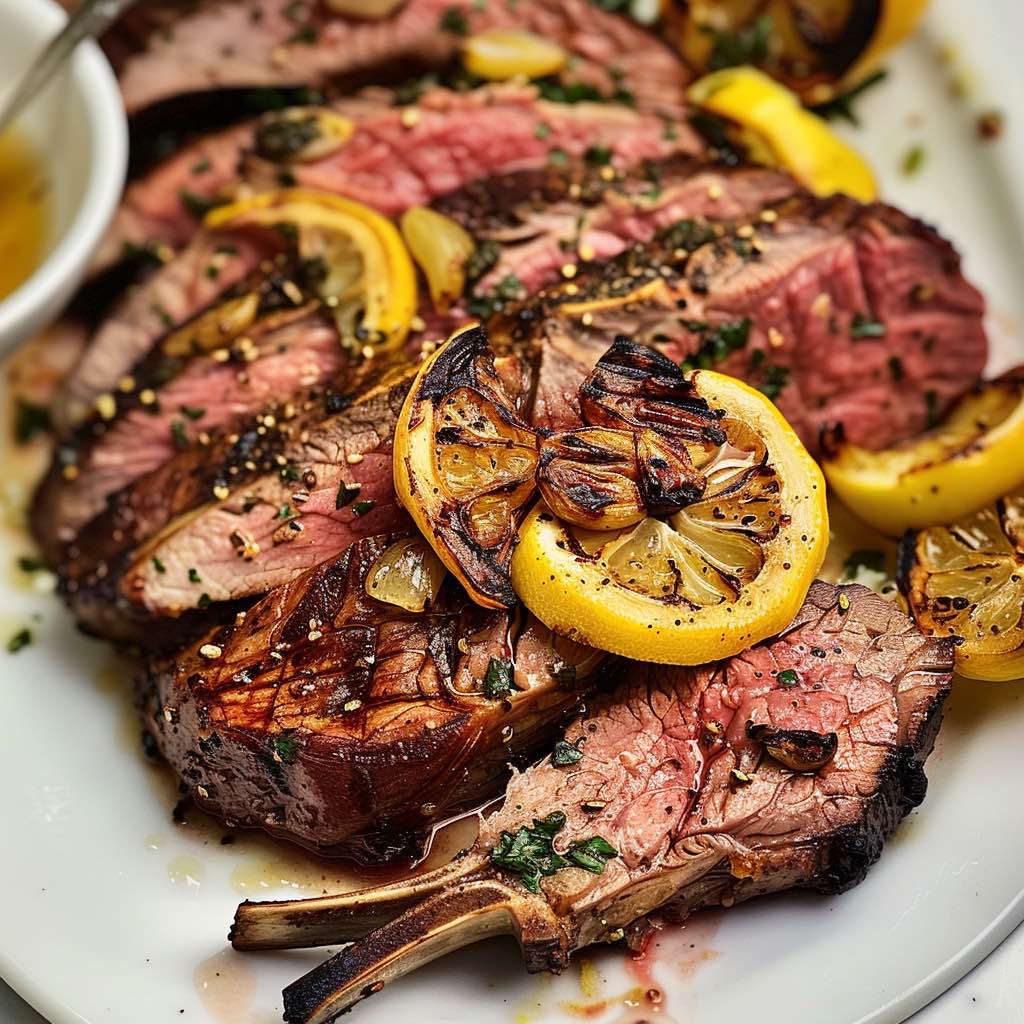
Grilled Leg of Lamb With Garlic and Lemon
Introduction
Grilled leg of lamb with garlic and lemon transforms any outdoor gathering into a memorable feast. This show-stopping centerpiece combines tender meat with bright citrus notes and aromatic garlic. The smoky char from the grill enhances the natural flavors of lamb perfectly.
Moreover, this Mediterranean-inspired dish requires minimal ingredients yet delivers restaurant-quality results. Whether you’re hosting a summer barbecue or celebrating a special occasion, this recipe impresses every time. The combination of fresh lemon juice, garlic, and herbs creates a marinade that penetrates deep into the meat. Best of all, grilling leg of lamb is simpler than most people think.
What Makes Grilled Leg of Lamb Special
Lamb offers a distinctive flavor profile that stands apart from beef or pork. The meat features natural richness that pairs beautifully with Mediterranean seasonings. Furthermore, leg of lamb provides an impressive presentation for entertaining guests.
The grilling process creates a delicious crust while keeping the interior juicy and tender. Lamb’s natural fat content helps prevent drying during cooking. Additionally, the garlic and lemon marinade balances the meat’s richness with bright, fresh flavors.
This dish works wonderfully for various occasions. From casual family dinners to elegant holiday meals, grilled leg of lamb adapts to any setting. The aromatic smoke from the grill adds another layer of complexity to the finished dish.
Health Benefits of Lamb
Lamb provides excellent nutritional value beyond its amazing taste. The meat contains high-quality protein essential for muscle maintenance and growth. It also supplies important vitamins and minerals including B12, zinc, and iron.
Grass-fed lamb offers additional omega-3 fatty acids compared to grain-fed options. These healthy fats support heart health and reduce inflammation.
Choosing the Right Cut of Lamb
Selecting quality lamb makes a significant difference in your final results. Look for meat with bright red color and white, creamy fat. Avoid lamb with brown or grayish tones.
Bone-In vs. Boneless
Bone-in leg of lamb typically weighs 7-9 pounds. The bone adds flavor during cooking and helps retain moisture. However, it requires longer cooking time and more careful temperature monitoring.
Boneless leg of lamb offers easier carving and more consistent cooking. These cuts usually weigh 4-6 pounds and cook faster. Many butchers butterfly boneless legs for even grilling.
Where to Buy Quality Lamb
Purchase lamb from reputable butchers or farmers markets when possible. Ask about the lamb’s origin and diet. Local farms often provide fresher options than supermarket alternatives.
Check out our guide on [selecting quality meats] for more detailed information.
Essential Ingredients for Garlic and Lemon Marinade
The marinade defines the flavor profile of grilled leg of lamb with garlic and lemon. Simple, fresh ingredients work best for this recipe.
Core Marinade Components
-
Fresh lemon juice (1/2 cup)
-
Lemon zest (from 2 lemons)
-
Garlic cloves (8-10, minced)
-
Extra virgin olive oil (3/4 cup)
-
Fresh rosemary (3 tablespoons, chopped)
-
Fresh thyme (2 tablespoons, chopped)
-
Sea salt (2 tablespoons)
-
Black pepper (1 tablespoon, freshly ground)
-
Dijon mustard (2 tablespoons)
Optional Flavor Enhancers
Consider adding these ingredients for variation:
-
Fresh oregano
-
Ground cumin
-
Smoked paprika
-
Crushed red pepper flakes
-
Fresh mint leaves
The beauty of this marinade lies in its simplicity. Each ingredient serves a specific purpose in creating balanced flavors.
Step-by-Step Preparation Guide
Proper preparation ensures your grilled leg of lamb turns out perfectly every time. Follow these detailed steps for best results.
Preparing the Lamb
First, remove the lamb from refrigeration 30-60 minutes before marinating. This allows the meat to reach room temperature. Pat the surface completely dry with paper towels.
Trim excess fat from the exterior, leaving about 1/4 inch. Too much fat causes flare-ups on the grill. However, some fat adds flavor and moisture during cooking.
Score the meat in a crosshatch pattern about 1/4 inch deep. This allows the marinade to penetrate better. Make cuts about 1 inch apart across the entire surface.
Creating the Marinade
Combine all marinade ingredients in a large bowl. Whisk vigorously until the mixture emulsifies. The olive oil should blend smoothly with the lemon juice.
Alternatively, use a food processor for smoother consistency. Pulse the garlic and herbs first, then add liquids gradually. This method creates a more uniform marinade.
Taste the marinade before applying it to the lamb. Adjust seasonings as needed. The flavor should be bold since much of it will drip off during grilling.
Applying the Marinade
Place the lamb in a large, non-reactive dish or heavy-duty zip-top bag. Pour the marinade over the meat, ensuring complete coverage. Massage the marinade into the scored cuts.
Seal the container or bag, removing as much air as possible. Refrigerate for at least 4 hours, preferably overnight. Turn the lamb every few hours for even distribution.
Marinating Techniques for Maximum Flavor
The marinating process significantly impacts the final taste of grilled leg of lamb with garlic and lemon. Understanding proper techniques ensures optimal results.
Ideal Marinating Time
Minimum marinating time should be 4 hours for adequate flavor penetration. However, 12-24 hours produces superior results. The acidic lemon juice helps tenderize the meat over time.
Never marinate longer than 48 hours. Excessive marinating time can break down meat fibers too much. This creates mushy texture rather than tender meat.
Temperature Considerations
Always marinate lamb in the refrigerator, never at room temperature. Bacteria multiply rapidly in the temperature danger zone (40-140°F). Food safety should always come first.
Remove the lamb from refrigeration 30-60 minutes before grilling. This prevents temperature shock when the meat hits the hot grill. Room temperature meat cooks more evenly throughout.
Marinade Safety Tips
Never reuse marinade that contacted raw lamb unless you boil it first. Raw meat juices contaminate the liquid with bacteria. If you want basting liquid, reserve some marinade before adding the lamb.
Discard used marinade properly after removing the lamb. The acidic nature doesn’t kill all bacteria present. When in doubt, throw it out.
Grilling Methods and Temperature Control
Mastering grill technique separates good grilled leg of lamb from exceptional results. Temperature control remains the most critical factor.
Direct vs. Indirect Grilling
Large cuts like leg of lamb benefit from combination grilling methods. Start with direct high heat to sear the exterior. This creates flavorful crust and appealing grill marks.
After searing, move the lamb to indirect heat for even cooking. This prevents burning while allowing the interior to reach proper temperature. The two-zone method works perfectly for this purpose.
Setting Up Your Grill
For gas grills, preheat all burners to high for 15 minutes. Then turn off burners on one side, leaving the other side at medium-high heat. Place a drip pan under the indirect zone.
For charcoal grills, arrange hot coals on one side only. Leave the other side empty for indirect cooking. Add a drip pan filled with water under the indirect zone. This catches drippings and adds moisture.
Temperature Guidelines
Preheat your grill to 450-500°F for initial searing. Sear the lamb 4-5 minutes per side over direct heat. This develops beautiful caramelization and locks in juices.
After searing, reduce temperature to 325-350°F for indirect cooking. Maintain consistent temperature throughout the remaining cooking time. Use a reliable grill thermometer for accuracy.
Cooking Times
Boneless leg of lamb typically requires 15-20 minutes per pound. Bone-in cuts need slightly longer, about 20-25 minutes per pound. However, internal temperature matters more than time.
Use an instant-read thermometer to check doneness accurately. Insert it into the thickest part, avoiding fat and bone. Different preferences require different target temperatures.
How to Tell When Lamb Is Done
Achieving perfect doneness ensures your grilled leg of lamb with garlic and lemon tastes amazing. Internal temperature provides the most reliable indicator.
Temperature Chart for Lamb
-
Rare: 120-125°F
-
Medium-rare: 130-135°F
-
Medium: 135-145°F
-
Medium-well: 145-155°F
-
Well-done: 155°F and above
Most lamb enthusiasts prefer medium-rare to medium doneness. This preserves the meat’s tenderness and natural flavor. Overcooking creates tough, dry texture.
Visual Cues
Besides temperature, observe the meat’s appearance. Juices should run clear or slightly pink for medium doneness. Red juices indicate rare to medium-rare.
The exterior should display dark brown to slightly charred areas. These caramelized sections add complex flavor. However, black areas indicate burning rather than proper charring.
Touch Test Method
Experienced cooks often use the touch test for doneness. Press the meat gently with your finger. Rare meat feels soft and squishy. Medium-rare offers slight resistance with some give.
Medium feels firmer with less give. Well-done meat feels very firm with minimal give. This method requires practice but provides quick assessment.
Resting and Carving Your Leg of Lamb
Proper resting and carving techniques preserve juices and ensure tender slices. Never skip this crucial step.
Why Resting Matters
Resting allows meat fibers to relax and reabsorb juices. During cooking, heat pushes moisture toward the center. Resting redistributes these juices throughout the meat.
Transfer the lamb to a cutting board immediately after grilling. Tent loosely with aluminum foil to retain heat. Rest for 15-20 minutes before carving.
Carving Technique
For boneless leg of lamb, identify the grain direction first. The grain refers to muscle fiber alignment. Always slice against the grain for maximum tenderness.
Use a sharp carving knife for clean cuts. Make slices about 1/4 to 1/2 inch thick. Thinner slices work better for sandwiches, while thicker cuts suit plated presentations.
For bone-in legs, carve around the bone carefully. Remove large sections first, then slice them separately. Save the bone for making flavorful stock later.
Serving Suggestions and Side Dishes
Grilled leg of lamb with garlic and lemon pairs wonderfully with various accompaniments. Choose sides that complement rather than compete with the main dish.
Classic Side Dishes
Roasted vegetables bring out the Mediterranean character of this dish. Try these combinations:
-
Roasted potatoes with rosemary
-
Grilled asparagus with lemon
-
Roasted bell peppers and zucchini
-
Sautéed green beans with garlic
-
Grilled eggplant with herbs
Grain-Based Sides
Whole grains add substance and nutritional value to your meal:
-
Couscous pilaf with dried fruits
-
Quinoa tabbouleh
-
Rice pilaf with toasted almonds
-
Farro salad with fresh vegetables
-
Pearl couscous with herbs
Fresh Salads
Light, crisp salads balance the richness of lamb beautifully:
-
Greek salad with feta and olives
-
Arugula salad with lemon vinaigrette
-
Tomato and cucumber salad
-
Mixed greens with balsamic dressing
-
Fattoush salad with pita chips
Sauces and Condiments
Enhance your lamb with these flavorful additions:
-
Tzatziki sauce with cucumber and dill
-
Mint yogurt sauce
-
Chimichurri sauce
-
Lemon tahini dressing
-
Harissa paste
Tips for Perfect Results Every Time
These expert tips ensure your grilled leg of lamb with garlic and lemon exceeds expectations consistently.
Before Grilling
Always bring meat to room temperature before grilling. Cold meat cooks unevenly and takes longer. Plan for 30-60 minutes of tempering time.
Pat the lamb dry before placing on the grill. Excess marinade causes flare-ups and prevents proper searing. Reserve some marinade for basting if desired.
During Grilling
Monitor grill temperature closely throughout cooking. Fluctuations affect cooking time and final results. Adjust vents or burners as needed to maintain consistency.
Avoid flipping the lamb too frequently. Let each side develop proper crust before turning. Generally, flip only once during direct heat searing.
Use tongs rather than forks for turning. Forks pierce the meat and release precious juices. Tongs provide better grip without damaging the surface.
After Grilling
Let the lamb rest adequately before carving. Rushing this step results in dry, less flavorful meat. The internal temperature will rise 5-10°F during resting.
Save pan drippings for making sauce or gravy. These concentrated juices add incredible flavor to accompaniments. Skim excess fat before using.
Storage and Leftover Ideas
Properly stored leftovers extend the enjoyment of your grilled leg of lamb with garlic and lemon. Follow food safety guidelines carefully.
Proper Storage Methods
Cool leftover lamb to room temperature within 2 hours of cooking. Bacteria multiply rapidly in warm conditions. Never leave cooked meat out longer than 2 hours.
Store lamb in airtight containers in the refrigerator. Properly stored lamb keeps 3-4 days safely. Label containers with the date for easy tracking.
For longer storage, freeze leftover lamb in portions. Wrap tightly in plastic wrap, then aluminum foil. Frozen lamb maintains quality for 2-3 months.
Creative Leftover Recipes
Transform leftover lamb into delicious new meals:
-
Lamb gyros with tzatziki and vegetables
-
Lamb fried rice with vegetables
-
Lamb shepherd’s pie with mashed potatoes
-
Lamb soup with vegetables and barley
-
Lamb tacos with fresh salsa
-
Lamb pasta with tomato sauce
-
Lamb sandwiches with hummus and greens
Reheating Guidelines
Reheat lamb gently to prevent drying. Use low oven temperature (250-275°F) until warmed through. Add a splash of broth to maintain moisture.
Microwave reheating works for quick meals. Cover the lamb and use 50% power. Heat in short intervals, checking frequently to avoid overcooking.
Nutritional Benefits of Lamb
Understanding the nutritional profile of grilled leg of lamb with garlic and lemon helps you make informed dietary choices.
Protein Content
A 3-ounce serving of lamb provides approximately 25 grams of protein. This high-quality protein contains all essential amino acids. Protein supports muscle growth, repair, and maintenance.
Lamb protein has high bioavailability, meaning your body absorbs it efficiently. This makes lamb an excellent choice for active individuals and athletes.
Essential Vitamins and Minerals
Lamb stands out as an excellent source of several key nutrients:
-
Vitamin B12: Supports nerve function and red blood cell formation
-
Zinc: Essential for immune function and wound healing
-
Iron: Prevents anemia and supports oxygen transport
-
Selenium: Acts as an antioxidant and supports thyroid function
-
Niacin: Supports metabolism and energy production
Fat Profile
Lamb contains both saturated and unsaturated fats. Grass-fed lamb offers better fat profiles than grain-fed options. It provides more omega-3 fatty acids and CLA.
The fat in lamb adds flavor and helps with nutrient absorption. However, trimming visible fat reduces overall calorie and fat content. Balance fat intake with your dietary goals.
Common Mistakes to Avoid
Learning from common errors helps you achieve perfect grilled leg of lamb with garlic and lemon consistently.
Overcooking the Meat
Overcooking represents the most common mistake with lamb. Many people fear undercooking and compensate by cooking too long. This creates tough, dry texture.
Use a reliable meat thermometer rather than guessing. Remove lamb when it reaches 5°F below your target temperature. Carryover cooking completes the process during resting.
Insufficient Marinating Time
Rushing the marinating process reduces flavor significantly. The marinade needs time to penetrate the meat fibers. Plan ahead and allow at least 4 hours, preferably overnight.
However, avoid over-marinating beyond 48 hours. Excessive acid exposure breaks down proteins too much. This creates mushy rather than tender texture.
Skipping the Resting Period
Cutting into lamb immediately after grilling releases all the juices. These juices end up on the cutting board instead of in the meat. Always rest lamb for 15-20 minutes minimum.
Cover loosely during resting to retain heat without steaming. Tight covering creates condensation that softens the crust. Loose foil tenting works perfectly.
Poor Temperature Control
Inconsistent grill temperature causes uneven cooking. The exterior may char while the interior remains undercooked. Monitor and adjust temperature throughout the cooking process.
Use a two-zone setup for better control. Sear over direct heat, then finish over indirect heat. This prevents burning while ensuring proper doneness throughout.
Not Scoring the Meat
Failing to score the lamb reduces marinade penetration. The crosshatch pattern allows flavors to reach deeper into the meat. Score about 1/4 inch deep in 1-inch intervals.
Additionally, scoring helps render fat during cooking. This prevents excessive greasiness in the finished dish. Take time for this simple but important step.
Frequently Asked Questions
How long should I marinate leg of lamb?
Marinate leg of lamb for at least 4 hours, though 12-24 hours produces optimal results. The acidic lemon juice and enzymes in garlic need time to tenderize and flavor the meat. Never marinate longer than 48 hours, as excessive marinating time can create mushy texture.
What temperature should grilled leg of lamb reach?
For medium-rare, cook lamb to 130-135°F internal temperature. Medium doneness requires 135-145°F. Remove the lamb from heat when it’s 5°F below your target temperature. The meat continues cooking during the resting period, reaching the perfect final temperature.
Can I prepare the marinade in advance?
Yes, prepare the marinade up to 3 days ahead and store it in the refrigerator. Keep it in an airtight container until ready to use. This saves time on cooking day and allows flavors to meld. Always reserve some clean marinade if you want basting liquid.
Should I remove the lamb from the marinade before grilling?
Remove excess marinade by scraping gently with a spoon or spatula. Pat the surface lightly with paper towels. Too much liquid marinade causes excessive flare-ups and prevents proper searing. However, don’t rinse the lamb completely, as this removes flavor.
How do I prevent the garlic from burning?
Mix minced garlic into the marinade rather than placing large pieces directly on the meat. Additionally, the indirect cooking method prevents burning after initial searing. If you notice garlic beginning to char, move the lamb to a cooler zone immediately.
What’s the best way to check lamb doneness without a thermometer?
The touch test provides a rough estimate of doneness. Press the meat gently with your finger. Soft and squishy indicates rare. Slight resistance suggests medium-rare. Firmer texture means medium to well-done. However, a meat thermometer provides much more accurate results.
Can I cook leg of lamb on a gas grill?
Absolutely! Gas grills work perfectly for grilled leg of lamb with garlic and lemon. Set up a two-zone cooking area by turning off burners on one side. Preheat thoroughly, sear over direct heat, then move to indirect heat to finish cooking. Temperature control is often easier with gas than charcoal.
How do I know when to flip the lamb?
Wait until the lamb releases easily from the grill grates. If it sticks, it hasn’t developed proper crust yet. Generally, sear each side for 4-5 minutes over direct heat. After moving to indirect heat, minimize flipping to maintain even cooking.
Conclusion
Grilled leg of lamb with garlic and lemon transforms ordinary meals into extraordinary culinary experiences. This Mediterranean-inspired dish combines simple ingredients with straightforward techniques for impressive results. The bright acidity of fresh lemon balances perfectly with aromatic garlic and tender lamb.
Success with this recipe depends on proper preparation, careful temperature control, and adequate resting time. Choose quality lamb, marinate thoroughly, and monitor internal temperature closely. These fundamental steps ensure juicy, flavorful meat every time.
Whether you’re grilling for a special celebration or casual weekend dinner, this recipe delivers consistent excellence. The versatility of leftover lamb extends your investment across multiple meals. From sandwiches to salads, the possibilities are endless.
Master these techniques and grilled leg of lamb with garlic and lemon will become a regular feature in your cooking repertoire. The combination of smoky char, zesty citrus, and savory garlic creates unforgettable flavors that keep guests coming back for more.
Grilled Leg of Lamb With Garlic and Lemon
Description
Grilled Leg of Lamb With Garlic and Lemon
Ingredients
For the Lamb:
-
1 boneless leg of lamb (3-5 pounds), butterflied to 2-inch thickness
-
2 teaspoons kosher salt
-
1/2 teaspoon freshly ground black pepper
For the Marinade/Rub:
-
1/3 cup extra virgin olive oil
-
8-10 garlic cloves, finely chopped or crushed
-
2 lemons, zested and juiced (about 1/4 cup juice)
-
3 tablespoons fresh rosemary leaves, chopped
-
3 tablespoons fresh thyme leaves, chopped
-
2 tablespoons fresh parsley, chopped
-
1 tablespoon dried oregano
-
1/4 teaspoon red pepper flakes (optional)
Instructions
Preparation:
-
Trim excess fat from the lamb, leaving some to hold the butterflied cut together
-
Using a sharp knife at 45-degree angle, cut 1/2-inch deep slits all over the lamb
Make the Marinade:
-
In a food processor, combine garlic, rosemary, thyme, parsley, salt, pepper, and olive oil
-
Add lemon zest, lemon juice, oregano, and red pepper flakes
-
Pulse until herbs are finely chopped and mixture forms a paste
Marinate the Lamb:
-
Place lamb in a large dish or resealable bag
-
Rub the herb mixture into all the slits and over the entire surface
-
Marinate at room temperature for 1 hour, or refrigerate for 12 hours to 2 days
-
Remove from refrigerator 30 minutes before grilling
Grilling:
-
Preheat grill to medium-high heat (450-500°F)
-
Clean and oil the grill grates
-
Grill lamb for 6-12 minutes per side, depending on thickness
-
For medium-rare, cook until internal temperature reaches 115-120°F
-
For a 2-inch thick butterflied leg, grill 6-7 minutes per side
Finishing:
-
Transfer lamb to cutting board and let rest 10-15 minutes
-
Halve and seed remaining lemon, squeeze juice over lamb
-
Cut lamb into thin slices against the grain
-
Sprinkle with additional salt and serve with accumulated juices
This Mediterranean-style grilled lamb develops a beautiful char while remaining juicy and tender inside, with the garlic and lemon marinade penetrating deep into the meat for maximum flavor.