
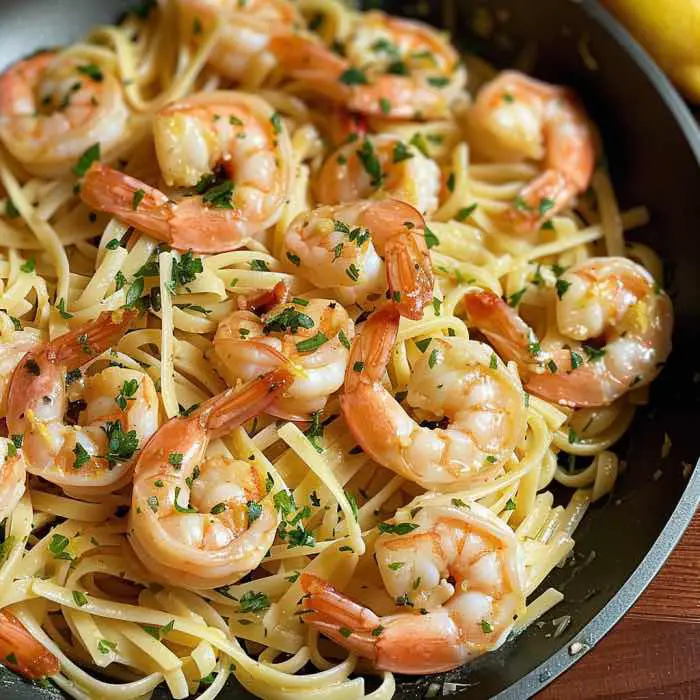
Lemon-Garlic Shrimp Pasta
Introduction
Lemon-Garlic Shrimp Pasta combines bright, zesty flavors with succulent seafood in one simple dish. This restaurant-worthy meal comes together in just 30 minutes, making it perfect for busy weeknights. Moreover, the combination of tender shrimp, al dente pasta, and a vibrant lemon-garlic sauce creates an unforgettable dining experience.
This recipe delivers impressive results without complicated techniques. Furthermore, you can customize it to match your preferences. Whether you’re cooking for family or entertaining guests, this dish never fails to impress.
What Makes Lemon-Garlic Shrimp Pasta Special
A Perfect Balance of Flavors
The magic lies in the harmony between ingredients. Fresh lemon juice brightens every bite. Meanwhile, aromatic garlic adds depth and warmth. Additionally, the pasta absorbs the flavorful sauce, creating a cohesive dish.
This combination appeals to diverse palates. Children often enjoy the mild seafood flavor. Similarly, adults appreciate the sophisticated taste profile. Therefore, it’s an excellent choice for family meals.
Quick and Easy Preparation
Time-pressed home cooks love this recipe. Most preparations take under 10 minutes. Subsequently, the cooking process is straightforward and forgiving. Even novice cooks can achieve excellent results.
The recipe requires minimal cleanup. Consequently, you’ll spend more time enjoying your meal. This efficiency makes it ideal for weeknight dinners.
Nutritional Powerhouse
Shrimp provides lean protein and essential nutrients. Additionally, it contains selenium and vitamin B12. The dish also incorporates heart-healthy olive oil. Furthermore, fresh lemon adds vitamin C without extra calories.
Essential Ingredients for Perfect Results
The Protein Component
Large Shrimp (1 pound): Choose raw, peeled, and deveined shrimp. Fresh or frozen varieties work equally well. However, ensure frozen shrimp is properly thawed. Pat them dry before cooking to achieve better browning.
The Pasta Foundation
Linguine or Spaghetti (12 ounces): These long pasta shapes work best. They catch the sauce beautifully. Alternatively, fettuccine or angel hair pasta are excellent substitutes. Choose high-quality pasta for optimal texture.
Flavor Builders
Fresh Garlic (6 cloves): Minced garlic provides aromatic depth. Fresh garlic tastes significantly better than jarred versions. Moreover, it releases essential oils when cooked.
Fresh Lemons (2-3 large): You’ll need both juice and zest. Fresh lemons offer superior flavor compared to bottled juice. Additionally, the zest contains aromatic oils.
Extra Virgin Olive Oil (1/3 cup): This creates the sauce base. Quality olive oil enhances overall taste. Furthermore, it helps distribute flavors evenly.
Red Pepper Flakes (1/2 teaspoon): These add gentle heat. Adjust according to your preference. Moreover, they complement the lemon brightness.
Fresh Herbs and Finishing Touches
Fresh Parsley (1/2 cup): Chopped parsley adds color and freshness. It also provides a subtle peppery note. Additionally, it makes the dish visually appealing.
Parmesan Cheese (1/2 cup): Freshly grated cheese adds richness. It also helps bind the sauce. However, it’s optional for dairy-free versions.
Salt and Black Pepper: Season to taste throughout cooking. These enhance natural flavors without overwhelming them.
Kitchen Tools You’ll Need
Essential Equipment
Large Pot: Use a 6-quart pot for cooking pasta. It should hold plenty of water. Adequate space prevents pasta from sticking.
Large Skillet: A 12-inch skillet accommodates all ingredients. Cast iron or stainless steel work best. Additionally, ensure it has high sides.
Colander: You’ll need this for draining pasta. Keep it ready near the sink. Reserve some pasta water before draining.
Helpful Accessories
Microplane Zester: This tool creates fine lemon zest. It prevents bitter white pith from mixing in. Moreover, it’s perfect for grating Parmesan.
Tongs: These help toss pasta with sauce. They also assist in serving. Additionally, they’re gentler than spoons on delicate shrimp.
Measuring Cups and Spoons: Accurate measurements ensure consistent results. Professional cooks rely on precision. Therefore, don’t skip this step.
Step-by-Step Cooking Instructions
Preparation Phase
Step 1: Gather Your Ingredients
First, assemble everything on your counter. This French technique, called mise en place, streamlines cooking. Consequently, you won’t scramble while cooking.
Zest lemons before juicing them. Mince garlic uniformly for even cooking. Additionally, chop parsley and set it aside.
Step 2: Prepare the Shrimp
Pat shrimp completely dry with paper towels. Moisture prevents proper searing. Season both sides with salt and pepper. Moreover, ensure shrimp are at room temperature.
Cooking Process
Step 3: Cook the Pasta
Bring 6 quarts of salted water to a rolling boil. Add pasta and stir immediately. Cook according to package directions until al dente. However, reduce cooking time by 1 minute.
Reserve 1 cup of starchy pasta water before draining. This liquid helps create silky sauce. Subsequently, drain pasta but don’t rinse it.
Step 4: Sear the Shrimp
Heat 2 tablespoons olive oil over medium-high heat. Once shimmering, add shrimp in a single layer. Cook for 2 minutes without moving them. This develops a golden crust.
Flip shrimp and cook for another 1-2 minutes. They should turn pink and opaque. Avoid overcooking, as shrimp become rubbery. Transfer to a plate immediately.
Step 5: Build the Sauce
Reduce heat to medium. Add remaining olive oil to the skillet. Next, add minced garlic and red pepper flakes. Sauté for 30-45 seconds until fragrant.
Be careful not to burn the garlic. Burnt garlic tastes bitter and ruins the dish. Therefore, watch it carefully during this step.
Step 6: Add Lemon Components
Pour in fresh lemon juice and add zest. Scrape up any browned bits from the pan bottom. These bits, called fond, add incredible flavor. Simmer for 1 minute to meld flavors.
Step 7: Combine Everything
Add drained pasta to the skillet. Toss vigorously to coat with sauce. If the mixture seems dry, add pasta water gradually. Start with 1/4 cup and add more as needed.
Return shrimp to the pan. Add fresh parsley and half the Parmesan. Toss gently to combine everything. The residual heat warms the shrimp without overcooking.
Step 8: Final Seasoning
Taste and adjust seasoning. Add more salt, pepper, or lemon juice as desired. The balance should be bright, garlicky, and well-seasoned.
Pro Tips for Restaurant-Quality Results
Achieving Perfect Shrimp Texture
Don’t overcrowd the pan when cooking shrimp. Overcrowding causes steaming instead of searing. Therefore, cook in batches if necessary. Additionally, use high heat for proper browning.
Remove shrimp at the right moment. They continue cooking from residual heat. Consequently, slightly undercooking prevents rubbery texture.
Pasta Cooking Secrets
Salt pasta water generously. It should taste like the sea. This is your only chance to season the pasta itself. Moreover, well-salted pasta tastes better.
Always reserve pasta water before draining. The starch helps emulsify the sauce. Furthermore, it adjusts consistency perfectly. Add it gradually rather than all at once.
Sauce Enhancement Techniques
Use freshly squeezed lemon juice only. Bottled juice contains preservatives and tastes artificial. Additionally, include some zest for intense lemon flavor.
Add a small pat of butter at the end for richness. This technique, called mounting, creates glossy sauce. However, it’s optional for lighter versions.
Timing Coordination
Start boiling pasta water first. Meanwhile, prepare other ingredients. This efficient workflow ensures everything finishes simultaneously. Consequently, you’ll serve hot, fresh pasta.
Don’t let cooked pasta sit. It continues absorbing moisture and becomes mushy. Therefore, combine with sauce immediately after draining.
Nutritional Benefits of This Dish
High-Quality Protein
Shrimp provides approximately 24 grams of protein per 3-ounce serving. Protein supports muscle maintenance and growth. Moreover, it promotes satiety and helps with weight management.
This lean protein contains minimal fat. Furthermore, shrimp offers all essential amino acids. Therefore, it’s an excellent protein choice for health-conscious diners.
Essential Minerals and Vitamins
Shrimp contains significant selenium, which supports immune function. Additionally, it provides vitamin B12 for energy metabolism. The dish also offers iron, phosphorus, and zinc.
Fresh lemon juice adds vitamin C. This antioxidant supports immune health and collagen production. Moreover, it enhances iron absorption from other foods.
Heart-Healthy Fats
Extra virgin olive oil contains monounsaturated fats. These fats support cardiovascular health. Additionally, olive oil provides anti-inflammatory compounds. Research shows it may reduce heart disease risk.
Garlic offers cardiovascular benefits too. Studies suggest it may help regulate blood pressure. Furthermore, it contains compounds with antimicrobial properties.
Calorie Considerations
A typical serving contains approximately 450-550 calories. This makes it a moderate-calorie meal option. However, portions and ingredient amounts affect total calories. Control portions for weight management goals.
According to the American Heart Association, balanced meals should include lean proteins like shrimp and healthy fats like olive oil. Check out our guide on [balanced meal planning] for more healthy recipe ideas.
Common Mistakes to Avoid
Overcooking the Shrimp
This is the most common error. Overcooked shrimp turn tough and rubbery. Cook just until they turn pink and opaque. Remember, they continue cooking after removal from heat.
Watch cooking time carefully. Small shrimp cook faster than large ones. Therefore, adjust timing accordingly based on shrimp size.
Burning the Garlic
Garlic burns quickly at high temperatures. Burnt garlic tastes bitter and unpleasant. Add garlic to medium heat only. Moreover, sauté it briefly for just 30-45 seconds.
Keep stirring constantly when cooking garlic. This prevents hot spots from burning it. Additionally, have your lemon juice ready to add immediately.
Using Too Little Lemon
Some cooks add insufficient lemon juice. This dish should taste bright and zesty. Don’t be timid with the lemon. However, start conservatively and add more gradually.
Balance is key in this recipe. The lemon should shine without overwhelming other flavors. Taste frequently and adjust as needed.
Rinsing the Pasta
Never rinse cooked pasta for this dish. Rinsing removes the starchy coating. This coating helps sauce adhere to pasta. Furthermore, it contributes to overall sauce texture.
Only rinse pasta for cold pasta salads. For hot dishes, transfer directly from pot to sauce. This maintains optimal texture and flavor.
Adding Shrimp Too Early
Don’t add shrimp back to the pan too soon. Adding them during active cooking causes overcooking. Instead, add them at the very end. The residual heat warms them perfectly.
Ingredient Substitutions and Variations
Protein Alternatives
Chicken: Use diced chicken breast for a poultry version. Cook it thoroughly before combining with pasta. Additionally, it pairs wonderfully with lemon-garlic sauce.
Scallops: These offer a sweet, delicate flavor. Cook them similarly to shrimp. Moreover, they create an elegant presentation.
White Fish: Firm fish like cod or halibut work well. Cut into bite-sized pieces before cooking. They provide a milder seafood option.
Pasta Options
Whole Wheat Pasta: This adds fiber and nutrients. It has a nuttier flavor profile. However, it requires slightly longer cooking time.
Gluten-Free Pasta: Many excellent options exist today. Follow package directions carefully. Additionally, gluten-free pasta can become mushy if overcooked.
Zucchini Noodles: For low-carb versions, use spiralized zucchini. Don’t overcook them. They need just 2-3 minutes to soften.
Vegetable Additions
Cherry Tomatoes: Halve them and add during sauce preparation. They burst and create extra sauce. Moreover, they add beautiful color.
Spinach: Stir in fresh spinach at the end. It wilts quickly from residual heat. Additionally, it boosts nutritional value.
Asparagus: Cut into 1-inch pieces and blanch separately. Add them with the shrimp. They provide a spring-fresh element.
Broccoli: Small florets work beautifully. Cook them with the pasta for convenience. They add fiber and vitamins.
Dairy-Free Options
Nutritional Yeast: This replaces Parmesan cheese nicely. It provides a savory, cheesy flavor. Moreover, it adds B vitamins.
Cashew Cream: Blend soaked cashews for creamy texture. This creates richness without dairy. Additionally, it’s protein-rich.
Serving Suggestions and Pairings
Complete Meal Ideas
Side Salad: Serve with a crisp green salad. Mixed greens with vinaigrette complement perfectly. Additionally, it adds freshness and fiber.
Garlic Bread: Crusty bread soaks up extra sauce beautifully. Make it with olive oil and fresh garlic. Moreover, it’s crowd-pleasing.
Roasted Vegetables: Mediterranean vegetables enhance the meal. Try roasted bell peppers or eggplant. They harmonize with lemon-garlic flavors.
Presentation Tips
Plating Technique: Twirl pasta into neat nests on plates. Arrange shrimp artistically on top. Additionally, garnish with lemon wedges and fresh parsley.
Color Contrast: The bright yellow lemon and pink shrimp create visual appeal. Add green parsley for contrast. Moreover, use white plates to showcase colors.
Family-Style Serving: Present in a large, shallow bowl. This encourages sharing and conversation. Furthermore, it keeps the pasta warm longer.
Beverage Pairings
Sparkling Water: Citrus-flavored sparkling water complements this dish. It cleanses the palate between bites. Moreover, it enhances the lemon notes.
Iced Tea: Unsweetened or lightly sweetened tea works well. Lemon-infused varieties are especially suitable. Additionally, it’s refreshing.
Fresh Lemonade: This echoes the lemon flavors in the pasta. Make it from scratch for best results. However, keep it lightly sweetened.
Storage and Reheating Guidelines
Proper Storage Methods
Refrigeration: Store leftovers in airtight containers. They keep for 3-4 days when properly refrigerated. Cool completely before storing to prevent condensation.
Keep shrimp and pasta together in the same container. This maintains flavor integration. Moreover, it simplifies reheating.
Freezing: This dish doesn’t freeze well. Shrimp texture deteriorates when frozen after cooking. Additionally, pasta can become mushy. Therefore, make only what you’ll consume.
Reheating Techniques
Stovetop Method: This produces the best results. Add pasta to a skillet with a splash of water or broth. Heat gently over medium-low heat while stirring.
Add liquid gradually to restore moisture. The pasta absorbs liquid during storage. Therefore, it needs additional moisture when reheating.
Microwave Method: Place pasta in a microwave-safe dish. Add 2 tablespoons of water and cover loosely. Microwave in 30-second intervals, stirring between each.
Avoid overheating in the microwave. This toughens the shrimp significantly. Therefore, heat just until warm throughout.
Refreshing Leftovers
Add fresh lemon juice before serving reheated pasta. This brightens the flavors again. Additionally, top with fresh Parmesan and parsley.
The dish tastes best freshly made. However, proper storage and reheating maintain acceptable quality. Plan portions accordingly to minimize leftovers.
Frequently Asked Questions
Can I use frozen shrimp for Lemon-Garlic Shrimp Pasta?
Yes, frozen shrimp work perfectly. Thaw them completely before cooking. Place frozen shrimp in a colander under cold running water. Pat them thoroughly dry before seasoning. Moreover, frozen shrimp are often flash-frozen at peak freshness.
How do I know when shrimp are fully cooked?
Properly cooked shrimp are pink and opaque throughout. They should curl into a loose “C” shape. Overcooked shrimp form tight circles. Additionally, they feel firm but not rubbery. The internal temperature should reach 145°F.
What’s the best pasta shape for this dish?
Long pasta shapes work best. Linguine, spaghetti, or fettuccine are ideal choices. They coat well with the sauce. However, shorter shapes like penne also work. Choose based on personal preference.
Can I make this recipe ahead of time?
This dish tastes best when served immediately. However, you can prepare components ahead. Cook and refrigerate shrimp separately. Additionally, chop garlic and parsley in advance. Cook pasta just before serving.
How can I make the sauce creamier?
Add a splash of heavy cream at the end. Alternatively, swirl in a tablespoon of butter. Both create silky, luxurious sauce. Moreover, reserved pasta water helps achieve creamy consistency without adding cream.
Is Lemon-Garlic Shrimp Pasta healthy?
Yes, this dish offers excellent nutritional value. It provides lean protein, healthy fats, and moderate calories. Moreover, it includes beneficial vitamins and minerals. Control portions and ingredient amounts for your dietary needs.
What can I substitute for shrimp?
Try chicken, scallops, or firm white fish. All work wonderfully with lemon-garlic sauce. Additionally, you can make a vegetarian version. Use chickpeas or white beans for protein.
How do I prevent the pasta from sticking?
Use plenty of boiling water when cooking pasta. Stir immediately after adding pasta to the pot. Additionally, don’t rinse cooked pasta. The starch prevents sticking when combined with sauce.
Conclusion
Lemon-Garlic Shrimp Pasta delivers restaurant-quality results at home. This dish combines simple ingredients into something extraordinary. The bright lemon flavor, aromatic garlic, and tender shrimp create perfect harmony.
Moreover, the recipe requires minimal time and effort. You can prepare this impressive meal in just 30 minutes. Therefore, it’s perfect for busy weeknights or weekend entertaining.
The versatility allows endless customization options. Add your favorite vegetables or swap proteins. Furthermore, dietary modifications are simple to implement.
This Lemon-Garlic Shrimp Pasta has become a staple in countless kitchens. Its balanced flavors appeal to diverse tastes. Additionally, the nutritional benefits make it a smart choice.
Lemon-Garlic Shrimp Pasta
Description
Lemon-Garlic Shrimp Pasta
Ingredients:
-
12 oz (340 g) spaghetti or linguine
-
1 lb (450 g) large shrimp, peeled & deveined
-
3 tbsp olive oil
-
4 tbsp unsalted butter, divided
-
5 garlic cloves, minced
-
½ cup chicken broth (or pasta water)
-
¼ cup fresh lemon juice (about 2 lemons)
-
1 tsp lemon zest
-
½ tsp crushed red pepper flakes (optional)
-
Salt & freshly ground black pepper, to taste
-
2 tbsp fresh parsley, chopped
-
Freshly grated Parmesan (for serving)
Instructions:
-
Cook Pasta
-
Cook spaghetti according to package directions until al dente.
-
Reserve ½ cup pasta water, then drain.
-
-
Cook Shrimp
-
Season shrimp with salt and pepper.
-
Heat 2 tbsp olive oil and 2 tbsp butter in a large skillet over medium-high heat.
-
Add shrimp and cook 1–2 minutes per side until pink. Remove and set aside.
-
-
Make Sauce
-
In the same skillet, add remaining butter and garlic. Sauté for 1 minute.
-
Stir in chicken broth (or pasta water), lemon juice, lemon zest, and red pepper flakes.
-
Simmer 2–3 minutes until slightly reduced.
-
-
Combine
-
Add pasta and shrimp back to skillet. Toss well until coated.
-
If needed, add a splash of pasta water to loosen sauce.
-
-
Finish & Serve
-
Sprinkle with parsley, adjust seasoning, and serve with Parmesan on top.
-
Optional: serve with garlic bread and a side salad.
-