
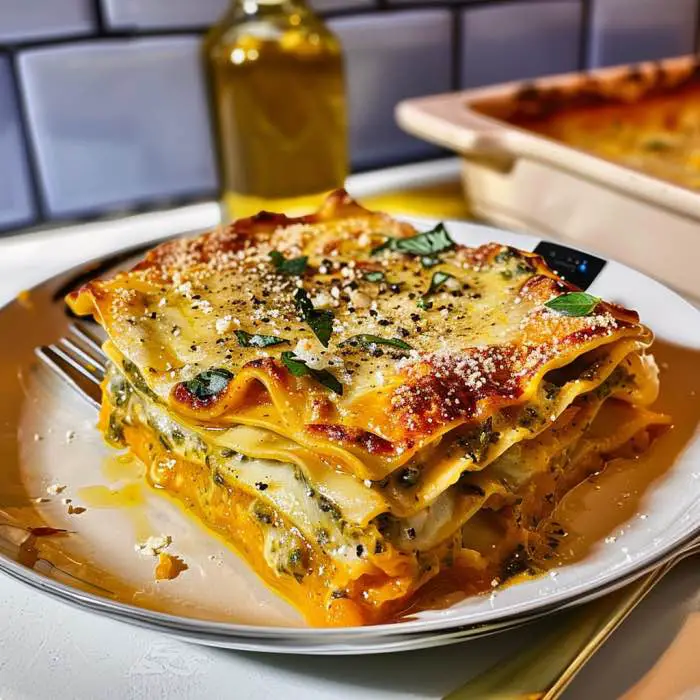
Butternut Squash Lasagna: The Ultimate Comfort Food Recipe
Introduction
Butternut squash lasagna transforms traditional Italian comfort food into something spectacular. This hearty dish combines roasted butternut squash with creamy cheese, tender noodles, and aromatic herbs. Moreover, it offers a delicious way to enjoy seasonal vegetables while satisfying your craving for comfort food.
The natural sweetness of butternut squash pairs beautifully with savory cheese. Additionally, this recipe works wonderfully for family dinners, holiday gatherings, or meal prep. Furthermore, it provides a nutritious alternative to traditional meat lasagna without sacrificing flavor.
What Makes Butternut Squash Lasagna Special
Butternut squash lasagna stands out because of its unique flavor profile. The roasted squash develops caramelized edges that add depth. In addition, the creamy texture blends seamlessly with ricotta and mozzarella cheese.
This dish also celebrates seasonal eating. Fall and winter bring peak butternut squash season. Consequently, this lasagna becomes a perfect cold-weather meal. The vibrant orange color makes it visually appealing too.
Nutritional Advantages
This vegetarian option packs impressive nutritional benefits. Butternut squash contains fewer calories than meat-based lasagnas. Similarly, it provides essential vitamins and minerals your body needs.
The dish satisfies vegetarians and omnivores alike. Therefore, it works well for diverse dinner crowds. Plus, the fiber content helps you feel satisfied longer.
Health Benefits of Butternut Squash
Butternut squash offers remarkable nutritional value for this lasagna recipe. This winter squash contains only 48 calories per 100 grams. Additionally, it provides substantial amounts of vitamins A and C.
Vitamin and Mineral Content
The vitamins in butternut squash support immune function. Vitamin A promotes healthy vision and cell growth. Meanwhile, vitamin C acts as a powerful antioxidant. These nutrients protect your cells from damage.
Butternut squash also delivers important minerals. Potassium helps regulate blood pressure naturally. Furthermore, magnesium supports bone health and heart function. Calcium strengthens bones while iron aids oxygen transport.
Antioxidant Properties
Beta-carotene gives butternut squash its orange color. Your body converts this compound into vitamin A. Consequently, these antioxidants reduce oxidative stress throughout your body.
The anti-inflammatory effects benefit overall health. Research suggests these properties may lower chronic disease risk. Therefore, enjoying butternut squash lasagna supports your wellness goals.
Fiber and Digestive Health
Each serving provides approximately 2 grams of dietary fiber. Fiber aids digestion and promotes gut health. Moreover, it helps maintain stable blood sugar levels.
This nutrient also contributes to weight management. The fiber creates a feeling of fullness. Thus, butternut squash lasagna satisfies hunger while delivering nutrition.
Essential Ingredients
Creating perfect butternut squash lasagna requires quality ingredients. Each component plays a crucial role in flavor and texture. Therefore, selecting the right items ensures success.
Main Components
Butternut Squash
One large butternut squash yields approximately 8 cups when cubed. Alternatively, use two small squashes for equivalent volume. The squash forms the foundation of your sauce.
Lasagna Noodles
Traditional lasagna noodles work best for this recipe. You will need about 12-15 noodles typically. Some cooks prefer no-boil noodles for convenience.
Cheese Selection
Ricotta cheese provides creamy texture between layers. Mozzarella creates those irresistible stretchy cheese pulls. Additionally, Parmesan adds sharp, nutty flavor. Plan for 15 ounces ricotta and 3 cups shredded mozzarella.
Sauce Ingredients
Milk or Cream
Whole milk creates the perfect sauce consistency. You will need approximately 1-2 cups. The milk blends with roasted squash for smoothness.
Herbs and Seasonings
Fresh sage enhances the butternut squash flavor beautifully. Thyme adds earthy undertones throughout the dish. Garlic provides aromatic depth while basil offers traditional Italian notes.
Salt and pepper remain essential for proper seasoning. Additionally, nutmeg complements squash wonderfully. A pinch of cinnamon can deepen the flavor profile.
Additional Ingredients
Eggs
One egg binds the ricotta mixture together. This creates better structure within your layers. The egg prevents the cheese from becoming runny.
Olive Oil
Extra virgin olive oil coats the squash before roasting. This promotes caramelization and prevents sticking. Use about 2-3 tablespoons for best results.
Choosing the Best Butternut Squash
Selecting quality butternut squash makes a significant difference. Look for squash with smooth, unblemished skin. The exterior should feel hard and heavy.
Visual Inspection Tips
Choose squash with uniform tan coloring. Avoid any with green tinges or soft spots. The stem should appear dry and intact. Furthermore, inspect for cracks or mold carefully.
Smaller squashes often taste sweeter than larger ones. However, larger squashes offer more flesh per pound. Consider your recipe needs when deciding size.
Weight and Texture Considerations
Pick squash that feels heavy for its size. This indicates good moisture content and fresh flesh. Light squash may have dried out inside.
The skin should resist fingernail pressure easily. Soft spots indicate overripeness or decay. Therefore, choose firm specimens consistently.
Kitchen Tools and Equipment
Proper equipment simplifies butternut squash lasagna preparation. Having the right tools saves time and frustration. Additionally, these items ensure consistent results.
Essential Tools
Sharp Knife
A large chef’s knife handles squash cutting safely. The knife must be extremely sharp for efficiency. Dull knives increase injury risk with hard squash.
Vegetable Peeler
A sturdy Y-shaped peeler works best for squash. This tool removes the tough skin effectively. Traditional peelers may struggle with hard surfaces.
Baking Sheets
You will need two rimmed baking sheets. These hold cubed squash during roasting. Parchment paper prevents sticking and eases cleanup.
Additional Equipment
9×13 Inch Baking Dish
This standard size accommodates multiple lasagna layers. Glass or ceramic dishes work equally well. Metal pans conduct heat differently but also succeed.
Large Pot
Boiling lasagna noodles requires a spacious pot. The noodles need room to move freely. This prevents sticking and ensures even cooking.
Blender or Food Processor
A high-speed blender creates silky squash sauce. Food processors work but may leave some texture. The choice depends on your preference.
How to Prepare Butternut Squash
Cutting butternut squash intimidates many home cooks. However, proper technique makes this task manageable. Follow these steps for safe, efficient preparation.
Safety First
Place a damp towel under your cutting board. This prevents slipping during cutting. Always keep fingers away from the blade path.
Work on a stable, flat surface with good lighting. Never rush this process regardless of skill level. Taking time ensures safety and precision.
Step-by-Step Cutting Instructions
Remove the Ends
First, cut off both ends of the squash. This creates stable flat surfaces. The squash now stands upright without rolling.
Peel the Squash
Stand the squash on one flat end. Use your vegetable peeler to remove skin. Work from top to bottom in long strokes.
Continue around the entire squash systematically. Remove all green and tan outer layers. Only orange flesh should remain visible.
Cut in Half
Slice the squash lengthwise down the middle. A rocking motion helps the knife through. Both halves will have a seed cavity.
Remove Seeds
Scoop out seeds and stringy pulp with a spoon. Discard these or save seeds for roasting separately. Clean the cavity completely.
Dice into Cubes
Cut each half into slices approximately 1-inch thick. Then cut those slices into strips. Finally, dice the strips into cubes. Aim for uniform size for even roasting.
Making the Butternut Squash Sauce
The butternut squash sauce defines this lasagna’s character. Roasting brings out natural sweetness and depth. Meanwhile, blending creates luxurious creaminess.
Roasting the Squash
Preheat your oven to 375-450°F for roasting. Higher temperatures create more caramelization. Line baking sheets with parchment paper first.
Toss cubed squash with olive oil generously. Add salt, pepper, and fresh herbs like sage. Spread cubes in a single layer without overcrowding.
Roast for 30-35 minutes until tender and caramelized. Check halfway through and flip for even browning. The edges should turn golden brown beautifully.
Creating the Sauce
Transfer roasted squash to a high-speed blender. Add 1-2 cups of milk gradually. The exact amount depends on desired consistency.
Include seasonings like salt, pepper, and nutmeg. A pinch of cinnamon enhances warmth subtly. Blend until completely smooth and creamy.
The finished sauce should coat a spoon nicely. If too thick, add more milk gradually. Conversely, reduce milk for thicker sauce.
Flavor Variations
Some recipes incorporate béchamel sauce with squash. This adds extra richness and creaminess. Make a roux with butter and flour first.
Gradually whisk in herb-infused milk for complexity. Sage and rosemary complement butternut squash wonderfully. Combine this béchamel with roasted squash.
Alternatively, keep the sauce simple with just squash. This highlights the vegetable’s natural flavor. Both approaches create delicious results.
Preparing the Cheese Mixture
The ricotta cheese mixture adds creamy richness to butternut squash lasagna. This component provides protein and satisfying texture. Moreover, proper seasoning elevates the entire dish.
Basic Cheese Mixture Recipe
Combine 15 ounces of ricotta cheese in a bowl. Add one beaten egg for binding. Mix in 1/2 cup grated Parmesan cheese thoroughly.
Season with minced garlic for aromatic flavor. Include 2 tablespoons of fresh chopped basil. Salt and pepper enhance all other flavors.
Stir until ingredients blend completely and evenly. The mixture should appear uniform in color. Taste and adjust seasoning as needed.
Cheese Quality Matters
Use whole milk ricotta for best results. Low-fat versions can taste grainy and dry. Quality ricotta creates superior texture and flavor.
Freshly grated Parmesan surpasses pre-shredded varieties significantly. The flavor tastes sharper and more complex. Additionally, it melts more smoothly.
Whole milk mozzarella provides excellent melting properties. Part-skim works but may not be as creamy. Shred cheese yourself rather than buying pre-shredded.
Optional Additions
Some cooks add fresh spinach to the cheese mixture. This increases nutritional value and adds color. Wilt spinach first and squeeze out excess moisture.
Chopped fresh herbs beyond basil work wonderfully. Try parsley, oregano, or thyme for variety. Each brings unique aromatic qualities.
A dash of red pepper flakes adds subtle heat. Nutmeg complements both cheese and squash beautifully. Experiment to find your perfect combination.
Selecting Your Lasagna Noodles
Lasagna noodles come in several varieties for this recipe. Each type has advantages and considerations. Therefore, understanding the differences helps you choose wisely.
Traditional Boiled Noodles
Regular lasagna noodles require pre-cooking before assembly. Boil them in salted water until al dente. This typically takes 8-10 minutes cooking time.
Drain noodles and lay them flat on oiled surfaces. This prevents sticking while they cool. Overlapping them slightly on parchment paper works well.
Traditional noodles offer reliable, consistent results. They maintain good texture after baking. Furthermore, they are widely available and affordable.
No-Boil Noodles
No-boil noodles skip the pre-cooking step entirely. These noodles absorb moisture from the sauce during baking. However, results can vary by brand.
Some cooks soak no-boil noodles briefly before assembling. This helps them soften and expand properly. Otherwise, they may stay too firm.
Ensure your sauce has enough moisture for no-boil noodles. They need extra liquid to hydrate completely. Add more milk or water to your sauce.
Fresh Pasta Sheets
Fresh pasta sheets create an elegant butternut squash lasagna. These cook quickly and have delicate texture. Look for them in specialty stores.
Fresh pasta requires minimal cooking time before assembly. Just blanch briefly in boiling water. Handle carefully as they tear more easily.
The flavor and texture differ from dried noodles noticeably. Fresh pasta tastes lighter and more refined. This option works beautifully for special occasions.
Step-by-Step Assembly Instructions
Assembling butternut squash lasagna follows a systematic layering process. Organization makes this step smooth and efficient. Additionally, proper layering ensures even distribution of flavors.
Preparation Before Assembly
Preheat your oven to 375°F for baking later. Prepare your 9×13 inch baking dish with cooking spray. Have all components ready and within reach.
Your butternut squash sauce should be at room temperature. The cheese mixture needs to be prepared and mixed. Cooked noodles should be laid out separately.
Shred the mozzarella cheese if not already done. Grate additional Parmesan for topping. Having everything ready streamlines the process.
Layer-by-Layer Instructions
First Layer
Spread 1 cup of butternut squash sauce across the bottom. This prevents noodles from sticking to the dish. Cover the entire base evenly.
Arrange lasagna noodles over the sauce in a single layer. Typically, 4-5 noodles fit width-wise in the pan. Slightly overlap edges if needed.
Second Layer
Spread approximately 3/4 cup of ricotta mixture over noodles. Use an offset spatula for smooth, even coverage. Don’t worry about perfection at this stage.
Add 1 cup of butternut squash sauce over the ricotta. Spread gently to avoid disturbing the cheese layer. Sprinkle 1/2 cup of shredded mozzarella on top.
Repeat Layers
Add another layer of lasagna noodles over the cheese. Follow with ricotta mixture, butternut squash sauce, and mozzarella. Repeat this pattern two more times typically.
Most recipes create 3-4 complete layers. This provides ideal sauce-to-noodle ratio. Adjust based on your pan depth.
Final Top Layer
Place final noodle layer over the last cheese layer. Spread remaining butternut squash sauce evenly on top. This should cover the noodles completely.
Sprinkle remaining mozzarella cheese generously over the sauce. Add final Parmesan cheese layer for golden crust. This creates the attractive baked top.
Tips for Even Layers
Use measuring cups for consistent sauce portions. This ensures each layer gets proper coverage. Similarly, divide cheese mixture equally before starting.
Spread each component to the pan edges completely. Gaps create uneven cooking and dry spots. Take time for thorough coverage.
Baking Your Lasagna to Perfection
Proper baking transforms assembled ingredients into cohesive butternut squash lasagna. Temperature and timing matter significantly for best results. Moreover, covering techniques affect the final texture.
Initial Covered Bake
Cover the baking dish tightly with aluminum foil. This traps moisture and prevents excessive browning. Ensure the foil doesn’t touch the cheese directly.
Bake at 375°F for 30 minutes while covered. The lasagna heats through and noodles soften further. Steam builds inside, cooking everything evenly.
Check_if_ the foil is secure before placing in oven. Loose foil allows moisture to escape prematurely. Consequently, the lasagna may dry out.
Uncovered Finishing
Remove the foil carefully after 30 minutes. Hot steam escapes quickly, so use caution. Return the dish to the oven uncovered.
Bake for an additional 15-20 minutes uncovered. The cheese should turn golden and bubbly. Watch closely during this phase to prevent burning.
Some cooks finish under the broiler briefly. This creates extra browning and caramelization. Stay nearby and watch constantly during broiling.
Testing for Doneness
Insert a knife into the center of the lasagna. It should slide through easily without resistance. The noodles should feel tender, not crunchy.
The edges should bubble vigorously around the pan. Cheese on top should be melted and golden. These visual cues indicate proper cooking.
Internal temperature should reach 165°F for food safety. Use an instant-read thermometer for accuracy. Check the center, not just the edges.
Resting Period
Let the lasagna rest for 15-20 minutes after baking. This crucial step allows layers to set properly. Cutting too soon results in messy portions.
The sauce thickens as the dish cools slightly. Cheese firms up, making cleaner slices possible. Additionally, this prevents burning mouths on hot filling.
Cover loosely with foil during resting if desired. This keeps the top from cooling too quickly. However, the lasagna stays very hot regardless.
Serving Suggestions
Butternut squash lasagna shines as a complete main course. However, complementary side dishes enhance the dining experience. Consider these serving ideas for impressive meals.
Simple Side Dishes
A crisp green salad balances the rich lasagna perfectly. Mix leafy greens with light vinaigrette dressing. Add toasted nuts or seeds for extra crunch.
Garlic bread makes a classic Italian accompaniment. Alternatively, serve crusty artisan bread with olive oil. These options help soak up extra sauce.
Roasted vegetables provide additional nutrition and color. Try Brussels sprouts, green beans, or asparagus. Season simply to let the lasagna star.
Garnishing Ideas
Fresh basil leaves add bright color and aroma. Tear them by hand and scatter over portions. This creates restaurant-quality presentation easily.
Drizzle high-quality olive oil over individual servings. This adds richness and sophisticated flavor. A small amount makes a noticeable difference.
Sprinkle extra Parmesan cheese at the table. Freshly grated cheese melts slightly from residual heat. Guests can customize their portions this way.
Portion Sizes
Cut the 9×13 inch pan into 12 squares typically. This provides generous portions for main-course servings. Adjust based on appetite and accompanying dishes.
For lighter meals or buffets, cut smaller squares. A full pan can serve 15-18 people this way. Smaller portions work well alongside other dishes.
Use a sharp knife for clean cuts through layers. Wipe the blade between cuts for neat presentation. A serrated knife sometimes works better than smooth.
Storage and Reheating Tips
Proper storage extends butternut squash lasagna’s delicious life. This convenience makes it ideal for meal planning. Furthermore, correct reheating preserves texture and flavor.
Refrigerator Storage
Let lasagna cool completely before refrigerating it. Cover tightly with plastic wrap or aluminum foil. Alternatively, transfer portions to airtight containers.
Refrigerated lasagna stays fresh for 3-4 days typically. Label containers with the preparation date clearly. Store on a middle shelf for consistent temperature.
Individual portions make reheating more convenient later. Cut the lasagna into servings before storing. This saves time during busy weekdays.
Freezing Instructions
Butternut squash lasagna freezes exceptionally well for later enjoyment. Freeze before or after baking successfully. Each method has specific advantages.
Freezing Unbaked Lasagna
Assemble the lasagna completely in a freezer-safe dish. Cover tightly with plastic wrap, then aluminum foil. Label with contents and baking instructions.
Freeze for up to 2-3 months for best quality. When ready to bake, thaw in refrigerator overnight. Bake according to original recipe instructions.
Freezing Baked Lasagna
Cool baked lasagna completely before freezing it. Cut into portions for easier reheating later. Wrap each piece individually in plastic wrap.
Place wrapped portions in freezer bags or containers. Remove as much air as possible before sealing. Frozen portions keep for 2-3 months.
Reheating Methods
Oven Reheating
Oven reheating produces the best texture results. Preheat oven to 350°F before starting. Place lasagna in an oven-safe dish.
Cover with foil to prevent drying out during reheating. Heat for 20-30 minutes until warmed through completely. Remove foil for the last 5 minutes.
Microwave Reheating
Microwave reheating works well for individual portions. Place a serving on a microwave-safe plate. Add a tablespoon of water or sauce.
Cover loosely with a microwave-safe lid or paper towel. Heat on medium power for 2-3 minutes. Check and continue heating in 30-second intervals.
Recipe Variations
Butternut squash lasagna adapts beautifully to different preferences. These variations keep the dish interesting and fresh. Additionally, they accommodate various dietary needs.
Adding More Vegetables
Roasted vegetables enhance nutrition and texture significantly. Try adding mushrooms, zucchini, or bell peppers. Roast them alongside the butternut squash cubes.
Spinach adds vibrant color and iron content. Layer fresh baby spinach between the ricotta layers. It wilts during baking and integrates perfectly.
Caramelized onions contribute sweet, savory depth. Cook sliced onions slowly until golden brown. Distribute them throughout the cheese layers evenly.
Sauce Variations
Béchamel-Based Sauce
Create a traditional béchamel sauce with butter and flour. Infuse milk with sage and rosemary beforehand. Combine the béchamel with roasted butternut squash.
This approach adds extra richness and complexity. The herbs complement the squash flavor beautifully. However, it requires additional cooking time.
Tomato Addition
Some recipes incorporate marinara sauce with butternut squash. Layer tomato sauce alternately with squash sauce. This creates a more traditional Italian flavor.
Use high-quality marinara or make homemade sauce. The acidity balances the squash’s sweetness nicely. This variation appeals to tomato sauce lovers.
Protein Additions
While vegetarian by default, protein additions work well. Crumbled Italian sausage adds savory richness. Cook and drain it before layering throughout.
Shredded rotisserie chicken provides convenient protein. Distribute it evenly between sauce layers. This makes the lasagna more substantial.
Ground turkey offers a leaner meat option. Season it with Italian herbs before browning. Mix with the butternut squash sauce for integration.
Vegan Adaptation
Replace ricotta with cashew-based vegan ricotta. Many brands taste remarkably similar to dairy versions. Alternatively, make homemade tofu ricotta.
Use plant-based mozzarella cheese for topping. Quality matters significantly with vegan cheeses. Test different brands to find your favorite.
Substitute vegetable broth or plant milk in the sauce. Almond or oat milk works particularly well. Ensure all ingredients are certified vegan.
Common Mistakes to Avoid
Understanding common butternut squash lasagna mistakes prevents disappointment. These pitfalls affect texture, flavor, and presentation. Therefore, awareness helps ensure success every time.
Underseasoning the Components
Bland lasagna disappoints despite perfect technique otherwise. Season each component separately during preparation. The butternut squash, ricotta mixture, and sauce all need attention.
Taste and adjust seasoning before assembling layers. Salt especially enhances other flavors significantly. Don’t rely solely on cheese for seasoning.
Watery Lasagna Issues
Excess moisture creates soggy, unappetizing lasagna texture. Ensure butternut squash sauce isn’t too thin. The sauce should coat a spoon nicely.
If adding spinach, squeeze out all moisture completely. Wet vegetables release water during baking. This dilutes flavors and creates pools.
Don’t overuse sauce between layers either. More isn’t always better with lasagna assembly. Follow recipe measurements for proper balance.
Cutting Too Soon
Impatience leads to messy, collapsed lasagna slices. Always rest the lasagna for 15-20 minutes minimum. This allows everything to set properly.
Serving straight from the oven creates frustration. The layers need time to firm up. Additionally, extremely hot filling can burn mouths.
Overcooking or Undercooking
Burnt edges and dried-out lasagna result from overcooking. Watch carefully during the final uncovered baking phase. Remove promptly when cheese turns golden.
Conversely, undercooking leaves crunchy noodles inside. Ensure adequate liquid in your sauce for no-boil noodles. Test doneness with a knife before removing.
Make-Ahead Instructions
Butternut squash lasagna excels as a make-ahead meal. This flexibility reduces stress for entertaining or meal prep. Moreover, flavors often improve after resting overnight.
Component Preparation
Advance Squash Sauce
Make butternut squash sauce 3-4 days ahead. Store it in an airtight container in the refrigerator. Bring to room temperature before assembling lasagna.
The sauce may thicken upon refrigeration naturally. Stir in additional milk to restore proper consistency. This step takes just minutes before use.
Cheese Mixture Prep
Prepare the ricotta mixture up to 2 days early. Keep it refrigerated in a covered container. Stir well before using as separation may occur.
Fresh herbs lose some vibrancy over time when mixed. Consider adding them on assembly day instead. This maintains bright, fresh flavor throughout.
Full Assembly in Advance
Assemble the entire lasagna 1 day before baking. Cover tightly with plastic wrap, then aluminum foil. Refrigerate until ready to bake the next day.
Add 10-15 minutes to the covered baking time. Cold lasagna needs extra time to heat through. Otherwise, follow normal baking instructions precisely.
This approach works perfectly for dinner parties. Prepare everything the day before while relaxed. Simply bake when guests arrive for fresh results.
Freezer Make-Ahead Options
Assemble unbaked lasagna up to 2 months ahead. Wrap extremely well to prevent freezer burn. Thaw overnight in refrigerator before baking.
Alternatively, bake and freeze individual portions for convenience. Reheat as needed for quick lunches or dinners. This strategy supports busy lifestyles effectively.
Label all freezer items clearly with contents and dates. Include baking or reheating instructions for future reference. This prevents confusion later during busy times.
Frequently Asked Questions
Can I make butternut squash lasagna without ricotta?
Yes, butternut squash lasagna works without ricotta cheese successfully. Substitute cottage cheese for similar texture and protein. Alternatively, use additional mozzarella throughout the layers.
Some recipes rely entirely on butternut squash sauce and mozzarella. This creates a lighter, less dense lasagna version. The results taste delicious though texturally different.
How do I prevent my lasagna from being watery?
Ensure your butternut squash sauce has proper thickness consistency. It should coat the back of a spoon nicely. Drain excess liquid from any vegetables you add.
Let the lasagna rest for 15-20 minutes after baking. This allows the sauce to thicken and layers to set. Additionally, avoid using too much sauce between layers.
Can I use pre-cut butternut squash?
Pre-cut butternut squash saves significant preparation time. Many grocery stores sell cubed squash in produce sections. This convenience comes at a higher price.
Ensure the pre-cut squash looks fresh and firm. Avoid packages with moisture or slimy texture. The quality matches whole squash when properly stored.
What can I serve with butternut squash lasagna?
A simple green salad with vinaigrette complements the rich lasagna. Garlic bread or crusty bread works wonderfully for soaking sauce. Roasted vegetables add color and additional nutrition to plates.
How long does butternut squash lasagna last?
Properly stored butternut squash lasagna lasts 3-4 days refrigerated. Keep it covered tightly in the original dish or transfer to containers. Freeze for 2-3 months for longer storage.
Can I make this lasagna gluten-free?
Use gluten-free lasagna noodles for celiac-safe butternut squash lasagna. Many brands offer reliable options at grocery stores. Ensure all other ingredients are certified gluten-free too.
Check your seasonings and cheese for hidden gluten sources. Most natural cheeses are gluten-free by default. However, some shredded cheeses contain anti-caking agents with gluten.
Conclusion
Butternut squash lasagna delivers comfort food satisfaction with nutritional benefits. The combination of roasted squash, creamy cheese, and tender noodles creates magic. Moreover, this recipe adapts easily to various dietary preferences and tastes.
The natural sweetness of butternut squash transforms traditional lasagna completely. Each layer offers texture and flavor that complement perfectly. Additionally, the vibrant orange color makes stunning presentation for any occasion.
Making this dish requires time but rewards with incredible results. The recipe works wonderfully for family dinners or special gatherings. Furthermore, make-ahead options provide flexibility for busy schedules.
Whether you follow the traditional recipe or try variations, success awaits. The key lies in proper seasoning, careful layering, and adequate baking time. Most importantly, don’t skip the resting period before serving.
Print
Butternut Squash Lasagna
Description
Butternut Squash Lasagna
Ingredients
For the Squash Layer:
-
1 large butternut squash, peeled, seeded, and cubed (about 4 cups)
-
2 tbsp olive oil
-
Salt and black pepper, to taste
-
½ tsp nutmeg
-
½ tsp thyme
For the Ricotta Layer:
-
1 ½ cups ricotta cheese
-
1 large egg
-
½ cup grated Parmesan cheese
-
Salt and pepper, to taste
For the Sauce:
-
2 tbsp butter
-
2 tbsp flour
-
2 cups milk (whole or 2%)
-
½ cup grated Parmesan cheese
-
Salt, pepper, and a pinch of nutmeg
Assembly:
-
9 lasagna noodles (cooked and drained, or use no-boil noodles)
-
2 cups shredded mozzarella cheese
-
Fresh sage or parsley, for garnish
Instructions
-
Roast the Butternut Squash
Preheat oven to 400°F (200°C).
Toss squash cubes with olive oil, salt, pepper, nutmeg, and thyme.
Spread on a baking sheet and roast 25–30 minutes, until tender and slightly caramelized.
Mash or blend until smooth. -
Prepare the Ricotta Mixture
In a bowl, combine ricotta, egg, Parmesan, salt, and pepper. Mix until creamy. -
Make the Cream Sauce
In a saucepan, melt butter over medium heat. Whisk in flour and cook 1 minute.
Gradually whisk in milk and cook until thickened, about 5 minutes.
Stir in Parmesan, salt, pepper, and nutmeg. Remove from heat. -
Assemble the Lasagna
-
Spread a thin layer of sauce on the bottom of a baking dish.
-
Add 3 noodles, then spread half the squash purée, half the ricotta mixture, and a little sauce.
-
Repeat layers.
-
Top with the remaining noodles, sauce, and mozzarella.
-
-
Bake
Cover with foil and bake at 375°F (190°C) for 25 minutes.
Remove foil and bake another 15 minutes, until bubbly and golden. -
Rest and Serve
Let rest for 10 minutes before slicing. Garnish with fresh sage or parsley.