
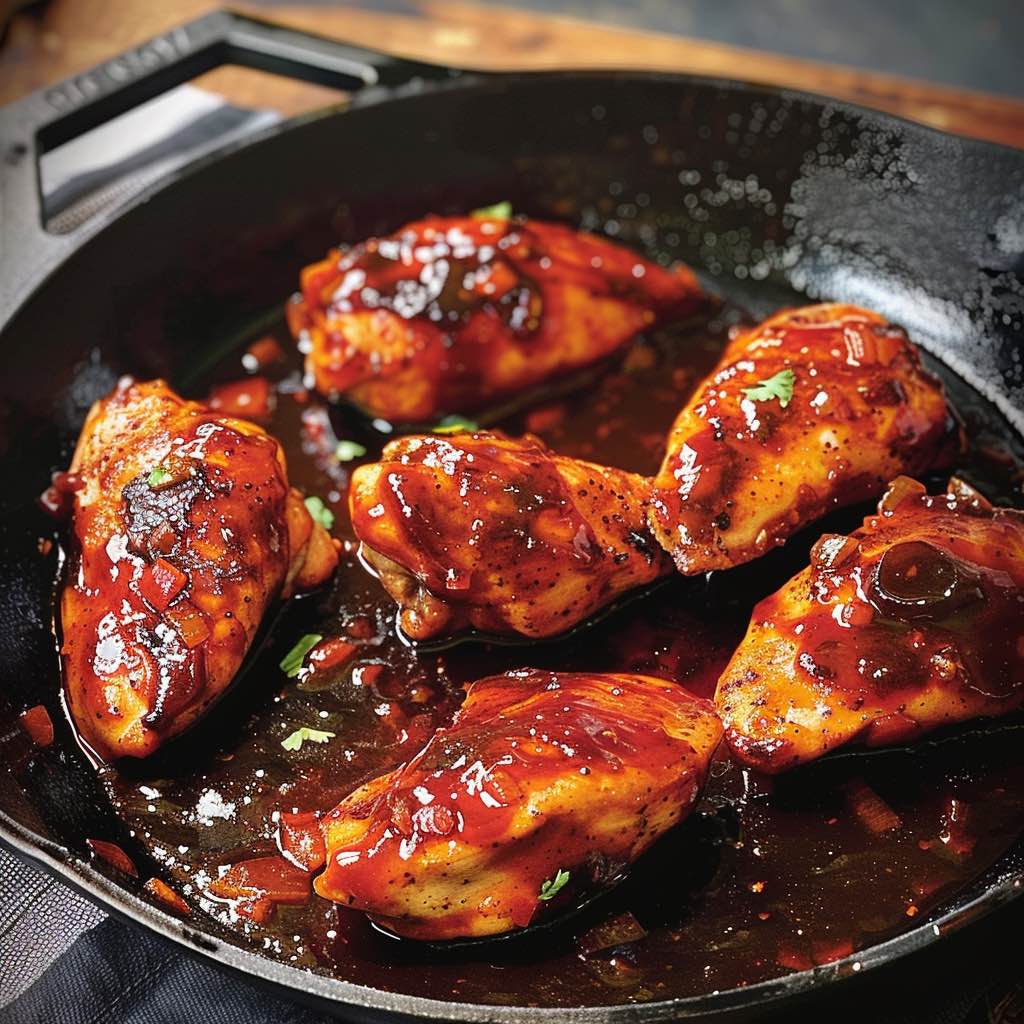
Skillet Barbecue Chicken: Your Complete Guide to Easy, Flavorful Weeknight Dinners
Introduction
Skillet Barbecue Chicken transforms ordinary weeknight dinners into something extraordinary. This one-pan wonder delivers tender, juicy chicken coated in rich, smoky BBQ sauce without firing up the grill. Moreover, it’s ready in less than 30 minutes, making it perfect for busy families. The beauty of this dish lies in its simplicity and versatility. Furthermore, cooking chicken in a skillet allows better control over temperature and doneness compared to outdoor grilling. Whether using boneless thighs or chicken breasts, this method guarantees flavorful results every single time.
What Makes Skillet Barbecue Chicken Special
Quick and Convenient Cooking Method
Skillet barbecue chicken offers unmatched convenience for home cooks. In addition, the stovetop method eliminates the need for outdoor grills or lengthy oven times. Therefore, this cooking technique works year-round, regardless of weather conditions. The skillet creates beautiful caramelization on the chicken surface while locking in moisture. Consequently, each bite delivers maximum flavor with minimal effort.
One-Pan Simplicity
This dish requires only one pan from start to finish. As a result, cleanup becomes incredibly easy after dinner. Additionally, the contained cooking environment helps sauce adhere better to the chicken. Thus, every piece gets evenly coated with delicious BBQ flavor. The skillet also allows for better monitoring throughout the cooking process.
Essential Ingredients and Equipment
Core Ingredients You’ll Need
The foundation of great skillet barbecue chicken starts with quality ingredients. First, boneless chicken thighs or breasts work exceptionally well. Next, olive oil helps prevent sticking and promotes browning. Furthermore, essential seasonings include garlic powder, onion powder, chili powder, and paprika. Finally, BBQ sauce serves as the star flavor component of the dish.
Basic ingredient list includes:
-
2-3 pounds boneless chicken (thighs or breasts)
-
1-2 tablespoons olive oil
-
1 teaspoon chili powder
-
1 teaspoon garlic powder
-
1 teaspoon onion powder
-
1 teaspoon paprika
-
Salt and black pepper to taste
-
1/2 to 1 cup BBQ sauce (homemade or store-bought)
Equipment Needed
A good-quality skillet makes all the difference in results. Specifically, cast iron skillets provide excellent heat retention and distribution. However, nonstick skillets also work perfectly fine for this recipe. Additionally, having a meat thermometer ensures perfectly cooked chicken every time. Similarly, tongs help flip chicken pieces without tearing the meat.
Choosing the Right Chicken Cuts
Boneless Chicken Thighs vs. Breasts
Boneless chicken thighs offer superior juiciness and flavor retention. In contrast, chicken breasts provide a leaner option with less fat. Nevertheless, both cuts work wonderfully for skillet barbecue chicken recipes. Importantly, thighs tend to stay moist even if slightly overcooked. Meanwhile, breasts require more careful temperature monitoring to prevent dryness.
Preparing Your Chicken for Cooking
Proper preparation ensures even cooking and better flavor absorption. First, pat chicken pieces completely dry with paper towels. Then, consider pounding breasts to uniform thickness for consistent cooking. Additionally, piercing the chicken with a knife helps marinade penetrate deeper. Subsequently, allowing chicken to reach room temperature before cooking promotes even doneness.
Step-by-Step Cooking Instructions
Seasoning the Chicken
Start by creating a flavorful spice blend for the chicken. Combine chili powder, garlic powder, onion powder, paprika, salt, and pepper in a bowl. Next, rub this mixture evenly over all chicken pieces. Alternatively, mix seasonings with olive oil before coating the chicken. Then, let seasoned chicken rest for 5-10 minutes before cooking.
Searing for Maximum Flavor
Heat your skillet over medium-high heat until quite hot. Add olive oil and swirl to coat the pan surface. Place chicken pieces in the skillet without overcrowding. Cook undisturbed for 5-7 minutes until golden brown develops. Flip chicken carefully and cook the second side for another 5 minutes.
Adding the BBQ Sauce
Once chicken is nearly cooked through, reduce heat to medium-low. Pour BBQ sauce over the chicken pieces evenly. Use a spoon or brush to coat all surfaces thoroughly. Cook for an additional 2-3 minutes while continuously basting. Finally, check that internal temperature reaches 165°F before serving.
Making Homemade BBQ Sauce
Benefits of Homemade Sauce
Creating BBQ sauce from scratch offers numerous advantages over store-bought versions. Primarily, homemade sauce contains no artificial preservatives or colors. Furthermore, controlling sugar content makes healthier versions possible. Additionally, customizing flavors to personal preferences becomes easy. Therefore, making sauce at home ensures knowing exactly what goes into the meal.
Basic Homemade BBQ Sauce Recipe
A simple, healthy BBQ sauce requires only pantry staples. Start with tomato sauce as the flavorful base. Add apple cider vinegar for tanginess and depth. Include maple syrup or honey for natural sweetness. Mix in smoked paprika for that characteristic smoky flavor. Finally, incorporate garlic, onion, and Worcestershire sauce for complexity.
Simple BBQ sauce ingredients:
-
1 cup tomato sauce
-
1/4 cup apple cider vinegar
-
2 tablespoons maple syrup or honey
-
1 tablespoon smoked paprika
-
1 tablespoon Worcestershire sauce
-
1 teaspoon garlic powder
-
1 teaspoon onion powder
-
Salt and pepper to taste
Cooking Your Homemade Sauce
Sauté finely diced onions in a small amount of olive oil. Add minced garlic and cook until fragrant. Pour in tomato sauce, vinegar, and all remaining ingredients. Simmer the mixture for 10-15 minutes, stirring occasionally. Finally, blend for smooth consistency or leave chunky as preferred.
Tips for Perfect Results Every Time
Temperature Control Matters
Maintaining proper heat throughout cooking ensures optimal results. Start with medium-high heat for initial searing. Then, reduce to medium-low when adding BBQ sauce. Moreover, consistent temperature prevents burning while allowing caramelization. Additionally, using a thermometer guarantees chicken reaches safe internal temperature.
Avoiding Dry Chicken
Several techniques help keep chicken moist and tender. First, avoid overcrowding the skillet, which causes steaming instead of browning. Second, refrain from moving chicken too frequently during cooking. Third, covering the skillet traps moisture during the cooking process. Fourth, letting chicken rest briefly before slicing preserves juices.
Achieving Perfect Caramelization
Beautiful caramelized BBQ sauce creates irresistible flavor and appearance. Pat chicken completely dry before cooking to promote browning. Use a hot skillet to create an initial sear. Add sauce only after chicken is mostly cooked through. Finally, allow sauce to cook down slightly for thicker consistency.
Nutritional Benefits and Health Information
Protein-Packed Main Dish
Skillet barbecue chicken provides excellent nutritional value for balanced meals. Each serving delivers approximately 25-32 grams of high-quality protein. Therefore, this dish supports muscle maintenance and overall health. Additionally, protein promotes satiety, helping control appetite throughout the day. Furthermore, chicken contains essential amino acids the body cannot produce independently.
Lower Fat Alternative to Red Meat
Chicken offers significant health advantages compared to red meat options. Specifically, skinless chicken contains less saturated fat than beef or pork. Consequently, choosing chicken supports heart health and cholesterol management. Moreover, using cooking methods like skillet preparation keeps added fats minimal. Therefore, this preparation method aligns with various dietary preferences.
Calorie Considerations
A typical serving of skillet barbecue chicken contains 175-285 calories. However, exact numbers vary based on chicken cuts and sauce ingredients used. Additionally, using homemade BBQ sauce can reduce sugar and sodium content significantly. Thus, controlling ingredients allows customization for specific dietary needs.
Serving Suggestions and Side Dishes
Classic Southern Pairings
Traditional accompaniments complement skillet barbecue chicken beautifully. Creamy coleslaw provides cool contrast to warm, savory chicken. Cornbread offers slightly sweet balance to tangy BBQ flavors. Additionally, mac and cheese creates satisfying comfort food combinations. Check out our guide on [perfect Southern side dishes] for more pairing ideas.
Healthy Side Options
Lighter sides keep the meal nutritious without sacrificing satisfaction. Roasted vegetables add color, fiber, and vitamins to the plate. Fresh green salads with vinaigrette provide refreshing crunch. Furthermore, cauliflower rice offers low-carb alternative to traditional grains. Similarly, steamed broccoli adds nutritional value while remaining simple to prepare.
Starch and Grain Accompaniments
Hearty starches round out the meal and provide lasting energy. Coconut rice adds tropical flair to barbecue chicken dinners. Mashed potatoes deliver classic comfort food appeal. Moreover, roasted sweet potatoes contribute natural sweetness and beta-carotene. Finally, fingerling potatoes cooked alongside chicken create one-pan dinner convenience.
Common Mistakes to Avoid
Overcrowding the Pan
Placing too much chicken in the skillet prevents proper browning. Instead, cook chicken in batches if necessary for better results. Overcrowding creates steam rather than allowing caramelization. Therefore, leave space between pieces for optimal heat circulation. Consequently, patience during cooking yields superior texture and flavor.
Adding Sauce Too Early
Introducing BBQ sauce too soon causes burning and bitterness. BBQ sauce contains sugars that caramelize quickly over high heat. Thus, add sauce only during the final cooking minutes. This timing allows sauce to glaze beautifully without scorching. Furthermore, it prevents excessive reduction and loss of moisture.
Not Checking Internal Temperature
Guessing doneness leads to either undercooked or overcooked chicken. Always use a meat thermometer for food safety and quality. Chicken must reach 165°F internal temperature before consumption. Additionally, checking temperature prevents unnecessary overcooking that causes dryness. Therefore, investing in a reliable thermometer proves worthwhile for any home cook.
Recipe Variations to Try
Spicy BBQ Chicken Skillet
Adding heat creates exciting flavor variations for adventurous eaters. Mix cayenne pepper or chili flakes into the seasoning blend. Alternatively, incorporate hot sauce into homemade BBQ sauce recipes. Additionally, chipotle powder delivers smoky heat simultaneously. Therefore, adjust spice levels gradually to suit personal preferences.
Honey BBQ Variation
Sweetening the sauce creates family-friendly flavor profiles. Stir a tablespoon of honey into BBQ sauce before adding to chicken. This addition balances tanginess with natural sweetness beautifully. Furthermore, honey provides beneficial antioxidants alongside great taste. Consequently, this variation appeals especially well to younger diners.
One-Skillet Chicken and Vegetables
Adding vegetables creates complete one-pan dinners with minimal effort. Slice onions thickly and place them under chicken pieces. Include broccoli florets, baby carrots, and potatoes around the chicken. Then, drizzle vegetables with olive oil and season well. Finally, everything cooks together, absorbing delicious BBQ flavors throughout.
Storage and Meal Prep Tips
Refrigerating Leftovers
Proper storage extends the life of skillet barbecue chicken safely. Allow chicken to cool completely before refrigerating. Transfer to airtight containers within two hours of cooking. Store in the refrigerator for up to 3-4 days maximum. Additionally, keep sauce-covered chicken separate from fresh vegetables for best quality.
Freezing for Later Use
Freezing provides convenient make-ahead meal options for busy weeks. Wrap individual portions tightly in freezer-safe containers or bags. Remove as much air as possible to prevent freezer burn. Label containers with date and contents for easy identification. Frozen skillet barbecue chicken maintains quality for up to 3 months.
Reheating Instructions
Gentle reheating preserves texture and moisture in leftover chicken. Microwave portions on medium power in 30-second intervals until heated through. Alternatively, reheat in a covered skillet over low heat with water splash. Oven reheating at 350°F for 10-15 minutes also works well. Avoid high heat, which dries out previously cooked chicken quickly.
Meal Prep Strategies
Preparing components ahead streamlines weeknight dinner preparation significantly. Season chicken pieces and store in the refrigerator up to 24 hours ahead. Make homemade BBQ sauce in advance and refrigerate for a week. Chop vegetables and store them separately in airtight containers. Then, final cooking takes only 20-30 minutes on busy evenings.
Frequently Asked Questions
Can I use chicken breasts instead of thighs for skillet barbecue chicken?
Yes, chicken breasts work perfectly well for this recipe. However, breasts require more careful monitoring to prevent drying out. Additionally, pounding breasts to even thickness ensures uniform cooking throughout. Therefore, adjust cooking time slightly shorter for thinner breast pieces. Nevertheless, thighs remain juicier if slightly overcooked compared to breasts.
How do I know when skillet barbecue chicken is fully cooked?
The most reliable method uses a meat thermometer inserted into the thickest part. Chicken must reach an internal temperature of 165°F for food safety. Alternatively, juices should run clear when chicken is pierced with a knife. Additionally, the meat should no longer appear pink inside. Therefore, investing in a digital thermometer ensures perfectly cooked results every time.
Can I make BBQ sauce without refined sugar?
Absolutely, many natural sweeteners work wonderfully in homemade BBQ sauce. Maple syrup provides natural sweetness with distinctive flavor. Honey offers another excellent refined-sugar-free option. Additionally, date syrup serves as an alternative sweetener choice. Furthermore, unsweetened applesauce contributes sweetness while reducing overall sugar content. Therefore, experimenting with different sweeteners customizes sauce to dietary preferences.
What’s the best skillet to use for barbecue chicken?
Cast iron skillets provide superior heat retention and even cooking. However, nonstick skillets also work excellently for easier cleanup. Additionally, ensure the skillet is large enough to avoid overcrowding chicken pieces. Furthermore, oven-safe skillets allow finishing in the oven if desired. Therefore, choose based on personal preference and equipment availability.
How can I make skillet barbecue chicken healthier?
Several simple modifications increase nutritional value without sacrificing flavor. Use skinless chicken breasts for lower fat content. Create homemade BBQ sauce to control sugar and sodium levels. Additionally, reduce cooking oil quantity or use cooking spray instead. Furthermore, serve alongside vegetable-rich sides rather than heavy starches. Therefore, small adjustments create significantly healthier overall meals.
Can I marinate the chicken overnight for skillet barbecue chicken?
Yes, marinating chicken overnight enhances flavor penetration throughout the meat. Combine chicken with seasonings and a small amount of BBQ sauce. Store in an airtight container in the refrigerator up to 24 hours. However, avoid adding full sauce amounts until actual cooking time. Therefore, marinating provides convenient prep-ahead option for busy schedules.
Conclusion
Skillet Barbecue Chicken delivers restaurant-quality flavor with minimal effort and cleanup. This versatile dish adapts easily to various tastes, dietary needs, and available ingredients. Moreover, mastering basic techniques ensures consistently delicious results every single time. Therefore, whether cooking for weeknight dinners or weekend gatherings, this recipe satisfies everyone at the table.
The combination of tender chicken, smoky BBQ sauce, and simple preparation makes this dish irresistible. Furthermore, the ability to customize seasonings and sauce creates endless variation possibilities. Additionally, nutritional benefits make skillet barbecue chicken a smart choice for health-conscious families. Consequently, this recipe deserves a permanent spot in any home cook’s regular rotation.
Print
Skillet Barbecue Chicken
Description
Skillet Barbecue Chicken
Ingredients
-
4 bone-in, skin-on chicken thighs (or breasts)
-
1 tbsp olive oil
-
Salt and freshly ground black pepper
-
1 cup barbecue sauce (your favorite brand or homemade)
-
2 tbsp honey
-
1 tbsp apple cider vinegar
-
1 tsp smoked paprika
-
2 cloves garlic, minced
-
Optional: pinch of cayenne pepper for a spicy kick
Instructions
-
Prepare the Chicken
Pat chicken dry and season generously with salt and pepper on both sides. -
Sear in the Skillet
Heat olive oil in a large oven-safe skillet (cast iron works best) over medium-high heat.
Add chicken, skin-side down, and sear for 5–6 minutes per side until golden brown. Remove and set aside. -
Make the BBQ Glaze
In the same skillet, lower the heat to medium. Add garlic and sauté for 30 seconds.
Stir in barbecue sauce, honey, vinegar, and smoked paprika. Simmer for 1–2 minutes. -
Return Chicken to Skillet
Coat chicken in the sauce, spooning it over each piece. -
Finish Cooking
-
Option 1 (Oven Method): Transfer skillet to a 400°F (200°C) oven and bake for 20–25 minutes, until chicken is cooked through (165°F / 74°C).
-
Option 2 (Stovetop Method): Cover skillet and cook on low heat for 20–25 minutes, flipping halfway through, until fully cooked and glazed.
-
-
Caramelize the Sauce (Optional but Delicious!)
For extra flavor, uncover and broil for 2–3 minutes or cook uncovered for a few minutes more until sauce thickens and caramelizes.