
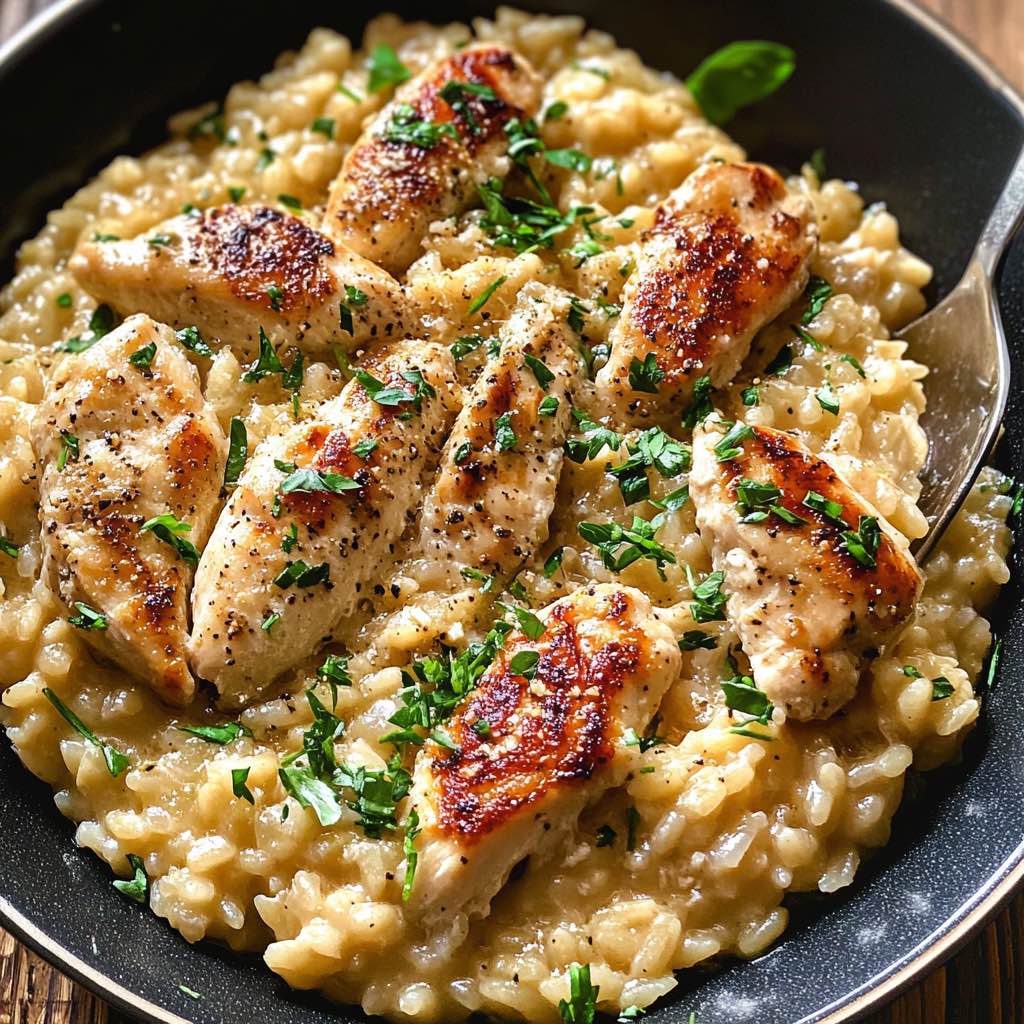
Deliciously Creamy Chicken Risotto with Parmesan
Introduction
Deliciously creamy chicken risotto with Parmesan is comfort food at its finest. This Italian classic combines tender chicken, creamy Arborio rice, and rich Parmesan cheese into one satisfying dish. Moreover, making this restaurant-quality meal at home is easier than most people think. Furthermore, this complete guide walks through every step, tip, and trick needed to create perfect risotto every single time.
What Makes This Chicken Risotto Special
The Perfect Comfort Food
This dish stands out as ultimate comfort food because it combines protein, carbohydrates, and rich flavors in one pot. Additionally, the creamy texture comes from slowly releasing starches from the rice during cooking. The Parmesan adds depth and umami that elevates every bite.
Restaurant Quality at Home
Professional chefs love risotto because it showcases proper technique while remaining approachable. Similarly, home cooks can achieve restaurant-quality results by following key principles. Most importantly, this recipe requires no special equipment beyond basic kitchen tools.
Essential Ingredients You’ll Need
Main Components
The foundation starts with high-quality Arborio rice, which releases starch to create creaminess. Fresh chicken thighs or breasts provide protein and hearty texture. Furthermore, freshly grated Parmesan cheese delivers authentic Italian flavor. Warm chicken broth serves as the cooking liquid that rice gradually absorbs.
Aromatic Base
Yellow onions form the aromatic foundation that builds flavor depth. Meanwhile, minced garlic adds savory notes that complement the chicken. Additionally, fresh parsley brightens the finished dish. Extra virgin olive oil and butter round out the ingredient list.
Best Rice for Creamy Risotto
Arborio Rice Characteristics
Arborio rice remains the most popular choice for risotto worldwide. This short-grain rice contains high levels of amylopectin starch. Consequently, it creates the signature creamy texture when cooked properly. Arborio cooks in approximately 18 minutes to reach perfect al dente consistency.
Alternative Rice Options
Carnaroli rice offers another excellent option with firmer texture. This variety maintains grain structure better during cooking. However, Carnaroli costs more and proves harder to find. Both varieties work beautifully in this chicken risotto recipe.
Rice Nutrition Facts
Arborio rice provides excellent energy through carbohydrates. Additionally, it contains moderate protein levels for muscle support. The rice also delivers essential vitamins including vitamin A and vitamin C. Iron content contributes to overall nutritional balance.
Step-by-Step Cooking Instructions
Preparation Phase
First, gather all ingredients before starting to cook. Then, dice the chicken into bite-sized pieces for even cooking. Next, warm the chicken broth in a separate pot over low heat. This crucial step ensures consistent temperature throughout cooking.
Building the Flavor Base
Heat olive oil in a large, heavy-bottomed pan over medium heat. Add diced onions with a pinch of salt. Cook for approximately 5 minutes until onions become translucent. Then, stir in minced garlic and cook for one additional minute.
Cooking the Chicken
Add the diced chicken pieces to the aromatic base. Cook until the chicken browns on the outside, about 5-6 minutes. The chicken doesn’t need to cook completely at this stage. Remove the chicken temporarily and set aside in a bowl.
Toasting the Rice
Return the pan to medium heat and add butter. Stir in the Arborio rice and coat each grain with fat. Toast the rice for 1-2 minutes until grains become partially translucent. This critical step seals the starch and helps maintain grain structure.
Adding Liquid Gradually
Pour one ladle of warm broth into the rice. Stir constantly until the rice absorbs approximately 75% of the liquid. This process typically takes 1-2 minutes per addition. Continue adding broth one ladle at a time for about 20 minutes total.
Final Touches
Return the chicken to the pan during the last 5 minutes of cooking. This allows the chicken to heat through completely. When the rice reaches al dente consistency, remove from heat. Vigorously stir in butter and freshly grated Parmesan cheese. Finally, add fresh parsley and season with black pepper.
Professional Tips for Perfect Results
Keep Stock Warm
Always maintain warm stock throughout the cooking process. Cold liquid stops the cooking process and affects texture. Therefore, keep the broth simmering in a separate pot nearby. This simple step ensures consistent results every time.
Use Wide, Heavy Pans
Select a wide, shallow pan for best heat distribution. Heavy-bottomed pans prevent sticking and burning. Consequently, Dutch ovens work exceptionally well for risotto. The wide surface area allows liquid to evaporate properly.
Stir Regularly, Not Constantly
Contrary to popular belief, constant stirring isn’t necessary. Stir the risotto every 30 seconds to activate starch. However, over-stirring incorporates too much air and creates gluey texture. Therefore, find the balance between attention and over-working the rice.
Add Butter at the End
The final butter addition creates luxurious creaminess. Professional chefs call this technique “mantecatura”. Stirring vigorously at this stage activates remaining starch. Moreover, this step takes the dish from good to exceptional.

Common Mistakes to Avoid
Rinsing the Rice
Never rinse Arborio rice before cooking. Rinsing strips away the starch needed for creaminess. The starch content creates the signature risotto texture. Therefore, use rice straight from the package without washing.
Adding All Liquid at Once
Dumping all broth in simultaneously ruins the dish. This mistake prevents proper starch release and creates soupy rice. Instead, patience and gradual additions produce perfect results. The incremental method remains non-negotiable for authentic risotto.
Using Cold Broth
Cold broth shocks the cooking process and affects timing. The temperature drop means rice takes longer to cook. Additionally, this can result in undercooked grains. Always bring broth to a boil before beginning.
Overcooking the Rice
Arborio rice cooks quickly and becomes mushy when overdone. Watch timing carefully during the final minutes. The rice should maintain slight firmness when finished. Taste frequently during the last 5 minutes of cooking.
Nutritional Benefits
Calorie and Macronutrient Content
Basic risotto provides approximately 153 calories per 100 grams. The dish contains 24 grams of carbohydrates for sustained energy. Additionally, risotto delivers 5 grams of protein per serving. Total fat content measures around 4 grams per portion.
Vitamin and Mineral Profile
This chicken risotto provides essential B vitamins for metabolism. Iron content supports healthy blood oxygen transport. Magnesium contributes to bone health and muscle function. Potassium helps maintain healthy blood pressure levels.
Energy and Performance Benefits
The high carbohydrate content provides quick energy release. This makes chicken risotto excellent for active individuals. Furthermore, the protein from chicken supports muscle repair. The balanced macronutrients create satisfying, sustained fullness.
Customizable Nutrition
Adding vegetables increases fiber and vitamin content significantly. For example, peas, asparagus, or mushrooms boost nutritional value. Similarly, using chicken breast instead of thighs reduces fat content. The dish adapts easily to various dietary needs.
Variations and Substitutions
Protein Options
Substitute rotisserie chicken for quick weeknight meals. Leftover roasted chicken works perfectly in this recipe. Alternatively, use turkey for a leaner protein option. Shrimp or seafood create elegant variations.
Vegetable Additions
Mushrooms add earthy depth and meaty texture. Asparagus brings spring freshness and bright color. Frozen peas offer convenience and pop of sweetness. Roasted vegetables contribute caramelized flavors.
Cheese Alternatives
While Parmesan remains traditional, other hard cheeses work too. Pecorino Romano provides sharper, saltier flavor. Grana Padano offers similar taste at lower cost. Mix different cheeses for complex flavor profiles.
Broth Choices
Chicken broth creates the most traditional flavor. However, vegetable broth makes excellent vegetarian risotto. White miso mixed with water adds umami depth. Each broth choice creates unique flavor dimensions.
Storage and Reheating Guide
Proper Storage Methods
Transfer leftover risotto to airtight containers immediately. Cool the risotto quickly before refrigerating. Store in the refrigerator at 1-5°C for maximum 2-3 days. Rice shouldn’t sit at room temperature for extended periods.
Safe Reheating Practices
Reheat risotto until it reaches 75°C or above. Use low heat and add extra broth to restore creaminess. Microwave in covered, microwave-safe dishes to trap moisture. Stir frequently during reheating for even temperature distribution.
Restaurant Technique
Professional chefs cook risotto to 80% completion before storing. Spread partially cooked risotto on aluminum sheets to cool. Cover and refrigerate until service time. Finish cooking by adding remaining broth and final ingredients.
Freezing Considerations
Freezing risotto isn’t recommended because texture becomes mushy. However, frozen rice loses its elegant consistency after thawing. Therefore, only refrigerate leftovers for best quality. Plan portions carefully to minimize waste.
Creative Leftover Ideas
Transform leftover risotto into crispy rice cakes. Alternatively, make Italian arancini by stuffing and frying rice balls. Coat portions with breadcrumbs and pan-fry like schnitzel. These methods give new life to day-old risotto.
Frequently Asked Questions
How long does it take to make deliciously creamy chicken risotto with Parmesan?
Total cooking time ranges from 25-30 minutes from start to finish. The preparation phase takes about 10 minutes for ingredient prep. Active cooking requires approximately 20 minutes of gradual liquid addition. Therefore, plan for 40 minutes total including preparation.
Can I make risotto ahead of time?
Yes, prepare risotto up to 80% completion three days in advance. Cool quickly on sheet pans before refrigerating. When ready to serve, finish cooking with additional broth. This restaurant technique saves time during entertaining.
Why is my risotto mushy?
Mushy risotto results from overcooking or adding too much liquid. Additionally, rinsing rice beforehand removes necessary starch. Over-stirring can also break down rice grains excessively. Therefore, watch timing carefully and stir moderately.
Do I really need to stir constantly?
No, constant stirring isn’t necessary despite common myths. Stir approximately every 30 seconds to activate starch. Excessive stirring incorporates too much air and creates gluey texture. Therefore, regular but not constant attention produces best results.
Can I use regular long-grain rice?
Long-grain rice doesn’t contain enough amylopectin starch for creaminess. Arborio or Carnaroli rice remain essential for authentic risotto. The high starch content creates the signature creamy consistency. Therefore, invest in proper short-grain risotto rice.
What’s the difference between Arborio and Carnaroli rice?
Arborio rice has shorter grains and higher starch content. It cooks faster in approximately 18 minutes. Carnaroli offers firmer texture and more forgiving cooking window. However, Carnaroli costs more and proves harder to find.
How do I know when risotto is done?
Properly cooked risotto maintains slight firmness called “al dente”. The rice should be tender but not mushy. Additionally, the consistency should be creamy and flow slightly. Taste test frequently during the final cooking minutes.
Can I make this recipe vegetarian?
Absolutely, substitute vegetable broth for chicken broth. Remove the chicken and add extra vegetables like mushrooms. The cooking method remains identical regardless of ingredients. Vegetarian risotto tastes equally delicious and creamy.
Conclusion
Deliciously creamy chicken risotto with Parmesan delivers restaurant-quality comfort food at home. This comprehensive guide covers everything from ingredient selection to storage tips. Moreover, avoiding common mistakes ensures perfect results every time. The gradual cooking method releases starches that create signature creaminess. Furthermore, this versatile dish accepts endless variations and substitutions. Warm chicken broth, patient stirring, and quality Parmesan remain the keys to success.
Print
Deliciously Creamy Chicken Risotto with Parmesan
Description
Deliciously Creamy Chicken Risotto with Parmesan
Ingredients (Serves 4)
For the Chicken:
-
2 chicken breasts, cut into bite-sized pieces
-
Salt and black pepper, to taste
-
1 tsp garlic powder
-
1 tbsp olive oil
For the Risotto:
-
1 ½ cups Arborio rice
-
4 cups chicken broth, kept warm
-
1 small onion, finely chopped
-
2 garlic cloves, minced
-
2 tbsp butter
-
1 tbsp olive oil
-
½ cup grated Parmesan cheese
-
½ cup heavy cream (optional, for extra creaminess)
-
Salt and pepper, to taste
-
2 tbsp chopped fresh parsley, for garnish
Instructions
1. Cook the Chicken
-
Season chicken pieces with salt, pepper, and garlic powder.
-
Heat olive oil in a skillet over medium-high heat and sauté chicken until golden and cooked through, about 5–6 minutes.
-
Remove chicken and set aside.
2. Start the Risotto
-
In a large skillet or saucepan, heat butter and olive oil over medium heat.
-
Add onion and cook until translucent, about 3 minutes.
-
Stir in garlic and cook 30 seconds until fragrant.
-
Add Arborio rice, stirring for 1–2 minutes to toast slightly.
3. Add Liquids Gradually
-
Begin adding warm chicken broth, one ladle at a time, stirring constantly.
-
Wait until each addition is mostly absorbed before adding the next.
-
Continue until rice is creamy and tender, about 18–20 minutes.
4. Finish the Risotto
-
Stir in cooked chicken, Parmesan cheese, and heavy cream (if using).
-
Adjust seasoning with salt and pepper.
-
Cook for 1–2 minutes until everything is heated through and creamy.
5. Serve
-
Plate the risotto and garnish with fresh parsley and extra Parmesan cheese.
-
Serve immediately for the creamiest texture.