
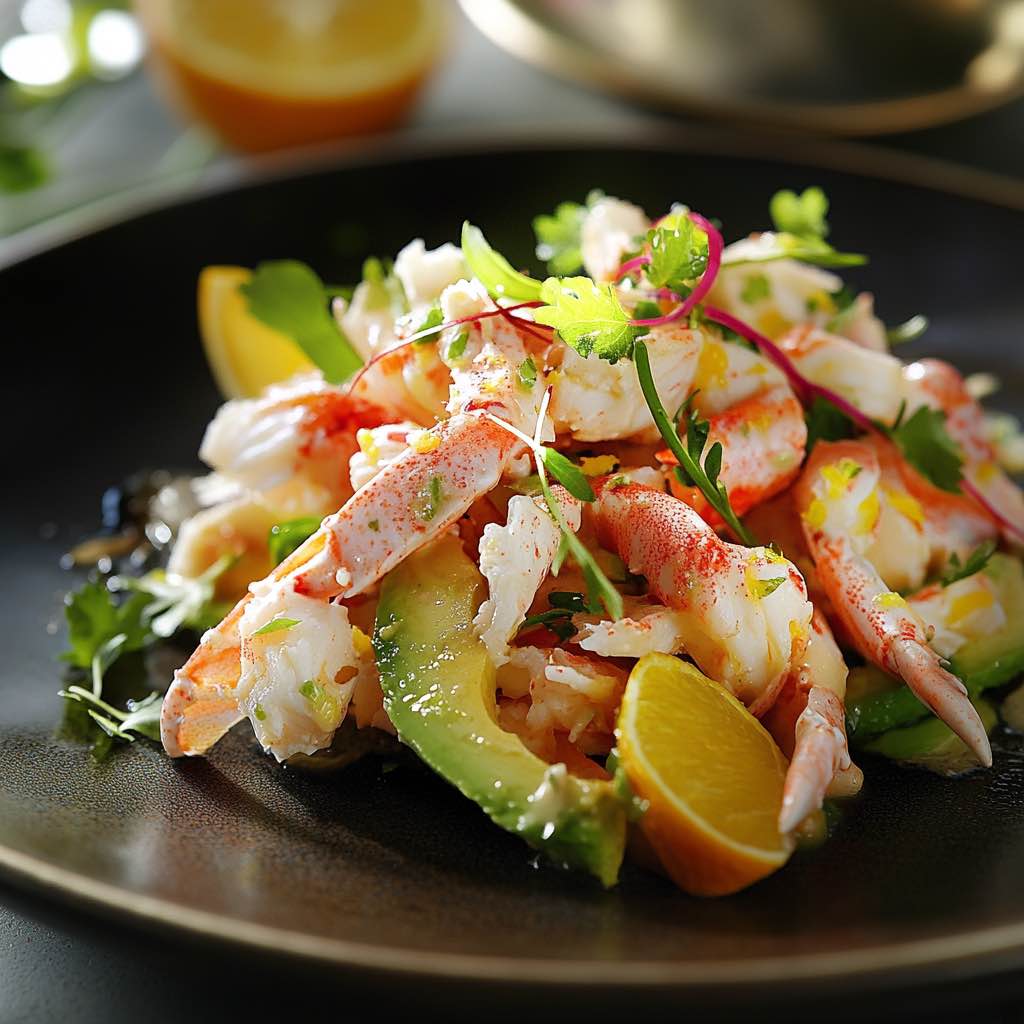
Crab Salad with Avocado and Citrus Dressing
Crab Salad with Avocado and Citrus Dressing brings together succulent crab meat, creamy avocado, and a zesty homemade dressing that transforms simple ingredients into a restaurant-quality dish. This light yet satisfying salad delivers impressive nutritional benefits while requiring minimal preparation time. Whether served as an elegant appetizer, a light lunch, or a sophisticated dinner option, this crab salad with avocado and citrus dressing offers both flavor and wellness in every bite.
Why Crab Salad with Avocado and Citrus Dressing Stands Out
This crab salad with avocado and citrus dressing combines three distinct flavor profiles that complement each other beautifully. The sweet, delicate taste of crab provides a luxurious protein base, while creamy avocado adds richness and smooth texture. Additionally, the bright citrus dressing ties everything together with its tangy, refreshing notes. Unlike mayonnaise-heavy versions, this approach keeps the dish light and vibrant.
The appeal extends beyond taste alone. This salad offers visual beauty with its contrasting colors—bright orange citrus segments, emerald avocado slices, and pristine white crab meat. Moreover, the preparation time remains remarkably short, making it ideal for both weeknight dinners and special occasions. The no-cook nature of this recipe means minimal time in the kitchen while still delivering maximum flavor.
Nutritional Powerhouse Ingredients
Crab Meat Benefits
Crab meat ranks among the most nutritious seafood options available today. Each serving delivers high-quality protein while remaining surprisingly low in calories and fat. Furthermore, crab contains impressive amounts of omega-3 fatty acids, specifically EPA and DHA, which support cardiovascular health. These beneficial fats help reduce inflammation throughout the body and promote optimal brain function.
The vitamin and mineral content of crab proves equally impressive. Vitamin B12, found abundantly in crab, supports nerve function and aids red blood cell production. Additionally, crab provides selenium, zinc, and copper—essential minerals that act as antioxidants and strengthen immune function. These nutrients work together to support thyroid health and overall wellness.
Avocado Nutritional Profile
Avocados contain an impressive array of nutrients that modern diets often lack. A medium avocado provides 14 grams of fiber, supporting digestive health and promoting satiety. The fruit also delivers significant amounts of heart-healthy monounsaturated fats, which help reduce bad cholesterol levels.
Beyond healthy fats, avocados supply essential vitamins and minerals. Vitamin E, vitamin K, vitamin C, and B vitamins appear in substantial quantities. Potassium content exceeds that of bananas, making avocados excellent for blood pressure regulation. These nutrients combine to support cardiovascular health, brain function, and overall vitality.
Citrus Fruit Advantages
Fresh citrus fruits bring vitamin C and antioxidants to this crab salad with avocado and citrus dressing. The natural acidity brightens flavors while providing health-supporting compounds. Oranges, lemons, and limes each contribute unique flavor profiles and nutritional benefits. Using fresh citrus juice rather than bottled versions ensures maximum nutrient content without added sugars or preservatives.
Essential Ingredients for the Perfect Crab Salad
Main Salad Components
Creating an outstanding crab salad with avocado and citrus dressing requires carefully selected ingredients. Fresh lump crab meat provides the star protein, offering sweet flavor and tender texture. Ripe avocados contribute creaminess and healthy fats. Crisp lettuce or mixed greens form the foundation, adding volume and fresh crunch.
Complementary vegetables enhance both taste and nutrition. Diced cucumber brings refreshing coolness and hydration. Thinly sliced radishes add peppery bite and beautiful color. Cherry tomatoes or diced roma tomatoes contribute juicy sweetness. Red and green bell peppers provide crunch and vibrant hues.
Citrus Dressing Ingredients
The citrus dressing transforms this salad from ordinary to extraordinary. Fresh orange juice forms the sweet base, while lemon juice adds bright acidity. Extra virgin olive oil creates emulsion and adds healthy fats. Dijon mustard acts as an emulsifier while contributing tangy depth.
Natural sweeteners balance the acidity perfectly. Honey or maple syrup work equally well, depending on preference. Fresh garlic adds aromatic complexity. Kosher salt and freshly ground black pepper enhance all flavors. These simple ingredients combine to create a dressing that rivals any restaurant version.
Optional Flavor Enhancers
Additional ingredients can customize this crab salad with avocado and citrus dressing. Fresh cilantro provides herbaceous brightness and pairs beautifully with citrus. Green onions or scallions add mild onion flavor without overpowering. Lime juice can replace or supplement lemon juice for variation.
For those who enjoy heat, jalapeños or serrano peppers add spicy kick. Apple slices contribute sweet crunch and pair wonderfully with crab. Watercress or arugula can replace standard lettuce for a peppery note. Each addition brings new dimensions while maintaining the dish’s light, fresh character.
How to Select the Best Crab Meat
Fresh vs. Canned Crab
Choosing quality crab meat significantly impacts the final dish. Fresh lump crab meat delivers superior flavor and texture but comes at premium pricing. The sweet, delicate taste and tender chunks make it worthwhile for special occasions. Conversely, canned crab meat offers convenience and affordability while still producing excellent results.
When purchasing fresh crab, look for meat that smells clean and oceanic, never fishy. The flesh should appear white or slightly pink with no discoloration. Fresh crab meat typically comes pasteurized and refrigerated, extending shelf life to several weeks unopened. Once opened, use fresh crab within two days for best quality.
Crab Meat Grades
Understanding crab meat grades helps make informed purchasing decisions. Jumbo lump consists of the largest, most intact pieces from the backfin. This premium grade works perfectly for crab salad with avocado and citrus dressing where presentation matters. Lump crab meat contains slightly smaller pieces but still maintains excellent flavor and texture.
Backfin or special crab meat combines smaller flakes with some lump pieces. This grade offers good value while still delivering authentic crab taste. Claw meat features stronger flavor and darker color. While perfectly edible, claw meat may overwhelm the delicate balance of this recipe.
Checking for Shell Fragments
Even premium crab meat occasionally contains shell fragments. Before incorporating crab into the salad, spread it on a clean plate. Carefully pick through the meat, feeling for hard pieces. Remove any shell or cartilage found. This extra step ensures a pleasant eating experience without unexpected crunch.
Choosing and Preparing Avocados
Selecting Ripe Avocados
Perfect avocado ripeness makes or breaks this crab salad with avocado and citrus dressing. Gently squeeze the avocado in your palm without using fingertips. Ripe avocados yield to gentle pressure but don’t feel mushy. The skin color varies by variety, so texture provides a more reliable indicator than appearance.
Check the stem end for additional ripeness clues. Flick off the small stem cap and observe the color underneath. Green or yellow indicates perfect ripeness, while brown suggests overripeness. If the stem doesn’t remove easily, the avocado needs more time. Planning ahead allows purchase of firm avocados several days before needed.
Proper Cutting Techniques
Cutting avocados correctly prevents waste and ensures even pieces. Cut lengthwise around the pit, then twist the halves apart. Carefully strike the pit with a knife blade and twist to remove. Score the flesh in a crosshatch pattern for cubes, or slice for elegant presentation.
Scoop avocado pieces with a large spoon, sliding between flesh and skin. Handle gently to maintain shape and avoid mashing. For this salad, slightly larger chunks work better than tiny pieces. The avocado should maintain its integrity while mixing with other ingredients.
Preventing Browning
Avocado oxidation creates unappealing brown discoloration. Citrus juice naturally prevents this enzymatic reaction. The citrus dressing in this recipe provides protection, so toss avocado pieces immediately after cutting. If preparing components ahead, brush avocado with lemon or lime juice.
Storage methods also affect browning. Keep cut avocado in airtight containers to minimize air exposure. Press plastic wrap directly against the flesh surface. Despite precautions, consume prepared salad within 24 hours for best quality. The avocados maintain better texture and color when freshly cut.
Creating the Citrus Dressing
Classic Citrus Vinaigrette
The citrus dressing brings this crab salad with avocado and citrus dressing to life. Start by freshly squeezing two tablespoons of orange juice and one tablespoon of lemon juice. Fresh juice significantly outperforms bottled alternatives in flavor. The natural oils from citrus zest can enhance aroma, though juice alone works beautifully.
Combine citrus juices in a jar with a tight-fitting lid. Add two tablespoons of extra virgin olive oil for richness. Include one-half tablespoon of Dijon mustard to help emulsify the dressing. Season with kosher salt and freshly ground black pepper to taste. Secure the lid and shake vigorously until well combined.
Alternative Dressing Variations
Several variations suit different preferences while maintaining the citrus character. Replace orange juice with grapefruit juice for more bitter, complex notes. Add lime juice alongside or instead of lemon for tropical flair. Increase sweetness by whisking in honey or maple syrup.
Garlic lovers can mince a small clove directly into the dressing. Fresh herbs like cilantro or parsley add green freshness. For creamier consistency, blend a few tablespoons of mayo or Greek yogurt into the citrus base. Each variation maintains the essential bright, tangy quality that defines this dish.
Emulsification Tips
Proper emulsification creates smooth, cohesive dressing rather than separated oil and juice. Always add acid (citrus juice) to the jar first, followed by seasonings. Mustard acts as a natural emulsifier, helping oil and juice blend. Pour oil last, then shake with considerable force.
Alternatively, whisk ingredients in a bowl for more control. Slowly drizzle oil while whisking constantly. This gradual addition encourages stable emulsion. For ultra-smooth results, blend all ingredients in a food processor. The mechanical action creates fine droplets that stay suspended. Regardless of method, the dressing should appear unified rather than separated.
Step-by-Step Preparation Guide
Preparing Components
Organization streamlines the assembly of this crab salad with avocado and citrus dressing. Begin by washing and thoroughly drying all greens and vegetables. Moisture dilutes the dressing and creates soggy salad. Pat leaves with paper towels or use a salad spinner for best results.
Carefully pick through the crab meat to remove any shell fragments. Segment citrus fruits if using as garnish, removing all bitter white pith. Dice cucumbers, tomatoes, and peppers into consistent, bite-sized pieces. Slice radishes thinly for delicate crunch. Having all components ready ensures quick final assembly.
Mixing the Salad
Assembly timing affects texture and presentation significantly. If serving immediately, divide greens among individual plates or arrange on a large platter. Distribute crab meat evenly across the greens. Add avocado slices or chunks, placing them strategically for visual appeal.
Scatter additional vegetables around the plate. Arrange citrus segments if using for garnish. Pour the citrus dressing over everything just before serving. This last-minute addition prevents wilting and maintains crisp textures. Alternatively, serve dressing on the side for individual preference.
For mixed presentation, combine ingredients in a large bowl. Toss gently with dressing, using a light hand to avoid mashing avocado. The goal is even coating without crushing delicate components. Transfer to serving dishes immediately after mixing.
Plating for Presentation
Thoughtful plating elevates this crab salad with avocado and citrus dressing to special-occasion status. Create height by building ingredients vertically rather than spreading flat. Start with a bed of greens, then layer crab, avocado, and vegetables. Finish with a drizzle of dressing and garnishes.
For individual servings, consider using avocado halves as natural bowls. Fill the cavity with crab salad for Instagram-worthy presentation. Alternatively, serve in clear glass bowls to showcase the beautiful colors. Edible flowers or fresh herb sprigs add elegant finishing touches.
Variations and Customizations
Protein Alternatives
While crab shines in this recipe, other proteins work wonderfully too. Cooked shrimp provides similar sweetness and pairs beautifully with citrus. Lobster creates an even more luxurious version for special celebrations. Grilled chicken offers a budget-friendly alternative that still tastes delicious.
For pescatarian options, try flaked salmon or tuna. These fish bring omega-3s and hearty texture. Plant-based eaters can substitute chickpeas or white beans for protein. Hearts of palm mimic crab texture surprisingly well. Each alternative maintains the salad’s light, fresh character while accommodating different needs.
Citrus Variations
Different citrus fruits create unique flavor profiles in this crab salad with avocado and citrus dressing. Blood oranges add deep color and sweet-tart complexity. Grapefruit brings sophisticated bitterness that complements rich crab. Tangerines or clementines offer candy-like sweetness.
Meyer lemons provide gentler acidity than regular lemons. Combine multiple citrus types for layered flavor. Try mixing orange and lime juice for tropical notes. Pomelo, an Asian citrus, works beautifully in fusion versions. Fresh citrus zest intensifies flavor without adding moisture.
Additional Mix-Ins
Extra ingredients personalize this adaptable recipe. Diced mango adds tropical sweetness and vibrant color. Sliced fennel contributes anise notes and refreshing crunch. Toasted nuts like almonds or pecans provide textural contrast.
Cooked asparagus spears add elegant sophistication. Edamame beans boost protein and create interesting texture. Microgreens or sprouts contribute delicate crunch and nutrients. Pomegranate arils offer jewel-like appearance and tart bursts. Each addition complements the core ingredients while adding personal flair.
Serving Suggestions and Pairings
As a Main Course
This crab salad with avocado and citrus dressing makes a satisfying light meal. Serve generous portions to ensure adequate protein and healthy fats. Pair with crusty artisan bread for substance without heaviness. Garlic-rubbed toast provides flavor and texture contrast.
Quinoa or couscous adds complex carbohydrates for longer-lasting energy. Serve the salad over a bed of these grains for heartier presentation. Sweet potato wedges offer nutritious side option. A simple vegetable soup complements without overwhelming.
As an Appetizer
Smaller portions work perfectly as elegant starters. Present in individual serving glasses or small bowls. Cucumber rounds or endive leaves create edible vessels for bite-sized portions. These handheld options suit cocktail parties beautifully.
Serve alongside other light appetizers for variety. Grilled vegetables, hummus, and fresh fruit create balanced spread. This salad’s bright flavors cleanse the palate between richer dishes. The no-cook preparation allows focus on other party dishes.
Beverage Pairings
Appropriate beverages enhance the dining experience significantly. Sparkling water with lemon or lime echoes the citrus notes. Iced herbal teas like mint or chamomile complement without competing. Fresh-squeezed lemonade or orangeade creates cohesive flavor profile.
For festive occasions, sparkling cider adds celebration. Coconut water’s natural sweetness pairs nicely with tropical variations. Cold-pressed green juices align with the health-conscious nature of this dish. Each option respects the fresh, clean flavors while adding refreshment.
Storage Tips and Shelf Life
Refrigeration Guidelines
Proper storage extends the life of this crab salad with avocado and citrus dressing. Store undressed components separately for maximum freshness. Place crab meat in an airtight container in the coldest part of the refrigerator. Consume within two days of opening for food safety.
Cut avocado oxidizes quickly despite citrus protection. Prepare avocados as close to serving time as possible. If storing cut avocado, press plastic wrap directly against the flesh. Greens stay crisp when stored in containers lined with paper towels.
The citrus dressing keeps well in a sealed jar for up to three weeks. Shake vigorously before each use to re-emulsify. Mixed salad should be consumed within 24 hours. The avocado browns and textures deteriorate with longer storage.
Make-Ahead Strategies
Planning ahead makes entertaining easier without sacrificing quality. Prepare the citrus dressing up to three days in advance. Wash and dry greens the morning of serving. Pick through crab meat and refrigerate in a covered container.
Prep vegetables like cucumbers, tomatoes, and radishes several hours ahead. Keep them separate until final assembly. Avoid cutting avocados until the last possible moment. This staged approach minimizes stress while ensuring fresh results.
For meal prep, consider portioning undressed components into individual containers. Pack dressing separately in small jars or containers. Assemble and dress just before eating for best texture and flavor. This system works perfectly for healthy packed lunches.
Freezing Considerations
Freezing this crab salad with avocado and citrus dressing is not recommended. Avocados become mushy and discolored when frozen and thawed. The high water content in greens and vegetables creates unpleasant texture after freezing. Crab meat can be frozen separately before use, but the assembled salad should remain fresh.
If working with frozen crab meat, thaw slowly in the refrigerator. Never refreeze previously frozen crab. The quality degrades significantly with each freeze-thaw cycle. Purchase fresh crab and other ingredients for best results.
Troubleshooting Common Issues
Watery Salad
Excess moisture dilutes flavors and creates unappetizing pooling. This usually results from wet greens or high-moisture vegetables. Always dry washed produce thoroughly before use. Use a salad spinner or pat with paper towels.
Dressing the salad too far in advance also causes watering. Salt in the dressing draws moisture from vegetables over time. Dress just before serving or keep dressing separate until the last moment. If watering occurs, drain excess liquid before serving.
Bland Flavor
Under-seasoning disappoints when fresh ingredients deserve proper enhancement. The citrus dressing requires adequate salt to bring out other flavors. Taste and adjust seasoning before adding to the salad. Fresh black pepper adds dimension that pre-ground versions lack.
Using bottled citrus juice instead of fresh reduces vibrant flavor. Always squeeze fresh lemons and oranges for best results. Old or low-quality crab meat tastes flat and uninteresting. Invest in premium crab when possible. Fresh herbs like cilantro brighten flavors instantly.
Broken Dressing
Separated dressing looks unappealing and doesn’t coat ingredients evenly. This happens when oil and acid don’t properly emulsify. Mustard helps bind the mixture, so don’t skip this ingredient. Shake or whisk vigorously to create stable emulsion.
Temperature differences between ingredients can prevent emulsification. Use room-temperature oil rather than cold. If dressing separates in storage, simply shake again before use. For persistent problems, blend ingredients in a food processor. The mechanical action creates finer droplets that stay combined.
Health Benefits You’ll Love
Heart Health Support
This crab salad with avocado and citrus dressing delivers impressive cardiovascular benefits. Omega-3 fatty acids from crab reduce inflammation and lower cholesterol levels. These healthy fats help regulate heart rhythm and decrease blood pressure. Regular consumption supports long-term heart health.
Avocado’s monounsaturated fats complement crab’s omega-3s perfectly. These beneficial fats help raise good HDL cholesterol while lowering harmful LDL. Potassium from avocados aids blood pressure regulation. The combination creates powerful heart-protective effects.
Weight Management Benefits
Despite rich flavors, this salad supports healthy weight maintenance. Crab meat provides substantial protein with minimal calories and fat. Protein increases satiety, helping maintain fullness between meals. The low-calorie profile allows generous portions without excessive calories.
Avocado’s healthy fats and fiber promote lasting satisfaction. Fiber slows digestion and stabilizes blood sugar levels. These effects prevent energy crashes and reduce cravings. The nutrient density means the body receives essential nutrition without empty calories.
Brain Function Enhancement
Multiple components support cognitive health and mental clarity. Omega-3 fatty acids, particularly DHA from crab, maintain brain structure and function. These fats support memory, focus, and mood regulation. Regular intake may reduce cognitive decline risks.
B vitamins from crab support nervous system health. Vitamin B12 specifically maintains nerve cells and aids neurotransmitter production. Healthy fats from avocado help absorb fat-soluble vitamins. This combination creates optimal conditions for brain health.
Immune System Support
This salad provides nutrients that strengthen immune function. Selenium, zinc, and copper from crab act as powerful antioxidants. These minerals support white blood cell production and activity. They also protect cells from oxidative damage.
Vitamin C from citrus fruits enhances immune response. This vitamin stimulates white blood cell production and antibody activity. Vitamin E from avocados works synergistically with vitamin C. Together, these nutrients create robust immune defense.
Frequently Asked Questions
Can I make crab salad with avocado and citrus dressing ahead of time?
Prepare individual components separately up to 24 hours in advance. Store the citrus dressing in a sealed jar for up to three weeks. Keep crab meat, washed greens, and chopped vegetables in separate containers. Cut avocados and assemble the salad just before serving for best texture and color. This approach maintains freshness while allowing advance preparation.
What’s the best type of crab for this salad?
Jumbo lump or lump crab meat works best for this crab salad with avocado and citrus dressing. These grades provide large, intact pieces with sweet, delicate flavor. Fresh crab tastes superior to canned but costs significantly more. Quality canned crab produces excellent results for everyday meals. Always pick through crab meat to remove any shell fragments before use.
How do I prevent avocado from browning?
The citrus juice in this recipe naturally prevents enzymatic browning. Toss cut avocado immediately with the citrus dressing for protection. If preparing avocado separately, brush exposed surfaces with lemon or lime juice. Store cut avocado with plastic wrap pressed directly against the flesh. Despite precautions, consume within 24 hours for best quality and appearance.
Can I use different citrus fruits in the dressing?
Absolutely—various citrus fruits create interesting flavor variations. Try grapefruit for more sophisticated, bitter notes. Blood oranges add beautiful color and complex sweetness. Lime juice brings tropical character alongside or instead of lemon. Mix multiple citrus types for layered, complex flavor profiles. Always use fresh-squeezed juice rather than bottled for best results.
Is this salad suitable for meal prep?
This crab salad works well for meal prep with proper storage techniques. Pack undressed components in separate containers. Store the citrus dressing in small individual jars. Combine and dress just before eating to maintain texture. Prepare avocados fresh rather than in advance. With this approach, enjoy fresh-tasting salad throughout the week.
What can I serve with crab salad?
This versatile dish pairs with numerous sides and accompaniments. Crusty bread or garlic toast adds substance. Quinoa or couscous creates heartier meal. Simple vegetable soup complements without overwhelming. For appetizer portions, serve with crackers or endive leaves. The light nature pairs well with most sides.
Conclusion
Crab Salad with Avocado and Citrus Dressing combines premium ingredients into a dish that’s both elegant and nourishing. The sweet crab, creamy avocado, and tangy citrus dressing create perfect flavor harmony. Beyond incredible taste, this salad delivers impressive nutritional benefits including heart-healthy fats, high-quality protein, and essential vitamins. The simple preparation makes it accessible for weeknight dinners while remaining sophisticated enough for special occasions.
Whether served as a light lunch, elegant appetizer, or satisfying dinner, this crab salad with avocado and citrus dressing never disappoints. The fresh, bright flavors celebrate quality ingredients without unnecessary complications. Try this recipe today and discover why it deserves a permanent place in your cooking rotation.
Print
Crab Salad with Avocado and Citrus Dressing
Description
Crab Salad with Avocado and Citrus Dressing
Ingredients
For the Salad:
-
8 oz lump crab meat (fresh or canned, drained)
-
1 ripe avocado, diced
-
1 cup cherry tomatoes, halved
-
1 small cucumber, diced
-
¼ small red onion, finely chopped
-
2 cups mixed greens or arugula
-
Fresh herbs (parsley, cilantro, or dill), chopped
For the Citrus Dressing:
-
3 tbsp olive oil
-
1 tbsp fresh lemon juice
-
1 tbsp fresh orange juice
-
1 tsp Dijon mustard
-
1 tsp honey
-
½ tsp grated orange zest
-
Salt and black pepper, to taste
Instructions
-
Make the Citrus Dressing:
-
In a small bowl, whisk together olive oil, lemon juice, orange juice, Dijon mustard, honey, zest, salt, and pepper until smooth.
-
Taste and adjust seasoning if needed.
-
-
Assemble the Salad:
-
In a large bowl, gently toss crab meat, avocado, tomatoes, cucumber, onion, and herbs.
-
Drizzle lightly with the citrus dressing and toss gently to coat.
-
-
Serve:
-
Arrange mixed greens or arugula on plates.
-
Spoon the crab mixture over the greens.
-
Drizzle with a bit more dressing just before serving.
-