
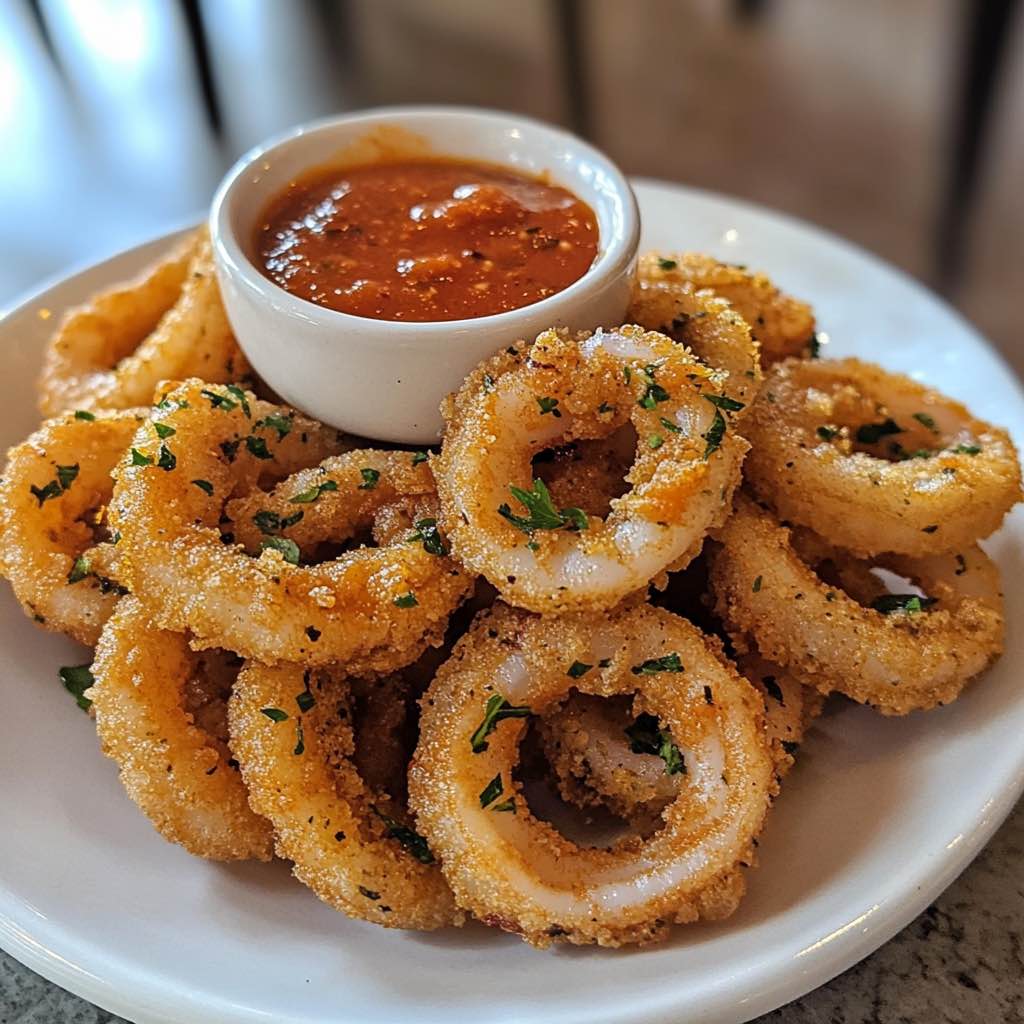
Fried Calamari with Marinara Dipping Sauce
Introduction
Fried calamari with marinara dipping sauce is a beloved appetizer that brings restaurant-quality flavor right to your kitchen. This crispy, golden seafood dish combines tender squid rings with a perfectly seasoned coating, paired with a rich tomato-based sauce. Moreover, this classic Italian-American dish offers both incredible taste and nutritional benefits. Therefore, learning to make this appetizer at home allows you to enjoy fresh, delicious calamari whenever a craving strikes.
Additionally, this comprehensive guide walks you through every step of creating perfectly crispy fried calamari. Furthermore, you’ll discover professional techniques that ensure tender, never-rubbery results. Check out our guide on [insert link] for more seafood appetizer inspiration.
What Is Fried Calamari
Fried calamari refers to squid that has been cleaned, cut into rings, coated in seasoned flour, and deep-fried until golden brown. The term “calamari” comes from Italian and simply means squid. This popular appetizer features a crispy exterior that contrasts beautifully with the tender meat inside.
The dish typically includes both the tube-shaped body cut into rings and sometimes the tentacles. Most importantly, proper preparation techniques transform this seafood into a restaurant-quality dish. Served alongside marinara sauce, this appetizer has become a staple in Italian restaurants and seafood establishments worldwide.
Health Benefits of Calamari
Rich Protein Source
Calamari provides an excellent source of lean protein for your diet. In fact, a mere 3-ounce serving delivers 13 grams of protein. This macronutrient helps build muscle and sustains energy throughout the day.
Brain and Liver Health
Squid contains choline, a vitamin-like nutrient that supports brain and liver function. Interestingly, only eggs and calamari serve as the best sources of this rare component. Additionally, studies show that only 10% of Americans get the recommended amount of choline.
Essential Vitamins and Minerals
Calamari offers vitamin B-12, potassium, copper, and iron. These nutrients strengthen your immune system and improve blood cell performance. Furthermore, squid provides selenium, which supports metabolic health.
Low Mercury Content
Unlike many seafood options, calamari contains very low amounts of mercury. Therefore, it represents one of the safest fish choices according to the Environmental Protection Agency. This makes it suitable for regular consumption as part of a balanced diet.
Essential Ingredients
For the Calamari
The coating mixture requires all-purpose flour, cornstarch, and baking powder. Additionally, you need dried oregano, black pepper, and cayenne pepper for seasoning. Fresh or frozen calamari tubes work perfectly for this recipe.
For Tenderizing
A milk bath with kosher salt helps tenderize the squid before cooking. Alternatively, fresh lemon juice can serve the same purpose. Both methods reduce fishiness and improve texture.
For the Marinara Sauce
San Marzano tomatoes form the base of authentic marinara sauce. You’ll also need yellow onion, garlic cloves, bay leaf, and fresh basil. Extra virgin olive oil and sea salt complete the ingredient list.
For Frying
Grape seed oil provides the ideal frying medium due to its high smoke point. However, extra virgin olive oil also works well for this application. The key involves maintaining proper oil temperature throughout the cooking process.
Choosing the Right Calamari
Fresh Versus Frozen
Finding fresh squid can be challenging unless you live near a seaport. Frozen calamari offers a convenient alternative and works beautifully in recipes. Most supermarkets stock frozen squid tubes, rings, and tentacles.
Quality Indicators
Look for squid with clear eyes and moist flesh when buying fresh. The aroma should smell clean like the ocean without any strong fishy odor. Smaller squid tends to be more tender than larger specimens.
Avoiding Freezer Burn
When selecting frozen squid, avoid packages with excessive ice crystals. A reddish tinge may indicate improper freezing. Additionally, the squid should appear firm and bright when thawed.
The Secret to Tender Calamari
The Two-Minute Rule
Calamari needs to be cooked hot and fast or low and slow. For frying, this means a maximum of two minutes in hot oil. Beyond this window, the muscles contract and become tough.
Understanding Squid Structure
Squid differs from other fish due to its dense muscle structure. Quick cooking prevents the muscles from contracting. Conversely, slow cooking for 30 to 45 minutes breaks down collagen into gelatin.
Proper Cut Thickness
Cut squid tubes into 3/4-inch thick rings for optimal results. This thickness extends cooking time enough for the coating to crisp while keeping the interior tender. Rings that are too thin cook too quickly and become rubbery.
Pre-Treatment Methods
Soaking rings in salted milk for 30 minutes tenderizes the meat. Additionally, marinating squid in lemon juice for 15 minutes achieves similar results. Both acidic treatments break down proteins for a more tender texture.
Preparing Your Calamari
Cleaning Fresh Squid
First, remove the head, tentacles, and entrails from the body. Next, pull out the clear, plastic-like quill from inside the tube. Then, peel off the outer membrane and rinse thoroughly under cold water.
Cutting Techniques
Slice the cleaned tubes into 3/4-inch rings using a sharp knife. Pat the rings completely dry with paper towels. Leave the tentacles whole or cut them into smaller pieces if they’re large.
The Milk Bath
Combine 1/2 cup milk with 1 teaspoon kosher salt in a medium bowl. Add the calamari rings to the milk mixture. Refrigerate for exactly 30 minutes to tenderize the squid.
Making the Perfect Coating
Flour Mixture Components
Whisk together 1 1/2 cups all-purpose flour with 1/3 cup cornstarch. Add 1/2 teaspoon baking powder for extra crispiness. Include 3/4 teaspoon dried oregano, 1/2 teaspoon black pepper, and 1/2 teaspoon cayenne pepper.
Why Cornstarch Matters
Cornstarch creates a lighter, crispier coating than flour alone. The combination of flour and cornstarch produces that signature golden-brown crunch. Furthermore, baking powder adds tiny air pockets that enhance crispiness.
Double-Coating Method
Some recipes call for a double-coating technique using buttermilk. First, dredge calamari in seasoned flour, then dip in buttermilk. Finally, coat again in seasoned flour for an extra-thick crust.
Coating Application
Remove calamari from the milk bath using tongs. Shake off excess liquid before tossing in the flour mixture. Ensure even coating by tossing gently rather than pressing.
Resting Period
Place coated calamari in a colander for a few minutes before frying. This allows the flour to rehydrate and stick better. The coating won’t fall off during frying if given this rest time.
Marinara Sauce Recipe
Authentic Italian Base
Heat a heavy-bottomed pot on medium-low flame with olive oil. Add diced yellow onion with a pinch of sea salt. Cook for about 10 minutes until translucent without burning.
Building Flavor
Stir in minced garlic and let it infuse the oil for 30 seconds. Use your hands to crush whole San Marzano tomatoes as you add them to the pot. Rustic chunks create better texture than smooth sauce.
Simmering Process
Add bay leaf and fresh basil sprigs to the tomato mixture. Bring everything to a gentle simmer and partially cover with a lid. Cook for about one hour until reduced and thick.
Final Touches
Season the sauce to taste with sea salt after it reduces. Discard the bay leaf and basil sprigs. Finish with a drizzle of cold-pressed extra virgin olive oil and fresh torn basil.
Sauce Variations
Traditional marinara requires just tomatoes, garlic, onion, basil, and oregano. Some recipes include red pepper flakes for heat. The sauce takes only 20 minutes if you prefer a quicker version.
Frying Techniques
Oil Temperature Control
Heat 4 inches of oil in a heavy pot to 350-365°F. Use a thermometer to monitor temperature accurately. Drop one calamari ring to test; bubbles should form immediately around it.
Maintaining Heat
Oil that’s too cool causes soggy, chewy calamari. Conversely, oil that’s too hot burns the outside before cooking the inside. Therefore, hovering between medium and medium-high heat maintains proper temperature.
Batch Frying
Fry calamari in small batches to avoid crowding. Overcrowding drops oil temperature and creates steam. Each batch should take 2-3 minutes until golden brown.
Draining Process
Remove fried calamari using a slotted spoon or spider strainer. Drain on a wire rack set over a baking sheet lined with paper towels. Season immediately with kosher salt while still hot.
Keeping Warm
Preheat your oven to 150°F before frying begins. Transfer drained calamari to the warm oven while frying remaining batches. This keeps everything hot and crispy until serving time.
Common Mistakes to Avoid
Overcooking
Frying calamari for more than 3 minutes results in rubbery texture. Always watch the clock carefully during frying. Remove the squid as soon as it turns golden brown.
Wrong Oil Temperature
Low oil temperature produces greasy, soggy calamari. Monitor temperature between batches and adjust heat as needed. Consistency in temperature ensures consistent results.
Cutting Too Thin
Thin rings cook too quickly and become tough. Stick to 3/4-inch thickness for optimal tenderness. Thicker rings allow the coating to crisp while the interior stays tender.
Skipping the Rest
Not allowing coated calamari to rest causes the coating to fall off. Give the flour mixture time to hydrate and stick. Those few minutes make a significant difference in coating adhesion.
Not Shaking Off Excess
Excess flour or liquid creates clumping and uneven coating. Shake off excess at each step of the breading process. This ensures a thin, even crust that crisps properly.
Serving Suggestions
Classic Presentation
Serve fried calamari on a large platter with lemon wedges. Place marinara sauce in a small bowl for dipping. Garnish with fresh parsley or basil for color.
Side Dish Pairings
Garlic bread complements fried calamari beautifully. Coleslaw provides a refreshing contrast to the rich fried seafood. Additionally, grilled vegetables add nutritional balance to the meal.
Alternative Dipping Sauces
Greek tzatziki sauce offers a cool, creamy option. Sweet chili sauce provides an Asian-inspired twist. Some people prefer simple lemon aioli or tartar sauce.
Salad Combinations
Toss fried calamari with watercress, mint, and Thai chiles. Add peanuts and chili-lime sauce for an Asian-inspired salad. This 20-minute dish transforms calamari into a complete meal.
Complete Meal Ideas
Pair calamari with rice pilaf for a satisfying dinner. Mashed potatoes create a comforting combination. French fries alongside calamari make a classic seafood basket.
Storage and Reheating Tips
Fresh Squid Storage
Cover fresh squid tightly and store in the coldest part of your refrigerator. Place it on a bed of ice for optimal freshness. Use fresh or thawed squid within two days of purchase.
Freezing Uncooked Calamari
Clean the squid thoroughly before freezing. Place cleaned squid in plastic freezer bags and squeeze out all air. Use frozen uncooked calamari within two months for best quality.
Storing Cooked Calamari
Refrigerate cooked squid in a tightly sealed container. It will stay fresh for two to three days. Alternatively, freeze cooked calamari for up to two months.
Reheating Methods
Reheat fried calamari in a 375°F oven for 5-7 minutes. This method maintains crispiness better than microwaving. Place calamari on a wire rack over a baking sheet for even heating.
Food Safety Guidelines
Never refreeze previously frozen seafood. Keep raw seafood away from ready-to-eat ingredients. Wash hands, utensils, and cutting boards thoroughly after handling raw squid.
Frequently Asked Questions
How do I make fried calamari crispy?
Use a mixture of flour, cornstarch, and baking powder for maximum crispiness. Maintain oil temperature between 350-365°F throughout frying. Additionally, avoid overcrowding the pan, which creates steam.
Why is my calamari rubbery?
Overcooking causes rubbery texture in calamari. Fry squid for only 2-3 minutes until golden brown. Furthermore, cutting rings too thin reduces cooking time and creates toughness.
Can I use frozen calamari?
Frozen calamari works excellently in this recipe. Thaw it overnight in the refrigerator before using. Pat the thawed squid completely dry before coating.
What makes marinara sauce authentic?
Authentic marinara uses San Marzano tomatoes, garlic, onion, basil, and olive oil. The sauce simmers for about an hour to develop deep flavor. Simple ingredients create the most authentic taste.
How long does marinara sauce last?
Refrigerated marinara stays fresh for up to one week. Store it in jars or airtight containers. You can also freeze marinara for several months.
Is fried calamari healthy?
Calamari provides lean protein, vitamins, and minerals. However, frying adds calories and fat. Eating fried calamari in moderation fits into a balanced diet.
What’s the difference between squid and calamari?
Calamari is simply the Italian word for squid. They refer to the same seafood. The terms are used interchangeably in cooking.
Can I make the sauce ahead?
Yes, marinara sauce tastes even better when made ahead. The flavors meld and deepen overnight. Prepare it up to a week in advance.
Conclusion
Fried calamari with marinara dipping sauce delivers restaurant-quality results right in your home kitchen. This comprehensive guide provides all the techniques needed for crispy, tender calamari every time. Moreover, the rich marinara sauce complements the seafood perfectly.
The key to success involves proper oil temperature, appropriate coating mixture, and careful timing. Additionally, pre-treating the squid with milk or lemon juice ensures tender results. Remember to fry in small batches and serve immediately for optimal crispiness.
This appetizer brings impressive flavor to any gathering or family meal. Furthermore, calamari offers nutritional benefits including lean protein and essential vitamins. Try this recipe today and discover how easy it is to create this classic Italian dish at home.
Print
Fried Calamari with Marinara Dipping Sauce
Description
Fried Calamari with Marinara Dipping Sauce
Ingredients
For the Calamari:
-
1 lb calamari rings (fresh or thawed)
-
½ cup all-purpose flour
-
½ cup cornstarch
-
1 tsp salt
-
½ tsp black pepper
-
½ tsp paprika (optional, for color)
-
Oil for frying (vegetable or canola)
-
Lemon wedges, for serving
For the Marinara Sauce:
-
1 cup marinara sauce (homemade or store-bought)
-
1 clove garlic, minced
-
1 tsp olive oil
-
½ tsp Italian seasoning
-
Salt and pepper, to taste
Instructions
-
Prepare the Marinara Sauce:
-
In a small saucepan, heat olive oil over medium heat.
-
Sauté garlic for 30 seconds until fragrant.
-
Add marinara sauce and Italian seasoning, simmer 5 minutes.
-
Season with salt and pepper, then remove from heat.
-
-
Prep the Calamari:
-
Pat calamari rings dry with paper towels.
-
In a bowl, mix flour, cornstarch, salt, pepper, and paprika.
-
Dredge calamari in the mixture, shaking off excess.
-
-
Fry the Calamari:
-
Heat oil in a deep skillet or fryer to 350°F (175°C).
-
Fry calamari in batches for 1–2 minutes until golden and crisp.
-
Remove and drain on paper towels.
-
-
Serve:
-
Plate fried calamari with lemon wedges and a side of marinara dipping sauce.
-
Optional: garnish with chopped parsley for color.
-