
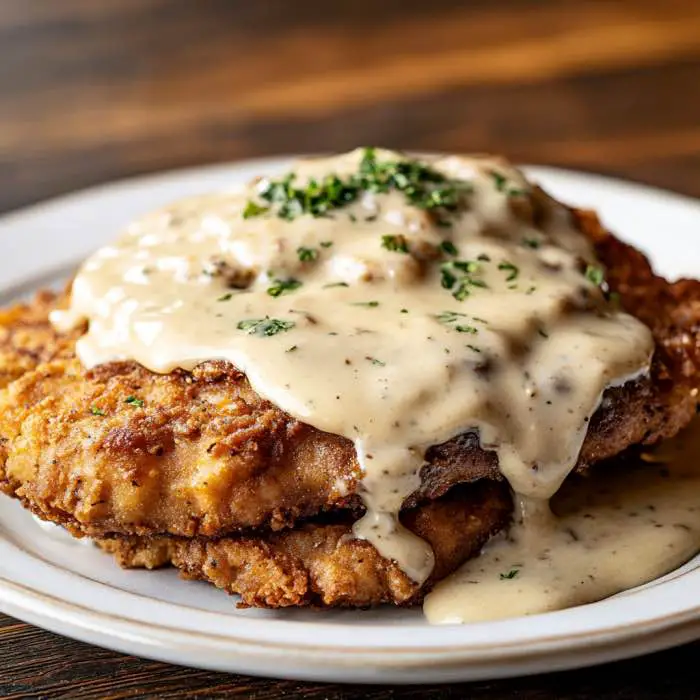
Chicken Fried Steak with Creamy Gravy: The Ultimate Guide to This Southern Classic
Introduction
Nothing beats the satisfaction of biting into a perfectly crispy chicken fried steak with creamy gravy cascading over golden-brown crust. This beloved Southern comfort food combines tender beef with a crunchy coating and silky pepper gravy that has won hearts across America for generations. Whether serving it for Sunday dinner or weeknight comfort, mastering this classic dish transforms any meal into a memorable feast. Furthermore, understanding the techniques behind this recipe ensures consistent, restaurant-quality results every time.
What Is Chicken Fried Steak with Creamy Gravy
Chicken fried steak is a Southern breaded cutlet dish consisting of tenderized beef coated with seasoned flour and fried to golden perfection. Despite its name, the dish contains no chicken at all. Instead, it’s called “chicken fried” because the preparation method mirrors that of classic fried chicken. The steak is typically served smothered in creamy white gravy made from pan drippings, flour, and milk.
This country-fried favorite features cube steak or round steak that’s been pounded thin and tender. The meat goes through a double-dredging process that creates an exceptionally crispy coating. Additionally, the rich cream gravy provides the perfect balance of peppery flavor and velvety texture.
The Rich History Behind This Southern Treasure
European Origins and American Adaptation
The origins of chicken fried steak trace back to German and Austrian immigrants who settled in Texas during the 19th century. These settlers brought their traditional Wiener schnitzel recipes, which featured breaded and fried veal cutlets. Over time, resourceful cooks adapted these European techniques to work with more affordable and readily available cuts of beef.
Mary Randolph’s 1838 cookbook, “The Virginia Housewife,” contains one of the earliest American recipes resembling chicken fried steak. Her veal cutlet recipe included egg wash, bread crumb coating, and pan frying—all fundamental elements of modern preparations. However, the term “chicken-fried steak” first appeared in print in June 1914 in a Colorado Springs Gazette restaurant advertisement.
Texas Claims and Regional Pride
Lamesa, Texas, claims to be the birthplace of this iconic dish and celebrates with an annual festival. According to local legend, a short-order cook named Jimmy Don Perkins accidentally created chicken fried steak in 1911 when he confused two separate orders. Meanwhile, Pig Stand restaurants in Dallas took credit for inventing the chicken-fried steak sandwich in 1921. Regardless of its exact origins, Oklahoma officially added chicken fried steak to its state meal in 1988.
Why This Dish Remains a Comfort Food Favorite
Affordable Elegance
Chicken fried steak transforms inexpensive cuts of beef into a satisfying meal that feels special. The tenderizing and breading process makes tough meat tender and flavorful. Consequently, families could stretch their food budgets without sacrificing taste or enjoyment. This practical approach to cooking continues to make the dish popular today.
Nostalgic Appeal
Many people associate chicken fried steak with creamy gravy with childhood memories and family gatherings. The dish represents traditional Southern hospitality and home cooking at its finest. Moreover, the combination of crispy textures and rich flavors creates an undeniably comforting eating experience.
Essential Ingredients for Perfect Chicken Fried Steak
For the Steak
Creating authentic chicken fried steak requires simple yet specific ingredients. You’ll need tenderized cube steak or round steak as your base. All-purpose flour forms the foundation of the coating, while buttermilk adds tanginess and helps the breading adhere. Eggs bind everything together and create structure.
Season generously with kosher salt, black pepper, cayenne pepper, and paprika for depth of flavor. Some cooks add baking powder and baking soda to the wet mixture for extra crispiness. Vegetable oil or shortening works best for frying because of its high smoke point.
For the Creamy Gravy
Traditional cream gravy requires just a few key ingredients. Reserved pan drippings or butter provide the fat base. All-purpose flour thickens the gravy into a smooth consistency. Whole milk creates the signature creamy texture.
Kosher salt and freshly cracked black pepper season the gravy perfectly. Some recipes incorporate fresh thyme, minced garlic, or onions for added complexity. Using quality ingredients makes a noticeable difference in the final result.
Choosing the Right Cut of Meat
Cube Steak: The Traditional Choice
Cube steak is the most popular option for chicken fried steak with creamy gravy. This cut has already been mechanically tenderized, creating small indentations across the surface. The pre-tenderized texture allows the meat to cook quickly and remain tender. Look for cube steaks that are approximately ¼-inch thick for best results.
Round Steak Alternatives
Top round or bottom round steaks work well when cube steak isn’t available. These tougher cuts benefit from manual tenderizing with a meat mallet. Pound the meat to about ¼-inch thickness, breaking down tough muscle fibers. This preparation step ensures tender, easy-to-eat results.
Sizing Considerations
Each steak should weigh between 4 to 6 ounces before breading. Thinner steaks cook more evenly and develop better crust. Additionally, uniform thickness across all pieces ensures consistent cooking times.
The Secret to Crispy, Golden Coating
Flour Mixture Fundamentals
The seasoned flour mixture creates the signature crunchy exterior. Combine all-purpose flour with salt, pepper, cayenne, and paprika in a shallow bowl. Mix thoroughly to distribute seasonings evenly throughout the flour. Season each component generously because bland breading ruins otherwise perfect steak.
Buttermilk Bath Benefits
Buttermilk’s acidity helps tenderize meat while adding subtle tangy flavor. The thick consistency clings to the steak better than regular milk. Beat eggs into the buttermilk along with baking powder and baking soda. These leavening agents create tiny air pockets that result in extra-crispy coating.
Temperature Control
Maintain oil temperature between 325-375 degrees Fahrenheit for optimal frying. Too hot, and the coating burns before the meat cooks through. Too cool, and the breading absorbs excess oil and becomes soggy. Use a thermometer to monitor temperature accurately throughout cooking.
Mastering the Double-Dredge Technique
First Flour Coating
Pat steaks completely dry with paper towels before beginning. Moisture prevents proper flour adhesion and leads to spotty breading. Dredge each steak in seasoned flour, coating all surfaces. Shake off excess flour gently but thoroughly.
Buttermilk Dip
Submerge the flour-coated steak completely in the buttermilk mixture. Turn to ensure every part gets covered. The buttermilk rehydrates the flour layer, creating a sticky base for the second coating. Allow excess buttermilk to drip off briefly before moving to the next step.
Final Flour Application
Return the wet steak to the seasoned flour for a second dredging. Press flour gently onto the surface to create a thick, even coating. This double-dredge method produces the characteristic shaggy, crispy crust. Place breaded steaks on a parchment-lined baking sheet and let rest for 5-10 minutes before frying.
How to Make Creamy Gravy from Scratch
Building the Foundation
After frying all steaks, carefully drain most of the oil from the pan. Reserve about 2 tablespoons of fat along with all the crispy browned bits. These bits, called fond, contain concentrated flavor that makes gravy exceptional. Heat the reserved drippings over medium heat until shimmering.
Creating the Roux
Whisk flour into the hot fat to create a roux. Cook for 1-2 minutes, stirring constantly, until the mixture turns golden brown. The roux should bubble gently and smell nutty. This step cooks out the raw flour taste and develops deeper flavor.
Adding Milk Gradually
Slowly pour whole milk into the roux while whisking constantly. Add milk in small increments to prevent lumps from forming. Scrape up any browned bits stuck to the pan bottom. Continue whisking as the mixture comes to a gentle simmer.
Seasoning and Thickening
Add kosher salt and generous amounts of freshly cracked black pepper. The gravy should taste slightly peppery to balance the rich cream. Simmer for 5-15 minutes until the gravy reaches desired thickness. Remember that gravy thickens further as it cools. Taste and adjust seasoning as needed.
Step-by-Step Cooking Instructions
Preparation Phase
First, preheat your oven to 200 degrees Fahrenheit. Line one baking sheet with parchment paper for breaded steaks. Set up a second sheet with a wire rack for draining fried steaks. Prepare your flour and buttermilk stations in shallow bowls.
Pound steaks to ¼-inch thickness if using round steak. Pat each piece completely dry and season both sides with salt and pepper. Set up your double-dredge assembly line for efficient breading.
Breading Process
Working with one steak at a time prevents the breading from becoming gummy. Coat in flour, then buttermilk, then flour again. Place breaded steaks on the prepared baking sheet without touching. Let them rest while the oil heats to proper temperature.
Frying to Perfection
Heat 1 inch of oil in a heavy Dutch oven or deep skillet. When the thermometer reads 375 degrees, carefully add 1-2 steaks. Avoid overcrowding, which drops oil temperature dramatically. Fry for 5-7 minutes, turning frequently, until deep golden brown.
Transfer finished steaks to the wire rack and keep warm in the oven. Allow oil to return to proper temperature between batches. This technique ensures each steak cooks evenly and stays crispy.
Making the Gravy
Once all steaks finish frying, prepare the creamy gravy using reserved drippings. Follow the roux method described in the previous section. Simmer until thick and creamy, about 5 minutes. Pour generous amounts of hot gravy over the steaks just before serving.
Common Mistakes to Avoid
Skipping the Meat Tenderizing
Failing to properly tenderize tough cuts results in chewy, unpleasant texture. Always pound steaks thin if they’re not pre-tenderized. This crucial step breaks down connective tissue and ensures tender results.
Inadequate Seasoning
Bland coating ruins otherwise perfect chicken fried steak with creamy gravy. Season every component generously, including the flour, buttermilk, and meat itself. Salt, pepper, and spices should be noticeable in the finished dish.
Incorrect Oil Temperature
Frying at the wrong temperature causes numerous problems. Too hot burns the exterior before cooking the interior. Too cool creates greasy, soggy coating that falls off. Monitor temperature carefully and adjust heat as needed.
Rushing the Roux
Undercooked roux gives gravy a pasty, raw flour taste. Cook the flour and fat mixture for at least 1-2 minutes. The roux should smell nutty and turn light golden brown. Patience in this step rewards with flavorful, smooth gravy.
Lumpy Gravy
Adding milk too quickly or failing to whisk constantly creates lumps. Pour milk gradually in thin streams while whisking vigorously. If lumps form, strain the gravy through a fine-mesh sieve. Alternatively, use an immersion blender to smooth out texture.
Expert Tips for Restaurant-Quality Results
Temperature Management
Use a reliable instant-read or deep-fry thermometer for accuracy. Check oil temperature before adding each batch of steaks. Consistent temperature produces consistently excellent results.
Resting the Breading
After the double-dredge, let breaded steaks rest for 5-10 minutes. This resting period allows the coating to adhere better to the meat. Consequently, less breading falls off during frying.
Proper Drainage
Place fried steaks on a wire rack rather than paper towels. Air circulation underneath keeps the bottom crispy. Paper towels can trap steam and soften the coating.
Keeping Steaks Warm
Hold finished steaks in a 200-degree oven while preparing remaining batches. This temperature keeps them hot without drying out the meat. Additionally, it maintains the crispy coating until serving time.
Gravy Consistency
For thicker gravy, cook longer or add more flour to the roux. For thinner consistency, whisk in additional milk. The gravy should coat the back of a spoon but still pour easily.
Serving Suggestions and Side Dishes
Classic Accompaniments
Creamy mashed potatoes are the traditional pairing for chicken fried steak with creamy gravy. The smooth potatoes complement the crispy coating perfectly. Green beans, corn, or coleslaw add freshness to balance the rich main dish.
Buttermilk biscuits make an excellent addition for soaking up extra gravy. Mac and cheese offers another comforting side option. Fresh dinner rolls work well when biscuits aren’t available.
Vegetable Options
Steamed broccoli provides a lighter contrast to the fried steak. Roasted Brussels sprouts add a slightly bitter note that cuts through richness. Collard greens continue the Southern theme while adding nutritional value.
A simple garden salad with tangy vinaigrette balances the heavy main course. Sliced tomatoes or cucumber salad offer refreshing, crisp textures.
Complete Meal Planning
Serve chicken fried steak for Sunday dinner, special occasions, or weeknight comfort meals. The dish works equally well for breakfast, brunch, lunch, or dinner. Plan for one steak per person as the main protein.
Storage and Reheating Guidelines
Refrigeration Tips
Store leftover chicken fried steak in an airtight container in the refrigerator. Properly stored, it keeps for 3-4 days. Keep the gravy in a separate container to prevent the coating from becoming soggy.
Freezing Instructions
Freeze cooked steaks without gravy for up to 3 months. Wrap each steak individually in plastic wrap, then place in a freezer-safe bag. Label with the date for easy tracking.
Store gravy separately in freezer-safe containers for up to 2 months. Leave space at the top because liquid expands when frozen.
Reheating Methods
For best results, reheat steaks in a 350-degree oven for 10-15 minutes. Place them on a wire rack over a baking sheet to maintain crispiness. Avoid microwaving, which makes the coating rubbery and soft.
Reheat gravy gently on the stovetop over medium-low heat. Whisk in a splash of milk to restore smooth, pourable consistency. Stir frequently to prevent scorching.
Nutritional Information and Dietary Considerations
Calorie and Macronutrient Content
One serving of chicken fried steak with creamy gravy contains approximately 600-800 calories. The breading and frying add significant fat content. Protein content ranges from 30-40 grams per serving, making it quite satisfying.
Modification Options
For lighter versions, try oven-frying the breaded steaks instead of deep-frying. This method reduces fat content while maintaining some crunchiness. Use low-fat milk in the gravy to cut calories further.
Gluten-free flour blends can replace all-purpose flour for those with sensitivities. However, texture may differ slightly from traditional preparation. Experiment to find a blend that works well.
Portion Control
Consider serving smaller 4-ounce steaks rather than 6-ounce portions. Load up on vegetable sides to create a more balanced plate. This approach allows enjoyment of the dish while moderating intake.
Frequently Asked Questions
What’s the difference between chicken fried steak and country fried steak?
Chicken fried steak is typically deep-fried and served with white cream gravy. Country fried steak is usually pan-fried and may be served with brown gravy. However, many people use these terms interchangeably to describe the same dish.
Can I make chicken fried steak with creamy gravy ahead of time?
You can bread the steaks several hours in advance and refrigerate them until frying time. The gravy can be made ahead and reheated with added milk to restore consistency. However, fry the steaks just before serving for optimal crispiness.
Why does my breading fall off during frying?
Several factors cause breading to separate from the meat. The steaks may have been too wet before dredging. Alternatively, the oil temperature may have been incorrect, or the coating wasn’t given time to set. Follow the double-dredge method and rest the breaded steaks before frying.
How do I fix lumpy gravy?
Strain lumpy gravy through a fine-mesh sieve to remove clumps. Alternatively, blend it with an immersion blender until smooth. Prevention works better than fixes—add milk gradually while whisking constantly.
Can I use a different cut of beef?
While cube steak is traditional, any thin-cut beef works when properly tenderized. Try top sirloin, flank steak, or even pork cutlets. Just ensure the meat is pounded to ¼-inch thickness for even cooking.
What oil is best for frying?
Vegetable oil, canola oil, or peanut oil all work excellently. These oils have high smoke points necessary for proper frying. Avoid olive oil, which has a lower smoke point and imparts unwanted flavor.
Conclusion
Chicken fried steak with creamy gravy represents the pinnacle of Southern comfort food, combining crispy breaded beef with silky pepper gravy. This beloved dish transforms affordable cuts of meat into a memorable meal through simple techniques and quality ingredients. By following proper preparation methods—including thorough tenderizing, double-dredging, temperature control, and careful gravy-making—anyone can master this classic recipe at home.
The rich history spanning from European schnitzel to Texas diners demonstrates the dish’s enduring appeal. Whether serving it for family dinner or special occasions, chicken fried steak with creamy gravy delivers satisfying flavors and textures that keep people coming back for more. With practice and attention to detail, restaurant-quality results are entirely achievable in the home kitchen.
Print
Chicken Fried Steak with Creamy Gravy
Description
Chicken Fried Steak with Creamy Gravy
Ingredients
For the Steak:
-
4 beef cube steaks (about 4–6 oz each)
-
1 ½ cups all-purpose flour
-
1 teaspoon salt
-
1 teaspoon black pepper
-
1 teaspoon paprika
-
½ teaspoon garlic powder
-
½ teaspoon onion powder
-
2 large eggs
-
¾ cup buttermilk (or regular milk)
-
Vegetable oil, for frying
For the Creamy Gravy:
-
3 tablespoons reserved frying oil (with bits from steak)
-
3 tablespoons all-purpose flour
-
2 ½ cups whole milk
-
Salt and black pepper, to taste
Instructions
1. Prepare the Steaks
-
Pat the cube steaks dry with paper towels.
-
In one bowl, whisk together the flour, salt, pepper, paprika, garlic powder, and onion powder.
-
In another bowl, whisk together the eggs and buttermilk.
2. Dredge and Coat
-
Dip each steak into the flour mixture, coating both sides.
-
Then dip into the egg mixture, letting excess drip off.
-
Finally, dip back into the flour mixture again, pressing gently so it adheres.
-
Set aside on a wire rack for 5–10 minutes — this helps the coating stick.
3. Fry the Steaks
-
Heat about ½ inch of oil in a large cast-iron skillet over medium heat.
-
Once hot (around 350°F / 175°C), carefully add the steaks.
-
Fry for 3–4 minutes per side, until golden brown and crispy.
-
Remove and place on a paper towel–lined plate to drain.
4. Make the Creamy Gravy
-
Drain all but 3 tablespoons of oil from the skillet, keeping the browned bits.
-
Whisk in the flour and cook for 1–2 minutes until golden.
-
Slowly whisk in the milk, stirring constantly until thick and smooth (about 4–5 minutes).
-
Season generously with salt and black pepper — add a touch more pepper for that signature Southern flavor.