Roasted Cauliflower with Garlic Parmesan
Introduction
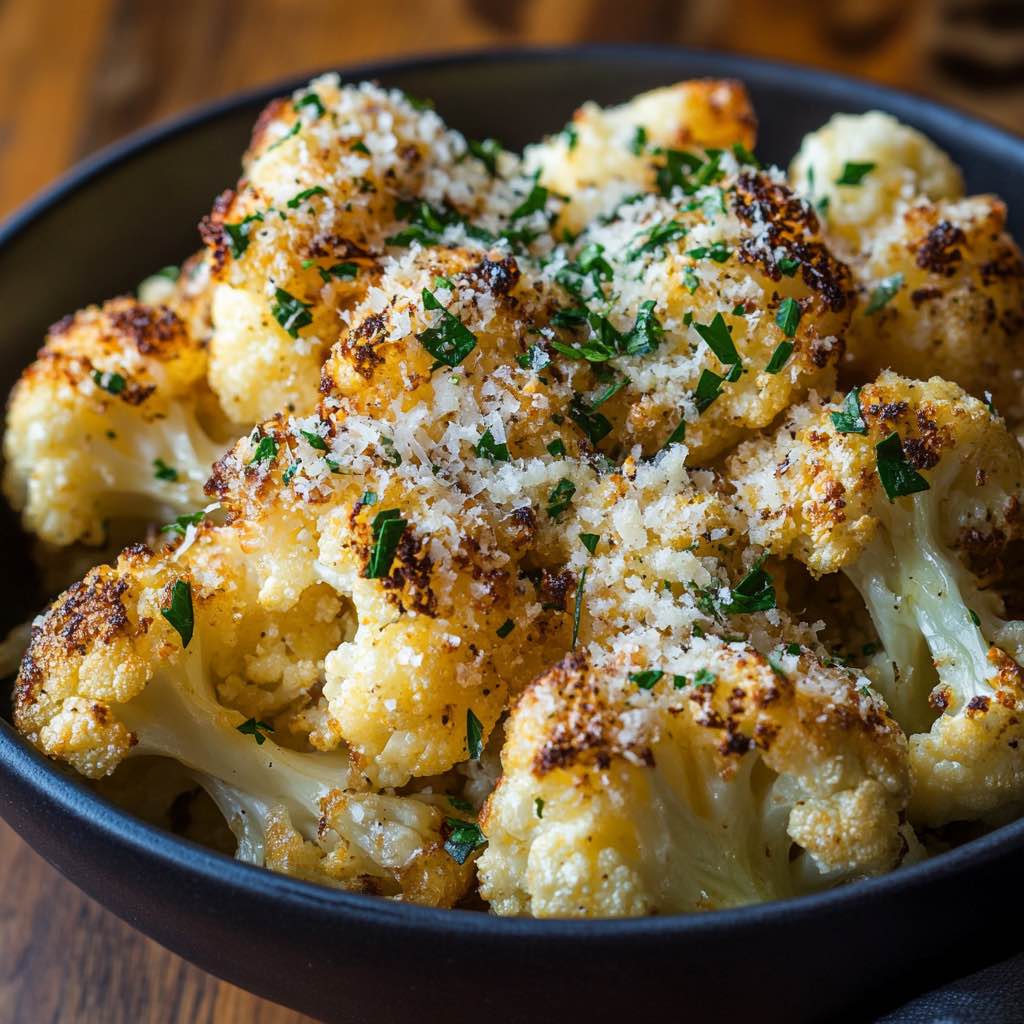
Roasted Cauliflower with Garlic Parmesan transforms ordinary vegetables into extraordinary comfort food. Moreover, this simple side dish delivers restaurant-quality flavor with minimal effort. Additionally, the combination of crispy edges, tender centers, and savory cheese creates an irresistible dish. Furthermore, anyone can master this recipe regardless of cooking experience. The golden-brown florets coated in aromatic garlic and nutty Parmesan cheese make even veggie skeptics ask for seconds. Therefore, this versatile recipe works perfectly for weeknight dinners or special occasions.
The beauty of this dish lies in its simplicity. Consequently, just a handful of ingredients create maximum flavor impact. Similarly, the roasting process caramelizes the natural sugars in cauliflower, bringing out a sweet, nutty taste. In addition, the high-heat cooking method ensures crispy exteriors while maintaining tender interiors.
Why Roasted Cauliflower with Garlic Parmesan is a Must-Try
Roasted Cauliflower with Garlic Parmesan stands out as a crowd-pleasing side dish. First, it requires minimal preparation time. Second, the ingredient list remains short and accessible. Third, the flavor profile appeals to both vegetable lovers and hesitant eaters.
This dish offers remarkable versatility in meal planning. Accordingly, it pairs beautifully with various proteins and main courses. Additionally, the recipe adapts easily to dietary preferences and restrictions. Therefore, home cooks can customize it to suit their needs.
The texture contrast makes this recipe particularly appealing. Specifically, the exterior develops a delightful crispness during roasting. Meanwhile, the interior stays perfectly tender and creamy. Subsequently, each bite provides a satisfying textural experience.
Health Benefits of Cauliflower
Nutrient-Dense Powerhouse
Cauliflower offers impressive nutritional value with minimal calories. Notably, one cup of raw cauliflower contains only 27 calories. Furthermore, it provides 58% of the daily value for vitamin C. Additionally, cauliflower supplies significant amounts of vitamin K, folate, and vitamin B6.
The vegetable is naturally low in carbohydrates. Therefore, it fits perfectly into various eating plans. Moreover, it contains 2 grams of fiber per serving, supporting digestive health.
Rich in Antioxidants
Cauliflower contains glucoraphanin, which converts to sulforaphane. This powerful antioxidant may help suppress cancer development. Additionally, sulforaphane supports heart health by reducing blood pressure. Furthermore, research suggests it may help prevent diabetes complications.
High in Choline
This vegetable provides an excellent source of choline. Specifically, one cup delivers about 44 milligrams of this essential nutrient. Choline plays crucial roles in brain development and metabolism. Moreover, it helps prevent cholesterol accumulation in the liver. Studies also link higher choline intake to lower risks of liver disease and dementia.
Essential Ingredients You’ll Need
Primary Ingredients
The foundation of Roasted Cauliflower with Garlic Parmesan requires just a few key components. First, one medium cauliflower head yields approximately 6-8 cups of florets. Second, extra-virgin olive oil provides the base for coating. Third, fresh garlic cloves deliver authentic flavor.
Parmesan cheese brings the signature savory richness. Specifically, 2-3 tablespoons of grated cheese create the perfect coating. Additionally, freshly grated Parmesan melts better than pre-grated varieties.
Seasonings and Aromatics
Basic seasonings enhance the natural flavors. Kosher salt and black pepper form the flavor foundation. Furthermore, garlic powder complements fresh garlic beautifully. Additionally, paprika adds subtle color and depth.
Fresh herbs brighten the finished dish. Specifically, parsley or chives provide fresh contrast. Moreover, lemon juice adds brightness that balances the rich cheese.
Optional Enhancements
Consider adding extra seasonings for variety. Dried basil and oregano introduce Italian-inspired notes. Similarly, onion powder deepens the savory profile. Furthermore, red pepper flakes add heat for spice lovers.
Kitchen Equipment and Tools
Essential Equipment
Proper equipment ensures optimal results. Primarily, a large rimmed baking sheet provides adequate space. Additionally, using two baking sheets prevents overcrowding. Furthermore, preheating the baking sheet creates extra crispiness.
A large mixing bowl allows thorough coating. Therefore, choose one with enough room for tossing. Moreover, a sharp knife makes cutting florets easier. Similarly, a sturdy cutting board provides a stable work surface.
Helpful Tools
Additional tools streamline the cooking process. First, a box grater or microplane grates Parmesan efficiently. Second, measuring spoons ensure accurate seasoning. Third, a spatula helps toss the cauliflower during roasting.
Consider using parchment paper for easier cleanup. Alternatively, aluminum foil works equally well. However, direct contact with the pan creates better caramelization.
Step-by-Step Cooking Instructions
Preparation Phase
Begin by preheating the oven to 450°F. Alternatively, 400°F works for gentler roasting. Meanwhile, place the baking sheet inside to preheat. This step creates immediate searing when florets touch the pan.
Wash the cauliflower thoroughly under cold water. Next, remove outer leaves and the core. Then, cut the head into uniform florets. Consequently, similar-sized pieces ensure even cooking.
Seasoning the Florets
Transfer florets to a large mixing bowl. Subsequently, drizzle with olive oil. Then, toss until evenly coated. Additionally, add paprika, salt, and pepper. Furthermore, incorporate minced garlic at this stage.
Mix thoroughly to distribute seasonings evenly. Therefore, every floret receives flavor coverage. Moreover, ensure no bare spots remain on the vegetables.
Roasting Process
Carefully remove the preheated pan from the oven. Next, spread florets in a single layer. Additionally, arrange them flat-side down for maximum browning. Furthermore, avoid overcrowding to promote crispiness.
Roast for 20-25 minutes initially. Meanwhile, toss the florets once midway through. Subsequently, check for light charring and tenderness. Then, sprinkle Parmesan cheese over the cauliflower.
Return the pan to the oven for 5 additional minutes. Consequently, the cheese melts and becomes golden. Finally, remove from the oven and add fresh lemon juice. Subsequently, garnish with chopped parsley before serving.
Pro Tips for Perfect Results
Temperature and Timing
High heat creates the best caramelization. Specifically, 450°F produces optimal browning. However, lower temperatures require longer cooking times. Therefore, adjust accordingly based on your oven.
Watch for golden-brown edges as doneness indicators. Additionally, tender texture signals proper cooking. Furthermore, slight charring adds desirable flavor complexity.
Cutting Techniques
Uniform floret size ensures even cooking. Therefore, aim for similar dimensions. Moreover, smaller pieces crisp up faster. Conversely, larger florets take longer but stay more tender inside.
Cut stems flat when possible. Consequently, flat surfaces brown better against the pan. Additionally, this technique maximizes caramelization.
Cheese Application
Add Parmesan near the end of cooking. Subsequently, this prevents burning while allowing melting. Furthermore, freshly grated cheese melts more smoothly. Additionally, it provides superior flavor compared to pre-grated versions.
Sprinkle cheese evenly over all florets. Therefore, every piece receives cheesy goodness. Moreover, toss after adding cheese to ensure complete coverage.
Oil Selection
Extra-virgin olive oil offers the best flavor. However, regular olive oil works well too. Additionally, avocado oil provides a higher smoke point. Therefore, it handles high temperatures without burning.
Use enough oil to coat but avoid excess. Consequently, florets should glisten without pooling. Moreover, proper oil coverage promotes browning.
Common Mistakes to Avoid
Overcrowding the Pan
The most common error involves cramming too many florets together. Consequently, overcrowding creates steam instead of roasting. Therefore, vegetables turn soggy rather than crispy. Additionally, use two pans if necessary for proper spacing.
Leave space between each piece. Subsequently, hot air circulates freely. Furthermore, this promotes even browning on all surfaces.
Cutting Uneven Pieces
Irregular sizes cause uneven cooking. Specifically, small pieces burn while large ones remain undercooked. Therefore, take time to cut uniform florets. Moreover, consistency ensures predictable results.
Adding Cheese Too Early
Adding Parmesan at the beginning causes burning. Subsequently, the cheese turns brown and bitter. Therefore, wait until the final minutes. Additionally, this timing allows proper melting without scorching.
Insufficient Preheating
Placing cauliflower in a cold oven extends cooking time. Moreover, it reduces caramelization. Therefore, always preheat thoroughly. Additionally, preheating the baking sheet intensifies browning.
Skipping the Toss
Failing to flip florets midway creates uneven browning. Consequently, one side burns while the other stays pale. Therefore, toss once during roasting. Furthermore, this ensures consistent color and texture.
Flavor Variations and Customizations
Spicy Version
Add red pepper flakes for heat. Specifically, ½ teaspoon provides moderate spice. Additionally, cayenne pepper intensifies the kick. Furthermore, hot sauce after roasting adds tangy heat.
Sriracha mixed with olive oil creates a spicy coating. Therefore, this variation appeals to heat lovers. Moreover, jalapeño powder offers smoky spiciness.
Herb-Infused Options
Fresh herbs elevate the flavor profile. Specifically, thyme complements Parmesan beautifully. Additionally, rosemary adds aromatic depth. Furthermore, sage provides earthy notes.
Mix dried Italian seasoning into the olive oil. Consequently, oregano and basil infuse throughout. Moreover, fresh basil added after roasting provides bright contrast.
Asian-Inspired Twist
Replace Parmesan with sesame seeds. Additionally, use sesame oil instead of olive oil. Furthermore, add garlic and ginger for aromatic complexity. Subsequently, finish with soy sauce and lime juice.
Toss with furikake seasoning after roasting. Therefore, this creates an umami-rich variation. Moreover, green onions provide fresh crunch.
Smoky Variation
Smoked paprika replaces regular paprika. Consequently, this adds deep smoky flavor. Additionally, chipotle powder introduces both smoke and heat. Furthermore, liquid smoke in the oil coating intensifies the effect.
Vegan Adaptation
Substitute nutritional yeast for Parmesan cheese. Therefore, this maintains the cheesy flavor. Additionally, vegan Parmesan alternatives work well. Furthermore, increase garlic and herbs to compensate for cheese richness.
Serving Suggestions and Pairings
Protein Pairings
Roasted Cauliflower with Garlic Parmesan complements various proteins perfectly. First, it pairs beautifully with grilled chicken breasts. Second, roasted salmon benefits from the vegetable’s savory profile. Third, beef steaks gain balance from the lighter side dish.
Pork chops work wonderfully alongside this cauliflower. Additionally, lamb chops complement the garlic Parmesan flavors. Furthermore, turkey cutlets pair well for lighter meals.
Grain Accompaniments
Serve alongside fluffy rice for complete meals. Similarly, quinoa provides protein-rich contrast. Additionally, pasta creates Italian-inspired dinners. Furthermore, couscous offers quick preparation.
Crusty bread soaks up flavorful pan drippings. Therefore, baguette slices make excellent accompaniments. Moreover, garlic bread echoes the dish’s flavor profile.
Complete Meal Ideas
Create grain bowls with cauliflower as the star. First, add roasted chickpeas for protein. Second, include fresh greens for nutrients. Third, drizzle with tahini sauce for creaminess.
Build dinner plates with multiple roasted vegetables. Additionally, include roasted Brussels sprouts. Furthermore, add roasted sweet potatoes for color. Subsequently, serve with your favorite protein.
Salad Integration
Toss warm cauliflower into green salads. Consequently, the warmth wilts greens slightly. Additionally, the cheese adds richness to simple lettuce. Furthermore, lemon juice doubles as dressing.
Storage and Reheating Tips
Proper Storage
Cool roasted cauliflower completely before storing. Subsequently, transfer to airtight containers. Additionally, refrigerate for up to 5 days. Furthermore, proper storage maintains quality.
Avoid storing with wet ingredients. Therefore, keep dressings and sauces separate. Moreover, moisture makes leftovers soggy.
Reheating Methods
The oven method restores crispiness best. Specifically, reheat at 350°F until warmed through. Additionally, spread florets on a baking sheet. Furthermore, avoid stacking for even heating.
Air fryers work excellently for reheating. Consequently, they recreate the original texture. Moreover, this method takes only minutes. Additionally, the high heat recrisps the exterior.
Microwaving offers convenience but reduces crispiness. However, this method works when time is limited. Therefore, use 30-second intervals to prevent overheating.
Freezing Considerations
Freezing changes the texture significantly. Specifically, cauliflower becomes softer after thawing. Therefore, fresh preparation yields better results. However, frozen works for soups or casseroles.
Nutritional Information
Calorie Content
Raw cauliflower contains minimal calories naturally. Specifically, one cup provides only 25-27 calories. However, added oil and cheese increase the total. Therefore, one serving of roasted cauliflower with garlic Parmesan contains approximately 120-150 calories.
The majority of calories come from olive oil. Additionally, Parmesan cheese contributes moderate calories. Furthermore, portion sizes affect total caloric intake.
Macronutrient Breakdown
Cauliflower provides primarily carbohydrates. Specifically, one cup contains 5.3 grams of carbs. Additionally, it offers 1.98 grams of protein. Furthermore, raw cauliflower contains minimal fat at 0.1 grams.
Added ingredients change the macronutrient profile. Consequently, olive oil adds healthy fats. Moreover, Parmesan increases both protein and fat content.
Vitamin and Mineral Content
This vegetable delivers impressive micronutrients. Notably, cauliflower provides 46.4 mg of vitamin C per cup. Additionally, it contains 303 mg of potassium. Furthermore, it supplies folate, vitamin K, and vitamin B6.
Calcium comes primarily from Parmesan cheese. Therefore, this recipe supports bone health. Moreover, the combination creates a nutrient-dense side dish.
Dietary Fiber
Each cup of cauliflower provides 2-2.5 grams of fiber. Consequently, this supports digestive health. Additionally, fiber promotes satiety and fullness. Furthermore, adequate fiber intake benefits heart health.
Frequently Asked Questions
How do I prevent soggy roasted cauliflower?
Prevent sogginess by avoiding overcrowding the pan. Additionally, use high heat for proper caramelization. Furthermore, ensure cauliflower is completely dry before roasting. Moreover, preheating the baking sheet helps create immediate searing.
Can I make Roasted Cauliflower with Garlic Parmesan ahead of time?
Yes, prepare components in advance for convenience. Specifically, cut florets the day before. Additionally, mix seasonings ahead of time. However, roast just before serving for optimal texture. Furthermore, reheating works but reduces crispiness.
What temperature works best for roasting cauliflower?
The ideal temperature ranges from 400-450°F. Higher temperatures create more caramelization. Conversely, lower temperatures work but require longer cooking. Therefore, adjust based on desired results and oven performance.
Should I use fresh or frozen cauliflower?
Fresh cauliflower produces superior results. Specifically, it roasts more evenly and crisps better. Additionally, frozen cauliflower contains extra moisture. Therefore, fresh florets create the best texture. However, frozen works when fresh isn’t available.
How can I make this recipe dairy-free?
Replace Parmesan with nutritional yeast for dairy-free versions. Additionally, vegan Parmesan alternatives work well. Furthermore, increase herbs and garlic to enhance flavor. Moreover, the result remains delicious without traditional cheese.
What other cheeses work well in this recipe?
Several cheeses substitute successfully for Parmesan. Specifically, Asiago provides similar nuttiness. Additionally, Romano offers sharp, salty flavor. Furthermore, aged cheddar creates different but delicious results. Moreover, Pecorino Romano adds authentic Italian taste.
How do I know when the cauliflower is done?
Look for golden-brown edges as doneness indicators. Additionally, florets should pierce easily with a fork. Furthermore, slight charring signals proper caramelization. Moreover, the texture should be tender but not mushy.
Conclusion
Roasted Cauliflower with Garlic Parmesan transforms simple vegetables into spectacular side dishes. Moreover, this recipe combines ease, flavor, and nutrition perfectly. Additionally, the crispy, cheesy results please even picky eaters. Furthermore, endless variations prevent mealtime boredom.
The health benefits make this dish particularly valuable. Specifically, cauliflower provides essential vitamins and antioxidants. Additionally, the minimal calorie content supports various dietary goals. Therefore, this recipe fits naturally into healthy eating patterns.
Mastering this technique opens countless culinary possibilities. Consequently, home cooks gain confidence in vegetable preparation. Moreover, the simple method applies to other vegetables too. Subsequently, entire meal preparations become easier and more delicious.
Print
Roasted Cauliflower with Garlic Parmesan
Description
Roasted Cauliflower with Garlic Parmesan
Ingredients
-
1 large head cauliflower, cut into florets
-
3 tablespoons olive oil
-
3 garlic cloves, minced
-
½ teaspoon salt
-
¼ teaspoon black pepper
-
½ teaspoon paprika (optional, for color)
-
½ cup grated Parmesan cheese
-
2 tablespoons fresh parsley, chopped (for garnish)
Instructions
1. Prepare the Cauliflower
-
Preheat oven to 425°F (220°C).
-
Line a baking sheet with parchment paper for easy cleanup.
-
In a large bowl, toss cauliflower florets with olive oil, garlic, salt, pepper, and paprika until evenly coated.
2. Roast
-
Spread cauliflower in a single layer on the baking sheet.
-
Roast for 20–25 minutes, stirring halfway through, until golden brown and crispy on the edges.
3. Add Parmesan
-
Remove the pan from the oven and sprinkle Parmesan cheese evenly over the cauliflower.
-
Return to the oven and roast for another 5 minutes, just until the cheese melts and gets slightly crisp.
4. Serve
Transfer to a serving dish and sprinkle with fresh parsley.
Serve hot as a side dish or even as a snack — it’s that good!