
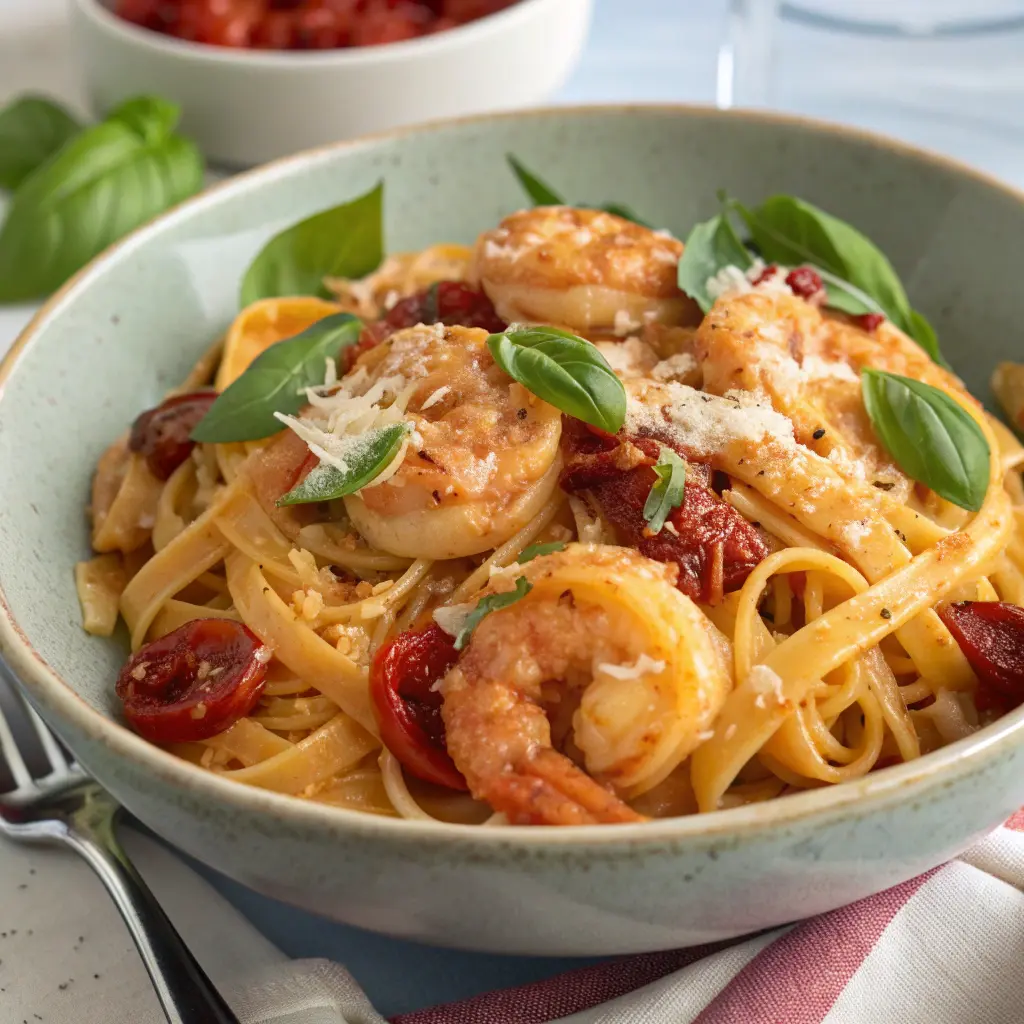
Creamy Sun-Dried Tomato Shrimp Pasta
Picture this: tender shrimp swimming in a velvety cream sauce studded with tangy sun-dried tomatoes, all tossed with perfectly cooked pasta. This Creamy Sun-Dried Tomato Shrimp Pastadelivers restaurant-quality flavor in your own kitchen, and it’s ready in just 30 minutes. Whether you’re planning a romantic dinner or need an impressive weekday meal, this dish combines simple ingredients into something truly spectacular—no fancy techniques or hard-to-find ingredients required.
Why This Shrimp Pasta Recipe Works
This creamy sun-dried tomato shrimp pasta stands out for several compelling reasons. First, the sun-dried tomatoes bring concentrated umami flavor that transforms ordinary cream sauce into something memorable. Additionally, shrimp cook incredibly fast, making this an ideal recipe for busy schedules.
The combination of garlic, cream, and Parmesan creates a luxurious sauce. Meanwhile, the sun-dried tomatoes add both sweetness and acidity. These elements balance each other perfectly. As a result, you get restaurant-quality results without professional training.
Furthermore, this dish offers impressive nutritional value. Shrimp provide lean protein and essential minerals like selenium and vitamin B12. The tomatoes contribute lycopene and antioxidants. Therefore, you’re enjoying both flavor and nutrition in every bite.
The Science Behind the Flavors
Understanding why ingredients work together helps you cook better. Cream forms the base by coating pasta strands evenly. The fat molecules carry flavors throughout the dish. Meanwhile, Parmesan adds saltiness and depth through naturally occurring glutamates.
Sun-dried tomatoes concentrate during the drying process. Consequently, their flavor intensifies dramatically compared to fresh tomatoes. This concentration means a little goes a long way. Moreover, their chewy texture provides pleasant contrast against tender shrimp.
Essential Ingredients Breakdown
Quality ingredients make exceptional dishes. Let’s examine each component in detail.
Main Proteins and Pasta
Shrimp (1 pound, peeled and deveined): Choose large or jumbo shrimp for best results. Fresh shrimp deliver superior texture, though frozen works excellently when properly thawed. Look for firm, translucent shrimp without ammonia smell.
Pasta (12 ounces): Fettuccine, linguine, or penne work beautifully. The shape matters less than cooking it al dente. Whole wheat pasta adds nuttiness and fiber. Gluten-free varieties accommodate dietary restrictions without sacrificing taste.
Sauce Components
Heavy Cream (1 cup): Creates the signature velvety texture. Full-fat cream works best because it doesn’t separate when simmering. However, half-and-half substitutes acceptably if you prefer lighter versions.
Sun-Dried Tomatoes (1/2 cup, chopped): Oil-packed varieties offer convenience and extra flavor. Alternatively, dry-packed tomatoes need rehydration in warm water for 15 minutes. The oil from jarred tomatoes adds richness to your sauce.
Parmesan Cheese (1 cup, freshly grated): Freshly grated cheese melts smoothly into sauces. Pre-grated varieties contain anti-caking agents that prevent proper melting. Therefore, invest a few extra minutes grating your own.
Garlic (4 cloves, minced): Fresh garlic provides aromatic depth. Jarred minced garlic works in a pinch. However, fresh cloves deliver superior flavor complexity.
Aromatics and Seasonings
Olive Oil (2 tablespoons): Extra virgin olive oil adds fruity notes. Use regular olive oil for high-heat cooking if preferred.
Butter (2 tablespoons): Enhances richness and helps create glossy sauce texture. Unsalted butter lets you control sodium levels.
Italian Seasoning (1 teaspoon): This blend typically contains basil, oregano, and thyme. These herbs complement Mediterranean flavors perfectly.
Red Pepper Flakes (1/4 teaspoon): Optional but recommended. They add gentle heat without overwhelming other flavors.
Salt and Black Pepper: Season throughout cooking for best results. Taste before serving and adjust accordingly.
Fresh Basil (1/4 cup, chopped): Garnish that adds brightness and visual appeal. Fresh parsley works as an alternative.
Kitchen Tools You’ll Need
Proper equipment ensures smooth cooking. Gather these items before starting:
-
Large pot for boiling pasta
-
Large skillet or sauté pan (12-inch works best)
-
Colander for draining
-
Sharp knife and cutting board
-
Grater for cheese
-
Wooden spoon or silicone spatula
-
Measuring cups and spoons
-
Tongs for tossing pasta
Step-by-Step Cooking Instructions
Follow these detailed instructions for foolproof results.
Preparation Phase
Start by organizing your workspace. This French cooking technique called “mise en place” prevents mistakes. First, peel and devein shrimp if necessary. Pat them completely dry with paper towels. Moisture prevents proper browning.
Next, mince garlic and chop sun-dried tomatoes. Grate Parmesan cheese freshly. Set all ingredients within arm’s reach of your stove. Finally, fill your large pot with salted water and bring it to a rolling boil.
Cooking the Pasta
Add pasta to boiling water. Stir immediately to prevent sticking. Cook according to package directions minus one minute. This ensures al dente texture that won’t become mushy when combined with sauce.
Before draining, reserve one cup of pasta water. This starchy liquid helps sauce cling to pasta. Drain pasta in colander but don’t rinse. The surface starch aids sauce adhesion.
Preparing the Shrimp
While pasta cooks, heat olive oil and butter in your large skillet over medium-high heat. Season shrimp with salt and pepper. Once the butter foams subsides, add shrimp in a single layer.
Cook shrimp for 2 minutes without moving them. This creates beautiful golden sear marks. Flip and cook another 1-2 minutes until pink and opaque. Transfer cooked shrimp to a clean plate. Don’t overcook—shrimp continue cooking from residual heat.
Building the Sauce
Reduce heat to medium. Add minced garlic to the same skillet. Cook for 30 seconds until fragrant. Be careful not to burn garlic—it turns bitter quickly.
Add chopped sun-dried tomatoes. Stir for another 30 seconds. Their oils release and perfume the entire dish. Next, pour in heavy cream. Add Italian seasoning and red pepper flakes.
Bring cream to a gentle simmer. Let it bubble for 2-3 minutes while stirring occasionally. The cream reduces slightly and thickens. Then, reduce heat to low and add Parmesan cheese gradually.
Stir constantly while adding cheese. This prevents clumping. The sauce becomes smooth and glossy. If it seems too thick, add reserved pasta water one tablespoon at a time.
Combining Everything
Add drained pasta to the sauce. Toss using tongs until every strand gets coated. Return cooked shrimp to the pan. Gently fold them into the pasta. Cook for one final minute so flavors meld together.
Taste and adjust seasoning. Add more salt, pepper, or red pepper flakes as desired. Remove from heat. Garnish with fresh basil and extra Parmesan before serving.
Pro Tips for Perfect Results
Shrimp Selection and Preparation
Buy shrimp from reputable sources. Check for freshness indicators like firm texture and ocean smell. Frozen shrimp often surpass “fresh” shrimp in quality because they’re frozen immediately after catch.
Thaw frozen shrimp in the refrigerator overnight. For quick thawing, place them in a colander under cold running water for 10 minutes. Never use hot water—it partially cooks shrimp and ruins texture.
Remove shells and devein shrimp yourself for cost savings. Leave tails on for presentation or remove them for easier eating. Pat shrimp thoroughly dry before cooking. Excess moisture creates steam instead of sear.
Sauce Consistency Mastery
Control your heat carefully. Too high, and cream can break or scorch. Too low, and sauce won’t thicken properly. Medium-low heat after initial simmer works best.
Always use freshly grated Parmesan. Pre-grated cheese contains cellulose that prevents smooth melting. Hard Italian cheeses like Pecorino Romano substitute excellently. Mix both for complex flavor.
Reserve pasta water religiously. Its starch content helps emulsify sauce. Add gradually—you can always add more but can’t remove excess liquid. Start with two tablespoons and assess consistency.
Timing Coordination
Start pasta water first since it takes longest to boil. Meanwhile, prep all other ingredients. Begin cooking shrimp when pasta has five minutes remaining. This synchronizes everything perfectly.
Work quickly once you start building sauce. Have all ingredients measured and ready. The entire sauce-making process takes under 10 minutes. Therefore, preparation prevents burning or overcooking.
Flavor Enhancement Tricks
Toast garlic gently for sweeter, mellower flavor. Burnt garlic tastes acrid and ruins dishes. Watch carefully and remove pan from heat if garlic browns too quickly.
Add sun-dried tomato oil from the jar for extra richness. This intensifies Mediterranean flavors naturally. Alternatively, use the oil for sautéing instead of olive oil.
Finish with fresh lemon zest for brightness. The citrus cuts through richness beautifully. However, add it off-heat to preserve delicate oils. A squeeze of fresh lemon juice also works wonderfully.
Nutritional Information
Understanding nutritional content helps with meal planning. This creamy sun-dried tomato shrimp pasta provides balanced macronutrients.
Per Serving (Based on 4 Servings)
-
Calories: 620
-
Protein: 38g
-
Carbohydrates: 52g
-
Fat: 28g
-
Saturated Fat: 15g
-
Cholesterol: 245mg
-
Sodium: 680mg
-
Fiber: 3g
-
Sugar: 4g
Nutritional Highlights
Shrimp deliver impressive protein with minimal calories. They contain all nine essential amino acids. Moreover, shrimp provide selenium, vitamin B12, and phosphorus. These nutrients support metabolism and bone health.
The dish offers calcium from Parmesan cheese and cream. One serving provides approximately 30% of daily calcium needs. This supports bone density and muscle function.
Sun-dried tomatoes contribute lycopene, a powerful antioxidant. Research from Harvard School of Public Health suggests lycopene supports heart health. They also provide vitamin K, iron, and potassium.
Making It Healthier
Reduce calories by using half-and-half instead of heavy cream. This cuts approximately 100 calories per serving. Alternatively, substitute part of the cream with reserved pasta water. The starch provides body without added fat.
Choose whole wheat pasta for extra fiber. This modification adds 4-6 grams of fiber per serving. Consequently, the meal becomes more satisfying and supports digestive health.
Increase vegetable content by adding spinach, cherry tomatoes, or roasted red peppers. These additions boost vitamins and minerals. They also add color and textural variety.
Recipe Variations and Substitutions
Adapt this versatile recipe to your preferences and dietary needs.
Protein Alternatives
Chicken: Substitute boneless, skinless chicken breasts or thighs. Cut into bite-sized pieces and cook through completely. Chicken takes longer than shrimp—plan for 6-8 minutes cooking time.
Scallops: Use bay or sea scallops for elegant variation. Pat them extremely dry for proper searing. Cook 2-3 minutes per side depending on size.
Salmon: Cut salmon into chunks and cook gently. The fish flakes beautifully into cream sauce. Salmon adds omega-3 fatty acids for heart health.
Plant-Based Options: White beans, chickpeas, or firm tofu replace shrimp successfully. These provide protein for vegetarian diets. Check out our guide on [insert link: plant-based protein swaps] for more ideas.
Pasta Choices
Long Pasta: Fettuccine, linguine, spaghetti, or angel hair all work wonderfully. Long strands twirl beautifully with cream sauce.
Short Pasta: Penne, rigatoni, or farfalle trap sauce inside ridges and tubes. These shapes work especially well for meal prep.
Specialty Pasta: Try chickpea, lentil, or black bean pasta for extra protein. These gluten-free options add nutritional benefits. Cauliflower pasta reduces carbohydrates significantly.
Sauce Modifications
Lighter Version: Replace half the cream with low-sodium chicken or vegetable broth. Add extra Parmesan to maintain richness. This reduces calories without sacrificing too much creaminess.
Dairy-Free: Use coconut cream or cashew cream instead of dairy. Nutritional yeast substitutes for Parmesan’s umami flavor. These modifications create completely vegan-friendly sauce.
Tomato-Forward: Add a quarter cup of tomato paste for deeper tomato flavor. Alternatively, include halved cherry tomatoes. They burst and release juices into sauce.
Additional Vegetables
Spinach: Add a few handfuls of fresh spinach leaves. They wilt instantly in hot sauce. Spinach provides iron and vitamin K.
Mushrooms: Sauté sliced mushrooms with garlic. They add earthiness and meaty texture. Cremini or shiitake varieties work particularly well.
Artichoke Hearts: Quartered artichoke hearts (canned or jarred) complement sun-dried tomatoes perfectly. They add Mediterranean authenticity.
Roasted Red Peppers: Slice jarred roasted red peppers and fold into sauce. They provide sweetness and beautiful color contrast.
Storage and Reheating Guidelines
Proper storage maintains quality and food safety.
Refrigeration
Cool pasta completely before storing. Transfer to airtight containers within two hours of cooking. Properly stored, creamy sun-dried tomato shrimp pasta keeps for 3-4 days refrigerated.
Store components separately when possible for best results. Keep sauce separate from pasta if meal prepping. This prevents pasta from absorbing all the liquid.
Freezing Considerations
Cream-based sauces don’t freeze ideally. The dairy can separate upon thawing. However, if you must freeze, use these tips. Cool completely first. Transfer to freezer-safe containers leaving one-inch headspace. Freeze for up to two months.
Thaw frozen pasta overnight in refrigerator. Never thaw at room temperature—this promotes bacterial growth. Expect texture changes after freezing. The sauce may appear grainy initially.
Reheating Methods
Stovetop Method: This produces best results. Place pasta in skillet over medium-low heat. Add two tablespoons of cream, milk, or broth. Stir gently until heated through. This takes approximately 5-7 minutes.
Microwave Method: Transfer portion to microwave-safe bowl. Add one tablespoon of liquid. Cover with damp paper towel. Microwave in 30-second intervals, stirring between each. Heat until steaming throughout.
Oven Method: Place pasta in oven-safe dish. Cover tightly with foil. Bake at 350°F for 15-20 minutes. Add splash of cream if sauce seems dry.
Food Safety Tips
Never leave cooked pasta at room temperature for more than two hours. Bacteria multiply rapidly in temperature danger zone (40-140°F). Refrigerate leftovers promptly.
Reheat only once for food safety. Repeated heating and cooling creates bacterial growth opportunities. Therefore, reheat only the portion you’ll consume immediately.
Check shrimp carefully when reheating. Overheated shrimp become rubbery and tough. Remove them if possible and add back at the end.
Serving Suggestions and Pairings
Transform this pasta into complete memorable meal.
Ideal Side Dishes
Garlic Bread: Crusty bread soaks up extra sauce beautifully. Rub toasted bread with fresh garlic cloves. Brush with olive oil and sprinkle with herbs.
Caesar Salad: Crisp romaine provides textural contrast. The tangy dressing complements creamy pasta. Add shaved Parmesan and homemade croutons.
Roasted Vegetables: Brussels sprouts, asparagus, or green beans add color. Roast them with olive oil, salt, and pepper. Their caramelized edges provide sweet contrast.
Caprese Salad: Fresh mozzarella, tomatoes, and basil offer refreshing balance. Drizzle with balsamic glaze. This classic combination never disappoints.
Beverage Pairings
Sparkling Water: Add lemon or lime for refreshing complement. Bubbles cleanse palate between bites.
Iced Tea: Unsweetened or lightly sweetened versions work well. The tannins cut through richness effectively. Try peach or raspberry flavored varieties.
Lemonade: Fresh-squeezed lemonade provides bright acidity. This balances creamy sauce beautifully. Add fresh herbs like mint or basil for complexity.
Italian Soda: Mix sparkling water with fruit syrup. Add cream for creamy version. These colorful drinks add festive touch.
Presentation Tips
Serve pasta in shallow bowls rather than deep plates. This showcases beautiful sauce and shrimp. Twirl long pasta into neat nests using tongs.
Garnish generously with fresh basil leaves. Add extra grated Parmesan at the table. A light dusting of red pepper flakes adds visual interest.
Consider individual portions for dinner parties. This looks more elegant than family-style serving. Warm serving bowls in the oven beforehand.
Frequently Asked Questions
Can I make creamy sun-dried tomato shrimp pasta ahead of time?
Yes, with modifications. Prepare sauce completely and cook shrimp separately. Store both in airtight containers refrigerated. Cook pasta fresh when ready to serve. Combine everything in hot skillet, adding splash of cream. This method preserves texture better than making everything ahead.
What’s the best way to prevent grainy sauce?
Several factors cause graininess. First, use freshly grated Parmesan rather than pre-grated. Second, add cheese off heat or over very low heat. Third, stir constantly while incorporating cheese. Finally, don’t let sauce boil after adding cheese. These steps ensure smooth, creamy results.
Can I use fresh tomatoes instead of sun-dried?
Fresh tomatoes work but create different flavor profile. They add moisture and freshness rather than concentrated sweetness. Cherry tomatoes work best—halve them and add with garlic. However, the dish won’t have signature sun-dried tomato intensity. Consider using both for balanced approach.
How do I know when shrimp are perfectly cooked?
Properly cooked shrimp appear opaque and pink throughout. They curl into loose C-shape. Overcooked shrimp form tight O-shape and feel rubbery. The cooking time varies by size—large shrimp need 2-3 minutes per side. Internal temperature should reach 120°F. Remove from heat immediately when done.
Why did my cream sauce break or separate?
Several issues cause separation. High heat makes cream proteins contract and separate. Adding cold cream to hot pan causes temperature shock. Boiling rather than simmering creates same problem. Finally, using low-fat cream or half-and-half makes breaking more likely. Fix broken sauce by removing from heat and whisking vigorously. Add tablespoon of cold cream while whisking.
Can I make this recipe dairy-free?
Absolutely. Substitute coconut cream for heavy cream. Use dairy-free Parmesan alternative or nutritional yeast. Coconut cream provides similar richness. Nutritional yeast adds cheesy, umami flavor. The result differs slightly but remains delicious. Many people prefer this lighter version.
What pasta shape works best for cream sauce?
Long pasta like fettuccine or linguine traditional choice. These shapes twirl beautifully with sauce. However, short pasta like penne or rigatoni works excellently too. Their tubes and ridges trap sauce inside. Ultimately, choose based on personal preference. Any pasta shape succeeds with proper cooking technique.
How can I add more vegetables without changing flavor profile?
Several vegetables complement existing flavors. Spinach wilts instantly without altering taste. Thinly sliced zucchini nearly disappears into sauce. Roasted red peppers enhance Mediterranean notes. Start with small amounts and adjust based on preference. The vegetables increase nutrition without overwhelming signature flavors.
Conclusion
This creamy sun-dried tomato shrimp pasta exemplifies how simple ingredients create extraordinary results. The combination of tender shrimp, tangy sun-dried tomatoes, and luxurious cream sauce delivers restaurant-quality flavor at home. Moreover, the entire dish comes together in just 30 minutes, making it perfect for both weeknight dinners and special occasions.
By following these detailed instructions, you’ll achieve perfectly cooked shrimp and silky smooth sauce every time. Remember the key tips: reserve pasta water for adjusting consistency, use freshly grated Parmesan, and don’t overcook the shrimp. These simple techniques separate good pasta from exceptional pasta.
Furthermore, this versatile recipe adapts easily to dietary preferences and available ingredients. Whether you substitute proteins, modify the sauce, or add extra vegetables, the foundational technique remains the same. Therefore, feel confident experimenting and making this dish your own.
Print
Creamy Sun-Dried Tomato Shrimp Pasta
Description
Creamy Sun-Dried Tomato Shrimp Pasta
Ingredients:
-
12 oz fettuccine or linguine pasta
-
1 lb large shrimp, peeled and deveined
-
2 tablespoons olive oil (or sun-dried tomato oil from the jar)
-
3 cloves garlic, minced
-
1/2 teaspoon crushed red pepper flakes (optional)
-
1/2 cup sun-dried tomatoes, chopped
-
1 cup heavy cream
-
1/2 cup grated Parmesan cheese
-
1/2 cup chicken broth
-
1 teaspoon Italian seasoning
-
Salt and black pepper, to taste
-
2 cups fresh spinach (optional but adds color and balance)
-
Fresh basil or parsley, for garnish
Instructions:
-
Cook the pasta:
Bring a large pot of salted water to a boil. Cook pasta according to package directions until al dente. Drain and set aside. -
Cook the shrimp:
In a large skillet, heat olive oil over medium heat. Add shrimp, season lightly with salt and pepper, and cook for 1–2 minutes per side until pink and opaque. Remove from skillet and set aside. -
Make the sauce:
In the same skillet, add garlic, sun-dried tomatoes, and crushed red pepper flakes. Sauté for 1 minute until fragrant. -
Add cream and flavor:
Pour in the heavy cream, chicken broth, and Italian seasoning. Stir and bring to a gentle simmer. -
Melt the cheese:
Add Parmesan cheese and stir until the sauce becomes creamy and smooth. -
Combine everything:
Add the spinach (if using) and let it wilt slightly. Return shrimp to the skillet, then add the cooked pasta. Toss well to coat evenly in the sauce. -
Serve:
Garnish with chopped basil or parsley and an extra sprinkle of Parmesan.