
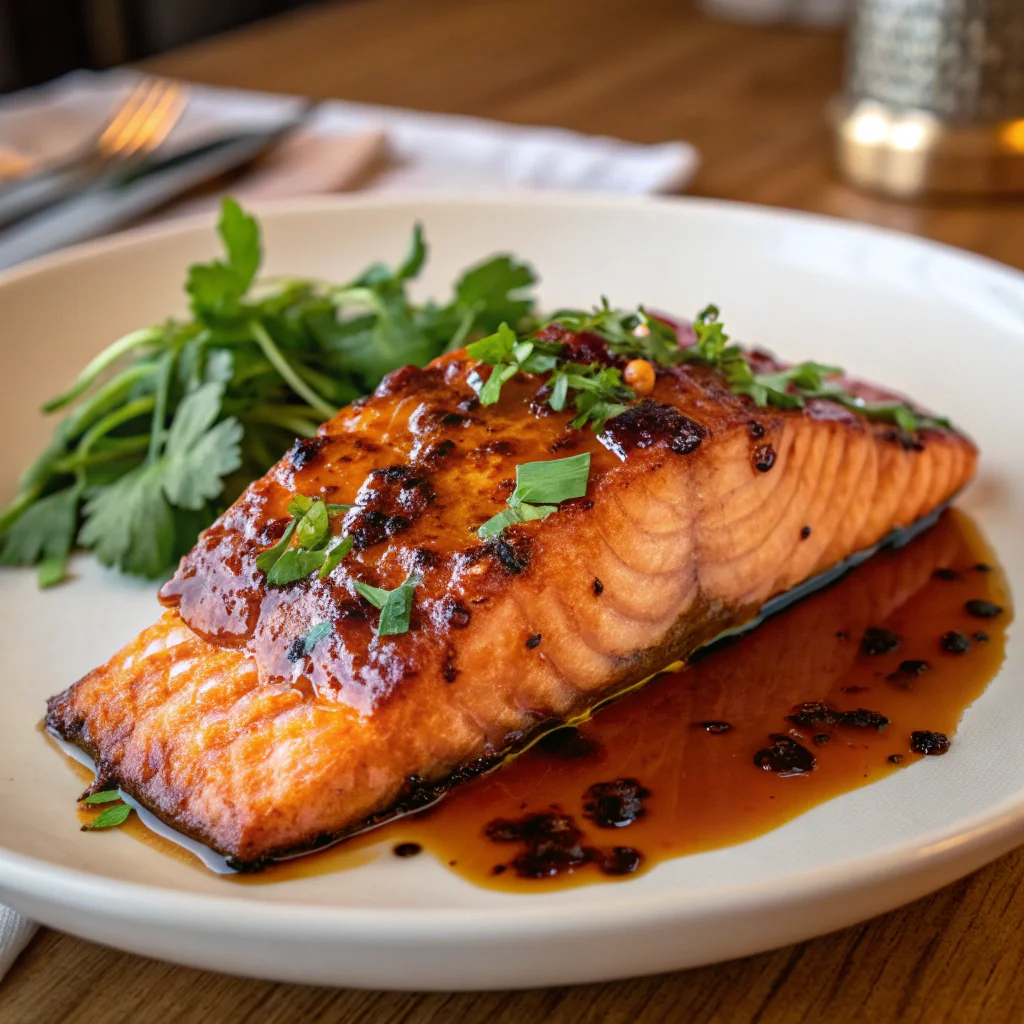
Honey Balsamic Glazed Salmon: A Sweet and Tangy Weeknight Masterpiece
Are you searching for a restaurant-quality fish dish that comes together in less than 30 minutes? This honey balsamic glazed salmon delivers crispy edges, tender flaky fish, and a luscious sweet-tangy glaze that transforms ordinary salmon into an extraordinary meal. Whether you’re cooking for a special occasion or simply elevating your weeknight dinner routine.
Why This Honey Balsamic Glazed Salmon Works
Salmon naturally pairs beautifully with sweet and acidic flavors. The honey provides caramelization and sweetness while balsamic vinegar adds depth and tanginess. Together, they create a glossy glaze that clings to every bite.
The Science Behind the Flavor
The Maillard reaction occurs when you sear salmon at high heat. This chemical process creates complex flavors and that coveted golden-brown crust. Meanwhile, the sugars in honey caramelize, forming a sticky coating that intensifies during cooking.
Balsamic vinegar contains acetic acid, which balances the honey’s sweetness. This acid also helps tenderize the fish slightly. The reduction process concentrates these flavors, creating a syrupy consistency that coats the salmon perfectly.
Why Choose This Recipe
This honey balsamic glazed salmon recipe stands out for several reasons:
-
Quick preparation: Active cooking time stays under 20 minutes
-
Minimal ingredients: Most items are pantry staples
-
Versatile cooking methods: Works with pan-searing, baking, or grilling
-
Healthy omega-3s: Salmon provides essential fatty acids
-
Elegant presentation: Looks impressive for guests
-
Budget-friendly: Uses affordable ingredients to create upscale flavors
Ingredients Breakdown
For the Salmon
-
4 salmon fillets (6 oz each, skin-on or skinless)
-
2 tablespoons olive oil
-
1 teaspoon salt
-
½ teaspoon black pepper
-
½ teaspoon garlic powder
For the Honey Balsamic Glaze
-
⅓ cup balsamic vinegar
-
3 tablespoons honey
-
2 cloves garlic (minced)
-
1 tablespoon Dijon mustard
-
1 tablespoon soy sauce
-
½ teaspoon dried thyme
-
¼ teaspoon red pepper flakes (optional)
Optional Garnishes
-
Fresh thyme sprigs
-
Lemon wedges
-
Sesame seeds
-
Chopped fresh parsley
Ingredient Selection Tips
Salmon Quality: Fresh wild-caught salmon offers the best flavor. Look for firm flesh with no strong fishy smell. Farm-raised salmon works well too and tends to be more affordable. Sockeye, coho, and Atlantic varieties all work excellently.
Balsamic Vinegar: Use quality balsamic vinegar from Modena if possible. Avoid imitation versions that contain added caramel coloring. The real product provides authentic depth and complexity.
Honey Types: Wildflower honey provides mild sweetness. For more distinct flavors, try orange blossom or clover honey. Raw honey offers additional nutrients but crystallizes faster than processed versions.
Kitchen Tools You’ll Need
Essential equipment makes preparation smoother:
-
Large oven-safe skillet (cast iron or stainless steel)
-
Small saucepan for glaze
-
Meat thermometer
-
Silicone spatula
-
Tongs
-
Whisk
-
Measuring cups and spoons
Optional but helpful:
-
Rimmed baking sheet with parchment paper
-
Pastry brush for glaze application
-
Fine-mesh strainer for smooth glaze
Step-by-Step Preparation Guide
Preparing the Salmon
Start by patting salmon fillets completely dry with paper towels. Moisture prevents proper searing and creates steam instead of that desirable crust. Season both sides generously with salt, pepper, and garlic powder at least 15 minutes before cooking. This allows the seasoning to penetrate the flesh.
Let salmon sit at room temperature for 10-15 minutes before cooking. Cold fish straight from the refrigerator cooks unevenly. The exterior overcooks while the center remains underdone.
Making the Honey Balsamic Glaze
Combine balsamic vinegar, honey, minced garlic, Dijon mustard, soy sauce, thyme, and red pepper flakes in a small saucepan. Whisk ingredients thoroughly until honey dissolves completely.
Place the saucepan over medium heat. Bring the mixture to a gentle simmer. Reduce heat to medium-low and cook for 8-10 minutes, stirring occasionally. The glaze should reduce by about half and coat the back of a spoon.
The glaze thickens further as it cools. Don’t reduce it too much during cooking or it becomes overly thick and sticky. If this happens, simply whisk in a tablespoon of water.
Pan-Searing Method (Recommended)
Heat olive oil in a large oven-safe skillet over medium-high heat. Wait until the oil shimmers. This indicates proper temperature for searing.
Place salmon fillets skin-side up in the hot pan. Press gently with a spatula for the first 30 seconds. This ensures even contact with the pan surface. Cook without moving for 4-5 minutes until a golden crust forms.
Carefully flip the salmon using a spatula. The fish should release easily when properly seared. If it sticks, wait another minute before flipping.
Brush half the honey balsamic glaze over the seared side. Transfer the skillet to a preheated 400°F oven. Bake for 6-8 minutes until salmon reaches 145°F internally.
Remove from oven and brush with remaining glaze. Let rest for 3 minutes before serving. The internal temperature continues rising during this resting period.
Oven-Baking Method
Preheat your oven to 425°F. Line a rimmed baking sheet with parchment paper for easy cleanup.
Arrange seasoned salmon fillets on the prepared baking sheet. Brush lightly with olive oil. Bake for 10 minutes.
Remove from oven and brush generously with honey balsamic glaze. Return to oven for 5-7 more minutes. The salmon is done when it flakes easily with a fork.
Brush with additional glaze before serving. This method works perfectly for meal prep since you can cook multiple fillets simultaneously.
Grilling Method
Preheat your grill to medium-high heat (about 400°F). Clean and oil the grates thoroughly to prevent sticking.
Place salmon skin-side down on the grill. Close the lid and cook for 6-8 minutes without flipping. The skin protects the delicate flesh from direct heat.
Brush the top with honey balsamic glaze during the last 2 minutes of cooking. The sugars caramelize quickly, creating beautiful grill marks.
Perfect Glaze Consistency Tips
Achieving Ideal Thickness
The honey balsamic glaze should be syrupy but still pourable. It should coat the back of a spoon without running off immediately. If too thin, continue simmering for 2-3 more minutes.
Test consistency by dipping a spoon in the glaze. Run your finger across the back of the spoon. The line should hold its shape briefly before slowly closing.
Preventing Over-Reduction
Watch the glaze carefully during the final minutes of reduction. It transforms quickly from perfectly thick to burnt. Remove from heat when it’s slightly thinner than desired. The cooling process thickens it further.
If you accidentally over-reduce the glaze, whisk in warm water one tablespoon at a time. Return to heat briefly and stir until smooth.
Storing Extra Glaze
This honey balsamic glazed salmon recipe makes enough glaze for four fillets with some extra. Leftover glaze keeps refrigerated for up to two weeks in an airtight container.
Reheat gently in a small saucepan over low heat. Whisk in a teaspoon of water if it’s too thick. Use it on chicken, pork chops, or roasted vegetables for quick flavor.
Serving Suggestions
Vegetable Pairings
Roasted asparagus complements salmon beautifully. Toss asparagus spears with olive oil, salt, and pepper. Roast at 425°F for 12-15 minutes until tender.
Sautéed green beans with garlic add color and crunch. Cook beans in olive oil until crisp-tender. Add minced garlic during the last minute.
Steamed broccoli provides a simple, nutritious side. Season with lemon juice and a pinch of salt. The brightness balances the glaze’s richness.
Grain Options
Quinoa pilaf offers complete protein alongside the salmon. Cook quinoa in vegetable broth for extra flavor. Stir in diced cucumber, tomatoes, and fresh herbs.
Wild rice blend provides nutty flavor and chewy texture. The earthy notes complement the sweet glaze. Prepare according to package directions.
Cauliflower rice keeps the meal lighter and low-carb. Sauté riced cauliflower with garlic and olive oil. Season with salt and pepper to taste.
Starch Selections
Roasted baby potatoes create a satisfying meal. Halve small potatoes and toss with olive oil and herbs. Roast at 425°F for 25-30 minutes until golden.
Sweet potato wedges add natural sweetness. Cut sweet potatoes into wedges and season with paprika. Roast until crispy outside and tender inside.
Garlic mashed potatoes provide comfort food appeal. Mash potatoes with butter, cream, and roasted garlic. The creamy texture contrasts nicely with flaky salmon.
Salad Combinations
Mixed green salad with vinaigrette balances the rich salmon. Combine spring mix, cherry tomatoes, and cucumber. Dress with olive oil and lemon juice.
Mediterranean-style salad incorporates bold flavors. Mix romaine, olives, red onion, and feta cheese. Use Greek dressing for authentic taste.
Storage and Reheating
Refrigeration Guidelines
Store leftover honey balsamic glazed salmon in an airtight container. Refrigerate within two hours of cooking for food safety. Properly stored salmon lasts 3-4 days.
Store the glaze separately from the salmon if possible. This prevents the fish from becoming too saturated. Salmon texture stays better when glaze is added just before serving.
Freezing Instructions
Freeze cooked salmon for up to 2 months. Wrap individual portions tightly in plastic wrap, then aluminum foil. Label with the date for easy tracking.
Thaw frozen salmon overnight in the refrigerator. Never thaw at room temperature as bacteria multiply rapidly. Plan ahead for safe defrosting.
Reheating Methods
Oven Method: Preheat to 275°F. Place salmon in a baking dish with a splash of water. Cover with foil and heat for 15 minutes.
Microwave Method: Place salmon on a microwave-safe plate. Cover with a damp paper towel. Heat in 30-second intervals until warmed through.
Stovetop Method: Heat a small amount of olive oil in a skillet over medium-low heat. Add salmon and cover. Warm gently for 3-4 minutes.
Brush with fresh glaze after reheating. This revives the flavor and adds moisture. Overheating makes salmon dry and tough, so use gentle heat.
Nutritional Benefits
Omega-3 Fatty Acids
Salmon ranks among the best sources of omega-3 fatty acids. A 6-ounce serving provides approximately 2,500mg of EPA and DHA. These essential fats support heart health and brain function.
Research from the American Heart Association suggests eating fatty fish twice weekly. Omega-3s help reduce inflammation throughout the body. They also support healthy cholesterol levels.
Complete Protein Source
Each serving of honey balsamic glazed salmon contains about 40 grams of protein. This complete protein provides all nine essential amino acids. Protein supports muscle maintenance, tissue repair, and immune function.
The high protein content helps you feel satisfied longer. This makes salmon an excellent choice for weight management. Combine it with fiber-rich vegetables for balanced nutrition.
Vitamins and Minerals
Salmon delivers impressive amounts of vitamin D and B vitamins. Vitamin D supports bone health and immune function. B vitamins help convert food into energy.
The mineral content includes selenium, which acts as an antioxidant. Potassium in salmon supports healthy blood pressure. These nutrients work together for overall wellness.
Calorie and Macronutrient Breakdown
One serving of honey balsamic glazed salmon contains approximately:
-
Calories: 380
-
Protein: 40g
-
Carbohydrates: 15g
-
Fat: 17g
-
Fiber: 0g
-
Sugar: 13g
The glaze adds minimal calories while maximizing flavor. Choose this recipe over cream-based sauces for lighter dining. The natural fats in salmon are healthy unsaturated types.
Troubleshooting Common Issues
Salmon Sticking to Pan
Ensure the pan is properly preheated before adding fish. The oil should shimmer but not smoke. Pat salmon completely dry before seasoning and cooking.
Don’t attempt to flip too early. Wait for a golden crust to develop. The fish releases naturally when ready. Using a non-stick or well-seasoned cast iron pan helps.
Overcooked or Dry Salmon
Salmon cooks quickly and continues cooking after removal from heat. Aim for 145°F internal temperature for food safety. However, many prefer salmon at 125-130°F for more moisture.
Watch cooking time carefully. Thick fillets need more time than thin ones. Use a meat thermometer for accuracy. Remove salmon from heat just before it reaches desired temperature.
Burnt Glaze
The sugars in honey burn easily at high temperatures. Apply glaze during the final minutes of cooking only. If pan-searing, brush glaze on after flipping.
Reduce oven temperature to 375°F if glaze browns too quickly. Cover salmon loosely with foil to prevent burning while the interior finishes cooking.
Glaze Too Thin
Simmer the glaze longer to evaporate more liquid. Remember it thickens as it cools. Add a small amount of cornstarch slurry if needed: Mix 1 teaspoon cornstarch with 2 teaspoons water.
Whisk the cornstarch mixture into simmering glaze. Cook for 1-2 minutes until thickened. This creates a glossier, more clingy coating.
Glaze Too Thick
Whisk in warm water one tablespoon at a time. Warm the mixture gently over low heat while stirring. The glaze should flow smoothly off a spoon.
Store glaze properly to maintain consistency. If refrigerated glaze becomes too thick, gentle reheating restores the proper texture.
Recipe Variations
Spicy Honey Balsamic Salmon
Add 1-2 teaspoons of sriracha to the glaze mixture. Alternatively, increase red pepper flakes to ½ teaspoon. The heat balances the sweetness beautifully.
Top finished salmon with sliced jalapeños for extra kick. This variation appeals to those who enjoy bold flavors. Serve with cooling cucumber salad.
Herb-Crusted Version
Mix fresh chopped herbs into panko breadcrumbs. Try rosemary, thyme, and parsley. Press this mixture onto salmon before cooking.
Drizzle honey balsamic glaze over the herb crust. The textural contrast adds interest. This version works especially well when oven-baking.
Asian-Inspired Twist
Replace Dijon mustard with rice vinegar. Add fresh grated ginger to the glaze. Increase soy sauce to 2 tablespoons.
Garnish with sesame seeds and sliced green onions. Serve over rice noodles or alongside bok choy. This fusion approach creates exciting new flavors.
Citrus-Enhanced Glaze
Add zest and juice from one orange to the glaze mixture. The citrus brightens the balsamic’s deep notes. Orange and salmon pair wonderfully together.
Alternatively, use lemon for a more traditional flavor profile. Garnish with citrus slices for beautiful presentation. The acidity cuts through the richness perfectly.
Mediterranean-Style
Add sun-dried tomatoes and capers to the finished glaze. Serve over orzo pasta tossed with olive oil and fresh basil. Crumble feta cheese on top.
This variation transforms the dish into a complete Mediterranean meal. The briny elements complement the sweet-tangy glaze. Check out our guide on [Mediterranean salmon preparations] for more ideas.
Frequently Asked Questions
Can I make honey balsamic glazed salmon ahead of time?
Prepare the glaze up to one week in advance. Store it refrigerated in an airtight container. Season the salmon up to 4 hours ahead but cook it just before serving. Freshly cooked salmon tastes best and maintains ideal texture.
What’s the best type of salmon to use?
Wild-caught sockeye or coho salmon offer excellent flavor and texture. Atlantic salmon provides a milder taste that many prefer. Choose center-cut fillets for even thickness. This ensures uniform cooking throughout.
How do I know when salmon is fully cooked?
Insert an instant-read thermometer into the thickest part. Salmon reaches safe internal temperature at 145°F. The flesh should be opaque and flake easily with a fork. Slightly translucent centers are preferred by many for moistness.
Can I use frozen salmon fillets?
Absolutely. Thaw frozen salmon overnight in the refrigerator. Never thaw at room temperature due to food safety concerns. Pat thawed fillets very dry before seasoning. Excess moisture prevents proper searing.
What if I don’t have balsamic vinegar?
Substitute with red vinegar mixed with a touch of molasses. Another option combines apple cider vinegar with a pinch of sugar. These alternatives won’t taste identical but work well. True balsamic provides the most authentic flavor.
How can I prevent the honey from burning?
Apply glaze during the final minutes of cooking only. Monitor oven temperature carefully to avoid excessive heat. If grilling, brush glaze on after the salmon is nearly done. The key is limiting high-heat exposure time.
Is the skin on salmon edible?
Yes, salmon skin becomes crispy and delicious when cooked properly. It contains additional omega-3 fatty acids and nutrients. Cook skin-side down for best results. Some people prefer removing it after cooking.
Can I double this recipe for a crowd?
Easily scale up for larger gatherings. Use two skillets or a large baking sheet. Avoid overcrowding to ensure proper heat circulation. Make extra glaze since people often request seconds.
How do I get restaurant-quality presentation?
Plate salmon over your chosen side dish. Drizzle extra glaze artistically across the plate. Garnish with fresh herbs and lemon wedges. A light sprinkle of sesame seeds adds professional polish.
Conclusion
This honey balsamic glazed salmon transforms simple ingredients into an extraordinary meal that rivals fine dining restaurants. The combination of sweet honey and tangy balsamic vinegar creates a sophisticated glaze that elevates salmon’s natural richness. Whether you choose to pan-sear, bake, or grill, this recipe delivers consistent results with minimal effort.
The beauty of honey balsamic glazed salmon lies in its versatility and approachability. You can prepare it on busy weeknights or serve it to impress guests at dinner parties. The nutritional benefits of salmon combined with the bold flavors of the glaze make this a winning choice for health-conscious food lovers.
Remember the key techniques: properly dried and seasoned salmon, correctly reduced glaze, and careful temperature monitoring. These fundamentals ensure success every time. Experiment with the variations to keep the recipe exciting and adapted to your preferences.
Print
Honey Balsamic Glazed Salmon
Description
Honey Balsamic Glazed Salmon
Ingredients:
-
4 salmon fillets (6 oz each), skin-on or skinless
-
Salt and black pepper, to taste
-
2 tablespoons olive oil
For the Honey Balsamic Glaze:
-
1/4 cup honey
-
1/4 cup balsamic vinegar
-
2 cloves garlic, minced
-
1 teaspoon Dijon mustard (optional, for depth)
-
1/2 teaspoon crushed red pepper flakes (optional for a slight kick)
Garnish:
Fresh parsley, thyme, or lemon wedges
Instructions:
-
Preheat oven:
Preheat oven to 400°F (200°C). Line a baking sheet with parchment paper or foil. -
Prepare the salmon:
Pat salmon fillets dry and season with salt and pepper. Place on the prepared baking sheet. -
Make the glaze:
In a small bowl, whisk together honey, balsamic vinegar, minced garlic, Dijon mustard, and red pepper flakes if using. -
Glaze the salmon:
Brush half of the glaze over the salmon fillets. -
Bake:
Bake for 12–15 minutes, depending on thickness, until salmon is cooked through and flakes easily with a fork. Halfway through, brush with the remaining glaze. -
Optional broil finish:
For a caramelized top, broil for 1–2 minutes after baking, keeping a close eye to prevent burning. -
Serve:
Garnish with fresh herbs or lemon wedges and drizzle with any remaining glaze.