
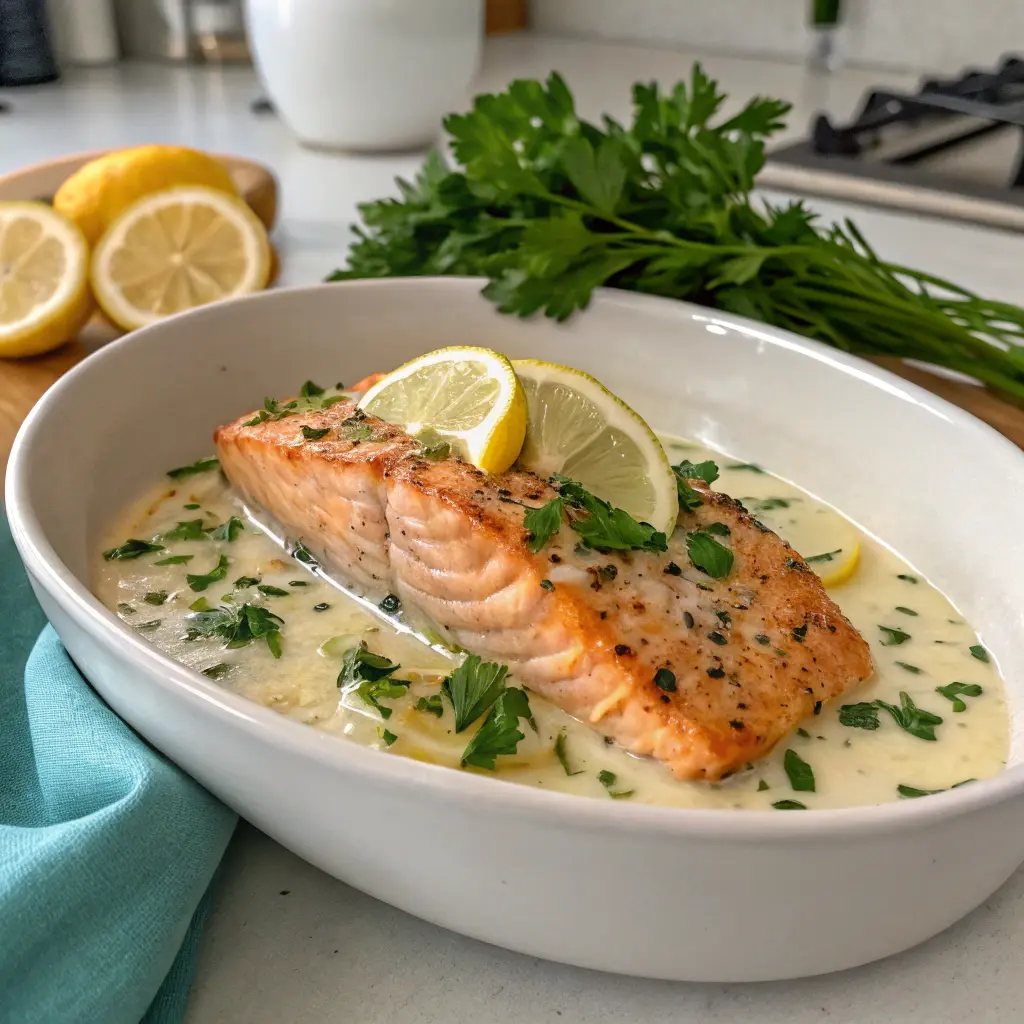
Creamy Garlic Butter Salmon
Picture this: tender, flaky salmon bathed in a velvety garlic butter sauce that clings to every bite. Creamy garlic butter salmon transforms an ordinary weeknight dinner into restaurant-quality cuisine without requiring chef-level skills. This recipe delivers rich, satisfying flavors through simple ingredients like butter, cream, and aromatic garlic. Whether you’re cooking for your family or entertaining guests, this dish promises to impress while keeping preparation straightforward and stress-free.
Why Creamy Garlic Butter Salmon Works
This garlic butter salmon recipe succeeds because it balances richness with brightness. The sauce combines heavy cream with butter to create luxurious texture while garlic adds depth. Fresh herbs like parsley or dill cut through the richness.
Salmon naturally contains healthy fats. These fats complement the creamy sauce without making the dish feel heavy. Moreover, salmon cooks quickly. You can have dinner on the table in under 30 minutes.
The recipe also proves incredibly versatile. You can adjust the garlic intensity, swap herbs, or add vegetables directly to the pan. Additionally, this preparation method works with various salmon cuts, from fillets to steaks.
Essential Ingredients Breakdown
Salmon Selection
Choose fresh, high-quality salmon for best results. Look for firm flesh with vibrant color. Wild-caught salmon offers robust flavor, while farm-raised salmon provides milder taste and higher fat content.
Skin-on fillets help the fish hold together during cooking. However, skinless works perfectly fine. Aim for fillets about 6 ounces each and roughly 1 inch thick for even cooking.
The Creamy Sauce Base
Heavy cream forms the foundation of this sauce. It provides body and richness that coats the salmon beautifully. Half-and-half can substitute if you prefer lighter texture, though the sauce will be thinner.
Butter adds essential richness and helps create silky consistency. Use unsalted butter so you can control seasoning. European-style butter with higher fat content creates even more luxurious sauce.
Aromatics and Seasonings
Fresh garlic is non-negotiable in this recipe. Minced garlic releases more flavor than whole cloves. Plan on 4-6 cloves for pronounced garlic taste.
Salt and black pepper season the dish. Paprika adds subtle smokiness and beautiful color. Red pepper flakes provide optional heat.
Fresh herbs brighten the finished dish. Parsley offers mild, fresh flavor. Dill complements salmon naturally. Thyme or basil work wonderfully too.
Optional Add-Ins
Parmesan cheese melts into the sauce for extra depth. Sun-dried tomatoes add tangy sweetness. Spinach or kale incorporate vegetables seamlessly. Lemon juice balances richness with acidity.
Kitchen Tools You’ll Need
A large skillet is essential for this recipe. Cast iron retains heat excellently and creates beautiful crust. Stainless steel works well too. Avoid non-stick pans if you want golden searing.
You’ll need a fish spatula for flipping delicate salmon. Its thin, flexible edge slides under fillets without breaking them. Standard spatulas often tear the fish.
Keep a meat thermometer handy. Salmon reaches perfect doneness at 145°F internal temperature. This tool eliminates guesswork and prevents overcooking.
A whisk helps incorporate cream smoothly into the sauce. Wooden spoons work for stirring, but whisks create better emulsion.
Step-by-Step Preparation Guide
Preparing the Salmon
Start by patting salmon fillets completely dry with paper towels. Moisture prevents proper searing and creates steam instead of crust. Season both sides generously with salt, pepper, and paprika.
Let seasoned salmon rest at room temperature for 15 minutes before cooking. This ensures even cooking throughout the fillet. Cold salmon straight from the refrigerator cooks unevenly.
Making the Garlic Butter Sauce
Heat your skillet over medium-high heat. Add butter and let it melt until it begins to foam. This indicates the butter has reached proper temperature for searing.
Place salmon fillets skin-side down in the hot pan. Press gently with your spatula to ensure full contact with the pan surface. This creates even browning.
Cook salmon for 4-5 minutes without moving it. You’ll see the flesh change color as it cooks from the bottom up. When the salmon is about 70% opaque, flip it carefully.
Cook the second side for 3-4 minutes until salmon reaches 145°F internally. Transfer salmon to a plate and tent with foil to keep warm.
Reduce heat to medium. Add minced garlic to the same pan and sauté for 30-60 seconds until fragrant. Be careful not to burn the garlic, which turns bitter quickly.
Pour heavy cream into the pan. Use a whisk to scrape up any browned bits from the bottom. These bits add tremendous flavor to your sauce.
Let the cream simmer gently for 3-4 minutes until it thickens slightly. The sauce should coat the back of a spoon when ready. Season with salt and pepper to taste.
Stir in fresh herbs and any optional ingredients like Parmesan or sun-dried tomatoes. Return salmon to the pan and spoon sauce over the fillets.
Cooking Techniques for Perfect Salmon
The Searing Method
Searing creates flavorful crust through the Maillard reaction. This chemical process develops complex flavors and appealing color. High heat and dry surface are crucial for successful searing.
Don’t flip the salmon too early. When the flesh releases easily from the pan, it’s ready to turn. Forcing it causes tearing and sticking.
Pan Temperature Management
Medium-high heat works best for salmon. Too high causes burning before the interior cooks through. Too low prevents proper browning and creates rubbery texture.
If your pan smokes heavily, reduce the heat slightly. Light wisps of smoke are acceptable, but thick smoke indicates temperature is too high.
Checking Doneness
Visual cues help determine doneness. Cooked salmon turns opaque and flakes easily with a fork. The center should still be slightly translucent for moist texture.
A meat thermometer provides precision. Insert it into the thickest part of the fillet. Remove salmon from heat at 140-145°F for perfect doneness. The fish continues cooking slightly after removal.
Resting Period
Let salmon rest for 2-3 minutes after cooking. This allows juices to redistribute throughout the fillet. Cutting immediately causes juices to run out, leaving dry fish.
Sauce Variations and Customizations
Lemon Garlic Butter Salmon
Add fresh lemon juice and zest to the cream sauce. This brightens the rich flavors and adds citrus notes. Lemon pairs naturally with salmon and garlic.
Use about 2 tablespoons of lemon juice and 1 teaspoon of zest. Add them at the end of cooking to preserve bright flavor. Too much heat diminishes lemon’s impact.
Tuscan-Style Salmon
Incorporate sun-dried tomatoes, spinach, and Parmesan cheese into the sauce. This creates Italian-inspired flavors with Mediterranean flair.
Add 1 cup of fresh spinach to the cream sauce and let it wilt. Stir in ¼ cup of chopped sun-dried tomatoes and ¼ cup of grated Parmesan. The cheese thickens the sauce while adding savory depth.
Cajun Cream Sauce
Replace standard seasoning with Cajun spice blend. This adds heat and complex flavor profile featuring paprika, cayenne, and garlic powder.
Season salmon with 1-2 tablespoons of Cajun seasoning before cooking. Add an additional teaspoon to the cream sauce. Adjust heat level according to your preference.
Mushroom Garlic Butter Sauce
Sauté sliced mushrooms alongside the garlic before adding cream. Cremini or baby bella mushrooms work wonderfully in creamy sauces.
Use 8 ounces of sliced mushrooms. Cook them until they release moisture and begin to brown. This takes about 5 minutes. Then proceed with the garlic and cream additions.
Side Dish Pairings
Vegetable Options
Roasted asparagus complements creamy garlic butter salmon beautifully. The slight char and tender texture contrast with the rich sauce. Drizzle asparagus with olive oil, season with salt and pepper, and roast at 425°F for 12-15 minutes.
Steamed broccoli offers nutritious, simple pairing. The mild vegetable doesn’t compete with the bold sauce. Add lemon juice to brighten the broccoli.
Sautéed green beans with almonds provide crunch and freshness. The nuts add textural contrast to the creamy dish. Cook green beans until crisp-tender, about 5-6 minutes.
Starch Accompaniments
Garlic mashed potatoes create comfort food perfection. The creamy potatoes echo the sauce’s richness. Check out our guide on [making perfect mashed potatoes] for detailed instructions.
Rice pilaf soaks up extra sauce wonderfully. The fluffy grains provide neutral base that highlights the salmon’s flavors. Both white and brown rice work well.
Roasted baby potatoes offer rustic appeal. Cut them in half, toss with olive oil and herbs, and roast until golden brown. The crispy edges contrast nicely with tender salmon.
Pasta makes excellent vehicle for the sauce. Choose wide noodles like fettuccine or pappardelle. The broad surfaces catch more creamy sauce.
Salad Selections
A simple arugula salad with lemon vinaigrette balances the meal. The peppery greens cut through richness while lemon ties everything together.
Caesar salad without anchovies provides familiar favorite. The creamy dressing complements the salmon sauce. Use quality Parmesan and crunchy croutons.
Caprese salad brings fresh tomatoes, mozzarella, and basil to the table. The bright flavors refresh the palate between bites of rich salmon.
Nutritional Benefits
Omega-3 Fatty Acids
Salmon ranks among the best sources of omega-3 fatty acids. These essential fats support heart health, brain function, and reduce inflammation. A 6-ounce serving provides more than your daily recommended intake.
Omega-3s may lower blood pressure and reduce risk of heart disease. They also support cognitive function and may help prevent age-related mental decline.
High-Quality Protein
Salmon delivers complete protein containing all essential amino acids. A typical serving provides about 40 grams of protein, supporting muscle maintenance and growth.
Protein increases satiety, helping you feel full longer after meals. This makes salmon excellent choice for weight management while providing essential nutrition.
Vitamins and Minerals
Salmon contains significant amounts of B vitamins, particularly B12 and B6. These vitamins support energy production and nervous system function.
The fish also provides selenium, an antioxidant that protects cells from damage. Potassium in salmon supports healthy blood pressure levels.
Vitamin D occurs naturally in salmon. This vitamin supports bone health and immune function. Many people lack adequate vitamin D, making salmon valuable dietary source.
Balancing the Cream Sauce
While the cream sauce adds richness and calories, you can modify it for lighter version. Use half-and-half instead of heavy cream to reduce fat content.
Alternatively, reduce the amount of butter used. Two tablespoons instead of four still creates delicious sauce with fewer calories.
The key is portion control and balanced meal composition. Pair salmon with plenty of vegetables to create nutritious, satisfying dinner.
Common Mistakes to Avoid
Overcooking the Salmon
Dry, tough salmon results from overcooking. The fish continues cooking after you remove it from heat, so pull it slightly before reaching target temperature.
Watch for opaque flesh that flakes easily but still shows slight translucence in the center. This indicates perfect doneness.
Using Too Much Heat
Excessively high heat burns the exterior before the interior cooks properly. Medium-high heat provides the sweet spot for beautiful crust and properly cooked fish.
If your butter or oil smokes heavily, reduce the temperature immediately. Burnt butter tastes bitter and ruins the sauce.
Burning the Garlic
Raw garlic transforms into bitter, acrid mess when burned. Add garlic after removing salmon from the pan when heat has reduced slightly.
Cook garlic just until fragrant, about 30-60 seconds maximum. The aroma tells you when it’s ready.
Not Drying the Salmon
Wet salmon won’t sear properly. Moisture creates steam, preventing the Maillard reaction that develops flavor and color.
Pat fillets thoroughly with paper towels before seasoning. This simple step dramatically improves results.
Flipping Too Early
Patience pays off when cooking salmon. The fillet releases naturally from the pan when it’s ready to flip. Forcing it causes tearing and sticking.
If the salmon resists, give it another minute. It will release when properly seared.
Skipping the Rest
Cutting into salmon immediately after cooking releases all the juices. A brief rest allows juices to redistribute, creating moister final result.
Just 2-3 minutes makes noticeable difference. Use this time to plate sides or make final sauce adjustments.
Storage and Reheating Tips
Refrigerator Storage
Store leftover salmon in an airtight container in the refrigerator. Properly stored, cooked salmon lasts 3-4 days. Keep the sauce separate if possible for better texture retention.
Let salmon cool to room temperature before refrigerating, but don’t leave it out longer than 2 hours. Bacteria multiply rapidly at room temperature.
Freezing Instructions
While fresh is best, you can freeze cooked salmon for up to 3 months. Wrap individual portions tightly in plastic wrap, then place in freezer-safe bags. Remove as much air as possible to prevent freezer burn.
The cream sauce doesn’t freeze well as dairy tends to separate when thawed. If you plan to freeze, prepare the salmon without sauce. Make fresh sauce when you’re ready to serve.
Label containers with the date so you can track freshness. Frozen salmon gradually loses quality over time, so use it within the recommended timeframe.
Thawing Methods
The safest way to thaw frozen salmon is overnight in the refrigerator. Place the wrapped salmon on a plate to catch any condensation.
For faster thawing, submerge the sealed package in cold water. Change the water every 30 minutes until thawed. Never thaw salmon at room temperature, which encourages bacterial growth.
Avoid microwave thawing as it creates uneven results and can partially cook the edges while the center remains frozen.
Reheating Techniques
Gentle reheating preserves salmon’s texture and moisture. The oven method works best for maintaining quality.
Preheat your oven to 275°F. Place salmon in an oven-safe dish and add a tablespoon of water or chicken broth. Cover tightly with foil and heat for 15 minutes until warmed through.
For stovetop reheating, use low heat and add a splash of cream or broth to refresh the sauce. Cover the pan to trap moisture and heat for 5-7 minutes.
Microwave reheating works in a pinch but can dry out salmon. Use 50% power and heat in 30-second intervals. Add moisture and cover with a damp paper towel.
Never reheat salmon more than once. Repeated heating degrades quality and increases food safety risks.
Frequently Asked Questions
Can I use frozen salmon for creamy garlic butter salmon?
Yes, frozen salmon works perfectly for this recipe. Thaw it completely in the refrigerator overnight before cooking. Pat the fillets extra dry as frozen salmon often releases more moisture. The cooking method remains the same, though frozen salmon may take an additional minute or two to reach proper doneness.
What type of salmon works best for this recipe?
Atlantic salmon, sockeye, and coho salmon all work beautifully. Atlantic salmon has higher fat content, creating especially moist results. Sockeye offers robust flavor and deep color. Choose based on availability and personal preference. Avoid very thin tail pieces as they cook too quickly.
How do I prevent the cream sauce from curdling?
Use medium or medium-low heat when making the sauce. High heat causes cream to separate and curdle. Add cream after removing the pan from direct heat for a moment. Stir constantly while the sauce simmers gently. Full-fat heavy cream is more stable than low-fat alternatives.
Can I make this recipe dairy-free?
Yes, you can substitute coconut cream for heavy cream. Use refined coconut oil instead of butter to avoid coconut flavor, or try olive oil. The sauce will taste different but still delicious. Coconut cream creates rich, creamy texture similar to dairy cream.
How do I know when salmon is perfectly cooked?
The salmon should reach 145°F internal temperature when measured with a meat thermometer. Visually, the flesh turns opaque and flakes easily with a fork. The center should still be slightly translucent for moist texture. Overcooked salmon appears completely opaque and feels dry.
Can I add vegetables directly to the pan?
Absolutely! Spinach, cherry tomatoes, and mushrooms work wonderfully cooked right in the sauce. Add heartier vegetables like asparagus or green beans at the beginning when you cook the salmon. Stir delicate greens like spinach into the finished sauce where they’ll wilt in seconds.
What can I substitute for heavy cream?
Half-and-half creates lighter sauce with thinner consistency. Coconut cream provides dairy-free alternative with similar richness. Greek yogurt mixed with a little milk works too, though add it off heat to prevent curdling. Each substitution changes the flavor profile slightly.
How do I remove salmon skin after cooking?
Cooking salmon skin-side down first makes removal easy. After flipping once, the skin often sticks to the pan. Simply lift the cooked salmon away with a spatula, leaving the skin behind. If the skin comes with the fillet, slide a thin knife between the flesh and skin while the fish is still warm.
Can I prepare the sauce ahead of time?
Yes, but fresh sauce tastes best. Make the sauce up to 2 hours ahead and keep it warm over very low heat. Stir occasionally to prevent skin from forming. Reheat gently before serving, adding a splash of cream if it’s thickened too much. The sauce may separate slightly when reheated.
Why is my salmon sticking to the pan?
Several factors cause sticking. The pan may not be hot enough before adding salmon. The fish might still be wet. You may be trying to flip too early before the crust forms. Use enough fat in the pan and let the salmon release naturally when it’s ready. A well-seasoned cast iron or quality stainless steel pan helps prevent sticking.
Conclusion
Creamy garlic butter salmon delivers restaurant-quality results in your home kitchen with minimal effort. The combination of perfectly seared salmon and luxurious garlic butter sauce creates memorable meals that satisfy even the pickiest eaters. This recipe proves you don’t need complicated ingredients or techniques to achieve impressive results.
The versatility of this dish means you’ll never get bored. Try different herb combinations, add vegetables to the sauce, or pair it with various sides. Each variation brings new flavors while maintaining the core elements that make this recipe special.
Remember the key techniques: dry salmon thoroughly, don’t rush the searing process, and use gentle heat for the cream sauce. These simple principles ensure success every time you make this dish.
Print
Creamy Garlic Butter Salmon
Description
Creamy Garlic Butter Salmon
Ingredients:
-
4 salmon fillets (6 oz each)
-
Salt and black pepper, to taste
-
2 tbsp olive oil
-
3 tbsp butter
-
4 cloves garlic, minced
-
1 cup heavy cream
-
½ cup grated Parmesan cheese
-
1 tsp lemon juice
-
1 tsp Italian seasoning
-
Fresh parsley, for garnish
Instructions:
-
Season salmon fillets with salt and pepper.
-
In a large skillet, heat olive oil over medium-high heat. Sear salmon for 3–4 minutes per side until golden and cooked through. Remove salmon and set aside.
-
In the same skillet, melt butter and sauté garlic for 30 seconds until fragrant.
-
Stir in heavy cream, Parmesan cheese, lemon juice, and Italian seasoning. Simmer for 3–5 minutes until the sauce thickens.
-
Return salmon to the skillet and spoon sauce over the fillets.
-
Garnish with chopped parsley and serve immediately with your choice of sides.