
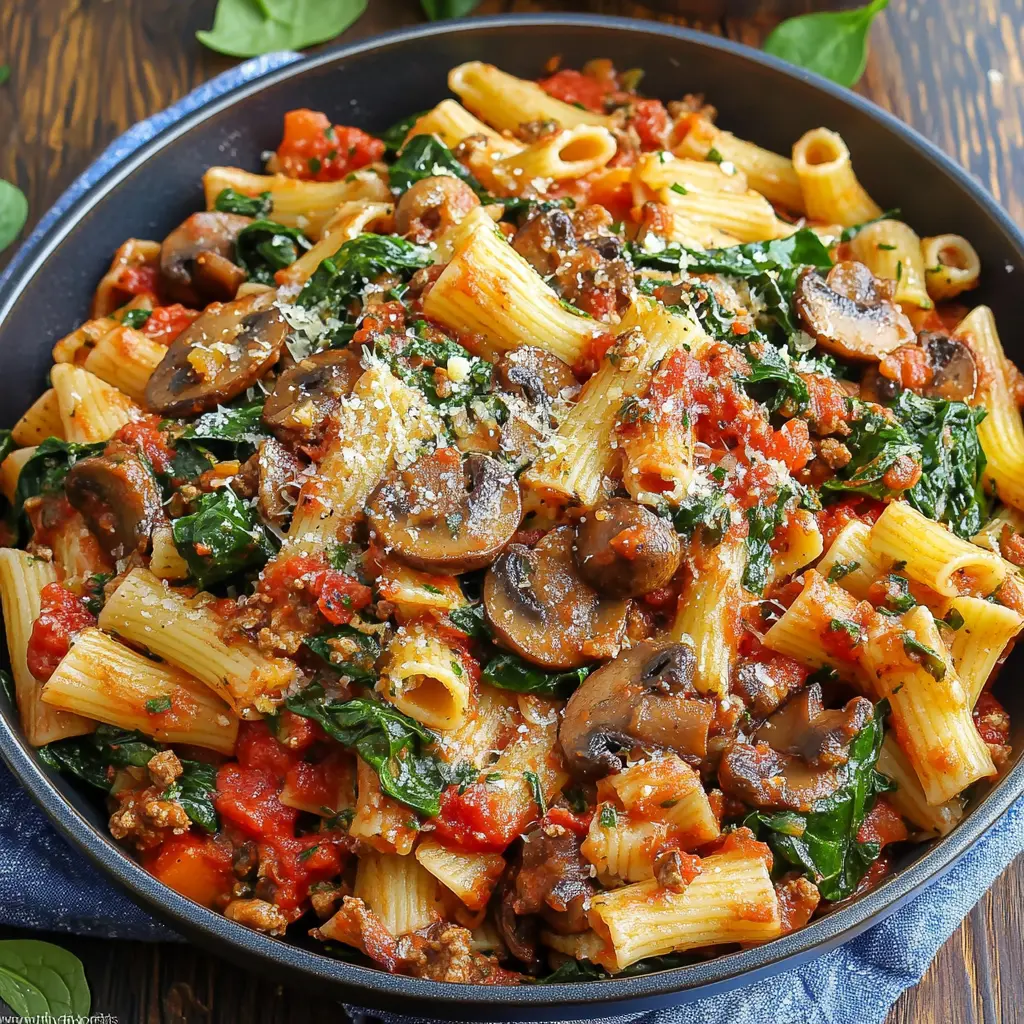
Italian Sausage Pasta with Spinach, Mushrooms, and Marinara Sauce
Imagine twirling your fork into perfectly cooked pasta coated in rich marinara sauce, studded with savory Italian sausage, tender mushrooms, and vibrant spinach. This Italian Sausage Pasta with Spinach, Mushrooms, and Marinara Sauce delivers restaurant-quality comfort food right in your own kitchen. Better yet, this recipe comes together in about 30 minutes, making it perfect for busy weeknights when you crave something hearty and satisfying.
Why This Recipe Works
This Italian sausage pasta recipe combines bold flavors with nutritional balance. The dish works because it layers complementary tastes and textures.
First, the Italian sausage provides protein and deep savory notes. When browned properly, it develops a caramelized crust that adds complexity. Second, the mushrooms contribute earthy umami flavor while absorbing the marinara sauce beautifully. Third, fresh spinach wilts into the hot pasta, adding color, nutrients, and a subtle sweetness.
The marinara sauce ties everything together. It coats each pasta strand while mingling with the rendered fat from the sausage. This creates a cohesive dish where every bite delivers balanced flavor.
Nutritional Benefits
This one-pot meal offers substantial nutritional value. Spinach provides iron, vitamins A and K, and antioxidants. Mushrooms deliver selenium, B vitamins, and fiber. The protein from Italian sausage keeps you satisfied for hours.
According to the American Heart Association, incorporating vegetables like spinach and mushrooms into pasta dishes increases nutrient density while maintaining great taste.
Ingredient Breakdown
Understanding each ingredient helps you make smart substitutions and achieve optimal results.
Italian Sausage (1 pound)
Choose between sweet or hot Italian sausage based on your preference. Sweet sausage contains fennel and mild spices. Hot sausage adds red pepper flakes for heat.
Look for sausage with visible seasoning throughout the meat. Quality sausage should list pork, spices, and minimal fillers. Remove casings before cooking for easier browning and better texture integration.
Pasta (12-16 ounces)
Short pasta shapes work best for this dish. Penne, rigatoni, or fusilli trap sauce effectively. Their ridges and hollows catch chunks of sausage and vegetables.
For 4-6 servings, use 12-16 ounces of dried pasta. Whole wheat pasta adds fiber and nutty flavor. Gluten-free varieties work equally well.
Mushrooms (8 ounces)
White button mushrooms offer mild flavor and wide availability. Cremini mushrooms provide deeper, earthier taste. For luxury, try a mix including shiitake or oyster mushrooms.
Slice mushrooms about 1/4-inch thick. This thickness allows proper browning while maintaining structure. Avoid washing mushrooms under water. Instead, wipe them with a damp paper towel.
Fresh Spinach (4-5 cups)
Baby spinach wilts quickly and has tender leaves. Regular spinach works too but requires removing thick stems. Fresh spinach reduces dramatically when cooked, so don’t worry about the initial volume.
Frozen spinach works in a pinch. Thaw it completely and squeeze out excess moisture before adding.
Marinara Sauce (24 ounces)
Quality marinara sauce forms the flavor foundation. Look for versions with simple ingredients: tomatoes, garlic, olive oil, and herbs. Avoid brands with added sugar or artificial flavors.
Alternatively, check out our guide on homemade marinara sauce for complete control over ingredients and taste.
Aromatics and Seasonings
Garlic (4-5 cloves) adds pungent flavor that complements Italian sausage perfectly. Onion (1 medium) provides sweetness and depth. Italian seasoning (1-2 teaspoons) reinforces traditional flavors. Red pepper flakes (1/4 teaspoon) add optional heat.
Fresh basil and Parmesan cheese garnish the finished dish beautifully.
Equipment You’ll Need
Proper equipment ensures cooking success and efficiency.
Large Pot
Use a 6-8 quart pot for boiling pasta. The large capacity prevents sticking and allows pasta to move freely. Stainless steel or enamel-coated pots work best.
Large Skillet or Sauté Pan
A 12-inch skillet with high sides accommodates all ingredients. Cast iron retains heat beautifully for browning sausage. Stainless steel works well too. Nonstick pans simplify cleanup but limit browning.
Additional Tools
A colander drains pasta efficiently. Wooden spoons prevent scratching cookware. Tongs help toss pasta with sauce. Sharp knives make prep work easier. A cutting board protects countertops.
Step-by-Step Instructions
Follow these detailed steps for foolproof results every time.
Step 1: Prepare Your Ingredients
Begin with mise en place. This French culinary term means having everything in place before cooking starts.
Remove Italian sausage from casings and break into chunks. Slice mushrooms evenly. Mince garlic cloves. Dice onion into small pieces. Measure out marinara sauce. Rinse spinach and shake off excess water.
This preparation ensures smooth cooking without scrambling mid-recipe.
Step 2: Cook the Pasta
Fill your large pot three-quarters full with water. Add 1-2 tablespoons of salt. The water should taste like the sea.
Bring water to a rolling boil over high heat. Add pasta and stir immediately to prevent sticking. Cook according to package directions, typically 8-10 minutes for al dente.
Set a timer for 2 minutes before the package suggests. Test pasta at this point. It should have slight resistance when bitten. Reserve 1 cup of pasta water before draining. This starchy liquid helps adjust sauce consistency later.
Drain pasta in a colander but don’t rinse. The surface starch helps sauce cling better.
Step 3: Brown the Italian Sausage
While pasta cooks, heat your large skillet over medium-high heat. Add no oil initially since sausage releases plenty of fat.
Add sausage chunks to the hot pan. Break them into smaller pieces with your wooden spoon. Let the sausage brown undisturbed for 2-3 minutes. This creates flavorful caramelization.
Stir and continue cooking until no pink remains, about 6-8 minutes total. The sausage should develop golden-brown bits.
If excess fat pools in the pan, remove all but 2 tablespoons. This prevents greasy sauce while retaining flavor.
Step 4: Sauté the Vegetables
Reduce heat to medium. Add diced onion to the pan with the cooked sausage. Cook for 3-4 minutes until the onion turns translucent.
Add sliced mushrooms next. Spread them in an even layer. Let them cook undisturbed for 2 minutes. This develops beautiful browning. Stir and continue cooking for another 3-4 minutes until mushrooms release moisture and shrink.
Add minced garlic during the last minute. Garlic burns easily, so brief cooking preserves its punch without bitterness. Stir constantly while garlic cooks.
Season with Italian seasoning, salt, and pepper. Red pepper flakes add heat if desired.
Step 5: Add Marinara Sauce
Pour marinara sauce over the sausage and vegetables. Stir everything together thoroughly. The sauce should coat all ingredients evenly.
Bring the mixture to a gentle simmer. Reduce heat to medium-low. Let it simmer for 5-7 minutes. This allows flavors to meld together beautifully.
Taste and adjust seasoning. Add salt, pepper, or more Italian seasoning as needed.
Step 6: Incorporate Spinach
Add fresh spinach in batches. The volume seems enormous at first. Stir gently as spinach wilts. Each addition takes only 1-2 minutes to collapse.
Continue until all spinach has wilted and turned bright green. The spinach should integrate completely with the sauce.
Step 7: Combine Pasta and Sauce
Add drained pasta directly to the skillet. Toss everything together using tongs or a large spoon. Ensure sauce coats every pasta piece.
If the mixture seems dry, add reserved pasta water gradually. Start with 1/4 cup and add more as needed. The starchy water helps sauce cling while adding silky texture.
Let everything heat through for 1-2 minutes while tossing occasionally.
Step 8: Serve and Garnish
Transfer Italian sausage pasta to serving bowls or a large platter. Tear fresh basil leaves over the top. Sprinkle generously with grated Parmesan cheese.
Serve immediately while hot. The cheese melts slightly from residual heat, creating irresistible appeal.
Expert Tips for Perfect Results
These professional techniques elevate your dish from good to outstanding.
Brown Sausage Properly
Patience during browning develops complex flavors. Resist the urge to constantly stir. Let sausage develop a crust before moving it. Those browned bits contain concentrated flavor.
Don’t Overcook Pasta
Al dente pasta has slight resistance when bitten. It continues cooking when combined with hot sauce. Slightly undercook pasta initially. This prevents mushy results in the final dish.
Layer Your Flavors
Building flavors sequentially creates depth. Brown sausage first. Sauté aromatics next. Add sauce and simmer. Each step compounds flavor development.
Use Fresh Garlic
Pre-minced garlic from jars lacks the punch of fresh cloves. Fresh garlic takes minutes to prepare and dramatically improves taste. Mince it finely for even distribution.
Add Spinach Last
Spinach wilts quickly and loses vibrant color if overcooked. Adding it near the end preserves nutrients, color, and texture. The residual heat wilts it perfectly without mushiness.
Reserve Pasta Water
This starchy liquid contains pasta’s cooking starch. It helps sauce adhere to pasta while adjusting consistency. Always reserve some before draining.
Choose Quality Marinara
Marinara sauce quality significantly impacts final results. Read labels carefully. Select versions with whole tomatoes, olive oil, and real herbs. According to Healthline, choosing marinara with minimal additives maximizes nutritional benefits.
Nutritional Information
Understanding nutritional content helps make informed dietary choices.
Per Serving (Based on 6 Servings)
Calories range from 450-550 depending on sausage fat content and pasta type. Protein content typically reaches 20-25 grams per serving. Carbohydrates provide 45-55 grams, mostly from pasta. Fat content varies from 18-25 grams based on sausage selection.
Fiber content reaches 4-6 grams per serving, primarily from vegetables and whole grain pasta options. Sodium levels depend heavily on sausage and marinara choices. Look for lower-sodium options to reduce intake.
Nutritional Highlights
This dish provides substantial iron from spinach and sausage. Vitamin A content exceeds daily requirements thanks to spinach. Mushrooms contribute significant B vitamins and selenium.
The combination of protein, complex carbohydrates, and vegetables creates a balanced meal. It satisfies hunger while providing sustained energy.
Serving Suggestions
Complete your meal with complementary sides and beverages.
Side Dishes
Garlic bread makes a classic accompaniment. Toast thick slices and rub with fresh garlic. A simple green salad provides refreshing contrast. Dress mixed greens lightly with olive oil and lemon juice.
Roasted vegetables add color and nutrition. Try zucchini, bell peppers, or asparagus. Caesar salad offers creamy richness that balances the hearty pasta.
Beverage Pairings
Sparkling water with lemon provides refreshing contrast. Italian sodas in flavors like blood orange or lemon complement the meal beautifully. Iced tea, either sweetened or unsweetened, works wonderfully.
For cold weather, hot herbal tea makes a cozy choice. Fresh-squeezed lemonade adds bright acidity that cuts through rich flavors.
Presentation Ideas
Serve family-style in a large bowl for casual dinners. Individual portions in shallow bowls work for formal occasions. Garnish each serving with fresh basil leaves and Parmesan shavings.
Add a drizzle of high-quality olive oil before serving for restaurant flair. A light dusting of red pepper flakes appeals to spice lovers.
Storage and Reheating
Proper storage maintains quality and food safety.
Refrigerator Storage
Cool leftovers to room temperature within 2 hours of cooking. Transfer to airtight containers. Refrigerate for up to 4 days.
Separate pasta from sauce if possible. This prevents pasta from absorbing too much liquid and becoming mushy. Store in separate containers and recombine when reheating.
Freezer Storage
This dish freezes reasonably well for up to 2 months. Use freezer-safe containers or heavy-duty freezer bags. Remove as much air as possible to prevent freezer burn.
Slightly undercook pasta if planning to freeze. This prevents mushiness after thawing and reheating.
Label containers with contents and date. Thaw overnight in the refrigerator before reheating.
Reheating Methods
Stovetop Method: Place pasta in a skillet over medium heat. Add 2-3 tablespoons of water or broth. Cover and heat, stirring occasionally, for 5-7 minutes until heated through.
Microwave Method: Transfer portions to microwave-safe dishes. Add a splash of water. Cover loosely and microwave on medium power in 1-minute intervals. Stir between intervals until hot.
Oven Method: Transfer pasta to an oven-safe dish. Cover with foil. Bake at 350°F for 20-25 minutes until heated through. Add extra sauce if needed.
Recipe Variations
Customize this Italian sausage pasta to suit preferences and dietary needs.
Protein Variations
Substitute ground turkey or chicken for lighter options. Turkey Italian sausage reduces fat while maintaining flavor. Ground beef works but changes the flavor profile significantly.
For vegetarian versions, use plant-based Italian sausage. Many brands replicate traditional flavor remarkably well. Chickpeas or white beans add protein without meat.
Vegetable Additions
Bell peppers add sweetness and crunch. Dice them and sauté with onions. Zucchini provides mild flavor and additional nutrients. Sun-dried tomatoes contribute concentrated tomato flavor and chewy texture.
Kale substitutes well for spinach with heartier texture. Cherry tomatoes burst when sautéed, adding fresh tomato flavor. Artichoke hearts bring Mediterranean flair.
Sauce Variations
Creamy tomato sauce transforms the dish. Add 1/2 cup heavy cream to marinara for luxurious richness. Arrabbiata sauce increases heat significantly for spice enthusiasts.
Pasta Alternatives
Whole wheat pasta adds nutty flavor and extra fiber. Chickpea pasta boosts protein content significantly. Rice noodles create a gluten-free option with different texture.
Zucchini noodles dramatically reduce carbohydrates. Blend regular pasta with zoodles for compromise. Spaghetti squash offers another low-carb vegetable-based alternative.
Cheese Options
Mozzarella melts beautifully and adds stretchy texture. Add it during the last minute of cooking. Ricotta dolloped on top provides creamy richness. Pecorino Romano offers sharper, saltier flavor than Parmesan.
Goat cheese adds tangy complexity. Crumble it over finished portions. Nutritional yeast creates a vegan “cheese” flavor with B vitamins.
Troubleshooting Common Issues
Solve common problems with these practical solutions.
Sauce Too Thick
Thick sauce won’t coat pasta properly. Add reserved pasta water gradually until desired consistency develops. Start with 1/4 cup and add more as needed.
Alternatively, add small amounts of vegetable broth. This thins sauce while adding extra flavor.
Sauce Too Thin
Excess liquid makes the dish soupy. Simmer uncovered for 5-10 minutes to reduce liquid. Stir occasionally to prevent sticking.
Add tomato paste in small amounts. One tablespoon at a time thickens while intensifying tomato flavor.
Pasta Clumping
Sticky pasta results from insufficient water or inadequate stirring. Always use plenty of water when boiling pasta. Stir immediately after adding pasta and occasionally during cooking.
If pasta has already clumped, add reserved pasta water and toss vigorously. The starch helps separate pieces.
Bland Flavor
Under-seasoning creates flat taste. Season at multiple stages during cooking. Salt pasta water generously. Season sausage and vegetables during cooking. Taste sauce before combining with pasta.
Boost umami with Parmesan rind simmered in sauce. Add more garlic for punch. Fresh herbs brighten flavor significantly.
Greasy Texture
Excess sausage fat makes the dish heavy. Drain most rendered fat after browning sausage. Keep only 1-2 tablespoons for flavor.
Choose leaner sausage options. Look for versions with 15% fat or less.
Mushy Spinach
Overcooked spinach loses appeal. Add spinach during the last 2-3 minutes of cooking. Remove from heat as soon as it wilts.
Use baby spinach for more delicate texture. Regular spinach requires removing thick stems first.
Frequently Asked Questions
Can I make this Italian sausage pasta ahead of time?
Yes, prepare components separately ahead. Brown sausage and store refrigerated for up to 2 days. Prep vegetables and store in airtight containers. Cook pasta and combine everything within 30 minutes before serving for best texture.
What’s the best pasta shape for this recipe?
Short pasta shapes with ridges or hollows work best. Penne, rigatoni, rotini, and farfalle all trap sauce effectively. These shapes capture chunks of sausage and vegetables in every bite.
Can I use frozen spinach instead of fresh?
Absolutely. Use 10 ounces of frozen spinach. Thaw completely and squeeze out excess moisture before adding. Frozen spinach adds more concentrated spinach flavor than fresh but different texture.
How do I prevent the pasta from getting mushy?
Cook pasta 1-2 minutes less than package directions suggest. It continues cooking when combined with hot sauce. Don’t rinse pasta after draining. The surface starch helps sauce adhere properly.
Is this recipe spicy?
The base recipe has mild heat from Italian sausage seasoning. Hot Italian sausage increases spice level. Red pepper flakes allow customization. Start with 1/4 teaspoon and adjust to taste.
Can I substitute different types of mushrooms?
Yes, any mushroom variety works. Cremini mushrooms offer deeper flavor than white buttons. Shiitake mushrooms add earthy, umami richness. Oyster mushrooms provide delicate texture. Mix varieties for complexity.
How can I make this dish lighter?
Use turkey Italian sausage instead of pork. Choose whole wheat pasta for extra fiber. Increase vegetable proportions and reduce sausage slightly. Use lighter marinara sauce with less oil.
What can I serve with Italian sausage pasta with spinach, mushrooms, and marinara sauce?
Simple green salads, garlic bread, roasted vegetables, and crusty Italian bread all complement this hearty pasta beautifully. Light appetizers like bruschetta or caprese salad work wonderfully too.
Can I make this gluten-free?
Yes, substitute gluten-free pasta for regular pasta. Check that Italian sausage contains no gluten fillers. Most marinara sauces are naturally gluten-free, but verify labels.
How do I know when the sausage is fully cooked?
Cooked sausage reaches an internal temperature of 160°F. It should show no pink color inside. The exterior develops golden-brown caramelization. Use a meat thermometer for certainty.
This Italian Sausage Pasta with Spinach, Mushrooms, and Marinara Sauce delivers comforting Italian flavors in one satisfying bowl. The combination of savory sausage, earthy mushrooms, nutritious spinach, and rich marinara sauce creates a balanced meal that pleases everyone at the table. This recipe comes together quickly, making it perfect for weeknight dinners or casual entertaining.
The versatility of this dish allows endless customization. Adjust vegetables, switch proteins, or modify the sauce to suit your preferences. Master the basic technique and you’ll create this crowd-pleaser repeatedly.
Print
Italian Sausage Pasta with Spinach, Mushrooms, and Marinara Sauce
Description
Italian Sausage Pasta with Spinach, Mushrooms, and Marinara Sauce
Ingredients:
-
12 oz pasta (penne or rigatoni)
-
1 lb Italian sausage (mild or spicy, casings removed)
-
2 tbsp olive oil
-
1 small onion, diced
-
3 cloves garlic, minced
-
8 oz mushrooms, sliced
-
2 cups fresh spinach
-
2 cups marinara sauce
-
½ cup heavy cream (optional for a creamy version)
-
½ cup grated Parmesan cheese
-
Salt and black pepper to taste
-
Red pepper flakes (optional)
-
Fresh basil or parsley, chopped (for garnish)
Instructions:
-
Cook the pasta: Bring a large pot of salted water to a boil. Cook pasta according to package directions until al dente. Drain and set aside.
-
Brown the sausage: In a large skillet, heat olive oil over medium heat. Add Italian sausage and cook until browned, breaking it up into crumbles with a spoon.
-
Add aromatics and veggies: Stir in onion and cook until softened, about 3 minutes. Add garlic and cook for 1 minute more. Add mushrooms and cook until tender and lightly browned.
-
Add sauce and spinach: Pour in the marinara sauce and stir well. Add spinach and cook until wilted. If using, stir in heavy cream for a creamy texture.
-
Combine: Add the cooked pasta to the skillet and toss to coat in the sauce. Stir in Parmesan cheese and season with salt, pepper, and red pepper flakes to taste.
-
Serve: Garnish with chopped basil or parsley and extra Parmesan. Serve warm.