
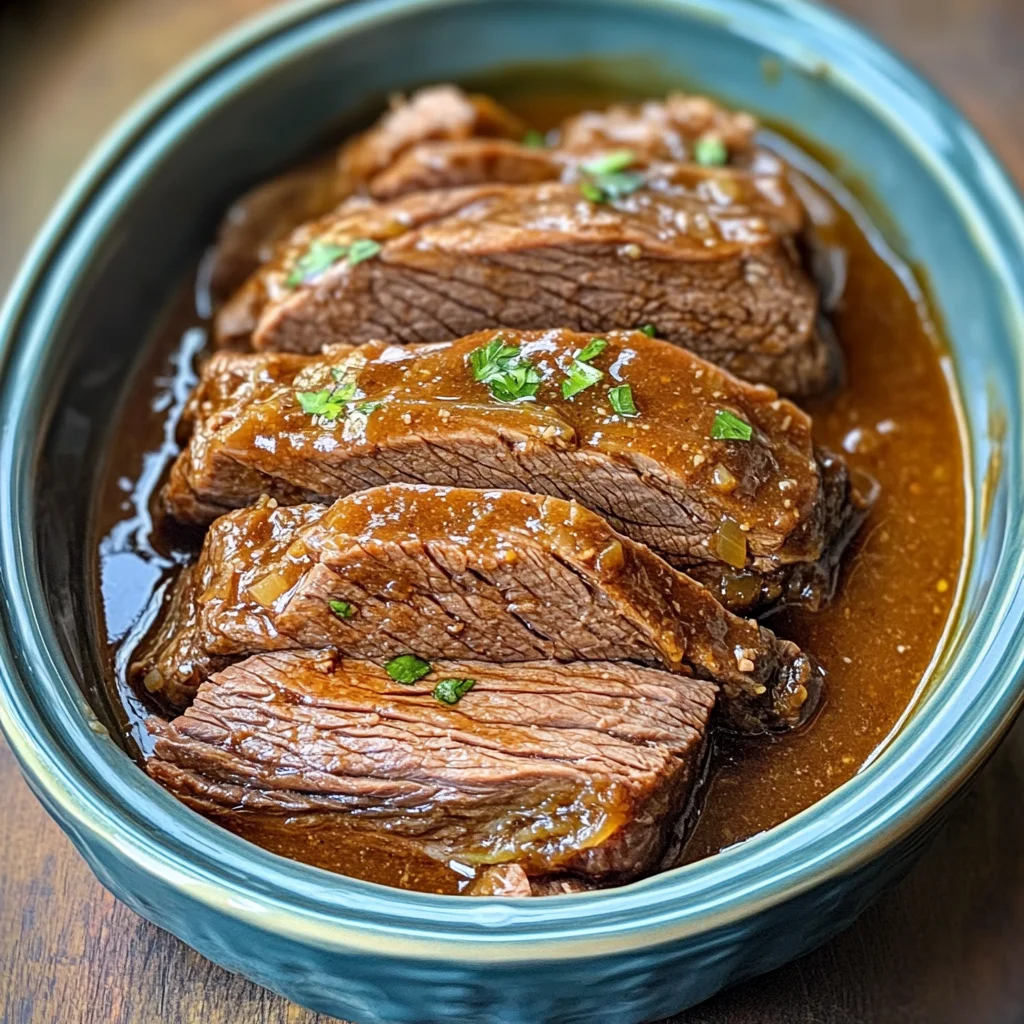
Slow Cooker Maple Brown Sugar Beef Roast
Why you’ll love this recipe
This Slow Cooker Maple Brown Sugar Beef Roast is a dependable crowd-pleaser that blends savory comfort with natural maple sweetness and a glossy brown sugar glaze. The slow cooker keeps things convenient, energy-smart, and consistent, so dinner practically cooks itself while you get on with your day. Moreover, the method supports food safety with steady heat and a lid that traps steam, helping the roast cook evenly to a safe internal temperature.
Ingredients and smart substitutions
-
Beef roast, 3–4 pounds, such as chuck, blade, or top round, trimmed of excess exterior fat for a cleaner sauce.
-
Pure maple syrup, preferably Grade A, any color class that matches your flavor preference from Golden to Very Dark.
-
Brown sugar, light or dark, to tune caramel depth and molasses notes in the final glaze.
-
Beef broth or stock to maintain moisture and carry flavor generously through the roast.
-
Onion and garlic to build savory backbone and balance sweetness as the roast braises.
-
Soy sauce or tamari for umami and color contrast in the glaze base, added modestly to avoid overpowering maple.
-
Apple cider vinegar or lemon juice for brightness to balance rich sweetness in the sauce.
-
Cornstarch slurry for easy, lump-free thickening near the end of cooking.
-
Salt and black pepper, with optional paprika, thyme, rosemary, or onion powder.
Substitutions and tips: Use Grade A Amber for a classic “rich” maple taste or Grade A Dark for bolder “robust” notes, depending on how pronounced you want the maple to be. Light brown sugar brings milder caramel tones, while dark brown sugar doubles the molasses impact for a deeper finish. If sodium is a concern, choose low-sodium broth and reduce soy sauce, adding salt later after tasting the concentrated gravy.
Best beef cuts for slow cooking
Choose tough, well-marbled cuts that break down gradually and become fork-tender over several hours. Chuck roast is the gold standard for rich, shreddable results, while top round or bottom round will slice neatly after resting. Regardless of the cut, always verify doneness with a thermometer and aim for the safe minimum internal temperature for beef roasts, followed by a short rest.
Step-by-step instructions
Follow these clear steps for Slow Cooker Maple Brown Sugar Beef Roast that hits the ideal balance of sweet, savory, and tender every time.
-
Pat dry, season, and optional sear
-
Pat the roast dry, then season all sides with salt, pepper, and optional paprika or dried herbs.
-
Optional but recommended: Sear in a hot skillet to brown the surface and develop Maillard flavors, which add complexity without sealing juices.
-
Searing produces new flavor compounds and a browned crust that enriches both the sauce and overall aroma.
-
Prep the slow cooker base
-
Layer sliced onions and minced garlic across the bottom to flavor the liquids and support even cooking.
-
Pour in beef broth, soy sauce or tamari, and a small splash of cider vinegar or lemon juice for balance.
-
Whisk maple syrup with brown sugar separately, then drizzle the mixture over the roast once it’s in the crock.
-
Fill level and lid discipline
-
Keep the slow cooker between half and two-thirds full for even heat distribution and safe cooking.
-
Place vegetables low and the roast above them so heat reaches the densest ingredients consistently.
-
Do not lift the lid unnecessarily, because each lift drops internal temperature and extends cook time significantly.
-
Time and temperature
-
Cook on LOW 8–10 hours or on HIGH 4–6 hours until the roast is tender and reaches safe internal temperature.
-
Starting on HIGH for the first hour can help drive the crock into the safe zone faster, then switch to LOW for the remainder.
-
At altitude, expect longer cooking, often adding about an hour on LOW for every 4,000 feet.
-
Check doneness and rest
-
Check with a food thermometer and look for at least 145°F for beef roasts, then rest briefly before slicing or shredding.
-
Resting helps juices redistribute, improving tenderness and serving quality without compromising food safety.
-
Thicken the sauce
-
Skim surface fat, then whisk a cornstarch slurry using a 1:2 ratio of cornstarch to cold water, starting with small amounts.
-
Stir the slurry into the simmering juices in the crock or a saucepan and cook until glossy and thick.
-
If needed, add in stages to reach a silky, spoon-coating consistency without over-thickening.
-
Serve
-
Slice against the grain for neater portions or pull into tender chunks if you cooked the roast longer for shreddability.
-
Spoon maple-brown sugar gravy over the meat and sides, then garnish with fresh herbs if desired.
Time, temp, and doneness guide
For food safety, the United States guidance is to cook beef roasts to at least 145°F and then rest briefly before serving. In a slow cooker, tenderness correlates with connective tissue breakdown, so longer on LOW often yields the most succulent texture. Because slow cookers vary, rely on a thermometer and tenderness checks rather than the clock alone.
-
LOW: 8–10 hours for most 3–4 pound roasts, with better moisture retention and shreddability.
-
HIGH: 4–6 hours for faster results when time is limited, followed by a rest and tenderness check.
-
Safe internal temperature: at least 145°F for roasts, with a rest period before slicing or shredding.
Pro tips for texture and flavor
-
Preheat and jump-start: Turning to HIGH for the first hour helps push the crock into a safer temperature band faster.
-
Fill wisely: Keep volume between half and two-thirds full to prevent cold spots and ensure steady heat circulation.
-
Keep the lid closed: Heat drops when the lid opens, delaying doneness and potentially risking undercooking.
-
Place veggies low: Root vegetables go under the roast so they soften properly in the path of the heat.
-
Sear for depth: Maillard browning boosts aroma and flavor complexity even though it does not “seal in juices.”
Sauce and gravy options
A simple cornstarch slurry transforms the cooking juices into a glossy, clingy sauce that coats every slice beautifully. Start with 1 tablespoon cornstarch mixed with 2 tablespoons cold water per cup of liquid, then whisk into simmering juices until thickened. Add more in small increments as needed and simmer briefly to cook out raw starch taste without letting the sauce thin again.
Flavor balancing ideas:
-
More savory: Add a dash more soy or tamari and a pinch of black pepper to counter sweetness.
-
Brighter finish: Stir in a small splash of cider vinegar or lemon juice to lift the glaze at the end.
-
Deeper maple: Use Grade A Dark or Very Dark syrup for robust maple presence in the finished sauce.
Serving ideas
-
Serve with mashed or roasted potatoes to soak up the maple-brown sugar gravy.
-
Add simple sides like buttered green beans, steamed broccoli, or a crisp salad for freshness.
-
Spoon over rice or egg noodles for a homestyle bowl with sauce in every bite.
Storage, reheating, and meal prep
Cool leftovers quickly in shallow containers and refrigerate within about two hours to maintain quality and safety. Reheat leftovers to 165∘F on the stove or in the microwave, and use the slow cooker only for keeping food hot after it is reheated. Do not cook from frozen in a slow cooker; thaw meat first so it reaches safe cooking temperatures in a timely manner.
Nutrition highlights
This dish leans on pure maple syrup for nuanced sweetness, which contributes flavor complexity across different Grade A color classes, from delicate to robust. The beef provides protein and iron, while careful trimming and skimming reduce excess rendered fat in the final sauce. Balancing the glaze with acid and savory elements keeps sweetness in check without losing the signature maple profile.
Light vs dark brown sugar for this roast
| Brown sugar type | Molasses content | Flavor impact | Best use in this recipe |
|---|---|---|---|
| Light brown sugar | About 3.5% molasses, milder caramel notes | Softer sweetness and lighter color | Balanced, all-purpose glaze without dominating the maple |
| Dark brown sugar | About 6.5% molasses, nearly double light | Deeper molasses, darker color | Bolder finish, ideal when using Dark or Very Dark maple |
Choosing between them depends on how prominently you want molasses tones to show alongside the maple character in Slow Cooker Maple Brown Sugar Beef Roast.
FAQs
Q: What is the safe internal temperature for Slow Cooker Maple Brown Sugar Beef Roast?
A: For beef roasts, verify at least 145∘F with a thermometer, then allow a brief rest before slicing or shredding.
Q: Should the slow cooker be set to LOW or HIGH for best results?
A: LOW often produces juicier, more tender results over 8–10 hours, while HIGH can finish in 4–6 hours when time is short.
Q: Can the roast be cooked from frozen in the slow cooker?
A: No, thaw the meat first so it leaves the temperature danger zone quickly and cooks evenly and safely.
Q: Do you have to sear the roast first?
A: Searing is optional, but it builds Maillard-driven flavor and color that enrich both the meat and the sauce.
Q: How do you thicken the sauce without lumps?
A: Whisk a 1:2 cornstarch-to-cold-water slurry, then add gradually to simmering juices while stirring until glossy and thick.
Q: Which maple syrup grade is best for the glaze?
A: Grade A Amber gives a classic rich taste, while Grade A Dark or Very Dark deliver more robust maple intensity.
Q: Light vs dark brown sugar—what changes in the final dish?
A: Dark brown sugar brings stronger molasses and a deeper color, while light brown sugar keeps the glaze gentler and more balanced.
Variations and add-ins
-
Savory-herb: Add thyme, rosemary, and onion powder for an herby backbone that balances sweetness.
-
Smoky-sweet: Use paprika and a pinch of chipotle powder to add warmth that complements dark maple.
-
Gluten-free: Use tamari or a verified gluten-free soy alternative and thicken with cornstarch slurry.
-
Lower-sugar approach: Reduce brown sugar slightly and finish with extra acid and pepper to keep flavors bright.
Equipment guide
-
Use a reliable slow cooker that heats consistently to keep food safely out of the danger zone.
-
Fill halfway to two-thirds full for best heat circulation and to avoid undercooking.
-
Keep the lid on, resist peeking, and insert a food thermometer to check doneness at the end.
Make-ahead and freezer tips
-
Assemble ingredients the night before, keep chilled, and load into a preheated crock in the morning for a faster warm-up.
-
Chill leftovers promptly and reheat to 165∘F, using the slow cooker only to hold hot food after reheating.
-
Freeze sliced or shredded portions in meal-size packs for quick bowls and sandwiches, then thaw safely before reheating.
Step-by-step recipe card
Ingredients
-
3–4 lb beef chuck roast, blade roast, or top round
-
1/2 cup Grade A maple syrup, Amber for rich or Dark for robust
-
1/3 cup light or dark brown sugar, packed
-
1 1/2 cups low-sodium beef broth
-
2 tbsp soy sauce or tamari
-
1 tbsp apple cider vinegar or 2 tsp lemon juice
-
1 large onion, sliced; 4 cloves garlic, minced
-
1 tsp kosher salt; 1/2 tsp black pepper; 1 tsp paprika; 1 tsp dried thyme
-
2–3 tbsp cornstarch mixed with 4–6 tbsp cold water for slurry
Instructions
-
Season and optional sear: Pat dry, season the roast, and sear on all sides until browned for Maillard depth.
-
Build the base: Put onions and garlic in the slow cooker, then add broth, soy or tamari, and a splash of acid.
-
Maple-brown sugar: Place the roast on top, whisk maple syrup with brown sugar, and pour over the meat.
-
Fill and cover: Ensure the crock is half to two-thirds full, then cover without peeking.
-
Cook: LOW 8–10 hours or HIGH 4–6 hours, checking tenderness and verifying at least 145∘F at the center.
-
Rest and thicken: Rest roast briefly, skim fat, and thicken juices with a 1:2 cornstarch slurry until glossy.
-
Serve: Slice or shred, then spoon sauce over the roast and sides.
Chef’s notes
-
Start on HIGH for the first hour, then switch to LOW to help the cooker reach safe heat quickly.
-
Place vegetables low and meat higher so dense items cook fully and evenly.
-
Do not reheat chilled leftovers in the slow cooker; reheat first on the stove or microwave to 165∘F.
Conclusion
Slow Cooker Maple Brown Sugar Beef Roast delivers a tender, sweet-savory centerpiece with a silky maple-brown sugar gravy that elevates even the simplest sides. With proper fill level, lid discipline, and a thermometer check to at least 145∘F, the method stays easy, safe, and reliably delicious for weeknights or gatherings. Ready to cook Slow Cooker Maple Brown Sugar Beef Roast tonight and save this keeper for your meal-prep rotation?
Print
Slow Cooker Maple Brown Sugar Beef Roast
Description
Slow Cooker Maple Brown Sugar Beef Roast
Ingredients:
-
3–4 lb beef chuck roast
-
1 cup beef broth
-
¼ cup pure maple syrup
-
¼ cup brown sugar
-
3 tbsp soy sauce
-
2 tbsp Worcestershire sauce
-
1 tbsp Dijon mustard
-
4 cloves garlic, minced
-
1 tsp onion powder
-
½ tsp black pepper
-
1 tsp salt
-
1 tbsp cornstarch + 2 tbsp water (optional, for thickening)
-
Fresh parsley, chopped (for garnish)
Instructions:
-
Place the beef roast in the slow cooker.
-
In a medium bowl, whisk together beef broth, maple syrup, brown sugar, soy sauce, Worcestershire sauce, Dijon mustard, garlic, onion powder, pepper, and salt.
-
Pour the mixture over the roast, making sure it’s well coated.
-
Cover and cook on Low for 8–9 hours or High for 4–5 hours, until the beef is tender and easily shredded.
-
Remove the roast and shred it with two forks.
-
(Optional) To thicken the sauce, stir cornstarch slurry into the slow cooker juices and cook on High for 10–15 minutes until thickened.
-
Return shredded beef to the slow cooker and toss with the sauce.
-
Garnish with chopped parsley and serve with mashed potatoes, rice, or roasted vegetables.