
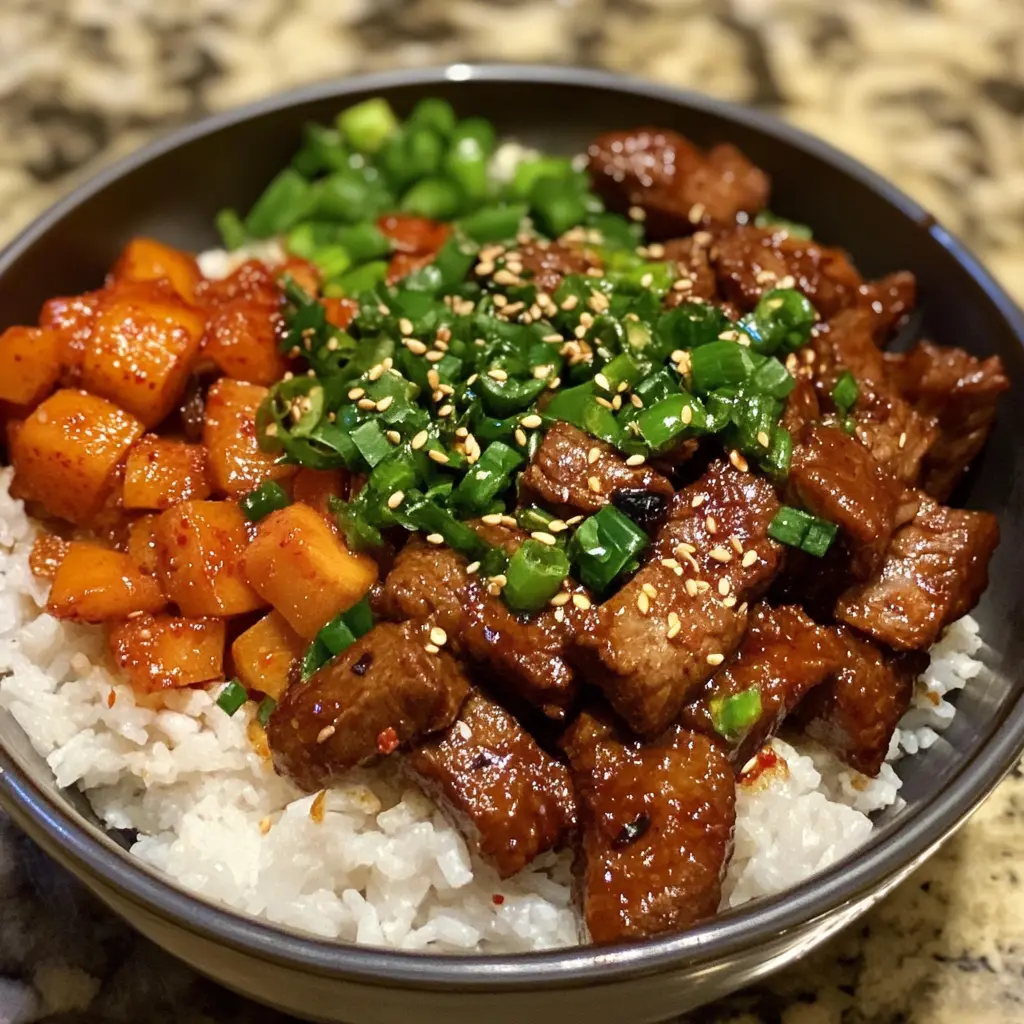
Spicy Korean-BBQ Beef Bowls: A Complete Guide to Making Restaurant-Quality Bowls at Home
Introduction
Spicy Korean-BBQ beef bowls have become a beloved staple in modern cuisine. These vibrant, flavorful dishes combine tender marinated beef with aromatic rice and fresh toppings. The result is a satisfying meal that brings the essence of Korean street food into your kitchen.
Korean-BBQ beef bowls represent more than just a quick lunch option. They showcase authentic Korean flavors with gochujang, sesame oil, and soy sauce. This guide walks you through creating restaurant-quality spicy Korean-BBQ beef bowls at home.
Whether you’re a beginner or an experienced cook, these bowls offer flexibility and bold flavors. The foundation starts with perfectly marinated beef. Then, you layer it with rice, vegetables, and sauce. Finally, you finish with sesame seeds and green onions for visual appeal and taste.
What Are Korean-BBQ Beef Bowls?
Understanding the Dish
Korean-BBQ beef bowls represent a fusion of traditional Korean barbecue and modern rice bowl concepts. They feature thinly sliced or ground beef coated in a savory-sweet-spicy marinade. The meat is then quickly cooked and served over steamed rice with an array of colorful vegetables and toppings.
This dish draws inspiration from bulgogi, Korea’s legendary marinated beef preparation. However, spicy Korean-BBQ beef bowls add an extra layer of heat and complexity. Traditional bulgogi uses a sweeter sauce, while these bowls incorporate gochujang for depth and spice.
Why These Bowls Are So Popular
Spicy Korean-BBQ beef bowls offer several compelling advantages. First, they’re incredibly quick to prepare—most recipes take 20-30 minutes from start to finish. Second, they’re highly customizable to your taste preferences and dietary needs. Third, they deliver authentic Korean flavors without requiring specialized barbecue equipment.
The versatility of Korean-BBQ beef bowls makes them perfect for weeknight dinners and meal prep sessions. You can batch-cook the beef and store it for quick assembly throughout the week. The combination of protein, carbohydrates, and vegetables creates a nutritionally balanced meal in one bowl.
Essential Ingredients for Spicy Korean-BBQ Beef
The Beef
The type of beef you choose significantly impacts your final dish. For ground beef bowls, lean ground beef (90% lean or higher) works best. For sliced beef bowls, use flank steak, skirt steak, or ribeye, sliced thin.
Approximately 1 pound of beef serves 3-4 people, depending on portion size. Ground beef typically produces a more uniform texture, while sliced beef creates a chewier, more traditional Korean-BBQ experience.
The Sauce Components
| Ingredient | Amount | Purpose |
|---|---|---|
| Soy sauce | 3-4 tablespoons | Provides umami and saltiness |
| Gochujang (Korean chili paste) | 1-2 tablespoons | Adds spicy heat and complexity |
| Sesame oil | 1 tablespoon | Contributes nutty, toasted flavor |
| Brown sugar | 2-3 tablespoons | Balances spice with sweetness |
| Garlic | 3-4 cloves, minced | Adds pungent aromatic notes |
| Ginger | 1 tablespoon, minced | Provides warm, zesty flavor |
| Rice vinegar | 1-2 tablespoons | Adds brightness and acidity |
| Gochugaru (Korean red pepper flakes) | ½-1 teaspoon | Intensifies spiciness |
Rice and Base Options
White short-grain rice is traditional for Korean-BBQ beef bowls. Each serving requires approximately ¾ cup cooked rice. Some people prefer brown rice for added nutrition or cauliflower rice for lower carbohydrate content.
The Perfect Korean-BBQ Marinade
Creating the Sauce
The marinade is the soul of spicy Korean-BBQ beef bowls. Whisking together the right proportions creates layers of flavor that distinguish this dish from ordinary beef. Start by combining your aromatics—garlic and ginger—in a bowl.
Next, add your liquid components: soy sauce, rice vinegar, and sesame oil. These ingredients work together to tenderize the beef while building complex flavor. The soy sauce provides umami depth, the vinegar adds brightness, and the sesame oil contributes nutty richness.
Then incorporate gochujang, the fermented chili paste that makes these bowls authentically Korean. Gochujang brings spiciness, umami, and a slightly fermented tang. Finally, add brown sugar to balance the heat and create a glaze-like consistency.
Marinade Proportions for Perfect Balance
For medium spice levels, use a 2:1 ratio of sweet to spicy components. This means if you use 2 tablespoons of brown sugar, include 1 tablespoon of gochujang. Adjust these ratios based on your heat tolerance.
For extra spicy Korean-BBQ beef bowls, increase gochujang to 2 tablespoons and add ½ teaspoon of gochugaru (Korean red pepper flakes). For mild versions, reduce gochujang to ½ tablespoon.
Step-by-Step Cooking Instructions
Preparing Your Ingredients
Begin by organizing all ingredients within arm’s reach. Mince garlic and ginger finely for even distribution. Slice beef into thin strips or use ground beef straight from the package. Having everything ready ensures smooth cooking without interruptions.
Making the Sauce
In a medium bowl, whisk together these ingredients thoroughly:
-
3 tablespoons soy sauce
-
1½ tablespoons gochujang
-
1 tablespoon sesame oil
-
2½ tablespoons brown sugar
-
3 cloves minced garlic
-
1 tablespoon minced fresh ginger
-
1½ tablespoons rice vinegar
-
¼ teaspoon gochugaru (optional, for extra heat)
Whisk until the sauce reaches a smooth consistency with no gochujang lumps. Set aside.
Cooking the Beef
Heat 1 tablespoon of neutral oil in a large skillet over medium-high heat. Once shimmering, add the beef (ground or sliced). For ground beef, break it into small pieces using a wooden spoon. Cook for 4-5 minutes until fully browned.
Once the beef is mostly cooked, drain excess fat if needed. Pour the prepared sauce directly over the beef. Stir constantly for 2-3 minutes, allowing the sauce to coat every piece. The mixture should become glossy and slightly thickened.
Achieving the Perfect Consistency
The sauce should reduce slightly and coat the beef like a glaze. If your sauce seems too thin, simmer for an additional 2-3 minutes. If it’s too thick, add 1-2 tablespoons of water and stir well.
Remove from heat and taste for seasoning. Add more soy sauce if you prefer more saltiness. Add extra gochujang if you want increased spiciness. Stir in additional sesame oil for deeper flavor notes.
Topping and Assembly Guide
Building Your Bowl
Start with a base of approximately ¾ cup of warm cooked rice. Pack the rice gently into a bowl if you prefer molded presentation. Layer the spicy Korean-BBQ beef directly over the rice while still warm.
Recommended Toppings
Fresh, colorful toppings create visual interest and textural contrast. Here are essential options:
-
Sesame seeds: Toasted white sesame seeds add nutty crunch
-
Scallions (green onions): Thinly sliced adds fresh, oniony notes
-
Kimchi: Fermented cabbage provides additional spice and probiotics
-
Cucumber: Quick-pickled or fresh sliced adds cooling crispness
-
Carrots: Shredded raw or lightly pickled adds sweetness and nutrition
-
Spinach: Lightly sautéed or raw adds green vegetables
-
Egg: Fried, soft-boiled, or served sunny-side up adds richness
-
Mushrooms: Sautéed shiitake or button mushrooms add umami
-
Corn: Sweet kernel corn adds textural variety
-
Sriracha or extra gochujang: For those wanting more heat
Assembly Order
For optimal presentation and flavor, follow this order:
-
Rice base
-
Spicy Korean-BBQ beef and its sauce
-
Colorful vegetables (different colors for visual appeal)
-
Protein topping (if adding egg or additional protein)
-
Sesame seeds
-
Fresh scallions as the final garnish
Flavor Variations and Customizations
Creating Mild Versions
To reduce spiciness, simply modify the marinade proportions. Use ½ tablespoon gochujang instead of 1½. Omit gochugaru entirely. Increase brown sugar to 3 tablespoons for additional sweetness that balances any remaining heat.
Enhancing Spiciness
For those who love intense heat, double the gochujang to 3 tablespoons. Add 1 full teaspoon of gochugaru. Consider adding fresh Thai chilies or serrano peppers to your beef during cooking.
Protein Variations
Ground chicken or ground turkey create leaner Korean-BBQ bowls with similar cooking times. For vegetarian bowls, substitute extra-firm tofu or mushroom medley. These alternatives absorb the marinade beautifully and provide satisfying texture.
Rice Alternatives
Brown rice requires additional cooking time but offers more fiber and nutrients. Cauliflower rice provides a low-carbohydrate option for keto diets. Quinoa adds complete protein and a slightly nutty flavor profile. Jasmine rice increases aromatic qualities compared to regular white rice.
Nutritional Information
Typical Nutritional Breakdown
A standard spicy Korean-BBQ beef bowl (1 pound of beef serving 4 people) contains approximately:
-
Per serving calories: 420-480 (depending on rice and topping choices)
-
Protein: 28-32 grams
-
Carbohydrates: 45-50 grams
-
Healthy fats: 12-15 grams
-
Fiber: 2-4 grams (higher if using brown rice or adding vegetables)
These bowls provide substantial protein for muscle repair and satiety. Sesame oil and soy sauce contribute omega-3 and omega-6 fatty acids. The vegetables add vitamins, minerals, and fiber for digestive health.
Storage and Meal Prep
Refrigerating Cooked Beef
Cooked spicy Korean-BBQ beef keeps in an airtight container for 3-4 days. Store the sauce separately if possible to prevent the rice from becoming soggy when assembling later.
Freezing for Extended Storage
The beef component freezes beautifully for up to 2 months. Thaw overnight in the refrigerator before reheating. Reheat gently over medium heat with 1-2 tablespoons water to restore moisture and sauce consistency.
Meal Prep Strategy
For maximum convenience, prepare the beef component on Sunday. Cook rice separately and store in airtight containers. Each morning, simply reheat the beef and rice, then assemble with fresh toppings. This system takes less than 5 minutes for a complete meal.
Frequently Asked Questions
Can I make spicy Korean-BBQ beef bowls without gochujang?
Sriracha or sambal oelek can substitute for gochujang when necessary. Both provide comparable spice and complexity. Use 1½ tablespoons of sriracha in place of gochujang. Note that sriracha is thinner, so you may need to reduce rice vinegar slightly.
How do I achieve the restaurant-quality glaze on my beef?
The key is reducing the sauce properly after adding it to the beef. Maintain medium-high heat for 2-3 minutes while stirring constantly. The beef absorbs the sauce as it thickens. If your heat is too low, the sauce won’t reduce sufficiently. If it’s too high, the sugar may burn before the sauce thickens.
What’s the difference between ground beef and sliced beef versions?
Ground beef cooks faster and distributes sauce more evenly throughout the mixture. Sliced beef (bulgogi style) provides a chewier texture and more traditional Korean-BBQ appearance. Ground beef suits busy weeknights, while sliced beef works better for special occasions or when you want authentic presentation.
Can I use a slow cooker for spicy Korean-BBQ beef bowls?
Slow cookers aren’t ideal for this dish because you want the sauce to reduce and glaze the beef. The long, moist cooking in a slow cooker prevents proper sauce reduction. However, you can marinate beef overnight in the sauce, then cook quickly in a skillet the next day for enhanced flavor.
Are spicy Korean-BBQ beef bowls gluten-free?
Most soy sauce contains gluten. For gluten-free bowls, substitute tamari or coconut aminos, which provide similar umami depth without gluten. Verify that gochujang is gluten-free (most modern brands are, but some traditional versions contain additives). Read all ingredient labels carefully.
How spicy are these bowls for children?
Standard recipes deliver medium spice levels manageable for most older children. For young children, reduce gochujang to ½ tablespoon and omit gochugaru entirely. Increase brown sugar to 3 tablespoons for a sweeter, milder version. Let children add their own sriracha or extra sauce if desired.
Can I make spicy Korean-BBQ beef bowls in bulk for events?
Absolutely! These bowls scale easily for large groups. Multiply ingredients proportionally. Use a large shallow pan or multiple skillets for cooking beef. Prepare rice in bulk using rice cookers. Set up a topping bar where guests customize their bowls with preferred toppings.
Conclusion
Spicy Korean-BBQ beef bowls bring authentic Korean flavors to your home kitchen without requiring special equipment or expertise. From selecting quality beef to perfecting your marinade, each step contributes to creating these delicious, satisfying bowls.
The beauty of these bowls lies in their flexibility. Whether you prefer mild or intensely spicy versions, they accommodate your preferences. Whether you’re meal prepping for the week or cooking for guests, spicy Korean-BBQ beef bowls deliver impressive results quickly.
Master the basic technique, then experiment with variations. Try different proteins, rice alternatives, and topping combinations. Each variation brings new flavors and textures to this versatile dish. Your family and friends will request these bowls repeatedly once they taste your homemade versions.
Print
Spicy Korean-BBQ Beef Bowls
Description
Spicy Korean-BBQ Beef Bowls
Ingredients
-
1 lb beef sirloin or flank steak, thinly sliced
-
2 tbsp soy sauce
-
1 tbsp gochujang (Korean chili paste)
-
1 tbsp sesame oil
-
2 tbsp brown sugar
-
3 cloves garlic, minced
-
1 tsp grated ginger
-
1 tbsp rice vinegar
-
1 tsp red pepper flakes (optional, for extra spice)
-
2 cups cooked white or brown rice
-
1 cup shredded carrots
-
1 cup sliced cucumber or cucumber ribbons
-
2 green onions, sliced
-
1 tbsp sesame seeds
-
Fresh cilantro, for garnish (optional)
Instructions
-
In a bowl, whisk together soy sauce, gochujang, sesame oil, brown sugar, garlic, ginger, rice vinegar, and red pepper flakes.
-
Add beef slices to the marinade and toss to coat. Let sit for 10–15 minutes.
-
Heat a skillet or grill pan over medium-high heat. Cook beef in batches for 2–3 minutes per side until cooked through and slightly caramelized.
-
Assemble bowls by dividing cooked rice among serving bowls. Top with cooked beef, shredded carrots, cucumber, and green onions.
-
Sprinkle with sesame seeds and garnish with fresh cilantro if desired.
-
Serve immediately and enjoy!