
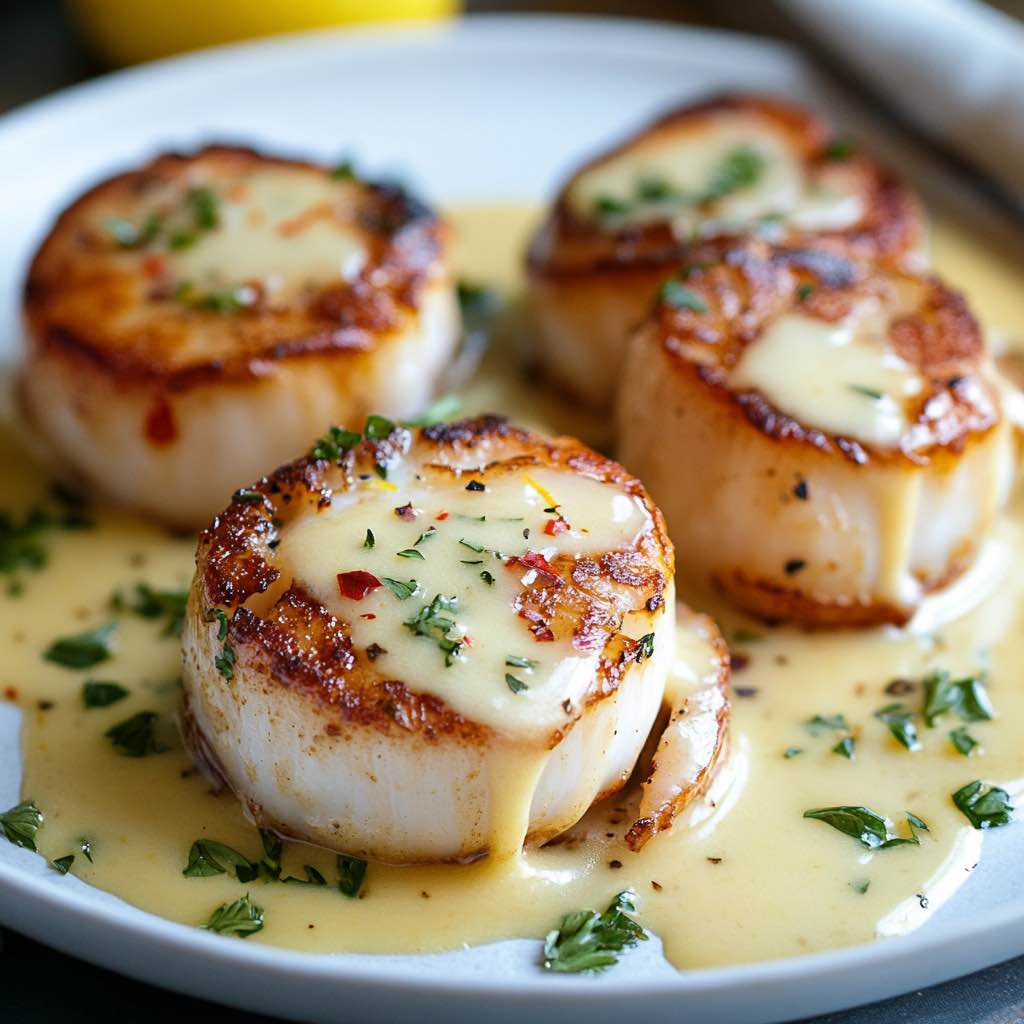
Bacon-Wrapped Scallops with Lemon Butter Sauce: The Ultimate Gourmet Appetizer
Bacon-wrapped scallops with lemon butter sauce represent the perfect marriage of land and sea flavors. This elegant appetizer transforms simple ingredients into a restaurant-quality dish that impresses guests every time. Moreover, the combination of smoky bacon, tender scallops, and bright lemon butter creates an irresistible flavor profile. Additionally, this recipe requires minimal preparation time while delivering maximum impact.
The sweet, delicate flavor of scallops pairs beautifully with crispy bacon’s saltiness. Furthermore, the rich lemon butter sauce adds a luxurious finish that elevates the entire dish. Whether you’re hosting a dinner party or preparing a special meal, bacon-wrapped scallops with lemon butter sauce never fail to impress.
Understanding Scallops and Bacon Selection
Choosing Quality Scallops
Sea scallops work best for bacon-wrapped preparations due to their larger size. Fresh scallops should have a sweet ocean smell without any fishy odors. Additionally, they should feel firm to the touch and appear translucent with a slight pink or beige color.
Dry scallops are preferable to wet scallops for several reasons. First, they haven’t been treated with sodium tripolyphosphate, which affects flavor. Second, dry scallops sear better and create superior caramelization. Finally, they maintain their natural sweetness and texture during cooking.
Size matters when selecting scallops for this recipe. Look for large sea scallops, typically labeled as U-10 or U-15. This means you’ll get 10-15 scallops per pound. These larger scallops provide the perfect canvas for bacon wrapping.
Selecting the Right Bacon
Thin-cut bacon works best for wrapping scallops because it cooks evenly. Thick-cut bacon may not render properly while the scallops cook. Additionally, thin bacon creates a crispier texture that complements the tender scallops.
Regular bacon provides the best flavor balance for this dish. However, you can experiment with different varieties. For instance, applewood-smoked bacon adds subtle sweetness. Alternatively, hickory-smoked bacon contributes more robust flavor.
Avoid pre-cooked bacon for this recipe. Fresh bacon renders fat during cooking, which helps create the perfect texture. Moreover, the rendering process adds flavor to both the bacon and scallops.
Essential Ingredients and Equipment
Primary Ingredients
The beauty of bacon-wrapped scallops lies in their simplicity. You’ll need:
-
1 pound large sea scallops (12-15 pieces)
-
6-8 strips thin-cut bacon, halved
-
4 tablespoons butter
-
2 tablespoons fresh lemon juice
-
1 tablespoon lemon zest
-
2 cloves garlic, minced
-
2 tablespoons fresh parsley, chopped
-
Salt and black pepper to taste
-
Toothpicks for securing
Optional Flavor Enhancers
Several ingredients can elevate your bacon-wrapped scallops:
Fresh herbs like thyme or chives add aromatic complexity. A pinch of red pepper flakes provides gentle heat. Additionally, a touch of honey in the lemon butter sauce creates sweet-savory balance.
Capers offer briny pops of flavor that complement the seafood. Meanwhile, freshly cracked black pepper adds warmth and spice. Consider these additions based on your flavor preferences.
Necessary Equipment
Proper equipment ensures cooking success:
-
Large skillet or cast-iron pan
-
Small saucepan for lemon butter
-
Sharp knife for preparation
-
Cutting board
-
Measuring spoons and cups
-
Tongs for turning scallops
-
Paper towels for patting dry
A cast-iron skillet provides excellent heat retention and even cooking. However, a heavy-bottomed stainless steel pan works equally well. Avoid non-stick pans, which don’t create proper searing.
Step-by-Step Preparation Guide
Preparing the Scallops
Start by removing scallops from refrigeration 15 minutes before cooking. This brings them to room temperature for even cooking. Next, remove the side muscle if still attached. This tough piece should pull away easily.
Pat each scallop completely dry with paper towels. Moisture prevents proper searing and caramelization. Additionally, dry scallops won’t stick to the pan during cooking.
Season scallops lightly with salt and pepper. However, remember that bacon adds saltiness, so use restraint. A light seasoning enhances the scallop’s natural sweetness.
Wrapping Technique
Cut bacon strips in half crosswise to create pieces long enough to wrap around each scallop once. Wrap each scallop snugly with bacon, ensuring the ends meet. Secure with a toothpick inserted horizontally through the bacon and scallop.
The bacon should cover most of the scallop’s circumference without overlapping significantly. Too much overlap creates uneven cooking. Conversely, too little coverage won’t provide enough bacon flavor.
Prepare all wrapped scallops before beginning to cook. This ensures even cooking timing across all pieces. Additionally, having everything ready prevents overcooking while you prepare remaining scallops.
Pre-Cooking Setup
Preheat your skillet over medium-high heat. A properly heated pan ensures immediate searing when scallops hit the surface. Test the temperature by sprinkling a few water drops in the pan. They should sizzle and evaporate quickly.
Arrange wrapped scallops on a plate near your cooking station. Have tongs ready for easy turning. Additionally, prepare your lemon butter sauce ingredients for quick preparation after cooking the scallops.
Perfect Lemon Butter Sauce Recipe
Creating the Base
The lemon butter sauce elevates bacon-wrapped scallops from good to exceptional. Start with high-quality butter for the richest flavor. European-style butter contains higher fat content, creating silkier sauce texture.
Melt butter in a small saucepan over medium-low heat. Avoid high heat, which can brown the butter and alter the flavor. Instead, gentle melting preserves the butter’s sweet, creamy characteristics.
Add minced garlic to melted butter and cook for 30 seconds until fragrant. Fresh garlic provides more vibrant flavor than garlic powder. However, avoid browning the garlic, which creates bitter tastes.
Adding Citrus Elements
Fresh lemon juice brightens the rich butter sauce. Add lemon juice gradually while whisking constantly. This prevents the sauce from breaking or separating. Additionally, taste as you go to achieve your preferred acidity level.
Lemon zest adds concentrated citrus oils that complement the juice. Use a microplane grater for finest zest texture. Furthermore, only zest the yellow portion of the peel, avoiding bitter white pith.
Finishing Touches
Chopped fresh parsley adds color and herbal notes to the sauce. Add parsley just before serving to maintain its bright green color. Additionally, parsley provides a fresh counterpoint to the rich butter.
Season the sauce with salt and pepper to taste. Remember that the bacon provides saltiness, so adjust accordingly. A pinch of white pepper maintains the sauce’s elegant appearance while adding heat.
Professional Cooking Techniques
Achieving Perfect Searing
Proper searing creates the caramelized exterior that makes scallops irresistible. Place wrapped scallops in the hot skillet seam-side down first. This prevents the bacon from unwrapping during cooking.
Cook without moving for 2-3 minutes until the bacon begins crisping. Moving scallops too soon prevents proper browning. Additionally, the bacon needs time to render fat and become crispy.
Listen for consistent sizzling sounds, which indicate proper temperature. If the sizzling stops, increase heat slightly. Conversely, if the sizzling becomes aggressive, reduce heat to prevent burning.
Proper Flipping Technique
Use tongs to gently turn each scallop when the first side develops golden-brown color. The bacon should hold its shape around the scallop. If bacon starts unwrapping, secure with additional toothpicks.
Cook the second side for 1-2 minutes until bacon crisps and scallops feel firm but not hard. Overcooked scallops become rubbery and lose their sweet flavor. Therefore, timing is crucial for perfect results.
Test doneness by gently pressing the scallop’s center. It should yield slightly while feeling firm. Additionally, properly cooked scallops have opaque color throughout with slight translucency in the center.
Temperature Management
Maintain consistent medium-high heat throughout cooking. Too low heat won’t crisp the bacon properly. Conversely, too high heat burns the bacon before scallops cook through.
If your pan gets too hot, reduce heat and add a small amount of butter. This helps regulate temperature while adding flavor. Additionally, the butter prevents sticking and adds richness.
Monitor each scallop individually since thickness variations affect cooking time. Remove finished pieces to a warm plate while others complete cooking. This prevents overcooking and ensures consistent results.
Serving and Presentation Ideas
Plating Techniques
Presentation significantly impacts the dining experience. Arrange bacon-wrapped scallops on warmed plates to maintain temperature. Additionally, warm plates prevent the lemon butter sauce from solidifying quickly.
Create height by slightly overlapping scallops on the plate. This restaurant-style presentation looks more professional than flat arrangements. Furthermore, varied heights add visual interest to the dish.
Drizzle lemon butter sauce around and over the scallops generously. The sauce should pool slightly on the plate while coating each scallop. Additionally, reserve some sauce for guests to add as desired.
Garnish Options
Fresh herbs make excellent garnishes for bacon-wrapped scallops. Chopped chives provide mild onion flavor and bright color. Similarly, microgreens add elegance and subtle flavors.
Lemon wedges offer guests the option to add extra citrus brightness. Place wedges alongside the scallops rather than on top. This prevents overwhelming the delicate flavors while providing choice.
Consider edible flowers for special occasions. Nasturtiums provide peppery flavor and vibrant colors. However, ensure any flowers used are food-safe and pesticide-free.
Accompaniment Suggestions
Light side dishes complement bacon-wrapped scallops without overwhelming their delicate flavors. Roasted asparagus provides color contrast and nutritional balance. Additionally, the vegetable’s slight bitterness balances the rich bacon.
Herbed rice pilaf offers a neutral base that absorbs the lemon butter sauce beautifully. The rice’s subtle flavors don’t compete with the scallops. Moreover, it provides substance to the meal.
For more information on elegant side dishes, [check out our guide on gourmet seafood pairings].
Mixed greens with light vinaigrette cleanse the palate between bites. Choose delicate greens like butter lettuce or baby spinach. Avoid strong flavors like arugula, which might overpower the scallops.
Nutritional Benefits and Considerations
Scallop Nutrition Profile
Scallops provide exceptional nutritional value in a low-calorie package. A three-ounce serving contains approximately 75 calories while delivering high-quality protein. Additionally, scallops provide essential minerals including selenium, phosphorus, and vitamin B12.
The omega-3 fatty acids in scallops support heart and brain health. These beneficial fats reduce inflammation and support cognitive function. Furthermore, scallops contain very low mercury levels compared to other seafood options.
Scallops provide all essential amino acids, making them a complete protein source. This supports muscle building and repair. Additionally, the high protein content promotes satiety, helping with weight management.
Bacon Considerations
While bacon adds incredible flavor, it also contributes saturated fat and sodium to the dish. However, the relatively small amount used in this recipe keeps these additions moderate. Additionally, choosing high-quality bacon without added nitrates provides better nutritional value.
The fat from bacon helps with the absorption of fat-soluble vitamins. This includes vitamins A, D, E, and K present in other meal components. Therefore, the bacon serves both flavor and nutritional functions.
Balancing the Meal
Pairing bacon-wrapped scallops with vegetables increases the meal’s nutritional density. Vegetables provide fiber, vitamins, and minerals while adding color and texture. Additionally, they help balance the rich flavors of the main dish.
Consider the entire meal when evaluating nutritional impact. Light appetizers and vegetable sides can offset the richness of bacon-wrapped scallops. This creates a well-balanced dining experience.
Common Mistakes to Avoid
Preparation Errors
One frequent mistake involves not properly drying scallops before cooking. Moisture prevents searing and creates steam instead of caramelization. Therefore, always pat scallops completely dry with paper towels.
Overwrapping with bacon is another common error. Too much bacon coverage prevents even cooking and creates chewy textures. Instead, use just enough bacon to wrap around once with minimal overlap.
Using wet scallops instead of dry ones significantly impacts the final result. Wet scallops contain added phosphates that affect flavor and texture. Additionally, they don’t sear properly due to excess moisture.
Cooking Temperature Issues
Cooking at incorrect temperatures ruins the dish’s texture and flavor. Too low heat won’t crisp the bacon or sear the scallops properly. Conversely, too high heat burns the bacon before scallops cook through.
Not preheating the pan sufficiently prevents proper searing. A properly heated pan creates immediate sizzling when food touches the surface. This reaction is crucial for developing flavors and textures.
Moving scallops too frequently during cooking prevents browning development. Each side needs uninterrupted contact with the hot surface. Therefore, resist the urge to move or check progress too often.
Sauce Problems
Making lemon butter sauce at too high heat can cause separation or burning. Gentle heat preserves the butter’s smooth texture while preventing bitter flavors. Additionally, gradual ingredient addition prevents sauce breaking.
Adding lemon juice too quickly or in large amounts can break the sauce. Slow, steady addition while whisking constantly maintains emulsion. Furthermore, room temperature ingredients incorporate more easily.
Preparing the sauce too far in advance can result in separation or solidification. Make lemon butter sauce just before serving for best texture and temperature. Additionally, keep it warm over very low heat if needed.
Storage and Reheating Tips
Proper Storage Methods
Store leftover bacon-wrapped scallops in the refrigerator for up to two days maximum. Place them in airtight containers to prevent odor absorption. Additionally, separate the lemon butter sauce and store it separately.
Freezing cooked scallops isn’t recommended due to texture changes. The delicate protein structure breaks down during freezing and thawing. Therefore, plan portion sizes to minimize leftovers.
If you must store overnight, let scallops cool completely before refrigerating. Hot food in closed containers creates condensation, which affects texture. Additionally, gradual cooling prevents bacterial growth.
Reheating Techniques
Gentle reheating preserves the scallops’ tender texture. Preheat oven to 300°F and place scallops on a baking sheet. Heat for 5-7 minutes until warmed through but not overcooked.
Avoid microwave reheating, which creates rubbery textures. The uneven heating patterns in microwaves overcook some areas while leaving others cold. Additionally, microwaving doesn’t restore the bacon’s crispiness.
Reheat lemon butter sauce gently in a small saucepan over low heat. Whisk constantly to prevent separation. If the sauce does separate, add a tablespoon of warm water while whisking vigorously.
Quality Indicators
Properly stored and reheated scallops should maintain their sweet flavor and tender texture. Off odors or slimy textures indicate spoilage. Additionally, bacon should retain some crispiness after proper reheating.
The lemon butter sauce should remain smooth and yellow in color. Brown or separated sauce indicates overheating or spoilage. Therefore, discard any sauce that doesn’t look or smell fresh.
Delicious Recipe Variations
International Flavor Profiles
Asian-inspired variations incorporate ginger, soy sauce, and sesame oil into the preparation. Replace lemon butter sauce with a ginger-scallion oil. Additionally, garnish with sesame seeds and sliced green onions for authentic presentation.
Mediterranean versions use herbs like oregano, basil, and thyme. Create a herb butter sauce with olive oil instead of traditional lemon butter. Furthermore, add sun-dried tomatoes and capers for robust flavors.
Southwestern variations incorporate chili powder, cumin, and lime. Replace lemon with lime juice and zest in the butter sauce. Additionally, garnish with cilantro and serve with avocado slices.
Dietary Adaptations
For gluten-free versions, ensure all ingredients are certified gluten-free. Most bacon contains no gluten, but check labels carefully. Additionally, serve with gluten-free sides like rice or quinoa.
Lower-sodium variations use reduced-sodium bacon or turkey bacon. Additionally, rinse scallops briefly to remove any added salt. Season sparingly since bacon still provides significant sodium.
For those avoiding pork, turkey bacon or beef bacon work as substitutes. These alternatives provide similar smoky flavors with different nutritional profiles. However, cooking times may need adjustment due to different fat contents.
Sauce Alternatives
Herb butter sauces offer fresh, aromatic alternatives to lemon butter. Combine butter with parsley, chives, tarragon, or dill. Additionally, add garlic and shallots for deeper complexity.
Compound butters can be prepared ahead and stored in the refrigerator. Roll seasoned butter in parchment paper and chill until firm. Slice rounds to top hot scallops for melting presentation.
Cream-based sauces provide rich alternatives for special occasions. Reduce heavy cream with herbs and seasonings. Additionally, finish with butter for glossy texture and rich mouthfeel.
Frequently Asked Questions
How do I know when bacon-wrapped scallops are properly cooked?
Properly cooked bacon-wrapped scallops have golden-brown, crispy bacon and firm but tender scallop centers. The internal temperature should reach 145°F for food safety. Additionally, the scallops should feel springy when gently pressed rather than soft or hard.
Can I prepare bacon-wrapped scallops ahead of time?
You can wrap scallops with bacon up to 4 hours before cooking and store them refrigerated. However, don’t cook them until ready to serve for best texture. Additionally, bring wrapped scallops to room temperature for 15 minutes before cooking.
What size scallops work best for this recipe?
Large sea scallops (U-10 to U-15 per pound) work best for bacon wrapping. These provide adequate surface area for bacon wrapping while cooking evenly. Additionally, smaller bay scallops are too delicate for this preparation method.
Why won’t my lemon butter sauce stay smooth?
Lemon butter sauce separates when heated too quickly or when ingredients are added too fast. Maintain gentle heat and add lemon juice gradually while whisking constantly. Additionally, ensure butter isn’t too hot when adding acidic ingredients.
Can I use frozen scallops for this recipe?
Fresh scallops produce superior results, but properly thawed frozen scallops work acceptably. Thaw frozen scallops overnight in the refrigerator, then pat completely dry before use. Additionally, frozen scallops may release more moisture during cooking.
Bacon-wrapped scallops with lemon butter sauce represent culinary elegance in its finest form. This dish combines simple ingredients with professional techniques to create restaurant-quality results at home. Moreover, the perfect balance of smoky bacon, tender scallops, and bright lemon butter creates an unforgettable flavor experience.
The key to success lies in selecting quality ingredients and executing proper cooking techniques. Fresh, dry scallops and thin-cut bacon form the foundation. Additionally, gentle cooking methods preserve the delicate textures while developing rich flavors.
Whether serving as an elegant appetizer or special occasion entrée, bacon-wrapped scallops with lemon butter sauce never fails to impress. The combination of land and sea flavors creates a sophisticated dish that showcases your culinary skills.

Bacon-Wrapped Scallops with Lemon Butter Sauce
Description
Ingredients
For the Scallops
-
1 pound large sea scallops (10-12 count)
-
9-10 strips bacon, cut in half
-
2 tablespoons olive oil or avocado oil
-
Salt and freshly ground black pepper
-
Toothpicks for securing
For the Lemon Butter Sauce
-
4 tablespoons unsalted butter
-
3 cloves garlic, minced
-
3 tablespoons fresh lemon juice
-
1 tablespoon fresh lemon zest
-
2 teaspoons brown sugar
-
1/2 teaspoon lemon pepper seasoning
-
2 tablespoons fresh parsley, chopped
-
Pinch of salt
Instructions
Prepare the Bacon and Scallops
Cook bacon strips in a large skillet over medium heat for 10-12 minutes until almost cooked through but still pliable. Remove and drain on paper towels. Meanwhile, remove the tough side muscle from each scallop and pat completely dry with paper towels – this is crucial for proper searing. Season scallops with salt and pepper on both sides.
Wrap and Secure
Wrap each scallop with a half strip of bacon and secure with a toothpick. The bacon should wrap around once with slight overlap. Place wrapped scallops on a plate while preparing the cooking surface.
Cook the Scallops
Heat olive oil in a large, clean skillet over medium to medium-high heat. Cook wrapped scallops for 3-4 minutes per side until bacon is crispy and scallops develop a golden-brown crust. The internal temperature should reach 120°F, and they’ll continue cooking to 130°F while resting. Transfer to a plate and keep warm.
Make the Lemon Butter Sauce
In the same skillet, reduce heat to medium and add butter, allowing it to melt and become foamy. Add minced garlic and cook for 1 minute, stirring frequently to prevent burning. Stir in lemon juice, lemon zest, brown sugar, and lemon pepper seasoning, scraping up any browned bits from the bottom of the pan. Cook for 2-3 minutes until slightly thickened, then stir in fresh parsley.