
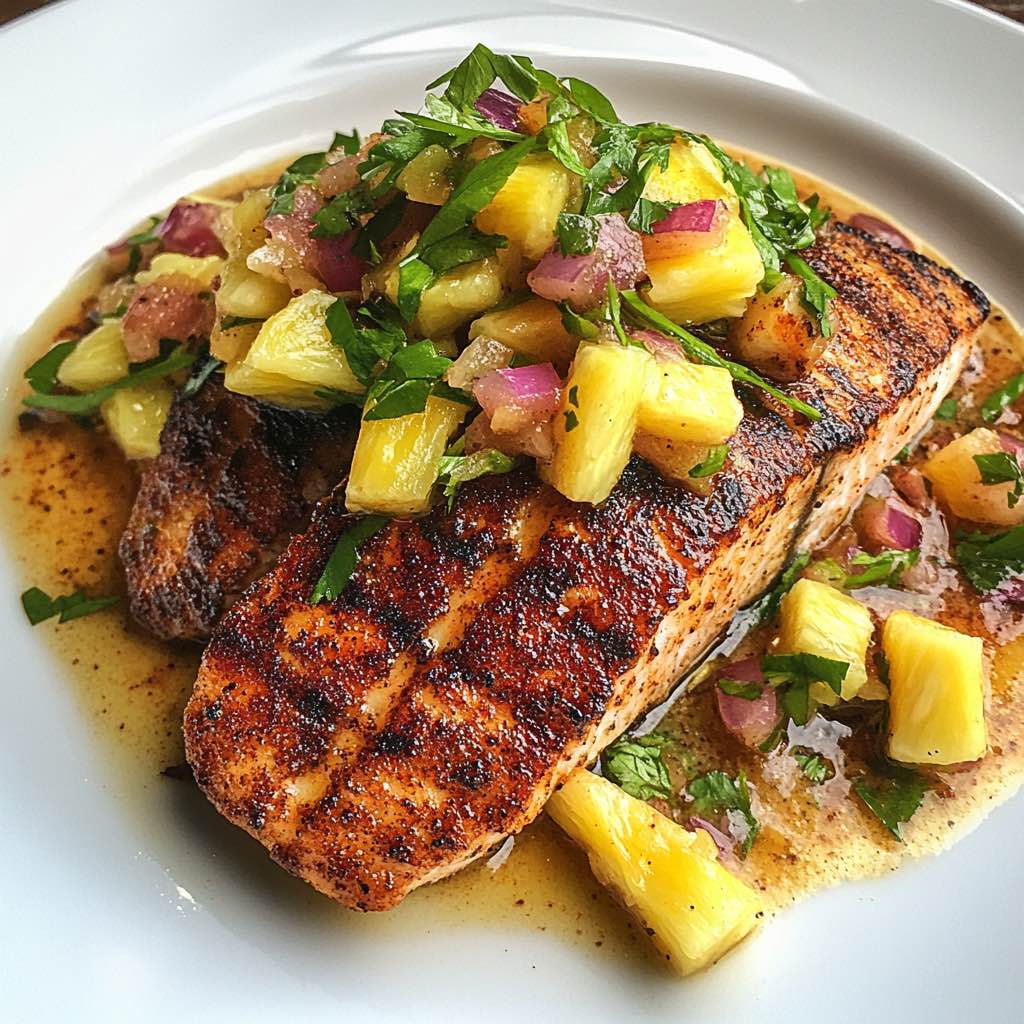
Blackened Red Snapper with Pineapple Salsa: A Tropical Culinary Masterpiece
Table of Contents
-
Introduction to Blackened Red Snapper
-
Understanding the Blackening Technique
-
Health Benefits of Red Snapper
-
Essential Ingredients for Success
-
Perfect Pineapple Salsa Recipe
-
Step-by-Step Cooking Instructions
-
Professional Tips and Techniques
-
Delicious Variations to Try
-
Best Side Dishes and Pairings
-
Nutritional Information
-
Storage and Reheating Tips
-
Frequently Asked Questions
-
Conclusion
The sizzle of perfectly seasoned fish hitting a hot cast-iron skillet creates magic in the kitchen. Blackened red snapper with pineapple salsa transforms a simple dinner into an extraordinary culinary experience. Moreover, this restaurant-quality dish combines the bold, smoky flavors of Cajun blackening spices with the bright, tropical sweetness of fresh pineapple salsa.
Furthermore, this recipe delivers impressive results that will make your guests think you’ve hired a professional chef. Additionally, the contrast between the deeply caramelized, spice-crusted fish and the cool, refreshing salsa creates a perfect balance of flavors and textures.
Understanding the Blackening Technique
Origins of Blackening
The blackening technique originated in Louisiana’s vibrant culinary scene during the 1980s. Chef Paul Prudhomme popularized this cooking method, which quickly became a signature of Cajun and Creole cuisine. Subsequently, the technique spread across America and became a beloved way to prepare fish and other proteins.
Essentially, blackening involves coating fish with a blend of aromatic spices before cooking it in an extremely hot cast-iron skillet. As a result, the spices create a deeply caramelized, almost blackened crust while keeping the interior moist and flaky.
The Science Behind Blackening
When spices meet intense heat, they undergo the Maillard reaction. This chemical process creates complex flavors and that distinctive dark crust. However, the key lies in achieving the right balance between heat and timing to avoid burning the spices while ensuring proper cooking.
Additionally, the high heat creates a protective barrier that seals in the fish’s natural juices. Therefore, properly blackened fish remains incredibly moist despite the intense cooking method.
Health Benefits of Red Snapper
Nutritional Profile
Red snapper provides exceptional nutritional value for health-conscious diners. This lean white fish contains high-quality protein while remaining relatively low in calories. Furthermore, it offers essential vitamins and minerals that support overall wellness.
Key nutritional benefits include:
-
High protein content supporting muscle development
-
Low saturated fat promoting heart health
-
Rich in selenium for immune system support
-
Contains phosphorus for strong bones and teeth
-
Provides B vitamins for energy metabolism
-
Omega-3 fatty acids supporting brain health
Sustainable Seafood Choice
Choosing wild-caught red snapper supports sustainable fishing practices. However, always verify that your seafood comes from reputable sources that follow responsible harvesting methods. This ensures both environmental protection and the highest quality fish for your blackened red snapper with pineapple salsa.
Essential Ingredients for Success
Blackening Spice Blend
Creating the perfect spice blend requires careful attention to proportions and quality ingredients. Fresh spices make a significant difference in the final flavor profile. Therefore, consider grinding whole spices when possible for maximum potency.
Traditional blackening spice ingredients:
-
Paprika (sweet or smoked)
-
Cayenne pepper for heat
-
Garlic powder
-
Onion powder
-
Dried oregano
-
Dried thyme
-
Ground cumin
-
Black pepper
-
White pepper
-
Salt
Selecting Quality Red Snapper
Fresh, high-quality red snapper forms the foundation of this dish. Look for fish with clear, bright eyes and firm flesh that springs back when pressed. Additionally, fresh fish should have a clean, oceanic smell without any fishy odors.
Key selection criteria:
-
Bright, clear eyes
-
Firm, springy texture
-
Fresh, oceanic aroma
-
Vibrant red skin color
-
Moist appearance without sliminess
Perfect Pineapple Salsa Recipe
Fresh Ingredients Make the Difference
The pineapple salsa provides a refreshing counterpoint to the intensely spiced fish. Fresh ingredients create the best flavor and texture combination. Moreover, this salsa can be prepared several hours ahead, allowing the flavors to meld beautifully.
Pineapple salsa ingredients:
-
2 cups fresh pineapple, diced small
-
1 red bell pepper, finely chopped
-
1/2 red onion, minced
-
1 jalapeño pepper, seeded and minced
-
1/4 cup fresh cilantro, chopped
-
2 tablespoons lime juice
-
1 tablespoon lime zest
-
Salt to taste
Preparation Techniques
Proper knife work ensures consistent texture throughout the salsa. Dice all ingredients uniformly for the best visual presentation and eating experience. Additionally, removing pineapple core completely prevents tough, fibrous pieces in the final dish.
Furthermore, balancing acidity with the lime juice brightens all the flavors while helping preserve the salsa’s fresh appearance. The lime also helps prevent the pineapple from browning over time.
Step-by-Step Cooking Instructions
Preparing the Fish
Step 1: Season the Snapper
Pat the red snapper fillets completely dry with paper towels. This crucial step ensures proper spice adherence and prevents steaming during cooking. Subsequently, brush both sides lightly with melted butter or oil.
Step 2: Apply the Blackening Spices
Generously coat both sides of each fillet with the blackening spice mixture. Press gently to ensure the spices adhere well. However, avoid over-seasoning, as the spices will concentrate during cooking.
Step 3: Rest the Seasoned Fish
Allow the seasoned fillets to rest at room temperature for 15-20 minutes. This resting period helps the spices penetrate the fish while bringing it closer to room temperature for more even cooking.
Cooking Process
Step 4: Preheat the Skillet
Heat a cast-iron skillet over medium-high heat until it’s smoking hot. This intense heat creates the signature blackened crust. Additionally, ensure proper ventilation as the cooking process generates considerable smoke.
Step 5: Cook the First Side
Carefully place the seasoned fillets in the hot skillet. Cook without moving for 3-4 minutes, depending on thickness. The fish should develop a dark, caramelized crust before flipping.
Step 6: Flip and Finish
Gently flip the fillets using a thin spatula. Cook the second side for 2-3 minutes until the fish flakes easily with a fork. Internal temperature should reach 145°F for food safety.
Final Assembly
Step 7: Rest and Serve
Remove the blackened red snapper from heat and let it rest briefly. Meanwhile, give the pineapple salsa a final stir to redistribute the juices. Subsequently, plate the fish and top generously with the fresh salsa.
Professional Tips and Techniques
Temperature Control
Mastering temperature control separates good blackened fish from exceptional results. The skillet must be hot enough to create the crust without burning the spices. However, extremely high heat can char the outside while leaving the center undercooked.
Temperature guidelines:
-
Cast-iron skillet: Medium-high heat
-
Oil smoke point: Use high-heat oils like avocado or grapeseed
-
Internal fish temperature: 145°F
-
Resting time: 2-3 minutes before serving
Timing Considerations
Proper timing ensures all components finish simultaneously. Start the pineapple salsa first, as it benefits from resting time. Additionally, prepare your side dishes before beginning the fish cooking process.
Furthermore, blackened red snapper with pineapple salsa tastes best served immediately after cooking. The contrast between hot fish and cool salsa creates an appealing temperature variation.
Delicious Variations to Try
Spice Blend Modifications
Customize the blackening spices to match your heat preference and flavor profile. For milder versions, reduce cayenne pepper and increase sweet paprika. Conversely, add extra heat with chipotle powder or hot paprika.
Variation ideas:
-
Mediterranean: Add dried basil and rosemary
-
Smoky version: Include smoked paprika and chipotle
-
Citrus blend: Incorporate dried orange and lemon zest
-
Herb-forward: Increase oregano and thyme proportions
Alternative Salsas
While pineapple salsa complements blackened red snapper beautifully, other fresh salsas work equally well. Consider seasonal fruit combinations or vegetable-based alternatives for variety.
Salsa alternatives:
-
Mango and black bean salsa
-
Cucumber and tomato relish
-
Peach and red onion salsa
-
Corn and avocado mixture
-
Tropical fruit medley with papaya and kiwi
Different Cooking Methods
Although cast-iron skillet cooking produces the most authentic results, alternative methods can accommodate different kitchen setups. However, each method requires slight adjustments to achieve similar results.
Alternative cooking methods:
-
Outdoor grilling for smoky flavors
-
Oven broiling for consistent heat
-
Non-stick pan with careful temperature control
-
Electric griddle for larger quantities
Best Side Dishes and Pairings
Complementary Flavors
Selecting appropriate side dishes enhances the overall dining experience. Choose accompaniments that complement rather than compete with the bold blackening spices and fresh pineapple salsa flavors.
Recommended side dishes:
-
Coconut rice with fresh herbs
-
Garlic roasted asparagus
-
Sweet potato fries with lime
-
Black beans and rice
-
Grilled zucchini and yellow squash
-
Quinoa pilaf with vegetables
Sauce Pairings
While the pineapple salsa provides excellent flavor contrast, additional sauces can enhance the meal further. Consider offering multiple options to accommodate different taste preferences.
Sauce suggestions:
-
Cilantro lime crema
-
Spicy mayo with hot sauce
-
Avocado lime dressing
-
Mango chutney
-
Fresh herb butter
Nutritional Information
Caloric Content
Blackened red snapper with pineapple salsa provides excellent nutritional value while remaining relatively low in calories. A typical serving contains approximately 250-300 calories, making it suitable for various dietary approaches.
Per serving nutritional breakdown:
-
Calories: 275
-
Protein: 35g
-
Carbohydrates: 12g
-
Fat: 8g
-
Fiber: 2g
-
Sodium: 450mg (varies with salt content)
Dietary Considerations
This recipe accommodates numerous dietary restrictions and preferences. The dish is naturally gluten-free, dairy-free (when prepared without butter), and follows paleo and keto guidelines with minor modifications.
Dietary compatibility:
-
Gluten-free: Naturally compliant
-
Dairy-free: Use oil instead of butter
-
Low-carb: Focus on fish, reduce salsa portion
-
Paleo-friendly: All ingredients comply
-
Heart-healthy: Low saturated fat content
Storage and Reheating Tips
Proper Storage Methods
Store leftover blackened red snapper and pineapple salsa separately for best results. The fish maintains quality for 2-3 days in the refrigerator, while the salsa stays fresh for up to one week.
Storage guidelines:
-
Refrigerate fish within 2 hours of cooking
-
Store salsa in airtight containers
-
Keep components separated until serving
-
Use glass containers to prevent flavor transfer
Reheating Techniques
Reheating blackened fish requires gentle methods to prevent overcooking. The goal is warming the fish without drying it out or making it rubbery.
Best reheating methods:
-
Low oven heat (275°F) for 10-12 minutes
-
Gentle stovetop warming in covered pan
-
Microwave on 50% power in short intervals
-
Room temperature serving for salads
Frequently Asked Questions
Can I make blackened red snapper with pineapple salsa ahead of time?
While the pineapple salsa can be prepared several hours in advance, the blackened fish tastes best when served immediately after cooking. However, you can season the fish and prepare all other components ahead of time for quick final assembly.
What’s the best substitute for red snapper?
Several fish varieties work well with blackening techniques. Grouper, mahi-mahi, and snapper varieties provide similar texture and flavor profiles. Additionally, firm white fish like halibut or sea bass adapt well to this preparation method.
How do I prevent the spices from burning?
Control your heat level and monitor cooking closely to prevent burnt spices. If your skillet becomes too hot, reduce the heat slightly. Furthermore, using a mixture of oil and butter helps prevent burning while adding flavor.
Can I use frozen red snapper for this recipe?
Fresh fish produces the best results, but properly thawed frozen fish can work acceptably. Ensure the fish is completely thawed and patted completely dry before seasoning. Additionally, frozen fish may release more moisture during cooking.
How spicy is traditional blackening seasoning?
Traditional blackening spice blends range from mild to moderately spicy. The heat level depends primarily on the amount of cayenne pepper used. Adjust the cayenne quantity to match your spice tolerance preferences.
What makes the fish turn black during cooking?
The dark color develops from the Maillard reaction between the spices and high heat. This browning process creates complex flavors while forming the characteristic dark crust. However, truly burned spices taste bitter and should be avoided.
For additional seafood cooking techniques and recipes, visit Seafood Nutrition Partnership for expert guidance and nutritional information.
Conclusion
Blackened red snapper with pineapple salsa represents the perfect marriage of bold Cajun flavors and tropical freshness. This impressive dish transforms simple ingredients into a restaurant-quality meal that’s surprisingly achievable in home kitchens. Moreover, the combination of protein-rich fish and nutrient-dense fresh fruit creates a satisfying, healthful dining experience.
The contrast between the intensely spiced, caramelized fish crust and the cool, sweet pineapple salsa creates an unforgettable flavor experience. Additionally, this versatile recipe adapts easily to different spice preferences and dietary requirements while maintaining its essential character.
Successfully preparing blackened red snapper with pineapple salsa requires attention to detail, quality ingredients, and proper technique. However, the impressive results justify the careful preparation process. Furthermore, once you master these fundamental techniques, countless variations become possible.
Blackened Red Snapper with Pineapple Salsa
Description
Ingredients
For the Blackened Red Snapper
-
4 red snapper fillets (6-8 ounces each)
-
2 tablespoons olive oil or avocado oil
-
2½ teaspoons smoked paprika
-
1 teaspoon garlic powder
-
1 teaspoon onion powder
-
1 teaspoon salt
-
½ teaspoon dried thyme
-
½ teaspoon dried oregano
-
¼ teaspoon cayenne pepper (adjust to taste)
-
⅛ teaspoon ground black pepper
For the Pineapple Salsa
-
2 cups fresh pineapple, diced small
-
½ red bell pepper, finely diced
-
¼ red onion, finely diced
-
1 jalapeño, seeded and minced
-
¼ cup fresh cilantro, chopped
-
2 tablespoons fresh lime juice
-
1 tablespoon lime zest
-
½ teaspoon salt
-
¼ teaspoon black pepper
Instructions
Prepare the Blackening Seasoning
In a small bowl, combine smoked paprika, garlic powder, onion powder, salt, thyme, oregano, cayenne pepper, and black pepper. This creates a flavorful blend that will form a beautiful crust on the fish.
Make the Pineapple Salsa
Combine diced pineapple, red bell pepper, red onion, jalapeño, and cilantro in a medium bowl. Add lime juice, lime zest, salt, and pepper, stirring gently to combine. Let stand for 15 minutes to allow flavors to meld.
Cook the Red Snapper
Pat red snapper fillets completely dry with paper towels – this is crucial for proper searing. Brush both sides lightly with olive oil, then generously coat with the blackening seasoning, pressing it into the flesh to ensure adherence.
Heat a large skillet over medium-high heat until very hot. Place seasoned fillets flesh-side down and cook without moving for 4 minutes until a dark, blackened crust forms. Flip carefully and cook for an additional 3-4 minutes until fish reaches an internal temperature of 145°F and flakes easily with a fork.
Serving
Serve the blackened red snapper immediately topped with the fresh pineapple salsa. The sweet, tangy salsa perfectly complements the spicy, smoky flavors of the blackened fish while adding a refreshing tropical element. This recipe serves 4 people and pairs beautifully with coconut rice, black beans, or roasted vegetables for a complete meal.