
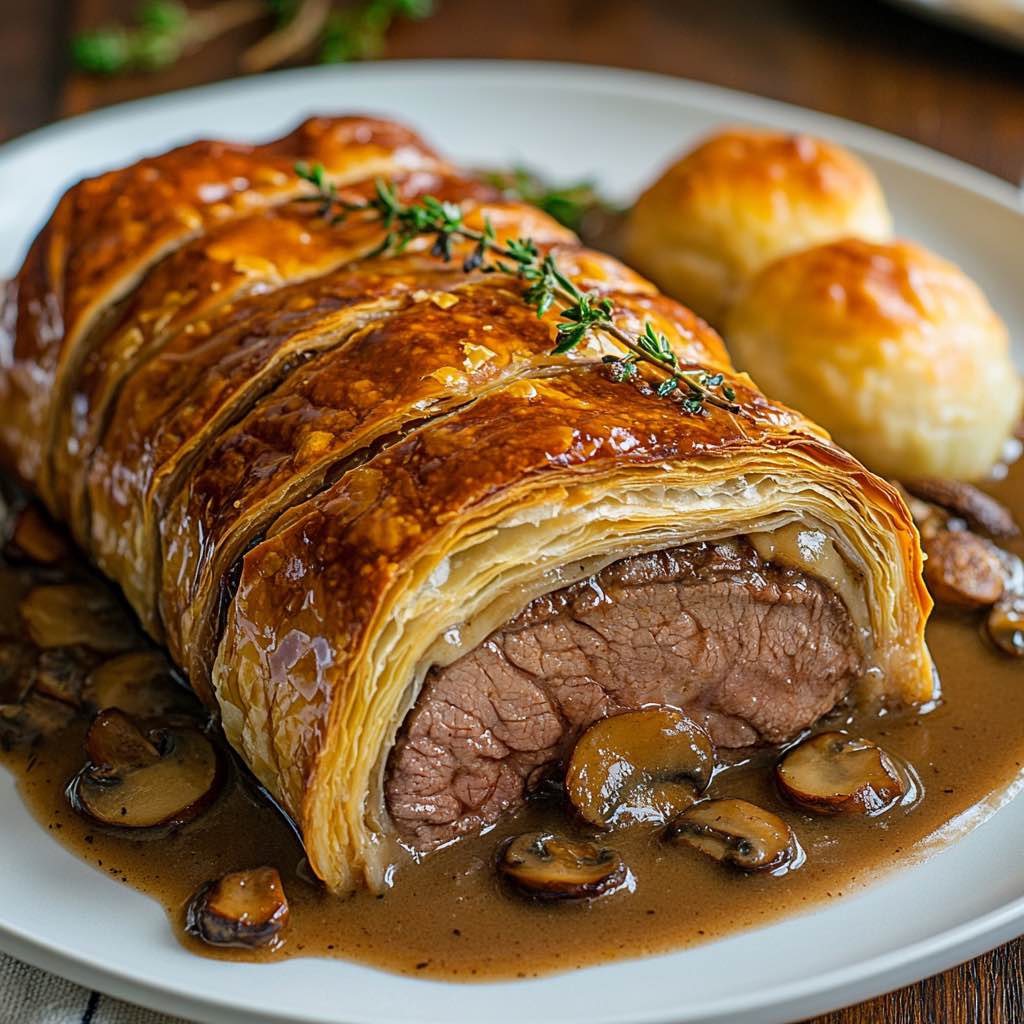
Beef Wellington with Mushroom Gravy: The Ultimate Guide to This Classic Dish
Beef Wellington with Mushroom Gravy represents the pinnacle of culinary sophistication. This iconic dish combines tender beef tenderloin wrapped in flaky pastry with a rich, savory gravy that elevates every bite. Moreover, mastering this classic recipe transforms any home cook into a culinary artist capable of creating restaurant-quality meals.
The combination of perfectly seasoned beef, aromatic mushroom duxelles, and buttery puff pastry creates an unforgettable dining experience. Additionally, the accompanying mushroom gravy adds depth and richness that complements the Wellington beautifully. Therefore, learning to prepare Beef Wellington with Mushroom Gravy opens doors to impressive entertaining and special occasion cooking.
What is Beef Wellington?
Beef Wellington consists of beef tenderloin coated with pâté and duxelles, then wrapped in puff pastry and baked. The dish showcases culinary technique through its multiple layers and precise cooking requirements. Furthermore, the pastry creates a protective barrier that keeps the beef moist while developing a golden, crispy exterior.
The traditional preparation involves several key components working in harmony. First, the beef tenderloin provides the protein foundation with its tender, flavorful meat. Second, the mushroom duxelles adds moisture and earthy flavors that permeate the dish. Third, the puff pastry creates textural contrast and visual appeal.
Beef Wellington with Mushroom Gravy takes this classic dish one step further. The accompanying gravy utilizes pan drippings and additional mushrooms to create a sauce that enhances every element of the Wellington. Consequently, this combination represents comfort food elevated to gourmet status.
The History Behind This Iconic Dish
The origins of Beef Wellington trace back to early 19th-century Britain. Many culinary historians believe the dish was named after the Duke of Wellington following his victory at the Battle of Waterloo in 1815. However, similar preparations existed in French cuisine under different names, suggesting a more complex culinary evolution.
French cuisine contributed significantly to Wellington’s development through dishes like filet de bœuf en croûte. These preparations shared similar techniques but varied in specific ingredients and presentations. Additionally, the French influence explains the sophisticated cooking methods required for success.
During the mid-20th century, Beef Wellington experienced renewed popularity in fine dining establishments. Celebrity chefs embraced the dish as a demonstration of culinary skill and creativity. Subsequently, home cooks began attempting this challenging recipe, leading to numerous adaptations and variations.
The addition of mushroom gravy represents a natural evolution of the original recipe. This enhancement provides additional moisture and flavor while creating a more complete meal presentation. Therefore, Beef Wellington with Mushroom Gravy has become the preferred version for many contemporary cooks.
Essential Ingredients for Beef Wellington with Mushroom Gravy
For the Beef Wellington
Creating exceptional Beef Wellington requires carefully selected, high-quality ingredients. The beef tenderloin serves as the centerpiece, so choosing a well-marbled, properly aged cut is crucial. Additionally, the supporting ingredients must complement rather than overpower the beef’s natural flavors.
Primary Ingredients:
-
2-3 pounds beef tenderloin, trimmed and tied
-
1 pound frozen puff pastry, thawed
-
1 pound mixed mushrooms (cremini, shiitake, portobello)
-
8 ounces pâté or liver mousse
-
2 large shallots, finely minced
-
4 cloves garlic, minced
-
2 tablespoons fresh thyme leaves
-
2 tablespoons Dijon mustard
-
2 egg yolks for wash
-
Salt and freshly ground black pepper
Supporting Ingredients:
-
2 tablespoons olive oil
-
2 tablespoons unsalted butter
-
8-10 thin slices prosciutto (optional)
-
2 tablespoons fresh parsley, chopped
-
1 teaspoon fresh rosemary, minced
For the Mushroom Gravy
The mushroom gravy requires ingredients that build layers of flavor while maintaining the dish’s sophisticated character. Using a variety of mushrooms creates complexity, while proper stock selection ensures rich, savory results.
Gravy Ingredients:
-
1 pound mixed mushrooms, sliced
-
3 tablespoons all-purpose flour
-
3 cups beef stock or broth
-
2 large shallots, diced
-
3 cloves garlic, minced
-
2 tablespoons unsalted butter
-
2 tablespoons olive oil
-
1 tablespoon fresh thyme
-
1 teaspoon fresh sage, chopped
-
Pan drippings from Wellington
-
Salt and pepper to taste
Quality ingredients make the difference between good and exceptional results. Therefore, investing in premium beef, fresh herbs, and high-quality stock pays dividends in the final dish.
Step-by-Step Recipe Instructions
Preparing the Beef
Proper beef preparation forms the foundation of successful Beef Wellington with Mushroom Gravy. Start by bringing the tenderloin to room temperature, which typically takes 30-45 minutes. This step ensures even cooking throughout the roast.
Season the beef generously with salt and pepper on all surfaces. Next, heat a large skillet over high heat and add olive oil. Sear the tenderloin on all sides until golden brown, approximately 2-3 minutes per side. This process creates the Maillard reaction, developing complex flavors and appealing color.
After searing, brush the entire surface with Dijon mustard while the beef is still warm. The mustard adds tangy flavor while helping other ingredients adhere to the meat. Allow the beef to cool completely before proceeding to the next step.
Making the Duxelles
The duxelles provides moisture and mushroom flavor that permeates the entire Wellington. Begin by finely chopping all mushrooms using a food processor or sharp knife. The texture should be uniform and relatively fine to ensure even distribution.
Heat butter and olive oil in a large skillet over medium-high heat. Add minced shallots and cook until translucent, approximately 3-4 minutes. Subsequently, add garlic and cook for an additional minute until fragrant.
Add the chopped mushrooms to the skillet and cook, stirring frequently, until all moisture has evaporated. This process typically takes 15-20 minutes and is crucial for preventing soggy pastry. Season with thyme, salt, and pepper, then set aside to cool completely.
Assembling the Wellington
Proper assembly requires patience and attention to detail. Lay plastic wrap on a clean work surface and arrange prosciutto slices in an overlapping pattern, if using. Spread the cooled mushroom duxelles evenly over the prosciutto.
Place the cooled, mustard-coated beef at one end of the mushroom mixture. Using the plastic wrap, carefully roll the prosciutto and duxelles around the beef, creating a tight cylinder. Twist the ends of the plastic wrap and refrigerate for at least 30 minutes.
Roll out the puff pastry on a lightly floured surface to accommodate the beef package. Remove the plastic wrap from the beef and place it seam-side down on the pastry. Brush the edges with beaten egg yolk, then wrap the pastry around the beef, sealing all seams.
Baking to Perfection
Preheat the oven to 425°F (220°C) and line a baking sheet with parchment paper. Place the Wellington seam-side down on the prepared sheet and brush the entire surface with egg wash. Score decorative patterns on top if desired, being careful not to cut through the pastry.
Bake for 25-30 minutes, or until the pastry is golden brown and the internal temperature reaches 125°F (52°C) for medium-rare. Use a meat thermometer inserted through the pastry for accurate readings. Additionally, tent with foil if the pastry browns too quickly.
Rest the Wellington for 10-15 minutes before slicing. This resting period allows juices to redistribute and makes slicing easier. Meanwhile, prepare the mushroom gravy using the pan drippings.
Creating the Mushroom Gravy
While the Wellington rests, begin the mushroom gravy preparation. Heat the same skillet used for searing over medium heat and add butter and oil. Sauté sliced mushrooms until golden and caramelized, approximately 8-10 minutes.
Add diced shallots and garlic, cooking until softened. Sprinkle flour over the mixture and cook, stirring constantly, for 2-3 minutes to eliminate raw flour taste. This roux will thicken the gravy and provide body.
Gradually whisk in beef stock, ensuring no lumps form. Add any collected pan drippings from the Wellington along with fresh herbs. Simmer the gravy for 10-15 minutes until it reaches desired consistency. Strain if desired for smooth texture, then season with salt and pepper.
Tips for Perfect Results
Achieving perfect Beef Wellington with Mushroom Gravy requires attention to several critical factors. Temperature control throughout the process ensures properly cooked beef and crispy pastry. Additionally, timing coordination prevents overcooking while maintaining food safety.
Temperature Management:
-
Use a reliable meat thermometer for accurate readings
-
Allow beef to rest at room temperature before cooking
-
Preheat oven fully before baking
-
Monitor internal temperature regularly during cooking
Moisture Control:
-
Cook mushroom duxelles until completely dry
-
Cool all components before assembly
-
Avoid overfilling the Wellington
-
Use plastic wrap during chilling to maintain shape
Pastry Success:
-
Keep puff pastry cold until ready to use
-
Work quickly during assembly to prevent melting
-
Seal seams properly to prevent leakage
-
Score decoratively without cutting through pastry
The key to success lies in preparation and patience. Therefore, preparing components ahead of time reduces stress and improves results significantly.
Common Mistakes to Avoid
Several common errors can compromise Beef Wellington with Mushroom Gravy results. Understanding these pitfalls helps ensure successful outcomes every time you prepare this challenging dish.
Moisture-Related Issues:
Soggy bottom syndrome occurs when excess moisture from ingredients penetrates the pastry. Prevent this by thoroughly cooking mushroom duxelles until dry and cooling all components completely before assembly. Furthermore, avoid adding wet ingredients that might compromise pastry integrity.
Temperature Problems:
Overcooking the beef represents the most frequent error in Wellington preparation. Use a meat thermometer and remember that carryover cooking continues during the resting period. Additionally, underbaked pastry ruins the dish’s textural contrast, so ensure golden browning before removing from the oven.
Assembly Errors:
Loose wrapping allows juices to escape and creates uneven cooking. Wrap tightly using plastic wrap during chilling, then ensure proper pastry sealing. Moreover, overstuffing the Wellington makes sealing difficult and can cause structural failure during baking.
Timing Mistakes:
Poor coordination between components leads to compromised quality. Plan the cooking sequence carefully, allowing adequate time for each step. Subsequently, prepare the gravy while the Wellington rests to maintain optimal serving temperatures.
Serving Suggestions and Pairings
Beef Wellington with Mushroom Gravy deserves thoughtful accompaniments that complement rather than compete with its rich flavors. Classic pairings enhance the dish’s sophisticated character while providing textural and flavor balance.
Vegetable Accompaniments:
-
Roasted root vegetables with herbs
-
Sautéed asparagus with lemon zest
-
Glazed carrots with fresh thyme
-
Steamed green beans with almonds
-
Roasted Brussels sprouts with bacon
Starch Options:
-
Creamy mashed potatoes with garlic
-
Roasted fingerling potatoes with rosemary
-
Wild rice pilaf with cranberries
-
Duchess potatoes for elegant presentation
-
Buttered egg noodles with parsley
Sauce Alternatives:
While mushroom gravy provides the classic accompaniment, other sauces work beautifully with Wellington. Consider horseradish cream sauce for those who enjoy sharp flavors. Additionally, a simple pan reduction using beef stock and herbs offers lighter alternative.
For special occasions, consider [insert link to our holiday side dish guide] for additional elegant accompaniment ideas that pair perfectly with this impressive main course.
Nutritional Information
Understanding the nutritional profile of Beef Wellington with Mushroom Gravy helps with meal planning and dietary considerations. This rich dish provides substantial protein while delivering significant calories from quality ingredients.
Per Serving (based on 8 servings):
-
Calories: 520-580
-
Protein: 35-40g
-
Carbohydrates: 25-30g
-
Fat: 32-38g
-
Fiber: 2-3g
-
Sodium: 850-950mg
Nutritional Benefits:
The beef tenderloin provides high-quality complete protein along with essential B vitamins, particularly B12 and niacin. Iron content supports healthy blood formation, while zinc contributes to immune function. Additionally, mushrooms offer selenium, potassium, and various antioxidants.
Dietary Considerations:
This dish contains gluten from puff pastry and potentially eggs. Individuals following low-carb diets might consider serving smaller portions with additional vegetables. Furthermore, the rich nature makes it unsuitable for low-fat dietary requirements.
Healthier Modifications:
While maintaining the dish’s integrity, some modifications can improve nutritional profiles. Using leaner cuts of beef or reducing portion sizes helps control calories. Additionally, increasing mushroom content provides more vegetables while maintaining flavor complexity.
Variations and Adaptations
Beef Wellington with Mushroom Gravy offers numerous adaptation possibilities while maintaining its essential character. These variations accommodate different preferences, dietary restrictions, and available ingredients.
Individual Wellingtons
Creating individual portions offers several advantages over the traditional whole roast presentation. Smaller Wellingtons cook more evenly and provide better portion control. Additionally, individual servings create elegant presentation opportunities for special dinners.
Prepare individual Wellingtons using 6-8 ounce beef medallions cut from the tenderloin. Follow the same preparation process but reduce cooking times to 15-20 minutes. This approach also allows for different doneness preferences among guests.
Alternative Protein Options
While beef remains traditional, other proteins work successfully in Wellington preparation. Pork tenderloin provides similar texture with different flavor profiles. Lamb leg or rack creates elegant alternatives for those preferring game flavors.
Poultry options include chicken breast or duck breast, though cooking times require adjustment. These proteins offer leaner alternatives while maintaining the dish’s sophisticated presentation. However, ensure proper internal temperatures for food safety.
Vegetarian Adaptations
Plant-based Wellington versions accommodate vegetarian diets while preserving the dish’s visual impact. Portobello mushroom caps, roasted vegetables, or plant-based protein alternatives work effectively as centerpieces.
Layer roasted vegetables such as eggplant, zucchini, and bell peppers with seasoned quinoa or lentils. The mushroom gravy translates perfectly to vegetarian versions, enhancing overall flavor profiles significantly.
Dietary Modifications
Gluten-free versions require alternative pastry options or creative wrapping techniques. Thinly sliced vegetables or gluten-free pastry substitutes maintain structural integrity while accommodating dietary restrictions.
Low-carb adaptations might eliminate pastry entirely, focusing on the beef and mushroom components. Serve with additional gravy and vegetables to maintain satisfying portion sizes.
Storage and Reheating Instructions
Proper storage and reheating techniques preserve Beef Wellington with Mushroom Gravy quality for future enjoyment. Understanding these methods prevents food waste while maintaining food safety standards.
Storage Guidelines
Cool leftover Wellington completely before refrigerating. Wrap tightly in plastic wrap or aluminum foil to prevent moisture loss and odor absorption. Properly stored Wellington remains safe for 3-4 days in refrigerator temperatures below 40°F (4°C).
Freeze Wellington for longer storage, though texture quality may diminish slightly. Wrap in plastic wrap, then aluminum foil, and store for up to 3 months. Label packages with preparation dates for proper rotation.
Store mushroom gravy separately in covered containers. Refrigerate for up to 4 days or freeze for up to 3 months. Cool completely before storage to prevent bacterial growth.
Reheating Methods
Oven reheating produces the best results for maintaining pastry crispness. Preheat oven to 350°F (175°C) and place Wellington slices on baking sheet. Cover lightly with foil and heat for 10-15 minutes until warmed through.
Avoid microwave reheating for Wellington, as it makes pastry soggy and creates uneven heating. However, microwave works adequately for gravy reheating. Stir frequently during heating to prevent hot spots.
Individual slice reheating works better than whole Wellington reheating. Cut portions before storage to facilitate even heating and reduce waste.
Frequently Asked Questions
Can I make Beef Wellington with Mushroom Gravy ahead of time?
Yes, Wellington can be assembled and refrigerated up to 24 hours before baking. This actually improves flavor melding and makes timing easier for entertaining. Wrap tightly in plastic wrap and remove 30 minutes before baking to come to room temperature.
The mushroom gravy can be prepared several days ahead and reheated when needed. This advance preparation significantly reduces last-minute cooking stress while maintaining quality.
What internal temperature should I target for the beef?
For medium-rare results, target 125°F (52°C) internal temperature. The beef will continue cooking during the resting period, reaching approximately 130°F (54°C). Medium doneness requires 135°F (57°C), while well-done reaches 145°F (63°C).
Remember that puff pastry requires sufficient cooking time for proper texture. Balance beef doneness with pastry requirements for optimal results.
Why did my pastry become soggy?
Soggy pastry typically results from excess moisture in the mushroom duxelles or insufficient cooling time. Cook duxelles until completely dry and cool all components thoroughly before assembly. Additionally, avoid overfilling the Wellington with wet ingredients.
Proper sealing prevents steam from escaping and creating soggy conditions. Ensure tight wrapping during chilling and secure pastry seams during assembly.
Can I substitute other types of pastry?
While puff pastry remains traditional, other options work successfully. Phyllo dough creates lighter, crispier results but requires different handling techniques. Shortcrust pastry offers sturdier structure but different texture profiles.
Avoid pastries with high moisture content or those that require different baking temperatures. The pastry must withstand the Wellington’s cooking requirements while maintaining structural integrity.
How do I prevent the Wellington from falling apart when slicing?
Use a very sharp knife and slice in smooth, confident motions. Allow adequate resting time before slicing to let juices redistribute. Clean the knife between slices to maintain clean cuts.
Proper assembly and sealing prevent structural problems during cooking. Ensure tight wrapping and secure seam closure for best slicing results.
Conclusion
Mastering Beef Wellington with Mushroom Gravy represents a significant culinary achievement that impresses guests and satisfies the cook’s creative aspirations. This sophisticated dish combines technical skill with premium ingredients to create memorable dining experiences worthy of special occasions.
The journey from raw ingredients to finished Wellington requires patience, attention to detail, and proper technique. However, the results justify the effort through exceptional flavors, elegant presentation, and the satisfaction of culinary mastery. Moreover, the accompanying mushroom gravy elevates the entire dish to restaurant-quality standards.
Success with Beef Wellington with Mushroom Gravy builds confidence for tackling other challenging recipes. The techniques learned during preparation translate to numerous other dishes, expanding overall cooking capabilities significantly. Therefore, this recipe serves as both delicious meal and valuable learning experience.
The key elements of temperature control, moisture management, and proper timing ensure consistent results every time. Additionally, understanding common mistakes and their prevention helps guarantee success even for novice cooks attempting this classic dish.
Beef Wellington with Mushroom Gravy
Description
Ingredients
For the Beef Wellington:
-
2-3 pounds center-cut beef tenderloin, trimmed of silverskin
-
2-4 tablespoons Dijon mustard
-
3 tablespoons olive oil for searing
-
Kosher salt and freshly ground black pepper
-
10-14 thin slices prosciutto
-
1-2 pounds frozen puff pastry, thawed
-
2 large eggs, beaten with 1 teaspoon water
-
Flaky sea salt for sprinkling
For the Mushroom Duxelles:
-
1 1/2 pounds mixed mushrooms (cremini, button, or wild), finely chopped
-
2-4 large shallots, minced
-
4 tablespoons unsalted butter
-
2-4 garlic cloves, minced
-
5 sprigs fresh thyme, leaves only
-
4 teaspoons dry sherry (optional)
-
Salt and freshly ground black pepper
For the Mushroom Gravy:
-
8 ounces mixed mushrooms, sliced
-
2 tablespoons butter
-
2 tablespoons all-purpose flour
-
2 cups beef stock
-
1/4 cup heavy cream
-
2 tablespoons sherry (optional)
-
Salt and pepper to taste
Instructions
Prepare the Beef:
-
Using kitchen twine, tie the beef tenderloin in 4-5 places to maintain its shape. Season generously with salt and pepper on all sides.
-
Heat olive oil in a large skillet over high heat until nearly smoking. Sear the tenderloin for 2 minutes per side, including the ends, until well-browned all over.
-
Transfer to a plate and when cool enough to handle, remove the twine and coat all surfaces generously with Dijon mustard. Refrigerate for at least 30 minutes.
Make the Mushroom Duxelles:
-
Pulse mushrooms, shallots, and thyme in a food processor until finely chopped. Be careful not to over-process into a paste.
-
Melt butter in a large skillet over medium heat. Add the mushroom mixture, garlic, salt, and pepper, cooking for 8-10 minutes until most liquid is absorbed.
-
Continue cooking over medium heat, stirring frequently, for 6-8 minutes until the mixture is dry and begins to stick to the pan. Add sherry if using and cook until evaporated. Transfer to a bowl and cool completely.
Assemble the Wellington:
-
On plastic wrap, arrange prosciutto slices in an overlapping rectangle large enough to wrap the tenderloin. Spread the cooled mushroom mixture evenly over the prosciutto.
-
Place the mustard-coated tenderloin at one end and roll tightly using the plastic wrap, creating a compact cylinder. Refrigerate for 30 minutes to 24 hours.
-
Roll out puff pastry on a floured surface to create a rectangle 2 inches larger than your wrapped tenderloin. Remove plastic wrap from the beef and place on one end of the pastry.
-
Brush pastry edges with egg wash, then roll the tenderloin in the pastry, sealing seams and ends. Place seam-side down on a parchment-lined baking sheet.
Bake the Wellington:
-
Preheat oven to 425°F. Brush the entire Wellington with egg wash and score the top with diagonal lines. Sprinkle with flaky salt.
-
Bake for 35-40 minutes for rare (internal temperature 125°F), or 45-50 minutes for medium-rare (135°F). The pastry should be golden brown and crispy.
-
Rest for 15-20 minutes before slicing to allow juices to redistribute.
Prepare the Mushroom Gravy:
-
While the Wellington rests, sauté sliced mushrooms in butter until golden brown, about 5 minutes. Sprinkle with flour and cook for 1 minute.
-
Gradually whisk in beef stock, bringing to a simmer. Cook until thickened, about 5-8 minutes. Stir in cream and sherry if using, then season with salt and pepper.